
Brahma Wheel, the Wheel of Life and Death (Kala)
Summary: In this essay we have presented the symbolism of Brahma Chakra or the Wheel of Life and Death (of Brahman as Kala) as described in the Svetasvatara Upanishad and its comparison with the Kalachakra of Buddhism.
The Svetasvatara Upanishad belongs to the Taittiriya section of the Yajurveda. It is one of the oldest Upanishads, which is decidedly theistic. In its approach, the Upanishad leans more towards the non-dualistic schools of Saivism. It describes the manifest creation as inhabited by the divine power of God (devatma-shakti), whom it identifies with Rudra or Lord Siva. Unlike the Prakriti of the Samkhya school, the Shakti that is described in the Upanishad is not independent of Brahman but an aspect of Him.
Brahma Chakra, the Wheel of Life or Creation
The wheel of creation, or the Brahma wheel (chakra), is described in the fourth verse of the first chapter of the Upanishad, which is as stated below.
tam eka-nemim travrtam sodasantam satardharam vimsati pratyarabhih
astakaih sabdhih visva-rupaika-pasam tri-marga-bhedam dvini mittaika
moham
"We know Him with one hub, three divisions, sixteen ends, sixteen supports (spokes), six sets of eight each, whose one noose has innumerable forms, whose paths are distinguished as three and whose delusion arises out of two causes."
The verse envisions creation as a moving wheel (chakra), as a manifestation or projection of Lord Shiva. In the macrocosm it represents the Purusha, the Cosmic Being who is mentioned in the Vedas as a combination of the Cosmic Soul (Isvara) and the Cosmic Body (the material universe). In the microcosm it represents each embodied soul or a living being (jiva).
The Wheel of Life is also Wheel of Death (Kalachakra)
EThe wheel of life (Kalachakra) or the wheel of Dharma, which is popularly known in Buddhism, seems to have its roots in the concept of similar kind found in the ancient scriptures of Hinduism such as the Wheel of Creation or Brahma Chakra found in the Svetasvatara Upanishad.
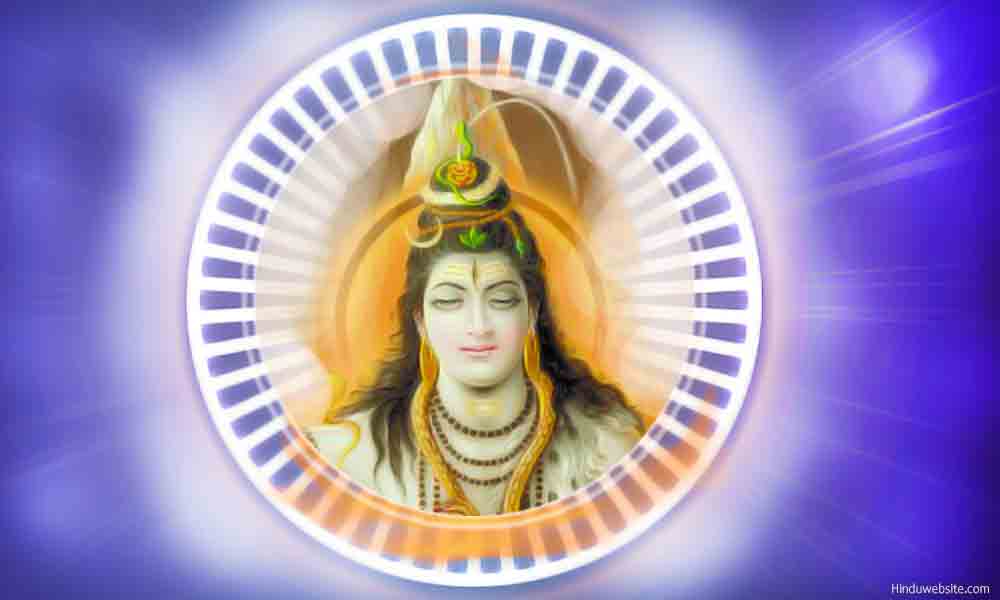
Lord Shiva, the Supreme Brahman, is the wielder of that wheel. Acting as its hub, he projects the universe all around him. Since he stands at the center of all that he manifests, he is also compared in some Upanishads as the spider and the creation as a spider’s web. The spider is a symbol of Death. Lord Shiva as the destroyer of the world is also the personification of Death (Kala) in the mortal world.
As the material and efficient cause, Lord Shiva as Brahman brings forth His entire manifestation through his Power or Shakti, using its parts or tattvas as the building blocks. He spins the wheel of creation, as Time or the Lord of Death (Kala). Hence, the Wheel of Life is also the Wheel of Death (Kala Chakra).
In the vast wheel of creation, everything is a wheel in itself, with a beginning and an end, with Death (Kala or Shiva) is hidden in its very core, just as a black hole is hidden in the core of each spinning galaxy. Death is also hidden in the core of every being and every material object. Hence, they are all subject to death and decay.
Each living being in the mortal world revolves in the cycle of creation, continuation, and destruction. They continue their deluded existence, bound by the triple bonds (pasas) of egoism (anava), actions (karma) and delusion (moha), believing themselves to be different and separate from the rest of the creation. Only when they find the axis in them, they attain stability and freedom from the spinning parts of the Wheel of Shiva. These principles are elucidated in more detail by different schools of Saivism. '
From the above, it is apparent that the idea of Kalachakra is not peculiar to Buddhism only. It has a very close parallel in Hinduism, especially in the Upanishads. However, we do not know whether Buddhism derived the concept from Hinduism or both derived it from another ancient school. Buddhism does not acknowledge a creator God or any ultimate source of creation or any wielder of the wheel. However, it believes in the inevitability of death and destruction and the need to escape from it.
Symbolism of Wheel of Brahman
The symbolism of Brahma Wheel, as stated in the Svetasvatara Upanishad (1.4), is described below. As you can see in the following discussion, in describing the wheel and its parts, the Upanishad derived a few important concepts from the Samkhya school.
Eka nemi
kanemi means one hub. Isvara, the one, is the hub of creation. He is the source and support of all. The wheel of creation moves by his will. From the hub, which is one and indivisible, the whole creation becomes projected in all directions as the wheel.
Travrtam,
Travrtam means the triple envelops or tiers. They refer to the triple modes of Nature namely, sattva, rajas and tamas. They extend into whole creation and impart to them movement, qualities and propensities. They also represent the triple manifestations of Isvara namely, Brahma, Vishnu and Shiva.
Sodasantam
Sodasantam means the 16 tattvas of Nature, which are known as ends or effects (vikriti), in contrast to the eight other tattvas which are considered the causes (prakriti). They are the five sense organs, five organs of action, five subtle senses, and the mind. The eight causes are, the great one (mahat), intelligence (buddhi), ego (aham), and the five elements (mahabhutas).
Satadharam
Satadharam refers to the fifty spokes of the wheel or the fifty supports of the mortal world. They are the forces which ensure the forward movement of the wheel of Samsara, or the cycle of births and deaths, and thereby keep the beings under bondage and delusion are listed. The fifty supports are listed below.
- Five viparyayas namely ignorance (tamas), desire (moha), aversion (mahamoha), anger (tamisra) and fear of death (andhatamisra).
- The 28 weaknesses or asaktis
- Nine opposites of happiness (tushti)
- Eight opposites of perfections or supernatural powers (siddhis)
Pratyarabhih
They are the 20 counter supports. According to the popular opinion they represent the five sense organs, five organs of action and their objects. They represent the objectivity, which we experience in our relation to the external world and perpetuate the illusion and the sense of duality we experience in our lives.
Astakaih sabbhih
It means six sets of eight's. They are stated below.
- Prakriti with its eight principles of gross elements, mind, buddhi and ego-sense
- Eight types of minerals (dhatus) found in the body
- Eight types of wealth or abundance (aisvarya)
- Eight types of feelings or mental states (bhava),
- Eight types of gods (devas)
- Eight qualities of the self (atma guna)
Visvarupa eka pasama
Lord Shiva also holds a noose, pasa, with which he binds the beings to the mortal world. The noose is one but has numerous forms. Symbolically, it represents desire or kama, which variously manifests in beings as desire for worldly possessions, name, fame, longevity, children, sexual passion, etc. It responsible for karma, bondage and attachment of the individual souls, who are also known as visvarupas (souls with forms).
Trimarga bhedam
It refers to the three divergent paths beings follow in the mortal world for salvation namely, the path of knowledge (jnanamarg), the path of devotion (bhaktimarg) and the path of action (karmamarg). According to another interpretation they are the path of righteousness (dharma), the path of unrighteousness (adharma) and the path of wisdom (jnana).
Moha
Moha means delusion, which arises from both good actions and bad actions and so also from actions and inaction. In the ultimate sense all actions are binding, unless they are performed without desire and as an offering to God, which is not easy to practice. According to another interpretation, as found in the Isa Upanishad, delusion may arise from both knowledge and ignorance. So the two causes referred here can be any of these.
The world as a river
The subsequent verse (1.5) speaks of the phenomenal world (Samsara) or the Jiva (embodied soul) as a river of five streams (panca srotombum) flowing from five terrifying and crooked sources, whose vital breaths are five, who is at the root of the five perceptions, five whirl pools, five pains that are divided into five branches of fifty each. The five streams are perceptions flowing from the five sensory organs, the five vital breaths are the five types of prana that flows in the body, the five whirlpools are the five types of mental afflictions (mentioned in the Yogasutras) which are caused by ignorance, desire, etc.
Suggestions for Further Reading
- The Samkhya Philosophy and 24 Principles of Creation
- The Bhagavadgita On The Problem Of Sorrow
- The Concept of Atman or Eternal Soul in Hinduism
- The Practice of Atma Yoga Or The Yoga Of Self
- The Problem of Maya Or Illusion and How To Deal With It
- Belief In Atman, The Eternal Soul Or The Inner Self
- Brahman, The Highest God Of Hinduism
- The Bhagavad Gita Original Translations
- The Bhagavadgita, Philosophy and Concepts
- Bhakti yoga or the Yoga of Devotion
- Hinduism And The Evolution of Life And Consciousness
- Why to Study the Bhagavadgita Parts 1 to 4
- The Triple Gunas, Sattva, Rajas and Tamas
- The Practice of Tantra and Tantric Ritual in Hinduism and Buddhism
- The Tradition Of Gurus and Gurukulas in Hinduism
- Origin, Definition and Introduction to Hinduism
- Hinduism, Way of Life, Beliefs and Practices
- A Summary of the Bhagavadgita
- Avatar, the Reincarnation of God Upon Earth
- The Bhagavadgita on Karma, the Law of Actions
- The Mandukya Upanishad
- The Bhagavadgita On The Mind And Its Control
- Symbolic Significance of Numbers in Hinduism
- The Belief of Reincarnation of Soul in Hinduism
- The True Meaning Of Renunciation According To Hinduism
- The Symbolic Significance of Puja Or Worship In Hinduism
- Introduction to the Upanishads of Hinduism
- Origin, Principles, Practice and Types of Yoga
- Hinduism and the Belief in one God
- Essays On Dharma
- Esoteric Mystic Hinduism
- Introduction to Hinduism
- Hindu Way of Life
- Essays On Karma
- Hindu Rites and Rituals
- The Origin of The Sanskrit Language
- Symbolism in Hinduism
- Essays on The Upanishads
- Concepts of Hinduism
- Essays on Atman
- Hindu Festivals
- Spiritual Practice
- Right Living
- Yoga of Sorrow
- Happiness
- Mental Health
- Concepts of Buddhism
- General Essays