
A Brief History of The Buddhist Councils
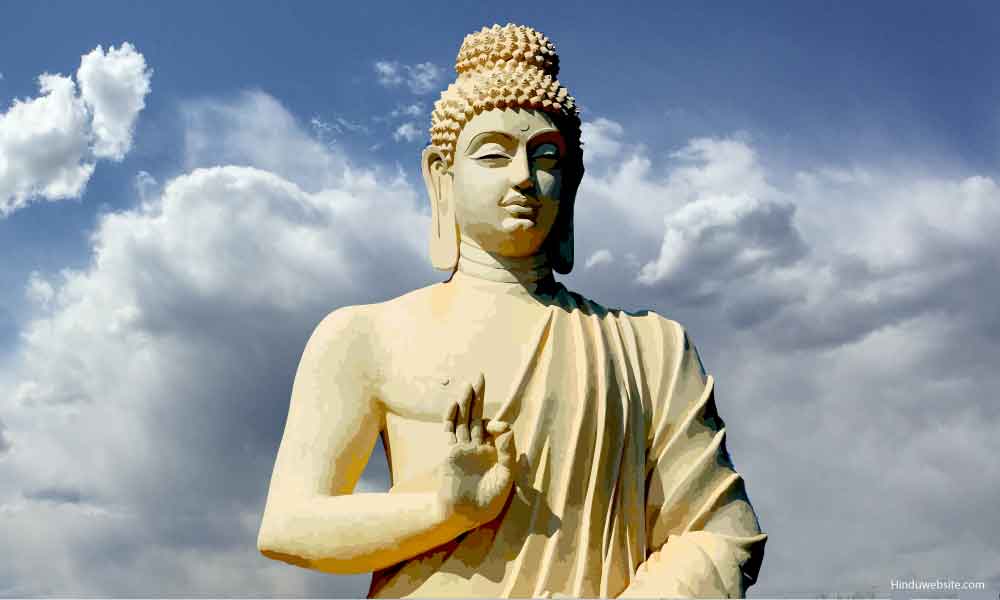
A brief history of the Six Councils organized by the Buddhist monks at various times in the long history of Buddhism to preserve and codify the teachings of the Buddha and the Buddhist texts.
The authentic teachings of the Buddha Gotama have been preserved and handed down to us and are to be found in the Tipitaka. The Pali word, 'Tipitaka', literally means 'the three baskets' (ti- three + pitaka- basket). All of the Buddha's teachings were divided into three parts. The first part is known as the Suttanta Pitaka and it contains the Discourses. The second part is called the Vinaya Pitaka and it contains all the rules the Buddha laid down for monks and nuns. The third part is known as the Abhidhamma Pitaka and comprises the Buddha's teachings on his psycho-ethical philosophy. It is known, that whenever the Buddha gave a discourse to his ordained disciples or lay-followers or prescribed a monastic rule in the course of his forty-five year ministry, those of his devoted and learned monks, then present would immediately commit his teachings word for word to memory.
Thus the Buddha's words were preserved accurately and were in due course passed down orally from teacher to pupil. Some of the monks who had heard the Buddha preach, in person were Arahants, and so by definition, 'pure ones' free from passion, ill-will and delusion and therefore, without doubt capable of retaining, perfectly the Buddha's words. Thus they ensured that the Buddha's teachings would be preserved faithfully for posterity. Even those devoted monks who had not yet attained Arahantship but had reached the first three stages of sainthood and had powerful, retentive memories could also call to mind and word for word what the Buddha had preached and so could be worthy custodians of the Buddha's teachings.
One such monk was Ananda, the Buddha's cousin and chosen attendant and constant companion during the last twenty-five years of the Buddh's life. Ananda was highly intelligent and gifted with the ability to remember whatever he had heard spoken. Indeed, it was his express wish that the Buddha always relate all of his discourses to him and although he was not yet an Arahant, he deliberately committed to memory and word for word all the Buddha's sermons with which he exhorted monks, nuns and his lay followers. The combined efforts of these gifted and devoted monks made it possible for the Dhamma and Vinaya, as taught by the Buddha to be preserved in its original state.
The Pali Tipitaka and its allied literature exists as a result of the Buddha's discovery of the noble and liberating path of the pure Dhamma. This path enables all those who follow it to lead a peaceful and happy life. Indeed, in this day and age we are fortunate to have the authentic teachings of the Buddha preserved for future generations through the conscientious and concerted efforts of his ordained disciples down through the ages. The Buddha had said to his disciples that when he was no longer amongst them, that it was essential that the Sangha should come together for the purpose of collectively reciting the Dhamma, precisely as he had taught it. In compliance with this instruction the first Elders duly called a council and systematically ordered all the Buddha's discourses and monastic rules and then faithfully recited them word for word in concert.
The teachings contained in the Tipitaka are also known as the Doctrine of the Elders (Theravada). These discourses number several hundred and have always been recited word for word ever since the First Council was convened. Subsequently, more Councils have been called for a number of reasons but at every one of them the entire body of the Buddha's teaching has always been recited by the Sangha participants, in concert and word for word. The first council took place three months after the Buddha's death and attainment of Parinibbana and was followed by five more, two of which were convened in the nineteenth and twentieth centuries. These collective recitations which were performed by the monks at all these Buddhist Councils are known as the 'Dhamma Sangitis', the Dhamma Recitations. They are so designated because of the precedent set at the First Buddhist Council, when all the Teachings were recited first by an Elder of the Sangha and then chanted once again in chorus by all of the monks attending the assembly. The recitation was then judged to have been authentic, when and only when, it had been approved unanimously by the members of the Council. What follows is a brief history of the Six Councils.
THE FIRST COUNCIL
King Ajatasattu sponsored the First Council. It was convened in 544 B.C. in the Satiapanni Cave situated outside Rajagaha three months after the Buddha had passed away. A detailed account of this historic meeting can be found in the Cullavagga of the Vinaya Pitaka. According to this record the incident which prompted the Elder Mahakassapa to call this meeting was his hearing a disparaging remark about the strict rule of life for monks. This is what happened. The monk Subhadda, a former barber, who had ordained late in life, upon hearing that the Buddha had died, voiced his resentment at having to abide by all the rules for monks laid down by the Buddha. Many monks lamented the passing of the Buddha and were deeply grieved, however, the Elder Mahakassapa heard Subhadda say: "Enough your Reverences, do not grieve, do not lament. We are well rid of this great recluse (the Buddha). We were tormented when he said, 'this is allowable to you, this is not allowable to you' but now we will be able to do as we like and we will not have to do what we do not like.' Mahakassapa was alarmed by his remark and feared that the Dhamma and the Vinaya might be corrupted and not survive intact if other monks were to behave like Subbhada and interpret the Dhamma and the Vinaya rules as they pleased. To avoid this he decided that the Dhamma must be preserved and protected. To this end after gaining the Sangha's approval he called to council four hundred and ninety-nine Arahants and Ananda. With the Elder Mahakassapa presiding, the five-hundred monks met in council during the rainy season. The first thing Mahakassapa did was to question the foremost expert on the Vinaya of the day, the Venerable Upali on particulars of the monastic rule. This monk was well qualified for the task as the Buddha had taught him the whole of the Vinaya, himself. First of all the Elder Mahakassapa asked him specifically about the ruling on the first offence (parajika), with regard to the subject, the occasion, the individual introduced, the proclamation, the repetition of the proclamation, the offence and the case of non-offence. Upali gave knowledgeable and adequate answers and his remarks met with the unanimous approval of the presiding Sangha. Thus the Vinaya was formally approved.
The Elder Mahakassapa then turned his attention to Ananda in virtue of his reputable expertise in all matters connected with the Dhamma. Happily, the night before the Council was to meet, Ananda attained Arahantship. The Elder Mahakassapa, therefore, was able to question him at length with complete confidence about the Dhamma with specific reference to the Buddha's sermons. This interrogation on the Dhamma sought to verify the place where all the discourses were first preached and the person to whom they had been addressed. Ananda, aided by his word-perfect memory was able to answer accurately and so the Discourses met with the unanimous approval of the Sangha. The First Council also gave its official seal of approval for the closure of the chapter on the minor and lesser rules, and approval for their observance. It took the monks seven months to recite the whole of the Vinaya and the Dhamma and those monks sufficiently endowed with good memories retained all that had been recited. This historic first council came to be known as the Pancasatika because five-hundred fully enlightened Arahants had taken part in it.
THE SECOND COUNCIL
The Second Council was called one hundred years after the Buddha's Parinibbana in order to settle a serious dispute over the 'ten points'. This is a reference to some monks breaking of ten minor rules. They were given to:
- Storing salt in a horn.
- Eating after mid-day.
- To eating once and then going again to a village for alms.
- Holding the Uposatha Ceremony with monks dwelling in the same locality.
- Carrying out official acts when the assembly was incomplete.
- Following a certain practice because it was done by one's tutor or teacher.
- Eating sour milk after one had had his mid-day meal.
- Drinking strong drink before it had been fermented.
- Using a rug which was not the proper size.
- Using gold and silver.
Their misdeeds became an issue and caused a major controversy as breaking these rules was thought to contradict the Buddha's original teachings. King Kalasoka was the Second Council's patron and the meeting took place at Vesali due to the following circumstances. One day, whilst visiting the Mahavana Grove at Vesali, the Elder Yasa came to know that a large group of monks known as the Vajjians were infringing the rule which prohibited monk's accepting gold and silver by openly asking for it from their lay devotees. He immediately criticized their behaviour and their response was to offer him a share of their illegal gains in the hope that he would be won over. The Elder Yasa, however declined and scorned their behaviour. The monks immediately sued him with a formal action of reconciliation, accusing him of having blamed their lay devotees, the Elder Yasa accordingly reconciled himself with the lay devotees, but at the same time, convinced them that the Vajjian monks had done wrong by quoting the Buddha's pronouncement on the prohibition against accepting or soliciting for gold and silver. The laymen immediately expressed their support for the Elder Yasa and declared the Vajjian monks to be wrong-doers and heretics saying, "the Elder Yasa alone is the real monk and Sakyan son. All the others are not monks, not Sakyan sons."
The stubborn and unrepentant Vajjian monks then moved to suspend the Venerable Yasa Thera without the approval of the rest of the Sangha. When they came to know of the outcome of his meeting with their lay devotees. The Elder Yasa, however escaped their censure and went in search of support from monks elsewhere, who upheld his orthodox views on the Vinaya. Sixty forest dwelling monks from Pava and eighty monks from the southern regions of Avanti who were of the same mind, offered to help him to check the corruption of the Vinaya. Together they decided to go to Soreyya to consult the Venerable Revata as he was a highly revered monk and an expert in the Dhamma and the Vinaya. As soon as the Vajjian monks came to know this they also sought the Venerable Revata's support by offering him the four requisites which he promptly refused. These monks then sought to use the same means to win over the Venerable Revata's attendant, the Venerable Uttara. At first he too, rightly declined their offer but they craftily persuaded him to accept their offer saying, that when the requisites meant for the Buddha were not accepted by him, Ananda would be asked to accept them and would often agree to do so. Uttara changed his mind and accepted the requisites. Urged on by them he then agreed to go and persuade the Venerable Revata to declare that the Vajjian monks were indeed speakers of the Truth and upholders of the Dhamma. The Venerable Revata saw through their ruse and refused to support them. He then dismissed Uttara. In order to settle the matter once and for all, the Venerable Revata advised that a council should be called at Valikarama with himself asking questions on the ten offences of the most senior of the Elders of the day, the Thera Sabbakami. Once his opinion was given it was to be heard by a committee of eight monks, and its validity decided by their vote. The eight monks called to judge the matter were the Venerables, Sabbakami, Salha, Khujjasobhita and Vasabhagamika, from the East and four monks from the West, the Venerables, Revata, Sambhuta-Sanavasi, Yasa and Sumana. They thoroughly debated the matter with Revata as the questioner and Sabbakami answering his questions. After the debate was heard the eight monks decided against the Vajjian monks and their verdict was announced to the assembly. Afterwards seven-hundred monks recited the Dhamma and Vinaya and this recital came to be known as the Sattasati because seven-hundred monks had taken part in it. This historic council is also called, the Yasatthera Sangiti because of the major role the Elder Yasa played in it and his zeal for safeguarding the Vinaya. The Vajjian monks categorically refused to accept the Council's decision and in defiance called a council of there own which was called the Mahasangiti.
THE THIRD COUNCIL
The Third Council was held primarily in order to rid the Sangha of corruption and bogus monks who held heretical views. The Council was convened in 326 B.C. at Asokarama in Pataliputta. It was presided over by the Elder Moggaliputta Tissa and one thousand monks under the patronage of the Emperor Asoka. Tradition has it that he won his throne through shedding the blood of all his father's sons save his own brother, Tissa Kumara who eventually ordained and achieved Arahantship.
Asoka was crowned in the two hundred and eighteenth year after the Buddha's Parinibbana. At first he paid only token homage to the Dhamma and the Sangha and supported members of other religious sects as well as his father had done before him. However, all this changed when he met the pious novice-monk Nigrodha who preached to him the, Appamada-vagga. Thereafter, he ceased supporting other religious groups and his interest in and devotion to the Dhamma deepened. He used his enormous wealth to build, it is said, eighty-four thousand pagodas, temples and viharas and to support the Bhikkhus with the four requisites daily and lavishly. His son Mahinda and his daughter Sanghamitta were ordained and admitted to the Sangha. Eventually, his generosity was to cause serious problems within the Sangha. In time the order was infiltrated by many unworthy men, holding heretical views and who were attracted to the order because of the Emperor's generous support and costly offerings of food, clothing, shelter and medicine. Large numbers of faithless, greedy men espousing wrong views tried to join the order but were deemed unfit for ordination. Despite this they seized the chance to exploit the Emperor's generosity for their own ends and donned robes and joined the order without having been ordained properly. Consequently, respect for the Sangha diminished. When this came to light some of the genuine monks refused to hold the prescribed purification or Uposatha ceremony in the company of the corrupt, heretical monks.
When the Emperor heard about this he sought to rectify the situation and dispatched one of his ministers to the monks with the command that they perform the ceremony. However, the Emperor had given the minister no specific orders as to what means were to be used to carry out his command. The monks refused to obey and hold the ceremony in the company of their false and 'thieving', companions (theyyasinivasaka). In desperation the angry minister advanced down the line of seated monks and drawing his sword, beheaded all of them one after the other until he came to the King's brother, Tissa who had ordained. The horrified minister stopped the slaughter and fled the hall and reported back to the Emperor Asoka who was deeply grieved and upset by what had happened and blamed himself for the killings. He sought Thera Moggaliputta Tissa's counsel. He proposed that the heretical monks be expelled from the order and a third Council be convened immediately. So it was that in the seventeenth year of the Emperor's reign the Third Council was called. Thera Moggaliputta Tissa headed the proceedings and chose one thousand monks from the the sixty thousand participants for the traditional recitation of the Dhamma and the Vinaya, which went on for nine months. The Emperor, himself questioned monks from a number of monasteries about the teachings of the Buddha. Those who held wrong views were exposed and expelled from the Sangha, immediately. In this way the Bhikkhu Sangha was purged of heretics and bogus bhikkhus.
This council achieved a number of other important things as well. The Elder Moggaliputta Tissa in order to refute a number of heresies and ensure the Dhamma was kept pure, complied a book during the council called, the Kathavatthu. This book consists of twenty-three chapters, and is a collection of discussions (katha) and refutations of the heretical views held by various sects on matters philosophical. It is the fifth of the seven books of the Abhidhamma Pitaka. The members of this Council also gave a royal seal of approval to the doctrine of the Buddha, naming it the Vibhajjavada, the Doctrine of Analysis. It is identical with the approved Theravada doctrine. One of the most significant achievements of this Buddhist assembly and one which was to bear fruit for centuries to come, was the Emperor's sending forth of monks, well versed in the Buddha's Dhamma and Vinaya who could recite all of it by heart, to teach it in nine different countries. These Dhammaduta monks included the Venerable Majjhantika Thera who went to Kashmir and Gandhara. He was asked to preach the Dhamma and establish an order of monks there. The Venerable Mahadeva was sent to Mahinsakamandala (modern Mysore) and the Venerable Rakkhita Thera was dispatched to Vanavasi (northern Kanara in the south of India.) The Venerable Yonaka Dhammarakkhita Thera was sent to Upper Aparantaka (northern Gujarat, Kathiwara, Kutch and Sindh). The Venerable Maharakkhita Thera went to Yonaka-loka (the land of the lonians, Bactrians and the Greeks.) The Venerable Majjhima Thera went to Himavant (the place adjoining the Himalayas.) The Venerable Sona and the Venerable Uttara were sent to Suvannabhumi (now Myamar). The Venerable Mahinda Thera, The Venerable Ittiya Thera, the Venerable Uttiya Thera, the Venerable Sambala Thera and the Venerable Bhaddasala Thera were sent to Tambapanni ( now Sri Lanka). The Dhamma missions of these monks succeeded and bore great fruits in the course of time and went a long way in ennobling the peoples of these lands with the gift of the Dhamma and influencing their civilizations and cultures.
THE FOURTH COUNCIL
The Fourth Council was held in Tambapanni (Sri Lanka) in 29 B.C. under the patronage of King Vattagamani. The main reason for its convening was the realization that it was now not possible for the majority of monks to retain the entire Tipitaka in their memories as had been the case formerly for the Venerable Mahinda and those who followed him soon after. Therefore, as the art of writing had, by this time developed substantially it was thought expedient and necessary to have the entire body of the Buddha's teaching written down. King Vattagamani supported the monk's idea and a council was held specifically to reduce the Tipitaka in its entirety to writing. Therefore, so that the genuine Dhamma might be lastingly preserved, the Venerable Maharakkhita and five hundred monks recited the words of the Buddha and then wrote them down on palm leaves. This remarkable project took place in a cave called, the Aloka lena, situated in the cleft of an ancient landslip near what is now Matale. Thus the aim of the Council was achieved and the preservation in writing of the authentic Dhamma was ensured. In the Eighteenth Century, King Vijayarajasiha had images of the Buddha created in this cave.
THE FIFTH COUNCIL
The Fifth Council took place in Mandalay Burma now known as Myanmar in 1871 A.D. in the reign of King Mindon. The chief objective of this meeting was to recite all the teachings of the Buddha and examine them in minute detail to see if any of them had been altered, distorted or dropped. It was presided over by three Elders, the Venerable Mahathera Jagarabhivamsa, the Venerable Narindabhidhaja, and the Venerable Mahathera Sumangalasami in the company of some two thousand four hundred monks (2,400). Their joint Dhamma recitation lasted for five months. It was also the work of this council to cause the entire Tipitaka to be inscribed for posterity on seven hundred and twenty-nine marble slabs in the Myanmar script after its recitation had been completed and unanimously approved. This monumental task was done by some two thousand four hundred (2,400) erudite monks and many skilled craftsmen who upon completion of each slab had them housed in beautiful miniature 'pitaka' pagodas on a special site in the grounds of King Mindon's Kuthodaw Pagoda at the foot of Mandalay Hill where it and the so called 'largest book in the world', stands to this day.
THE SIXTH COUNCIL
The Sixth Council was called at Kaba Aye in Yangon, formerly Rangoon in 1954, eighty-three years after the fifth one was held in Mandalay. It was sponsored by the Burmese Government led by the then Prime Minister, the Honourable U Nu. He authorized the construction of the Maha Passana Guha, 'the great cave', an artificial cave very like India's Sattapanni Cave where the first Buddhist Council had been held. Upon its completion The Council met on the 17th of May, 1954. As in the case of the preceding councils, its aim first objective was to affirm and preserve the genuine Dhamma and Vinaya. However it was unique in so far as the monks who took part in it came from eight countries. These two thousand five hundred learned Theravada monks came from Myanmar, Cambodia, India, Laos, Nepal, Sri Lanka, Thailand and Vietnam. The late Venerable Mahasi Sayadaw was appointed the noble task of asking the required questions about the Dhamma of the Venerable Bhadanta Vicittasarabhivamsa who answered all of them learnedly and satisfactorily. By the time this council met all the participating countries had had the Pali Tipitaka rendered into their native scripts, with the exception of India.
The traditional recitation of the Buddhist Scriptures took two years and the Tipitaka and its allied literature in all the scripts were painstakingly examined and their differences noted down and the necessary corrections made and all the versions were then collated. Happily, it was found that there was not much difference in the content of any of the texts. Finally, after the Council had officially approved them, all of the books of the Tipitaka and their Commentaries were prepared for printing on modern presses and published in the Myanmar (Burmese) script. This notable achievement was made possible through the dedicated efforts of the two thousand five hundred monks and numerous lay people. Their work came to an end in May, 1956, two and a half millennia after the Lord Buddha's Parinibbana. This council's work was the unique achievement of representatives from the entire Buddhist world. The version of the Tipitaka which it undertook to produce has been recognized as being true to the pristine teachings of the Buddha Gotama and the most authoritative rendering of them to date.
May All Beings Be Happy!
Suggestions for Further Reading
- Buddhism - The Concept of Anatta or No Self
- Anatta or Anatma in Buddhism
- Anicca or Anitya in Buddhism
- The Buddha on God
- The Buddha on Avijja or Ignorance and on the Origin of Life
- The Eightfold Path Of Buddhism
- The Four Noble Truths of Buddhism
- Buddhism - Right Living On The Eightfold Path
- Handbook for the Relief of Suffering by Ajaan Lee
- Meat Eating or Vegetarianism in Buddhism
- The Agendas of Mindfulness
- Meditation on Anicca or Impermanence in Buddhism
- A Sketch of the Buddha's Life
- What is Ignorance And Cessation Of Ignorance
- The Meaning of the Buddha's Awakening
- Basic Breath Meditation Practice
- Buddha's Teachings on Kamma or Karma
- Affinities Of Buddhism And Christianity
- Death and Dying in Buddhism
- Buddhism In A Nutshell
- The Buddha on Ignorance or Avijja
- Dhamma for Everyone by Ajaan Lee Dhammadharo
- Advaita Vedanta and Buddhism
- Four Discourses of the Buddha on Everyman's Ethics
- The Five Aggregates A Study Guide
- The Healing Power of the Five Buddhist Percepts
- The Working of Maya or Illusion - A Buddhist Perspective
- Buddhism - Kamma (Karma) and its Fruit
- Buddhism - Kamma (Karma) A Study Guide
- Buddhism - Living the Dhamma A Practice Guide
- What Anatta or No-Self is All About
- Buddhism - The Middle Way
- The Buddhist Monastic Code, Dhamma-Vinaya
- Nibbana, or Nivranva in Buddhsim
- Why The Buddha Taught the Anatta or Not-Self Doctrine
- The Status of Women in Buddhist Societies
- Buddhism - The Practice of Loving-Kindness (Metta)
- Buddhism - Does Rebirth Make Sense
- Buddhism - Right Concentration
- Buddhism - Intentions and Nirvana
- The Round of Rebirth - Samsara
- The Role of Samavega in Buddhism
- The Chaos Theory and Nirvana in Buddhism
- A Christian's Journey Into Buddhism
- A Simple Guide to Buddhism
- Buddhist Cosmology - The Thirty one Realms of Existence
- Buddhism and the concept of renunciation
- Sankharas (Samskaras) in Buddhism
- Vedanta and Buddhism A Comparative Study
- Buddhism - Vipansana or Insight Meditation
- The Right Approach To End Suffering in Buddhismm
- Essays On Dharma
- Esoteric Mystic Hinduism
- Introduction to Hinduism
- Hindu Way of Life
- Essays On Karma
- Hindu Rites and Rituals
- The Origin of The Sanskrit Language
- Symbolism in Hinduism
- Essays on The Upanishads
- Concepts of Hinduism
- Essays on Atman
- Hindu Festivals
- Spiritual Practice
- Right Living
- Yoga of Sorrow
- Happiness
- Mental Health
- Concepts of Buddhism
- General Essays
Source: Venerable Dr. Rewata Dhamma: Born in Myanmar in 1929 he ordained at a local monastery as a novice at the age of twelve and showed himself to be an excellent scholar. Going on to study under several eminent learned monks, he obtained the highest degree in Pali at the age of 23 and was awarded the title of Sasanadhaja Siripavara Dhammacariya by the Myanmar President in 1953. Three years later he was awarded a state scholarship and left to study at the Sanskrit and Hindi universities in Varanasi (Benares) in India. In 1960 he obtained the Shastri (BA) in Mahayana Buddhism, in 1964 an MA in Sanskrit and Indian Philosophy and in 1967 a PhD. He was by then teaching in the universities and in 1967 was appointed chief editor of the Encyclopaedia of Buddhist Technical Terms. He also published several books in Pali and Hindi. His two volume commentary on the Abhidhammattha Sangaha was awarded the Kalidasa prize as one of the outstanding books of the year by the Hindi Academy in 1967. This is now used as a Buddhist textbook in many Indian universities. He forsook this career to come and work in Birmingham in 1975. Since then he has established an international reputation as a teacher of Buddhism and Vipassana meditation and has led retreats throughout Europe and the US as well as giving talks and lectures at such universities as Oxford, Cambridge, Manchester, Lancaster, Zurich, Harvard, Columbia, Berkeley, Macomb and Champagne. He has also now published a number of books in English. In addition he has become known for his promotion of peace and reconciliation and has been invited to address many conferences and symposia, notably in Asia.