
Dana - Charity and Generosity in Buddhism
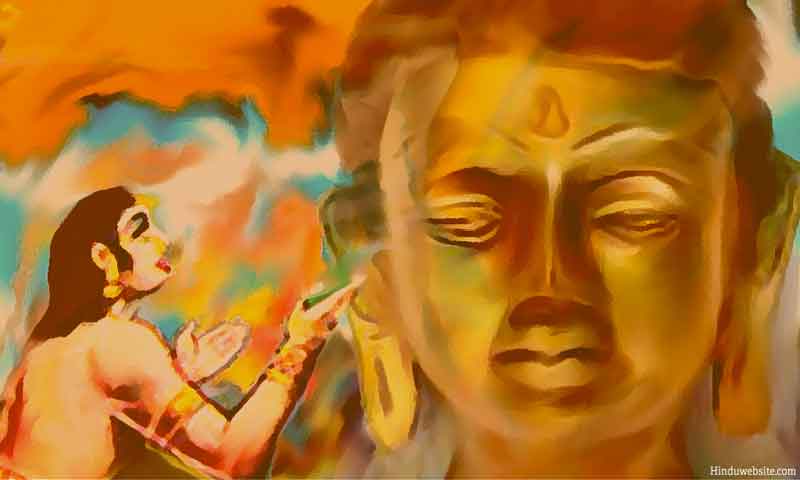
"And what is the treasure of generosity? There is the case of a disciple of the noble ones, his awareness cleansed of the stain of stinginess, living at home, freely generous, openhanded, delighting in being magnanimous, responsive to requests, delighting in the distribution of alms. This is called the treasure of generosity." — AN VII.6
A requisite for spiritual progress
"Without abandoning these five qualities, one is incapable of entering & remaining in the first jhana... the second jhana... the third jhana... the fourth jhana; incapable of realizing the fruit of stream-entry... the fruit of once-returning... the fruit of nonreturning... arahantship. Which five? Stinginess as to one's monastery [lodgings], stinginess as to one's family [of supporters], stinginess as to one's gains, stinginess as to one's status, and ingratitude. Without abandoning these five qualities, one is incapable of entering & remaining in the second jhana... the third jhana... the fourth jhana; one is incapable realizing the fruit of stream-entry... the fruit of once-returning... the fruit of nonreturning... arahantship.
"With the abandoning of these five qualities, one is capable of entering & remaining in the second jhana... the third jhana... the fourth jhana; capable of realizing the fruit of stream-entry... the fruit of once-returning... the fruit of nonreturning... arahantship..." — AN V.258-259
The rewards of giving
These are the five rewards of generosity: One is dear and appealing to people at large, one is admired by good people, one's good name is spread about, one does not stray from the rightful duties of the householder, and with the break-up of the body at death, one reappears in a good destination, in the heavenly worlds." — AN V.35
[The Buddha:] "Then there is the case where a certain person refrains from taking life, refrains from taking what is not given, refrains from sensual misconduct, refrains from false speech, refrains from divisive speech, refrains from abusive speech, refrains from idle chatter, is not covetous, bears no ill will, and has right views. And he gives food, drink, cloth, vehicles, garlands, scents, creams, bed, lodging, & lamps to priests & contemplatives. With the break-up of the body, after death, he reappears in the company of human beings. There he experiences the five strings of human sensuality [delightful sights, sounds, smells, tastes, tactile sensations]. It's because he refrained from taking what is not given, refrained from sensual misconduct, refrained from false speech, refrained from divisive speech, refrained from abusive speech, refrained from idle chatter, was not covetous, bore no ill will, and had right views that he reappears in the company of human beings. And it's because he gave food, drink, cloth, vehicles, garlands, scents, creams, bed, lodging, & lamps to priests & contemplatives that he experiences the five strings of human sensuality.
[Similarly for the case of rebirth in the company of devas] "...It's because he refrained from taking what is not given... and had right views that he reappears in the company of devas. And it's because he gave food, drink, cloth, vehicles, garlands, scents, creams, bed, lodging, & lamps to priests & contemplatives that he experiences the five strings of divine sensuality. But at any rate, brahman, the donor does not go without reward."
[The brahman Janussonin:] "It's amazing, Master Gotama, it's astounding, how it's enough to make one want to give a gift, enough to make one want to make an offering, where the donor does not go without reward."
"That's the way it is, brahman. That's the way it is. The donor does not go without reward." — AN X.177
Never underestimate the power of small gifts
"Even if a person throws the rinsings of a bowl or a cup into a village pool or pond, thinking, 'May whatever animals live here feed on this,' that would be a source of merit." — AN III.57
What isn't given is lost
So when the world is on fire
with aging and death,
one should salvage [one's wealth] by giving:
what's given is
well salvaged.
What's given bears fruit as pleasure.
What isn't
given does not:
thieves take it away, or kings;
it gets burnt
by fire or lost.
— SN I.41
Overcoming miserliness
Conquer anger
with lack of anger;
bad, with
good;
stinginess, with a gift;
a liar, with truth.
— Dhp
223
What the miser fears,
that keeps him from giving,
is the very danger that comes
when he doesn't give.
— SN I.32
No misers go
to the world of the devas.
Those
who don't praise giving
are fools.
The enlightened
express
their approval for giving
and so find ease
in the world beyond.
— Dhp 177
Giving even one's last meal
"If beings knew, as I know, the results of giving & sharing, they would not eat without having given, nor would the stain of miserliness overcome their minds. Even if it were their last bite, their last mouthful, they would not eat without having shared, if there were someone to receive their gift. But because beings do not know, as I know, the results of giving & sharing, they eat without having given. The stain of miserliness overcomes their minds." — Iti 26
Giving at the proper time
In the proper season they give —
those with discernment,
responsive, free from stinginess.
Having been given in proper
season,
with hearts inspired by the Noble Ones
— straightened,
Such —
their offering bears an abundance.
Those who rejoice
in that gift
or give assistance,
they, too, have a share of
the merit,
and the offering isn't depleted by that.
So, with
an unhesitant mind,
one should give where the gift bears great
fruit.
Merit is what establishes
living beings in the next
life.
— AN V.36
To reap the highest rewards, to whom should we give?
As he was sitting to one side, King Pasenadi Kosala said to the Blessed One: "Where, lord, should a gift be given?"
"Wherever the mind feels confidence, great king."
"But a gift given where, lord, bears great fruit?"
"This [question] is one thing, great king — 'Where should a gift be given?' — while this — 'A gift given where bears great fruit?' — is something else entirely. What is given to a virtuous person — rather than to an unvirtuous one — bears great fruit." — SN III.24
How a person of integrity gives a gift
"These five are a person of integrity's gifts. Which five? A person of integrity gives a gift with a sense of conviction. A person of integrity gives a gift attentively. A person of integrity gives a gift in season. A person of integrity gives a gift with an empathetic heart. A person of integrity gives a gift without adversely affecting himself or others. — AN V.148
Many fruits
[General Siha:] "Is it possible, lord, to point out a fruit of generosity visible in the here & now?"
[The Buddha:] "It is possible, Siha. One who gives, who is a master of giving, is dear & charming to people at large. And the fact that who gives, who is a master of giving, is dear & charming to people at large: this is a fruit of generosity visible in the here & now.
"Furthermore, good people, people of integrity, admire one who gives, who is a master of giving. And the fact that good people, people of integrity, admire one who gives, who is a master of giving: this, too, is a fruit of generosity visible in the here & now.
"Furthermore, the fine reputation of one who gives, who is a master of giving, is spread far & wide. And the fact that the fine reputation of one who gives, who is a master of giving, is spread far & wide: this, too, is a fruit of generosity visible in the here & now.
"Furthermore, when one who gives, who is a master of giving, approaches any assembly of people — noble warriors, brahmans, householders, or contemplatives — he/she does so confidently & without embarrassment. And the fact that when one who gives, who is a master of giving, approaches any assembly of people — noble warriors, brahmans, householders, or contemplatives — he/she does so confidently & without embarrassment: this, too, is a fruit of generosity visible in the here & now.
"Furthermore, at the break-up of the body, after death, one who gives, who is a master of giving, reappears in a good destination, the heavenly world. And the fact that at the break-up of the body, after death, one who gives, who is a master of giving, reappears in a good destination, the heavenly world: this is a fruit of generosity in the next life."
When this was said, General Siha said to the Blessed One: "As for the four fruits of generosity visible in the here & now that have been pointed out by the Blessed One, it's not the case that I go by conviction in the Blessed One with regard to them. I know them, too. I am one who gives, a master of giving, dear & charming to people at large. I am one who gives, a master of giving; good people, people of integrity, admire me. I am one who gives, a master of giving, and my fine reputation is spread far & wide: 'Siha is generous, a doer, a supporter of the Sangha.' I am one who gives, a master of giving, and when I approach any assembly of people — noble warriors, brahmans, householders, or contemplatives — I do so confidently & without embarrassment.
"But when the Blessed One says to me, 'At the break-up of the body, after death, one who gives, who is a master of giving, reappears in a good destination, the heavenly world,' that I do not know. That is where I go by conviction in the Blessed One."
"So it is, Siha. So it is. At the break-up of the body, after death, one who gives, who is a master of giving, reappears in a good destination, the heavenly world." — AN V.34
Many motives, many fruits
"Sariputta, there is the case where a person gives a gift seeking his own profit, with a mind attached [to the reward], seeking to store up for himself [with the thought], 'I'll enjoy this after death.' He gives his gift — food, drink, clothing, a vehicle; a garland, perfume, & ointment; bedding, shelter, & a lamp — to a priest or a contemplative. What do you think, Sariputta? Might a person give such a gift as this?"
"Yes, lord."
"Having given this gift seeking his own profit — with a mind attached [to the reward], seeking to store up for himself, [with the thought], 'I'll enjoy this after death' — on the break-up of the body, after death, reappears in the company of the Four Great Kings. Then, having exhausted that action, that power, that status, that sovereignty, he is a returner, coming back to this world.
"Then there is the case of a person who gives a gift not seeking his own profit, not with a mind attached [to the reward], not seeking to store up for himself, nor [with the thought], 'I'll enjoy this after death.' Instead, he gives a gift with the thought, 'Giving is good.' He gives his gift — food, drink, clothing, a vehicle; a garland, perfume, & ointment; bedding, shelter, & a lamp — to a priest or a contemplative. What do you think, Sariputta? Might a person give such a gift as this?"
"Yes, lord."
"Having given this gift with the thought, 'Giving is good,' on the break-up of the body, after death, reappears in the company of the Devas of the Thirty-three. Then, having exhausted that action, that power, that status, that sovereignty, he is a returner, coming back to this world.
"Or, instead of thinking, 'Giving is good,' he gives a gift with the thought, 'This was given in the past, done in the past, by my father & grandfather. It would not be right for me to let this old family custom be discontinued'... on the break-up of the body, after death, he reappears in the company of the Devas of the Hours. Then, having exhausted that action, that power, that status, that sovereignty, he is a returner, coming back to this world.
"Or, instead... he gives a gift with the thought, 'I am well-off. These are not well-off. It would not be right for me, being well-off, not to give a gift to those who are not well-off'... on the break-up of the body, after death, he reappears in the company of the Contented Devas. Then, having exhausted that action, that power, that status, that sovereignty, he is a returner, coming back to this world.
"Or, instead... he gives a gift with the thought, 'Just as there were the great sacrifices of the sages of the past — Atthaka, Vamaka, Vamadeva, Vessamitta, Yamataggi, Angirasa, Bharadvaja, Vasettha, Kassapa, & Bhagu — in the same way will this be my distribution of gifts'... on the break-up of the body, after death, he reappears in the company of the devas who delight in creation. Then, having exhausted that action, that power, that status, that sovereignty, he is a returner, coming back to this world.
"Or, instead... he gives a gift with the thought, 'When this gift of mine is given, it makes the mind serene. Gratification & joy arise'... on the break-up of the body, after death, he reappears in the company of the devas who have power over the creations of others. Then, having exhausted that action, that power, that status, that sovereignty, he is a returner, coming back to this world.
"Or, instead of thinking, 'When this gift of mine is given, it makes the mind serene. Gratification & joy arise,' he gives a gift with the thought, 'This is an ornament for the mind, a support for the mind.' He gives his gift — food, drink, clothing, a vehicle; a garland, perfume, & ointment; bedding, shelter, & a lamp — to a priest or a contemplative. What do you think, Sariputta? Might a person give such a gift as this?"
"Yes, lord."
"Having given this, not seeking his own profit, not with a mind attached [to the reward], not seeking to store up for himself, nor [with the thought], 'I'll enjoy this after death,'
" — nor with the thought, 'Giving is good,'
" — nor with the thought, 'This was given in the past, done in the past, by my father & grandfather. It would not be right for me to let this old family custom be discontinued,'
" — nor with the thought, 'I am well-off. These are not well-off. It would not be right for me, being well-off, not to give a gift to those who are not well-off,' nor with the thought, 'Just as there were the great sacrifices of the sages of the past — Atthaka, Vamaka, Vamadeva, Vessamitta, Yamataggi, Angirasa, Bharadvaja, Vasettha, Kassapa, & Bhagu — in the same way this will be my distribution of gifts,'
" — nor with the thought, 'When this gift of mine is given, it makes the mind serene. Gratification & joy arise,'
" — but with the thought, 'This is an ornament for the mind, a support for the mind' — on the break-up of the body, after death, he reappears in the company of Brahma's Retinue. Then, having exhausted that action, that power, that status, that sovereignty, he is a nonreturner. He does not come back to this world.
"This, Sariputta, is the cause, this is the reason, why a person gives a gift of a certain sort and it does not bear great fruit or great benefit, whereas another person gives a gift of the same sort and it bears great fruit and great benefit."
The greatest gift
A gift of Dhamma conquers all gifts
— Dhp 354
Suggestions for Further Reading
- Auspicious and Admirable Friendship, Kalyanamittata
- Practical advice for meditators
- Buddhism - Guidelines for Meditation
- Code of Conduct and Discipline For the Buddhist Monks
- Rules For Monks in Theravada Buddhism
- Bodhinyana A Collection of Dhamma Talks
- Buddhism - Meditation Upon the Body
- Principles of Lay Buddhism
- The Buddha's Method of Teaching
- About The Buddhist Meditation
- Dana - Charity and Generosity in Buddhism
- Dana, The Practice of Giving
- The Role of Meditation Pain, Illness and Death
- Dhamma Vinaya - Training Rules for the Monks
- Duties of the Buddhist Sangha
- Giving Gifts and Money to the Buddhist Monks
- The Buddha On How The World Will End
- An Anthology of The Teachings of Ajaan Lee Dhammadharo
- Ajan Suwat Suvaco on The Dhamma Practice
- Talks on the Dhamma Practice For the Buddhist Monks
- Food Rules For Buddhist Monks
- Training the Mind With Mindfulness
- Pabajja, Entering Into to Buddhist Monkhood
- Understanding Anicca, Dukkha, and Anatta
- Buddhism For Lay Buddhists
- Buddhism - Stages in the Practice of Dhamma
- Suda Sutta - Meditation and Cooking
- Anapana Sati, Meditation on Breathing
- Buddhist Meditation and Depth Psychology
- Forty Dhamma Talks on Meditation
- Buddhism: A Method of Mind Training
- Anapanasati Sutta Mindfulness of Breathing
- The Place of Vipassana Meditation in Buddhism
- Buddhism - The Power of Mindfulness
- A Modern Treatise on Buddhist Satipatthana Meditation
- A Teaching on Satipatthana Vipassana Meditation
- Talks for Beginning Meditators
- Buddhism - Talks on the Training of the Mind
- Essays On Dharma
- Esoteric Mystic Hinduism
- Introduction to Hinduism
- Hindu Way of Life
- Essays On Karma
- Hindu Rites and Rituals
- The Origin of The Sanskrit Language
- Symbolism in Hinduism
- Essays on The Upanishads
- Concepts of Hinduism
- Essays on Atman
- Hindu Festivals
- Spiritual Practice
- Right Living
- Yoga of Sorrow
- Happiness
- Mental Health
- Concepts of Buddhism
- General Essays
Source: Reproduced and reformatted from Access to Insight edition © 2005 For free distribution. This work may be republished, reformatted, reprinted, and redistributed in any medium. It is the author's wish, however, that any such republication and redistribution be made available to the public on a free and unrestricted basis and that translations and other derivative works be clearly marked as such.