
A Fistful of Sand - The Dhamma Practice
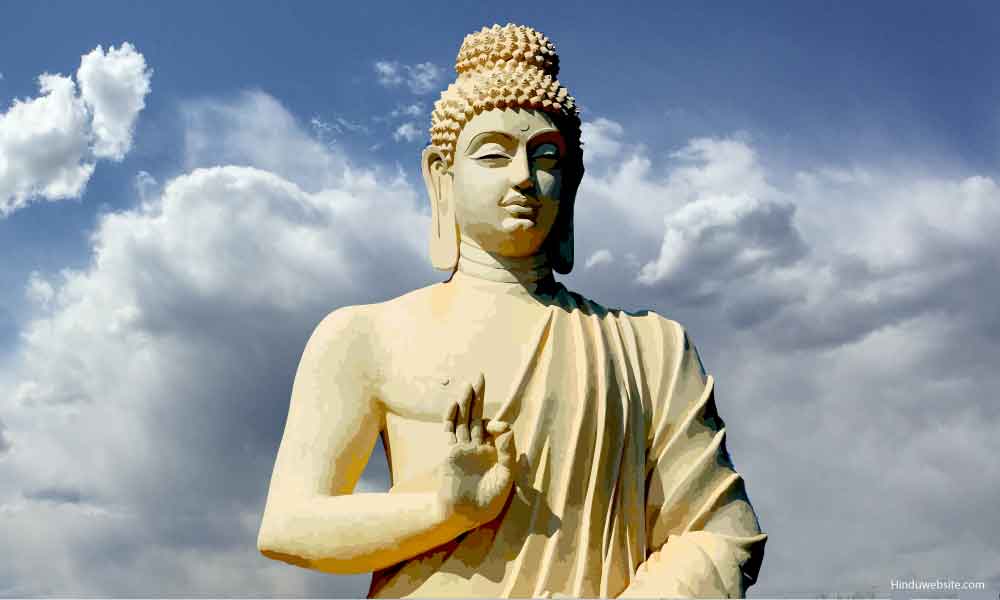
Translated from the Thai by Thanissaro Bhikkhu
Contents
![[go to top]](../../images/scrollup.gif)
- Introduction
- The Skillful Heart
- Questions & Answers (1)
- Questions & Answers (2)
- Inconstancy
- "This Body of Mine"
- Karma
- Questions & Answers (3): The Bhikkhuni Sangha
Introduction
In the summer of 1989, Larry Rosenberg — one of the guiding teachers at the Insight Meditation Society (IMS) in Barre, Massachusetts — invited Phra Ajaan Suwat Suvaco to lead a two-week retreat at IMS the following spring. Ajaan Suwat had been living in the United States for several years at that point, founding monasteries for the Thai communities in the Seattle and Los Angeles areas, but this was his first opportunity to teach large numbers of non-Asian Americans. The retreat was held in the first two weeks of May, 1990, with approximately 100 people attending. I was brought from Thailand to serve as interpreter.
The format of the retreat was simple. The retreatants did sitting and walking meditation from early morning to late at night. There had been a plan to encourage them to do walking meditation in the stately forest behind the center, but the weather was so chilly and rainy throughout the retreat that everyone was confined to the building. One pleasant exception was the evening of Visakha Puja — the holiday celebrating the Buddha's birth, Awakening, and final passing away. This occurred toward the beginning of the retreat, and provided an opportunity for the retreatants to perform a candlelit circumambulation of the IMS complex as a full moon rose in the clear, cold, twilit sky over the pines.
Throughout the retreat, Ajaan Suwat led small group interviews in the afternoon and then met with all the gathered retreatants in the evening, either to give a Dhamma talk or to answer questions. Larry, meanwhile, led individual interviews in the mornings and afternoons. Sadly, the taping of Ajaan Suwat's teachings was rather haphazard. None of the afternoon sessions were taped, and as for the evening sessions, there were days when both the Thai and the English were recorded; other days when only the English was; and other days, nothing. Thus our record of the retreat is fairly incomplete.
Still, what was recorded is extremely valuable, as this sort of opportunity — for a Thai ajaan to speak directly to Westerners in their own environment, and for them to ask him questions — is rare. A number of Ajaan Suwat's students have transcribed the Thai portion of the tapes, and this translation is taken from that transcription. I haven't gone back to listen to the English passages on the tapes — which are available for anyone who is interested — partly out of embarrassment at my own shortcomings as an interpreter, but also because I wanted to present the retreat as it sounded to Ajaan Suwat himself: what he heard in the questions as they were translated to him, and what points he was trying to get across.
A few of the teachings he gave during the retreat are etched indelibly in my memory and yet didn't make it onto the tapes, so I'd like to record them here. One was the comment he made to me after the second day of the retreat, on how grim the retreatants were in their approach to the meditation. He admired their dedication, but was worried that they weren't finding any joy in the practice. He attributed this to their coming directly to meditation without having first gained the sense of joyful confidence in the Buddha's teachings and in themselves that can come with a good foundation in generosity and morality. His attempts to lighten the mood of the retreat are obvious in his talks.
Two exchanges in the question and answer sessions also have remained vividly in my mind. One was from an afternoon session. A man new to the practice commented, "You guys would have a good religion here with this Buddhism if only you had a God. That way people would have some sense of support in their practice when things aren't going well." Ajaan Suwat responded, "If there were a God who could arrange that, by my taking a mouthful of food, all the beings in the world would become full, I'd bow down to that God. But I haven't yet found anyone like that."
The second exchange was during an evening session. A woman who had sat several retreats complained to the effect: "I'm finding myself frustrated in my practice of meditation. Now that I've gotten started, I can't turn back, and yet I don't seem to be getting anywhere." Ajaan Suwat's simple response: "Where are you trying to go?"
After a brief moment of silence, the woman laughed and said she was satisfied with the answer.
I hope that the talks and discussions translated here will provide satisfaction for you, the reader, as well.
— Thanissaro Bhikkhu
The Skillful Heart
We've all come here through a sense of conviction, intent on studying and practicing the Dhamma that will bring happiness and fulfillment to our hearts. We should understand that the Dhamma taught by the Lord Buddha doesn't lie anywhere far away. As the Canon says, skillful and unskillful dhammas arise right here in the heart. If we want to study the Dhamma, we have to study our own heart. When we're well acquainted with the heart, we'll be well acquainted with the Dhamma. When we're well acquainted with the Dhamma, we'll be well acquainted with the heart.
There are times when the heart is in bad shape. Bad mental qualities get mixed up with it, making it even worse, making us suffer both in body and mind. These bad mental qualities are said to be "unskillful" (akusala). The Buddha teaches us to study these qualities so that we can abandon them.
There are other times when the heart is in good shape: at ease with a sense of well being. We feel at ease whether we're sitting or lying down, whether we're alone or associating with our friends and relatives. When the heart gains a sense of ease in this way, it's said to be staying with the Dhamma. In other words, skillful (kusala) mental qualities have appeared in the heart. The skillful heart is what gives us happiness. This is why the Buddha taught us to develop these skillful qualities, to give rise to them within ourselves.
If you were to list these skillful qualities, there would be lots of them. But even though there are lots of them, they all arise in our one heart. So if we want to know and see the Dhamma, we have to develop mindfulness and alertness, keeping watch over our heart. If the heart isn't at peace, if it's distracted and turbulent, we should realize that, at that moment, the heart is out of shape. Unskillful qualities have arisen within it. So we should try to be mindful and alert to put it back into good shape. We have to keep watch over the heart to see whether, at this moment in time, it's in good or bad shape.
If we see that the heart isn't yet in satisfactory shape, we should let go of our unskillful preoccupations and make ourselves mindful of what's good. We want to be happy, so we don't want the things that will make us suffer. We should try to put the mind into good shape, convinced in the practice of the Dhamma that will develop our mindfulness. We have to look after the heart so that it's confident and content in our practice. We should remind ourselves that in following this practice we're following in line with the Buddha: one who knows, who sees, an arahant free from defilement, released from suffering in the cycle of death and rebirth. The fact that we're practicing in line with the Dhamma taught by the Buddha means that we're studying in an institution of highest learning, with the Buddha as our foremost teacher.
So be mindful to keep your heart in good shape. Be mindful of your meditation word, buddho. Or if you want, you can focus on the in-and-out breath. When the breath comes in, keep your mind at ease. When it goes out, keep your mind at ease. Don't be tense, don't force things, don't get caught up in any desire to know or see beyond reasonable bounds. If we give rise to this kind of desire, this kind of defilement, it'll distract the heart. So we should be careful to be mindful, to look after the mind, to meditate well. Simply be mindful of the breath. When the breath comes in, let it come in with ease. When it goes out, let it go out with ease. Let the mind be at ease, too. If anything comes along to disturb you, don't get involved with it. Just keep that sense of ease going. If your mindfulness can keep maintaining your sense of contentment, your sense of confidence in the practice, the mind will separate from its outside preoccupations and gather into a sense of stillness. There will be a sense of lightness. Comfort. A feeling of contentment with that comfort.
If it so happens that while we're trying to maintain that sense of ease in the heart, disturbances come in to interfere, making the mind distracted and restless, we should remember that we don't have to look for that lost sense of ease anywhere else. Remember: wherever there's restlessness is where there is stillness. We have to be alert to the preoccupations that have put the mind out of shape: we don't want them, so we shouldn't pay them any attention. We should try to remember the good preoccupations that have given us a sense of peace and calm in the past. When we can put the mind at ease in this way, the things disturbing that ease will disappear right there, right where the bad preoccupation was. This is like darkness: no matter how long the darkness has reigned, when we realize that it's darkness and that we want light, we don't have to look anywhere else. If we have a lantern, then as soon as we've lit it, light will appear right where there was darkness before. We don't have to look anywhere else. The darkness will disappear right there where there's light. In the same way, when the mind isn't at peace, we don't have to look for peace anywhere else. Restlessness comes from an unskillful preoccupation; peace comes from a skillful preoccupation right in the same place.
When we've developed a good preoccupation that puts the mind at peace, we should look after it and maintain it well. As long as this sort of preoccupation is in charge of the heart, the heart will maintain its sense of ease. So we don't have to look for goodness anywhere else, for that would simply distract and deceive the heart. We have to keep looking at our own heart, to see if it's in good shape yet or not. Everyone has a heart, and every heart has skillful and unskillful qualities. So use the quality of dhamma-vicaya, your powers of discriminating analysis, to observe the heart, this sense of awareness right here within yourself.
While you're sitting here listening, focus your attention exclusively on your own heart. The sound of the talk will come into the heart of its own accord. You don't have to focus your attention outside on the sound, or to analyze what's being said. Establish your mindfulness right at the heart. When the person speaking mentions this or that quality, the awareness of that quality will arise right in your own heart. If it doesn't arise immediately, then give rise to it. Say, for example, that the mind is in bad shape. When the person speaking mentions goodness, try to give rise to a good mood within the heart. Make yourself confident, content in the practice. Arouse your efforts to give rise to knowledge of things you've never before known, to attain things you've never before attained, to see the subtle things you've never before seen, step by step within your own mind.
During his lifetime, the Buddha taught the Dhamma fully knowing the capabilities of his listeners, aware of the level of their intelligence and potential, and of which aspect of the Dhamma they'd understand most easily. He then would teach them that Dhamma. As for his listeners, they would focus their attention on their own hearts and minds, and would understand in line with the practices they had done in the past. When the corresponding qualities appeared in their own hearts, they were able to know in line with the truth appearing within them. When the Dhamma appeared in their hearts, they experienced peace and calm, or gained an understanding into the truths that the Buddha taught. For example, when he taught about stress and suffering, his listeners focused on the stress and suffering in their own hearts. They tried to understand to the point where they saw that things couldn't be otherwise than what the Buddha taught. They really saw suffering and stress. When the Buddha taught that the flaw called the origination of stress should be abandoned, they saw the suffering that comes from craving. They saw how these things are always related. Whenever craving arises, suffering always follows in its wake.
As a result, they made an effort totally to abandon the origination of stress. The more they were able to abandon craving, the weaker their suffering grew. When they were able to cut craving totally away, suffering and stress totally disappeared. They then knew clearly in line with the truth. The state of their minds didn't deteriorate or fall away, because they had entered into the truth. They had listened to the Dhamma and focused on their own minds in the proper way, so that they could see the basic principles of the truth with their own mindfulness and discernment.
As for those whose mental faculties weren't yet fully strong, who had developed their faculties only to a moderate level, even though they didn't reach the Dhamma while they were sitting there listening to it, the Buddha taught the noble eightfold path for them to put into practice. This enabled them to gain knowledge and understanding step by step, to the point where their mindfulness and discernment were strong enough to bring them to the Dhamma at a later point, in line with the merit and potential they had developed on their own.
As for us: even though we may not reach the Dhamma while listening to it, the Buddha laid down the path to the cessation of stress for us to develop by putting it into practice. This path is nothing other than the noble path: right view, right resolve, right speech, right activity, right livelihood, right effort, right mindfulness, and right concentration. Having taught about the right path that we should develop, he also taught about the wrong path that should be avoided. In other words, he taught us:
to abandon wrong view and to develop right view;
to abandon wrong resolve and to develop right resolve;
to abandon wrong speech and to develop right speech;
to abandon wrong activity and to develop right activity;
to abandon wrong livelihood and to develop right livelihood;
to abandon wrong effort and to develop right effort;
to abandon wrong mindfulness and to develop right mindfulness;
to abandon wrong concentration and to develop right concentration.
For this reason, we should acquaint ourselves with both the right path and the wrong path. What sort of view ranks as the wrong view we should abandon? Wrong view starts with views about the body, or physical form in general. If we view physical form in line with what the Buddha taught — that rupam aniccam, physical form is inconstant; rupam dukkham, physical form is stressful; rupam anatta, physical form is not-self — that's called right view. But if we see physical form as constant — or try to make it constant — that's wrong view, and runs counter to the Buddha's teachings. In other words, if we see that rupam niccam, physical form is constant; rupam sukham, physical form — the body — is easeful; rupam atta, physical form is our self or really our own, that's wrong view.
If we really look at the body in line with its truth, we'll see that it really is inconstant. From the moment it's born we can easily see the changes it undergoes. It ages and wears down every day. This inconstancy is why we have to keep struggling under the desire to make it constant and lasting. The nature of the body is that it's always lacking one thing or another — like a water tank that's continually leaking: we have to keep adding water to it to keep it from running dry; if we forget to add water, it'll dry out for sure. In the same way, the body is genuinely inconstant, genuinely stressful. If it were constant, we wouldn't have to struggle, we wouldn't have to keep looking for things to keep it going; we wouldn't have to work. The reason we work for money is so that we can nourish this body, which is continually wasting away. The Buddha saw clearly that this work and struggle is stressful, that it's intimately tied up with the inconstancy of the body. Wherever there's inconstancy, there's stress. And because of that stressfulness, it's inconstant. These qualities are dependent on each other.
When we've contemplated so that we see this truth, then we see the Dhamma. We have right view. The more the mind understands stress and suffering, the more it can grow still and let down its burdens. Its greed will decrease. Its anger will decrease. Its delusion about physical form will decrease. Its burdens will decrease. This will make it brighter and more peaceful: a skillful mental state arising in such a way that we can see it clearly when we contemplate the events appearing in the mind in line with their truth.
When the Buddha explained right view, he started with stress and suffering: jatipi dukkha — birth is stressful; jarapi dukkha — aging is stressful; maranampi dukkham — death is stressful. These are truths found within each and every one of us — every person, every living being. Whether or not we study the matter, this is the way things are in actuality, ever since who knows when. For hundreds and thousands of years in the past, wherever there has been birth, there has had to be aging, illness, and death in its wake. The same thing is true in the present and even on into the future: every person who takes birth will have to meet with these things. This teaching is the genuine truth. It will never change into anything else. No matter how many hundreds or thousands of people will be born, they will all have to meet with illness, will all have to age, will all have to die, each and every one of them. Not one of them will remain. No matter what knowledge they attain, what weapons they invent, they won't be able to win out over this genuine truth. So once we've developed right view in this way, we have to eliminate our defilements — in other words, our intoxication with our youth, our intoxication with being free from disease, our intoxication with being alive. We'll then be able to behave in a way that will be to our own true benefit as long as we are still alive.
As we develop mindfulness in contemplating the body in and of itself, seeing its true nature and developing right view, our heart will get more and more convinced of this reality, and will grow farther and farther away from wrong view. We'll be able to develop right view more continually. This is the path that will lead us to attain the Dhamma, the ultimate peace.
As we develop right view, then right resolve will be no problem, because our resolve to meditate so as to develop right view is, in and of itself, right resolve: the resolve to see the Dhamma, to know the Dhamma, in line with the truth that appears in our own body, beginning with the truth of stress and suffering. Our body is composed of birth: As soon as there's birth, there has to be suffering. We suffer because of birth. Hunger, desire, intense heat and cold: all of these things come from birth. And no matter how carefully and adequately we look after the body, it has to keep on aging and wasting away. No matter how much we plead with it, it won't listen to us. It just keeps on aging. And on top of that, it has all kinds of diseases. If you really look at the body, you'll see that diseases can arise at any time at all. It's a home for diseases. It has eyes, and so there are eye diseases. It has ears, and so there are ear diseases. It has a nose, and so there are nose diseases. It has a tongue, and so there are tongue diseases. Diseases can arise in each and every one of its parts. This is a genuine truth — which is why there are doctors and hospitals in every country. All people of all races have to depend on medicine. Even the person telling you this has diseases, just like everyone else. When we look to really see the truth, we'll see that the Buddha's teachings aren't in the least bit mistaken: they're right here in each and every one of us.
If we develop our minds properly in line with the truth so that its views are right, our restlessness and distraction will grow calm. We'll see that the greed we've felt in the past has served no real purpose. When anger arises toward other people, we'll see that it serves no real purpose, that it's nothing but stress and suffering. We'll see that our only way out is to make the mind still: this is the way to true happiness. We'll gain disenchantment, seeing — given the true nature of things — that what we've busied ourselves with has served us no real purpose. It's tired us out to no real purpose, created difficulties to no real purpose, and has left us with nothing at all that we can truly call our own. Think about all the things you've sought and amassed from your birth up to the present moment: is there anything there that you can really depend on? Anything you can really call your own? Nothing at all. None of those things can really help you. They may help you a bit, but not enough to give you any real happiness.
So I ask that you all work at developing right view. Meditate on the four frames of reference (satipatthana) so as to develop discernment. As you meditate — sitting, standing, walking, and lying down — stay mindful of the body, which is filled with inconstancy. No matter where you look, it's inconstant. It's also full of stress. Wherever you look, you see that diseases and pains can arise at any time. It can age at any time. There's no part of it that's totally free of aches and pains. If you don't believe me, take a sharp spike and stab any part of the body, and you'll see that it hurts wherever you stab. You can see clearly in line with the truth that the whole body is stressful. As for buddho, the awareness in the mind, it'll be aware that what's really important is not the body: it's the mind. When you see the drawbacks and stresses of the body, then discernment, clarity, and calm will arise in the heart, freeing it from its burdens and karma debts related to the body. In this way we let go of our heavy burden: nicchato parinibbuto, free from hunger, unbound, reaching a bliss and peace that is lasting.
So I ask all of you — who have conviction, who want peace, who want happiness in your day-to-day life — to develop mindfulness, to develop right view. Look at the body in and of itself. The body in and of itself is mentioned in the Great Frames of Reference Discourse (Maha-satipatthana Sutta), but it's not in the words. It's not there in the book. It's right here. When we practice, we don't have to recite the words. We look right at our own body, at what's already here. Mindfulness is something we already have; all we need to do is apply it to the body. If we're not mindful of the body, then it's not right mindfulness. When we're mindful of the body, there's our mindfulness: the mindfulness that will enable us to practice, that will enable us to know. If we keep observing the body, we're sure to see what's here.
The more we observe, the more proficient we'll become. We'll understand clearly and correctly. The more clearly we see, the more effort — right effort — we'll put into knowing and seeing even more fully. Right mindfulness will be more continually mindful; and right concentration, more firmly established. Right speech and right activity will follow in their wake. So develop right view in your hearts by developing the frames of reference. Keep track of the body in and of itself, train in line with the truth, by day and by night, whether you're sitting, standing, walking, or lying down. When you practice correctly, no one with any true wisdom will be able to take issue with you, for you're focused on the genuine truth: the inconstancy, the stress and suffering, all four of the four noble truths that can be seen right here in this body. These things can't be seen anywhere else. If we really develop right view with regard to these things, results will arise within us. When results arise, the nature of the mind is that it will know on its own. It won't have to be told. All that's necessary is that you practice rightly. Begin trying from this moment on. Don't get distracted by this person saying that or that person saying this. There's nowhere else you have to look. The evidence is your own body. How inconstant it is, you'll know for yourself. It won't lie to you. How stressful it is — how many diseases, aches, and pains — you'll know for yourself. It won't lie to you. The truth is always there for you to see.
Practicing to see in line with the truth in this way is called seeing the Dhamma, the nature of reality in and of itself. We'll come to see the truth all the way through and gain release from suffering and stress. So keep at it. When you gain any understandings of any sort, we can discuss them as they arise, step by step, until you gain genuine release from suffering and stress. But this will be enough for now.
Questions & Answers (1)
Question:
I understand that Tibetan monks use visualization when they meditate. Have you ever used visualization in your meditation?
Ajaan Suwat:
Visualization of what?
Question:
I'm not really sure. Maybe of the unattractiveness of the body?
Ajaan Suwat:
Visualization, if it's done in the proper way, can be useful. If it's done in the wrong way, it can lead to delusion. The process of visualization, in the language of the Dhamma, is called sankhara, or fabrication. The Buddha taught us to be wise to the true nature of fabrication, that it's inconstant and undependable. When we know this truth, we don't get attached to the things that arise. When knowledge arises and we don't get attached to it, then we don't get deluded by it. That's when it can be useful.
One of the principles of the Dhamma is that if you visualize anything in your meditation, you should visualize only things lying within you, so that you see physical fabrication in the body and mental fabrication in the mind in line with their true nature. For example: at present you're not yet old, but you're taught to visualize yourself as growing old in the same way you've seen other people grow old. Remind yourself that as the years pass, you'll have to age in just the same way. Aging is stressful. Your eyes won't be able to see as clearly as when you were young. Your ears won't be able to hear in the same way as when you were young. It'll be painful to sit down, to stand, to walk. There will be all kinds of obstacles. So now, before you grow old, you should accelerate your efforts at developing goodness so that it will be a refuge for the heart when old age comes. In other words, accelerate your efforts at practicing the Dhamma and training the mind to find peace.
One of the Ten Recollections (anussati) taught by the Buddha is recollection of death: When you see other people dying, other animals dying, you should reflect on the fact that you will have to die just like everyone else. Repeat the word maranam, maranam (death, death) in the mind and look at yourself: you're going to have to die for sure. As you reflect maranam, maranam, it may happen that as your mind grows still, a vision of your own death will appear within you. If your mindfulness is good and you have your wits about you, then the more clearly you see death in this way, the more the mind will grow still with an even greater sense of well being. As you watch death clearly, seeing the body decay, concentration grows even stronger. If you visualize death so that you can see it clearly, you'll realize that there's nothing to be gained by growing attached to the body. When you see the truth in this way, you'll see that your past greed for things served no real purpose. The anger you've felt in the past: what purpose did it serve? You'll see that greed, anger, and delusion are stressful and serve no purpose — for ultimately, we'll have to let go of everything that comes along with them. You'll see that this sense of peace and ease in the mind is what serves a real purpose. When the mind is at peace in this way, it doesn't want anything else. All it wants is peace, and that's enough.
I'll tell you a story. It's time you listened to something light for a change, so that you won't be so tense and grim. It's important that you first let yourself relax. Once Ajaan Funn, my teacher, was wandering through the forest in Baan Phyy district, Udorn Thani province, and stopped to spend the night not far from a certain village. He saw that it was a congenial place and so stayed on there to practice meditation. A woman living in the village would often come in the morning to give him alms, and then again in the evening to hear his Dhamma talks. Ajaan Funn taught her to meditate, something she had never done before. It so happened that she was afraid of ghosts. Wherever she went, she was afraid of ghosts, and so she never went anywhere alone. Especially at night, she was really afraid. When Ajaan Funn taught her to meditate, she didn't want to, because she was afraid that she'd see a corpse or a ghost. On following days, Ajaan Funn asked her how her meditation was going, and she couldn't answer him because she hadn't meditated. After a while she began to feel embarrassed: "He keeps teaching me to meditate and yet all I do is hold onto my fear of ghosts." So she decided, "Whatever may happen, I'm going to meditate." So she started to meditate.
At first she simply focused on repeating the word buddho as she watched her breath come in and out. As her mind began to relax, it began to drift a bit and a vision arose: she saw a corpse lying stretched out in front of her. When she saw the corpse, she began to feel afraid. Then the corpse moved in so that it was lying on her lap. With the corpse on her lap, she couldn't get up to run away. And that's when she remembered her buddho. She wanted buddho to come and help her. So she kept thinking, buddho, buddho, more and more intensely. As she was doing this, one part of her mind was afraid, the other part kept recollecting buddho, buddho, until the corpse disappeared from her lap and turned into herself. That was when she had a vision of her chest bursting wide open. Her heart was bright, very bright. In the brightness of her heart she could see all kinds of things. She could see what other people were thinking, what animals were thinking. She knew all kinds of things and felt really amazed. From that point on her fear of ghosts disappeared. Her heart grew peaceful and at ease.
The next day she went to see Ajaan Funn. Ajaan Funn was sick with a fever, but he forced himself to get up to greet her and give her a Dhamma talk, as he had on previous days, just as if he wasn't sick at all. After the talk, she immediately said to him, "Than Ajaan, your heart isn't bright and blooming at all. It looks withered and dry. You must be very sick." Ajaan Funn was surprised: "How does she know the state of my mind?" But he had noticed that her manner was different from what it had been on previous days. She was very composed and polite. She had bowed down very politely, her words had been gentle and very respectful. When she commented on his heart that way, he wondered: "Does she really know the state of my mind?" So when she returned to the village, he forced himself to sit and meditate to the point where the fever broke and went away. His heart grew peaceful, bright, and at ease. The next day, when the time came that the woman would come, he decided to play sick in order to test her. When she arrived, he didn't get up to greet her and stayed lying down as if he was sick. After she bowed down, she sat to meditate for a moment, and then said, "Why, your lotus" — meaning his heart — "your lotus is really blooming!" That was when Ajaan Funn realized that she was really meditating well.
From that point on, she could come in the evening without the slightest fear of ghosts or spirits. And she continued to meditate well. Her mind never deteriorated. To tell the truth, she had never studied in school and didn't know much of the Dhamma, but because of her respect for Ajaan Funn, when he taught her to meditate she followed his instructions. Whether it was because of her past merit or what, I don't know, but she gained peace of mind, developed her discernment, and was able to know her own heart and the hearts of other people. So those of you who have come here to meditate: don't underestimate yourselves, thinking that you won't gain anything or come to any insights. Don't be so sure! If you keep up your efforts and practice correctly, it might very well happen that you'll gain insight. If things come together properly, the day will come when you know, when you see the Dhamma. It could very well happen.
So keep up your efforts. After the retreat is over, when you go back home, keep using your mindfulness to keep watch over yourself. In your comings and goings, keep training your mindfulness as you do while you're here, as a means of maintaining the state of your mind through practicing restraint of the senses. This will develop your mindfulness and give it power. That way, you'll find that things go more smoothly when the time comes to train the mind to be still.
Are there any other questions?
Question:
I'm finding that my mind is beginning to settle down somewhat in my meditation, and I'm surprised at the sense of comfort and ease that comes when it does settle down.
Ajaan Suwat:
A sense of ease arises when there's peace and calm. Stress and suffering arise when there's no peace and calm. These things always go together. You can observe in yourself that whenever the mind isn't at peace, when there's a lot of disturbance and turmoil, there's a lot of stress and suffering as well. When there's only a little disturbance, there's only a little stress and suffering. When there's a lot of peace, there's a lot of ease. If you're observant, you'll notice that wherever there's peace, there's also a sense of comfort and ease.
You can compare it to a nation at peace, with no war, no strife, no conflicts, no crime. That nation will have the sense of ease that comes with being at peace. If a family lives in harmony, with no quarreling, that family will have the sense of ease that comes with being at peace. If the body is free from disease, strong enough to be used for whatever work you want to do, it's called a body at peace, and has the sense of ease that comes with being at peace. If the mind isn't disturbed by the defilements that would put it into a turmoil, it's at peace in line with its nature. Even nibbana is peace — a peace that lasts and can never be disturbed. That's why nibbana is the ultimate ease.
Question:
When I meditate and see the changes in my body and mind, there seems to one part of the mind that's simply the observer, which doesn't change along with the things it watches. When I catch sight of this observer, this sense of awareness, what should I do next?
Ajaan Suwat:
One part of the mind is fabrication. As for this sense of awareness itself, this is very important. We should try to know fabrications in line with their true nature. These things are inconstant, and so we should know their inconstancy. These things change and grow. When they appear, we should know that they're appearing. When they disappear, we should know that they're disappearing. When we know the appearing and disappearing of fabrications, we'll realize: Before we didn't understand fabrications, which was why we felt desire for them. We thought they would make us happy. But fabrications are inconstant. They arise and change in this way and so serve no real purpose at all. We've struggled to acquire them for a long, long time, but have never gained enough happiness from them to satisfy our wants. But when we train the mind so that our sense of awareness knows in this way, we gain a sense of peace, happiness, satisfaction. This sense of happiness doesn't involve any struggle, doesn't depend on anyone else at all. When we experience this sense of peace and ease, we'll gain discernment and insight. We'll see the sense of peace and ease coming when our discernment is wise to the nature of fabrications and can cleanse the mind so that it feels no greed for fabrications. The mind then becomes clean and pure.
Question:
Is this sense of awareness the self? Here we're taught that there is no self, and so I'm confused.
Ajaan Suwat:
Don't be in a hurry to label this sense of awareness self or not-self. The discernment that makes us aware of every aspect of fabrication will tell us on its own in line with the truth. It's the same as when you fix food. As you're fixing it, don't ask what the taste is like or where it resides. At that moment you can't tell where the taste is. But once you've fixed it and eaten it, you'll know the taste and where it lies. In the same way, this issue of self and not-self is very refined. When you've practiced until you've reached that level, it'll be clear to you in the same way that the taste of food is clear to you when it touches your tongue. You know immediately, for the nature of these things is to know on their own.
Our job at present is to know the process of fabrication as it appears in the body and mind. We shouldn't let ourselves be deluded by the fabrications of the body. We should know their true nature. The same holds true with the mental fabrications, issues of good and bad, that affect the mind: we shouldn't be deluded by them, shouldn't fall for them. When we're wise to them and can't be fooled by them, we'll gain the discernment that puts an end to suffering and stress because we're no longer misled by what fabrication keeps telling us.
For instance, when the eye sees a beautiful form, a form that we've liked in the past, we tend to fall for it. We want it. This greed of ours creates a disturbance, defiles the mind all over again. When the ear hears a beautiful sound we've liked, that we've fallen for in the past, the process of fabrication will make us like it again. Greed arises, desire arises, the mind gets disturbed all over again. When a good smell comes into the nose, we fall for it. When the tongue touches a flavor we like, we fall for it again. When our mindfulness and alertness aren't up on what's happening, we like these things. We fall for them. We search for them. This is what gives rise to craving in the mind: the origination of suffering and stress. And so we suffer.
For this reason, our discernment has to be fully aware of this aspect of fabrication as well. Once discernment is trained, then when we see a form, hear a sound, smell an aroma, taste a flavor, we can recall that these things are fabrications. They're inconstant. When fabrication is inconstant, the pleasure that comes from fabrication is undependable. We shouldn't get carried away by the pleasures that come from those fabrications. Otherwise, when they change, we'll keep experiencing pain again and again until those fabrications have disappeared. When they disappear, we struggle to gain them again, come into conflict with other people again, fall out with them, quarrel with them, develop animosities, develop bad kamma with them — all because we've fallen for fabrications. So we have to reflect on the fact that fabrications are inconstant. We shouldn't latch onto them, grow attached to them, or fall for them so much.
Question:
Just now while I was meditating I had this feeling that the body was simply sitting there on its own, breathing all on its own, and the mind seemed to be something separate. It separated out for a moment, and then came back into the body. When the mind separates out in this way, is it the first step in contemplating the body?
Ajaan Suwat:
There wasn't any pain, was there?
Question:
No, no pain at all. It was as if the body didn't have to rely on the mind. It kept breathing on its own, while the mind was something separate.
Ajaan Suwat:
That's because your mindfulness was good. You weren't holding onto the body. You were able to let go, so that feelings weren't making contact with the mind. This is the way it always is with a quiet mind. A quiet mind like this is a really good thing to have. This is why monks out meditating in the forest, when they grow sick, don't suffer, and can instead find a great deal of bliss. They take their illness as a means of developing mindfulness, reminding themselves that it's not-self, and so they shouldn't latch onto it. The mind is the mind; the feeling is not-self. When you repeat the notion, not-self, not-self, and then investigate the feeling, taking it apart, you can keep investigating until the mind grows quiet and at ease, with no suffering at all. The body grows light. The mind grows light, with a great deal of happiness. You begin to marvel and gain conviction in the practice, because you've seen a happiness that has arisen from within your very own heart. Suffering stops, even though the body may still be sick.
So we should keep making an effort at training the mind, using various techniques to look after it so that it'll settle down and be still. That way we'll gain the strength that will help us when pain and discomfort arise in the heart. We'll have our hideout — for when we stay with this sense of stillness, we'll have an excellent hideout from danger.
When meditators go wandering through the forest, their teachers usually have them stay in places that are scary. If there's a place where tigers are known to frequent, the teachers will have their students go stay there. There are cases where meditators have gained mindfulness, gained concentration, gained rapture and ease, all from their fear of being eaten by tigers. But you have to be brave. Even though you may be afraid, you have to be brave at the same time. If you're simply afraid and run away instead of meditating, it won't accomplish anything. There are quite a few meditation masters who, when they heard tigers closing in on them at night, grew so afraid that they couldn't bear it. There was no way for them to escape, because it was nighttime, and they were staying in a place where...
(End of tape)
Questions & Answers (2)
... In the frames of reference that we're practicing, we're taught to reflect on the food we eat, the other necessities of life we use, to see that they're simply things for us to depend on for a short while. Don't grow attached to them. You can choose the things you buy and store up for your use, but the mind should keep reflecting that they fall under the Three Characteristics. They're uncertain. When we want to use these things for our benefit, we should look after them, but we shouldn't let ourselves suffer when they deteriorate and change.
Question:
Sometimes, when I'm meditating to relax and settle the mind, the desire for results gets in the way. What should I do to keep my intention pure so that desire doesn't become an obstacle?
Ajaan Suwat:
This desire is a form of craving. It really is an obstacle. Craving is something the Buddha taught us to abandon. If the desire serves a purpose, you should go ahead and desire. But if it doesn't, you should focus on what will get results. In other words, you should act without desire. Even when there's no desire, you can still act. You want to gain awareness, of course, so the task in front of you is to focus your awareness on a single object. When your meditation object appears to your awareness, you should focus on staying there with it in a single spot. As you stay there longer and longer, the mind will grow still and refined, all on its own. That's because stillness comes from being mindful — simply from being mindful without lapses of forgetfulness — and not from desire.
Tell yourself: this is a task you have to do with mindfulness, discernment, and correct awareness. You don't have to depend on desire. When you do the work correctly, the results will come on their own.
Question:
When doubts arise in the mind, are they of any help in the practice?
Ajaan Suwat:
As long as the level of discernment called ñana-dassana — knowledge and vision — hasn't yet arisen within us, all of us are bound to have doubts. But if we simply sit there doubting, it doesn't serve any purpose. When doubts arise, we should study and practice so as to give rise to knowledge. If we can't give rise to knowledge on our own, we should go ask those who know, teachers with correct knowledge. If we practice correctly, the things we wonder about will appear, and that will be the end of our doubts. For instance, the questions you're asking are all an affair of doubt. When you get a correct answer, you gain knowledge that helps unravel your doubts — and in this way doubts serve a purpose, in that getting answers to your questions can resolve your doubts on some levels.
Question:
Suppose that the Thai government tried to change the religion in the country and began to oppress Buddhist monks or to drive them out of the country. Would the monks resist — should they resist — if the government were to oppress the monks in Thailand?
Ajaan Suwat:
One of the basic principles laid down by the Buddha is that monks shouldn't get involved in politics. They should focus instead on the practice, exercising restraint over their words and actions so as to stay within the correct bounds of the Dhamma and the precepts. As long as the monks practice properly, there are people who will be inspired by them and who will respect them. The people who respect them would resist of their own free will — the monks wouldn't have to resist.
Even if people with no religion were to take over the government or were to gain the power to oppress the monks and people at large, they'd be able to hold power only temporarily — because the type of power that knows no religion or morality, that would govern in an unfair way, can't really maintain peace and order in a country. There are ideologies that, when they take over the government, give no freedom to the people, don't allow them to practice religion or to hold other beliefs. And as we've seen, they can stay in power only temporarily. As time passes, the people get rid of them, push them out. We can see this clearly at present: in almost every country where unfair ideologies are in power, people are demanding the freedoms that we have here in America, where the government gives weight to human rights and where the people are pleased with this system.
Suppose that some groups were to try to change this system. The vast majority of the people wouldn't go along with them for sure. In the same way, ninety percent of the people in Thailand are Buddhist. If the government showed no respect for Buddhism, the people wouldn't go along with it for sure. There have been times in the past when the government thought somewhat along those lines, but they never succeeded, because the majority of the people didn't go along with them. The current king is widely loved and respected because of his reputation for developing the country and helping the people in the proper way. He holds fast to Buddhist principles, both in his own personal behavior and in his dealings with the people. For this reason, the power of the Buddha's teachings is still deeply embedded in the hearts of the Thai people. They are deeply appreciative of the fact that the king respects the Buddha's teachings and practices in line with them, strictly observing the precepts and staying firmly established in the practice of meditation.
Question:
In light of the precept against killing, what does Buddhism have to say about having armed forces to protect the nation?
Ajaan Suwat:
This sort of thing is an affair of the world. There have been armed forces since time immemorial. When the Buddha was alive, there were battles, police forces, armies, governments, just like today. The Buddha taught only the people who were able to practice his teachings. Armed forces and so forth are a necessary part of having a society, which is why we don't get involved in them.
Question:
Under the first precept, if someone comes to kill us or to kill members of our family, do we have the right to fight back?
Ajaan Suwat:
In cases like that you have the right to use your intelligence, to figure out what will work so that you and your family will escape from danger, and then you can fight in self-defense. But if you're ordained as a monk, you try to avoid fighting in that way. The Buddha saw the danger that lies in harming and killing one another, and so he laid down the principles that will prevent these things from happening in the first place — in other words, by observing the five precepts. When we don't harm other people, don't kill them, the good kamma coming from that will give results: i.e., other people won't harm or kill us, either.
This is why the Buddha started out teaching these basic principles — the five precepts — to lay people, so as to release them from this sort of thing.
Question:
When we see injustice in our country — as in the problem of the homeless that we see all around us in America — do we have the duty to fight that injustice?
Ajaan Suwat:
One of the basic principles of the Buddha's teachings is attahi attano natho — you should make yourself your own mainstay. The Buddha taught people to help themselves. When you're born as a human being, you can't abandon your duties. You have to make an effort. Our parents all raised us so that we know how to take care of ourselves, so that we'll understand the drawbacks of laziness, of not going to school; they taught us to study so as to gain knowledge and then find work to do so that we can depend on ourselves and not go looking for help from others.
Question:
But when we see their suffering, when we see the injustices they're subjected to, don't we have to help them?
Ajaan Suwat:
The injustice is when we expect to depend on other people to do our work for us.
Question:
But these homeless people are poor because they've been treated unjustly by society.
Ajaan Suwat:
This is a very subtle matter, dealing with the question of where we should look to for justice. If we're able to work, so that we have a place to live and food to eat, what more should we expect from other people? If everyone were to observe the five precepts, there would be no injustice.
Question:
Suppose that in Thailand the government didn't oppress monks, but cruelly oppressed the general populace instead. If the monks were to see the sufferings of the people, would they have any duty to help them?
Ajaan Suwat:
The issues of the monks' life are very subtle. The Buddha laid down rules forbidding us from even talking about these things, so I'd rather not go into these matters in detail. My main concern is what I can do so that you can depend on yourselves to attain peace and happiness of mind. That's what concerns me: how each of us can learn how to depend on ourselves, so that our minds are solid and don't waver in line with events, so that we can look after ourselves in a way that allows us to escape the dangers of the sufferings arising within us. Every person has suffering, and every person is only one person. There's nobody who's two. If each of us looks after our one person, without oppressing anyone or harming anyone, there would be no problems. The problem is that we don't look after ourselves, and expect help to come from outside. That means that we abandon our responsibilities, and that's why there's injustice in the world — oppression, corruption, inequality. If every person were to listen to the Buddha's teachings and be responsible for him or herself, we'd see that everyone else is just like us. If we curse them, they'll curse us back. If we show them respect, they'll show us respect in return. This is why we shouldn't oppress them or harm them. We should treat them with justice, because if there are things that we don't like having done to us and yet we go do them to other people, it creates dangers for ourselves. When we can see these dangers, we should look after our own behavior. Then these dangers won't exist. This is the basic principle at which the Buddha's teachings aim. And this is why monks are not involved with worldly affairs. We have to study this principle until we understand it, and that way there will be no oppression.
Question:
I have two questions about rebirth. The first is: what is it that gets reborn?
Ajaan Suwat:
When you were born, do you know what it was that got born?
Question:
No.
Ajaan Suwat:
If you don't know, how is it that you were still able to be born? What led you to be born?
(A moment of dead silence)
Question:
My second question has to do with channeling spirits. There seem to be a lot of people in America who are interested in contacting spirits, to the point where books have been written, giving advice on how to get in touch with spirits in this way. What does Buddhism have to say about this?
Ajaan Suwat:
Buddhism for the most part teaches us to be mindful so as to get in touch with ourselves. This is because the unawareness (avijja) that gives rise to fabrication and suffering is an unawareness concerning our own minds, and it lies within our own minds, too. So Buddhism teaches us to learn about our own minds, and not to get involved with spirits or people who channel spirits, because that sort of thing doesn't serve any purpose, can't help us give rise to the awareness that will put an end to our defilements.
Question:
When I leave meditation and go walking outside or have work to do, I sometimes have to use a lot of thought. How can I be mindful and think at the same time? Where should I focus mindfulness? What techniques do you recommend?
Ajaan Suwat:
When we begin meditating we want mindfulness so that it'll keep our body and mind still and at peace, but the body has to keep changing positions — sitting, walking, lying down. The way to practice, given in the Maha-satipatthana Sutta, is that when we sit, we're alert to how we're sitting. When we walk, we're alert to the fact that we're walking, and we walk in a composed way. Don't let the mind be mindful of anything outside its proper bounds. Keep it within bounds, i.e., within the body. Be alert to the way you step, place your foot, all your various movements. If you can stay aware of these things, you're on the right path. Or if you don't focus on the body, focus on the mind. Be alert to whatever mood or preoccupation is arising in the present. Love? Hatred? Is it focused on visual objects? Tastes? The past? The future? Then notice which preoccupations serve no purpose, and tell yourself not to focus on things that serve no purpose. Focus only on things that do serve a purpose. When the mind settles down, be alert to the fact. Give yourself a sense of pleasure, satisfaction, and peace in the present. When you do this, you're practicing in line with the Maha-satipatthana Sutta as a way of training your mind to gain concentration. Then when you sit in meditation, focus the mind on more refined levels of stillness — for the sitting posture allows you to be less concerned about keeping the body in position. When you're standing or walking, you have to pay more attention to maintaining your posture.
I've had some practice in developing good will and loving-kindness, but I don't know how to develop sympathetic joy. Do you have any suggestions?
Ajaan Suwat:
Sympathetic joy is a feeling of happiness at the good fortune of others. When other people are happy or gain wealth, we wish them well. We aren't jealous or envious of them. This is a quality we develop to get rid of the defilement of envy. When other people gain good fortune, we practice feeling happy for them. If we suffer from the defilement of envy, we can't stand to see other people doing well in life. We get jealous because we feel we're better than they are. This is why the Buddha taught us to develop sympathetic joy.
Question:
Is there any technique for developing sympathetic joy?
Ajaan Suwat:
The technique is to spread this thought to people in general: "If anyone is suffering, may they experience happiness. As for people experiencing happiness, may they maintain that happiness. May they not be deprived of the good fortune they've gained, the wealth they've gained, the status they've gained, the praise they've gained, the happiness they've gained. May their happiness increase." We're not jealous of their happiness and we don't try to compete with them in underhanded ways. The Buddha's purpose in teaching sympathetic joy is so that our minds won't be consumed with envy over other people's good fortune. When we feel no envy toward others and can train our hearts to reach stillness using this theme as our preoccupation, then we've completed our training in sympathetic joy. The phrase we repeat when we chant every day — "May all living beings not be deprived of the good fortune they have attained" — that's sympathetic joy.
Question:
When I meditate on my breath, I notice that at the end of the in-breath there's a brief rest. The same thing happens at the end of the out-breath. As time passes, this momentary rest grows longer and longer, and is very comfortable. Is this the right way to practice?
Ajaan Suwat:
When we're mindful, we get to see things we've never seen before, we experience things we've never experienced before, in a way that we'll never forget. A mind that has never experienced peace and stillness will come to experience peace and stillness. A mind that's never been aware will come to be aware. This is part of correctly following the right path: you begin by getting the mind to enter a subtle level of concentration. You should continue what you're doing, but don't get complacent. If your concentration isn't yet solid, it can deteriorate. So you should tend to the mind that's at stillness and keep it there. Remember how you got it there. Keep practicing continually, and you'll find that there are even more refined levels of the still mind. There are levels even more refined and pleasurable than this. So don't content yourself with stopping just there. See if you can make the stillness and sense of comfort even more refined.
It's like walking up the stairs to your house. The stairs have five steps: the five levels of jhana. The first time the mind reaches a subtle level of stillness is the first step. When you haven't yet started climbing the stairs, you should content yourself with getting to the first step. But when you've reached the first step, you should content yourself simply with the fact that you've gotten up off the ground and stop right there — for the first step isn't your house. So you should remind yourself of the fact that it's not your house, you haven't yet reached shelter, and then look for the second step. When you've reached the second step, you should remind yourself that you still haven't reached shelter, so you have to take the next step.
In the same way, when you've reached a subtle level of stillness and experienced just this level of pleasure and ease, you should ponder this ease to see that it's not yet constant. It can still change. There are still higher levels of ease. Today you've gotten this far; the next step will be to keep moving up until you reach genuine ease.
What I've explained so far should be enough for today. Talking a lot can get you confused, for you're still new to this training. Your memory can handle only so much. Like students just beginning their studies: if they study a lot of advanced material and stuff it into their brains, it won't all stay there.
It's the same when we practice meditation. Your mindfulness and discernment can take only so much. Listen to just a little bit and then put it into practice, so as to strengthen your mindfulness and discernment, so as to strengthen your concentration. In that way you'll be able to take in more refined levels of Dhamma. At this stage I want you to stop listening and to go back to look at your mind: is it willing to accept the training? Is it able to follow it? Or is it still stubborn? If the mind isn't yet willing to accept and follow the training, reason with it until it is. Get the mind to reach what you've been hearing about, so that it sees the results clearly within itself. Your knowledge on this level isn't knowledge from the mind. It's knowledge from concepts. As for the mind, it hasn't yet taken these things in. If, when you meditate, you find that your mind is still restless and distracted, unwilling to do what you want it to do, that's a sign that it hasn't yet accepted the teachings. So you have to reason with it over and over again.
If, on the other hand, you can remember only one concept but can train the mind so that it can take in the truth of that concept, then learning about concepts serves a purpose. If the mind isn't willing to take in the truth of that concept, then knowing concepts doesn't serve any purpose.
So I'll ask to stop today's question-and-answer session here.
Inconstancy
Question:
I was wondering if you could explain inconstancy and the emptiness of the mind.
Ajaan Suwat:
Inconstancy is one of the three characteristics, a teaching on the level of insight and discernment.
The word inconstancy (anicca), for the most part, is used in connection with fabrications (sankhara): sankhara anicca — fabrications are inconstant. The word "fabrications" here carries a very broad meaning on the level of theoretical Dhamma, but in terms of the practice for giving rise to discernment, "fabrications" means the body and mind. So while you listen to this talk on inconstancy, focus your attention on your own body, for it's something easy to know and to see. Then I'll explain the changes and inconstancy in it.
What is the purpose of studying inconstancy? This is something we should look into. Studying inconstancy has many benefits. In particular, the Buddha taught us to be mindful of the body, mindful of the fact that once the body is born it has to keep changing day in and day out. The happiness and pleasures we get from the body on a daily basis are inconstant. If they were constant, we wouldn't have to look for happiness and pleasure anywhere else. But the fact is that the pleasure we have, as soon as we've experienced it for a while, gives out — regardless of what kind of pleasure it is. This is why the Buddha says it's inconstant: it requires us to stir ourselves to search, to store things up.
The things we stir ourselves to search for: if we gain things that are good, that we like, we get possessive. And when there are things we love and like, other people like them, too. Many people who see what we have will want it as well. This gives rise to competition, to cheating and swindling, as people try to get what they want. From this comes hatred, animosity, and vengeance. This shows the inconstancy within the body, the constant changes in the happiness we want. The mind suffers negative impacts from the pleasure and pain that are such a confusing turmoil within it.
When we realize this truth, the Buddha taught us to develop the discernment needed to comprehend it. And he laid down another principle: Natthi santi param sukham — there is no happiness higher than peace. The peace here is peace in the Dhamma, the peace that comes from practicing the Dhamma. He pointed out that peace is the highest happiness and showed us the path to that peace, which we're practicing right now: developing tranquillity and insight, exercising restraint over our words and deeds, and training our mind.
So we should turn in to look at ourselves. When we understand that the body and the pleasures we experience are inconstant, the mind state that used to feel attachment, that used to deceive itself into thinking that it was in possession of happiness... We try to change things so that our pleasure will be constant. We don't see the drawbacks of the suffering we've been through. Delusion and misunderstanding thus arise in the mind that hasn't seen the peace offering a happiness more subtle and refined than what we're generally used to. This is why we have to depend on the Dhamma, depend on our conviction in the Buddha. If we look at the fabrications that the Buddha said are inconstant and stressful, we'll see that what he said is really true. The pleasures we've experienced don't really suffice. We have to study, to look for knowledge, to find a refuge more dependable than what we've known. This is why we have to depend on the teachings of the Buddha. When we've heard them, we train our minds to be still, to let go. We have to give ourselves the opportunity to make our minds empty and still.
When we say the mind is empty, that means that it's disengaged. It's not restless and distracted. It doesn't have a lot of preoccupations. The same as when we do demanding work: if we keep at it a lot, the body gets tired. When it's tired, we disengage it from the work. We sit down or lie down to rest. When it has rested at normalcy, the tiredness goes away. We regain our strength. When we've regained our strength, we can resume our work. We see that working uses up energy. When our energy is used up, resting gathers energy. The resting is part of the pleasure and ease that comes when the body is "empty": in other words, disengaged from its work.
It's the same with the mind. We look for happiness all the time because we want precisely this sense of ease. When the mind isn't empty and disengaged, we keep looking. We should train the mind to be still. When the mind is still, here in this sense of awareness itself, it's empty and disengaged. It's not thinking about anything. It's empty through its stillness. But we can't keep it empty and still like this all the time. We still have our clinging-aggregates. We still have our eyes, and the mind wants to see things. We still have our ears, nose, tongue, and body. There are still sounds, smells, tastes, and tactile sensations. We still have feelings of pleasure and pain. These things are always disturbing us. So this is why the Buddha teaches us, once we've gotten the mind to settle down and be still, to contemplate the inconstancy of the body. That way we'll come to understand that the body is really inconstant and stressful. As long as we're still attached to the body as "me" or "mine," we'll have to suffer from aging, illness, and death at all times.
So we should let go of these things and hold onto the Dhamma, making the mind still. That way we'll give rise to stillness and ease. We'll see that the body is inconstant, aging and wasting away; that stress and suffering arise because of this inconstancy. Ultimately the whole body falls apart. When it falls apart, what is it like? It grows putrid and decays. It doesn't belong to anyone. This is why the Buddha taught us to yathabhutam sammappaññaya datthabbam: to see things as they are with right discernment, to let them go, to have no attachment to the aggregates, not to view them as self. When this is the case, the mind won't feel any greed, for it sees that greed serves no purpose. When we've seen this truth, the angers we've felt in the past will grow weaker. Knowledge will arise in the place of our past delusions. When the mind contemplates and develops discernment to the point where it's able once and for all to make itself pure, totally abandoning the defilements of greed, anger, and delusion — or passion, aversion, and delusion — then that's called a mind truly empty: empty of defilement, empty of greed, anger, and delusion, because it's no longer carrying anything around. If you carry things, they're heavy. They defile the mind. If you don't hold on and carry them, the mind is empty. Pure. It doesn't have to look for anything ever again.
This emptiness of the mind comes from our understanding inconstancy. So if you aspire to this emptiness, you should contemplate inconstancy to see it clearly, to make your discernment alert and wise to the truth. The mind — whose defilements depend on inconstant things to give rise to greed, anger, and delusion — won't be able to give rise to them any more, because it's grown disenchanted. It doesn't want them. It will grow empty and enter into stillness. The mind is empty because its defilements are gone.
To summarize: the three characteristics of inconstancy, stress, and not-self exist only in the mind with defilements. When the mind has the discernment to kill off the defilements for good, there's nothing inconstant, stressful, or not-self within it. That's why it's empty. As for our minds, at present they're not empty because they haven't been able to chase the defilements all out. Even though we're able to develop mindfulness and meditate to the point where we experience stillness and ease, that's only a little bit of temporary emptiness. As soon as mindfulness lapses, things come in to disturb us all over again. That's because we're not empty of defilement.
The ultimate defilement is unawareness. Every defilement, whether blatant, moderate, or subtle, has unawareness mixed in with it. This is why the Buddha taught us to train our minds to give rise to awareness, the opponent of unawareness. Whichever side is stronger will win out and hold power over the mind. If awareness wins out, the defilements have no place to stay. If unawareness wins out, there's no peace and ease. No purity. The mind isn't empty. Stress and suffering arise.
To know the unawareness already in the mind is awfully difficult. It's like using darkness to illuminate darkness: you can't see anything. Or like two blind people leading each other along: they'll have a hard time escaping from dangers and reaching their goal. This is why we have to depend on people with good eyes: in other words, mindfulness and discernment. These are the crucial factors that will lead us to the end of the path.
An example of how we can put mindfulness to use: suppose we aren't yet acquainted with anicca. We don't know where it is. When we hear that anicca refers to the inconstancy of the five aggregates, beginning with physical form, we apply mindfulness to keeping these things in mind, to see if they really are inconstant. Or suppose we feel that we gain pleasure from holding onto the body as our self; we keep on providing for it and fixing it, so that we don't see its stress and inconstancy. In this way we've gone astray from the Buddha's teachings. So we use mindfulness to keep the body in mind. For example, we're mindful of hair. Is our hair constant? Does it always stay the same, or not? Think of the first strand of hair that grew on your head. It was cut off long ago. The hair we have now is new hair. It keeps changing. The first strand of hair no longer serves us any purpose. We don't even know where it's gone. This is one way of contemplating inconstancy.
As for anatta, or not-self: The hair that, in the past, we thought was ours — where is it now? If we think in this way we'll come to understand the teaching on not-self. If we contemplate the things that the Buddha said are not-self, we'll see that what he said is absolutely true. We'll see the truth, and our own mind is what sees the truth in line with what the Buddha said: our body doesn't have any essence; it just keeps sloughing away. And as for what he said about the body's being unclean: when it dies, no one can dress it up to make it really clean. As soon as it falls down dead, everyone detests it. When we reflect more and more profoundly on this, the mind will come to accept that what the Buddha taught is the genuine truth. When the mind accepts this, its ignorance will gradually disappear. Discernment — knowledge in line with the Buddha's teachings — will gradually take shape in our minds.
So when the mind contemplates hair profoundly until it knows the truth and its ignorance disappears, knowledge — beginning with knowledge about the true nature of our hair — will arise. The unawareness with which we clung to the hair as us or ours, seeing it as beautiful, dressing it up with perfumes, making it lovely and attractive: we'll see that all that was an act of self-delusion. If the true nature of these things was really good, we wouldn't have to do any of that, for it would already be good. It's because it's not good that we have to make it good. That's one way in which our own views have deluded us. The Buddha told us to know the truth of this matter so that the mind will be able to let go. When the mind lets go, all its defilements lighten and disappear because our views are right. Defilements arise because of wrong views, because of ignorance or unawareness of the truth. Ignorance gives rise to delusion and mistaken assumptions, which turn into wrong views. This is why we have to make an effort to give rise to awareness.
For example: suppose we aren't aware that the hair, nails, teeth, skin, flesh, tendons, bones in our body are composed of the properties of earth, water, wind, and fire. Actually, this physical form of ours is nothing more than the four properties. The water property includes all the liquid parts of the body, such as bile, phlegm, lymph, mucus, urine, blood, fat, oil. The earth property includes all the hard and solid parts, such as hair of the head, hair of the body, nails, teeth, skin, flesh, tendons, bones, bone marrow, etc. The wind property includes the breath, the breath energy in the stomach, the energy that rises up in the body, the energy that goes down, the energy that flows all over the body. The fire property includes the warmth that keeps the body from decaying, the warmth that helps with the digestion, and the warmth that keeps the body alive at the right temperature. Altogether, the body is nothing but these four properties. When we don't realize this, that's called unawareness. We aren't acquainted with the body, the aggregates. When we learn about this, awareness can begin to arise.
This is why we're taught to contemplate the parts of the body: kesa, hair of the head; loma, hair of the body; nakha, nails; danta, teeth; taco, skin. New monks are taught these things from the very day of their ordination so that they can eliminate unawareness and give rise to awareness through the light of mindfulness and discernment. I ask that you develop a lot of mindfulness and discernment in this area so that your minds will reach the emptiness and freedom you want.
Discernment here means the awareness that comes from studying the five aggregates. No other knowledge can destroy this defilement of unawareness. So when you want to destroy the defilement of unawareness, you have to carefully study the five aggregates, beginning with the body, until you see the four noble truths right here in the five aggregates. Actually, the five aggregates are things whose true nature is well within our power to study and know. First there's the aggregate of form, or the physical body. Then there are the mental aggregates: feeling, perception, mental fabrications, and consciousness. These are things we can know. We have to study and practice so that we can know all four of these mental aggregates in line with their true nature. Each of these aggregates covers a lot of aspects. For instance, physical form: yankinci rupam atitanagata-paccuppannam ajjhattam va bahiddha va — there are all kinds of forms that can fool and delude us: internal and external; blatant and subtle; past, present, and future. But when insight arises in full strength, it'll show us the way to see without much difficulty. All that's needed is that you first start with the basic meditation themes, such as the hair of the head, and see them clearly in line with their nature. Then discernment will gradually arise.
Do you understand this? You can say that the Dhamma is subtle, but you can also say that it's right here within us, within our own bodies. All the things I've discussed here: when you haven't yet put them into practice but would like to see these truths, you shouldn't let mindfulness wander outside the body. Contemplate things in line with their true nature. Don't let prejudice get in the way. Remind yourself that this is the Dhamma.
That's enough explanation for now. When you study things but don't put them into practice, your knowledge doesn't get you anywhere. So now that you know the path, I'd like you to focus your intention on practicing a lot. I'll ask to stop here so that you can put your knowledge into practice and benefit from it.
May you all meet with well being.
"This Body of Mine"
When meditators' minds have reached genuine happiness in the Dhamma through their mindfulness and discernment, clearly seeing the four noble truths, none of them — not one — will revert to looking for happiness in the world or in material things. That's because happiness in the Dhamma is a lasting happiness: solid, refined, and genuinely pure. If you compare worldly happiness with the happiness of the Dhamma, you'll see that there's not even the least real happiness to it. It offers nothing but stress, nothing but drawbacks. So why do we think it's happiness? Because we're burning with pain. We look to worldly happiness and pleasures to relieve the pain, which then goes away for a while but then comes back again.
For instance, the Buddha said that birth is stress, but ordinary people regard it as something happy. We don't see that stress and pain involved. Yet once the mind has reached the happiness of the Dhamma, it can see that birth is really stressful, just as the Buddha said. The reason we have to look after ourselves, take care of ourselves, and still can't find any peace, is because these things that have been born come to disturb us. We sit down and get some pleasure and ease from sitting down, but after a while it becomes painful. We say that it's pleasant to lie down, but that's true only at the very beginning. After we've lain down for a long time, it begins to get unpleasant. So we have to keep changing postures in order to gain pleasure. We look for this thing or that, but as soon as we've gained just a little pleasure from them, stress and pain come in their wake. If we have a family and home to live pleasantly together, there are only little pleasures, which have us fooled and deceived, while there are hundreds and thousands of unpleasant things. The happiness and pleasure that come from external things, material things, is never enough. It keeps wearing away, wearing away, and wearing us out, to no purpose at all. This is why those who have reached the Dhamma don't return to this world so filled with sorrows and turmoil.
And this is why I want you to put an effort into meditating, contemplating in line with the Dhamma. Even if you aren't yet convinced of the Dhamma, at least take the teachings of the Buddha as your working principles. For example, when the Buddha teaches about the Three Characteristics of inconstancy, stress, and not-self, we should train our minds to see in line with what he said. Give him a try. For example, he says that this body of ours is filled with all sorts of unclean things. We may not agree, but at least give it a try to see what happens when you look at things in line with what he says. He says it's not clean. Atthi imasmim kaye — in this body there is: hair of the head, and it's not clean; hair of the body, and it's unclean; nails, and they're not clean. Don't be in a hurry to reject the Buddha's teachings. Take a look to see whether these things really are unclean or not. When the mind focuses on these things more and more steadily, and begins to feel quiet and at ease, the truth of these things will gradually appear more and more clearly. Conviction in the Dhamma, in the practice, will arise. Energy will arise as we want to see more. As this awareness grows greater, the mind will grow more luminous and still. This is the way of the practice. When you go back home, remember this simple principle: practice meditation by observing your body, observing your mind.
Use your mindfulness to keep track of the body in and of itself, so as to know it in line with its truth. If you don't look at the body, then look at the mind in and of itself. When you observe the movements of the body and mind, the pleasures and pains that arise so often, you'll develop awareness and skill. You'll learn how to handle things in line with the Buddha's teachings. You'll gain the discernment that sees and knows the truth. You'll see things more and more clearly. The more clearly you see things, the stronger and more quiet the mind will grow. You'll see the body as stressful and unclean, but you'll have to look after the mind, keeping yourself wise to the fact that the stress and uncleanliness are an affair of the body, not of the mind.
The body has been unclean all along. We've lived with it all this time, so there's no need to be afraid of seeing these things, no need to reject them. We should contemplate the body so as to give rise to a sense of chastened dispassion. When you let go of the body, let go in a discerning way. Don't let go in a way in which delusion and misunderstanding overcome the mind. Don't get disgusted with the body so that the mind becomes restless and agitated and stops meditating. That kind of dislike is wrong. When we look at things we don't like — such as the inconstancy, the stressfulness, and the unattractiveness of the body — remember that they're part of the noble truths. The Buddha said that they're very beneficial. Contemplating the unattractiveness of the body is very beneficial because it serves an important purpose. If we see the body properly in this way, it helps the mind grow still with a sense of disenchantment. And that's what will cure our delusions and misunderstandings. This is why, when ordaining a monk, the very first step is to teach him the five meditation themes — kesa, hair of the head; loma, hair of the body; nakha, nails; danta, teeth; taco, skin — as a way of developing discernment and knowledge of the truth.
So hold onto these themes and keep contemplating them, regardless of whether the mind is still or not. Whenever you have any free time, contemplate them. You can contemplate them even while you're working. Contemplate them until you get down to the minute details in a way that gives rise to a sense of stillness and ease.
It's similar to when we do physical work. We get wages for each hour we work. The more hours we work, the higher our pay. But if you get greedy and keep working without rest, then the body wears out, the mind grows weak, and you can't work any more. So you have to rest and eat to regain the strength of your body and nerves. Even though you don't get paid for the time you rest, you're willing to take the loss for the sake of your strength of body and mind, so that you can contend with the work after you've rested.
It's the same when you meditate: if you just keep contemplating and investigating, it won't be long before the mind gets restless and agitated. So you have to bring the mind to stillness to avoid its getting restless. If it gets restless, it'll have no peace. It'll get all tied up in knots and will grow weary of the meditation. So contemplate for a while until you can sense that the mind wants to stop and rest; then focus back on the in-and-out breath or anything else that will serve as a gathering point for the mind. Gradually let go of your contemplation, gradually let the mind settle down, so as to gain strength from the sense of pleasure and ease that come in this way. Don't worry about how long you should stay there. Even though the mind doesn't seem to be gaining any knowledge, don't worry about it. It's as when you're resting from physical labor: even though your boss doesn't give you anything for the hour you rest, you're willing for the sake of gaining energy — in this case, strength of mind.
This is why the Noble Disciples constantly practice concentration, constantly get the mind to settle down. After they're contemplated to the point where the mind gets weary, they let the mind grow still. After it's had enough stillness, they go back to their contemplation. This is how we should practice. If we practice in this way, the mind will gain energy and strength, will gain discernment to the end point of all suffering and stress, seeing things for what they actually are. The question asked the other day — how to practice when you go back home — was a very good question. The answer is: keep looking after your mind in the way I've described here. Practice exercising your own mindfulness and discernment.
Karma
Question:
You've spoken of the five topics that should be contemplated every day: that we're subject to aging, subject to illness, subject to death, subject to separation from the things and people we love, and that we're the owners of our karma. This fifth topic is the most difficult of the five to understand. I was wondering if you could explain karma, and in particular the role of mindfulness at the moment of death.
Ajaan Suwat:
Listen carefully. I'm going to explain the karma in line with the principles the Buddha's Awakening. When the Buddha explained karma, he did so in line with one of the knowledges he attained on the night of his Awakening: recollection of past lives. In becoming the Buddha, it wasn't the case that he had been born only once and had practiced only one lifetime before attaining Awakening. He had been developing his goodness, his perfections, for many lifetimes. That was how he had been able to build up his discernment continually over the course of time to the point where he could awaken to the subtle Dhamma so hard for anyone to recollect, so hard for anyone to awaken to. He had been developing his mindfulness until it was fully powerful, his discernment until it was fully powerful, so that he could come to know the truth. For this reason, our understanding of karma has to depend both on our study and on our practice, training our own minds as the Buddha did so as to gain discernment step by step.
When the Buddha spoke about karma after his Awakening to the truth, he was referring to action. There's physical karma, i.e., the actions of the body; verbal karma, the actions of speech; and mental karma, the actions of the mind. All human beings, all living beings, experience good things and bad, pleasure and pain, from karma — their own actions.
Karma is something very subtle. When you ask about rebirth and how you'll experience pleasure and pain in future lives, you should first study karma in your present life, your actions in your present life. Understand your actions in the present life clearly. Once you understand them, once you know the truth of action in the present, then when you train the mind further you'll gradually come to the end of your doubts. There's no one who has ever resolved doubts about rebirth simply through reading or hearing the spoken word. Even among those who've practiced a long time: if their discernment isn't up to the task, they'll still have their same old doubts. The texts tell us that doubt is ended only with the attainment of the first of the noble paths, called stream-entry. Stream-enterers have cut away three defilements: self-identity views, doubt, and attachment to precepts and practices. When the discernment of the noble path arises, knowledge of birth and death, rebirth and redeath, arises together with it. As for our current level of discernment: if we want to know about these things, we need to do the preliminary work. We need to study the nature of action in the present. So today I won't speak of future lifetimes. I'll teach about the three kinds of action — physical action, verbal action, and mental action — in the present.
These three kinds of action are divided into two sorts: good and bad. Bad actions give rise to suffering. Good actions give rise to good results: happiness, prosperity, mindfulness, and discernment, both in the present and on into future days, future months, future years.
Bad actions are called unskillful karma. The Buddha taught that we should abandon this kind of karma. In the area of physical action, that includes tormenting and killing living beings, whether large or small. This kind of action is unskillful because it lacks good will and compassion. All living beings love their life. If we kill them, it's unskillful because we have no compassion, no pity, no regard for their lives. This is why the Buddha told us not to do it. If we kill other human beings, we get punished in the present both by the civil law and by the Dhamma.
These three things — killing, stealing, and illicit sex — are all called unskillful physical karma. We should contemplate them to see why the Buddha told us not to do them. When we've contemplated them, we'll see that they really aren't good things to do because we wouldn't want anyone to do them to us. For example, the wealth that we've earned is something we're possessive of. It's something we want to use as we like. If someone were to steal it from us or cheat us out of it, then even if that person used to be our friend, that's the end of the friendship. We can't live with that person any longer. We're sure to have a quarrel and a falling out. That person might even have to go to jail for the theft. This is crude karma, the kind whose results are visible in the immediate present.
The same holds true with the third precept. Once we've decided to get married, to live with another person, then if that person cheats on us, think of how much suffering there will be for both sides. People who want peace or who are established in morality won't praise the other person as being a good person. All of these things are unskillful physical actions that the Buddha taught us to abandon.
As for verbal karma, there are four kinds of unskillful action: lying, divisive speech, harsh speech, and idle chatter. And in the area of mental karma, there are three: greed, ill will, and wrong views.
Whoever does any of these ten kinds of unskillful actions — the three kinds of unskillful physical karma, the four kinds of unskillful verbal karma, and the three kinds of unskillful mental karma — is an unskillful person. This is why we're taught that we're the owners of our actions. If we act in these mistaken ways, we become mistaken people. We're the ones who are defiled by those actions: no one else is defiled by what we do. This is why we're taught to reflect every day that we're the owner of our actions. If we do something bad, we become bad people and we have to reap the bad results, the suffering that arises from that action. That's why we're taught that we're the heirs to our actions. If we don't abandon those actions, if we keep doing them often, the results of those actions will follow us wherever we go. There's no way we can be regarded as good people. This is why we're taught that we're followed by our actions. Wherever we go, if we don't give up that kind of behavior we'll be mistrusted by society.
The reason the Buddha has us reflect on these things — that we're the owners of our actions, heirs to our actions, followed by our actions — is so that we'll pay attention to our actions every day, so that we'll see them clearly for what they are. If we don't clearly see the nature and results of our actions, we should contemplate them further: Why does killing result in suffering? When a person kills, why is that person a bad person? The same holds true with stealing and illicit sex. If we examine these actions carefully, making our minds impartial and fair, we'll see that these actions really are bad. They really result in suffering. We'll see for ourselves in line with what the Buddha taught. We don't have to look at anyone else. We just look at ourselves. If we see that what we're doing isn't good, then when other people do the same things, the same holds true for them. Whoever does these things is a bad person. If a lot of people do these things, then there's trouble for a lot of people. If everyone in the world were to do these things, the whole world would be troubled. The peace and happiness the world does experience comes totally from the good actions of good people.
The ten things we've been talking about are karma on the unskillful side, but there are also ten kinds of skillful karma — three physical, four verbal, and three mental — in just the same way. These are the actions that bring us happiness and prosperity. In terms of the three kinds of skillful physical karma, we use our discernment and compassion to consider things. We have compassion for animals that are about to be killed. If we see something belonging to someone else that we'd like, we have compassion for them so that we wouldn't want to steal that thing or cheat the other person out of it. If we see an opportunity for some illicit sex, we reflect on the fact that we're already married and should have only one heart, one love. We should have compassion for the person we live with. If we cheat on that person, we'll create suffering for him or her. Having only one heart, one love, is meritorious, for it allows us to live together for life. So if we learn to abandon the pleasures that come from taking life, stealing, and illicit sex, we benefit. We become good people. Society doesn't mistrust us. The society of good people recognizes us as good people, as clean people, pure in body because our virtues are pure. This is where purity comes from.
To save time, I'll condense the remainder of the discussion. The ten kinds of skillful actions are the opposite of the ten kinds of unskillful ones. In terms of the three kinds of skillful physical karma, we abstain from the three kinds of unskillful karma. We resolve not to do them, and we follow through absolutely in line with that resolve. The same holds for the four kinds of skillful verbal karma. We resolve firmly not to lie, not to engage in divisive speech, in harsh speech, or idle chatter. We also resolve not to be greedy, not to feel ill will for anyone, and to straighten out our views — i.e., to hold to the principle of karma, seeing that if we do good, we'll become good; if we do bad, we'll become bad. When we see things in this way, our views are right in line with the truth.
Unskillful actions comes from the mind's being affected by the defilements of greed, anger, and delusion. People kill and steal out of greed, engage in illicit sex out of greed, steal or kill out of anger. Sometimes they engage in illicit sex out of anger, as a way of getting even. Sometimes they do these things out of delusion, as when they're tricked into doing them along with other people. That's why these three defilements — greed, anger, and delusion — are so important. And this is why we develop mindfulness, so that we'll see how these three defilements are the root of unskillfulness. If they arise, they can cause us to misbehave in various ways, to engage in unskillful karma. So when they arise, we have to use our discernment to hold them in check.
As for skillful mental states: When we understand how unskillfulness comes from these three defilements — when we've heard these teachings and considered them on our own — the mind comes to feel shame at the idea of misbehaving in any of those ways. It realizes why they shouldn't be done. It also develops a sense of moral dread, realizing that if we do those things, we'll become bad people. Our friends — anyone who knows us — will criticize us, won't want to associate with us, will despise us. When we feel this kind of dread, we can abandon those things.
So when our discernment reaches the stage where we have this sense of shame and moral dread, when we resolve not to do wrong in terms of our physical, verbal, and mental karma, then skillful mental states have arisen within us. These states will then lead us to do all sorts of good. We'll feel compassion for others. We'll want to help them. This in turn becomes one of our perfections, causing other people, other beings, to love us in return. The happiness that comes from this goodness is called merit (puñña). When we have a sense of shame and moral dread, we exercise restraint over our physical actions so that we don't do anything wrong. This means that our body is pure. We exercise restraint over our speech, not breaking our precepts, and in this way our speech is pure. We exercise restraint over the mind, an in this way our mind is pure. When we exercise restraint and don't do anything wrong, we'll know for ourselves that we're good people — good because what we do is good.
As for the good things that come from doing good: our friends will love us, people trust us, we pose no threat to anyone anywhere. People are happy to welcome us into their society. When we act in this way, we're not mistrusted wherever they go. Thus, when we do good, that good karma is ours. We'll be skillful people. If other people do good, that good karma is theirs. As for people who don't restrain themselves in this way, they don't have a share in that goodness. This is why the Buddha said that we're the owners of our actions.
If we do good, we'll experience good results. If we keep doing good, that goodness will keep following us wherever we go. For example, if a monk observes his precepts, exercises restraint over his words and deeds in Thailand, the people there recognize him as a good person. When he comes to America, we see that he's a good person who poses no danger to us. The same holds true with us. If we behave in a skillful way, we're good people. If we go to Thailand, the people there will welcome us. Wherever we go, people will welcome us. It's when we do evil that people want to keep us out.
So we can see clearly in line with what the Buddha said: Living beings are what they are in line with their actions. If we do good, we're good people and experience happiness. Society welcomes us. We help bring pleasure to the world. When we see the good we've done, we'll feel happy with ourselves. Esteem for ourselves. We can guarantee our own purity. Wherever we go, we can go with confidence, for there are no hidden weak points in our behavior or hearts. We're not afraid of being found out for anything, for we have nothing to hide. It's because of our purity that we can be confident and brave. Wherever we go, we know that good people will welcome us. Moreover, we can help them become better people, too. They can take us as an example, and in this way we serve a beneficial purpose. The activities of good people are much more beneficial than those of people who aren't good. This is because their minds tend toward self-sacrifice for the sake of the world, the sake of the common good. In this way they win honor, praise, wealth, and happiness. Society spreads their name far and wide for the goodness they've done.
Now that you've heard about the pleasure and pain that come in the present from good and bad karma we've done, do you understand what I've said? Do you agree?
Question:
What about when you're about to die? What's the influence of the karma you've done? And what's the role of mindfulness at that point?
Ajaan Suwat:
I'm not yet talking about death. I'm talking about the present to make sure that we first understand the present.
Mindfulness at the point of death, though, is related to present karma. It's a form of skillful karma. If we've done good, then our mindfulness will have the strength to recollect the goodness we've done.
Normally, when people are about to die, two kinds of signs can appear. The first is a karma-sign (kamma-nimitta), dealing with actions they've done in the past. If a person has done evil, then there may be a sign making him relive that action. When I was a child, there was a man in the village who had slaughtered a lot of cattle. When he was about to die, he started screaming and sounded just like a cow being slaughtered. This is called a sign of unskillful karma. The person relives the karma he did, although this time it's being done to him: in the case of the man who slaughtered cattle, he sees someone coming to kill him. When that sort of vision appears, the mind will fall in line with it and be reborn in a state of deprivation to suffer the consequences of its evil deeds.
The second kind of sign is a destination-sign (gati-nimitta). You see where you're going. You may see hell, the realm of the hungry ghosts — everywhere you look you see things corresponding to the bad things you've done. If you die at that point, the mind will go to that sort of destination.
Enough of these bad things. Let's talk about some good ones, all right?.
If you've done good things and skillful things, then when you're about to die... Especially if you've practiced meditation and attained jhana, then when you're about to die the mind can enter one of the rupa jhanas and be reborn on the level of the rupa brahmas. If you've attained any of the arupa jhanas, then you can enter jhana and reach the levels of the arupa brahmas, in line with the mind's strength. As for more ordinary levels of skillfulness — called kamavacara-kusala, skillfulness on the sensual level — as when you practice generosity, observe the precepts, and meditate, abstaining from the ten forms of unskillful karma we've mentioned: when you're about to die, a karma-sign will arise and you'll remember meditating in the past. You'll find yourself meditating again, being mindful, gaining the same sense of ease you had before. The mind then holds onto its concentration and experiences rebirth in a pleasurable direction in one of the good destinations. Or you may remember the happiness you felt in doing good — paying respect to the Buddha, lighting candles and incense, giving donations in one way or another. You may get a karma-sign that you're doing those things again together with your friends, in the same way as we're meditating together here: paying respect to the Buddha, sitting in meditation, doing walking meditation. If you pass away at that moment, the mind will experience birth in one of the good destinations. In this way, whatever actions you did in the course of your life will appear to you — as if you're doing them again — as you're about die.
As for the good destination-signs, you may see gold and silver palaces, riches, things that delight you and give you pleasure, things corresponding to the skillful things you've done. If you die at that point, you'll go to a good destination.
There's a story in the Dhammapada Commentary about a very virtuous lay disciple who liked to listen to the Dhamma and made a practice of generosity, virtue, and meditation. As he grew older and was on his deathbed, he asked his children to invite some monks to come recite some suttas to him. As the monks were chanting — most likely the Mangala Sutta, the Girimananda Sutta, or the Satipatthana Sutta — devas from all the various directions came with their royal chariots to take the lay disciple back to their different heavens. This one said, "Come with me." That one said, "No, come with me." So the devas started fighting over him. The lay disciple, seeing this, said, "Stop!" As soon as he said that, the monks — who didn't see the devas — stopped chanting and went back to their monastery. Soon after, the lay man asked his children, "What happened to all the monks?" The children answered, "Well, you told them to stop, so they stopped chanting and went back to the monastery." "No," the lay disciple said, "I didn't tell them to stop. I told the devas to stop fighting." The children didn't believe him that any devas had come. All they could think was that he was losing his mind. He insisted, though, that the devas had come to welcome him to their heavens. "If you don't believe me, take that garland and throw it in the air." So they threw the garland in the air and it caught on the edge of one of the deva's chariots as it was about to leave. The children didn't see the chariot, all they could see was the garland whizzing through the air. The only person who could see the devas was their father.
This is one of the rewards of acting skillfully, or serving a useful purpose in life. When you're about to die, the devas come to take you to their heavens. They want you to join them — for there's happiness in living with wise people, in associating with people who are good.
In short, the three types of skillfulness that lead to a good destination are danamaya, generosity, helping other people to live in pleasure and happiness; silamaya, virtue, observing the five precepts and ten forms of skillful action; and bhavanamaya, meditation, developing the mind. I ask that you have conviction in meditation, that you set your minds on doing it. Whether or not your minds settle down doesn't really matter. Even if you don't gain release from suffering in this lifetime, you're developing good habits that will act as supporting conditions in future lifetimes. The reward of your meditation is that you'll be mindful, discerning, and intelligent. You'll live long and feel mental well-being. If you get to hear the Dhamma in the future, you'll more easily gain Awakening. These are some of the rewards of meditating.
So don't let yourselves grow weary of the meditation. Don't tell yourselves that you don't get anything from doing it. At the very least, you gain skillfulness on the sensual level; you develop awareness, understanding, and intelligence as supporting conditions for your future happiness, both in this life and on into the next.
That's enough explanation for now. May each and every one of you meet with peace and prosperity.
Questions & Answers (3)
The Bhikkhuni Sangha
Question:
Please excuse me for asking this question, but from what I've heard you say, you feel that it's all right for lay people to practice meditation if they want to, but those who are really intent on the practice, who really want to get full results, should ordain. But women don't have the opportunity to ordain the way men do. So my question is why. When a woman gets good results from practicing concentration and insight meditation, she gains a sense of self-confidence. Yet when she sees that women no longer have the chance to ordain as they did in the time of the Buddha, it destroys her self-confidence.
Ajaan Suwat:
Please listen carefully, for this is an important matter that we should all be informed about.
Ordination is a ceremony that the Buddha laid down, both for the Bhikkhu Sangha and for the Bhikkhuni Sangha. When he had allowed women to ordain, there were many women who, on practicing the Dhamma, reached arahantship, some of them with special abilities like the Buddha's famous male disciples. For example, the Buddha praised Sister Khema as foremost among the bhikkhunis in terms of her discernment, just as he praised Sariputta as foremost in discernment among the bhikkhus. He praised Sister Uppalavanna as foremost among the bhikkhunis in terms of her psychic powers, just as he praised Moggallana as the foremost bhikkhu in terms of his psychic powers. For a long time afterwards, women continued ordaining and practicing the Dhamma, but for what reason I don't know, they weren't able to maintain their lineage all the way up to the present.
Now, the Buddha decreed that any man who wants to ordain must have a preceptor, and that there must be at least five members of the Sangha sitting in on the ordination. One of the Sangha members is agreed upon by the group as the person who will question the candidate concerning his qualifications, to see if he will be able to practice the Buddha's teachings on becoming ordained. When all the Sangha members see that the candidate is qualified, they make a public announcement of his ordination.
The same requirements were laid down for the Bhikkhuni Sangha. The candidate has to have a bhikkhuni as her preceptor, and the Bhikkhuni Sangha has to question her concerning her qualifications. When they see that she is qualified, they admit her into the Bhikkhuni Sangha.
To govern the life of both Sanghas, the Buddha laid down rules and requirements, called the vinaya. In laying down these rules, it wasn't the case that the Buddha called a meeting and laid them down all in advance. Only when an individual bhikkhu had misbehaved did the Buddha call a meeting of the Sangha to question the offender about what he had done. When the offender admitted his wrong-doing, the Buddha would lay down a training rule, one at a time. If someone else misbehaved in another way, the Buddha would call another meeting and add another rule. He continued doing this in response to the actual misdeeds of the bhikkhus.
The same held true for the bhikkhunis. If an individual bhikkhuni misbehaved, the Buddha would call a meeting of the Sangha, over which he would preside. When he had questioned the offender and she had admitted to her wrong-doing, he would lay down a rule to prevent that kind of behavior from being repeated in the future. As this happened many times — as members of the Sangha misbehaved in various ways, causing trouble in the Sangha — the Buddha kept adding more and more rules. After he passed away, no one knows why but there's no report of the Bhikkhuni Sangha in the account of the First and Second Councils. The account of the Third Council reports that bhikkhunis were involved at that time, and some of them were sent to Sri Lanka. The bhikkhunis continued their ordination lineage for centuries after that, but for some unknown reason the lineage no longer exists in the present.
Now that there are no longer any bhikkhunis, there's no way that women can simply become bhikkhunis on their own, for no one would dare certify that they'd be acting in line with the Buddha's promulgations. There are no preceptors to train them, no Bhikkhuni Sangha to join. The requirements set down for women to ordain are that there must be a bhikkhuni to act as preceptor, there must be a bhikkhuni to question the candidate as to her qualifications, and there must be a quorum of bhikkhunis who agree to admit the candidate into the Sangha. Then they send someone to inform the Bhikkhu Sangha that the woman of this-and-this name has been ordained. When the bhikkhus are formally informed, then the candidate would count as a bhikkhuni, on an equal footing in the training with all the other bhikkhunis.
It's right here that I would like to express my sympathy. Why weren't the bhikkhunis able to maintain their lineage? If they had maintained their lineage, then women would be able to ordain just like men. No one would be able to stop them. After all, the Buddha gave his permission for women to ordain. This is why I feel sympathy for those who would like to ordain.
What I've said so far applies to the Theravadan tradition. The Theravadan Bhikkhuni Sangha no longer exists. The Mahayanists say that their bhikkhuni lineages still exist, but if you look at their behavior and practices, they've strayed very far from the vinaya. This is why the Theravadan tradition doesn't recognize them as bhikkhunis. The Mahayanists say their way is right, but we don't get involved in that discussion. If, on studying the matter, you feel conviction in the practice of the Mahayana bhikkhunis, that's one opportunity for ordination.
Actually, ordination is simply a formality, a customary procedure in line with the rules of the Sangha. In the area of meditation, the Buddha didn't forbid anyone — man or woman — from practicing. If you're really convinced of the value of the practice, you don't have to put on ochre robes in line with monastic customs. Once you've developed a correct understanding of the Buddha's teachings — when you have strong conviction and want to practice the noble eightfold path in full — I'm thoroughly convinced that you can practice without having to put on monastic robes. You can go off on your own and practice to the point of developing the mindfulness and discernment needed to gain release from suffering. It's said that if lay people reach arahantship, they can simply start wearing white, observing the eight precepts, and live apart from lay people in general. In this way, they can live out their full life span without any difficulty. Lay people can attain arahantship if they're really firmly convinced and courageous.
Question:
I'm glad to hear you say that, for I was under the impression that ordaining was supposed to be better than lay life in the area of the practice.
Ajaan Suwat:
I'm in no position to give any opinion as to whether being ordained is better or not. We simply practice in line with the Dhamma and Vinaya laid down by the Buddha. We don't claim to be better than anyone else.
There was once a person who asked the Buddha, "Do those who are able to reach nibbana exist only in the Buddha's monastic Sangha, or are other groups of people able to reach arahantship as well?" The Buddha answered, "Anyone — no matter what group he or she belongs to — who practices correctly in line with the noble eightfold is able to reach nibbana." This shows that lay people, if they practice correctly, can reach nibbana as well. So you can rest assured that the Buddha wasn't prejudiced in any way.
Question:
I never thought that the Buddha was prejudiced, just that the Theravadan tradition in its practice has been prejudiced against women.
Ajaan Suwat:
The Buddha taught nothing but the truth. If something wasn't true, he wouldn't say it. He taught the Dhamma in such a way that anyone who contemplated it could confirm what he was saying. If there were things that other people, on consideration, couldn't see or know, he wouldn't teach them or lay them down as rules. This is why his teachings are sanditthiko, visible here and now. If people who listen to them practice correctly in line with them, they can see the truth of his every word for themselves. This way they can develop self-confidence.
Once, when the Buddha had come to a river, he picked up a fistful of sand and asked the monks who were following him, "Which is greater, this fistful of sand or the sand in all the rivers and oceans?" The monks answered, "The sand in the Blessed One's fist is a small amount, lord. The sand in all the rivers and oceans is far more."
The Buddha then responded, "In the same way, monks, those things that I have known with direct knowledge but have not taught are like the sand in all the rivers and oceans. The things I have taught are like this fistful of sand."
Any teaching that was true but wouldn't serve a purpose — in other words, things that his listeners couldn't confirm for themselves — the Buddha wouldn't teach. And he wouldn't deceive the world by teaching anything useless or untrue. He taught only the genuine truth that his listeners could understand and confirm for themselves through the practice.
I've explained quite a lot already. When there's a lot of speaking, there's simply a lot of breath. My hope is that you all will learn from listening, in line with your mindfulness, and then take what you've learned and put it into practice so that it will serve a purpose. Even though it may not be much, my hope is that it's enough to serve a purpose.
You've sacrificed a lot — your work, all kinds of things — in coming here to practice. Coming together like this doesn't happen easily. Our interpreter has sacrificed his time, too, inspired by his sense that you want to practice. The organizer, Larry Rosenberg, has given a lot of his time and energy to the arrangements that have enabled us to come together to practice, out of a similar desire: the desire that all of you learn and practice the correct way to lead your lives, so that you'll reach purity in line with the principles of the Buddha's teachings — the same teachings he taught his disciples in the past, so that they too were able to reach purity. The teachings of the Buddha are still with us. Those of us in the present should listen to them and put them into practice so as to serve a purpose, just like the people in the past. That way we'll find happiness and prosperity in our lives.
So I ask that you remember what you've learned here, contemplate it, and put it into practice so that all of you — each and every one — will benefit in line with your aims.
That's enough for now, so I'll ask to stop here.
Suggestions for Further Reading
- Auspicious and Admirable Friendship, Kalyanamittata
- Practical advice for meditators
- Buddhism - Guidelines for Meditation
- Code of Conduct and Discipline For the Buddhist Monks
- Rules For Monks in Theravada Buddhism
- Bodhinyana A Collection of Dhamma Talks
- Buddhism - Meditation Upon the Body
- Principles of Lay Buddhism
- The Buddha's Method of Teaching
- About The Buddhist Meditation
- Dana - Charity and Generosity in Buddhism
- Dana, The Practice of Giving
- The Role of Meditation Pain, Illness and Death
- Dhamma Vinaya - Training Rules for the Monks
- Duties of the Buddhist Sangha
- Giving Gifts and Money to the Buddhist Monks
- The Buddha On How The World Will End
- An Anthology of The Teachings of Ajaan Lee Dhammadharo
- Ajan Suwat Suvaco on The Dhamma Practice
- Talks on the Dhamma Practice For the Buddhist Monks
- Food Rules For Buddhist Monks
- Training the Mind With Mindfulness
- Pabajja, Entering Into to Buddhist Monkhood
- Understanding Anicca, Dukkha, and Anatta
- Buddhism For Lay Buddhists
- Buddhism - Stages in the Practice of Dhamma
- Suda Sutta - Meditation and Cooking
- Anapana Sati, Meditation on Breathing
- Buddhist Meditation and Depth Psychology
- Forty Dhamma Talks on Meditation
- Buddhism: A Method of Mind Training
- Anapanasati Sutta Mindfulness of Breathing
- The Place of Vipassana Meditation in Buddhism
- Buddhism - The Power of Mindfulness
- A Modern Treatise on Buddhist Satipatthana Meditation
- A Teaching on Satipatthana Vipassana Meditation
- Talks for Beginning Meditators
- Buddhism - Talks on the Training of the Mind
- Essays On Dharma
- Esoteric Mystic Hinduism
- Introduction to Hinduism
- Hindu Way of Life
- Essays On Karma
- Hindu Rites and Rituals
- The Origin of The Sanskrit Language
- Symbolism in Hinduism
- Essays on The Upanishads
- Concepts of Hinduism
- Essays on Atman
- Hindu Festivals
- Spiritual Practice
- Right Living
- Yoga of Sorrow
- Happiness
- Mental Health
- Concepts of Buddhism
- General Essays
Source: Copyright © 1999 Thanissaro Bhikkhu Reproduced and reformatted from Access to Insight edition © 1999 For free distribution. This work may be republished, reformatted, reprinted, and redistributed in any medium. It is the author's wish, however, that any such republication and redistribution be made available to the public on a free and unrestricted basis and that translations and other derivative works be clearly marked as such.