
Starting out Small - Talks for Beginning Meditators
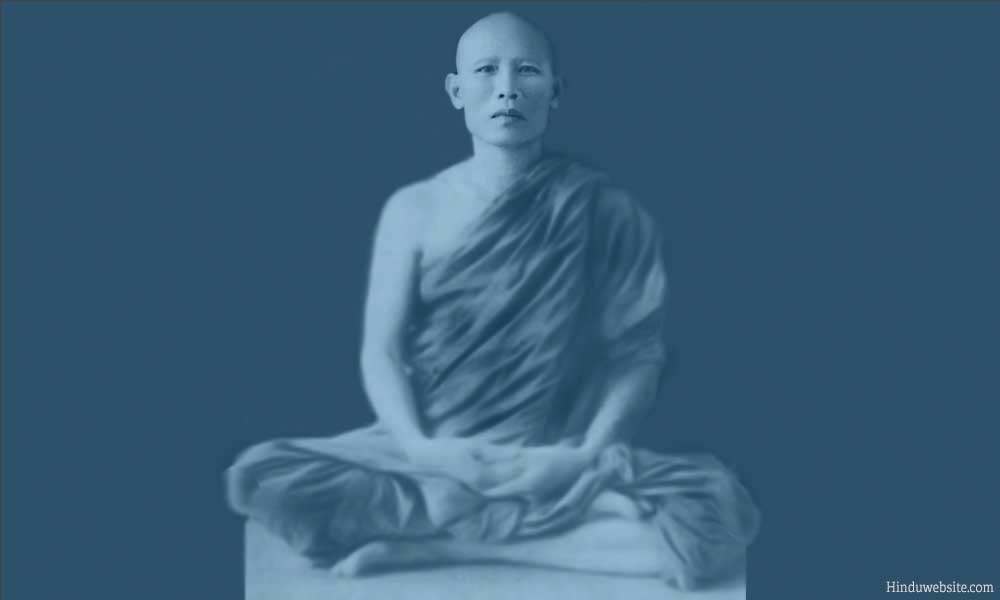
Ajaan Lee Dhammadharo
A Collection of Talks for Beginning Meditators
by Ajaan Lee Dhammadharo
Translated from the Thai by Thanissaro
Bhikkhu
Contents
- Introduction
- Brightness Within
- The Light of Discernment
- Clinging
- Letting Go
- Three Principles
- Three Strands of a Rope
- At the Gate of a Cattle-pen
- Starting Out Small
- Housework & Fieldwork
- Strength for the Journey
- Into Position
- Two Guardian Meditations
- Playing Host
- An Image of the Buddha
- Binoculars
- The Electric Heart
- Restraint of the Senses
- Snakes, Fires, & Thieves
- Enduring Principles
Introduction
![[go to top]](../../images/scrollup.gif)
This is a work in progress. Eventually, I hope to make available in English a much larger collection of Ajaan Lee's talks to add to the collections already available: Lessons in Samadhi, Food for Thought, Inner Strength, and The Skill of Release. But for the moment, in keeping with the title of the collection, I'd like to start out small.
The passages translated here had their beginnings in talks that Ajaan Lee gave to groups of people while they were meditating. In some cases, the people were his followers; in others, total strangers. In every case, Ajaan Lee found it necessary to cover the sorts of questions that occur to people new to meditation — Why meditate? How should I meditate? And why in that particular way? — and in his own style he provided not only straightforward answers to these questions but also vivid analogies, to help his listeners relate their meditation to familiar activities so that they would feel less intimidated by the uncharted areas of the minds they were trying to tame.
One aspect of Ajaan Lee's teachings that might strike you as foreign is his analysis of the body into four properties: earth, fire, water, and wind. This mode of analysis dates back to the time of the Buddha, although Ajaan Lee develops it in a distinctive way. Think of this analysis, not as an attempt at biology or chemistry — the sciences we use to analyze the body from the outside — but as a way of analyzing how the body feels from the inside. This is an aspect of awareness that we often overlook and that, in English at least, we have a poor vocabulary for describing. As you gain through meditation a greater familiarity with this aspect of your awareness, you'll come to see how useful Ajaan Lee's method of analysis is.
The passages included here have taken a fairly circuitous route from Ajaan Lee's mouth to your eyes. One of his followers — a nun, Mae Chii Arun Abhivanna — took notes during the talks, from which she later worked up reconstructed versions of what Ajaan Lee had said. Ajaan Lee had a chance to review and revise the reconstructions of the talks dated prior to 1957. As for the talks made after that year, Mae Chii Arun didn't get around to making reconstructions until after Ajaan Lee's death in 1961, and so these were printed without his input.
Although the talks make for great reading, they make for even better listening. If you meditate with a group of friends, try arranging for one member of the group to read a passage while the others are meditating. In that way, you can best recreate the context for which the talks were originally intended.
Thanissaro Bhikkhu
October, 1999
Brightness Within
May 18, 1958
For people to be happy or sad, good or bad, all depends on the heart. The heart is what's in charge, the most important thing to be found in our body. That's because it's lasting and responsible for all the good and evil we do. As for the body, it knows nothing of pleasure or pain, happiness or sadness, and it's not at all responsible for anyone's good or evil actions. Why is that? Because the body isn't lasting. It's empty.
To say that it's empty means that as soon as it's deprived of breath, its four properties of earth, water, wind, and fire separate from one another and return to their original nature. The parts coming from the earth property return to be earth as they originally were. The parts coming from the water property return to be water as they originally were. The parts coming from the wind and fire properties return to be wind and fire as they originally were. There's nothing about them that's "woman" or "man," "good" or "bad." This is why we're taught, rupam aniccam, physical form is inconstant. Rupam dukkham, it's hard to bear. Rupam anatta, it's not-self, empty, and doesn't stay under anyone's control. Even if we try to forbid it from growing old, growing sick, and dying, it won't behave in line with our wishes. It has to fall in line with the processes of arising and wasting away in accordance with the nature of natural fabrications. This applies to everyone.
But you can't say that the body is entirely anatta, for some parts of it are atta. In other words, they lie somewhat under our control. For instance, if you want the body to walk, it'll walk. If you want it to lie down, it'll lie down. If you want it to eat, it'll eat. If you want it to take a bath, it'll take a bath. This shows that it lies somewhat under your control. So the body is both anatta and atta. But even so, both aspects are equal in the sense that they're empty and not responsible for the good or evil things we do. No matter how much good or evil you do, the body doesn't have any part in the rewards. When it dies, it gets cremated and turns into ashes either way. It's not responsible for anyone's happiness or sadness at all. When people do good or evil, the results of their good and evil all fall to their own minds. The mind is what's responsible for all our actions, and it's the one that experiences the results of its actions as well. This is why the Buddha taught us to cleanse our hearts and minds, to make them pure as a way of leading us to future happiness.
What do we use to cleanse the heart and mind? We cleanse the heart and mind with skillfulness — in other words by developing skillful qualities within it through practicing concentration. We cut away all the thoughts of greed, anger, and delusion within the mind, such as the Hindrances of sensual desire, ill will, torpor & lethargy, restlessness & anxiety, and doubt. All of these qualities are things that soil the mind. When the mind is soiled in this way, it's bound to suffer. It's headed for darkness because of its own actions.
Our unskillful actions can be divided into the different ways they're dark. Some are dark like the darkness of night, i.e., totally devoid of any brightness. Some are dark like clouds, i.e., they alternate between being dark and bright, just as when the moon is bright at some times and covered by clouds at others. Some of our unskillfulness is dark like haze, obscuring all our vision whether by day or by night. This third kind of unskillfulness is ignorance, or avijja. It obscures the mind at all times so that we can't recognize which of the mind's objects are past, which are future, and which are present. This is why the mind concerns itself with past, present, and future so that it can't stay firmly in any one place. It has no certainty about anything. This is ignorance. From ignorance comes craving, the cause of all stress and suffering.
To get rid of this haze we have to meditate, getting rid of thoughts and concepts of past and future by seeing them as inconstant, stressful, and not-self; seeing all the aggregates of form, feeling, perception, thought-fabrication, and consciousness as inconstant, stressful, and not-self, to the point where there is no past, no future, no present. That's when the mind is released from the clouds and haze of its Hindrances and enters into brightness.
There are two kinds of people in the world. Some are like those with good eyes. They're the ones who develop skillful qualities within themselves, and so they see the brightness of the world both by day and by night. Then there are those who don't develop skillful mental qualities. They're like people born blind: even though the light of the sun and moon may be shining, these people are in the darkness — in this case, the darkness of their own minds. This is why the Buddha taught us to remove the darkness from our minds, to remove our minds from darkness, as in the Pali verse,
Kanham dhammam vippahaya sukkam bhavetha pandito,
which means, "Having abandoned dark qualities, the wise person develops the bright." When people develop brightness within themselves, they can use that brightness to illuminate all their activities. This will bring them success in all they do. But if they're in the dark, it's as if they were blind, so that the things they do won't succeed in full measure. For example, they may listen to the Dhamma, but if their minds are still wandering out all over the place, it's as if they were obscured by the clouds and haze of their Hindrances.
This is why we're taught to practice tranquillity meditation, fixing the mind on a single preoccupation. Tell yourself that the qualities of the Buddha aren't separate from the qualities of the Dhamma, which aren't separate from the qualities of the Sangha. They're actually one and the same, as the Pali verse tells us:
Buddho dhammo sangho cati nanahontampi vatthuto
Aññamaññaviyoga va ekibhutamapanatthato"Although the Buddha, Dhamma, and Sangha may be different as objects, seemingly separate from one another, they are actually one in meaning."
Thus when we make the mind firm in its awakened awareness, it contains the qualities of the Buddha, Dhamma, and Sangha all in one. That's when our concentration will develop in the proper way.
So I ask that you abandon unskillful mental qualities and cleanse the mind so that it's clean and pure. Brightness will then arise within your heart. This way you'll experience ease and happiness without a doubt, as the Pali passage guarantees: Citte sankilitthe duggati patikankha. Citte asankilitthe sugati patikankha. "When the mind is defiled, a bad destination can be expected. When the mind is undefiled, a happy destination can be expected."
The Light of Discernment
August 23, 1958
Our discernment is like light, and there are three levels to it: low-level discernment, which is like the light of a torch; intermediate discernment, which is like the light of a candle or a kerosene lantern; and high-level discernment, which is like electric light.
To get light from a torch, you need to use a lot of fuel. And even though it's bright, it creates smoke. This is like the discernment that comes from being generous: it requires a lot of financial resources, and you sometimes have to contend with resistance from people outside.
The light of a candle or gas lantern is like the discernment that comes from observing the precepts. You have to exercise a lot of care and use your powers of endurance to keep them pure. Lantern-light requires fuel and a wick. As for candlelight, it requires a wick and some wax. If you have wax but no wick, you can't get any light. And both lantern-light and candlelight create smoke and soot, so neither of them counts as being entirely good.
As for electric discernment, there's no need for fuel, and it doesn't create smoke or soot. It's easy to use: whenever you want it, by day or by night, just flip on the switch. This refers to the discernment that comes from developing concentration. The power of the mind, when it's pure and firmly established, gives rise to the light of knowledge — liberating insight — enabling us to see events clearly, both in the area of the world and of the Dhamma. When we can make the mind clean and pure, it gives rise to concentration and to the light of discernment — pañña-pajjoto — which is like electric light, or the light of the sun, which shines all twelve hours of the day. This kind of discernment is the discernment of the noble ones.
All three forms of merit — generosity, virtue, and meditation — depend on discernment. When we develop discernment, we'll know how to look for merit on our own. And what kind of light will we want — torch light, candlelight, lantern-light, or electric light? Death is like darkness. When the time comes to die, outside light won't be of any use to us. Our speech, hands, feet, arms, and legs won't be of any use to us. They won't be able to help us at all. Our eyes won't be able to see any light. No one will hear what we have to say. Our hands and feet won't be able to move. Our possessions won't be able to help us. The only resource that will be able to help us is our discernment, making sure that greed, aversion, and delusion don't get provoked, maintaining the mind in a state free from greed, free from aversion, free from delusion. We'll be able to separate these three things — body, mind, and defilement — out from one another, in the same way that we separate the wick of a candle from its wax. The fire of defilement will then have to go out, because the wick and the wax lie in separate places and don't make contact. In the same way, if we can separate the body from the mind, our normal awareness will have to go out. But when it goes out, that doesn't mean that awareness is annihilated. It's still there, but as a special form of awareness that doesn't depend on the body or mind and yet can still be aware. It's just like fire going out from a candle: it's not annihilated. There's still plenty of fire potential left in the world. It's there by its nature, simply that it isn't involved with any fuel. This kind of fire is better than the kind that requires fuel, because it doesn't wear anything out. It's simply there by its nature. This kind of merit is more wonderful than anything else.
If we can separate the body, the mind, and defilement from one another, there'll be no more heat. The mind won't be hot, and instead will be cool at all times. The light of fire arises from the spinning of waves. If there are no waves, there'll be no spinning. The waves are like defilement. If we can cut through the waves, the spinning will stop. There will be no more birth. Greed, aversion, and delusion are like waves — or like the wick of a candle. If we cut out the wick, leaving only the wax, fire will have no place to catch hold and so will have to go out. When the candle goes out, it's like the death of human beings: the fire leaves the candle, but the fire potential isn't annihilated. In the same way, the mind that goes out from the body isn't annihilated. If it can remain on its own, without having to depend on a body, it doesn't appear in any way, shape, or form anywhere at all. That's the awareness of nibbana.
This is the kind of awareness that's really like electric light. Whenever we want it, it's there for us to know. Sometimes even if we don't want to know, we still end up knowing. As for ordinary people, even if they want to know things, they often don't know; they often don't see even when they want to see. That's like torch light or candlelight: if there's no fuel, there's no way it can be bright.
This is why we're taught to train our minds to be firmly established in concentration — for the mind well-trained is what gives rise to the light of discernment that doesn't get deluded: the discernment that knows for sure.
Clinging
September 9, 1957
Clinging is the cause of all suffering and stress. It's what gives rise to states of becoming and birth. It's not at all safe. Whatever appears and takes shape is bound to create suffering. Just as when a person's money appears in a way that other people can see: there are bound to be thieves who will steal it away. When you have money, you're afraid if people see it. You're afraid even if they don't. In the same way, when people cling to the five aggregates as their self in this world, they suffer. When they die and go to the next world, they suffer still.
The clinging we feel has three kinds, or three time frames: past, present, and future. In each time frame there are five aggregates, which means that each of us has 15 aggregates. And when we have so many aggregates to carry around, it's no wonder we suffer. When we look ahead, we start wondering: "If I live until 60, 70, or 80, what's it going to be like? If I fall into poverty, what will I do?" When we think like this, we start worrying in all kinds of ways. If we think about good things, we get enthralled. If we think about bad things, we get disheartened. Some people think about bad things so much that they get really discouraged and despondent. That's because they cling to their thoughts and preoccupations. This is called having five heavy stones placed in front of us.
Then we turn around and look behind us: "When we die, what will happen to our children and grandchildren?" We might think of giving them part of the family fortune so that they'll be able to set themselves up in life. But then we think of how foolish they can be. "If they take our family fortune and gamble it all away, what will we do?" When we think like this, it makes us discouraged. Other times we think of our own good qualities, our children's good qualities, in the present, and it makes us happy. That's another five heavy stones. So altogether we have five stones in front of us, five stones behind us, and five stones in the present. Our right hand clings to physical phenomena, our left hand to mental phenomena. We hold on to form, feeling, perception, thought-constructs, and consciousness as our self. So we carry a burden in our right hand, a burden in our left hand, and more burdens placed on a pole over our shoulder. If we keep carrying these things around without ever putting them down, we'll meet with nothing but suffering. Then we grab onto the suffering so that we suffer even more, to the point where our faces are all contorted and our shoulders twisted out of shape.
This is why the Buddha had such compassion for us and taught us to cago patinissago, to relinquish and let go. Whoever doesn't put down the pole on his or her shoulder will never get away. If we can first let go of our thoughts of past and future, things will be somewhat lighter. If we're only carrying things in our hands there's some hope that we'll be able to keep going. In other words, if we don't practice concentration, keeping our minds still and away from the Hindrances, we're still carrying a pole over our shoulders with burdens in front of us and behind us, all because we can't let go of our thoughts of past and future. Thoughts of past and future are things we don't need to think about. Whether they're our own affairs, the affairs of our children or grandchildren, or our business or financial affairs: when we've come to meditate like this, there's no need to think about anything at all. Be intent on sitting still. Keep your body straight, focus on watching only the present — the breath — and light will appear. Even though your right and left hands are still holding onto physical and mental phenomena, at least you've put down both burdens that were on your shoulders.
As for the physical phenomena that are still heavy, that's because the King of Death keeps sprinkling poison on them. For example, our eyes: At first they are clear. Everything we see is sharp and bright. But then the King of Death sprinkles his poison in them, making them murky and dark, or giving us cataracts. So we have to go running to have our eyes examined, to get glasses for them, to put medicine in them, to go in for surgery. They make us suffer in every way, so that our tiny little eyes start weighing as much as a fist in the face.
As for our ears, at first they can hear all kinds of sounds. Then the King of Death comes and sprinkles his poison in them so that they start ringing or going deaf. We can hardly hear what other people are saying, we can't understand what they're getting at, and this makes us irritable. They say bad things, and to us they sound good. Or they say good things, and to us they sound bad. We get things right and wrong, and this gives rise to quarrels and disagreements.
The same with our nose. At first it's in good shape, but then the King of Death sprinkles poison in it, so that tumors and growths develop. We have to go looking for medicinal snuff and inhalers, or for doctors to zap the growths with electricity. Our nose starts smelling bad and disfigures our face.
As for the tongue, body, and mind, they pile us high with pain in just the same way. This is why we're taught, rupam aniccam: all physical forms are unstable and inconstant. If we get stuck on thinking about these things, it sets us on fire. Our skin and flesh grows flabby and wrinkled, our backs get bent, and as we grow older like this it's a burden both to our own hearts and to the hearts of our children and grandchildren. In addition, it's a burden in terms of the money we need to spend to look after ourselves.
Whoever holds onto unstable things as being his or her self will have to walk in an unstable way. Most of us tend to cling to the body and other physical things as being ours. Sometimes we cling to mental phenomena — feelings, perceptions, thought-constructs, and consciousness — as being ours. This is called carrying things in both hands. Still, it's better than carrying loads on a pole over our shoulder, for as long as our burdens are only in our hands we're able to sit or lie down. But if we have burdens on a pole over our shoulder, we can't sit down. We have to keep standing.
For this reason we should train our hearts to be peaceful and still — in other words, to develop concentration. When the heart's tranquil and still, discernment will arise. When discernment arises, we'll understand our own birth: When we were born, we didn't bring along even a single tooth or piece of cloth. However we came is how we'll have to return. We won't be able to take a single thing along with us, aside from the good and evil that will take us to be reborn in good or bad destinations or that will send us to nibbana. People who can meditate in this way will become light and unburdened, for they'll be able to let go of what they're carrying in their hands. In that way they'll be happy, for they've received three jewels to adorn themselves. When they get to the other side, they'll be able to sell them for a good price. As long as they stay here, they'll have good things to dress up with. Whoever has the intelligence to practice letting go in this way will receive wealth that's of value everywhere — like gold: No matter what country you go to, gold is recognized as having value. It's not like paper money, which is recognized only in your own country.
For this reason, when we can train the mind to let go — so that it's released from holding on to the future, the past, and the present — it's as if we've received an entire ingot of pure gold. We'll be happy at all times. But if we're stupid enough to hold onto things as our own, we'll set the mind on fire so that it won't know any peace.
This is why the Buddha has warned us: whoever clings to physical or mental phenomena, or to mental labels and thoughts, will have to be so burdened that they won't be able to get anywhere. Ultimately, they'll have to die stuck in the world, like the monkey stuck in a tar trap.
Whoever clings is said to be heavily burdened. As long as we're alive, we have trouble finding true goodness. When we die, we have heavy burdens lying in our way. This is why the Buddha teaches us to let go. Don't grasp onto thoughts of past, future, or present. Make the mind like water on a lotus leaf, which doesn't seep in. It reaches a quality that doesn't die, doesn't come back to be born in this world or any other. Free from suffering and stress, it reaches the highest, most excellent ease.
So we should all try our best to lighten our burdens.
Letting Go
Notes from a talk, April 21, 1953
Letting go.
One of the important reasons why the Buddha taught the Dhamma was to teach us to let go, not to hold on to things. The more we really know the Dhamma, the more we can let go. Those who know a little can let go of a little; those who know a lot can let go of a lot.
As a first step we're taught dana — to be generous, to give donations — as a strategy for getting us to learn how to let go. The next step is caga — renouncing rights of possession — which is letting go at a higher level than dana. And finally, on a more refined level, we're taught to relinquish all our upadhi, or the acquisition-defilements in the mind. This is the level on which we examine and explore until we can gain total release.
Dana means giving away material things. If we don't give them away, they're hard to let go. For the most part, if we don't give things away, we hold rights over them and regard them as belonging to us. But if we give them away, we no longer have any rights over them. Things we hold onto are dangerous. (1) They can cause us harm. (2) They cause harm to people who steal them from us. And (3) once those people have stolen them, then they claim rights over them. The Buddha saw these dangers, which is why he taught us to be generous, to learn how to give things away.
People who develop the habit of being generous reap many rewards. Their act of generosity comes back to them both in the present and on into the future. They have lots of friends. Other people trust them. Their hearts are light — they aren't weighed down with worries about looking after the things they've given away. And these same results will keep coming in the future, just as when we have a bucket of rice grains: if we plant them in a field, we'll reap ten buckets of rice in return. The same holds true with the goodness we develop in this lifetime. It gives enormous returns. That's how people of discernment understand it.
Caga is the next step. Dana is something that even crazy people can do, but caga is a type of giving that only wise people can do, because their sense of personal possession has to end immediately in the act of giving. They see that all material things are common property: things don't really belong to us, they don't really belong to other people. If you see things as belonging to you, that's addiction to sensuality (kamasukhallikanuyoga). If you see things as belonging to others, that's addiction to self-affliction (attakilamathanuyoga). When we're born, we didn't bring anything along with us when we came. When we die, we won't take anything along when we go. So what really belongs to us? Our sense of possession has to fall away from the heart if our giving is to count as caga.
The third level of letting go is relinquishing what's in the heart. Whether or not we give things away, we let go of them in the heart every day. We let go of the things we have. We let go of the things we don't have. Just as a person has to wash his mouth and hands every day after he eats if he wants to stay clean at all times. What this means is that we're not willing to let anything act as an enemy to the heart by making us stingy or grasping. If we don't do this, we're the type of person who doesn't wash up after a meal. We're not clean. We stay asleep without ever waking up. But when we let go in this way, it's called viraga-dhamma, or dispassion. The lower levels of letting go are things we can do only from time to time. Dispassion is something we can develop always.
Ordinarily our defilements tie us down hand and foot, and then nail us to the floor. It's hard to get free, which is why we need a high level of skill, called bhavanamaya-pañña — the discernment that comes from developing the mind in meditation — to gain release.
Dispassion is a mental quality that's really delicious and nourishing. Whoever hasn't reached this level of the Dhamma has eaten only the rind of the fruit, without knowing the taste and nourishment of the flesh. The good part of the flesh lies deep.
The upadhi-kilesas, or acquisition-defilements in the mind, are ignorance, craving, and clinging. If we reach the level where we see the Dhamma for ourselves within us, then we take responsibility for ourselves. We can take care of these things on our own, just as when we come of age in terms of the law.
If we can get our minds into the first jhana, we can let go of the five hindrances.
Most of us are like inexperienced children: when we eat fish or chicken, we eat the bones along with the flesh because we haven't developed any intuitive insight. When this insight arises, it's more dazzling than the light of a fire, sharper than a spear. It can consume anything: meat, bones, rice, husks — anything — because it's smart enough to pound everything into a powder. It can consume sights, sounds, smells, flavors, tactile sensations, and ideas. Good or bad, it isn't picky. It can eat them all. If people praise us, we can use it to nourish the heart. If they criticize us, we can use it to nourish the heart. Even if the body is in terrible pain, the heart can be at its ease, for it has all the utensils it needs to fix its food properly: grinders, mixers, steamers, pots, and pans. The fog of ignorance will scatter. Everything that ties us down — the nails of the five clinging-aggregates, the three ropes (love for spouse, love for children, love for material possessions), and the eight chains of the affairs of the world (loka-dhamma) — gain, loss, status, loss of status, praise, criticism, pleasure, and pain — will all fall away.
Stupid people think that staying in jail is comfortable, which is why they keep on doing more and more evil. They see the world as pleasant and so they're like prisoners who don't want to get out of jail. As for people with discernment, they're like the caged quail who keeps looking for a way to get out of the cage. As a result the chains that hold them down will fall away one link at a time. The eight affairs of the world are like the chains put on criminals to keep them bound. Stupid people think these chains are necklaces of gold to wear as ornaments. Actually, they're things that defile the mind. People who get tied down by them will never get away, because they're afraid they'll lose their wealth and status, afraid of criticism and pain. Anyone who is stuck on pleasure, who is afraid of criticism, will never manage to come to the monastery to practice.
The Buddha saw that we're like monkeys tied to a chain. If we don't develop liberating insight, we'll never get free from our chains. We'll never make it to dispassion.
In the first stage we let go of evil and start doing good. In the second stage we let go of evil and some forms of good. In the third stage we let go of everything, good and evil, because everything is fabricated by nature and thus undependable. We do good but we're not attached to it. When you let go, you have do it intelligently, and not in a ruinous way — i.e., by not doing good. You can't hold on even to your opinions, much less to material things. When you do good, you do it for the sake of the living beings of the world, for your children and grandchildren. You do everything in the best way possible, but you're not attached to it, because you know that all things fabricated are inconstant. This way your heart can be clear and bright like a jewel.
If you get caught up on criticism or praise, you're foolish. It's like drinking other people's saliva. When you act rightly, there are people who will say that you're right and those who will say that you're wrong. When you act wrong, there are people who will say you're wrong and those who will say you're right. There's nothing constant about good or bad, for they're all nothing but fabrications.
Three Principles
July 6, 1956
In brief, there are three principles that are really basic to meditation:
1. The right intention: You have to make up your mind that you're going to let go of all thoughts and preoccupations dealing with the world. You aren't going to keep them to think about. Every thought and concept dealing with the past or future is an affair of the world, and not of the Dhamma. Make up your mind that you're going to do one thing right now: the work of the religion, and nothing else. In other words, you're going to work on the immediate present. This is called the right intention.
2. The right object: This means the right theme or focal point for the mind. The theme here is dhatuvavatthana, or resolution into the properties, one of the themes in taking the body as a frame of reference (kayanupassana-satipatthana). In short, we're going to look at the four properties that make up the body: the properties of earth, water, wind, and fire. The earth property covers the hard parts of the body, such as the bones. The water property covers the liquid parts, such as urine, saliva, blood, and pus. The fire property covers the heat and warmth in the body. The wind property covers the feelings of energy that flow in the body, such as the breath. Of all these properties, the most important one is the wind property, or the breath. If other parts of the body get damaged — say, if our eyes go blind, our ears go deaf, our arms and legs get broken — it can still survive. But if it doesn't have any breath, it can't last. It'll have to die. So the breath is an important object because it forms a basis for our awareness.
3. The right quality: This means the feelings of comfort or discomfort that arise in the body. When you take care of the in-and-out breath so that it flows freely through the various parts of the body, it'll give rise to results. Take good note of whether the results that the body and mind reap from the breath are good or bad. Does the body feel open and at ease, or does it feel tight and constricted? Does the mind feel calm, quiet, and pleasant, or is it irritable, distracted, and chaotic? If the body and mind feel at ease, that counts as good results. If the opposite is true, then that counts as bad results. So you have to gain a sense of how to adjust the breath so that it becomes comfortable.
As for the right qualities of the mind, those are mindfulness and alertness.
Try to keep following these three basic principles every time you practice concentration. Only then will you get results that are full and correct.
As for the rewards of concentration, there are lots of them. They arise in line with the power of the mind of the person meditating, as I'll explain at a later date.
Three Strands of a Rope
August 19, 1959
If you've never meditated, these two easy principles are all you have to understand: (1) Think of the qualities of the Buddha; and (2) think of bringing them into your mind. What this means is, be mindful to make the mind firmly established solely in the breath, without forgetting it or letting yourself get distracted.
Not forgetting the breath means being mindful of the in-and-out breath at all times. Not getting distracted means that you don't grab hold of anything else to think about. If the mind is focused but you're thinking about something else, it's not called Right Concentration. Your mindfulness has to keep within the bounds of the work you're doing, in other words, staying with the breath.
Don't put pressure on the breath, tense it up, or hold it. Let it flow easily and comfortably, as when you put a fresh egg in cotton batting. If you don't throw it or push it down, the egg won't get dented or cracked. This way your meditation will progress smoothly.
The breath is one thing, mindfulness is another, and your awareness, still another. You have to twist these three strands together so that they don't break away from one another. In other words, your awareness has to stay with the act of mindfulness, thinking about the breath. And both your awareness and mindfulness have to stay with the breath. Only then can you say that these things are factors of meditation.
When you can twist these three strands into a single rope, focus your awareness on observing the in-and-out breath to see whether it's comfortable or not, expansive or confined, broad or narrow. Whichever way of breathing feels comfortable, keep breathing in that way. If the breath isn't comfortable, keep changing it until it is.
If you force the mind too much, it's bound to pop away. If you loosen your grip too much, it's going to get lost. So try to tend to it in a way that's just right. The important point is that your mindfulness and alertness be circumspect, making adjustments throughout the breath. Don't let the mind go flowing out after other preoccupations.
Mindfulness is like a person who's awake and alive. If the mind lacks mindfulness, it's like we're sleeping with dead bodies in a cemetery. There's nothing but foul smells and fear. This is why we're taught to be mindful of ourselves in the present moment at all times. Cut away all thoughts of past and future without grabbing onto them to think about, for these things are deceitful and illusory, like spirits and demons. They waste your time and pull you down. So be aware simply of the breath, for the breath is what gives life and leads you to higher happiness.
Mindfulness is like a magic soap that scrubs the breath. Alertness is another bar of magic soap for scrubbing the mind. If you constantly have mindfulness and alertness in conjunction with the breath and the mind, your body and mind will be valuable and pure, so that as long as you live in the world you'll be at your ease; when you die, you won't be put to difficulties.
If the mind is focused but forgets the breath and goes thinking about other things, that's called Wrong Concentration. If the mind drops some of its Hindrances, such as sensual desire, by falling asleep, that's called Wrong Release. Only if the mind is firmly focused on mindfulness and the breath is it in Right Concentration. Only if it drops its Hindrances by being wise to their tricks is it called Right Release.
If mindfulness and alertness are constantly established in the mind, our views will become straight, our concentration will become right, just as when two beams of light meet: they give rise to the bright light of discernment. There are times when discernment arises for only a tiny moment in the mind, and yet it can kill off enormous defilements. For example, it can let go of all the clinging-aggregates. It can abandon self-identity views by letting go of the body; it can abandon attachment to practices and precepts by letting go of feeling; and it can abandon uncertainty by letting go of perception, mental fabrications, and consciousness.
We're taught to develop this sort of discernment by practicing Right Concentration. Even if it arises only for the flash of an eye, it can bring us many, many benefits. Just like an atomic bomb: even though it's only a tiny thing, it can bring destruction to the world in an awesome way.
The discernment arising from within the mind is something that can't be described. It's a tiny, little thing, not like the knowledge that comes from studying and memorizing in school. That's why we can't talk about it. The Buddha even laid down training rules for the monks, forbidding them from talking about their spiritual attainments. This is why we can't know if other people are noble disciples. It's something that each noble disciple can know only for him or herself alone.
At the Gate of a Cattle-pen
August 23, 1959
I'd like to recommend the basic principles of sitting in meditation for newcomers who've never done it before.
1. Make up your mind that you're not going gather up anything else to think about, that you're going to think about only one thing: the qualities of the Buddha, or the word buddho.
2. Be firmly mindful of the breath, thinking bud- with the in-breath, and dho with the out. Or if you want, you can simply think buddho, buddho in the mind.
3. Make the mind still and then drop the word buddho so that you can simply observe nothing but the in-and-out breath. It's like standing at the gate of a cattle-pen and keeping watch over the cattle to see their characteristics as they come in and out of the pen. What color are they — black? red? white? spotted? Are they old or young? Are they calves or fully grown? Make sure you don't go walking in with the cattle yet, for they might kick you and break your shins, or gore you to death with their horns. Stay right at the gate. What this means is that you keep your mind still in one point. You don't have to make it go in and out with the breath. Observing the characteristics of the cattle means learning how to observe the breath: Does breathing in short and out short feel good, or does in long and out long feel good? How about in long and out short, or in short and out long? Learn to recognize which type of breathing is most comfortable, and then stick with it.
So there are three steps you have to follow: the first step is to stay mindful of the word buddho. The second is to be mindful of the breath, thinking bud- with the in breath and dho with the out. Don't forget. Don't get distracted. The third step, when the mind is still, is to drop the word buddho and to be observant of nothing but the in-and-out breath.
When you can do this, the mind will grow still. The breath will be still, too, like a dipper floating in a barrel of water: the water is still, the dipper is still, because no one is pressing on it, tipping it, or hitting against it. The dipper will keep floating in perfect stillness on the surface of the water. Or you can say that it's like climbing up to the top of a very tall mountain, or like floating up above the clouds. The mind will feel nothing but a cool sense of pleasure and ease. This is the root, the heartwood, the apex of all that is skillful.
It's called the root because it's a good quality that runs deep and tenacious right down the middle of the heart. It's called the heartwood because it's solid and resilient, like the heartwood of a tree that insects can't burrow into and destroy. Even though insects may be able to nibble away at the tree, they can go only as far as the bark or the sapwood. In other words, even though distractions may come and bother us, they can reach only as far as the sense doors: our eyes, ears, nose, tongue, and body. For example, when sights strike against the eye, they go only as far as the eye. They don't get into the heart. When sounds strike the ear, they go only as far as the ear, and not into the heart. When smells strike the nose, they go only as far as the nose. They don't enter the heart. This is why we say that the goodness of meditation is the heartwood of what's skillful, because the various forms of evil can't easily destroy the goodness of the heart when it's solid and stable, in the same way that insects can't bore into heartwood.
The skillfulness of a mind in concentration is called the apex of all that's skillful because it's high in quality. It can pull all other forms of goodness into the mind as well. When the mind is still, its goodness spreads out to cover the entire body, so that we stop doing unskillful things with the body. It will cover our speech, so that we stop saying unskillful things with our mouth. The unskillful things we've done with our eyes, ears, hands, will all get washed away. In this way, the goodness that comes from meditating will wash out our eyes and ears, will wash our hands and all the various parts of our body so that they all become clean.
When we have cleanliness in charge of our body, it's a goodness that's high in quality — just as rain falling from high up in the sky spreads to cover everything. The higher it comes from, the more territory it covers. When the mind is high in quality, its goodness spreads to cover our eyes, ears, nose, tongue, and body. It spreads to cover sights, sounds, smells, tastes, and tactile sensations. It spreads to cover our thoughts of past and future. In this way, this goodness spreads out until eventually it covers the entire cosmos. These, in short, are a few of the rewards that come from meditation.
The high-quality goodness coming from meditation is like rain falling from high in the sky. Not only does it wash away the dirty things on the ground, but it also nourishes the plants so that human beings can depend on them. In addition, it refreshes people with its coolness. The Buddha showered his goodness on the world beginning from the very day of his Awakening, and his goodness is still raining on us 2,500 years later. The Buddha was a Great Being because of the high-quality goodness he developed through his meditation — the same meditation we're doing right now.
To put it simply: every aspect of meditation is good. No matter how much you do, even if you don't seem to be getting any results, it's all good regardless. Even when you simply repeat the word buddho, it's good for the mind. When you're mindful of the breath, it's good for the mind. When you can make the mind still with the breath, it's good for the mind. For this reason, meditation is something you should do at all times. Don't let the time and opportunity to meditate pass you by.
Starting Out Small
May 17, 1959
The power of the Buddha is more tremendous than that of all other beings, human and divine. His body is enormous, in that we've been making representations of it from ancient times up to the present and yet still haven't finished the job. His mouth is enormously wide. Many are the things that he said only once but that other people have repeated without ceasing: here I'm talking about his teachings, which members of the Sangha have copied down into texts and delivered as sermons for us to hear up to the present. The Buddha's physical mouth was small, but his words are amazingly great, which is why we say that his mouth is wide. His eyes are wide as well: they've seen the true nature of the entire cosmos. This is the way it is with people who are really good: they tend to have this kind of enormous greatness.
Big things like this have to come from small things. Before the Buddha could become enormous in this way, he first had to make himself small. In other words, he cut himself off from his royal family and went alone into the forest to sit under the branches of the Bodhi tree on the banks of the Nerañjara River. He let his in-and-out breathing grow smaller and smaller until it was extremely subtle, and there the fire of his defilements and mental fermentations went totally out without trace. He awakened to the foremost right self-awakening, becoming a Buddha. His heart, which he had let grow so extremely subtle and small, exploded outward in goodness in a way that is still blatant to us even today.
So I ask that we all set our minds on really practicing concentration. Don't worry about the past or the future or anything else. When the mind is firmly set in concentration, knowledge and discernment will arise without our having to worry about them. Don't let yourself think that you want to know this or see that. These things will come on their own. As the proverb says, "Those with a lot of greed get only a little to feed on; those content with only a pinkie's worth will get a whole thumb." Keep bearing this point in mind.
For the mind to range far and wide, wandering after outside concepts and preoccupations, saps the strength it needs to deal with its various affairs. Whatever it then thinks of doing will succeed only with difficulty. It's like a gun with a broad-gauged barrel. If you put tiny bullets into it, they rattle around inside and don't come out with much force. The narrower the gauge of the barrel, the more force the bullets will have when you shoot them out. It's the same with the breath: The more you narrow its focus, the more refined the breath will become, until eventually you can breathe through your pores. The mind at this stage has more strength than an atomic bomb.
Intelligent orchard owners get their bananas to help them plant their orchard, get their mangoes to help them plant their orchard. They don't have to invest a lot of capital. In other words, they clear the land bit by bit, plant it bit by bit, harvest bit by bit, sell bit by bit, until the orchard grows larger and larger all the time. This way they don't need to invest much in terms of labor or capital, but the results they get are large and lasting. As for stupid people, when they start an orchard, no matter how large, they pour all their money into it, hiring people to clear the land, plow it, and plant it all at once. If they run into a drought for three days or seven days running, their plants all wither and die. Grass and weeds spring up and overrun the place. At that point, there's nothing the owners can do, because the orchard is way too big for them. They don't have the money to hire the workers again, because they used up all their funds right at the beginning. All they can do is sit with their arms around their knees, blinking back the tears. They've lost all their capital and have no profits to show. That's the way it is with people who are greedy. As for those who keep at their work steadily, bit by bit, the results keep growing bigger and bigger all the time.
Housework & Fieldwork
August 4, 1956
When we sit and meditate, there are three things we have to work with:
1. The breath: make it the object of the mind.
2. Mindfulness: think of the meditation word bud- with the in-breath and dho with the out.
3. The mind: keep the mind both with the breath and with the meditation word. Let the breath flow comfortably. Let the mind be at ease. Don't force the breath or try to put the mind into a trance. Keep the mind firm and upright, and don't let it slip off here or there.
These are the things we have to study — not just so that we'll know them. We study them so that we can put them into practice, i.e., we practice them so that we'll come to the knowledge we really want.
In keeping the mind pure, we have to cut away perceptions so that they don't stick in the heart. It's like looking after a white sheet spread on our bed. We have to watch out for any dust that will blow in on the wind and land on the sheet, and for any insects — such as ants or bed bugs — that will come to live there. If we see any dust, we have to take the sheet and shake it out. Wherever there are any stains, we have to launder it immediately. Don't let them stay long on the sheet or else they'll be hard to wash out. If there are any insects, we have to remove them, for they may bite us and give us a rash or keep us from sleeping soundly. When we keep looking after our sheet in this way, it will have to stay clean and white and be a comfortable place for us to sleep.
The dust and insects here are the Hindrances that are the enemies of the heart. We have to look after our heart in just the same way we look after our bedding. We can't let any outside perceptions come in and stick to the heart or nibble at it. We have to brush them all away. That way the mind will become calm, free from distractions.
When we meditate, we're giving rise to skill in three ways: we aren't harming anyone with our body; we aren't bad-mouthing anyone with our speech; and we're getting the mind to stay with good intentions. In other words, we're staying with buddho with every in-and-out breath, so we're not thinking of doing anything evil, and we don't think thoughts of anger or hatred about anyone. This way our body, speech, and mind are pure. This is what gives rise to merit and skill, for we're not doing any evil at all.
When we think of the breath in this way, it's as if we're painting a picture on a piece of white cloth. Our mind in its ordinary state is like a plain piece of cloth, with no patterns or designs. When we raise the mind to a higher level and think of the factors of meditation, it's like drawing a mental picture on it. For example, the word buddho is a mental picture, inasmuch as we can't see it with our eyes, but we can see it through our thinking. If we think of it constantly, it's as if our ink or paint seeps deep into the cloth. If we don't think buddho, or think of it in only a superficial way, it's like drawing with a pencil. The picture won't stick and seep into the heart. It might get smeared or entirely erased.
Then we add details to our picture: this is what's meant by evaluation (vicara). If we keep at it, our picture will become more and more elaborate. As the picture becomes more and more elaborate, we'll notice whether the in-and-out breath has become comfortable or not. If it's easy and comfortable, keep it that way. Sometimes you'll notice that the mind is comfortable but the body isn't; sometimes the body is comfortable but the mind is irritable and distracted; sometimes the body is reasonably comfortable and at ease, and the mind has settled down and isn't jumping about. So when you see any aspect that isn't comfortable, you should fix it, in the same way that a rice farmer has to keep careful watch over the sluice gates in his field, clearing out any branches or stumps that will cut off the flow of the water. When you see anything that isn't good, you should get rid of it. You have to stay observant of the breath, to see if it's too slow or too fast, or if it's making you tired. If it is, change it.
This is like plowing or harrowing your field. When the big clods of earth get broken up and spread around, the field will be level. When the body gets level and smooth, keep it going that way. The mind will then become level and smooth as well — for it lives with the body, and now it gets to stay in a place of comfort. Whether it's good in every part, or only in some parts, you'll know.
When we give rise to skill in the mind like this, it's as if we've gained wealth. And when we gain wealth, things are bound to come and disturb us, just as a tree with beautiful, fragrant flowers tends to have caterpillars or insects disturbing its flowers. When the virtues of the Buddha, Dhamma, and Sangha arise in the heart, there are bound to be things that will disturb or destroy them, such as visions or Hindrances, just as when a flower is pestered by insects, it may fall away from the tree. When it falls off the tree, it won't be able to bear fruit. The same with your mind: Don't let your goodness fall away under the influence of the Hindrances. You have to keep after it, to make sure that it stays still and established in the body until there's no sense of anything disturbing it or trying to destroy it. The mind will then be like a spray of mango flowers nourished with drops of mist. In no long time it will bear fruit, and you'll be able to harvest the fruit and eat it in comfort.
In the Dhammapada, the Buddha says that a person who is forgetful or heedless is like a dead person. In other words, if mindfulness lapses for a moment, you've passed out for a moment. If it lapses for a long time, you've passed out for a long time. So if you realize that it's lapsed, you have to correct things immediately. In other words, you re-establish mindfulness right away. If you've realized it's lapsed, there's at least some hope for you. Some people don't even know that it's lapsed: those are the ones who are hopeless. As the Buddha said, pamado maccuno padam: heedlessness is the path of death. This is because heedlessness is delusion, the root of unskillfulness. When delusion arises, it opens the way for all kinds of evil and unskillful things. So we should try to uproot it immediately before it starts growing and spreading its branches far and wide. When mindfulness lapses, it opens the way for us to think of all kinds of things, making it hard for us to finish our work. To say nothing of keeping track of the breath, if mindfulness keeps lapsing we couldn't even finish writing a single letter.
So we have to be especially careful to maintain mindfulness. Don't let yourself forget or lose track of what you're doing.
Strength for the Journey
May 7, 1958
When you sit in concentration, you have to keep being observant to see whether the mind is established in all the component factors of meditation. Your practice of concentration has to be composed of three component factors for it to count as correct in line with the principles of meditation that will give rise to the full results that we all want. The component factors of meditation are:
1. The right object. This refers to the object on which the mind settles — or in other words, the breath. We have to focus our awareness on the breath and not let it stray out in other directions. This is the "thana" or foundation of our kammatthana.
2. The right intention. Once we've focused our awareness on the in-and-out breath, we have to keep our mindfulness fixed solely on the breath by thinking bud- in with the in-breath, and dho out with the out. We have to keep doing this until the mind is still and in place. Then we can drop the meditation word. Once the mind is still and doesn't go wandering off in other places, mindfulness will stay snug with the breath without slipping away or growing absent minded. This is the intention, the kamma of our kammatthana.
3. The right quality. This refers to the skill with which we can improve, adjust, and spread the breath so that it becomes comfortable. For example, if short breathing is uncomfortable, change it so that it's a little longer. If long breathing is uncomfortable, change it so that it's a bit shorter. Observe long breathing, short breathing, fast or slow breathing, and then keep on breathing in whichever way is most comfortable. If any problem or discomfort arises, make further changes. But don't tense up the breath or try to hold it. Let the body breathe in and out with a sense of ease. The breath will then feel wide open, agile, and spacious. It won't get bottled up in any one spot, won't feel heavy or confined. When this is the case, a sense of fullness and refreshment, a cool sense of ease will arise in the mind. As for the body, it'll feel at ease as well. This is the essence of what is good, the skillfulness that we all desire.
When we can train the mind to stay firmly in these three factors of meditation, it'll become tame and obedient, and no longer stubborn — because once our mind becomes skillful and intelligent, it'll gain a sense of what's good for us, what's not, what are the affairs of other people, what are our own affairs. When this happens, there won't be a lot of confusion. It's the same as when we've trained an ox. We can put it to good work and won't have to waste a lot of rope to keep it tied down. That's when we can be at our ease. Even if we let it wander off on its own, it won't get lost. When it goes away, it'll come back to its pen on its own, for it knows which pen belongs to its owner, which pens belong to other people, which person is its owner and which people are not, which plants are the grasses it can eat, which plants are the rice plants it shouldn't. This way it won't invade the fields of other people, trampling their crops and eating their rice, which would give rise to all sorts of controversies and bad feelings. That way, we can live in peace.
It's the same with the mind. Once it's trained, it'll become tame. It won't go traipsing off after external thoughts and preoccupations. Normally, the mind doesn't like to stay with the body in the present. Sometimes it goes flowing out the eyes, sometimes out the ears, sometimes out the nose, the tongue, and the body, so that it splits into five different currents, just like a river that splits into five channels instead of staying in one: the force of the current gets weakened. And in addition to leaking out the five sense doors after sights, sounds, smells, tastes, and tactile sensations, the mind also goes flowing out after thoughts of the past and thoughts of the future without ever staying firmly in the present. This is why it knows no peace, because it doesn't get any time to rest. As a result, its strength begins to fail, and when the strength of the mind grows weaker, so does the strength of the body. When this is the case, we can't bring any of our projects to completion, either in the area of the world or of the Dhamma.
When this happens, we're like a sick person who's a burden on his doctors and nurses. The doctors have to keep making visits to check up on his symptoms. The nurses have to feed him, give him medicine, and take him to the bathroom. When he tries to sit up, he needs someone to support him. The people looking after him have to go without sleep both by day and by night, and can never leave him alone. As for the people financially responsible, they have to run around trying to find money to pay the medical bills. The whole family is worried and concerned, and the sick person himself can find no comfort. He can't go anywhere, can't do anything, can't eat solid food, can't get any sleep: everything becomes a problem.
In the same way, when our minds aren't quiet and still, and instead keep flowing out after concepts and preoccupations, we're like sick people. We don't have the strength to bring our work to completion. This is because the untrained mind goes wandering off as it likes and is very stubborn. You can't tell it to do anything at all. If you tell it to lie down, it'll sit down. If you tell it to sit down, it'll get up and walk. If you tell it to walk, it'll start running. If you tell it to run, it'll stop. You can't really control it at all. When this is the case, all sorts of unskillful qualities — ignorance and defilements like greed, anger, and delusion, or the five Hindrances — will come flowing into the mind, overcoming it and possessing it in the same way that people get possessed by spirits. When this is the case, we're in all sorts of trouble and turmoil — all because the mind doesn't have the strength it needs to withstand ignorance or to drive it out of the heart.
The Buddha saw that this is the way things are for people by and large, causing them to suffer, which is why he taught us to gather up the strength of body and strength of mind we need to fight off these various forms of suffering. In other words, he taught us to practice concentration so as to make the strength of our mind firm and solid. Practicing concentration means training the mind to be quiet and still. As the mind stays quiet and still for longer and longer periods of time, it'll become clear. When it's clear, the light of discernment will arise within it. This discernment is the strength that will enable the mind to contend with all sorts of events, both good and bad, for it'll have the intelligence enabling it to wise up to all the preoccupations coming in by way of the eyes, ears, nose, tongue, body, and intellect. It will be able to identify perceptions of past, present, and future. It will be acquainted with the properties, aggregates, and sense media, knowing what's good, what isn't, what's worth thinking about, what's not, what's untrue, what's true. When it knows this, it'll become dispassionate, disenchanted, and will let go of all thoughts and concepts, let go of its attachments to the body, let go of its attachments to things outside, all of which arise from the process of fabrication and have no real enduring essence.
When the mind can let go of all thoughts and preoccupations, it'll become light and agile, like a person who has put down all the burdens she's been carrying on her shoulders and in her hands. She can walk, run, and jump with agility. She can sit down or lie down with ease. Wherever she goes, she's comfortable. When the mind has experienced a sense of comfort, it'll become happy and full. It won't feel hungry. When it's full and happy, it can rest. Once it's rested, it'll have strength. Whatever tasks it undertakes, in terms of the world or the Dhamma, will succeed. If the mind lacks a sense of fullness, though, it'll be hungry. When it's hungry, it's in a lousy mood: irritable and upset. When this is the case, it's like a sick person who doesn't have the strength to complete any task with ease.
As for people who have practiced concentration to the point where their minds are quiet and still, they're no longer hungry, for they have a sense of fullness within them. This gives them five kinds of strength — conviction, persistence, mindfulness, concentration, and discernment — which will enable them to advance to even higher levels of goodness. When the mind is still, it develops mental serenity. When the body is still, it develops physical serenity as well: the various properties within it are peaceful and harmonious, and don't quarrel with one another. The whole body is then bathed in the purity that comes flowing out the currents of the mind through the properties of earth, water, fire, and wind, caring for them and protecting them. When things are protected and cared for, they don't run down. In this way the properties of the body reach a state of harmony, giving them the strength they need to withstand feelings of pain and weariness. As for the mind, it'll develop greater and greater strength, enabling it to withstand all sorts of mental torments. It'll keep getting more and more powerful, like the gunpowder used to make rockets and fireworks. When it's lit, it explodes and shoots all the way up to the sky.
When we practice concentration, it's as if we were gathering provisions for a trip. The provisions here are the skillful qualities we develop in the mind. The more provisions we have, the more comfortably we can travel and the further we can go. We can go to the human world, the deva worlds, the brahma worlds, or all the way to nibbana. When we have a lot of provisions, our traveling is easy, for we can afford to go by car or by boat. We can stay in comfortable places and have plenty of food to eat. The trip won't tire us, and we can go far and fast. As for people with meager provisions, they can't afford the carfare, so they have to go barefoot, walking on gravel and stepping on thorns, exposed to the sun and rain. They can't stay in comfortable places; they're lacking in food; their progress is tiring and slow. By the time they reach their destination they're ready to give up, for they're all out of strength. But whether we travel quickly or slowly, we're all headed to the same destination. For example, suppose we're all going to Bangkok. Those who go by foot will get there in three months; those who go by car, in three days; while those who get on a plane will arrive in three minutes.
For this reason, you shouldn't get discouraged in your efforts to do what's good. Develop as much strength as you can, so that you'll have the provisions and vehicles you'll need to help speed you along to your goal. Once you've arrived, you'll experience nothing but happiness and ease. When you practice the Dhamma, even if you don't reach the paths, their fruitions, or nibbana in this lifetime, at the very least you're developing the conditions that will help you along the way in the future.
When we meditate, it's as if we were driving a car on a trip. If you have a sense of how to adjust and improve your breath, it's like driving along a smooth, paved road. The car won't run into any obstacles, and even a long trip will seem short. As for people who aren't centered in concentration, whose minds are slipping and slithering around with no sense of how to improve their breathing, they're driving their car along a bumpy, unpaved road full of potholes. In some spots the bridges have collapsed. In others the road is washed out. What this means is that their mindfulness lapses and they let their minds fall into thoughts of the past and future. They don't stay put in the present. If they don't know how to repair their road, they'll keep running into dangers and obstacles. Their car will keep getting bogged down. Sometimes they spend weeks and months stuck in one place, and their short trip turns into a long one. Sometimes they go back to the beginning point and start all over again. Running back and forth like this, around and around in circles, they'll never be able to get to the goal.
So I ask that you all remember this discussion of the Dhamma and take it to heart. Try using it to make adjustments in your mind and see what happens. If you train the mind correctly in line with the three factors of meditation that I've mentioned here, you may well meet with the peace and happiness for which you aim.
Into Position
Undated, 1958
When meditators "get into position," exactly what are they doing? "Getting into position" means making the mind stay in place, making it stay with the body, not letting it go stay with other people or think about anything else at all. If the mind stays outside of the body, it's like a battery without any current. You can't get any use out of it. You can't use it to produce heat or give off light. So this is why we're taught to keep the mind inside.
When trees are withered and dry, it's because they don't have any water to nourish them. The same holds true with us. If the mind doesn't stay inside the body, the body won't flourish. It'll have to wither and wear out, grow ill in one way or another, and eventually die because of this disease or that. So the mind is like water that permeates the body to give it nourishment. If the mind focuses its attention outside of the body, then the body won't be able to gain any sense of freshness, fullness, or ease. This is because the mind is the most important factor influencing the body. It's our most valuable resource.
Now, when the mind is a valuable resource in this way, we should learn how to look after it. We have to hand it over to someone we can trust. In other words, we entrust it to somebody venerable. But the word venerable here doesn't mean the external venerables, like monks, because not all monks are trustworthy. Some of them are good monks, some of them aren't. If we let them cheat us out of our valuables, we end up even worse off than before. No, venerable here means internal venerables: the venerable qualities of the Buddha, Dhamma, and Sangha within the mind.
When we meditate, we're handing our minds over to these venerable qualities. They're qualities that are kind and considerate. They won't abuse us or cause anyone any harm. This is why we can wholeheartedly entrust our valuables — our mind — to them. For example, when we meditate buddho, buddho, we have to be sincere to these qualities. We really have to think about them. We don't just think about them in jest. "Thinking in jest" means that we think without really being intent. We have to be really intent on keeping buddho with the mind, and the mind with buddho each and every time we breathe in and out. This is what it means to be sincere in our thinking. It's the kind of thinking that serves a purpose.
The purpose here is to develop something of real and abundant essence within ourselves — to create results that will be lasting. Things that don't serve any real purpose are those giving results that don't last. When we talk about lasting results: for example, when you sit here and meditate, you'll find that the results will continue appearing even after you die. But if you aren't really meditating, if you let your mind think about other things, you'll find that the results will vanish at death, because the things you think about aren't certain or sure. They're not lasting. They'll have to change, deteriorate, and end up disappearing and dying in the same way that you will.
When we make ourselves quiet and still — when we put the mind into concentration — it's as if we're charging our battery. Once our battery is charged, we can put it to use whenever we want. When our battery is fully charged — full of discernment — we can use it for any sort of purpose at all. We can hook it up to a wire and use it to cook our food or light our home. If we simply charge it, without connecting it up to anything, the current will stay there, cool in the battery, without causing danger of any sort, like the current in a flashlight cell. If a battery is just sitting there, we can touch it with our hands and see that it feels cool, not the least bit hot — and yet there's still the fire of electricity in there. If we need light or want to cook our food, all we have to do is hook up a wire and turn on the switch, and the electricity will come out of the battery to achieve whatever aims we have in mind.
Our "battery" is the mind in concentration. If we hook up the wire of ardency to roast our defilements, the power of our current, or discernment, will burn them to ashes. As when we cook food to get rid of its rawness: the food will be saved from going spoiled and will benefit the body. In the same way, people who have discernment within themselves can eliminate all the defilements that present a danger and cause suffering to the body and mind. This is why we're taught to develop concentration: so as to accumulate the discernment that will benefit us both in this present lifetime and on into the next.
Two Guardian Meditations
August 11, 1956
When you sit and meditate, keep observing two important factors: 1) the body, which is where the mind dwells; and 2) the mind, which is the factor responsible for good and evil.
The mind is a factor that's extremely fickle and fast. It likes to slip off looking for all sorts of nonsense, for things that bring us nothing but trouble. It doesn't like to stay in place. Now it goes running here, now it goes running there, bringing back different kinds of suffering. That's why we say that it's fickle and fast: easily diverted, hard to look after. Now, since our mind is so fickle and fast, the Buddha had to search for a method by which we can take this weak point and turn it around into something good. He teaches us to develop concentration by focusing on the body. In other words, he has us fix our attention on one of the really important factors of the body, the breath. The breath is what helps us find comfort and ease in all the parts of the body. It's what keeps the body alive. All of our sense doors — the eyes, the ears, the nose, the tongue, the body, and the mind — depend on the breath to create the sensations by which they receive impressions of outside things and bring them in to have an effect on the body. For instance, the function of the eyes is to receive impressions of forms for us to see. The function of the ears is to receive impressions of sounds for us to hear. The function of the nose is to receive impressions of aromas for us to smell. The function of the tongue is to receive impressions of flavors for us to taste. The function of the body is to receive impressions of tactile sensations for us to touch. The function of the mind is to receive impressions of the various things that come in via these other five senses.
So when we meditate, we have to close all of these sense doors off tight. We close our eyes: we don't have to look at pretty sights or ugly ones. We close our ears, so that we don't listen to anything that isn't necessary — i.e., anything that isn't beneficial to listen to. Only the words that advise us to do good should we listen to. As for the nose, it's necessary for life. If we don't have the nose as our breathing passage, we start having problems in the other parts of the body, so we keep it open. As for the mouth, we keep it closed. And as for the body, we keep it in one position, as when we sit with our legs crossed, like we're doing right now.
We have to try to keep these sense doors closed off, so that we don't use our eyes, ears, nose, tongue, body, or mind in any other activity aside from practicing concentration. We herd the mind into one preoccupation, so that it stays in its home, the body, with the windows and doors all shut.
The mind is the heart-property or heart-element. The nature of the mind is that it's faster than the wind in the air, which flows to and fro, up and down, and never stays in place. So we have to bring our mindfulness into the mind so that we can take this weak point and turn it around into something good. This is called bhavana, or mental development through meditation. We focus on the breath and recollect the qualities of the Buddha. When we start off recollecting the Buddha in this way, we simply think of the word, buddho. We don't yet have to analyze what it means. Buddho is a name for mindfulness. It means being aware, being awake. But if we simply think of the word buddho, it doesn't fulfill all the factors for mental development through meditation. When we think the word, we have to steady and adjust it so that it stays in rhythm with the breath. When we breathe, we have to breathe just right, not too slow, not too fast, whatever feels natural. Then we think buddho back and forth with the breath, adjusting our thinking so that it merges with the breathing. That's when we can say that we're fulfilling the factors of meditation.
This is called recollection of the Buddha, in which we think of the qualities of the Buddha in an abbreviated way, depending on the breath as our focal point and keeping our mindfulness in charge of the thinking.
When mindfulness becomes one with the breath and with our awareness in this way, our various senses will grow even and calm. The mind will gradually grow more and more quiet, bit by bit. This is called getting established in the first "guardian meditation" — recollection of the Buddha — in which we use our thinking as a path of practice.
This kind of thinking gives results for Buddhists of all sorts. At the same time, it brings us into the factors that are helpful for the mind — mindfulness and alertness — the factors that support the mind in getting established in goodness.
The second guardian meditation is good will. The word good will — metta — comes from mitta, or friend. As a quality, it means love, benevolence, familiarity, intimacy. When we imbue our mind with good will, we escape from animosity and hostility. In other words, we should remind ourselves that we're going to stay with our friend at all times. We won't go wandering off. We won't leave our friend in a lurch. Our friend, here, is the body, because the body and mind have to depend on each other at all times. The body has to depend on the mind. The mind has to depend on the body. When people are friends they have to love each other, wish each other well, stick with each other, be intent on helping each other at all times. They don't abandon each other.
So tell yourself that when the body breathes in, you're going to stick with the breath. In Pali, the breath is called kaya-sankhara, or bodily fabrication, because it's what fixes the body to keep it alive. It's like the cook who fixes food in a home so that the people in the family can eat their fill and be happy. If there's something wrong with the cook, then there's going to be turmoil and chaos in the house. If the cook of the body — the breath — gets weird, everyone else in the body — the properties of earth, water, wind, and fire — will all have to suffer and get thrown into a turmoil as well. So we can say that the breath is the property that looks after all the properties in the body. For example, we inhale the breath into the lungs. There it cleanses the blood in the lungs, which gets sent to the heart. The function of the heart is to send the blood out to nourish all the parts of the body, so that the blood and the breath energy flow normally. If the breath isn't as good as it should be, the lungs won't be as good as they should be. The heart won't be good, the blood it pumps out won't be good, so all the various parts of the body will have to suffer as a result. This is when the properties of the body are said to be defiled.
If the mind really has good will for the body, then it has to look after the breath in the body to keep it functioning properly. So we have to keep after our "cook" to make sure that she isn't filthy, lazy, or apathetic. Otherwise, she'll put poison in our food to kill us, or filth in our food to make us sick. So we have to make sure that our cook is clean and pure in her habits, as when we breathe the qualities of the Buddha in with the breath.
The breath accompanied by buddho is called the sukka breath, or the clean, clear breath. When the master of the house is clean and circumspect like this, the cook will have to be clean and circumspect, too. All the employees in the house will have to be clean. In other words, when we're mindful, the breath that goes into the body will be a pure breath. When it reaches the heart, it will cleanse the blood in the heart so that it's pure as well. When the heart pumps this pure blood, sending it to nourish the body, the body will be purified, too. And then the mind will have to feel well. In other words, the heart is good, the nourishment in the blood is good. When the mind is in good shape like this, the blood won't become abnormal. And when this good blood is sent to nourish the nerves throughout the body, the body will have to function well. It won't feel tired or aching.
This is because we've adjusted our breath well, so that we can treat all kinds of diseases and pains. When the purity of the breath spreads throughout every blood vessel, the bad things already there in the body will have to scatter. Those that haven't yet appeared won't be able to appear. This will help the body to be balanced and normal.
When the breath is in good shape and the heart is in good shape, then the fire property in the body won't be too strong. If the breath isn't right, or if it's too hot, then the fire property gets thrown out of balance. When it grows too hot, the blood thickens and gets stuck in the capillaries, making us sleepy or giving us a headache. If it grows too cold, it gives us the shivers or makes us feverish.
So the breath is more important than any of the other the properties in the body. It assists the fire property, which in turn distills the liquid property. The liquid property in the body falls into two sorts: the part that hardens and turns into earth, and the part that stays liquid by its nature. When the breath functions properly, all the other properties function properly, and the body will feel rested and at ease.
This is called showing good will for yourself. The mind sticks with the breath, the breath sticks with the body, the body sticks with the mind. They don't abandon one another. They're affectionate, intimate, harmonious — they're good friends.
When people stay together they become intimate and familiar with one another. If they don't stay with one another, they can't become familiar with one another. And when they're not on familiar terms, they don't really know one another.
When people are friends and on familiar terms, they trust one another. They tell one another their secrets. They don't hide what's going on. In the same way, when we become close friends with the body and on familiar terms, we're going to learn all the body's secrets. For instance, we may learn what kamma in the past led to the birth of the body the way it is — what our previous lifetimes were like, what good and bad things we did, that led to the body's being like this or that. We'll learn how the four properties of the body function. We'll learn how things arise and pass away at the properties of the eye, ear, nose, tongue, body, and intellect. We'll get to know the secrets of the various affairs connected with the body, because it will have to reveal its true nature to us in every way — just as when we open the cover on a serving dish, enabling us to see what's there in the dish.
When we come to know how things function in the body this way, that's called vijja, or clear knowing. This sort of clear knowing arises from the stillness of the mind. When the body and mind are both quiet together, they give knowledge to each other. Just as with people: if we're friendly with them, they're bound to be friendly with us. If we're antagonistic with them, they're bound to be antagonistic with us. In the same way, when the body is friendly with the mind, the mind is bound to be friendly with the body. In other words, it can help the various parts of the body. It can help make the body act in line with its thoughts. If, for instance, there's a feeling of pain or weariness, we can gather the power of the mind at full strength to think of the feeling going away, and that feeling of pain or weariness may completely vanish, simply through the power of a single mental moment. People who have helped each other in the past have to help each other all the time. If we can help them, they're bound to be able to help us.
The ability to do this comes from the power of the mind that's capable of giving orders in line with its aspirations. When we can make our friend good through the power of our thought, then all our friends can become good. For example, when we think of purifying the breath, the breath will help improve the fire property. The fire property will help improve the liquid property. The liquid property will help improve the earth property. When all the properties help one another in this way, they become balanced and a help to the body, so that the body can be healthy.
As for the mind, it grows cool and calm. Anyone who comes near will pick up some of that calmness as well. Just like a mountain cool in its depths: whoever walks past will be cooled as well, even though the mountain didn't make a point of splashing water on them to cool them off.
Here we've been speaking about the body. As for the mind, when it's pure it gives even greater results. When we think using the power of the pure mind, the currents go faster than lightning through the sky, and they can go all around the world. If anyone wants to come and harm us, they can't get near, because the current of a pure, strong mind has the power to ward off all kinds of danger. Take the Buddha as an example: No one could kill him. People who thought of killing him, as soon as they got near him, saw him as their loving father. Those who were subject to the current of the Buddha's purity let go of their evil habits and turned into good people; they let go of their violence and viciousness, becoming gentle and mild. Angulimala, for instance: If he hadn't been willing to listen to the Buddha, he would have been swallowed up by the earth. But he was able to think, "The Buddha won't kill me. I won't kill anyone." He immediately put down his weapons, gave up killing once and for all, ordained, and became one of the Buddha's noble disciples.
So in the same way, we should think of the qualities of the Buddha, Dhamma, and Sangha with every in-and-out breath. When we stay within the territory of the Dhamma in this way, it's as if we were having an audience with the Buddha himself. Even though — when we keep thinking of the qualities of the Buddha, Dhamma, and Sangha — we keep going over the same old territory over and over again, what's wrong with that? Actually, when we use our powers of directed thought (vitakka) and evaluation (vicara) back and forth this way, the results we end up with are positive: a sense of fullness that spreads throughout every part of the body. The mind will feel full and bright. The heart will feel blossoming, established in the sense of fullness, or rapture (piti), that comes with thoughts of good will. When the heart is full in this way, it's at ease, just as when we've eaten our fill of food. And when the heart is full, its friend the body is sure to feel full and rested as well. We'll be at our ease both in body and in mind, just as when we see our children and grandchildren well-fed and sleeping soundly. This is called pleasure (sukha). And when we see that something gives pleasure to our children and grandchildren, we have to focus our efforts on it continually. This is how the mind reaches singleness of preoccupation (ekaggatarammana), entering into a state of peace, free from every sort of disturbance and danger.
Playing Host
September 27, 1956
When you sit and meditate, tell yourself that your body is like your home. When you repeat the word buddho in with the breath, it's like inviting a monk into your home. When people invite a monk into their home, what do they do in order to qualify as having good manners? 1) They have to prepare a place for him to sit down. 2) They provide him with good food or drinking water. 3) They have to converse with him.
When we meditate, "preparing a place to sit down" means thinking bud- in with the in-breath, and dho out with the out. If we're mindful to think in this way, the word buddho will always stay snug with the breath. Whenever our thinking slips away from the breath, it's as if we put a rip in the seat we're preparing for our guest. And don't forget that before you prepare a seat, you first have to sweep the place clean. In other words, when you first start out, you should breathe in long and deep and then let the breath come all the way out, two or three times. Then you gradually allow the breath to grow lighter, bit by bit, until it's just enough for you to follow comfortably. Don't let it grow any weaker or stay any stronger than just right. Then you start combining buddho with the in-and-out breath. When you do this, your visiting monk will come into your home. Now make sure that you stay with him. Don't go running off anywhere else. If your mind runs off to hang around with external concepts of past or future, it's as if you've run away from the monk you've invited into your home — which is really bad manners.
Once the monk has sat down in the seat you've prepared for him, you have to give him some good food or water, and then find good things to converse with him. The good food here is the food of intentions, the food of sensory contact, and the food of consciousness. The food of intentions stands for the way you adjust the breath so as to make it comfortable both for the body and for the mind. For instance, you're observant to see which kind of breathing is good for the body, and which kind is bad. What kind of in-breathing feels easy? What kind of out-breathing feels easy? Does it feel good to breathe in fast and out fast? How about in slow and out slow? You have to experiment and then taste the food you've prepared. This is one kind of food for the mind. This is why being intent to stay with the breath is called the food of intention. When you adjust the breath to the point where it feels comfortable and in good order, it'll give rise to a sense of fullness and ease. That's when you can say that you've provided your visiting monk with good, nourishing food. When he's finished his meal, he's going to chant blessings for the sake of your well-being and happiness, so that you'll be free from pain and suffering. Or, as the saying goes, the power of the Buddha gets rid of suffering. In other words, when you've adjusted the breath properly, the pains in the body will disappear. Even though there may be some that don't disappear, they don't impinge on the mind. As for pain and suffering in the heart, that will all disappear. The mind will cool down. When it cools down, it'll be at its ease — quiet, blooming, and bright.
And as for the saying, the power of the Dhamma gets rid of dangers: the various forms of Mara coming to disturb the body, such as the pains of the aggregates, will all vanish. The mind will be free from dangers and animosities.
And as for the saying, the power of the Sangha gets rid of disease: all the various diseases in the mind — sorrow, lamentation, pain, distress, and despair — will disappear. This way, once you've invited this monk into your home and provided him with good food, he's going to give you three kinds of blessing: you escape for pain, from danger, and from disease. This is part of the blessing that your visiting monk will give you. But if, when you've invited a monk into your home, you go running off outside — in other words, if you forget the breath or go hanging around with external thoughts — it's really impolite, and the monk is going to be put to difficulties. It's as if you had invited him into your home but had forgotten to prepare his meal. So if you aren't really intent on the breath and don't really welcome your monk into your home, you won't get this kind of blessing.
The last part of inviting your monk into your home is to converse with him. Once he's eaten his fill, you talk with him. This stands for the qualities of directed thought, evaluation, rapture, pleasure, and singleness of preoccupation. You connect all six types of breath energy in the body so that they all flow into one another — as when you put up a telephone line. If the line stays in good shape, you can hear what they say all over the world. But if the line is cut, you can't get word of what they're saying even in Bangkok just down the road. So when you keep your line in good shape, you can hear anything being said anywhere at all. When the mind stays in the first jhana this way, it's as if your visiting monk is talking with you, and you're talking with him. And the things you're talking about are all Dhamma. This puts you in a good mood. As time passes, you feel so good that you don't even want to eat. This is rapture: the body feels full. At the same time, the mind is free from disturbances and so feels pleasure. Wherever you get a sense of pleasure, you keep staying interested in that point: this is singleness of preoccupation.
When you welcome your visiting monk in this way, he's going to keep coming to visit you. No matter where you go, he'll be able to reach you. Even if you're staying in the mountains or forest wilderness, he'll be able to give you whatever help you need.
An Image of the Buddha
August 31, 1958
Our goodness: what can we do to make it really good? For today's goodness I want each of us to set our minds on casting a Buddha within the mind to protect ourselves, because Buddhas are things that are more sacred and numinous that any other object in the world. They can protect us and help us survive all sorts of danger and suffering. As we're told in the Pali chant, "Sabba-dukkha sabba-bhaya sabba-roga vinassantu," which means, "All sufferings, all dangers, all diseases can be destroyed through the power of the Buddha, Dhamma, and Sangha."
Whoever has an inner Buddha is protected from all three major fears. The first kind is the fear of suffering, i.e., birth, aging, illness, and death. The Buddha isn't afraid of these things at all, for he has warded them off in all their forms... (2) The various kinds of danger, such as danger from criminals: Whoever might try to come and steal his valuables, the Buddha isn't the least bit afraid, for his valuables aren't the kind that anyone can steal. The danger of fire: Don't mention house fires or being bombed by nuclear weapons. Even if the fires of the end of the aeon were to burn up the entire world, he wouldn't be startled or fearful. The danger of floods: even if water were to flood from the earth up to the sky, he wouldn't be concerned. The danger of famine, drought, and pestilence wouldn't make him suffer or put him to any hardship. (3) The various diseases that arise in the body don't cause him any fear. Just look at the Buddha image in front of you: What dangers is he afraid of? From where? No matter what anyone does to him, he just sits there perfectly still, not afraid of anything at all. This is why we should cast a Buddha within ourselves so that we can wear it around our neck and protect ourselves from fear wherever we go.
Now, when they cast a Buddha image, what do they do? The first thing is to make a mold that's beautiful and well-proportioned. Then they heat it until it's hot through and through. Then they pour molten metal into the mold. Then they let it cool. When it's thoroughly cooled, they pull off the pieces of the mold, leaving only the Buddha image, but even then the image is still rough and unattractive. They have to polish it until it gives off clear reflections, or else paint it with lacquer and cover it with gold leaf. Only then will they have a finished Buddha image in line with their aims.
So now that we're casting a Buddha within ourselves, we have to heat our mold before we can pour the metal into it. Pretend that the body here is your mold; your mind is the expert craftsman. I want us all to set our minds on casting a Buddha within ourselves. Who's going to have the most beautiful Buddha will depend on how skillful and capable each craftsman is at smelting.
How do we heat our mold? We heat the mold by sitting in concentration: your right leg on top of the left, your hands placed palm-up in your lap, your right hand on top of your left. Sit up straight. Don't lean forward or back, or tilt to either side. If the mold is off-center, your Buddha will have to be off-center, too. The next step is to fix your mindfulness on the breath, thinking bud- with the in-breath and dho with the out. Stay focused exclusively on the breath. You don't have to think of anything else — just as if you were pumping air into your furnace to heat up the mold. If your mindfulness doesn't stay with the breath — if you forget or absent-mindedly think of other things — it's as if your air pump breaks down. The fire won't grow strong, and the mold won't get heated through. If the mold isn't heated through, then when you pour your molten metal into it, the mold will crack and the metal will leak out all over the place. So you have to be careful that your mold doesn't crack, and make sure that your air pump doesn't wear out, either. In other words, keep watch over your mindfulness so that it isn't absent-minded or forgetful.
Now let's talk about how you melt your metal — the bronze, gold, silver, or whatever kind of metal you're going to use to cast your Buddha image. When they cast an image, they have to melt the metal and remove all the specks and impurities, leaving nothing but the metal in its pure form. Only then do they use it to cast the image. In the same way, we have to cut away from the heart all the concepts and preoccupations that act as Hindrances. The five Hindrances are like impurities mixed in with gold. If we don't melt them away or remove them from the heart, our Buddha image won't turn out as perfect and powerful as we'd like it. It'll be blemished and full of holes. If you were to put it on an altar, it wouldn't look inspiring. If you were to give it away, no one would want to receive it. Therefore it's necessary — crucial — that your expert craftsman be meticulous, circumspect, and not careless; that he make a concerted effort to purify the metal he's using. In other words, you have to brush away all concepts of past and future, leaving only the present: the breath. Be aware only of the breath. When your mold is thoroughly heated (i.e., you're alert to the whole body), your air pump is working well (i.e., mindfulness is steady and strong), and your metal is pure and free from specks (i.e., there are no Hindrances in the heart), then the Buddha image you're casting will be beautiful to your satisfaction.
Casting a Buddha image within you means sitting in concentration, giving rise to peace and calm in the mind. When the mind is at peace, the body is at peace. Rapture — a sense of fullness in body and mind — will arise within you (i.e., when mindfulness fills the body, your awareness fills the body, too). When rapture arises in full force, it gives way to pleasure. When there's a lot of pleasure, the mind grows clear and bright. The brightness of the mind is the knowledge of liberating insight. You come to see the truth of the body, that it's simply the four properties of earth, water, fire, and wind — not yours or anyone else's. It's inconstant. Stressful. This gives rise to a sense of weariness and disenchantment, so that you let go of the process of mental and physical fabrication, seeing that there's no real substance to it. You can separate the body from the mind.
The mind will then be free of its burden in having to haul the physical body around. It turns into a mind that's free, light, and at ease. Whichever way you look is wide open — as if you were to remove the floors, walls, and roof of your home: if you look down, you see the ground. If you look up, you'll see the stars. Look around in all four directions and you'll see that there's nothing to obstruct your line of sight. You can see everything clearly. If you look to the west you'll see the noble truth of stress. Look south and you'll see the cause of stress. Look east and you'll see the cessation of stress. Look north and you'll see the path. If you can see in this way you're said to be a full dollar, i.e., worth four full quarters. And if you get four full quarters many times over, you'll grow more and more valuable all the time. You'll turn into a rich person with lots of wealth — i.e., noble treasures. You'll be released from poverty.
Whoever has noble treasures is said to be a noble person. Noble people are those who have seen the four noble truths. Whoever sees the four noble truths is said to see the Buddha within. The Buddha likes to stay with people of that sort — and when the Buddha is staying with us, we'll be blessed and won't fall into hardship. We'll simply keep heading higher and higher. This is why we should all cast a Buddha within ourselves by practicing concentration whenever we have the opportunity.
Another way of casting a Buddha within ourselves is to meditate constantly on the foulness of the body, as when we chant: Ayam kho me kayo: this body of mine. Uddham padatala: from the tip of our big toe up to the head — what is it like? Addho kesamatthaka: from the crown of the head down to the big toe, what is it like? Tacapariyanto: inside this burlap bag, what valuables do we have? The skin covering the body is like a burlap bag full of all kinds of things, so let's see what fantastic valuables we have here in this bag. Starting with the ribs, heart, liver, lungs, intestines, food in the stomach and intestines, blood, gall, lymph, urine. What kind of lovely valuables are these things?
If you look carefully at your body, you'll see that what you have here is the four states of deprivation, nothing wonderful at all.
The first state of deprivation is the animal kingdom: all the worms and germs that live in our stomach and intestines, in our blood vessels, and in our pores. As long as there's food for these things to eat in there, they're always going to be with us, multiplying like crazy, making us ill. On the outside of the body there are fleas and lice. They like staying with those who don't keep themselves clean, making their skin red and sore. As for the animals living in the blood vessels and pores, they give us rashes and infections.
The second state of deprivation is the kingdom of hungry ghosts, i.e., the properties of earth, water, fire, and wind in the body. First they feel too cold, then too warm, then they feel ill, then they want to eat this or that. We have to keep pandering to them, running around to find things for them to eat with never any chance to stop and rest. And they never have enough — like the hungry ghosts who starve after they die, with no one to feed them. These properties keep pestering you, and no matter what you do, you can never please them. First the food is too hot, so you have to put ice in it. Then it's too cold, so you have to put it back on the stove. All of this comes down to an imbalance in the properties, sometimes good, sometimes bad, never coming to a stable state of normalcy at all, making us suffer in various ways.
The third state of deprivation is the land of angry demons. Sometimes, when we get ill or lose our senses, we run around naked without a stitch of clothing, as if we were possessed by angry demons. Some people have to undergo operations, getting this removed or cutting out that or sucking out this, waving their arms and moaning in a way that's really pitiful. Some people get so poor that they have nothing to eat; they get so thin that they have nothing left but ribs and eyeballs, suffering like the angry demons who can't see the brightness of the world.
The fourth state of deprivation is purgatory. Purgatory is the home of all the spirits with a lot of bad karma who have to suffer being roasted, speared with red-hot iron spikes, and pierced with thorns. All the animals whose flesh we've eaten, after they've been killed and cooked, gather together in our stomach and then disappear into our body in huge numbers. If you were to count them, you'd have whole coops of chickens, herds of cattle, and half a sea's worth of fish. Our stomach is such a tiny thing, and yet no matter how much you eat you can never keep it full. And you have to feed it hot things, too, like the denizens of purgatory who have to live with fire and flame. If there's no fire, they can't live. So there's a big copper frying pan for them. All the various spirits we've eaten gather in the big copper frying pan of our stomach, where they're consumed by the fires of digestion, and then they haunt us: Their powers penetrate throughout our flesh and blood, giving rise to passion, aversion, and delusion, making us squirm as if we were burned by the fires of purgatory, too.
So look at the body. Is it really yours? Where did it come from? Whose is it? No matter how much you care for it, it's not going to stay with you. It'll have to go back to where it came from: the properties of earth, water, fire, and wind. The fact that it's able to stay for a while depends entirely on the breath. When there's no more breath to it, it starts to decay, and no one wants it then. You won't be able to take it with you when you go. There's no one who can take his arms, legs, feet, or hands along with him. This is why we say that the body is not-self. It belongs to the world. As for the mind, it's the one that does good and evil, and will be reborn in line with its karma. The mind is what doesn't die. It's the one that experiences all pleasure and pain.
So when you realize this, you should do as much good as you can for your own sake. The Buddha felt compassion for us and taught us in this way, but we don't feel much compassion for ourselves. We prefer to fill ourselves with suffering. When other people teach us, it's no match for our teaching ourselves, for other people will teach us only once in a while. The possibility of being a common animal, a human being, a heavenly being, or of entering nibbana all lie within us, so we have to choose which one we want.
The good you do is what will go with you in the future. This is why the Buddha taught us to meditate, to contemplate the body to give rise to dispassion. It's inconstant, stressful, and nothing of ours. You borrow it for a while and then have to return it. The body doesn't belong to the mind, and the mind doesn't belong to the body. They're separate things that depend on each other. When you can see this, you have no more worries or attachments. You can let go of the body, and three hunks of rust — self-identity views, attachments to precepts and practices, and uncertainty in the Path — will fall away from your heart. You'll see that all good and evil come from the heart. If the heart is pure, that's the highest good in the world.
Binoculars
August 20, 1956
When you meditate, you have to be mindful of three things at once. In other words, as you breathe in and out, three things — (1) the breath, (2) the meditation word, and (3) the mind — have to stay together with every moment. At the same time, alertness always has to be in charge. Only then can you say that you're established in the factors of meditation lying at the essence of what's meritorious and skillful.
"Mindfulness" — heedfulness — counts as what's meritorious here. Forgetfulness — heedlessness — counts as evil.
Alertness is what surveys the results of our activities — seeing what we do that gives good results, what we do that gives bad — and then makes adjustments. For example, if the breath isn't yet comfortable, we move the mind to a new spot or change the way we're breathing. It's like changing the place where we sit. If where we're sitting isn't comfortable, we have to get up and find a new place to sit down. Once we've found a comfortable place to sit, we have to keep it going as long as we can. We don't have to change seats any more.
When mindfulness stays with the breath, it's called anapanasati. When it's immersed in the body, it's called kayagatasati. When mindfulness stays with the body and mind at all times, it's called developing our meditation theme (kammatthana) — as when we sit here meditating: we're doing our work, i.e., our work on our meditation theme.
Mindfulness is the cause. If we focus our attention on working with the mind, we'll get lots of results on the level of the mind. If we focus on working with the body, we'll get lots of results on the level of the body.
The results that come from developing our meditation theme are (1) we calm down the evil qualities of the mind; and (2) we calm down the physical properties of the body. The mind will be wide open and free, like the ocean when it's free of waves: the wind is still, the water smooth, and the air is clear. When this is the case, we can see all kinds of far distant things. This way we get to know the affairs of the body. On the lowest level, we come to know the body in the present: we understand what's going on with the properties of earth, water, fire, and wind, both in their important parts and in their unimportant parts. The important parts are the ones that stay in the body; the unimportant parts are the ones that come and go, forming a bridge between the properties inside the body and those outside. In terms of the wind property, we'll see how many types of breath energy stay in the body, and how many types of breath come in and out. We'll see which parts of the earth, water, fire, and space properties stay in the body, and which parts come and go. The same holds true with the property of consciousness. For instance, when our eyes don't see clearly, what's wrong with the property of eye-consciousness? We'll be able to see all the ways in which it changes, as well as all the changes in the properties of ear-, nose-, tongue-, body-, and intellect-consciousness. We'll have mindfulness and alertness constantly in charge.
Mindfulness and alertness are like binoculars for seeing great distances. The mind is like the binoculars' owner. If the properties in the body aren't at normalcy, if they aren't smooth and calm, then no matter how fantastic our binoculars, we won't be able to see anything. For example, when the Buddha surveyed the beings of the world, he'd wait until the world was quiet and still — the last watch of the night before dawn, when the minds of human beings were quiet, still, and asleep. That's when he'd use his special binoculars to survey all that was going on in the world.
When the mind is calm it's like an ocean that's calm: the wind is still, the boat isn't rocking, the water is clear, and the air wide open.
As we keep training the mind, it keeps getting more and more mature, more tempered and sharp, able to cut right through anything at all. Like a knife that we always keep sharpening: there's no way it can't become sharp. So we should keep at the practice in the same way we sharpen a knife. If any part of the body or mind isn't in good shape, we keep adjusting it until we get good results. When good results arise, we'll be in a state of Right Concentration. The mind will be firmly established in the present, in a state of singleness of preoccupation. We'll gain power both in body and in mind. Power in body means that wherever there are pains, we can adjust the properties of earth, water, fire, and wind to give rise to a sense of comfort, in the same way we trim a tree. If any branches are broken or rotten, we cut them away and graft on new branches. If the new ones break, we graft on more new ones. We keep doing this until the tree is healthy and strong.
When we work at the mind in this way, the four bases for success arise in full strength. And as the Buddha said, whoever develops the bases for success will live long. In other words,
chanda: we're content with our work;viriya: we stick with our work and don't get discouraged or give up;
citta: we focus our full attention on nothing but our work;
vimansa: we're circumspect in the mind, circumspect in the causes and results of what we're doing.
All four of these qualities are bases or steps to the Path. They're the cause for developing power in body and power in mind, all the way to the knowledge of the ending of mental fermentations and on into nibbana.
What I've said so far is meant to give us all a sense of how to develop mindfulness and alertness as our own special binoculars for surveying events in terms of the world and of the Dhamma. So you should train your mind to stay firm and upright in the factors of our meditation, riding herd on it so that it will stay with the body in the present. Regardless of how much you can remember of what I've said, you should set your mind on practicing at all times. Don't abandon the practice, or do it in fits and starts, for that will prevent you from reaching any kind of success. Think of yourself as a supervisor, constantly keeping an eye on the body and mind. When you do this, your workers — the properties of earth, water, fire, and wind — won't dare shirk their jobs or be slack in their work. Each will have to fulfill its responsibilities to the full. In this way, you'll come to succeed in your work in every way. At the same time, once you've developed your special binoculars, your eyesight will go further than that of ordinary people. In this way, you'll be able to keep yourself protected on all sides. You'll escape from dangers and meet with happiness and fulfillment in every way.
The Electric Heart
October 22, 1958
The currents of the heart are fast, erratic, and don't take on any shape that can appear to the eye. The currents of sound and smell can be measured in terms of numbers — 1, 2, 3, 4, etc. — but the currents of the mind can't be measured at all. And it's the nature of fast things that they be subtle as well. That's why the currents of the mind are impossible for anyone who's not really interested in researching them to see. Some people even maintain that there is no mind in any individual, that all we have is a body, like trees. When we die, there's nothing left, nothing to take rebirth. There's only the properties of earth, water, wind, and fire.
It's the nature of really fast-moving things that we can't see them — what they are, what their shape or characteristics are. For example, when we ride in a car or a boat passing another one coming in the opposite direction at top speed, we can't see the faces of the people riding in the other car or boat well enough to recognize who they are. Or suppose that two people run past each other at high speed. They won't be able to see each other's faces. Some birds fly through the air so quickly that we can't even see them. All we can hear is the whoosh going past in the air. The currents of the mind that flash out of the body are the same sort of thing.
The Buddha discovered that the human mind is something powerful — stronger and more numinous than anything else there is. But because the mind spins so fast, we can't see it. If we want to see it, we have to get it to spin more slowly. As it spins more and more slowly, we can get it to stop. When it stops, we'll realize that the mind is something true, something that doesn't die. At the same time, it's cool. When it hasn't yet stopped, it's hot. The heat comes from the spinning. When it spins really fast, it can generate the electricity of passion, aversion, and delusion.
As we generate these three kinds of electricity within ourselves, the mind will go running out the six wires — the nerves of the eyes, ears, nose, tongue, body, and mind. If any of these wires get shorted, they can set our home, our town, on fire. When these currents flare up in the mind, they can wear out the nerves of our eyes, ears, nose, tongue, and body, so that they start sending us the wrong information and make us misunderstand things. If we go around with exposed wires and meet up with someone else whose wires are exposed, we're going to get shorted, and both of us will be devastated. It's bad enough that both of us are generating electricity; to make things worse, we go ahead and put our hands right on each other's exposed wires. When this happens, we'll get electrocuted. The danger of exposed wires is that their current sucks us in. When we connect, the heat builds up and explodes into fire.
The spinning of the mind builds up heat in the properties of the body, and when the properties get unbalanced like this, they can give rise to pain and illness. When the mind spins in this way, it darkens everything. Our eyes, ears, etc., get darkened so that they can't see the truth of sights, sounds, smells, tastes, tactile sensations, and ideas. This is why the Buddha teaches us to give rise to stillness by developing the ballast of skillful and meritorious actions. And what acts as ballast for the mind? We're taught to create ballast for the mind by looking for three big hunks of rock: generosity, making donations of material things; virtue, keeping our words and deeds at normalcy; and meditation, training the mind. If the mind isn't slowed down by the weights of what's skillful and meritorious, there's no way it can get relief from the heat of its fires. Sometimes evil pulls it in one direction, while goodness pulls it in another. Goodness is like the positive current; evil, like the negative current. The mind alternates between good and evil, looking for good only from time to time, but it doesn't find any real peace and quiet. Still, it's beginning to see things a little more clearly, as when a car begins to slow down but hasn't yet stopped.
So we have to find four other ways to slow the mind down. In other words, we have to make sure that our thoughts, words, and deeds don't fall under the four kinds of bias: bias based on desire, based on aversion, based on delusion, and based on fear. We have to be fair and gentle with other people, harming neither ourselves nor others. This helps our mind spin even more slowly. If it spins forward, it has four blockades in the way. If it spins back, it has three rocks weighing it down. We need principles in how we sit, stand, walk, lie down, speak, act. These are the mainstays of the mind in developing tranquillity and insight. This is what's meant by meditation.
The mind is like a machine. When the machine stops, we can safely touch all its belts and gears. The belts here are its various concepts and perceptions. In other words, perceptions of past and future spin back and forth, which is why the mind can't find any coolness. As it keeps spinning, it develops heat. If it spins really fast, it'll set on fire, burning itself and spreading out to burn other people as well. This is why we're taught to stop the spinning by cutting the belts. In other words, we practice tranquillity meditation, not allowing the mind to spin along after the currents of the world. Whatever activity you're involved in, keep the mind fully involved in what you're doing. This is like water in the ocean when it's full of waves: if we take a bowlful of water and set it apart until the waves grow still, or if we clarify the water with an alum crystal, we can look into the water and see our reflection clearly.
Our face is something that normally we never see. Even though we use our mouth to speak day in and day out, we've never seen what shape it is. Even though we breathe through our nose with every moment, we've never seen it. Our ears hear sounds all day long, but we've never seen what they look like. Our eyes can see all kinds of things, but they can't see themselves. This is why we have to depend on mirrors to see our reflections. Only then can we see our face. When people have discernment, it's as if they have a large mirror for looking at themselves, because discernment is the clear knowing that comes from a mind bright, clean, and pure, free from spinning, free from waves.
When the mind stops spinning, it comes to stillness. This stillness is what gives rise to the discernment that develops into cognitive skills within us — the three skills and the eight, such as recollection of former lives, which enables us to see ourselves; knowledge of the passing away and arising of living beings — once we've seen enough of ourselves, we can see other people; and knowledge of the ending of mental fermentations: we can see what's good, what's evil, what should be abandoned, what should be developed, what takes birth and dies, what doesn't take birth and doesn't die. When these skills arise within us, we will thoroughly comprehend our own bodies and minds, as well as fabricated things in general. The three fires of passion, aversion, and delusion will stay separated far from the heart. The heart stops spinning, and when there's no more spinning, the fire and electricity stop, leaving nothing but coolness and ease.
This is why we're taught to find ballast and blockades for the mind so that it will spin more and more slowly, more and more slowly until it stops, for the sake of the coolness, ease, and peace I've mentioned here.
Restraint of the Senses
August 5, 1958
Restraint of the senses means making sure they're in harmony with their objects. In other words:
Cakkhu-samvaro: Exercise restraint over the eyes. Don't let your eyes be bigger than their visual objects, and don't let the visual objects be bigger than your eyes. An example of small eyes and big objects is when you see something and the heart latches onto it for days on end. This is called not being straightforward in your practice, because you've let the visual object get bigger than your eyes. As for big eyes and small objects, that's when you can't see enough of an object. When it disappears, you want to see it again and again. You can't let go of it. This is called eyes bigger than their objects. This is what gives rise to greed. When objects are bigger than your eyes, that also gives rise to greed and delusion. Anyone who doesn't know how to exercise restraint over the eyes gives rise to the three fires of passion, aversion, and delusion, which burn the eyes and give rise to suffering.
Sota-samvaro: Exercise restraint over your ears and their sounds so that they're the right size for each other. Sometimes your ears are bigger than the sounds they hear, sometimes the sounds are bigger than the ears. For example, someone says something and you take it to think about for many days. That's a case of the sound being bigger than the ears. This gives rise to liking or disliking. The fires of passion, aversion, and delusion burn the ears of people like this, for they haven't watched out for evil, and so evil can come flowing into their hearts.
Ghana-samvaro: Exercise restraint over the nose and smells. If a smell smells good, don't fall for it. If it smells bad and you can't stand it, get away from it. Don't hate it. If you contemplate the nose and its smells, you'll see that sometimes a smell is bigger than the nose, i.e., one whiff and it gets stuck in the heart for many days, months, and years. The smell may have been over and gone for many days, months, and years, but the nose hasn't gotten over it. Passion and aversion get provoked, and then delusion goes running after the smell. This is called not exercising restraint over the nose.
Jivha-samvaro means restraint over the tongue and flavors. If the food you get is edible, don't go struggling to look for things to make it more special than it already is. If you like it, eat your fill. If you don't like it, eat just a little. Choose foods that benefit the body. Otherwise, you'll suffer. Don't follow your taste buds. Sometimes the flavors are bigger than the tongue. You sit thinking about eating chicken or duck, pork or fish, and so you go looking for them. When you get them, your tongue shrivels up and you can hardly eat them at all. This is called not having a sense of enough, not exercising restraint. In addition to eating, the tongue plays a role in speaking. Sometimes the tongue grows large: what you say goes way beyond the truth. You speak without stopping and it's all nonsense. Other times, the topic is big but the tongue grows small: there's a lot to be explained, but you hem and haw so that no one can understand the truth. This is called not exercising restraint so that the tongue is the same size as its topics, and it's one way of bringing on suffering.
Kaya-samvaro means restraint over the body and tactile sensations. Sometimes they feel comfortable together, sometimes they don't. In other words, the place where you're staying may be big, but the body is small. Sometimes the place is small, but the body feels big. They don't go together. The tactile sensations that touch the body don't fit. Sometimes the body is small but the sensations are big. For example, you come across a sensation you like. Then, even when it's vanished for many days, you still miss it. Sometimes the body is big but the sensations are small. For example, you don't feel comfortable wherever you sit or lie down, for the whole world seems narrow and confining. That's called not exercising restraint to keep the body and its tactile sensations in line with each other. And that gives rise to suffering.
Mano-samvaro: Exercise restraint over the heart to keep it on the right path in line with things as they arise. Sometimes your thoughts are bigger than the mind: you worry and stew about something, going way beyond the truth of the situation. This leads to misunderstandings, making the mind restless and anxious. Sometimes the mind is bigger than your thoughts: you take a minor problem and turn it into four or five big ones. In other words, you don't exercise restraint over the heart to keep it in line with your situation — what they call "harvesting grass to roof the field." This leads to useless distraction, which opens the way for greed, anger, and delusion. This is why we're taught to exercise careful restraint over the heart to bring it to peace and calm. That's what's meant by restraint of the senses.
Snakes, Fires, & Thieves
April 12, 1959
The dangers faced by the mind are like poisonous snakes, fires, and great thieves — things that are always lying in wait to lay us to waste: robbing us, killing us, and stripping us of our valuables, our human goodness, every day and night.
"Poisonous snakes" here stand for passion, aversion, and delusion, which have a painful poison that seeps into the minds of run-of-the-mill people. When it reaches the heart, this poison can kill you.
As for "fires," there are two kinds: forest fires and house fires. A forest fire doesn't have any one owner. It arises of its own accord, by its nature, and spreads its destruction far and wide, without bounds, until it dies out on its own. This stands for the fires of birth, aging, illness, and death, forms of suffering that arise in the bodies of all living beings. This fire can burn up both our worldly treasures and our noble treasures (i.e., the goodness of the mind that we otherwise would be able to develop). As for house fires, those are the fires that arise from within the heart — defilements, ignorance, craving, and clinging — the hindrances that get in the way of the goodness that comes from training the heart and mind.
The "great thieves" or "500 most wanted criminals" stand for our five aggregates: form, feeling, perception, thought-constructs, and consciousness, which are constantly robbing us, killing us, and oppressing us, destroying both our worldly treasures and our noble ones. In addition, there are the underground criminals that keep sneaking up on us without our realizing it: material gain, status, praise, and pleasure from external things. Whoever gets duped by these criminals finds it hard to work free. This is why they can destroy the goodness that we'd otherwise be able to attain in the area of the heart and mind.
All of these poisonous snakes, fires, and criminals pose a tremendous danger to the heart. They keep destroying our goodness every moment. If we're not wise to them, we'll have trouble gaining release from them. The only way to prevent these dangers is through the power of the Dhamma: in other words, the practice of meditation, using our powers of directed thought and evaluation within ourselves to the point where we give rise to the discernment that clearly knows and sees the truth of all fabricated things. When we can see the dangers on all sides, we'll learn to be careful and on our guard, to look for ways of destroying them or of escaping from them. When we can do this, our lives will be happy.
When we practice the Dhamma it's as if we were going through a lonely, desolate forest on the way to a goal that's the highest form of happiness and safety. To get through the forest, we have to depend on the practice of concentration, with our mindfulness circumspect on all sides. We can't be heedless or complacent. We must make the effort to cut away all the concepts and preoccupations that come in to destroy the goodness of the mind. When we know that there are poisonous snakes, fires, and the 500 most wanted criminals lying in wait for us along our way, we have to be mindful, alert, and wakeful at all times, and to get good weapons ready so that we can fight them off.
At the same time, we need provisions to help us on our way — in other words the factors of jhana. Directed thought is what focuses the mind on what it wants to know. Evaluation is what kills off the Hindrances. These two qualities are like fixing dinner. But if we have only these two qualities, it's as if we've prepared our dinner but don't yet know the flavor of the different kinds of food we have. If we can still the mind until it's one with its object, that's like eating and swallowing our food. That's when we'll know its flavor and be able to gain a sense of fullness and nourishment from it: in other words, a sense of rapture, pleasure, and singleness of preoccupation. The heart will then be able to gain full strength, just like the body when it's had a nourishing meal.
Outer food is what nourishes the body and gives it strength. When the body has strength, we can walk or run anywhere we want. Whatever we want to do, we'll have the strength to succeed. As for inner food — the Dhamma — that's what nourishes the heart and mind. When the heart and mind are well nourished, the power of the heart is made resilient and strong. Whatever we set our mind on will succeed in line with our thoughts. If the mind is deprived of the food of the Dhamma, it gets feeble and weak. Its
thoughts meet with no success, or at best with success in some things and not in others, not fully in line with our hopes. That's why we have to shore up the strength of our own minds as much as we can, for the strength of the mind is the most important thing within us that will take us to our goal of the highest happiness.
As long as you're still alive and breathing, don't let yourself be heedless or complacent. Don't let time pass you by to no purpose. Hurry up and accelerate your efforts at developing goodness — for when there's no more breath for you to breathe, you'll have no more opportunity to do good...
You should focus exclusively on whatever thoughts help make the mind firm so that it can give rise to goodness. Don't dally with any other kinds of thinking, regardless of whether they seem more sophisticated or less. Shake them all off. Don't bring them into the mind to think about. Keep the mind firmly set in a single preoccupation: that's your true heart, the true heart of the Buddha's teachings.
Enduring Principles
May 26, 1958
Those of us who are training our hearts and minds in hopes of the paths and fruitions leading to nibbana, if we don't study to understand the fundamental principles of the world, are likely to wander off the path. Or else we'll keeping circling around without ever reaching our goal. So if we really want to put an end to suffering, we should ask ourselves: what do we have within us that can act as a true refuge for ourselves? This is the sort of question we should keep reflecting on all the time. As we chant every day: "Svakkhato bhagavata dhammo, sanditthiko akaliko — The Dhamma well-expounded by the Blessed One, to be seen here & now, is timeless." In other words, if we want to reach it, we'll be able to reach it. If we don't want to reach it, we won't. But whether or not we'll reach it depends on underlying causes, which come in two sorts: an enduring principle and supporting principles. The enduring principle, called dhamma-thiti, is what stays unmoving by its nature. The supporting principles are our training and education, which can be either good or bad. This is why our practice sways back and forth, like a tree in the middle of an open field, swaying back and forth in the wind. If we don't discover the enduring principle within us, we won't be able to find anything to act as a true refuge — for our training and education are simply supporting factors.
This is why we should keep asking ourselves: "Have we found any principle within ourselves that can act as our refuge?" As long as we're still depending on other people, other things, we don't have a true refuge. Our training and education are nothing more than supporting factors — like the fertilizer we give to plants. When the fertilizer runs out, the plant will have to fall to the ground and decompose. The same holds true for the Buddha: when his body ran out of strength, it turned into the four elements. The Dhamma, when it no longer has any power, turns into nothing but letters on paper or palm leaves, which then disintegrate. As for the Sangha, when they run out of strength, they die. So the refuge we take in these things is nothing more than a snack or finger food, but people for the most part misunderstand them to be our true refuge. They think that the Buddha, Dhamma, and Sangha will carry or drag them to heaven or nibbana. From one angle this is right, but from another it's wrong. It's right in the sense that the Buddha, Dhamma, and Sangha keep alive the tradition of goodness that we can hold onto and follow. It's wrong, though, in the sense that they aren't the things that will make us reach the paths and fruitions leading to nibbana. Reaching nibbana depends on our own actions: our practice.
So we have to ask ourselves: "What do we want in life?" If we really want something, we're sure to succeed at it in every way. But the fact that we don't succeed comes from ourselves. If we want to be millionaires, we'll have to become millionaires. If we want to be beggars, we'll have to become beggars. Success and lack of success come from within ourselves — in other words, from the causal factors lying within the limits of our own goodness. If we practice correctly, we're sure to succeed. It all depends on the enduring principles in the world, together with the supporting factors that point us in the right direction. The supporting factors are the teachings formulated by wise people and sages. The enduring principles — dhamma-thiti — come from the principles of nature. To reach the paths and fruitions leading to nibbana requires dhamma-thiti.
Take our Buddha or the Private Buddhas as an example: when they were born, there was no Buddha to teach them. But they had met up with sages and Buddhas in previous lives, so they were born with character traits that spurred them on to be high-minded, to see the drawbacks of the world so crowded with defilement and craving, with birth, aging, illness, and death. Disenchanted, they aspired to gain release from all this suffering — for as long as we human beings are subject to birth and death, then even if we had wings to fly, we still wouldn't escape from our suffering. But if we're free from birth and death, then even if we have to crawl on all fours in the dirt, we won't feel any suffering. This is why the Buddha left the householder life and went off into the wilderness to be alone, developing virtue, concentration, and discernment until he attained full Buddhahood. Once he had attained his goal, he had another character trait — his great compassion — that inspired him to teach the Dhamma to his relatives and to living beings in general so that they could gain release from suffering as well.
Practicing virtue is called compassion in terms of one's actions. This is followed by compassion in terms of one's speech and thoughts. When the Buddha expressed this sort of compassion, people responded to him in kind: they loved him, respected him, and were willing to grant him power. The Buddha's compassion expressed itself in two ways: for the well being of the world (lokattha-cariya) and the well being of his relatives (ñatattha-cariya).
In terms of the world, the Buddha spread his good will and compassion to beings all over the world, without showing any partiality for any group or individual at all. As for the well being of his relatives, like everyone else he had parents, grandparents, and siblings, and these people in turn had children, grandchildren, and in-laws. The Buddha's compassion spread out along all of these connections, expressed in terms of compassionate actions, compassionate words, and compassionate thoughts. This compassion spread out from a heart that had found its own dependable refuge within. This was why he was able to spread his compassion so that others could depend on him as well. It's the nature of the heart that when it can depend on itself, its goodness gradually spreads out of its own accord. If there's any kind of connection — whether people are relatives or not — it spreads out along those connections. It spreads out in terms of words, when you can teach and instruct others. In terms of thoughts, there's no anger, hatred, or jealousy. There's simply the willingness to sacrifice for others. When there were ways the Buddha could help others with his thoughts, he spread those thoughts at all times.
He had seen that the lay life wasn't convenient for spreading goodness so far and wide, which was why he became a monk. He had seen that being a member of the noble warrior class involved both good and evil, for it's the nature of the world that people are proud of their birth, their race, their class, which divides us into factions and creates inequalities. When divisions like this arise in the world, it's difficult to spread goodness. That was why he left his relatives, cutting himself off from his class and race.
And this is why, when a new monk is being ordained, the announcing teacher asks him, "Have your mother and father given their permission?" and the candidate answers, "Yes." He has left the limitations of the worldly life and now doesn't belong to any family at all. Then, once he's ordained, he's taught not to go hanging around with his old family. So when the Buddha left home, he went off on his own to find the truth of the Dhamma. Regardless of whether he was to get teachings from others, he explored within himself without depending on his old wealth or family connections. He gave himself totally to the practice. At first he had studied with the Six Teachers, but they were unable to convince him of their teachings.
The first teacher was Teacher Eye. This teacher fools us in all sorts of ways. It tells us that this sight is beautiful, that sight is ugly, this sight is good, that sight is bad. It whispers to the heart, causing us to trip and fall, because we don't see things in terms of their basic principles — that all sights are the same. Whether they're birds, rats, people, animals, trees, vines, whatever, they differ only in terms of their features. Their basic condition is the same: they arise, decay, and then disappear in line with the principles of nature.
The second teacher was Teacher Ear. At first there are two of these teachers, but then they turn into four, which gets things even more confusing. In other words, the left ear hears good sounds and bad sounds, the right ear hears good sounds and bad sounds, all of which gives rise to distorted perceptions. We imagine good things to be bad, and bad things to be good; true things to be false, and false things to be true. So Teacher Ear is another teacher who fools us. The Buddha thus left both Teacher Eye and Teacher Ear to study with:
Teacher Nose. At first this teacher has two nostrils, but then they split into four. Sometimes it likes good smells, sometimes it doesn't like good smells and likes bad smells instead. Then it goes whispering to the heart to make it misunderstand things. If we could take a photo of the mind, we'd see that the eyes are big and bulging, the ears are set out like huge sails, while the nose is wide, wide open. When the Buddha saw that he had no use for these three teachers, he went on to study with:
Teacher Tongue. This teacher — the mouth — is even more of a turmoil. If it were part of the army, it'd be called a multi-task force. On the one hand, it eats food; on the other, it says all kinds of things. Sometimes it likes to say good things, sometimes bad things. Sometimes it doesn't like to say good things, and prefers to say bad things instead. One little tongue, but it too splits into four. When it's not speaking, it eats. Sometimes that person gets to eat, this person doesn't get to eat. This person has only a little to eat, that person starves, while that person over there has more than enough to eat. The dangers that come from these affairs block the paths and fruitions leading to nibbana. So the Buddha moved on to study with the fifth teacher:
Teacher Body. This teacher is made up of the six elements, but as soon as the elements get unbalanced it gets feverish or chilled, weak or stiff. As it meets up with friction, it wears out. As for the sixth teacher, that's:
Teacher Mind. This teacher thinks and worries, deluding itself in all sorts of ways. Suppose, for instance, that we're leaving the house to come to the monastery. As soon as we've left the door it starts deceiving us: "What a pain. It's so far to walk. A waste of time. The sun is hot." When we get to the monastery and start sitting in meditation, it starts deceiving us again: "We've been sitting too long. I'm tired. My legs hurt. They're numb. My back is stiff." Then it squeezes our legs, squeezes our arms, beats our back, pokes our stomach, giving us heartburn or a stomachache. When we're whipped and beaten like this, we eventually give in. Sometimes it comes whispering, "Why don't you stop? Time's almost up. Open your eyes." So we leave meditation, raise our hands in respect, and bow down to the Buddha. And that's it. If we're weak by nature, we fall for it.
This is why the Buddha left all of these six teachers, closed his eyes, closed his ears, nose, tongue, body, and mind, not letting his heart go running after sights, sounds, smells, tastes, tactile sensations, or ideas. He closed off his senses to escape from these things, leaving only the door of the mind, which he focused on goodness. When this was the case, he didn't concern himself with any of the senses. He went to sit cross-legged under the Bodhi tree on the full moon day in May and gave rise to discernment within himself. He gathered all his thoughts so that they were right, and didn't let them associate with anything outside of the Dhamma. He began meditating, cutting off all connection to the past and future, cutting all connection to the nerves of the eyes, ears, nose, tongue, body, and mind. He focused on the breath, making it more and more refined, to the point where the condition of the body disappeared, leaving just the qualities of the six elements: seeing, for example, how the breath actually moves, how it stops. This is called buddha-vijja, the skill of the awakened ones. This skill sees things in terms, not of their characteristics, but in terms of their basic qualities. Inconstancy is a characteristic. Stress and not-self — burdensomeness, what can't be controlled — are all characteristics.
Basic qualities, though, are neutral and constant. Inconstancy is on the level of characteristics. To make an analogy: the mouth can't turn into the nose. That's an affair of basic qualities. If things could change like that, we wouldn't be able to live. For example, if tonight our ears changed into eyes, or our leg became an arm, or our nose became a mouth: if this happened, everything would break out into chaos. If we see things only in terms of their characteristics, that's the knowledge of the six teachers. Change-of-lineage knowledge, though, sees from both sides, both as characteristics and as basic qualities. To make another analogy: our leg, ever since we were two, has been a leg. It'll still be a leg when we're 80, in line with it's basic quality. This is constancy. Whatever it's been, that's what it'll continue to be until we die. Whoever doesn't see through to basic qualities like this will get dragged off by the six teachers. This is why the Buddha left the six teachers to study the skill of the awakened ones, to see both what it is that changes and what it is that doesn't. Whoever sees both sides — the side of inconstancy and the side of constancy — without getting stuck on either side, that's change-of-lineage knowledge: knowing the principles of the world and the basic quality of the Dhamma.
This is why the Buddha taught, "Sabbe sankhara anicca, sabbe dhamma anatta: All conditioned things are inconstant; all phenomena are not-self." Regardless of whether people might say, "constant" or "inconstant," "stress" or "bliss," "There is a self" or "There is no self," the Buddha could remain unswayed. This is called, "Attahi attano natho": those who can give rise to this knowledge and skill within themselves can truly depend on themselves. They're not attached to knowledge of the past, knowledge of the future, knowledge of the present. They're not stuck on any dimension of time at all. They can let go of conventions, formulated teachings, formulated ultimate truths. They can let go within themselves alone, know within themselves alone. This is called truly depending on yourself. When you reach this point, your training for the sake of the paths and fruitions leading to nibbana will have to succeed in line with your aims. There won't be any wandering astray.
And that's enough for now.
* * *
sabbe satta sada hontu
avera sukha-jivino
katam
punna-phalam mayham
sabbe bhagi bhavantu te
May all beings live happily,
always free from
animosity.
May all share in the blessings
springing from the
good I have done.
Suggestions for Further Reading
- Auspicious and Admirable Friendship, Kalyanamittata
- Practical advice for meditators
- Buddhism - Guidelines for Meditation
- Code of Conduct and Discipline For the Buddhist Monks
- Rules For Monks in Theravada Buddhism
- Bodhinyana A Collection of Dhamma Talks
- Buddhism - Meditation Upon the Body
- Principles of Lay Buddhism
- The Buddha's Method of Teaching
- About The Buddhist Meditation
- Dana - Charity and Generosity in Buddhism
- Dana, The Practice of Giving
- The Role of Meditation Pain, Illness and Death
- Dhamma Vinaya - Training Rules for the Monks
- Duties of the Buddhist Sangha
- Giving Gifts and Money to the Buddhist Monks
- The Buddha On How The World Will End
- An Anthology of The Teachings of Ajaan Lee Dhammadharo
- Ajan Suwat Suvaco on The Dhamma Practice
- Talks on the Dhamma Practice For the Buddhist Monks
- Food Rules For Buddhist Monks
- Training the Mind With Mindfulness
- Pabajja, Entering Into to Buddhist Monkhood
- Understanding Anicca, Dukkha, and Anatta
- Buddhism For Lay Buddhists
- Buddhism - Stages in the Practice of Dhamma
- Suda Sutta - Meditation and Cooking
- Anapana Sati, Meditation on Breathing
- Buddhist Meditation and Depth Psychology
- Forty Dhamma Talks on Meditation
- Buddhism: A Method of Mind Training
- Anapanasati Sutta Mindfulness of Breathing
- The Place of Vipassana Meditation in Buddhism
- Buddhism - The Power of Mindfulness
- A Modern Treatise on Buddhist Satipatthana Meditation
- A Teaching on Satipatthana Vipassana Meditation
- Talks for Beginning Meditators
- Buddhism - Talks on the Training of the Mind
- Essays On Dharma
- Esoteric Mystic Hinduism
- Introduction to Hinduism
- Hindu Way of Life
- Essays On Karma
- Hindu Rites and Rituals
- The Origin of The Sanskrit Language
- Symbolism in Hinduism
- Essays on The Upanishads
- Concepts of Hinduism
- Essays on Atman
- Hindu Festivals
- Spiritual Practice
- Right Living
- Yoga of Sorrow
- Happiness
- Mental Health
- Concepts of Buddhism
- General Essays
* * *
Source: Copyright © 2000 Metta Forest Monastery. Reproduced and reformatted from Access to Insight edition © 2000 For free distribution. This work may be republished, reformatted, reprinted, and redistributed in any medium. It is the author's wish, however, that any such republication and redistribution be made available to the public on a free and unrestricted basis and that translations and other derivative works be clearly marked as such.