
Mystic Christianity - The Secret Doctrine
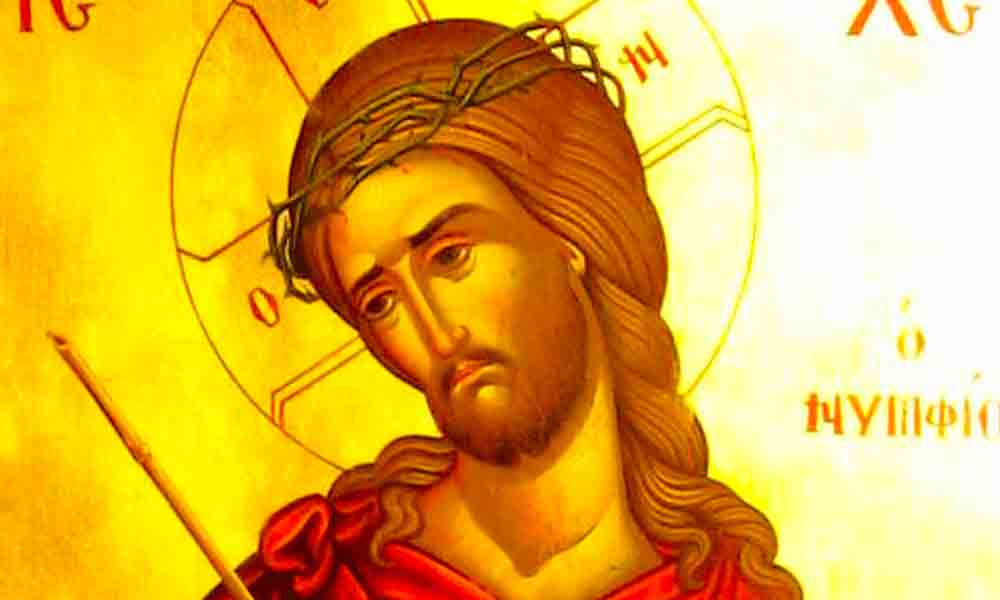
To the average Christian the nature of the Holy Ghost--one of the beings of the Trinity--is veiled in obscurity, and is generally pronounced "not to be understood." A careful examination of the orthodox Christian writings will show the student that the Church is very much at sea regarding this subject, which should be of the greatest importance to its priests and congregations. Ask the average intelligent churchman regarding the nature of the Holy Ghost, and see for yourself the vague, contradictory and unsatisfactory concepts held by the person questioned. Then turn to the encyclopaedias and other books of reference, and see how little is known or taught regarding this important subject.
It is only when the teachings of Mystic Christianity are consulted that one receives any light on the subject. The Occult Teachings are quite explicit on this subject so fraught with difficulty and lack of comprehension on the part of the orthodox teachers and students.
The teaching of Mystic Christianity, regarding the Holy Ghost, may be summed up by the great general statement that: _The Holy Ghost is the Absolute in its phase of Manifestation, as compared to its phase of Unmanifestation_--_Manifest Being as compared with Unmanifest Being_--_God Create as compared with God Uncreate_--_God acting as the Creative Principle as compared to God as The Absolute Being_.
The student is asked to read over the above general statement a number of times and to concentrate his or her attention carefully upon it, before proceeding further with the lesson.
To understand the above statement it is necessary for the student to remember that the Absolute may be thought of as existing in _two phases. Not as two persons or beings_, remember, but as in _two phases_. There is but One Being--there can be but One--but we may think of that One as existing in two phases. One of these phases is Being Unmanifest; the other, Being Manifest.
_Being Unmanifest_ is the One in its phase of Absolute Being, undifferentiated, unmanifested, uncreated; without attributes, qualities, or natures.
It is impossible for the human mind to grasp the above concept of Being Manifest in the sense of being able to think of it as a "Thing, or Something." This because of the essential being of it. If it were like anything that we can think of, it would not be the Absolute, nor would it be Unmanifest. Everything that we can think of as a "thing" is a relative thing--a manifestation into objective being.
But we are compelled by the very laws of our reason to admit that the Absolute Being Unmanifest exists, for the Manifest and Relative Universe and Life _must have_ proceeded and emanated from a Fundamental Reality, which must be Absolute and Unmanifest. And this Being which our highest reason causes us to assume to exist is Being Unmanifest--God the Father--who cannot be known through the senses--whose existence is made known to us only through Pure Reason, or through the workings of the Spirit within us. In the material sense "God is Unknowable"--but in the higher sense He may be known to the Spirit of Man, and His existence may be _known_ and proven by the exercise of the highest faculties of the reason.
Being Unmanifest is the One in its _actual_ existence and being. If all the world of objective life and manifestation, even to its highest forms, were withdrawn from manifestation, then there would be left--what? Simply and solely, Being Unmanifest--God the Father, alone. Into His Being all else would be withdrawn. Outside of Him there would be _nothing_. He would be Himself--One--existing in the phase of Being Unmanifest.
We are aware that this idea may seem to be "too abstruse" for the minds of some of our students at first reading--it may appear like an assertion of a Being who is Non-Being. But, be not too hasty--take time--and your mind will assimilate the concept, and will find that it has a corresponding Truth imbedded in its inmost recesses, and then it will know this to be the Truth. And then will it recognize the existence of God the Father, as compared with God, the Holy Ghost.
The Holy Ghost, as we have said, is the Absolute in its phase of Manifest Being. That is, it is God as manifest in the Spirit of Life, which is immanent in, and manifest in, all objective life and phenomena in the Cosmos or Universe.
In previous series of lessons in the Yogi Philosophy, we have shown you that there was a Spirit of Life immanent in, and manifesting through, all forms of life. We have also shown you that everything in the Universe is alive--down to even the minerals, and the atoms composing matter. We have shown you that inasmuch as the Spirit of Life is the source of all Manifestations in the universe, and the "God in the machine" of all phenomena of force, matter and life, then it naturally follows that there can be nothing dead in the world--that there is LIFE manifesting in every object, varying only in the degree of manifestation. In our "Advanced Lessons" and in "Gnani Yoga" this subject is considered in detail. Then what is this Spirit of Life? If God is All, then it cannot be Something other than God. But it cannot well be God the Uncreate--the Absolute in its Absolute phase--the Being Unmanifest. Then what can it be?
The student will see that the natural and logical answer to the question with which we have closed the preceding paragraph must be: Being Manifest--God in Creation--the Holy Ghost! And this is the Occult Teaching concerning this great mystery of Christianity. And see how well the framers of the Nicene Creed grasped the traditions of the Early Church, when it said: "And I believe in the Holy Ghost, _the Lord and Giver of Life_."
The teaching regarding the Immanent God lies at the foundation of all of the Mystic teachings of all peoples, races, and times. No matter under what names the teaching is promulgated--no matter what the name of the creed or religion in which it is found imbedded--it is still the Truth regarding the God Immanent in all forms of life, force, and matter. And it always is found forming the Secret Doctrine of the philosophy, creed or religion. The Outer Teaching generally confines itself to the instruction of the undeveloped minds of the people, and cloaks the real Truth behind some conception of a Personal Deity, or Deities--gods and demi-gods, who are supposed to dwell afar off in some heavenly realm--some great Being who created the world and then left it to run itself, giving it but occasional attention, and reserving his consideration principally for the purpose of rewarding those who gave him homage, worship and sacrifices and punishing those who failed to conform with the said requirements. These personal deities are believed generally to favor the particular people who give them their names and temples, and accordingly to hate the enemies of the said tribe or nation.
But the Secret Doctrine or Esoteric Teaching of all religions has brushed aside these primitive conceptions of undeveloped minds, and teach the Truth of the Immanent God--the Power inherent in and abiding in all life and manifestations. And Christianity is no exception to the rule, and in its declaration of faith in the Holy Ghost its esoteric principle is stated.
While the tendency of the orthodox churches today is to say very little about God the Holy Ghost, for the reason that it cannot explain the meaning of the term, Mystic Christianity boldly declares its allegiance to this principle of the earlier teachings and reverently repeats the words of the Nicene Creed, "I believe in the Holy Ghost, THE LORD AND GIVER OF LIFE."
* * * * *
That there is a Secret Doctrine of Christianity is not generally known to the majority who claim the name of "Christian." But it has always been known to the mystics in and out of the church, and its flame has been kept steadily alight by a few devoted souls who were chosen for this sacred task.
The Secret Doctrine of Christianity did not originate with Jesus, for He, Himself, was an Initiate of Mysteries which had been known and taught for centuries before His birth. As St. Augustine has said:
"That which is called the Christian Religion existed among the ancients _and never did not exist_, from the beginning of the human race until Christ came in the flesh, at which time the true religion which already existed began to be called Christianity."
We would like to quote here a few paragraphs from the writings of a well known writer on religious subjects, with which statement we heartily agree, although our views on certain other points of teaching do not agree with those of this writer. He says:
"It may be said that in the present day these doctrines are simply not taught in the churches; how is that? It is because Christianity has forgotten much of its original teachings, because it is now satisfied with only part, and a very small part, of what it originally knew. 'They still have the same scriptures,' you will say. Yes, but those very scriptures tell you often of something more, which is now lost. What is meant by Christ's constant references to the 'Mysteries of the Kingdom of God'--by His frequent statement to His disciples that the full and true interpretation could be given only to them, and that to others He must speak in parables? Why does He perpetually use the technical terms connected with the well known mystery-teaching of antiquity? What does St. Paul mean when he says, 'We speak wisdom among them which are perfect'--a well known technical term for the men at a certain stage of initiation? Again and again he uses terms of the same sort; he speaks of 'the wisdom of God in mystery, the hidden wisdom which God ordained before the world began, and which none even of the princes of this world know'--a statement which could not by any possibility have been truthfully made if he had been referring merely to ordinary Christian teaching which is openly preached before all men. His immediate followers, the Fathers of the Church, knew perfectly well what he meant, for they all use precisely the same phraseology. Clement of Alexandria, one of the earliest and greatest of all, tells us that 'It is not lawful to reveal to the profane persons the Mysteries of the Word.'"
"Another consideration shows us clearly how much of this early teaching has been lost. The church now devotes herself solely to producing good men, and points to the _saint_ as her crowning glory and achievement. But in older days she claimed to be able to do much more than that. When she had made a man a saint, her work with him was only just beginning, for then only was he fit for the training and teaching which she _could_ give him then, but cannot now, because she has forgotten her ancient knowledge. Then she had three definite stages in her course of training--Purification, Illumination and Perfection. Now she contents herself with the preliminary Purification, and has no Illumination to give."
"Read what Clement says: 'Purity is only a negative state, valuable chiefly as the condition of insight. He who has been purified in Baptism and then initiated into the Little Mysteries (has acquired, that is to say, the habits of self-control and reflection) becomes rife for the Greater Mysteries for the Gnosis, the scientific knowledge of God.' In another place he says: 'Knowledge is more than faith. Faith is a summary knowledge of urgent truths, suitable for people who are in a hurry; but knowledge is scientific faith.' And his pupil Origen writes of 'the popular, irrational faith' which leads to what he calls physical Christianity, based upon the gospel history, as opposed to the spiritual Christianity conferred by the Gnosis of Wisdom. Speaking of teaching founded upon historical narrative, he says, 'What better method could be devised to assist the masses?' But for those who are wise he has always the higher teachings, which are given only to those who have proved themselves worthy of it. This teaching is not lost; the church cast it out when she expelled the great Gnostic Doctors, but it has nevertheless been preserved, and it is precisely that Wisdom which we are studying--precisely that which we find to answer all the problems of life, to give us a rational rule by which to live, to be to us a veritable gospel of good news from on high."
St. Paul indicates the existence of the Secret Doctrine of Christianity, when he says to the Corinthians:
"And I, brethren, could not speak unto you as unto spiritual, but as unto carnal, as unto babes in Christ. I fed you with milk, not with meat; for ye were not yet able to bear it; nay, not even now are ye able, for ye are yet carnal." (_I Cor. 3:1._)
Jesus said: "Give not that which is holy unto the dogs, neither cast your pearls before the swine, lest haply they trample them under their feet, and turn and rend you." (_Matt. 7:6._)
St. Clement of Alexandria has said regarding the above saying of Jesus:
"Even now I fear, as it is said, 'to cast the pearls before swine, lest they tread them underfoot, and turn and rend us.' For it is difficult to exhibit the really pure and transparent words respecting the true Light to swinish and untrained hearers."
In the first century after Christ, the term "The Mysteries of Jesus" was frequently used by the Christian teachers, and the Inner Circle of Christians was recognized as a body of advanced souls who had developed so far as to be able to comprehend these mysteries.
The following passage from St. Mark (4:10-12) is interesting in this connection:
"And when He was alone, they that were about Him with the twelve asked of Him the parables. And He said unto them, 'Unto you is given the mystery of the kingdom of God: but unto them that are without, all things are done in parables: that seeing they may see, and not perceive; and hearing they may hear, and not understand.'"
The same writer says (4:33-34):
"And with many such parables spake He the word unto them, as they were able to hear it; and without a parable spake He not unto them; but privately to His own disciples He expounded all things."
Jesus said to His disciples (_John 16:12._): "I have yet many things to say to you, but ye cannot bear them now." The Occult Teachings state that when He returned in His astral form, after the crucifixion, He taught them many important and advanced mystic truths, "speaking of the things pertaining to the kingdom of God." (_Acts 1:3._)
The early Christian Fathers spake and wrote openly regarding the Christian Mysteries, as all students of Church History well know. Polycarp, Bishop of Smyrna, writes to certain others hoping that they are "well versed in the sacred Scriptures and that nothing is hidden from you; but to me this privilege is not yet granted." (_The Epistle of Polycarp, chapter 7._) Ignatius, Bishop of Antioch, says that he is "not yet perfect in Jesus Christ. For I now begin to be a disciple, and I speak to you as my fellow disciple." He also addresses them as being "initiated into the Mysteries of the Gospel, with St. Paul, the holy, the martyred." Again:
"Might I not write to you things more full of mystery? But I fear to do so, lest I should inflict injury on you who are but babes. Pardon me in this respect, lest, as not being able to receive their weighty import, ye should be strangled by them. For even I, though I am bound and am able to understand heavenly things, the angelic orders, and the different sorts of angels and hosts, the distinction between powers and dominions, and the diversities between thrones and authorities, the mightiness of the aeons, and the preëminence of the cherubim and seraphim, the sublimity of the Spirit, the kingdom of the Lord, and above all the incomparable majesty of Almighty God--though I am acquainted with these things, yet am I not therefore by any means perfect, nor am I such a disciple as Paul or Peter."
Ignatius also speaks of the High Priest or Hierophant, of whom he asserts that he was the one "to whom the holy of holies has been committed, and who alone has been entrusted with the secrets of God." (_Epistles of Ignatius._)
St. Clement of Alexandria was a mystic of high rank in the Inner Circle of the Church. His writings are full of allusions to the Christian Mysteries. He says among other things that his writings were "a miscellany of Gnostic notes, according to the time philosophy," which teachings he had received from Pontaemus, his instructor or spiritual teacher. He says of these teachings:
"The Lord allowed us to communicate of those divine Mysteries and of that holy light, to those who are able to receive them. He did not certainly disclose to the many what did not belong to the many; but to the few to whom He knew that they belonged, who were capable of receiving and being moulded according to them. But secret things are intrusted to speech, not to writing, as is the case with God. And if one say that it is written, 'There is nothing secret which shall not be revealed, nor hidden, which shall not be disclosed,' let him also hear from us, that to him who hears secretly, even what is secret shall be manifested. This is what was predicted by this oracle. And to him who is able secretly to observe what is delivered to him, that which is veiled shall be disclosed as truth; and what is hidden to the many shall appear manifest to the few. The mysteries are delivered mystically, that what is spoken may be in the mouth of the speaker; rather not in his voice, but in his understanding. The writing of these memoranda of mine, I well know, is weak when compared with that spirit full of grace, which I was privileged to hear. But it will be an image to recall the archetype to him who was struck with the Thyrsus."
< (We may state here that the Thyrsus was the mystic-wand carried by the Initiates in the Mystic Brotherhoods--the Initiate being first tapped with it, and then receiving it from the Hierophant, at the ceremony of formal Initiation.) Clement adds:
"We profess not to explain secret things sufficiently--far from it--but only to recall them to memory, whether we have forgot aught, or whether for the purpose of not forgetting. Many things, well I know, have escaped us, through length of time, that have dropped away unwritten. There are then some things of which we have no recollection; for the power that was in the blessed men was great."
"There are also some things which remain unnoted long, which have now escaped; and others which are effaced, having faded away in the mind itself, since such a task is not easy to those not experienced; these I revive in my commentaries. Some things I purposely omit, in the exercise of a wise selection, afraid to write what I guarded against speaking; not grudging--for that were wrong--but fearing for my readers lest they should stumble by taking them in a wrong sense; and, as the proverb says, we should be found 'reaching a sword to a child.' For it is impossible that what has been written should not escape, although remaining published by me. But being always revolved, using the one only voice, that of writing, they answer nothing to him that makes inquiries beyond what is written; for they require of necessity the aid of someone, either of him who wrote or of someone else, who walked in his footsteps. Some things my treatise will hint; on some it will linger; some it will merely mention. It will try to speak imperceptibly, to exhibit secretly, and to demonstrate silently." (_The Stromata of St. Clement._)
St. Clement, in the same work from which the above quotation was taken, has a chapter entitled "The Mysteries of the Faith, not to be Divulged to all." In it he states that inasmuch as his writings might be seen by all men, the unwise as well as the wise, "it is requisite, therefore, to hide in a Mystery the wisdom spoken, in which the Son of God is taught." He then adds, "For it is difficult to exhibit the really pure and transparent words to swinish and untrained hearers. For scarcely could anything which they could bear be more ludicrous than these to the multitude; nor any subjects on the other hand more admirable or more inspiring to those of noble nature. But the wise do not utter with their mouths what they reason in council. 'But what ye hear in the ear,' said the Lord, 'proclaim upon the houses; bidding them receive the _secret traditions of the true knowledge_, and expound them aloft and conspicuously; and as we have said in the ear, so to deliver them to whom it is requisite; but _not enjoining us to communicate to all without distinction_ what is said to them in parables. But there is only a delineation in the memoranda, which have the truth sown sparse and broadcast, that it may escape the notice of those who pick up seeds like jackdaws; but when they find a good husbandman, each of them will germinate and will produce corn."
"Those who are still blind and dumb, not having understanding, or the undazzled and keen vision of the contemplative soul, must stand outside of the divine choir. Wherefore, in accordance with the method of concealment, the truly sacred Word, truly divine and most necessary for us, deposited in the shrine of truth, was by the Egyptians indicated by what were called among them _adyta_, and by the Hebrews 'the veil.' Only the consecrated were allowed access to them. For Plato also thought it not lawful for 'the impure to touch the pure.' Thence the prophecies and oracles are spoken in enigmas, and to the untrained and uninstructed people. Now, then, it is not wished that all things should be exposed indiscriminately to all and sundry, or the benefits of wisdom communicated to those who have not even in a dream been purified in soul, for it is not allowable to hand to every chance comer what has been procured with such laborious efforts. Nor are the Mysteries of the Word to be expounded to the profane. The Mysteries were established for the reason that it was more beneficial that the holy and the blessed contemplation of realities be conceded. So that, on the other hand, then, there are the Mysteries which were hid till the time of the apostles, and were delivered by them as they received from the Lord, and, concealed in the Old Testament, were manifested to the saints. And on the other hand, there is the riches of the glory of the mysteries of the Gentiles, which is faith and hope in Christ. Instruction, which reveals hidden things, is called Illumination, as it is the teacher only who uncovers the lid of the ark." (_The Stromata of St. Clement_.)
St. Clement also quotes approvingly the saying of Plato, that: "We must speak in enigmas; that should the tablet come by any mischance on its leaves either by sea or land he who reads may remain ignorant." He also says, concerning certain Gnostic writings:
"Let the specimen suffice to those who have ears. For it is not required to unfold the mystery, but only to indicate what is sufficient for those who are partakers in knowledge to bring it to mind."
We have quoted freely from St. Clement, for the purpose of showing that he, a man in a very exalted position in the Early Christian Church, recognized, and actually taught, the Inner Teachings, or Secret Doctrine of Mystic Christianity--that the Early Christian Church was an organization having a Mystic Centre for the few, and Common Outer for the multitude. Can there be any doubt of this after reading the above words from his pen?
But not only St. Clement so wrote and taught, but many others in authority in the Early Christian Church likewise voiced their knowledge of, and approval in, the Inner Teachings. For example, Origen, the pupil of St. Clement, a man whose influence was felt on all sides in the early days of the Church. Origen defended Christianity from the attacks of Celsus, who charged the Church with being a secret organization which taught the Truth only to a few, while it satisfied the multitude with popular teachings and half-truths. Origen replied that, while it was true that there were Inner Teachings in the Church which were not revealed to the general public, still the Church, in that respect, was but following the example of all teachers of Truth, who always maintained an esoteric side of their teachings for those fitted to participate in them, while giving the exoteric side to the general body of followers. He writes:
"And yet the Mystery of the Resurrection, not being understood, is made a subject of ridicule among unbelievers. In these circumstances, to speak of the Christian doctrine as a _secret system_ is altogether absurd. But that there should be certain doctrines, not made known to the multitude, which are divulged after the exoteric ones have been taught, is not a peculiarity of Christianity alone, but also of philosophic systems in which certain truths are exoteric and others esoteric. Some of the hearers of Pythagoras were content with his _ipse dixit;_ while others were taught in secret those doctrines which were not deemed fit to be communicated to profane and insufficiently prepared ears. Moreover, all the Mysteries that are celebrated everywhere throughout Greece and barbarous countries, although held in secret, have no discredit thrown upon them, so that it is in vain he endeavors to calumniate the secret doctrines of Christianity, seeing that he does not correctly understand its nature."
"I have not yet spoken of the observance of all that is written in the Gospels, each one of which contains much doctrine difficult to be understood, not merely by the multitude, but even by certain of the more intelligent, including a very profound explanation of the parables, which Jesus delivered to 'those without' while reserving the exhibition of their full meaning for those who had passed beyond the stage of exoteric teaching, and who came to Him privately in the house. And when he comes to understand it, he will admire the reason why some are said to be 'without' and others 'in the house.'" (_Origen against Celsus_.)
In the same work Origen considers the story of the Syria-Phoenician woman (_Matt. Chap. 15_) and says concerning it:
"And perhaps, also, of the words of Jesus there are some loaves which it is possible to give to the more rational, as to the children, only; and others as it were crumbs from the great house and table of the well-born, which may be used by some souls like dogs."
And, again,
"He whose soul has, for a long time, been conscious of no evil, especially since he yielded himself to the healing of the Word, let such a one hear _the doctrines which were spoken in private by Jesus to His genuine disciples_."
And, again,
"But on these subjects much, and that of a mystical kind, might be said: in keeping with which is the following: 'It is good to keep close to the secret of a king,' in order that _the doctrine of the entrance of souls into bodies_ may not be thrown before the common understanding, nor what is holy given to the dogs, nor pearls be cast before swine. For such a procedure would be impious, being equivalent to a betrayal of the mysterious declaration of God's wisdom. It is sufficient, however, to represent in the style of a historic narrative what is intended to convey a secret meaning in the garb of history, that those who have the capacity may work out for themselves all that relates to the subject."
He also says, in the same work:
"If you come to the books written after the time of Jesus, you will find that those multitudes of believers who hear the parables are, as it were, 'without,' and worthy only of exoteric doctrines, while the disciples learn in private the explanation of the parables. _For, privately, to His own disciples did Jesus open up all things, esteeming above the multitudes those who desired to know His wisdom._ And He promises to those who believe on Him to send them wise men and scribes."
In another work, Origen states that:
"The Scriptures have a meaning, not only such as is apparent at first sight, but also another, which escapes the notice of most men. For such is written in the forms of certain Mysteries, and the image of divine things. Respecting which there is one opinion throughout the whole Church, that the whole law is indeed spiritual; _but that the spiritual meaning which the law conveys is not known to all_, but to those only on whom the grace of the Holy Spirit is bestowed in the word of wisdom and knowledge." (_De Principiis_.)
We could fill page after page with live quotations from the writings of the Early Christian Fathers, and their successors, showing the existence of the Inner Teachings. But we must rest content with those which we have given you, which are clear and to the point, and which _come from undoubted authority_.
The departure of the Church from these Inner Teachings was a great calamity, from which the Church is still suffering. As that well-known occultist, Eliphias Levi, has said:
"A great misfortune befell Christianity. The betrayal of the Mysteries by the false Gnostics--for the Gnostics, that is, _those who know_, were the Initiates of primitive Christianity--caused the Gnosis to be rejected, and alienated the Church from the supreme truths of the Kabbala, which contains all the secrets of transcendental theology.... Let the most absolute science, let the highest reason become once more the patrimony of the leaders of the people; let the sarcerdotal art and the royal art take the double sceptre of antique initiations and the social world will once more issue from its chaos. Burn the holy images no longer; demolish the temples no more; temples and images are necessary for men; but drive the hirelings from the house of prayer; let the blind be no longer leaders of the blind; reconstruct the hierarchy of intelligence and holiness, and recognize only _those who know_ as the teachers of _those who believe_." (_The Mysteries of Magic, Waite translation_.)
And now, you ask, what were taught in these Christian Mysteries--what is the Inner Teaching--what the Secret Doctrine? Simply this, good students--the Occult Philosophy and Mystic Lore which has been taught to the Elect in all times and ages, and which is embodied in our several series of lessons on THE YOGI PHILOSOPHY AND ORIENTAL OCCULTISM, _plus the special teaching regarding the nature, mission, and sacrifice of Jesus the Christ, as we have tried to explain in the present series of lessons_. The Truth is the same no matter under what name it is taught, or who teaches it. Strip it of the personal coloring of the teacher and it is seen to be the same--THE TRUTH.
In these lessons we have tried to give you the Key to the Mysteries, but unless you have studied the other lessons in which the Occult Teachings have been set forth, you will not be able to see their application in Mystic Christianity. You must bring Knowledge to these lessons, in order to take away knowledge.
Suggestions for Further Reading
- Advice on the Practice of Concentration in
- An introduction to yoga by Annie Besant
- Gnani Yoga, The Law of Karma by Yogi Ramacharaka
- Questions and Answers on Occult subjects
- Mystic Christianity - the Holy Ghost
- Total Mind Body Awareness
- The Hindu-Yogi Science Of Breath, by Yogi Ramacharaka
- Yogi Ramacharka
- The Mystic Christianity - Ancient Wisdom
- What is meditation
- An Essay on Yoga and Skills by Sri Aurobindo
- The Sevenfold Nature of Human Body
- Yoga the science of breathing
- Buddhism - The Power of Mindfulness
- A Modern Treatise on Buddhist Satipatthana Meditation
- A Teaching on Satipatthana Vipassana Meditation
- Suda Sutta - Meditation and Cooking
- Buddhism - Meditation Upon the Body
- The Basis For Spiritual Life
- Is Enlightenment the Right Word for Spiritual Liberation?
- Ashtanga Yoga of Patanjali
- Hinduwebsite.com - Yoga Home Page
- The Meaning and Purpose of Yoga
- Yoga's Best Kept Secrets
- What is Your Notion of God?
- Benefits of Yoga on Life and Longevity
- Yoga Exercises and Techniques
- The Yoga Sutras - Featured Translations
- The Doctrine and Practice of Yoga
- The Mind and The Illusion of Reality
- Self Discovery - Opening the Door to Self-realization
- Essays On Dharma
- Esoteric Mystic Hinduism
- Introduction to Hinduism
- Hindu Way of Life
- Essays On Karma
- Hindu Rites and Rituals
- The Origin of The Sanskrit Language
- Symbolism in Hinduism
- Essays on The Upanishads
- Concepts of Hinduism
- Essays on Atman
- Hindu Festivals
- Spiritual Practice
- Right Living
- Yoga of Sorrow
- Happiness
- Mental Health
- Concepts of Buddhism
- General Essays