
Why Was Bhagavadgita Revealed in a Battlefield?
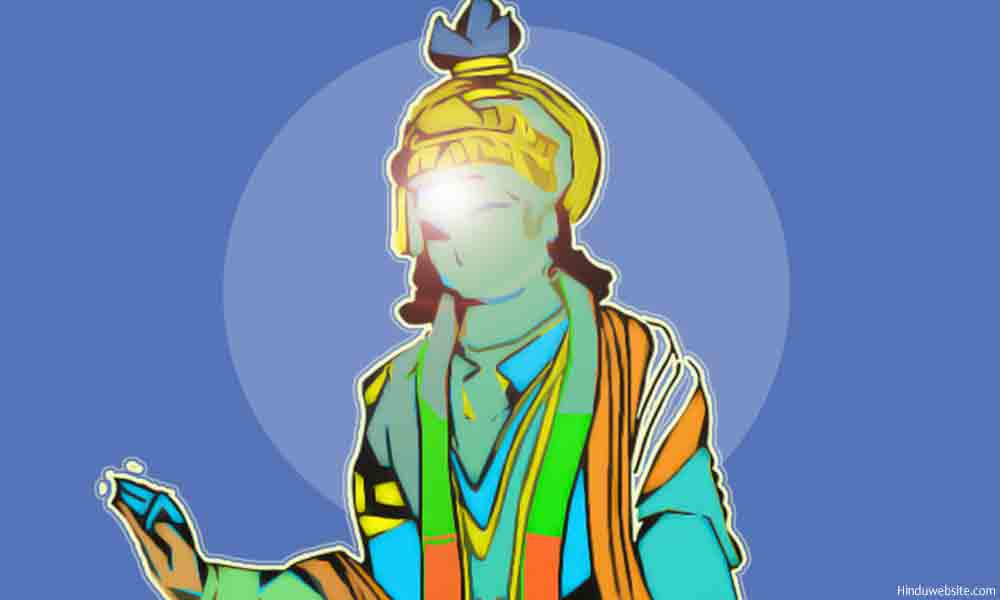
Summary: The Bhagavadgita is part of the epic Mahabharata. The discourse was delivered by Lord Krishna to Arjuna in the battlefield of Kurukshetra before the beginning of the great war. In this essay we explain why death and battlefield were chosen as the background to deliver the message of liberation and immortality.
Death as the symbol of suffering
The purpose of the teaching of the Bhagavad-Gita is to remove sorrow from our lives. The highest sorrow in life is caused by death. If death itself loses its power as an event contributing to our sorrow, then we are rest assured that any other event in our lives cannot become a causative factor for overwhelming sorrow.
The teaching of the Bhagavad-Gita starts from the 11th verse in the Second Chapter, wherein Lord Krishna makes a sweeping statement that the wise do not grieve neither for the dead nor for the living. If death as well as life do not cause sorrow then what else can?
This initial statement of Lord Krishna paves way for the whole teaching about the unfolding Truth of the Self which comes later, knowing which and with one's understanding rooted in that knowledge, we are convincingly explained how one is saved from the sea of sorrow. Subsequently, the means for attaining that status is also vividly described. The teaching is a complete and ultimate knowledge to those who seek to redeem themselves from the seemingly unending flow of sorrow in their lives.
The theme of the Upanishads is also the same. The Bhagavad-Gita is compared to a cow endowed with the rich milk containing the essence of the teachings of the Upanishads. Lord Krishna is compared to a skillful milk-man who brings out that precious milk for the wise and Arjuna is compared to a calf, without which it is not possible to milk the cow easily.
Since death is taken in the teaching as the most sorrowful event to be overcome, what else can be a more ideal context than a cruel war, where death looms large in front of not only one self but every one participating in it?
The teaching of the Bhagavad-Gita has taken place in the context of the Mahabharata. Any number of peaceful and pleasant situations would have been availed by the teacher, Lord Krishna, to impart this teaching to his student Arjuna, the latter being his friend and a nephew. But, the Lord had chosen the context of the war purposefully, neither to justify the war nor to encourage the killings, but to broach the subject of immortality with the impending death as the backdrop so that the import of his teaching is fully grasped.
We shall see a few more interesting aspects of the war field context of the teaching of the Bhagavad-Gita.
Why a discourse in the middle of two armies
To receive the Highest Knowledge, surrendering oneself to the Lord is the only criterion. Lord Krishna, despite his closeness with Arjuna, did not teach him that Knowledge till the advent of war because till then Arjuna's mind was preoccupied with the fratricidal disputes and had not yet got the opportunity to turn to the Lord for refuge. Although human beings are endowed with the creator's highest gift of Free Will, they usually tend to use it for any number of purposes other than the spiritual till the time comes. Surrendering one's Freewill unto the God produces the miraculous result.
Once the mind is tuned to the idea of surrender, it becomes immediately qualified to receive the Divine Knowledge by the divine grace. Symbolically, the fact that the Bhagavad-Gita is delivered in the context of a catastrophic war proves that no situation is exceptional for the deliverance of Divine Knowledge. In the middle of the two mighty armies who are raring to wage a deadly war, the teaching flows from the Lord as though He was waiting all along for the complete surrender of Arjuna to seek the Highest.
The teaching of the Bhagavad-Gita is universal. The positioning of Arjuna's chariot in the middle of two opposing armies wedded to different ideologies illustrates the universal nature of the teaching and the impartiality of the Lord. In Chapter one (V.21) Arjuna 'orders' Lord Krishna to place the chariot in the middle of the two armies. Lord Krishna, who subsequently preached the significance of duty, dutifully complies with his request, even though He is the Master of all the worlds and places the chariot right in the middle of the two armies, one symbolizing Righteousness and the other symbolizing Un-righteousness. This way both are given an opportunity to hear the teaching. The righteous grasp the teaching to achieve the Highest, whereas the un-righteous turn away in the other direction bound by ignorance and refuse to be guided by the sweet song of the Lord. They perish by their own arrogance.
The best teacher is the one who not only preaches, but also leads his life as per his teachings. We shall see how the words and deeds of Lord Krishna in the war field are in perfect harmony.
The twofold teaching
The teaching of the Lord Krishna in the Bhagavad-Gita is two fold in nature. One pertains to self-knowledge which is the goal and the other pertains to action with a certain spiritual attitude which is the means. Right action is again and again suggested as the means for the purification of the mind.
Both the above mentioned areas of His teachings are also symbolically reflected in the way He conducts Himself in the battle field. Arjuna, the one who has asked the Lord to act his charioteer, throws his weapons down and refuses to wage the war. But, Krishna, the charioteer of the whole creation, would not abandon his duty to act as Arjuna's charioteer. He holds the reins firmly with one hand as He unfolds the most secret and sacred Knowledge to Arjuna, while the other hand is held in the 'chinmudra', the icon of Self-Knowledge.
In the 'chinmudra', the index finger and the thumb are joined in a circle while the other three fingers are held together. The index finger symbolically represents the ignorant 'jiva' and the thumb represents the all knowing, ever existing 'Atman'. The other three fingers stand for the gross, subtle and causal bodies. As long as the jiva identifies itself with the gross, subtle and causal bodies it remain limited. But by destroying ignorance once it chooses to bend (surrender) itself before the Lord, it understands its true Atmic nature, which is represented by the circle formed by the union. A circle is truly infinite because it has no beginning and no end.
Thus in the war field Lord Krishna exemplifies his two fold teachings, Brahma Vidya ( Self Knowledge ) and Karma yoga ( Action with a Certain attitude ) through his own conduct.
The war field context is analyzed from various angles and it is the opinion of many that it is the most appropriate context to impart the divine knowledge.
Now, we will take up another observation made about the Bhagavad-Gita. There are people who quote verses from Bhagavad-Gita, and complain that God Himself in His teachings has admitted that He has created four divisions among the human beings. Based on this observation they question the universal nature of the teaching of Bhagavad-Gita.
Let us analyze this observation in detail.
Next: The Fourfold Caste System in the Bhagavadgita
Suggestions for Further Reading
- The Samkhya Philosophy and 24 Principles of Creation
- The Bhagavadgita On The Problem Of Sorrow
- The Concept of Atman or Eternal Soul in Hinduism
- The Practice of Atma Yoga Or The Yoga Of Self
- The Problem of Maya Or Illusion and How To Deal With It
- Belief In Atman, The Eternal Soul Or The Inner Self
- Brahman, The Highest God Of Hinduism
- The Bhagavad Gita Original Translations
- The Bhagavadgita, Philosophy and Concepts
- Bhakti yoga or the Yoga of Devotion
- Hinduism And The Evolution of Life And Consciousness
- Why to Study the Bhagavadgita Parts 1 to 4
- The Triple Gunas, Sattva, Rajas and Tamas
- The Practice of Tantra and Tantric Ritual in Hinduism and Buddhism
- The Tradition Of Gurus and Gurukulas in Hinduism
- Origin, Definition and Introduction to Hinduism
- Hinduism, Way of Life, Beliefs and Practices
- A Summary of the Bhagavadgita
- Avatar, the Reincarnation of God Upon Earth
- The Bhagavadgita on Karma, the Law of Actions
- The Mandukya Upanishad
- The Bhagavadgita On The Mind And Its Control
- Symbolic Significance of Numbers in Hinduism
- The Belief of Reincarnation of Soul in Hinduism
- The True Meaning Of Renunciation According To Hinduism
- The Symbolic Significance of Puja Or Worship In Hinduism
- Introduction to the Upanishads of Hinduism
- Origin, Principles, Practice and Types of Yoga
- Hinduism and the Belief in one God
- Essays On Dharma
- Esoteric Mystic Hinduism
- Introduction to Hinduism
- Hindu Way of Life
- Essays On Karma
- Hindu Rites and Rituals
- The Origin of The Sanskrit Language
- Symbolism in Hinduism
- Essays on The Upanishads
- Concepts of Hinduism
- Essays on Atman
- Hindu Festivals
- Spiritual Practice
- Right Living
- Yoga of Sorrow
- Happiness
- Mental Health
- Concepts of Buddhism
- General Essays