
Worship of one God, Monotheism in Hinduism
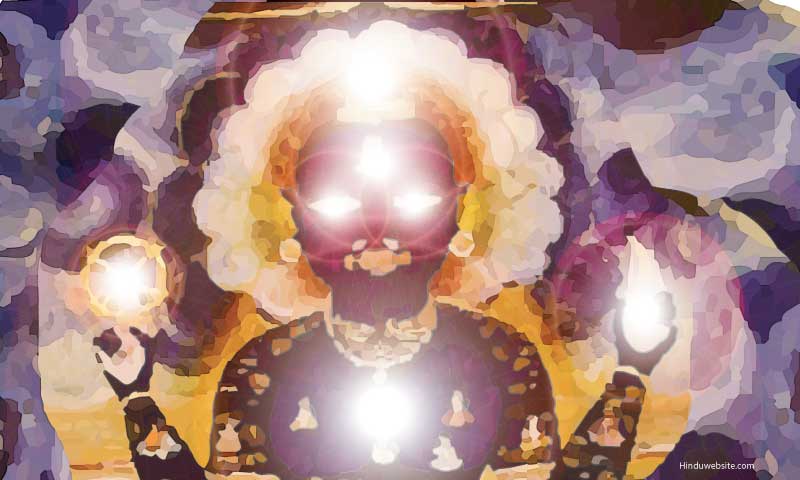
This article is about the origin and development of the concept of God in Hinduism in the context of the Vedas in general and the Isa Upanishad in particular and whether the elements of monotheism entered Hinduism indigenously through prevailing traditions or through some external source such as Judaism or Christianity. The author believes that the Vedic people were aware of a single supreme universal God from the earlier days, but they did not mention Him publicly nor made Him any offerings directly for valid reasons such as His impersonal, transcendental and absolute nature.
There is one translation of the Isa Upanishad in circulation the author of which, one Mr.Ninan, put forward a speculative theory that the Isa Upanishad was composed after its authors got the idea of a supreme and universal God from elsewhere in the post Christian era. He goes on to argue that the ancient Indians had no concept of God or Parameswara prior to the Christian era and that they worshipped only different devas or gods. In his opinion the Indians got the idea of Parameswara or a supreme God from El Elyon, meaning the most high, used by certain middle eastern ancient traditions to denote God. In his translation he refers to Isa as Jesus and tries to wiggle around some important concepts of Hinduism mentioned in the Upanishad by carefully avoiding refrence to their original meaning and giving them a new and rather distorted interpretation.
Mr. Ninan has done a good job by translating the Upanishad with a pro-Christian slant and acknowledging a scripture outside the pale of Christianity as sacred and venerable, whatever may be his motivation. From a Hindu perspective, there is nothing wrong with calling Jesus as Isa. One can call God by any name. Name is just a form, where as God is beyond all names and words. But the attitude with which the author has attempted to justify his theory shows his lack of familiarity with Hindu scriptures and his inability to comprehend the philosophy contained in them. Before attempting to translate the scripture, he should have followed the advice of Mr.R.Gordon1 who urged the Christians about 200 years ago in the following words to make use of the Hindu scriptures, as a part of their old Testament, for their value in expressing some important aspects of Christianity. He wrote:
"Christianity in India needs the Vedanta. We missionaries have not realized this with half the clearness that we should. We cannot move freely and joyfully in our own religion; because we have not sufficient terms and modes of expression wherewith to express the more immanental aspects of Christianity. A very useful step would be the recognition of certain books and passages in the literature of the Vedanta as constituting what might be called an Ethnic Old Testament. The permission of ecclesiastical authorities would then be asked for reading passages found in such a canon of Ethnic Old Testament as divine service along with passages from New Testament as alternatives to the Old Testament lessons"
Yes, if the church can accept the old testament of Judaism wholeheartedly without reservations, why not the Upanishads of Hinduism, a religion that has done no harm or disservice to Christ or his teachings and the scriptures that bear allegiance to no particular religion or prophet? It is important to note here that Hinduism is not a religion, but a repository of sacred knowledge that can be used to reach God through any religion or dogma or as a glue to cement one's faith. It can fill in the gaps of any religious creed and remove its weaknesses. If one can ignore the outer and ritual aspects of Hinduism as well as the individual divinities and their outer forms, one can easily incorporate into any religion the deeper philosophical and symbolic aspects of Hinduism, such as the truths reflected in the Upanishads, and its methods and techniques to transcend ourselves.
We have already seen how yoga can improve the lives of people, independent of their religious and spiritual beliefs. Hindu philosophy can do the same or perhaps even better. One does not have to believe in Hindu divinities to follow its theosophical truths or practice its methods. Hinduism offers a wide variety of choices to people to practice their individual faith. This is the beauty and the charm of Hinduism. Followers of other faiths should not have any quarrel with Hinduism because Hinduism believes in the divinity of all beings and the possibility of man ascending to the heights of God through various means according to his or her faith. In this endeavor religion is just a package, actually an illusion or delusion, because what is true and permanent is neither religion nor our single-minded attachment to it but the transcendental Self that is in all.
Mr.Ninan's contention that Indians got the idea of Parameswara from the Semitic expression of El Elyon and then used that concept in the composition of the Isa Upanishad is not tenable on many grounds. In a manner, it is a sacrilege because the Vedas, including the Upanishads, are divine revelations, not composed by man or human intellect. They contain profound symbolism which is not comprehensible even to the most knowledgeable among the students and scholars of Hinduism, speaking about which Sri Aurobindo2 said, "Dayananda has given the clue to the linguistic secret of the Rishis and reemphasized one central idea of the Vedic religion, the idea of the One Being with the Devas expressing in numerous names and forms the many-sidedness of His unity."
Hinduism is a tradition that evolved out of many streams of thoughts, all of which originated and developed in the Indian subcontinent. Around the time the composition of the Vedas was completed, India was the spiritual center of the world, where freedom of thought flourished by the side of Brahmanical puritanism and caste rigidities. Around 600 BCE, Indian society was a medley of conflicting thoughts and ideas of glorious visionary idealism, passive anarchism, agnostic skepticism and down to earth philosophies of materialism such as that of the Carvakas or the Lokayatas. If there was an attempt on the part of some to fathom the depth of their inner selves through ascetic means and rigorous austerities, there was also the case of some, who gave themselves up, with nihilistic resignation, to the vagaries of fatalism that advocated an effortless and passive submission to the elements of life and predetermined progression of events. Elsewhere, in pastoral communities, if ordinary minds remained content with the mechanical ritualism of their ancestors as a way of life, extraordinary minds such as Yajnavalkya, Janaka, Buddha and Mahavira trod new paths, breaking away from tradition, in search of solutions to salvation and the problem of suffering. It was a freedom of thought that sprung neither from the assurances of constitutional guarantees nor from the enlightened self-interest of truth seekers, but from an enquiry that rested upon the idealism and curiosity of selfless souls who had passion for truth and attempted to enquire into the enigma of life, beyond the limits of human intelligence and sensory knowledge and translate their experiences into meaningful human language.
Following are some of the points put forward by this author in support of the argument that the concept of an absolute and eternal Being as the source of all is an indigenous development in which neither Christianity nor Judaism played any role either directly or indirectly at any point of time in the history of Hinduism. The ancient Indians were aware of the existence of an eternal and supreme God whom they revered secretly for a very long time, before they began mentioning Him publicly in sacrificial chants and daily utterances. In proving this contention, we are not even going into the details of Indus valley civilization and its supposed connection with the Saraswathi civilization, believed to have flourished around 5000 BC. We are content to confine our discussion with the classical descriptions of the Vedic religion as mentioned in many standard books of Indian history with its starting point as 2500 BC or so.
1. The concept of a single universal God as the ruler of the world or the worlds was known to the people of Egypt, Persia and India long before Christ was born and also before Abraham of the old Testament. We find traces of monotheism in some of the earliest Rigvedic hymns. Dyaus the shining god of heaven and Prithvi the earth goddess are "among the oldest of the vedic deities."3 Varuna, who is also mentioned in Zoroastrianism and bears the epithet asura (ahura), was the "sovereign of the universe and guardian of the moral law," or rta. Some of the earliest Rigvedic hymns, such as the following, clearly reflect the elements of monotheism developing in early Vedic religion.4.
"They call him Indra, Mitra, Varuna and Agni;
He is the heavenly bird Garutmat.
To what is One, the poets give many a name. They call it Agni, Yama,
Matariswan."
In the hymn addressed to Hiranyagarbha (the cosmic golden germ), we find the following expression:
"Who is our Father, our Creator, Maker,
Who every place doth know and every creature;
By whom alone the gods were given their names,
To Him all creatures go, to ask Him."
2. In the ancient world, Jesus was not the only person who was recognized as the son of God. It was a common tradition in India, Egypt and Persia to regard a king as God himself in human form or a direct descendent of God and submission to him and his rule as a mark of surrender to God. The son of a divine ruler was regarded as the son of God and treated with utmost fear and respect by virtue of his birth. This ensured smooth succession and continuity of the political institutions upon earth. This practice should not be confused with the Vedic beliefs. These were political ramification of religious beliefs, the clever manipulation of human sentiment to bind people to their states and monarchs in the absence of regular means of communication such as radio. TV or newspapers of today.
3. Closely related with the concept of God in Vedic religion was the concept of rta or natural order of things and events. Ancient Indians believed that the regularity of events experienced in life, in the form of recurring days and nights, months and seasons, aging and death, movement of stars and planets, suggested the existence of an invisible and intelligent controller or regulator who, with his unassailable power, ensured their continuity and predictability (niyati) of the world. They referred that power as the will of God and believed that things moved out of fear and respect for Him.
3. As far back as 1500 BCE, the ancient Indians had the concept of a single universal God whom they referred as Brahman, Iswara, Hiranyagarbha, Hiranmayi-prajapati or simply as "That". In the words of George Feuerstein5 "The nuclei of the oldest Upanishads - Brahad-Aranyaka, Chandogya, Kaushitaki, Aitareya and Kena Upanishad - appear to date back over three thousand years ago." The emergence of Brahman as the single supreme God and Lord of manifest creation happened with the internalization of Vedic rituals and externalization of human form into cosmic form, as is evident in some passages of the Upanishads like the Katha and the Kaushataki Upanishad. Mr. Feuerstein further adds, "The idea that behind the reality of multiple forms - our ever changing universe - there abides an eternally unchanging single Being was communicated already in the Rigvedic times. What was new was that the grand discovery transcended the legacy of sacrificial ritualism."
Brahman was a mystery even to the gods. Then what of men! The Kena Upanishad explains how the gods themselves were unaware of the supreme Brahman till they came to know about Him from Uma Haimavati, after a brief encounter with Him, in which they were utterly and totally outsmarted by a mysterious Being. A miniscule knowledge of Him made Indra leader of the heavens and Vayu and Agni as prominent deities. This Upanishad supports the speculation that elements of monotheism entered Hinduism through ascetic traditions such as Savisim.
4. Of the two hundred plus Upanishads known, about 12 or 14 are considered the oldest and the most important. Of them Isa Upanishad is one. If we have to go by the interpretation of Mr.Ninan that Isa Upanishad was composed after the Christian era, then all the oldest Upanishads, which speak about Brahman or an Universal Being, and and most of the Samhitas and Brahmanas associated with them, should have also been composed in the same time frame, which is nearly 600 years after the Buddha and Mahavira and 300 years after Kautilya, the author of Arthashastra and the coronoation of Chandragupta Maurya, a contemporary of Alexander. This is an absurd claim because it is not tenable on any grounds. The principal Upanishads were composed long before the Christian era, at least by 700-800 BCE. The age ascribed to them by most historians, usually falls between 1500 BCE and 800 BCE. Some Indian scholars stretch the date back to 2000 BC or earlier.
5. Brahman is frequently referred in Upanishads in neutral gender as "That", a concept that is alien to the Semitic religions, which address God always as masculine. The oldest of the Upanishads, the Brihadaranyaka Upanishad, contains the famous saying (mahavakya), "Aham Brahmasmi," meaning I am Brahman. Another important statement in reference to Brahman is "tattvamasi," meaning you are That. One of the verses in the Isa Upanishad contains the poignant expression, "so'ham asmi, " meaning whatever is That, That also I am . These are pure Indian expressions, found nowhere else. In the old testament when Moses encounters God and asks Him who He is, He replies, "I am I am." In both the testaments, we do not find any humans expressing unity with God in such exalted words, where as in the Upanishads we find them frequently and use them as great truths (mahavakyas) for meditation.
6. The idea of a supreme universal Being as the Creator and Witness, as immanent and transcendent, hidden in every aspect of creation as the subject as well as object, in them and enveloping them, developed in the Indian subcontinent indigenously. Through the spiritual and ascetic paths of knowledge, the vision of such grandeur dawned upon the consciousness of seers and sages, as they contemplated upon the mysteries of human existence, looking inwardly for the truth that was hidden within themselves. In deeper states of meditation, they saw an image of themselves projected outwardly and universally upon the visible and invisible reality of the gross and subtle worlds. They saw the universal and infinite form of God as an extension of their own form (tattvamasi), the space outside as a continuation of the space within themselves (aham Brahmasmi) and the divinities whom they worshipped in the rituals actually as residing in their own bodies in subtle form, nourishing themselves through the good deeds and sacrificial acts of humans.
They acknowledged His sacred and silent presence, calling Him by different names and honoring His sanctity. But they were in no hurry to reveal the profound secret to everyone indiscriminately as their emphasis was not on preaching empty dogma but on duplicating the experience in themselves and others through sustained spiritual practice and arriving at Truth through personal experience. So they kept the secret to themselves, revealing it only to a few deserving aspirants. Since the Upanishads were taught in private, in whispering tones, as the master and the disciples sat together in a secluded palce, they were called the Upanishads, meaning sitting nearby. Speaking of the singular manner in which the concept of Supreme Being developed in India, Deussen 6 writes,
"Monotheism was attained in Egypt by a mechanical identification of the various local gods, in Palestine by proscription of other gods and violent persecution of their worshippers for the benefit of their nation god Jehovah. In India they reached monism, though not monotheism, on a more philosophical path seeing through the veil of the manifold the unity which underlies it."
7. The concept of God found in the Upanishads is much grander, more complex and essentially different than the descriptions of God found in other religions. The Vedic religion was neither polytheistic nor monotheistic but had elements of both. It is referred to as henotheism or kathenotheism, characterized by belief in multiple gods and each god standing out as the highest. The Brahman of Upanishads is an impersonal God, who does not take sides, nor responds to the calls of individuals because there is nothing outside of Him and there is nothing other than Him. He is complete, fulfilled, self-absorbed and immersed in Himself. He does not communicate with anyone, because for communication you need an object and there is no object that exists outside of Him. But He can be reached and experienced personally as oneself. That job is left to His other manifestations, the lesser divinities and personal Gods such as Vishnu and Siva who are worshipped in their highest aspect as Brahman Himself. In Hinduism, the rule of God extends far beyond the earth and heaven to innumerable worlds of light and darkness and in multiple planes of granularity, from the subtlest to the grossest. The descriptions of Brahman or Universal Self in Hinduism is no different from those of the universe found in the text books of quantum physics and modern astronomy, except that one is spiritual and the other purely material. Speaking of the Vedic vision of God, Max Mueller7 wrote,
"In fact, the Vedic poets had arrived at a conception of the godhead which was reached once more by some of the Christian philosophers at Alexandria, but which even at present is beyond the reach of many who call themselves Christians."
8. Isa Upanishad is one of the oldest of the Upanishads composed prior to the Christian era. The Upanishad speaks of a universal Lord "Isa" and reflects the growing influence of Vaishnavisim, Saivism and the Bhakti (devotional) movement. Ancient Indians were familiar with the word "isa" long before the Christian era. The Upanishad does not recognize son of God but God Himself as the omniscient and omnipresent ruler and dweller of not just one world but of many moving worlds within the moving universe (jagatyam jagat). Some of the concepts mentioned in it are antithetical to the main teachings of Christianity, such as the concept of karma, surrender to God, performance of obligatory duties, impermanence of the life and things, detachment, departure of soul, right knowledge and right actions, sunlit worlds (not just one heaven) and sunless worlds (not just one hell) and cremation. Most importantly, some of its verse are chanted during cremation ceremonies as the body is consigned to flames. It advocates neither the blind worship of God nor relentless preoccupation with the material rewards, but a balanced approach in life towards God and personal duty, towards the existential reality and the transcendental reality and towards knowledge of God and the knowledge of life. It cautions people not to choose knowledge (spiritual practice) at the expense of ignorance (mundane life) or vice versa to avoid entering the sunless worlds of utter darkness.
9. One of the verses (15) in the Upanishad is a prayer for the departed soul's journey to the world of sun (surya or savitr), where he is beseeched to grant the soul a passage to the sunlit world, addressing him with different names, such as Pusan, meaning nourisher, and prajapatya, meaning son of Prajapathi Brahma (Prajapati is the father of Adityas, the solar deities of which the sun is one). Aditi, the universal Mother and the mother of the devas, is also their mother. According to Vedic beliefs, a departed soul travels either to the world of Sun or the world of moon depending upon in which part of the year the death occurred. Those who died during the first half of the year (summer solastice) went along the northern route to the sun and those who died in the second half of the year (winter solastice) went along the southern route to the moon. They were either consumed there by gods or returned to the earth, after exhausting their karmas, to be reborn again. The Isa Upanishad reflects the ancient beliefs of Vedic religion, before the concept karma and rebirth took firm roots and the concept of souls travelling to the ancestral world gave way to the more complex forms of after life, cosmology and reward and retribution for the souls for their actions upon earth. In no way this Upanishad refers either to Jesus or the Biblical God of genesis.
10. The word Isa is a Sanskrit word, neither Semitic nor Aramic nor Hittite nor Phoenician nor Persian. It is frequently used in various religious expressions and rooted in Hindu tradition to denote the power and status of divinities as well as men of position. Isa means master or lord. It is used in such expressions as vagisa, suresa and mahesa to denote royalty or lordship. Isa is an epithet of Lord Siva. Etymologically, the "ī" in the "isa" (pronounced as eesa) means desire or the cupid god Manmadha. "Sa" means the destroyer or the weapon that destroys. In this sense Isa means Lord Siva, who destroyed the cupid Manmadha when he tried to tempt the meditating Siva to fall in love with Parvathi. There are many derivative and associative words of Isa used frequently in Hindu literature, mostly in a religious sense. Isana, a derivative word, is an epithet of Lord Siva, Surya (the sun god) and also Lord Vishnu. Isanya is the north eastern direction, which is ruled by Isana or God Himself. It has special significance in Vastu sastra and the construction of buildings and temples. Isita, meaning superiority or greatness, is one of the eight siddhis or perfections of Lord Siva. Isvara, another derivative word, means powerful, capable, lord, ruler, husband, king and Siva. In classical yoga, Isvara means individual soul and personal god. Goddess Durga is known as Isvari. Isa-sakha is an epithet of Kubera. The sacred city of Varanasi is known as Isanagari or the city of Lord Siva.
11. For the Hindus the Vedas are sacred and inviolable. They constitute the sruti literature because they are only heard and not manmade (apaurusheya), in contrast to the smriti literature, which is believed to be a product of human intellect. Isa Upanishad is an inseparable part of the Yajurveda. According to Hindu beliefs the Vedas are inviolable because they constitute the standard truth or the final authority (sabda pramana) in ascertaining correct knowledge. Each word in the Veda is indisputable because it emanated from God Himself directly. One can only chant it or use it but cannot argue about its divinity or authority. To make an assumption that the Isa Upanishad was composed with the help of borrowed concepts from an unknown religion, amounts to doubting the sanctity of the Vedas and their divine origin.
12. For more than 4000 years, the priestly families of the Hindu socieity maintained the purity of the Vedas with utmost devotion and dedication. It was not done under the fear of temporal authority or the lure of money. It was done as a sacred responsibility, an obligatory duty, for the preservation of dharma and as a service to God, not by a few, but thousands of families, for generations. As trustees of sacred knowledge, they assumed moral, personal, family and religious responsibility to preserve them for the posterity, often under testing circumstances and fear of death in the hands of intolerant rulers. They did not allow any tampering of the scripture for fear of polluting the rituals and attracting the displeasure of the divinities. The Bible is a holy book. It is about God but not from God. In contrast, the Vedas are divine revelations about God and His creation. They are manifested at the beginning of each time cycle (mahayuga) and withdrawn at the end of it. They are meant for the welfare of men and to keep the worlds of beings and gods in their respective spheres and let the dharma (divine law) and rta or regularity follow its own course.
13. That the purity of the Vedas and other religious scriptures were maintained in India since the earliest times has been confirmed by the European scholars who studied them in the past. According to A.L.Basham 8, the European historians who collected the Vedas from different places in India during 1780 were amazed to see that "the text as transmitted in Kashmir was scarcely different from that transmitted in Tamilnadu." This was over 4000 years after the early Vedic hymns of the Rig-Veda were composed.
14. Anyone who is familiar with Indian religions knows that Hinduism is the oldest living religion10 of the world. All the religions and religious traditions that thrived in ancient India, including some atheistic and agnostic schools, originated from India indigenously and shared some basic concepts. Even the atheistic schools like the Carvakas had something in common with the theistic schools in matters such as the standards of objectivity (pramanas), nature of substances (padarthas) and nomenclature of elements (bhutadi). There was no widespread influence or knowledge of the Judeo-Christian religions in the Indian subcontinent till the end of the Mughal period. They had some knowledge of the Indo-Iranian religions such as Zoroastrianism, but the relationship between the two was hardly cordial. Even if we assume that some Christian missionaries travelled to India in the early Christian era, their contribution and influence on Indian society and their religious beliefs remained isolated and local.
15. Finally, one can imagine the difficulties and obstacles involved in the ancient world in accepting ideas that were alien to a native people. through alterations to a religious scripture that was believed to be inviolable, in a religion that had no centralized authority. It is difficult to foresee it happening on a uniform scale, across the length and breadth of the country, spanning thousands of miles, involving countless individual priestly families of different hues and languages, at a time when communication was not easy to establish, and in a manner that would have allowed the alterations go unnoticed, legitimate and permanent. For over 3000 years, India has an going tradition of scholars writing commentaries on the prevailing texts and debating the finer nuances of religious dogmas to settle differences or clarify doubts. The religious groups of ancient India competed for attention and membership through devotional and personal means rather than wars and aggression. If they were familiar with the concepts of Christianity they would have said so somewhere in their commentaries.
Conclusion
Although the early Vedic people worshipped various divinities, they knew that hidden behind all the divinities and encompassing all the reality was a single universal Principle that controlled the order and rhythm of the worlds and ensured their continuity. They called it variously as That (tat), the One (akam), the ancient (adi), the eternal (nityam) and Brahman. They did not mention Him directly in the early hymns nor offered Him oblations directly for valid reasons. Firstly Brahman was a secret. Even the gods could not fathom Him nor Knew Him. So He was unmentionable in the public. Secondly, He was an impersonal and absolute God who favored none, desired nothing and was forever stable and detached. So the Vedic priests who aimed to seek personal favors from the divinities through rituals, saw no point in seeking His help. Thirdly, He was incommunicable through the senses and the mind. The duality of the knower and the known, the subject and the object, or the process of knowing did not exist in Him. A gulf separated one aspect of Him for the other, while He remained immersed in Himself, watching the movements (jagat) He created within Himself (jagatyam) with dispassion. He was the two birds in One; one watched, while the other enjoyed. The gulf between the two sides of His reality could not be bridged except through transcendental means. The Vedic priests therefore choose not to offer Him any prayers directly, while they knew that all the prayers reached Him ultimately through the divinities in whom He existed. They confined their prayers to the lesser divinities and left the task of seeking Brahman to those who were willing to make the necessary sacrifices and reach out to Him spiritually through austerities and penances.
It was only when the impersonal Brahman became personal in the form of personal God, as the Vedic religion was now reaching out to a wider audience in the Gangetic plains of northern India, we see a definite shift in emphasis from the early Vedic deities such as Indra, Agni and Varuna to newer gods with greater charm and personal appeal such as Siva and Vishnu. It coincided with the development of devotional theism (bhakti movement) and the emergence of strong theistic movements such as Saivism, Vaishnavism and Shaktism. In the Bhagavadgita we see this shift clearly and hear about it directly from Lord Krishna who declares that although He is the unmanifest, supreme and highest universal God who exists everywhere and in everything, it is not difficult to communicate with Him and that He would respond to the calls of His devotees promptly through His manifest form. He also explains the difficulties in worshipping invisible and formless Brahman in the following manner 9.
Difficult and full of suffering indeed is the path
Of those whose minds are fixed on the Unmanifest
For indeed most painful is the path of those
Whose goal is to reach the Unmanifest.
But those who are fully devoted to Me
Who surrender all actions to me,
Worship Me and meditate on Me
With unflinching devotion
I speedily rescue them from
the samsara that is bound by death
The Vedic scholars not only envisaged the universal supreme God but speculated upon the origin of life and the manifestation of the worlds. The creation hymn of the Rigveda is a supreme example of the extent of maturity of thought prevailed in those times. Even by the liberal and biased estimates of European historians, such as Basham, the creation hymn was composed "no later than 900 BCE." It shows an "incredible sophistication" of the "development of thought," presenting an "imaginative picture of a universe evolving out of a primal condition that was neither being nor nonbeing, neither the cosmos nor the chaos." The long hymn which contains many fundamental concepts of Hinduism, concludes in the following manner.
But, after all, who knows, and who can say
whence all it came, and how creation happened?
The gods themselves are latter than creation,
so who knows truly whence it has arisen?
Whence all the creation had its origin
He, whether He fashioned it or whether He did not,
He who surveys it all from highest heaven
He knows - or may be He does not know.
Contrast this with the creation theory proposed in the Genesis and you will see the extent of difference between the two religions in their disposition and approach to the concept of God.
Suggestions for Further Reading
- Om, Aum, Pranava or Nada in Mantra and Yoga Traditions
- Brahmacharya or Celibacy in Hinduism
- Atheism and Materialism in Ancient India
- Solving the Hindu Caste System
- How To Choose Your Spiritual Guru?
- Creation in Hinduism As a Transformative Evolutionary Process
- Wealth and Duty in Hinduism
- Do You Have Any Plans For Your Rebirth or Reincarnation?
- Understanding Death and Impermanence
- Lessons from the Dance of Kali, the Mother Nature
- Letting your God live in You - The True Essence of the Hindu Way of Life
- prajnanam brahma - Brahman is Intelligence
- Maslow's Hierarchy Of Needs From The Perspective Of Hinduism
- The Defintion and Concept of Maya in Hinduism
- The Meaning of Nirvana
- Self-knowledge, Difficulties in Knowing Yourself
- Hinduism - Sex and Gurus
- The Construction of Hinduism
- The Meaning and Significance of Heart in Hinduism
- The Origin and Significance of the Epic Mahabharata
- The True Meaning of Prakriti in Hinduism
- Three Myths about Hinduism
- What is Your Notion of God?
- Why Hinduism is a Preferred Choice for Educated Hindus
- Essays On Dharma
- Esoteric Mystic Hinduism
- Introduction to Hinduism
- Hindu Way of Life
- Essays On Karma
- Hindu Rites and Rituals
- The Origin of The Sanskrit Language
- Symbolism in Hinduism
- Essays on The Upanishads
- Concepts of Hinduism
- Essays on Atman
- Hindu Festivals
- Spiritual Practice
- Right Living
- Yoga of Sorrow
- Happiness
- Mental Health
- Concepts of Buddhism
- General Essays
Footnotes
1. Mr.R.Gordon Milburn, the Indian Interpreter 1913. As quoted in the Principal Upanishads by S. Radhakrishnan.
2.The Secret Of the Veda, Chapter III, Modern Theories by Sri Aurobindo.
3. An Advanced History of India, R.C.Majumdar, H.C.Raychaudhuri and Kalikinkar Datta, Chapter III, The Early Vedic Age.
4. Ekam vipra bahudha vadanti, agnim, yamam, matariswanam ahuh - Rigveda 1.164.46.
5. The Yoga Tradition, Its History, Literature Philosophy and Practice by George Feuerstein, PH.D.
6. Outlines of Indian Philosophy, Deussen.
7. The Six Systems Of Indian Philsophy by Max Mueller.
8. The Origins and Development Of Classical Hinduism, by A. L. Basham.
9. The Bhagavadgita, Chapter 12 verses 5 to 7.
10. The word religion is used here and elsewhere for lack of proper expression. Hinduism is not a religion in the western sense of the word. This fact is well known to all who are familiar with it.