
The Concept of Liberation, Moksha or Nirvana
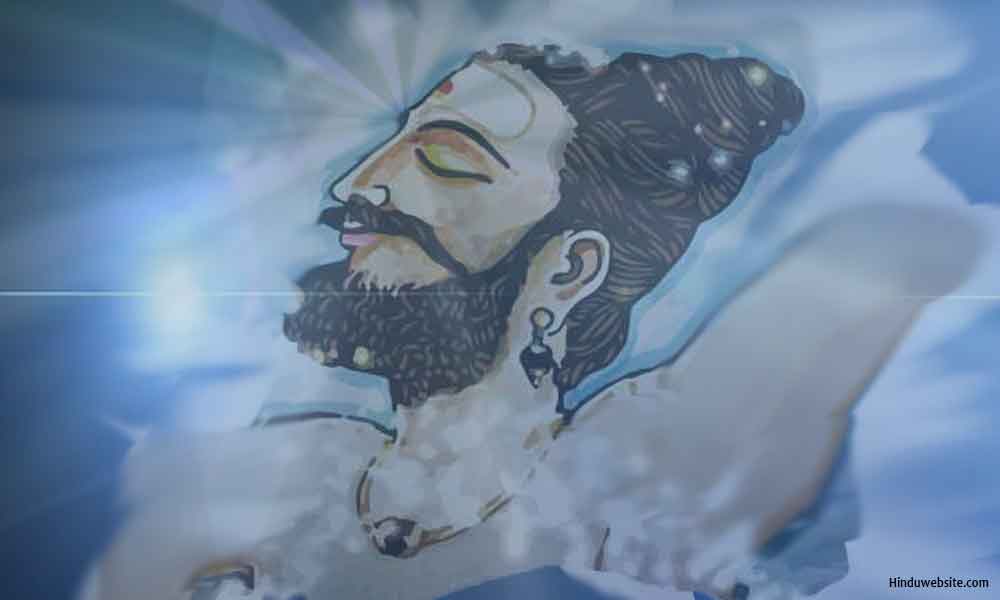
The concept of liberation is one of the distinguishing features of Hinduism, Buddhism, Jainism and Sikhism. It is variously referred to as mukti, moksha, kaivalya and nirvana in the scriptures. Mukti means freedom from bondage. Moksha means destruction of delusion. Kaivalya means aloneness arising from destruction of all bonds; and nirvana means entering into a stateless state of immutability and non-becoming.
Liberation also means acquiring self-knowledge (atma jnanam) of knowing who you are or what your essential nature is or knowing the truths concerning yourself and the world in which you live. In its natural state the Self is free; but here upon earth a living being is bound to things and nature. Life is a process of change, becoming and being subject to the three cardinal functions of creation, preservation and destruction.
In liberation, the Self is forever free from change and becoming. In a liberated state, the individual Self exists as an eternal and infinite being without any limitations except a few that give It the distinction of an individual soul. The Self has no gender, no form and no distinction. It is perfect and complete in itself. It is pure consciousness that is self-aware and self-luminous. What happens to a living being (jiva) upon death? Where do they go?
According to the atheistic schools such as the Carvakas, which prevailed in ancient India long before the advent of Buddhism, the beings returned to the elements when they died. Applying pure logic and depending solely upon the direct knowledge they gained from their perceptions, they argued that there was no eternal soul in the human body and therefore no afterlife or heavenly life for those who died. Since there was no life, they argued, people should make the most out of their lives, pursuing both pleasure and wealth, without wasting their time and resources upon religious duties and sacrificial ceremonies. The theistic traditions however cautioned people not to fall into the trap of materialistic realism or the lure of physical pleasures, but live with a sense of responsibility with an eye towards their liberation. In their worldview, life extended beyond the confines of the earth and the human personality had an invisible, transcendental and subtle aspect, that was beyond that mind and the sense and which could be reached only through transcendental means. While they argued about the nature and existence of God, they held similar notions about the liberation of the individual beings from the suffering of life. They suggested that four possibilities existed for each individual soul, upon leaving the world.
- The individual being secures a place in heaven to enjoy the pleasures of heavenly life, if it indulged in righteous actions and acquired merit during its existence upon earth.
- The being goes to hell to suffer greatly as a part of Its-purification and penitentiary correction, if it deviated from the path of righteousness and indulged in sinful actions.
- The being goes neither to the heaven nor to the hell. Instead, it remains in an intermediary state of limbo in the middle atmospheric region as a ghost or a spirit because of some peculiar circumstances.
- The being attains eternal liberation, if it has managed through spiritual practice and past life actions to rid Itself of all karma and impurities. It enters the highest world of Brahman and remains there for eternity in the presence of Isvara, the Universal Supreme Being.
Of these, the first three states are considered temporary. Having exhausted the merit or demerit of their previous karmas in these worlds, the individual souls return to earth to take another birth as mortal beings and continue their existence. However, liberation is permanent. Those who achieve liberation never return to earth. What happens to them when they achieve liberation? How do they exist and in what state? Few possibilities are suggested in the scriptures for those who escape from the cycle of births and deaths and enter into the world of immortals.
- They cease to exist as individual souls and become one with the Universal Self.
- They cease to exist as limited mortal beings. They become eternal souls, their original and true state, and remain in that state forever.
- They cease to exist as individual beings and enter into a changeless state of emptiness or nothingness, from which there is no return and in which there in no becoming, being, striving or forming.
- Having attained liberation, an individual soul may continue to progress further in the world of Brahman from one cycle of creation to another and earn a place in the pantheon of gods of the highest order.
How can one achieve liberation? Are there any specific practices, which are necessary to attain liberation? Our scriptures suggest various methods to purify the mind transcend the obstacles and limitations to attain the stateless state of pure consciousness. They allude to the following three broad approaches, which are effective as means of liberation.
- Transforming and purifying the mind and the body to achieve inner perfection, through righteous conduct, virtuous living, self-restraint, detachment, equanimity, sameness and dispassion.
- Cultivating right knowledge and proper discernment, by practicing self-study or learning from wise masters or by awakening the psychic centers or cakras.
- Practicing devotion, concentration, meditation and self-absorption whereby the mind and body are completely purified, perfected and stabilized.
To achieve liberation, we need to know the obstacles or what stand in between liberation and us. Our traditions recognize the following impurities, which prevent us from knowing who we are.
- Ignorance or delusion
- Desires
- Attachment
- Egoism
- Sinful actions
- Nature
There are many other factors and forces, which bind us to the world and subject us to the cycle of births and deaths. The above-mentioned ones are however important. They are also interrelated. Thus, for example, desires arise from our ignorance and delusion. They in turn enhance our ignorance. From desires comes attachment. From attachment arises egoism. Out of desires, ignorance, attachment and egoism, we indulge in sinful actions. Again all these happen because we are subject to the impurities of Nature, namely rajas and tamas. Because there are many factors, which keep us chained to the corporeal and limited existence and because Nature would not like too many aberrations, achieving liberation is a very difficult and near impossible process. To achieve liberation we have to focus on all the factors that are responsible for our bondage and deal with them either individually or comprehensively.
Liberation means freedom from all bonds, holds, desires, limitations and death. Although we may think that we are free and live in a free world, physically and mentally we are subject to many limitations and relationships, which do not let us live our lives freely or experience the freedom of unbound souls. There are many invisible chains that hold us shacked to the world. Everyone who lives here is a prisoner of his own thoughts and actions. Our desires, fears, anxieties, emotions, feelings, thoughts, cares, concerns, relationships, goals and natural limitations hold us back. They come in the way of our happiness and our ability to live freely and joyously. They keep us confined to our little worlds. To achieve liberation we have to break through the walls that separate us from the rest. We have to overcome everything that holds us back or holds us in chains. How can there be freedom, if we are conditioned to live like slaves to our own fears and desires? To be free from the bonds of the earth, we have to learn to live freely both mentally and physically. The following three-step approach to liberation is gleaned from various scriptures and presented here in a summary form.
Physical liberation
This is the first step, also the most important, because none can achieve liberation without becoming free from the shackles of the body. In this, you have to free your body slowly and gradually from the natural urges, limitations and impulses to which it is subject. You have to control certain bodily functions and activities such as hunger, thirst, breathing, sleep, sexual desire, craving for physical pleasures, and your attachment with your name and form. You do this by various means, such as following a rigorous code of conduct, observing restraints, regulating your breath, seeking the company of pure people and keeping the body pure and healthy. Our fight for liberation has to begin with body, because it is the primary domain of Nature, where it holds its maximum power and strength. Since Nature wields such powerful influence upon our bodies, even the most advanced yogis and gurus often succumb to natural drives and lose their way.
Mental liberation
The human mind is the most restless and unstable aspect of our personalities. It is also one of the most limiting and binding factors in our liberation. It is susceptible to external influence and vulnerable to many internal weaknesses. Liberating the mind from the shackles of the world is therefore of utmost importance. You have to accomplish this by controlling your thoughts, desires, impulses, emotions, feelings, cares and concerns, anxiety, attachment, likes and dislikes, prejudices, enmity, egoism, pride, greed. You have to cease to be judgmental, critical, inimical, anxious, angry, fearful, proud, deceitful or passionate. You have to cultivate detachment and remain impervious to the problems and difficulties in your life. Outside events should cease to bother you as you practice equanimity and sameness towards all dualities and pairs of opposites. You may accomplish these usually by cultivating virtues and practicing dispassion, detachment, equanimity, patience, forgiveness, tolerance, compassion, right thinking, concentration, meditation and self-absorption.
Spiritual liberation
If the mind and the body are under control and if they are purified and filled with the predominance of sattva, spiritual liberation would naturally follow. However, it is possible only when you are completely free from every conditioning, desire and attachment. Nothing should disturb you, overwhelm you or conquer you. You have to be like the lotus leaf in the muddy waters of life, untouched by the impurities and the action that happens around you. Usually, you arrive at it through renunciation, detachment, surrender, faith, knowledge and devotion. You practice it by studying the scriptures, transcending your ignorance, cultivating right discernment, following the scriptural injunctions, approaching a spiritual master or a learned person, surrendering to God and performing self-less and sacrificial actions, without desire and expectations.
Spiritual liberation is possible for everyone. It is not some metaphysical concept, which cannot be tested physically. Achieving liberation is difficult, but not impossible. To become truly free, we must learn to become free first in our minds and bodies. We gain control over them and over the constraints to which we are subject so that we may live like free souls, without care or concern. We must cease to indulge in self-promotion and self-perpetuation and learn to flow with the flow of life. We have to open ourselves to the vagaries of life, without fear or expectations, living like the dust particles that float freely in the air without a will of their own.
As long as you have the notion of "I" and "mine", and as long as you want to be something or have something, you cannot be truly free here or hereafter. To be free spiritually, you have to be free first both mentally and physically. Liberation in the mind and body leads to the liberation of the Self. To let you Self free, you have to let your life be guided by the will of Brahman, giving up any notion of controlling it or directing it out of care or concern. You have to to overcome your passions and emotions through detachment and cultivate sameness. Sameness (samatvam) is the key. If you are same to every duality in life, you are already free.
Suggestions for Further Reading
- Om, Aum, Pranava or Nada in Mantra and Yoga Traditions
- Brahmacharya or Celibacy in Hinduism
- Atheism and Materialism in Ancient India
- Solving the Hindu Caste System
- How To Choose Your Spiritual Guru?
- Creation in Hinduism As a Transformative Evolutionary Process
- Wealth and Duty in Hinduism
- Do You Have Any Plans For Your Rebirth or Reincarnation?
- Understanding Death and Impermanence
- Lessons from the Dance of Kali, the Mother Nature
- Letting your God live in You - The True Essence of the Hindu Way of Life
- prajnanam brahma - Brahman is Intelligence
- Maslow's Hierarchy Of Needs From The Perspective Of Hinduism
- The Defintion and Concept of Maya in Hinduism
- The Meaning of Nirvana
- Self-knowledge, Difficulties in Knowing Yourself
- Hinduism - Sex and Gurus
- The Construction of Hinduism
- The Meaning and Significance of Heart in Hinduism
- The Origin and Significance of the Epic Mahabharata
- The True Meaning of Prakriti in Hinduism
- Three Myths about Hinduism
- What is Your Notion of God?
- Why Hinduism is a Preferred Choice for Educated Hindus
- Essays On Dharma
- Esoteric Mystic Hinduism
- Introduction to Hinduism
- Hindu Way of Life
- Essays On Karma
- Hindu Rites and Rituals
- The Origin of The Sanskrit Language
- Symbolism in Hinduism
- Essays on The Upanishads
- Concepts of Hinduism
- Essays on Atman
- Hindu Festivals
- Spiritual Practice
- Right Living
- Yoga of Sorrow
- Happiness
- Mental Health
- Concepts of Buddhism
- General Essays