
Sadhana Chatushtayam - Way to Salvation
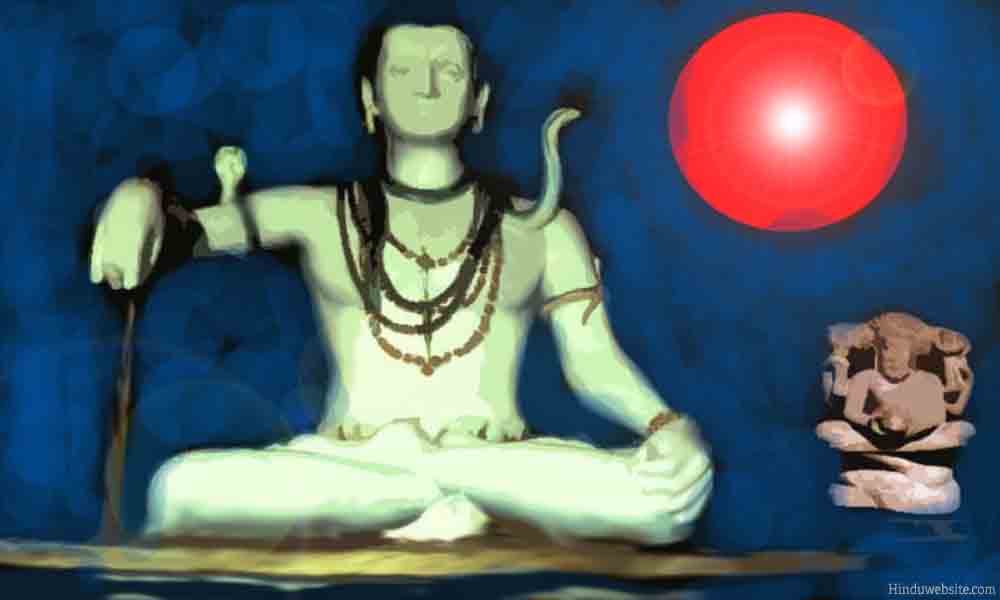
Salvation or moksha means freedom from delusion (moha), illusion (Maya), ignorance (ajnana), duality (dvanda), egoism (anava), attachment (raga), aversion (dvesha) and death (mortality). In Hinduism it is considered the highest state or the supreme state (parandhamam). Beings who are caught in the cycle of births and deaths (samsara) are subject to these limiting and binding phenomena. Those who transcend them through austere self-effort have better chances of becoming free. The rest remain bound to mortal life.
Freedom from the cycle of births and deaths and thereby from the existential suffering, and all the causes which leads to them, this is called variously as final liberation, salvation, moksha, nirvana, kaivalya. A person who irrevocably achieves it is called jivanmukta.
In Hinduism salvation is a recurring theme. It is perceived as the best solution to overcome all the problems and suffering which we experience here. The scriptures suggest various ways to achieve it. Not all agree with regard to the methods and techniques required to achieve salvation, but they all declare that the way to salvation in human life is through effort and self-purification.
In his acclaimed work Vivekachudamani (the Jewel of Wisdom), sri Shankaracharya identified four important qualities that are very essential for achieving salvation or perfection on the spiritual path. They are collectively known as the four spiritual endowments (sadhana sampatti) or the four means of spiritual practice (sadhana chatushtayam). Every spiritual practitioner is expected to know them and cultivate them. They are the means to know Brahman and attain liberation.
Spiritual life is not easy. On the spiritual path one has to resolve many problems and overcome many obstacles, and unless one is well equipped with knowledge and virtue, it is very difficult to journey till the end. Those who are interested in spiritual life and liberation should focus their effort on cultivating these four endowments without fail, because without them one will be vulnerable to many dangers and setbacks. The four spiritual means of liberation are discussed below.
1. Discriminating intelligence (vivekam). Many problems in our lives can be traced to the wrong decisions we make due to the lack of knowledge, reasoning or discrimination. We must know difference between the right and the wrong in the context of what we intend to do and between what leads to freedom and what leads to bondage. It is possible only when we have pure intelligence, which is not tainted by the impurities of egoism, delusion, ignorance, etc. Discriminating intelligence is a superior faculty of the mind, which enables a practitioner to know the difference between truth and falsehood, reality and delusion, knowledge and ignorance and right and wrong.
Without discrimination it is not possible to know the truth about who we really are and how we engage in actions which lead to consequences (karma) and suffering. We need to know how we create our own suffering and what we can do about it. It cannot be learned from reading the scriptures only. We need to learn from observation and experience also.
With proper discernment one realizes the ultimate truth behind all the illusory phenomena one can find sanctuary in God or Brahman, who is real and everything which arises from him as the objective reality is but an illusion. Cultivating such discerning wisdom, one becomes indifferent to the phenomenal world and develops dispassion, detachment (vairagyam) and distaste for worldly pleasures.
The goal of these practices is liberation and the methods that are used to achieve it are known as the path, the method (yoga) or the practice (sadhana). Eventually, as one becomes stabilized in the contemplation of Brahman and in the practice of Yoga, one enters the undisturbed state of sameness and equanimity. One of the principal aims of classical yoga is to cultivate viveka khyati or the ability to discern things properly whereby one develops insight into the nature of things and one's own Self.
2. Dispassion and detachment (vairagyam): The Upanishads as well as the Bhagavadgita identify desires as the root cause of bondage and suffering. Desires are caused by the activity of the senses. Due to the repeated contact with the objects of pleasure and pain, one becomes subject to attraction and aversion, which eventually leads to attachments and desire-ridden actions, with further consequences to one's life and destiny upon earth.
Our propensity to seek pleasure and avoid pain is primarily responsible for afflictions and mental disturbances. Without a stable mind one can achieve neither peace nor liberation. The classical yoga of Patanjali focuses upon stilling the mind and entering deeper states of Samadhi (self-absorption).
The Yogasutras (1.12) state that the afflictions of the mind (citta vrittis) can be stilled only by practicing dispassion. Dispassion arises when we develop discriminating wisdom and stop craving for sense objects. More importantly, one has to become indifferent to everything, including the gunas and their influence. True liberation comes only when one is detached from everything, including the need for liberation and dependence on God.
3. The six virtues (shatsampatti). Liberation is not possible unless one is pure and righteous. For that, one has to cultivate divine qualities through the predominance of sattva to overcome selfishness. One has to restrain oneself from worldliness and from the chief evils such as pride, anger, lust, greed, etc. One should also focus upon acquiring the six virtues, which are considered essential to overcome the impurities of the mind and body. These six virtues are known as the six treasures or types of wealth. They are listed below.
- Shama: internal control of the mind and the sense organs
- Dama: External control of the body , especially the organs of action (karmendriyas) and the organs of perception (jnanendriyas) by withdrawing them or disassociating them from the sense objects.
- Uparati: Cultivating sameness towards the dualities of life by renouncing the world and attachment with worldly things, whereby one becomes free from the afflictions of the mind and remains stable and focused.
- Titiksha: It is the ability to tolerate or withstand the sorrows and disappointments of life without feeling disturbed or oppressed by them. It is the willingness or the readiness to accept life unconditionally as it happens without expectations, resignation, or resistance.
- Shraddha: It is having faith in yourself, you teacher, your religion, your scriptures, your practice, your path, God, the divinities, the methods and techniques you practice to perfect yourself on the spiritual path.
- Samadhi: The ability to stabilize the mind and remain self-absorbed. This happens only when the mind is freed from all the afflictions through the practice of the eightfold yoga and cultivation of sattva. Samadhi is said to be of several types, but the highest of them is known as the dharmamegha samadhi.
4. Mumukshatvam: It is the intense aspiration for liberation from the triple evils, namely egoism, bondage and ignorance to which we are subject and become one with the Self or enter the highest world of Brahman. A person who yearns for liberation is known as mumukshu. The desire for liberation does not arise easily in a person. It arises when a person cultivates discriminating intelligence and attains the knowledge of the self and Brahman from study of the scriptures and the teachings of learned masters.
Suggestions for Further Reading
- Om, Aum, Pranava or Nada in Mantra and Yoga Traditions
- Brahmacharya or Celibacy in Hinduism
- Atheism and Materialism in Ancient India
- Solving the Hindu Caste System
- How To Choose Your Spiritual Guru?
- Creation in Hinduism As a Transformative Evolutionary Process
- Wealth and Duty in Hinduism
- Do You Have Any Plans For Your Rebirth or Reincarnation?
- Understanding Death and Impermanence
- Lessons from the Dance of Kali, the Mother Nature
- Letting your God live in You - The True Essence of the Hindu Way of Life
- prajnanam brahma - Brahman is Intelligence
- Maslow's Hierarchy Of Needs From The Perspective Of Hinduism
- The Definition and Concept of Maya in Hinduism
- The Meaning of Nirvana
- Self-knowledge, Difficulties in Knowing Yourself
- Hinduism - Sex and Gurus
- The Construction of Hinduism
- The Meaning and Significance of Heart in Hinduism
- The Origin and Significance of the Epic Mahabharata
- The True Meaning of Prakriti in Hinduism
- Three Myths about Hinduism
- What is Your Notion of God?
- Why Hinduism is a Preferred Choice for Educated Hindus
- Essays On Dharma
- Esoteric Mystic Hinduism
- Introduction to Hinduism
- Hindu Way of Life
- Essays On Karma
- Hindu Rites and Rituals
- The Origin of The Sanskrit Language
- Symbolism in Hinduism
- Essays on The Upanishads
- Concepts of Hinduism
- Essays on Atman
- Hindu Festivals
- Spiritual Practice
- Right Living
- Yoga of Sorrow
- Happiness
- Mental Health
- Concepts of Buddhism
- General Essays