
Moksha or Liberation in Hinduism
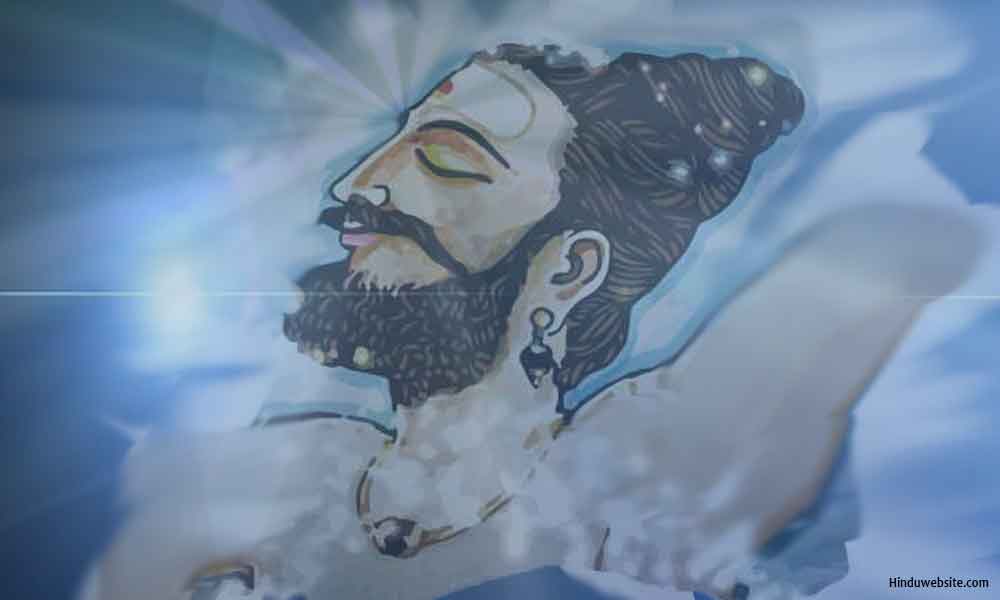
Verily in the beginning this was Brahman, that Brahman knew (its) Self only, saying, 'I am Brahman.' From it all this sprang. Thus, whatever Deva was awakened (so as to know Brahman), he indeed became that (Brahman); and the same with Rishis and men. The Rishivamadeva saw and understood it, singing,' I was Manu (moon), I was the sun.' Therefore now also he who thus knows that he is Brahman, becomes all this, and even the Devas cannot prevent it, for he himself is their Self. (Brihadaranyaka Upanishad)
Moksha is the most popular word used in Hinduism to denote the final or the ultimate liberation. It is not only the highest goal of all spiritual paths and practices but also the highest state (parandhama) to which a mortal being (jiva) can ascend. Other Sanskrit words which are used to describe it are Mukti, Kaivalya, Laya, Moksha, Nirvana, Sayujya, Jnanodaya, Siddhi and Samadhi. Liberation is not the freedom of the mind or body but freedom of the soul. It is also its natural state (sahaja). In liberation the soul does not gain anything or lose anything, nor does it undergo any transformation. It simply returns to its natural and original state and shines in its own light when the impurities of the mind and body that surround it are completely dissolved.
According to Hinduism, neither dying nor going to heaven constitute true liberation. Death is a simple release from the body but not from the hold of Nature. Upon death, a soul may wander upon earth, temporarily become stuck in the middle planes or in one of the heavens, or attain liberation. We have many heavens and hells. We have the ancestral heaven, Indra’s heaven, Brahma’s heaven, Vishnu’s heaven, Shiva’s heaven, and the highest, immoral heaven of Brahman. Then, according to some accounts we have a series of seven bright worlds above the earth and seven dark worlds below the earth. Our Puranas also speak of Yamalok (underworld), to which sinners go upon death where they face extreme suffering and cleansing before taking another birth. They also speak of several other worlds 1, and worlds (trsankus) that cannot be categorized as a heaven or a hell.
People may go to any of them upon their death according to their deeds and devotion. Those who worship Vishnu and Shiva and attain liberation go to their respective heavens namely Vaikuntah and Kailasa. Devotees of both gods, who worship them as the Lords of the universe, claim them to be the highest worlds, just as the world of Brahman which is located in the Sun. They believe that those who enter them will not return to take birth again. According to Srimad Bhagavatam (10.14.21), the world of Vaikuntah is infinite. There are innumerable Vaikuntahs. None can fathom their length and breadth.
The Vedas state that those who engage in righteous actions but have not attained final liberation, go to the ancestral world (pitr-lok) upon departing from here. They leave the mortal world with their subtle, casual bodies and stay there until their karmas are exhausted. Life in the ancestral world is better than the earthly life. However, it not the final destiny of human souls, nor is it an ideal solution to lasting peace because it does not liberate the souls from the cycle of deaths and rebirths. Those who go there return again to take another birth and continue their existence upon earth. They will keep repeating this cycle birth after birth, until they are completely free from karma. Therefore, the Upanishads caution people not to become too involved with the world or with rites and rituals, since they lead to the ancestral world rather than to the immortal heaven.
Liberation is achieved only when one renounces desires and attachments and engages the mind in spiritual practice by stabilizing it in the contemplation of God to attain oneness with him or become dissolved in him. Thus, in Hinduism liberation means the deliverance of individual souls (atman) from Samsara or the cycle of births and deaths. It is a complex, transformative process which requires the cleansing of the mind and body, the overcoming of duality, delusion and egoism and achieving oneness with the Self or Brahman. Sometimes, words such as self-realization, awakening, enlightenment, salvation, etc., are also used to denote liberation.
The concept of liberation is unique to the religious and renunciant traditions of India. You do not hear about it in other religions, although they may refer to the possibility of an eternal life earned by the grace of God or an allegiance to a particular faith. Hinduism does not believe that anyone can ascend to the immortal heaven with a physical body or an ethereal body. Only pure souls can go there, which are godlike in every aspect. For that, they have to be completely pure and free from all forms of impurity, materiality, duality and delusion.
The concept of Moksha is also difficult to understand, unless one is very familiar with related terms such as bondage, rebirth, attachments, karma, binding actions and liberating actions, yoga, maya or concealment, moha or delusion, anava or egoism and prakriti or nature. They refer to various forces or obstacles which keep the soul bound to the earth as a part of God’s creation to ensure the order and regularity of the worlds. Souls cannot easily escape from the mortal life. It is God’s will and Nature’s design to keep them bound, so that creation can progress in an orderly manner as ordained.
According to Hindu theories of creation, souls become bound when they come under the deluding influence of Nature. She keeps them bound through its instruments of delusion, duality, desires, attachments, egoism and ignorance. They attain liberation when they are completely free from them, removing all traces of materiality and impurities which accumulate around them like a cloud. When the individual souls become aware of their eternal and indestructible nature and transcend the limitations which are imposed upon them by Nature through yoga or self-transformation, they gain freedom and return to their divine state. Upon discarding their mortal bodies, they ascend to the highest heaven from where they will never return.
However, it does not happen instantly. It takes several births and a disciplined and organized effort by the souls to regain their freedom and return to their original state. From the scriptures we can discern a few important stages in the journey of liberation. It begins with the realization that one is not the mind and body, but an eternal Self and culminates in the experience of that State. It is facilitated by physical and mental purity, mental stability, discernment, faith, contemplative practices, and absorption of the mind in the Self or in God.
The journey of souls from one birth to another is known as transmigration of souls. Their final and permanent release from the cycle of births and deaths is referred to as the state of liberation. Karma plays an important role in it. Depending upon their potential to achieve liberation, souls are of different kinds. For example, some souls are forever free and do not require liberation. Some never attain liberation because they are meant to inhabit the lower worlds. Some may attain it over several lives or over two or more cycles of creation. Others may become stuck in the higher or lower worlds for a long time. For the souls, life on earth is a perilous existence during which they face the prospect of prolonged bondage, pain and suffering, while their chances of attaining liberation are excruciatingly limited.
Who can pursue liberation?
Liberation is the chief aim of all human beings. It is not only an essential purpose of human life (purushartha, ) but also the highest of all aims (paramartha), which can be pursued by both young and old and men and women. The Vedas recommend it for both householders and renunciants. Householders have to pursue it as a part of their obligatory duties, which are ordained by God and which are meant for the order and regularity of the world and the upholding of Dharma. Renunciants have to pursue it as a part of their vows and according to the path or the teacher tradition they follow. In both cases, devotees have to practice renunciation, detachment, restraint of the mind and senses, virtue and purity. Liberation may be achieved by one of the following means.
- Self-effort through spiritual practice
- Due to the merit (punyam) earned in previous births
- The intervention of God or guru
- Due to chance or previous karma
- Death in the battlefield or death on an auspicious occasion
The paths to liberation
Hinduism does not prescribe a particular way to achieve liberation. It is goal specific, but not path specific. This way it differs radically and fundamentally from other major religions of the world. It specifies the primary and the most important objective of human life as self-realization. However, the specifics of the manner and the method in which it is to be attained it leaves to the wisdom of the scholars and philosophers and the individuals themselves. Since God is omniscient and innumerable are His forms, innumerable are also the paths and the methods, by which one can find Him. To limit the paths by which one can reach God or to declare a particular path as the one and the only super highway to the kingdom of God, is to measure the infinite with a scale or define the indefinable with words. In each cycle of creation, God reveals to seers and sages the knowledge of liberation and the paths to achieve them, leaving the devotees with the freedom to choose from them what suits them most.
The various methods and approaches which are mentioned in the scriptures to achieve liberation or self-realization can be broadly grouped into four categories. They are usually referred to as paths (margas) or systems of practices (yogas). (In this discussion, we have used both the names interchangeably). Their ultimate purpose is liberation, and their immediate purpose is to prepare the devotees for the rigors of spiritual life through various methods and practices. They are not mutually exclusive, since they complement and strengthen each other.
It is difficult to say which of them is better since they have their own merits and appeal to different types of people according to their modes or gunas. The Bhagavadgita presents them as complimentary paths, which play an important role in purification and liberation. They also contain many common practices and core themes, which overlap and contribute to overall progress. For example, the practice of detachment, renunciation, virtue, sameness is found in all, although the method of practicing them may differ.
The four paths or systems to attain Moksha are mentioned below in the order of their importance to householders. Some scholars tend to place Karma Yoga in the first place. According to them since everyone has to perform actions, it is the ideal place to ground oneself in spirituality and begin the journey of liberation. However, while everyone engages in actions, actions by themselves do not lead to liberation but to bondage. One cannot truly practice selfless actions or uphold Dharma without proper knowledge of the scriptures, and without knowing one’s true identity and ultimate purpose. Sometimes, such knowledge may arise spontaneously due to the progress made in the past births, but it is rather an exception. One must acquire right knowledge to engage in righteous actions, practice various yogas and progress further. Hence, jnana yoga should rightly be considered the foremost of all the spiritual paths.
- The yoga of spiritual knowledge (jnana yoga)
- The yoga of selfless and desireless actions (karma yoga)
- The yoga of pure devotion (bhakti yoga)
- The yoga of renunciation (sanyasa yoga)
As long as one has purified the mind and body and cultivated the predominance of sattva (purity), one can attain liberation by practicing any one of them individually or by combining the best of their features. As suggested in the Bhagavadgita, the four paths may be integrated into a holistic approach and practiced together. For the renunciants, Sannyasa is the only prescribed option. Hence, they have to bring the attitude of renunciation into every aspect of their lives, including the actions they perform or the knowledge they seek.
However, householders have a choice. Traditionally, they can practice all the four. Until they reach old age and retire from active life, they have to practice the first three. When they reach the old age, after fulfilling their duties and obligations, they should retire from worldly life and practice renunciation. Nevertheless, it is not strictly necessary that householders should take up Sannyasa only in the last phase of their lives. They can do it at any time according to their inclination and interest.
The path of spiritual knowledge
Jnana Marg (the path of knowledge) or Jnana Yoga is ideal for those who are contemplative and introverted, and driven by unbound curiosity to pursue liberation in an intellectual, intuitive and scholarly way. Its main purpose is to overcome delusion, confusion, mental afflictions and modifications, and achieve mental clarity, stability, discernment, peace and equanimity. It is achieved through the study and recitation of the scriptures and contemplative and devotional practices to engage the mind in spiritual thoughts. They also have to practice the renunciation of desires and attachments, and purification of the mind and body. Seekers of knowledge aim to achieve these ideals through self-study, inquiry (vichara), contemplation (Dhyana), and by seeking the guidance of spiritual teachers and adepts.
In the pursuit of right knowledge, one has to acquire the knowledge of the Self (atma jnana) and the knowledge of Brahman (Brahmajnana). Both are important for liberation. With right knowledge, you realize that you are not your mind and body but the individual Self, which is eternal, indestructible, immutable and pure consciousness. This realization brings a fundamental shift in your thinking and approach towards yourself and your relationship with the world and your essential purpose.
Hinduism distinguishes two types of knowledge namely the lower knowledge or the knowledge of obligatory duties, rites and rituals, and the higher knowledge or the knowledge of Atman and Brahman. They are also known as avidya (nonessential knowledge) and vidya (essential knowledge). For householders, the knowledge of both are important since they have to perform their duties while pursuing liberation. The Isa Upanishad warns the seekers not to ignore either of them since both are important to avoid rebirth. However, for renunciants the knowledge of the Self is of utmost importance.
Knowledge plays an important role in every aspect of human life. It is what distinguishes an ignorant being (pashu) from an enlightened person (jnani). Knowledge in this context means spiritual knowledge or knowledge of the right means, rather than worldly knowledge, which is considered an obstacle to liberation. It is difficult to pursue liberation without right knowledge. Hence, knowledge is considered to be the foundation or the prerequisite for all other paths of liberation.
Without right knowledge or the knowledge of right methods, one can practice neither righteous actions nor renunciation. In case of householders, knowledge is the basis of dharma (moral duty), artha (wealth), enjoyment (kama) and liberation (moksha), while a renunciant must be conversant with right methods of yoga and self-transformation to discipline his mind and body. Hence, the pursuit of knowledge is the ideal starting point for both householders and renunciants.
Jnana Yoga is difficult to practice because it requires a lot of effort to study and assimilate the knowledge. Devotees need the guidance of spiritual teachers to understand the true purport and meaning of the scriptures and the secrets of Yoga and other disciplines. They also need their help to choose right methods and practices and clear their doubts and confusion. Hence, to ground their minds in the knowledge of the Self and hasten their progress, initiates are encouraged to spend time in the company of truth seekers and right-minded people (satsang), besides finding a qualified teacher for guidance and support.
The practice of Jnana Yoga leads to the purification and stabilization of the mind in the contemplation of the Self (atma samyama) and skillfulness in discernment, whereby one can choose right methods to worship God and overcome duality, delusion, attraction and aversion. Through discernment, one realizes the true causes and solutions for human suffering, the difference between action and inaction, and the importance of performing their obligatory duties without incurring sin. Hence, in many ways Jnana Yoga is considered foundational for the other three yogas.
In the pursuit of knowledge our minds and intelligence play an important role. They let us know in practical terms what is needed and what should be accomplished to achieve liberation. However, in the process they also create rigid notions of how we should think and act, or what may be deemed as the ideal of state of liberation. Such intellectual notions create expectations, which can potentially interfere with our progress or lead us astray, if we become stuck in the intellectual idea of the Self rather than pursuing the truth of it. Seekers of knowledge have to resolve it by silencing the mind and its formations and modifications through detachment, silence, indifference, sameness, openness and nonjudgmental attitude, renouncing desires in all its forms.
The path of desireless and selfless actions
Karma Marg (the path of action) is known by different names as Karma Yoga, Karma Sanyasa Yoga, Jnana Karma Sanyasa yoga and Kriya Yoga. It rests upon two important ideas namely the importance of obligatory duties and renunciation of desires in performing them. The Vedas and the law books assign obligatory duties to all classes of beings for the order and regularity of the worlds. Their source is God only. When those duties are neglected, the world will fall into chaos and darkness, resulting in the ascendance of evil powers, often requiring the intervention of God himself to restore order and destroy evil. The Bhagavadgita states that those who ignore their duties or engage in desire ridden actions with an intention to enjoy the fruit of their labor incur sinful karma and remain bound to the cycle of births and deaths.
Karma Yoga teaches people to live the right way, doing their part and fulfilling their obligation to God, gods, humans, their own families, ancestors, pious people, and other living beings. The right way is to engage in actions without egoism, selfishness and evil intentions. Actions must be performed with the spirit of selfless service as God’s true servant (bhagavata) upon earth, surrendering oneself to God and offering the fruit of such actions to him, with the firm belief that he is the doer in all actions and we are but his instruments.
The idea behind Karma Yoga is simple. If you live for your sake and perform actions for your enjoyment or for the enjoyment of those to whom you are attached, you become responsible for your actions and suffer from their consequences. However, if you perform them in the name of God, then he solely becomes responsible for them, whether they are sinful or not, and you will be exonerated from all the consequences. In other words, you must mentally renounce all your identities, which arise from your name and form and from your attachment to things, places and people, and step into the shoes of God, identifying yourself with him in all respects. You are no more “you” but an aspect of the very essence of God himself. You have to live here and perform your actions not as you but as God himself.
Karma Yoga acknowledges the reality that no one can escape from performing actions. Thereby, no one can escape from karma or the consequences of their actions. Even God himself engages in actions, although he has no desire or motive because he has to ensure the orderly progression of the worlds and set an example to others. In practicing Karma Yoga, one should follow the example of God as his devotee and voice upon earth, and live as how God would have lived. The epic Ramayana exemplifies this ideal in the person of Lord Rama. He is considered an incarnation of Lord Vishnu, because he lived upon earth as God in a human form and performed his duties, even though they were difficult and painful.
While everyone performs actions, including the lesser beings, whether they possess knowledge or not, Karma Yoga cannot be practiced without right knowledge. One cannot become a true karma yogi without practicing jnana yoga and acquiring right knowledge to cultivate purity, faith, resolve, detachment, devotion and discernment. For a karma yogi, life is a great yajna or a long sacrifice, in which he pours all his energies, possession, actions, desires and intentions as offerings to escape from their sinful consequences and from rebirth. No one can become a true karma yogi, unless one is pure and selfless and saturated the mind with the thoughts of god.
Thus, a karma yogi has to be a knower of the Self (atma jnani) and an awakened soul who practices what he learned and assimilated to cultivate discernment. He lives as a righteous practitioner of Dharma, who performs his duties as a sacrifice. As a devotee of God, he surrenders to him his will, ego, intentions and attachments, and finally as a renunciant he renounces desires and expectations in the performance of his actions. Although living life as a series of sacrificial actions is its central theme, Karma Yoga integrates the essential aspects of all other paths. Because of relevance to worldly life, it is the most suitable path for the householders, who are obligated to perform many duties in their lives without ignoring their ultimate goal, which is liberation.
The path of ecstatic devotion
Bhakti Yoga or Bhakti Marg became famous in the medieval period due to the tireless activity of countless seers and saints who wanted to protect Hinduism from the onslaught of Islam, and extend it to the masses rather than confining it to a few. However, it is an ancient path, with its roots in the origin and development of Shaivism and Vaishnavism, the earliest theistic movements of the Vedic period, which subsequently became the major sects of Hinduism. Of the two, Vaishnavism relies more upon devotional practices to achieve liberation. In Shaivism the emphasis is more upon spirituality and knowledge (yoga and jnana) rather than devotional service and worship (charya and kriya). One may find elements of devotional worship in the Classical Yoga of Patanjali also, in the concept of Isvara Paridhana (devotion to Self), which is to be practiced by a yogi by constantly meditating upon the sacred syllable Aum as the Self to attain mental absorption in it.
The roots of bhakti (devotion) can be found in the very idea of the Vedic sacrifice (yajna). Bhakti is the act of offering sacrificial material (bhakta) to God or gods. They are its true enjoyers and final recipients (bhoktas). Thus, bhakti is the devotional act of offering oneself or one’s possessions to the object of veneration. In bhakti one symbolically becomes the sacrificed and the sacrifice, and God the recipient of it. It is the act of unconditionally sacrificing one’s very life and possession to him. Bhakti Yoga is thus the ultimate sacrifice of human life in the selfless love and service of God. In a state of unconditional devotion and surrender, you put everything before God and surrender to him, without any thought, concern or expectation. It is a test of your love and faith, and to what extent you can go to prove the purity of your though and intention.
Thus, Bhakti Yoga aims to lead devotees on the path of liberation through unconditional surrender and devotion to God or the Self. It is not to be confused with the devotion of worldly people who ritually worship gods to fulfill their desires. Their devotion is tainted with selfishness and desires. It may eventually lead to pure devotion of the highest kind, which is emphasized in the scriptures, but it is not the same. It produces karma and keeps them bound. Their attachment to God is impure, since it arises from their attachment to worldly things.
In Bhakti Yoga devotees renounce everything including all attachments, except their deep and ardent love and attachment for God. Their passionate devotion for God (raga marga bhakti) outlasts their distaste for worldly things. Hence, they worship him with blissful devotion, love and attachment (rati bhava), but without desires and expectations, treating God as their very Self and feeling ecstatic oneness with him, as they dissolve their egos and merge their minds in the contemplation of him.
Their methods of worship may be physical, mental or spiritual. They may ritually or spiritually worship the physical, mental and spiritual forms of God as Saguna (with qualities) or Nirguna (without qualities) or both. The path approves idol or image worship as an important part of their spiritual and ritual practice, upholding the idea that each image of God or a deity represents his physical form upon earth, which gains supernatural powers from the ritual offerings made by the devotees. Hence, for all practical purposes, it is a living embodiment or incarnation of God himself (arca) and worthy of worship.
The most popular forms of devotional service include remembrance, recitation of scriptures, singing prayers and devotional songs, contemplating upon the opulence and greatness of God and his divine deeds (lila), repetitive chanting of mantras and the names of God, making ritual offerings with love and devotion to the living idols, visiting temples, sacred places and pilgrim places, seeing God in everyone and everywhere, serving the devotees of God, helping the poor and the needy, spreading the knowledge of liberation, praising God, listening to spiritual discourses, and so on.
The ultimate purpose of these methods is to purify oneself and saturate the mind with the thoughts of God to attain oneness (sayujya) or nearness (samipya) with him. The path is ideal for householders who have progressed well enough on the previous two paths and lead a life of sacrifice and selfless service, restraining their minds and bodies, overcoming their attachments and delusion and feeling the universal presence of God in all things they perceive. It is best suited for those who want to unburden themselves from the cares of the world and live in the care of God, loving him with intense and single-minded devotion and experiencing his love in return.
Those who pursue this path are expected to surrender to God and live with complete trust in him, remembering and chanting his name all the time, without concerning themselves excessively or obsessively with the intricacies of theology or with the dreariness of a mechanical life, characterized by selfless action. It is ideal for those who prefer to live as the true children of God, having no egos, surrendering themselves to him completely and giving full expression to their feelings of love and devotion in a state of surrender and humility. The Bhagavadgita assures that God takes responsibility for the lives of those who devote themselves to God and become lost in their devotion to him and looks after them as his very Self.
The Path of renunciation
In the previous three systems of spiritual practices, devotees have to practice renunciation by renouncing their egoism, worldly desires and attachments. However, their renunciation is incomplete and limited in scope. For example, as householders in the practice of Karma, Jnana and Bhakti Yogas they are not allowed to give up their obligatory duties or the pursuit of knowledge or their deep love and attachment to God. In spite of their commitment, faith and resolve to pursue liberation, they still have to keep one foot in worldly life and one foot in the spiritual life as a part of their householder duties, making sure that their virtuous and righteous actions for the sake of Dharma do not result in sinful consequences for them or others, and their lives are spent in the contemplation and service of God as a sacrifice or an offering. They have to practice renunciation, by giving up selfish and desire-ridden actions, which according to the Bhagavadgita is true renunciation.
In Sannyasa Marg (the path of renunciation) or Sannyasa Yoga, the practice of renunciation reaches its culmination. On that austere path, one has to unconditionally give up worldly life, cutting off all bonds and attachments to people and things. It is as if they can have nothing, be nothing and expect nothing from themselves, others or even from God. Even the desire for liberation and love for God have to be renounced, as a part of the emptying and unwinding process to be without any definition, individuality or identity. Sanyasa is the path of self-destruction, in which you destroy all attachments, accumulations and formations that burden your soul.
Seekers of liberation who choose this path have to renounce their past, their family and relationships, personal name, caste and other identities, duties and obligations, possessions, their notions of virtue and morality, and their love and attachment to God and religion to become completely free and rootless. The purpose of such self-effacement is to live at the mercy of elements or by the will of God or chance, giving up even the subtlest desire to control or regulate anyone or anything, and spending one’s quiet moments in the contemplation of the Self or Brahman. The ideal of sannyasa is that one should give up everything and cut of all the bonds that keep the beings bound to the mortal world. By practicing physical and mental liberation in all their forms, one has to cross the ocean of impermanence to achieve spiritual liberation.
This is the ideal or the highest Sannyasa which is exemplified in the Vedas, as the ideal pursuit of the seers and sages. Dutiful householders are advised to practice it in the last phases of their lives as a part of their Varnashrama Dharma, having given up worldly duties and retired from active life. They have to take initiation vows and strictly follow the moral code as prescribed by the law books.
For example, the laws stipulate that those who choose to follow this path should give up the use of fire to cook food or perform sacrifices. They have to abandon their houses and families and live in open, under the sky or in a cave rather than in a house or a shelter. As a part of their austerities, they have to discipline their minds and bodies to cultivate purity. The laws also prescribe that they should bathe in a river or a pond or use cold water for bathing and cleaning. They have to gather food by begging only, and eat what has been offered. They are also advised to keep wandering,rather than staying at the same place; avoid the company of worldly people and the opposite sex; abstain from sexual intercourse or even the thought of it; not to use perfumes or ornamentation; and wear just a piece of cloth to cover their nakedness.
In ancient India, renunciants used to gradually give up food in the final phases of sannyasa, so that their physical bodies would eventually fall off, and their souls would become free from the last breath that kept them on earth. Nowadays, you will not see anyone practicing such an extreme and austere kind of sannyasa, which was common in ancient times in many ascetic sects. Compared to it, the sannyasa of today looks like a watered-down version and easier to practice.
Present-day sanyasis mostly live in groups or in ashrams, which are often well furnished with all modern amenities, including mobile phones and Internet. They use fire, eat cooked food, take hot water baths, spend time on social networks and in the company of worldly people, follow their gurus and become attached to them or their organizations, interact with the opposite sex, watch television and movies, engage in debates and discussions and even take part in partisan politics. Some of them may even own businesses, credit cards and bank accounts also. This is Kaliyuga. Hence, most of these practices have become mainstream and widely acceptable.
Sannyasa is a noble practice. It is the highest and the ultimate sacrifice one can make upon earth to realize the Self and attain the highest and purest perfection. It is the meeting point where fear yields to faith and devotion, and the ego surrenders to silence and transcendence. Standing on the edge of life, a sannyasi stares into an uncertain future, with peace and equanimity, and free from delusion, attraction and aversion.
A true sannyasi is a living and breathing God upon earth, even if he or she has not attained liberation. In him all the yogas are poised to reach their culmination. He practices them effortlessly and spontaneously as if he is guided by an invisible force. His actions inspire, his knowledge enlightens, and his devotion endears. His very intention to lay himself at the feet of God elevates him and sets him apart as a divine soul. He reflects the light of the soul and the wisdom of pure intelligence of the transcendental kind. In his presence, you are in the presence of God.
Even if they have not yet attained perfection, true sanyasis who are not corrupted by the temptations and practices of materialistic world are worthy of respect. The problem is, you cannot easily find them or meet them. Since they shun worldly life and the company of worldly people, they are as difficult to find as God himself.
Suggestions for Further Reading
- Mental Liberation: Achieving True Freedom
- Is Enlightenment the Right Word for Spiritual Liberation?
- The Concept of Liberation, Moksha or Nirvana
- The Soul, The Ego and The Process of Liberation
- The Bhagavadgita on Divine Qualities For Liberation
- Ashtavakra Gita on Tattvajna - Liberated Person
- Jivanmukti, the state of Liberation
- Devayana - The Immortal Path of Liberation
- Who are Fit for Liberation and Immortality?
- The Concept of Nirvana
- Kaivalya, the State of Aloneness
- Renunciation Or Sanyasa According To Bhagavadgita
- Descriptions of Soul or Atman In The Bhagavadgita
- The True Meaning of Sanyasa or Renunciation in Hinduism
- Significance of Death in Hinduism
- Jnana Karma Sanyasa Yoga
- Essays On Karma
- Jnana Yoga or The Yoga of Knowledge
- Self-knowledge, Difficulties in Knowing Yourself
- Sadhana Chatushtayam - Way to Salvation
- The Meaning of Nirvana
- Reincarnation or Rebirth in Hinduism
- Samsara or the Transmigration of Souls
- The Concept of Jnana or Knowledge in Hinduism
- Bondage – Bandha in Hinduism
- Bhakti Marg, the Path of Devotion
- Asceticism in Hinduism
- Devotion and Meditation in Hinduism
- Essays On Dharma
- Esoteric Mystic Hinduism
- Introduction to Hinduism
- Hindu Way of Life
- Essays On Karma
- Hindu Rites and Rituals
- The Origin of The Sanskrit Language
- Symbolism in Hinduism
- Essays on The Upanishads
- Concepts of Hinduism
- Essays on Atman
- Hindu Festivals
- Spiritual Practice
- Right Living
- Yoga of Sorrow
- Happiness
- Mental Health
- Concepts of Buddhism
- General Essays
References
1. These are the heavens and hells of this particular universe, in this time cycle. According to some Puranas, there are millions of such universes and millions of Brahmas who create them.