
Jainism - Jivas, the Embodied Souls
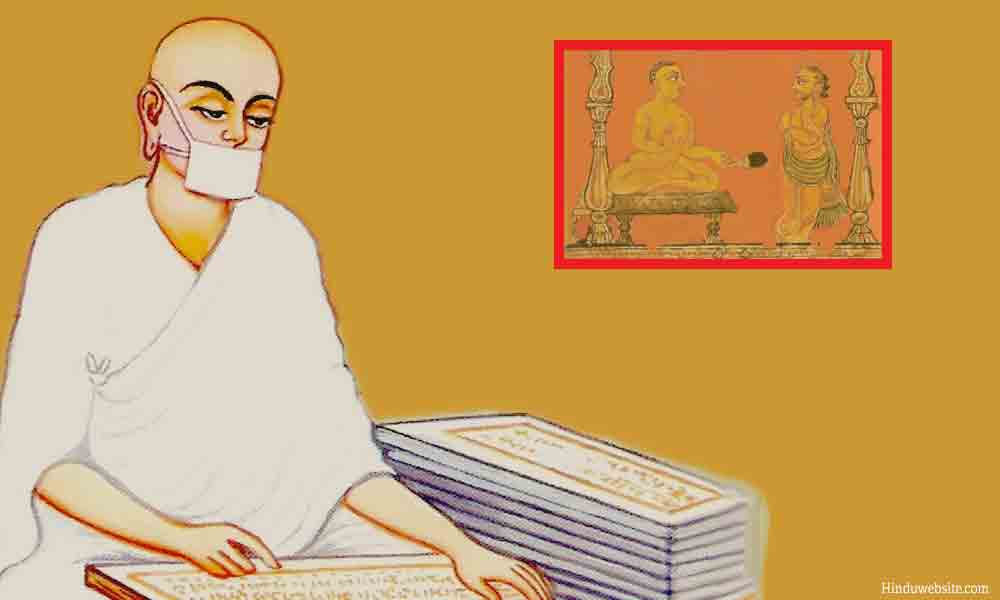
Being and soul - Jiva and Atma
In Jainism a Jiva is an individual soul embodied in the gross body of a living being or an object such as a piece of wood or glass of water. In both cases the soul is bound to matter and subject to change, duality, karma and rebirth. In its original and purest state an individual soul is eternal and filled with bliss consciousness. In its bound state it is subject to the impurities of gunas, suffering and delusion.
While in Jainism the words Jiva and souls are used interchangeably, in case of Hinduism a clear distinction exists between the two. Literally speaking, in Hinduism a jiva means a living being or an embodied Self having a soul inside the body and bound to Nature and its modification. It is pure and eternal even in its bound state and subject to no modifications. In other words, bondage is for the Self but suffering is for the being.
However, in Jainism a jiva means a living soul or a soul in a state of bondage and duality. In its essential nature, each soul is pure and eternal but subject to materiality, states and conditions until it reaches the highest state of perfection and becomes free from all traces of impurities. The distinction between the two also disappears when we read that souls exist not only in living beings but also in pure matter, in air, in water, in space and in the earth.
Therefore, in Jainism we find that the words jiva and soul are used interchangeably to denote an individual soul in a state of conditioned existence bound to the modifications and realities of Nature. Jainism also differs from Hinduism in another respect. A being does not have to possess only one soul. At times innumerable souls or a clusters of souls may inhabit the same body or same space.
The soul of the Jiva
From the perspective of Jainism, the distinction between the Self and the being becomes thinner as they two coalesce to become an embodied being. Unlike the Atman of the Upanishads, which is considered infinite, without form, without qualities and without blemish, in Jainism, the embodied Self in a living being has variable dimensions and subject to states and change.
It is liable to expansion and contraction, depending upon the physical size of the body in which it resides and the nature of karma particular to the being. The larger the body, the larger the soul.
Before the birth, the soul is small, and it remains in the womb like a seed in a fruit. After it the being is born, it grows in proportion to the body and envelops it from all sides.
According to the tents of Jainism, embodied Self cannot be smaller than the body in which it resides because it has to use the body, and more particularly the sense organs, to grasp securely the sense objects. At the time of death, it contracts and becomes a tiny seed to start a new life in a new body according to its previous karma.
Jainism holds that the individual souls are infinite in number and exist eternally. No one created them and none can destroy them. Their number also remains the same through out, though they may move from one plane of existence to another and also assume different forms in different things, depending upon their level of evolution and previous activity.
Soul clusters
Some times multiple souls or clusters of souls may occupy a being's body forming complex organisms. Some of them reside in gross matter, which is within the grasp of the senses, and some occupy subtle bodies which are beyond the reach of senses and can be known only through psychic methods.
Nigodas are huge aggregates of innumerable jivas who live together like complex organisms in the subtle world and fill the vast spaces of the earth. They act like soul banks and supply souls to fill the vacuum created by the departing souls.
Soul states and types
Souls are eternal and their essential nature does not change. However, they are subject to states or condition depending upon their level of perfection and inner purification. Thus, they may be bound to the phenomenal existence of forever free from it. They may be subject to ignorance or duality or possess transcendental knowledge.
Jain scriptures mention the following three categories of souls or beings (jivas).
1. Nirtya Siddhas, the ever perfect souls.
2. Muktas, the liberated souls who were once subject to the cycle of births and deaths, but are now completely free and would never take birth again.
3. Baddhas, the bound souls, who are bound to this world, undergo repeated births and deaths and are subject to continuous inflow of karmic material into their bodies.
They are similar to the three classes of souls recognized in the qualified monism (visistadvaita) school of Hinduism. In addition to them, individual souls may also enter the heavenly realms as gods or perfect beings (Jinas) by undergoing intense purification through spiritual practice.
The state of the liberated beings
Having been freed form all notions of association with matter and bondage, the liberated souls (muktas) enjoy unlimited consciousness, infinite knowledge, infinite perception, infinite power and infinite joy. The ordinary beings who are bound to the world suffer from ignorance and delusion. They remain bound to their gross bodies and Nature until they are liberated.
The bodies of living beings in a bound state are infused with the substance of karma which keeps flowing into them according to their deeds. The beings in their imperfect and mundane existence are never free from the karmic substance in their bodies. Like blood and sweat, this invisible and ethereal impurity remains clung to them until they are purified fully in the fire of austerity. As already stated elsewhere, in Jainism, karma is not the mere effect of a cause or the consequence of an action, but a stream of subtle matter that enters the body of a jiva and imparts to it varying degrees of grossness and impurity, making the liberation of the jiva increasingly difficult.
This is part 1 of the essay on Jivas in Jainism. Read Part 2
Suggestions for Further Reading
- The Atomic Theory of Jainism
- History of Jainism
- Jainism - Philosophy and Doctrine
- Major Beliefs of Jainism
- Jain Literature and Canonical Texts
- Jainism Cosmology
- The Jains And Their Creed
- Jainism - Doctrine and History
- An Introduction to Jainism or Jain Dharma
- The Philosophy and Practice of Jainism
- Information Websites on Jainism
- Jainism and the Belief in God
- Jainism - Jivas, the Embodied Souls
- Jainism - Belief in Karma
- The Theory of Knowledge in Jainism
- History of Jainism after Mahavira
- Vardhamana Mahavira
- Jainism - Anekantavada or Nayavada
- An Outsider Perspective on Jainism
- Jainism - Sects and Subsects
- Syadavada or Saptabhangi
- The Tattvas of Jainism
- Jain Thirthankaras
- Ethics of Jainism - The Three Jewels
- Tirthahkaras Before Mahavira
- Essays On Dharma
- Esoteric Mystic Hinduism
- Introduction to Hinduism
- Hindu Way of Life
- Essays On Karma
- Hindu Rites and Rituals
- The Origin of The Sanskrit Language
- Symbolism in Hinduism
- Essays on The Upanishads
- Concepts of Hinduism
- Essays on Atman
- Hindu Festivals
- Spiritual Practice
- Right Living
- Yoga of Sorrow
- Happiness
- Mental Health
- Concepts of Buddhism
- General Essays