
The Prasna Upanishad
Introduction
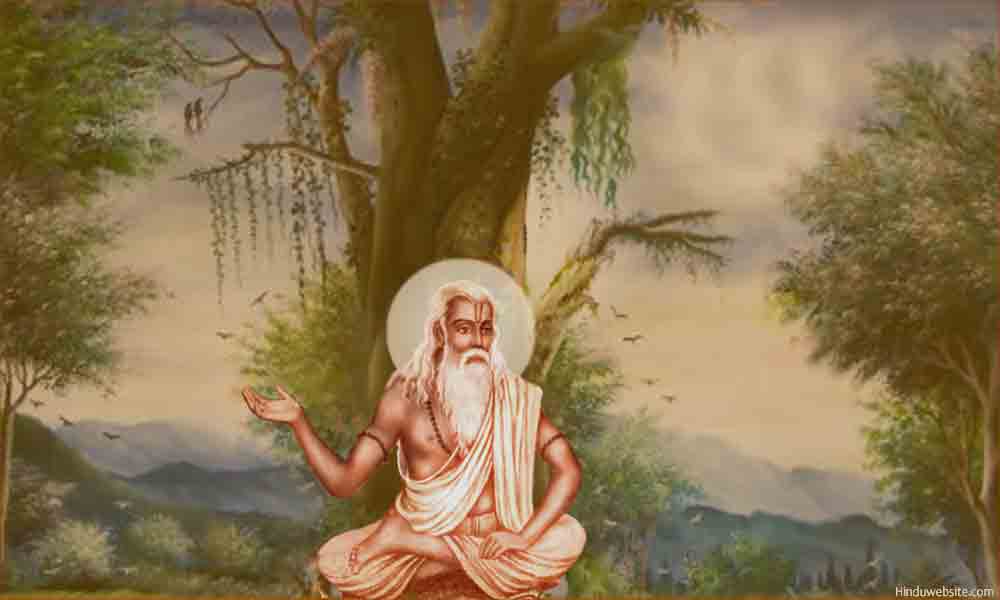
It is believed that the Prasna Upanishad might have been originally an independent text, but was later included in the Atharvaveda due to the association of Pippalada, the teacher of the Upanishad, with the Atharvaveda. As the name suggests, it is an Upanishad of six main questions, asked by six seekers of truth and answered by sage Pippalapada. The questions cover a wide range of subjects concerning the origin of creation, superiority of breath, the supporting and illuminating powers of manifest creation, the source of life for the physical body, the paths of breath in the body, the nature of dream and deep sleep states, the benefits of chanting the sacred mantra Aum and the significance of the sixteen tattvas or realities of Nature. From the Upanishad, we learn that an enlightened master would not reveal the secrets of higher knowledge unless he was satisfied that the recipients were qualified and disciplined. Pippalapada, the son of Dadhichi, was a historic person, considered a teacher of the Atharvaveda and founder of an ancient school of thought. He probably lived a few centuries or decades before the Buddha and some of his disciples might be contemporaries of the Buddha. His name suggests that he had some connection with the Pipal tree, or with its fruit which he was said to be fond of, or with a branch of ascetics who meditated traditionally under the tree because of its miraculous powers. It is a known fact that even the Buddha got enlightenment under a pipal tree. Pippalapada used to insist that his disciples stayed with him for a year before he would answer them any questions they asked. Presented here is a new translation of the Prasna Upanishad by Jayaram V.
Invocation
aum bhadram karnebhih srnuyama deva bhadram pasyemaksabhir yajatrah; sthirair angais tustuvamsas tanubhir vyasema devahitam yad ayuh.
1. Aum, O gods, may we hear with our ears what is auspicious. O those who are qualified for worship, may we see with our eyes what is auspicious. May we enjoy the life given to us by gods, with bodies of strong limb, living for the sake of gods.
svasti na indro vrddhasravah svasti nah pusa visvavedah; svasti nastarksyo aristanemih svasti no brhaspatir dadhatu; aum santih santih santih.
2. May Indra, of ever increasing vigor, bestow upon us prosperity. May Pusan, the knower of all, bring to us prosperity. May Tarksya, the obstructer of misfortune, grant us prosperity. May Brihaspati, give us prosperity. Aum, peace, peace, peace.
Question 1
Manifestations of Prajapati
1. Aum, sukesa ca bharadvajah saibyasca satyakamah saurya-yani ca gargyah kausalyas casvalayano bhargavo vaida-rbhih kabandhi katyayanaste haite brahmapara brahman-isthah pa-ram brahmanvesamana esa ha vai tat sarvam vaks-yatiti te ha samitpanayo bhagavantam pippaladam upasannah.
1. Once Sukesa, son of Bharadvaja, Satyakama son of Sibi, Gargya grandson of Surya, Kausalya son of Asvala, Bhargava of the Vidarbha country, Kabandhi son of Katya, these, devoted to Brahman, their minds fixed in Brahman, and searching for the highest Brahman, approached the godman, Pippalada, with sacrificial fuel in their hands, thinking that he would explain to them all about That.
Notes: Six students approached sage Pippalada with fuel in their hands hoping that he would teach them about Brahman. We do not know how these six students approached him all at once, whether they just happened to meet him by chance or whether they came as a group because they belonged to a particular school or tradition. What we know is that they had doubts and curiosity about Brahman and they were eager to learn about Him by asking questions, which became the starting point of discussion for each of the six chapters. Of these six, Kabandhi Katyayana or one of his immediate descendents was said to be a contemporary of the Buddha.
2. tan ha sa risir uvaca bhuya eva tapasa brahmacaryena sraddhaya samvatsaram samvatsyatha yathakamam prasnan pricchata yadi vijnasyamah sarvam ha vo vaksyama iti.
2. The seer said to them, "Stay for a year, practicing austerity, chastity and faith. Then ask me whatever you desire to ask and if we know, we shall, indeed, tell you all about it."
Notes: It is said that it was customary for the students of Pippalada to stay with him for a year before he gave them initiation.
3. atha kabandhi katyayana upetya papraccha; bhagavan kuto ha va imah prajah prajayanta iti
3. Then, Kabandhi, son of Katya approached him and asked, "Godman, from what, indeed, all these creatures arise?"
Notes: Kabandhi wanted to know the source of creation or the deity who was responsible for manifesting life forms. Creation is a mystery. Even now, in this age, we are not sure how life originated upon earth and how so much diversity manifested. Even if science manages to find out the truth concerning our creation, it would not be able to fathom the reasons for it. No scientist can tell you why the world came into existence or why beings manifested upon earth. They may tell you how, but not why. Only philosophical enquiry can throw some light upon it, though vaguely. Hence we have speculative philosophies that try to fill in the gaps in our understanding of life and creation, which science or empirical studies fail to explain.
4. tasmai sa hovaca prajakamo vai prajapatih sa tapo'tapyata sa tapastaptva sa mithunamutpadayate; rayim ca pranam ca itye-tau me bahudha prajah karisyata iti.
4. To him he said, "Prajapati, the Lord of all creatures, desirous of offspring, performed penance, and by practicing that penance produced the pair, matter and life, thinking that they would produce manifold beings for him in diverse ways.
Notes: Rayi, stone, represents gross matter or the physical body. Prana, (life), which keeps the body breathing, represents the subtle energy or the subtle body. Thoughts, feelings, emotions arise and exist in us because of prana. Without prana, beings would be lifeless. The component realities of Nature (tattvas) arise from both. Therefore, beings are made of both. Each being has a gross body and a subtle body, one visible and the other invisible, one sustained by food (rayi) and the other by subtle energy (prana) that circulates in the body through various channels led by the breath (prana). Both these constitute the beingness. They are different and distinct from the inner Self, but depend upon it entirely, while the Self is completely independent and self-existing.
5. adityo ha vai prano rayir eva candrama rayir va etat sarvam yan murtam camurtam ca tasman murtir eva rayih.
5. Aditya, the sun, indeed, is life, the moon the matter. Matter indeed is all this, whatever that has a definite form and has no form. Therefore body (of a being), indeed is matter only.
Notes: Matter exists either in recognizable forms, as objects, or in its primal and formless state as the basic raw material, such as energy or clay. Whether it has a form or not, clay is still matter only. We may distinguish an object from a lump of clay for our understanding, but they are essentially made of the same substance, the earth. The body has a form; but when it is reduced to its elemental state, it has no recognizable form. Yet all states of corporeality and embodiment represent different states of matter only.
6. athaditya udayan yat pracim disam pravisati tena pracyan pranan rasmisu sannidhatte; yad daksinam yat praticim yad udicim yad adho yad urdhvam yad antara diso yat sarvam prakasayati, tena sarvan pranan rasmisu sannidhatte.
6. Now, after the sun arises, he enters (this world) from the eastern side. There, he bathes with his effulgent rays all that lives in the east. Then he shines brightly upon whatever is in the south, whatever is in the west, whatever is in the north, all that is below, above and in between. Thereby, he bathes with his effulgent rays all living beings (in all quarters and directions).
Notes: The sun is prana. He is the life giver. He is the source of all energy. This is a verifiable fact. The sun shines equally in all directions and upon all beings. We are able to exist because the Sun is unconditional in giving light and radiates in all directions.
7. sa esa vaisvanaro visvarupah prano'gnir udayate; tad etad rica'bhyuktam.
7. This is he, the Vaisvanara fire of innumerable forms, (verily), who rises as life and fire. Of this there is this verse from the Rigveda.
Notes: The sun exists in the body as Vaisvanara, the indwelling fire. He circulates in the body as five breaths that move in their respective channels and keep the bodily temperature (tapah) intact so that the organs (deities) carry out their respective functions.
8. visvarupam harinam jatavedasam parayanam jyotir ekam tapantam; sahasrarasmih satadha vartamanah pranah prajanam udayaty esa suryah.
8. Of innumerable forms, golden colored, the knower of all, the object of study, the one light, the result of austerity, with a thousand rays, who exists in a hundred forms, the life in all beings, thus rises the Sun.
Notes: The Vedas are considered the verbal testimony to establish spiritual truths. Hence, Pipplalada quoted a verse from the Rigveda in support of his teaching that the sun indeed exists in the body as the Vaisvanara fire and responsible for its life as well as its warmth.
9. samvatsaro vai prajapatih tasyayane daksinam cottaram ca; tadye ha vai tad istapurte kritam ity upasate te candramasam eva lokam abhijayante; ta eva punaravartante tasmad eta risayah prajakama daksinam pratipadyante; esa ha vai rayiryah pitriyanah.
9. The year, indeed, is Prajapati, the Lord of beings. He has two paths, the southern and the northern. Now as to those, who perform sacrificial actions out of desires and worship thus, conquer the world in the moon. They return again. Therefore, the sages, who desire offspring, attain the southern path. This one, which is called the path of ancestors, is verily matter.
Notes: There are two paths, the southern path by which the departing souls go to the world of ancestors that exists in the moon and return from there to take another birth again. In the ancestral world they become food to the deities. Hence it is called the food or matter (rayi). The other one is the northern path, which leads to the world of immortals. It is described in the next.
10. athottarena tapasa brahmacaryena sraddhaya vidyaya atmanam anvisyadityam abhijayante; etadvai prananam ayatanam etad amritam abhayam etat parayanam etasmanna punar avartante ity esa nirodhah, tadesa slokah.
10. Now, by the northern path conquer the sun, those who search for their true Selves through austerity, celibacy, faith and knowledge. This, indeed, is the container of life breath; this is immortal, the fearless; this is the highest goal. From this none ever returns. This one prevents (rebirth). Of this there is the verse.
Notes: These two paths are mentioned in other Upanishads also. The northern path leads to the world of immortals believed to exist in the sun. Those who go there would never return. It is attained only by the practice of yoga and renunciation. Thus, the mortal beings have two options. By seeking material things, or indulging in desires and selfish actions, they revolve in the cycle of death and rebirth. However, by ascetic practices and generating bodily heat (tapa) through penances (tapas), they can transform their physical and subtle bodies and attain immortality.
11. pancapadam pitaram dvadasa kritim diva ahuh pare ardhe purisinam; atheme anya u pare vicaksanam saptacakre sadara ahurarpitamiti.
11. They say this deity is the father of five seasons and twelve forms, seated high in the heaven, amidst waters. Now, others say (he is) wise, who is endowed with (a chariot of) seven wheels, (each having) six spokes.
Notes: The symbolism in this verse refer to the divisions of time. The deity, Kala or Time, often equated with Prajapati, is the father of five seasons and twelve months. He is also endowed with the seven days of a week and the six divisions of four hours each in each day. Time has great significance in Hindu cosmology. It is one of the earliest manifestations of Brahman, which is responsible for diversity, the world order, the fructification of karma, rebirth, recurring phenomena such as day and night, weeks, months, years and the seasons, and death.
12. maso vai prajapatih tasya krisnapaksa eva rayih suklah pranah tasmad ete risayah sukla istim kurvanti itara itarasmin.
12 The month, verily, is Prajapati, the Lord of the creatures. Of this the dark half is matter and the bright half is life. That is why, the seers perform sacrifices in the bright half; while others perform them in the other half.
13. ahoratro vai prajapatih tasyahar eva prano ratrir eva rayih pranam va ete praskandanti ye diva ratya samyujyan te brah-macaryam eva tad yad ratrau ratya samyujyante.
13. Day and night are, indeed, Prajapati, the Lord of the creatures. Of this, day is life and the night is matter. Those who unite in sexual acts during the day waste their life-energy; while those who unite in sexual acts during the night remain (pure as the) chaste.
Notes: There is a time for everything. According to this nighttime intercourse is not sinful, but daytime one is. According to this verse, daytime intercourse will result in the wastage of bodily heat (tapa).
14. annam vai prajapatih tato ha vai tad retah tasmad imah prajah prajayanta iti.
14. Food, indeed, is Prajapati, the Lord of creatures. From that only is semen. From that are born these beings.
15. tadye ha vai tat prajapativratam caranti te mithunam utpa-dayante; tesam evaisa brahma loko yesam tapo brahmacaryam yesu satyam pratistitam.
15. Thus, those who practice the vow of Prajapati, the lord of creatures, produce both (sons and daughters). For them only is meant this world created by Brahma, in whom austerity, chastity and truth are established.
Notes: Isa brahman loka means this world of Brahma. It refers to our world or the earthly world.
16. tesam asau virajo brahma loko na yesu jihmam anritam na maya ceti.
16. To them belongs the bright and spotless world of Brahman, in whom there is no crookedness, falsehood or delusion.
Question 2
Deities in the Body and Breath
1. atha hainam bhargavo vaidarbhih papraccha; bhagavan katyeva devah prajam vidharayante katara etat prakasayante kah punaresam varistha iti.
1. Then Bhargava of Vidarbha asked, "Godman, how many deities support a being? Which of them illumine it? Who is superior among them?"
Notes: The question is essentially about the organs that support the body or the gods who uphold the material body of creation.
2. tasmai sa hovaca, akasa ha va esa devo vayur agnir apah prithivi van manas caksuh srotram ca; te prakasyabhivadanti vayam etad banam avastabhya vidharayamah.
2. He said, "Space, verily, is this deity; so also air, fire, water, earth, speech, the mind, eyes, and ear. Having illumined the body, they declare, "We support this aggregate of the body by holding it together."
Notes: Each organ in the body is a deity performing certain functions to help the body survive. The body is a creation in itself. It represents the entire cosmos in a minute form. It has its own dharma, derived from the highest Supreme Self Himself. The organs uphold it and share the burdens of the body. They do it not only to support the body, but also to serve the soul that is hidden in it. The body is a vehicle for the soul, its Lord, and every organ in it is meant to play its dutiful role to provide enjoyment to the soul and allow it to continue its existence in a mortal form until its liberation. Feeding the body is an act of sacrifice. The food is the sacrificial offering. The body is the kshetra, the sacrificial pit. The offering is accepted by the digestive fire vaisvanara on behalf of all other organs, just as the sacrificial fire accepts the sacrificial offerings poured into a sacrifice and apportions them among the gods according to their appointed share.
3. tan varisthah prana uvaca; ma moham apadyatha aham evaitat pancadhatmanam pravibhajya etad banam avastabhya vidharayami iti.
3. Breath, the foremost among them, said to them, "Do not fall into delusion. I am the one who supports and sustains this body by dividing myself into fivefold."
Notes: In simple terms, prana means breath. in broader terms, it is the life sustaining energy arising from the sun externally and the subtle energy sustained internally in the body by the five different breaths which will be discussed later. Although, loosely speaking, prana means breath, it does not convey the true meaning of prana, which is not only the breath we inhale and exhale but also the life energy derived from the sun which flows in our veins (nadis) along particular channels and keeps us alive.
4. te asraddadhana babhuvuh so'bhirmanad urdhvam utkr-mata iva, tasminn utkramaty yathetare sarva evotkra-mante, tasmims ca pratisthamane sarva eva pratisthante, tad yatha maksika madhukararajanam tukramantam sarva evotk-ramante tasmims ca pratisthamane sarva eva pratisthante evam van manat caksuh srotram ca, te pritah pranam stunvanti.
4. They did not believe. Out of pride, he seemed to go up. As he went up, then all others also went up. When he settled down, they also settled down. Just as all the bees fly out, when the queen bee flies out and all settle down when she settles down, so did speech, mind, eye, ear. Having been satisfied, they praised prana.
Notes: Creation has a structure and hierarchy. The deities have to settle that among themselves so that they can be functionally effective and keep their chain of command flowing. The organs in the body, which are supposed to function as a team, went through this storming and norming process by challenging each other and eventually accepted prana as superior among them. Prana is superior to the bodily organs because it sustains life in the body. The bodily organs depend upon it, since it facilitates the flow of the Vaisvanara fire in the body and the distribution of food among them. We know that the body cannot survive, if breath departs from it. So is the case with all the bodily parts. They cannot survive if breath departs from the body. Without prana, they will be reduced into the five basic elements (mahabhutas). The same is emphasized here. Madhukara-rajanam means the ruler among the bees. It is translated here as the queen bee since there is no king-bee.
5. eso'gnistapatyesa surya esa parjanyo maghavan esa vayuh; esa prithivi rayirdevah sada asac camritam ca yat.
5. This one burns like fire; this one is the sun; this one is the rain; this one is the air; this one is the earth, matter, deity; he is what is and what is not and what is immortal.
6. ara iva rathanabhau prane sarvam pratisthitam; rico yajumsi samani yagyah ksatram brahma ca.
6. As spokes (are fixed) in the hub of a wheel, breath is established in all (organs), in the hymns of the Rigveda, Yajurveda, Samaveda, in sacrifices, warriors and the brahmanas.
Notes: Breath is hidden in the hymns of the Vedas because to chant them you need breath in the mouth. So also, it flows equally in people of all castes.
7. prajapatis-carasi garbhe tvameva pratijayase; tubhyam prana prajastvima balim haranti yah pranaih pratitisthasi.
7. You verily wander in the wombs like the lord of creation, and you are then born again (in children). O Breath, for you alone, who dwells in the organs, all these creatures bring their sacrifices.
8. devanamasi vahnitamah pitrinam prathama svadha; risinam caritam satyam atharvangirasam asi.
8. You are the best carrier for the gods, first offering to the ancestors; you are the truth in the conduct of the seers such as the Atharvas and the Angirasas.
Notes: Shankara translated risinam as the bodily organs and atharvangirasam as the essence of atharva present in the organs.
9. indras tvam prana tejasa rudro'si pariraksita; tvam-antarikse carasi suryastvam jyotisam patih.
9. O Breath, you are Indra, in vigor you are Rudra, who protects from all sides; you wander in the mid-region (as air), you are the sun (in the heaven), the lord of the lights.
10. yada tvam abhivarsasy athemah prana te prajah; anandarupas tisthanti kamayannam bhavisyati iti.
10. When you pour down then, O breath, these beings of yours appear happy (thinking) that there will be as much food as they desire.
11. vratyas tvam prana ekarsiratta visvasya satpatih; vayam adyasya datarah pita tvam matarisva, nah.
11. You are very pure, O Matarisva, the one seer, the eater, and the universal lord of all that exists. We are the offerers of the food (you eat).
Notes: Matarisva, an epithet of vayu, used here to invoke Breath.
12. ya te tanurvaci pratisthita yasrotre yaca caksusi; yaca manasi santatasivam tam kuru motkramih.
12. Make pure and auspicious, settling firmly, the speech, the ears, the eyes, and the whole mind. Do not rise up and go away.
13. pranasyedam vase sarvam tridive yat pratisthitam; mateva putran raksasva sris ca pragyam ca vidhehi na iti.
13. All this here is under the control of breath. It is firmly established in the three worlds. Protect us as a mother (protects) her son, give us wisdom and destine for us prosperity and wisdom.
Question 3
The Origin and Manifestations of Breath
1. atha hainam kausalyas casvalayanah papraccha; bhagavan kuta esa prano jayate katham ayaty asmim charire atmanam va pravibhajya katham pratisthate kenotkramate katham bahyam abhidhate katham adhyatmam iti.
1. The Kausalya Asvalayanah asked him, "Godman, from where does this breath born? How does it enter into this body? And having established, how does it divide itself in the body? How does it leave? How does it support what is outside and what is within oneself?"
2. tasmai sa hovaca atiprasnan pricchasi brahmistho'siti tasmat te'ham bravimi.
2. To him, he said, "Very difficult questions you ask. You are interested in Brahman. Therefore, I will tell you."
3. atmana esa prano jayate; yathaisa puruse chayaitasminn etad atatam manokritenayaty asmin sarire.
3. From the self this breath is born. Like this shadow of a person, the breath spreads in this body (from the Self) by the actions of the mind.
4. yatha samradevadhikritan viniyunkte; etan graman etan graman adhitistasvety evam evaisa prana itaran pranan prithak prithag eva sannidhatte.
4. Just as an emperor appoints officers, saying, "Preside over this and this village," so does Breath allots separate duties to the other pranas (in the body).
Notes: The other pranas are the five pranas that circulate in the body, which are described in the next verse.
5. payupasthe'panam caksuh srotre mukhanasikabhyam pranah svayam pratistate madhye tu samanah; esa hy etadd hutam annam samam nayati tasmad etah saptarciso bhavanti.
5. He established apana in the two lower apertures, breath itself in the eye, in the ears and in the mouth, and samana in the middle. It distributes the food that has been offered equally. Therefore seven flames arise from this.
Notes: Apana is the breath that goes down and out through the lower apertures. Prana is that which goes upward through the throat, nostrils, the eyes and the ears. The samana is equalizing breath that circulates in the middle region. It is responsible for digestion.
6. hridi hyesa atma; atraitad ekasatam nadinam tasam satam satam ekaikasyam dvasaptatir dvasaptatih pratisakha nadisahasrani bhavanty asu vyanas carati.
6. The Self, indeed, is in the heart. In that (heart) are one hundred and one arteries. Each of them again has a hundred and each of these branches into seventy two thousand sub-branches. Vyana moves in them.
Notes: Vyana is the diffused breath. It circulates in the entire bodies through these fine arteries issuing from the heart and its main arteries. It is important to remember that these arteries of prana are not blood vessels, but subtle channels through which pranic energy flows in the body. If these channels are blocked for one reason or the other, a person may develop physical and mental ailments.
7. athaikayordhva udanah punyena punyam lokam nayati papena papam ubhabhyam eva manusya lokam.
7. Now rising up through one of these udana leads by means of merit to the world of merit and by means of sin to the world of sin and by means of both to the world of mortals.
Notes: Udana is the breath that goes upwards through the artery susumna
8. adityo ha vai bahyah prana udayaty esa hy enam caksusam pranam anugrihnanah; prithivyam ya devata saisa purusasya apanam avastabhyantara yad akasah sa samano vayur vyanah.
8. The sun indeed is the external breath. It rises up empowering the breath in the eye. The earth is that very deity which draws a person's apana towards itself. The mid-region in between is samana. Air is vyana.
9. tejo ha va udanah tasmad upasantatejah; punar bhavam indriyair manasi sampadhyamanaih.
9. Light indeed is udana. Therefore, he whose light has departed, attains another existence together with his senses drawn into his mind.
Notes: At the time of death, udana, the upward breath, travels through one of the veins leading from the heart and escapes the body through an aperture in the head.
10. yat cittas tenaisa pranam ayati; pranas tejasa yuktah sahatmana yatha sankalpitam lokam nayati.
10. Whatever thought he had (at the time of death), with that he enters into breath. Yoked to the light (udana) and along with the Self, breath leads him to the world as intended by him.
11. ya evam vidvan pranam veda na hasya praja hiyate'mrito bhavati tadesah slokah.
11. He who knows breath thus, has no shortage of progeny. He becomes immortal. Of this, there is this verse.
12. utpattim ayatim sthanam vibhutvam caiva pancadha; adhyatmam caiva pranasya vijnayamritam asnute vijnayamritam asnuta iti.
12. Knowing the origin, the entry, the placement, and the fivefold manifestation of breath within oneself, one attains immortality. Knowing one does indeed attain immortality.
Question 4
Who Remains Awake in Sleep
1. atha hainam sauryayani gargyah papraccha; bhagavan etasmin puruse kani svapanti kany asmijn jagrati katara esa devah svapnan pasyati kasyaitat sukham bhavati kasmin nu sarve sampratistita bhavantiti.
1. Then Sauryayani Garya asked him, "Godman, which organs remain asleep and which organs remain awake in this person? Who is the deity who watches the dreams? Who happens to be happy and in whom they become fully resolved?
2. tasmai sa hovaca; yatha gargya maricayo'r arkasyastam gacchatah sarva etasmis tejomandala ekibhavanti; tah punah punar udayatah pracaranty evam ha vai tat sarvam pare deve manasy ekibhavati tena tarhy esa puruso na srinoti na pasyati na jighrati na rasayate na sprisate nabhivadate nadatte nana-ndayate na visrijate neyayate svapitity acaksate.
2. To him he said, "Just as, O Gargya, the rays of the sun become one in the sphere of the sun and spread out as he dawns again and again, so do all these organs become one in the highest deity, the mind. Therefore, during that time the person does not hear, does not see, does not smell, does not taste, does not touch, does not speak, does not grasp, does not rejoice, does not expel, and does not move. He is sleep, they say.
3. pranagnaya evaitasmin pure jagrati; garhapatyo ha va esopa-nah vyano'nvaharyapacanah yad'garhapatyat praniyate prana-yanad ahavaniyah pranah.
3. In this city( the body) it is the fires of prana that remain awake. This apana is indeed the garhapatya fire. Vyana is the anvaharyapacana fire. Since the ahavaniya fire is extracted from the garhyapatya fire, which is the source of extraction, Prana is the Ahavainya fire.
Notes: Garhapatya, anvaharyapacana and ahvaniya fires are the domestic fires expected to be kept by the householders, especially those belonging to the Brahmana caste, for the purpose of performing daily sacrifices. The three fires have to be maintained at three different locations in the house. They are compared here to the three types of breath mentioned before.
4. yad ucchvasa nihsvasav etav ahuti samam nayatiti sa samanah; mano ha va va yajamanah; istaphalam evodanah; sa enam yajamanam ahar ahar brahma gamayati.
4. Since it equalizes these (two) oblations, the inhalation and exhalation, therefore it is (called) samana. The mind is indeed the host of the sacrifice. The desired fruit of the sacrifice is udana. Day after day it leads the host of the sacrifice to Brahman.
Notes: Samana is the presiding prana of the mid-region (atmosphere). It equalizes both the inhalation and exhalation. These are likened in this verse to the oblations offered in the fire (Agnihotra) sacrifice. Udana travels upwards into the head region. Since it accompanies the beings to sleep, it is described here as the one which takes the host of the sacrifice to Brahman day after day.
5. atraisa devah svapne mahimanam anubhavati; yad dristam dristam anupasyati srutam srutam evartham anusrinoti desa-digantarais ca pratyanubhutam punah punah pratyanubhavati dristam cadristam ca srutam casrutam canubhutam cananu-bhutam ca sac casac ca sarvam pasyati sarvah pasyati.
5. There, in the dream state, that deity experiences greatness. Whatever he has seen, he sees again, heard, he hears again; whatever he experiences in places and regions, he experiences them again and again; whatever he has seen and not seen, whatever he has heard and not heard, whatever was felt and not felt, whatever exists and not exists, he sees all becoming all.
Notes: A dream is a rehash of existing memories, sensations, feelings, perceptions and experiences with imagination intermixed. In a dream, the mind, which is the deity described here, becomes the creator (sarvah) as well as creation (sarvam). He attains greatness (mahiman) by transcending the physical barriers that exist in the physical world. In short, in dream state, you have no limits to what you can experience or go.
6. sa yada tejasa'bhibhuto bhavati; atraisa devah svapnanna pasyaty atha tad etasmin sarire etat sukham bhavati.
6. When he is overwhelmed by light, then that deity does not see the dreams. Then peace and happiness arise in this body.
7. sa yatha sobhya vayamsi vasovriksam sampratisthante; evam ha vai tat sarvam para atmani sampratisthante.
7. Just as the birds, O radiant one, fly towards the tree that shelters them, so does everything, so also all this proceeds towards the supreme Self to rest there.
8. prithivi ca prithivimatraca apas capomatra ca tejas ca tejomatra ca vayus ca vayumatra ca akasas cakasamatra ca caksus ca drastavyam ca srotram ca srotavyam ca granam ca ghratavyam ca, rasas ca rasayitavyam ca tvak ca sparsayita-vyam ca vak ca vaktavyam ca hastau cadatavyam ca upasthas canandayitavyam ca payusc ca visarjayitavyam ca yadau ca gantavyam ca manas ca mantavyam ca buddhis ca boddhivyam ca ahankaras ca ahankartavyam ca cittam ca cetayitavyam ca tejas ca vidyotayitavyam ca pranas ca vidyarayitavyam ca.
8. The earth and the earth element, water and the water element, light and the light element, air and the air element, space and the space element, eyes and the object of seeing, ears and the object of hearing, nose and the object of smelling, tongue and the object of tasting, skin and the object of touching, speech and what can be spoken, hands and what can be handled, the sex organ and the pleasure it can produce, the mind and what can be thought of, the intellect and what can be discerned, the ego and its egoism, consciousness and what can be consciously experienced, light and what can be illumined with lightning, the breath and all that it can hold together.
Notes: The tattvas or the component realities of Nature are listed here, the five elements, the senses and their objects, the mind, the intellect, the ego, the internal organ or citta and what can be experienced through it, light and breath. Matra means measure, number, quality or element.
9. esa hi drasta sprastasrota ghrata rasayita manta boddha karta vijnanatma purusah; sa pare'ksara atmani sampratisthate.
9. And this one, indeed, is the seer, the touching one, the hearing one, the smelling one, the tasting one, the thinking one, the discerning one, the doer, the person who is the knower himself. He remains established in the supreme imperishable Self.
10. param evaksaram pratipadyate sa yo ha vai tad acchayam asariram alohitam subhram aksaram vedayate yastu saumya; sa sarvagyah sarvo bhavati; tadesa slokah.
10. He who knows that one who is without shadow, without body, without color, and who is pure and imperishable, O dear, attains the supreme and the imperishable. He becomes all and all-knowing. Regarding this there is this verse.
11. vigyanatma saha devais ca sarvaih prana bhutani sampra-tisthanti yatra; tad aksaram vedayate yas tu saumya sa sarvagyah sarvam evavivesa iti.
11. He who knows that imperishable one, in whom are established the all-knowing Self, along with all the deities, breaths and elements, that one, O dear, becomes all-knowing and enters into all.
Question 5
Significance of Aum Meditation
1. atha hainam saibyah satyakamah papraccha; sa yo ha vai tab bhagavan manusyesu prayanantam aumkaram abhidhyayita; katamam va va sa tena lokam jayatiti.
1. Then Satyakama Saibhya asked him, "Godman, he who among men mentally fixes his mind upon Aum until the end of his life, which world he wins by that?
2. tasmai sa hovaca, etadvai satyakama param caparam ca brahma yad aumkarah; tasmad vidvan etena iva yatanenaikataram anveti.
2. To him he said, "Satyakama, this very transcendental and immanent Brahman, indeed, is that Aum only. Therefore, the knowledgeable one arrives at one or the other through this means only."
3. sa yadhy ekamatram abhidhyayita sa tenaiva samveditas turnam eva jagaty abhisampadhyate; tam rico manusyalokam upanayante sa tatra tapasa brahmacaryena sraddhaya sampanno mahimanam anubhavati.
3. If he meditates upon the one letter (A), having attained equanimity quickly by that alone, he attains the physical world. The Rics lead him to the world of humans, and there through austerities, the practice of celibacy, endowed with faith, he experiences greatness.
Notes: The first letter of Aum is A. When one meditates upon even that single letter, one attains a good birth in the earthly world. The hymns of the Rigveda, which he learns by virtue of his previous birth in a good family, enables him to attain greatness
4. atha yadi dvimatrena manasi sampadhyate so'ntariksam yajurbhir unniyate saumalokam; sa saumaloke vibhutim anubhuya punar avartate.
4. Now, if (he meditates) upon the two letters (AU) the attains the subtle world. Led by the Yajus through the mid-region, he is lifted to the world of the moon. Having experienced supernatural existence, he returns again.
Notes: The Yajus are the hymns of the Yajurveda containing sacrificial formulas. The world of the moon is the ancestral world. Those who go there return to the earth again once they exhaust their karmas
5. yah punar etam trimatren aum ity etenaivaksarena param purusam abhidhyayita sa tejasi surye sampannah; yatha padodaras tvaca vinirmucyata evam ha vai sa papmana vinirmuktah sa samabhir unniyate brahmalokam sa etasmaj jivaghanat paratparam purusayam purusam iksate; tad etau slokau bhavatah.
5. Again, he who meditates upon the Supreme Self with the three letters of Aum, he becomes endowed with the light of the sun. Just as a snake is freed from its slough, in the same manner he becomes free from sin. Led by the Samans, he is lifted to the world of Brahman. In the congregation of living entities, he sees the highest of the high and the Person hidden in the persons.
6. tisro matra mrityumatyah prayukta anyonya saktah anaviprayuktah; kriyasu bahyabhyantara madhyamasu samyak prayuktasu na kampate jnah.
6. The three letters are within the confines of death. They should be yoked and applied together. By applying (the unified Aum) in kriya yoga, the awakened one does not waver in the external, internal, intermediate and self-absorbed states.
Notes: This verse explains the significance of Aum in the practice of kriya yoga, which is also mentioned in the Yogasutras of Patanjali (2.1). He described kriya yoga as having three important elements, austerity (tapas), self-study (svadhyaya) and devotion (isvara paridhana). This verse explains the benefit of using Aum in the practice of kriya yoga so that the awakened yogi (jina) would remain in the state of samyak cetana all the time and in all states.
7. rigbhir etam yajurbhir antariksam samabhir yat tat kavayo vedayante; tam aumkarena ivayatanenanveti vidvan yat tac chantam ajaram amritam abhayam param ceti.
7. The knowledgeable one knows this world by the Riks, the mid-region by the Yajus, and That (Brahman world) by the Samans. However, with the help of Aum, the learned one attains that which is the highest, calm, free from old age and death, harmonious, without fear and supreme.
Notes: The chanting of Aum is superior to the study and chanting of the triple Vedas. The study of the Vedas gives us the knowledge of the immanent, the three worlds; but the chanting of Aum takes us to the immortal world of Brahman.
Question 6
The Being with Sixteen Parts
1. atha hainam sukesa bharadvajah papraccha; bhagavan hiranyanabhah kausalyo rajaputro mam upetyaitam prasnam apricchata; sodasa kalam bharadvaja purusam vettha; tam aham kumaram abruvam naham imam veda; yadhy aham imama vedisam katham te navaksyam iti; samulo va esa parisusyati yo'nritam abhivadati tasman narhamy anritam vaktum; sa tusnim ratham aruhya pravavraja; tam tva pricchami kvasau purusa iti.
1. Then Sukesa Bharadvaja asked him, "Godman, Hiranyanabha, the prince of Kosala, approached me and asked this question,'O Bharadvaja, do you know the person of sixteen parts?'I said to that prince, 'I do not know him. If I know him, why would I not tell you? Truly, up to the roots withers he who speaks untruth. Therefore, I cannot speak to you untruth.' Silently, (having heard this), he mounted his chariot and went away. Regarding that person now I ask, 'Where is that person?'"
2. tasmai sa hovaca; ihaivantah sarire saumya sa puruso yasminn etah sodasa kalah prabhavanti iti.
2. To him he said, "Here, inside this body only, my dear, is that person, in whom the sixteen parts manifest."
Notes: Pipplalada was said be a proponent of the theistic Samkhya philosophy. In this verse he referred to the tattvas that constituted the subtle body (linga sarira) inside the gross body. The sixteen parts that went into its making are listed in the verse 4 below.
3. sa iksacakre; kasminn aham utkranta utkranto bhavisyami kasmin va pratistite pratistasyam iti.
3. That one reflected, "By whose going up, I too happen to go up, and by whose staying, I stay firmly established?"
4. sa pranam asrjata pranac chraddham kham vayur jyotir apah prithivindriyam manah annam annad viryam tapo mantrah karma loka lokesu ca nama ca.
4. He created prana; from prana faith, space, air, light, water, earth, senses, mind, and food; from food sperm, heat, sacred chants, action, worlds and in the worlds name.
5. sa yathema nadhyah syandamanah samudrayanah samu-dram prapyastam gacchanti bhidhyete tasam namarupe samu-dra ity evam procyate; evam evasya paridrastur imah sodasa kalah purusayanah purusam prapyastam gacchanti bhidhyete casam namarupe purusa ity evam procyate sa eso'kalo'mrito bhavati tadesa slokah.
5. Just as these flowing rivers go towards the ocean and having reached the ocean end up completely dissolved in it, and with their names and forms completely lost are simply spoken as the ocean, so does the sixteen parts of this all seeing one, moving towards the person and on reaching the person, disappear, and with their names and forms lost, they are spoken as the person only. He (who reaches that person and unites with him like the rivers unite with the ocean) becomes without parts, immortal. Regarding this there is this verse.
Notes: Name and form, distinction and diversity exists only so long as the beings remain distinct and separate from the inner Self. Duality and division disappear, as in case of deep sleep, when a person enters into union with the inner Self. The tattvas are part of the body. The individual Self is free from them, even when it is embodied.
6. ara iva rathanabhau kala yasmin pratistitah; tam vedhyam purusam veda yatha ma vo mrityuh parivyatha iti.
6. In whom the parts are established like the spokes in the nave of a wheel, know that person who should be known so that death will not cause you suffering from any side.
7. tan hovaca etavad evaham etat param brahma veda; natah paramast iti.
7. To them, he said, "I know this much only about this supreme Brahman. Nothing is higher than that."
8. te tam arcayantah tvam hi nah pita yo'smakam avidhyayah param param tarayasi iti; namah param arisibhyo namah parama-risibhyah.
8. Worshipping him with ritual offerings, they said, "You, indeed, are our father who has taken us across to the other side of ignorance. Salutations to the supreme seers, salutations to the supreme seers."
Notes: A guru is responsible for the spiritual birth of a student. By imparting them the knowledge of liberation, he is also responsible for their birth in the world of Brahman. He is therefore worthy of worship as one's very father.
Suggestions for Further Reading
- The Samkhya Philosophy and 24 Principles of Creation
- The Bhagavadgita On The Problem Of Sorrow
- The Concept of Atman or Eternal Soul in Hinduism
- The Practice of Atma Yoga Or The Yoga Of Self
- The Problem of Maya Or Illusion and How To Deal With It
- Belief In Atman, The Eternal Soul Or The Inner Self
- Brahman, The Highest God Of Hinduism
- The Bhagavad Gita Original Translations
- The Bhagavadgita, Philosophy and Concepts
- Bhakti yoga or the Yoga of Devotion
- Hinduism And The Evolution of Life And Consciousness
- Why to Study the Bhagavadgita Parts 1 to 4
- The Triple Gunas, Sattva, Rajas and Tamas
- The Practice of Tantra and Tantric Ritual in Hinduism and Buddhism
- The Tradition Of Gurus and Gurukulas in Hinduism
- Origin, Definition and Introduction to Hinduism
- Hinduism, Way of Life, Beliefs and Practices
- A Summary of the Bhagavadgita
- Avatar, the Reincarnation of God Upon Earth
- The Bhagavadgita on Karma, the Law of Actions
- The Mandukya Upanishad
- The Bhagavadgita On The Mind And Its Control
- Symbolic Significance of Numbers in Hinduism
- The Belief of Reincarnation of Soul in Hinduism
- The True Meaning Of Renunciation According To Hinduism
- The Symbolic Significance of Puja Or Worship In Hinduism
- Introduction to the Upanishads of Hinduism
- Origin, Principles, Practice and Types of Yoga
- Hinduism and the Belief in one God
- Essays On Dharma
- Esoteric Mystic Hinduism
- Introduction to Hinduism
- Hindu Way of Life
- Essays On Karma
- Hindu Rites and Rituals
- The Origin of The Sanskrit Language
- Symbolism in Hinduism
- Essays on The Upanishads
- Concepts of Hinduism
- Essays on Atman
- Hindu Festivals
- Spiritual Practice
- Right Living
- Yoga of Sorrow
- Happiness
- Mental Health
- Concepts of Buddhism
- General Essays
Attribution: Reproduced with permission from the Selected Upanishads, A Collection of 14 Upanishads with Devanagari Script, Translation and Notes, Editor and Translation: Jayaram V, Published by PurelifeVision Books, USA, 2013.