
Ashtavakra Gita or the Ashtavakra Samhita
Introduction
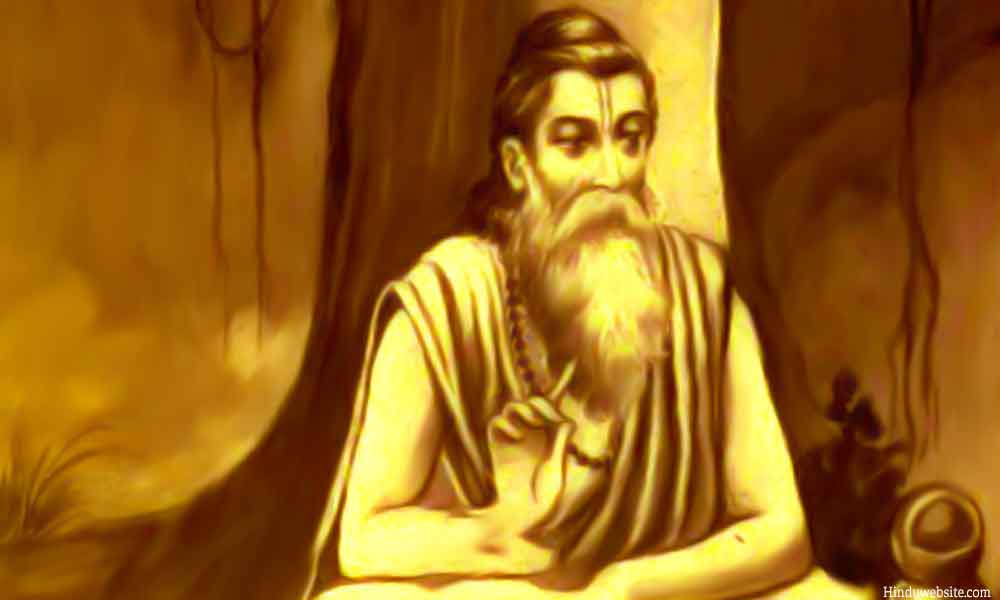
The Ashtavakra Gita, or the Ashtavakra Samhita as it is sometimes called, is a very ancient Sanskrit text. Nothing seems to be known about the author, though tradition ascribes it to the sage Ashtavakra; hence the name.
There is little doubt though that it is very old, probably dating back to the days of the classic Vedanta period. The Sanskrit style and the doctrine expressed would seem to warrant this assessment.
The work was known, appreciated, and quoted by Ramakrishna and his disciple Vivekananda,as well as by Ramana Maharshi, while Radhakrishnan always refers to it with great respect. Apart from that the work speaks for itself.
It presents the traditional teachings of Advaita Vedanta with a clarity and power very rarely matched.
The translation here is by John Richards, and is presented to the public domain with his affection. The work has been a constant inspiration in his life for many years. May it be so for many others.
John Richards
Stackpole Elidor, UK
The Translation
Janaka said:
How is one to acquire knowledge? How is one to attain liberation? And how is one to reach dispassion? Tell me this, sir. 1.1
Ashtavakra said:
If you are seeking liberation, my son, avoid the objects of the senses like poison and cultivate tolerance, sincerity, compassion, contentment, and truthfulness as the antidote. 1.2
You do not consist of any of the elements -- earth, water, fire, air, or even ether. To be liberated, know yourself as consisting of consciousness, the witness of these. 1.3
If only you will remain resting in consciousness, seeing yourself as distinct from the body, then even now you will become happy, peaceful and free from bonds. 1.4
You do not belong to the brahmin or any other caste, you are not at any stage, nor are you anything that the eye can see. You are unattached and formless, the witness of everything -- so be happy. 1.5
Righteousness and unrighteousness, pleasure and pain are purely of the mind and are no concern of yours. You are neither the doer nor the reaper of the consequences, so you are always free. 1.6
You are the one witness of everything and are always completely free. The cause of your bondage is that you see the witness as something other than this. 1.7
Since you have been bitten by the black snake, the opinion about yourself that "I am the doer," drink the antidote of faith in the fact that "I am not the doer," and be happy. 1.8
Burn down the forest of ignorance with the fire of the understanding that "I am the one pure awareness," and be happy and free from distress. 1.9
That in which all this appears is imagined like the snake in a rope; that joy, supreme joy, and awareness is what you are, so be happy. 1.10
If one thinks of oneself as free, one is free, and if one thinks of oneself as bound, one is bound. Here this saying is true, "Thinking makes it so." 1.11
Your real nature is as the one perfect, free, and actionless consciousness, the all-pervading witness -- unattached to anything, desireless and at peace. It is from illusion that you seem to be involved in samsara. 1.12
Meditate on yourself as motionless awareness, free from any dualism, giving up the mistaken idea that you are just a derivative consciousness or anything external or internal. 1.13
You have long been trapped in the snare of identification with the body. Sever it with the knife of knowledge that "I am awareness," and be happy, my son. 1.14
You are really unbound and actionless, self-illuminating and spotless already. The cause of your bondage is that you are still resorting to stilling the mind. 1.15
All of this is really filled by you and strung out in you, for what you consist of is pure awareness -- so don't be small-minded. 1.16
You are unconditioned and changeless, formless and immovable, unfathomable awareness, unperturbable: so hold to nothing but consciousness. 1.17
Recognise that the apparent is unreal, while the unmanifest is abiding. Through this initiation into truth you will escape falling into unreality again. 1.18
Just as a mirror exists everywhere both within and apart from its reflected images, so the Supreme Lord exists everywhere within and apart from this body. 1.19
Just as one and the same all-pervading space exists within and without a jar, so the eternal, everlasting God exists in the totality of things. 1.20
Janaka said:
Truly I am spotless and at peace, the awareness beyond natural causality. All this time I have been afflicted by delusion. 2.1
As I alone give light to this body, so I do to the world. As a result the whole world is mine, or alternatively nothing is. 2.2
So now that I have abandoned the body and everything else, by good fortune my true self becomes apparent. 2.3
Waves, foam, and bubbles do not differ from water. In the same way, all this which has emanated from oneself is no other than oneself. 2.4
When you analyse it, cloth is found to be just thread. In the same way, when all this is analysed it is found to be no other than oneself. 2.5
The sugar produced from the juice of the sugarcane is permeated throughout with the same taste. In the same way, all this, produced out of me, is completely permeated with myself. 2.6
From ignorance of oneself, the world appears, and by knowledge of oneself it appears no longer. From ignorance of the rope it appears to be a snake, and by knowledge of it it does so no longer. 2.7
Shining is my essential nature, and I am nothing other than that. When the world shines forth, it is only me that is shining forth. 2.8
All this appears in me imagined due to ignorance, just as a snake appears in the rope, the mirage of water in the sunlight, and silver in mother of pearl. 2.9
All this, which has originated out of me, is resolved back into me too, like a jug back into clay, a wave into water, and a bracelet into gold. 2.10
How wonderful I am! Glory to me, for whom there is no destruction, remaining even beyond the destruction of the world from Brahma down to the last clump of grass. 2.11
How wonderful I am! Glory to me, solitary even though with a body, neither going or coming anywhere, I who abide forever, filling all that is. 2.12
How wonderful I am! Glory to me! There is no one so clever as me! I who have borne all that is forever, without even touching it with my body! 2.13
How wonderful I am! Glory to me! I who possess nothing at all, or alternatively possess everything that speech and mind can refer to. 2.14
Knowledge, what is to be known, and the knower -- these three do not exist in reality. I am the spotless reality in which they appear because of ignorance. 2.15
Truly dualism is the root of suffering. There is no other remedy for it than the realisation that all this that we see is unreal, and that I am the one stainless reality, consisting of consciousness. 2.16
I am pure awareness though through ignorance I have imagined myself to have additional attributes. By continually reflecting like this, my dwelling place is in the Unimagined. 2.17
For me here is neither bondage nor liberation. The illusion has lost its basis and ceased. Truly all this exists in me, though ultimately it does not even exist in me. 2.18
Recognising that all this and my body too are nothing, while my true self is nothing but pure consciousness, what is there left for the imagination to work on now? 2.19
The body, heaven and hell, bondage and liberation, and fear too, all this is pure imagination. What is there left to do for me whose very nature is consciousness? 2.20
I do not even see dualism in a crowd of people, so what do I gain if it is replaced by a desert? 2.21
I am not the body, nor is the body mine. I am not a living being. I am consciousness. It was my thirst for living that was my bondage. 2.22
Truly it is in the infinite ocean of myself, that, stimulated by the colourful waves of the world, everything suddenly arises in the wind of consciousness. 2.23
In the infinite ocean of myself, the wind of thought subsides, and the world boat of the living-being traders is wrecked by lack of goods. 2.24
How wonderful it is that in the infinite ocean of myself the waves of living beings arise, collide, play, and disappear, in accordance with their nature. 2.25
Ashtavakra said:
Knowing yourself as truly one and indestructible, how could a wise man possessing self-knowledge like you feel any pleasure in acquiring wealth? 3.1
Truly, when one does not know oneself, one takes pleasure in the objects of mistaken perception, just as greed arises for the mistaken silver in one who does not know mother of pearl for what it is. 3.2
All this wells up like waves in the sea. Recognising, "I am That," why run around like someone in need? 3.3
After hearing of oneself as pure consciousness and the supremely beautiful, is one to go on lusting after sordid sexual objects? 3.4
When the sage has realised that he himself is in all beings, and all beings are in him, it is astonishing that the sense of individuality should be able to continue. 3.5
It is astonishing that a man who has reached the supreme nondual state and is intent on the benefits of liberation should still be subject to lust and in bondage to sexual activity. 3.6
It is astonishing that one already very debilitated, and knowing very well that its arousal is the enemy of knowledge, should still hanker after sensuality, even when approaching his last days. 3.7
It is astonishing that one who is unattached to the things of this world or the next, who discriminates between the permanent and the impermanent, and who longs for liberation, should still be afraid of liberation. 3.8
Whether feted or tormented, the wise man is always aware of his supreme self-nature and is neither pleased nor disappointed. 3.9
The great-souled person sees even his own body in action as if it were someone else's, so how should he be disturbed by praise or blame? 3.10
Seeing this world as pure illusion, and devoid of any interest in it, how should the strong-minded person, feel fear, even at the approach of death? 3.11
Who can be compared to the great-souled person whose mind is free from desire even in disappointment, and who has found satisfaction in self-knowledge? 3.12
How should a strong-minded person who knows that what he sees is by its very nature nothing, consider one thing to be grasped and another to be rejected? 3.13
An object of enjoyment that comes of itself is neither painful nor pleasurable for someone who has eliminated attachment, and who is free from dualism and from desire. 3.14
Ashtavakra said:
The wise person of self-knowledge, playing the game of worldly enjoyment, bears no resemblance whatever to samsara's bewildered beasts of burden. 4.1
Truly the yogi feels no excitement even at being established in that state which all the Devas from Indra down yearn for disconsolately. 4.2
He who has known That is untouched within by good deeds or bad, just as space is not touched by smoke, however much it may appear to be. 4.3
Who can prevent the great-souled person who has known this whole world as himself from living as he pleases? 4.4
Of all four categories of beings, from Brahma down to the last clump of grass, only the man of knowledge is capable of eliminating desire and aversion. 4.5
Rare is the man who knows himself as the nondual Lord of the world, and he who knows this is not afraid of anything. 4.6
Ashtavakra said:
You are not bound by anything. What does a pure person like you need to renounce? Putting the complex organism to rest, you can find peace. 5.1
All this arises out of you, like a bubble out of the sea. Knowing yourself like this to be but one, you can find peace. 5.2
In spite of being in front of your eyes, all this, being insubstantial, does not exist in you, spotless as you are. It is an appearance like the snake in a rope, so you can find peace. 5.3
Equal in pain and in pleasure, equal in hope and in disappointment, equal in life and in death, and complete as you are, you can find peace. 5.4
Ashtavakra said:
I am infinite like space, and the natural world is like a jar. To know this is knowledge, and then there is neither renunciation, acceptance, or cessation of it. 6.1
I am like the ocean, and the multiplicity of objects is comparable to a wave. To know this is knowledge, and then there is neither renunciation, acceptance or cessation of it. 6.2
I am like the mother of pearl, and the imagined world is like the silver. To know this is knowledge, and then there is neither renunciation, acceptance, or cessation of it. 6.3
Alternatively, I am in all beings, and all beings are in me. To know this is knowledge, and then there is neither renunciation, acceptance, or cessation of it. 6.4
Janaka said:
In the infinite ocean of myself the world boat drifts here and there, moved by its own inner wind. I am not put out by that. 7.1
Whether the world wave of its own nature rises or disappears in the infinite ocean of myself, I neither gain nor lose anything by that. 7.2
It is in the infinite ocean of myself that the mind-creation called the world takes place. I am supremely peaceful and formless, and I remain as such. 7.3
My true nature is not contained in objects, nor does any object exist in it, for it is infinite and spotless. So it is unattached, desireless and at peace, and I remain as such. 7.4
I am pure consciousness, and the world is like a magician's show. How could I imagine there is anything there to take up or reject? 7.5
Ashtavakra said:
Bondage is when the mind longs for something, grieves about something, rejects something, holds on to something, is pleased about something or displeased about something. 8.1
Liberation is when the mind does not long for anything, grieve about anything, reject anything, or hold on to anything, and is not pleased about anything or displeased about anything. 8.2
Bondage is when the mind is tangled in one of the senses, and liberation is when the mind is not tangled in any of the senses. 8.3
When there is no "me," that is liberation, and when there is "me" there is bondage. Consider this carefully, and neither hold on to anything nor reject anything. 8.4
Ashtavakra said:
Knowing when the dualism of things done and undone has been put to rest, or the person for whom they occur has, then you can here and now go beyond renunciation and obligations by indifference to such things. 9.1
Rare indeed, my son, is the lucky man whose observation of the world's behaviour has led to the extinction of his thirst for living, thirst for pleasure, and thirst for knowledge. 9.2
All this is transient and spoiled by the three sorts of pain. Knowing it to be insubstantial, ignoble, and fit only for rejection, one attains peace. 9.3
When was that age or time of life when the dualism of extremes did not exist for men? Abandoning them, a person who is happy to take whatever comes attains perfection. 9.4
Who does not end up with indifference to such things and attain peace when he has seen the differences of opinions among the great sages, saints, and yogis? 9.5
Is he not a guru who, endowed with dispassion and equanimity, achieves full knowledge of the nature of consciousness, and leads others out of samsara? 9.6
If you would just see the transformations of the elements as nothing more than the elements, then you would immediately be freed from all bonds and established in your own nature. 9.7
One's desires are samsara. Knowing this, abandon them. The renunciation of them is the renunciation of it. Now you can remain as you are. 9.8
Ashtavakra said:
Abandon desire, the enemy, along with gain, itself so full of loss, and the good deeds which are the cause of the other two -- practice indifference to everything. 10.1
Look on such things as friends, land, money, property, wife, and bequests as nothing but a dream or a magician's show lasting three or five days. 10.2
Wherever a desire occurs, see samsara in it. Establishing yourself in firm dispassion, be free of passion and happy. 10.3
The essential nature of bondage is nothing other than desire, and its elimination is known as liberation. It is simply by not being attached to changing things that the everlasting joy of attainment is reached. 10.4
You are one, conscious and pure, while all this is inert non-being. Ignorance itself is nothing, so what is the point of wanting to understand? 10.5
Kingdoms, children, wives, bodies, pleasures -- these have all been lost to you life after life, attached to them though you were. 10.6
Enough of wealth, sensuality, and good deeds. In the forest of samsara the mind has never found satisfaction in these. 10.7
How many births have you not done hard and painful labour with body, mind, and speech. Now at last, stop! 10.8
Ashtavakra said:
Unmoved and undistressed, realising that being, non-being and change are of the very nature of things, one easily finds peace. 11.1
At peace, having shed all desires within, and realising that nothing exists here but the Lord, the Creator of all things, one is no longer attached to anything. 11.2
Realising that misfortune and fortune come in their own time from fortune, one is contented, one's senses under control, and does not like or dislike. 11.3
Realising that pleasure and pain, birth and death are from destiny, and that one's desires cannot be achieved, one remains inactive, and even when acting does not get attached. 11.4
Realising that suffering arises from nothing other than thought, dropping all desires one rids oneself of it, and is happy and at peace everywhere. 11.5
Realising, "I am not the body, nor is the body mine. I am awareness," one attains the supreme state and no longer remembers things done or undone. 11.6
Realising, "I alone exist, from Brahma down to the last clump of grass," one becomes free from uncertainty, pure, at peace, and unconcerned about what has been attained or not. 11.7
Realising that all this varied and wonderful world is nothing, one becomes pure receptivity, free from inclinations, and as if nothing existed, one finds peace. 11.8
Janaka said:
First of all I was averse to physical activity, then to lengthy speech, and finally to thought itself, which is why I am now established. 12.1
In the absence of delight in sound and the other senses, and by the fact that I am myself not an object of the senses, my mind is focused and free from distraction -- which is why I am now established. 12.2
Owing to the distraction of such things as wrong identification, one is driven to strive for mental stillness. Recognising this pattern I am now established. 12.3
By relinquishing the sense of rejection and acceptance, and with pleasure and disappointment ceasing today, brahmin -- I am now established. 12.4
Life in a community, then going beyond such a state, meditation and the elimination of mind-made objects -- by means of these I have seen my error, and I am now established. 12.5
Just as the performance of actions is due to ignorance, so their abandonment is too. By fully recognising this truth, I am now established. 12.6
Trying to think the unthinkable, is doing something unnatural to thought. Abandoning such a practice therefore, I am now established. 12.7
He who has achieved this has achieved the goal of life. He who is of such a nature has done what has to be done. 12.8
Janaka said:
The inner freedom of having nothing is hard to achieve, even with just a loin-cloth, but I live as I please, abandoning both renunciation and acquisition. 13.1
Sometimes one experiences distress because of one's body, sometimes because of one's speech, and sometimes because of one's mind. Abandoning all of these, I live as I please in the goal of human life. 13.2
Recognising that in reality no action is ever committed, I live as I please, just doing what presents itself to be done. 13.3
Yogis who identify themselves with their bodies are insistent on fulfilling and avoiding certain actions, but I live as I please abandoning attachment and rejection. 13.4
No benefit or loss comes to me by standing, walking or lying down, so consequently I live as I please whether standing, walking or sleeping.13.5
I lose nothing by sleeping and gain nothing by effort, so consequently I live as I please, abandoning success and failure. 13.6
Continually observing the drawbacks of such things as pleasant objects, I live as I please, abandoning the pleasant and unpleasant. 13.7
Janaka said:
He who by nature is empty-minded, and who thinks of things only unintentionally, is freed from deliberate remembering like one awakened from a dream. 14.1
When my desire has been eliminated, I have no wealth, friends, robbers, senses, scriptures or knowledge. 14.2
Realising my supreme self-nature in the Person of the Witness, the Lord,and the state of desirelessness in bondage or liberation, I feel no inclination for liberation. 14.3
The various states of one who is free of uncertainty within, and who outwardly wanders about as he pleases like an idiot, can only be known by someone in the same condition. 14.4
Ashtavakra said:
While a man of pure intelligence may achieve the goal by the most casual of instruction, another may seek knowledge all his life and still remain bewildered. 15.1
Liberation is distaste for the objects of the senses. Bondage is love of the senses. This is knowledge. Now do as you wish. 15.2
This awareness of the truth makes an eloquent, clever and energetic man dumb, stupid and lazy, so it is avoided by those whose aim is enjoyment. 15.3
You are not the body, nor is the body yours, nor are you the doer of actions or the reaper of their consequences. You are eternally pure consciousness, the witness, in need of nothing -- so live happily. 15.4
Desire and anger are objects of the mind, but the mind is not yours, nor ever has been. You are choiceless awareness itself and unchanging -- so live happily. 15.5
Recognising oneself in all beings, and all beings in oneself, be happy, free from the sense of responsibility and free from preoccupation with "me." 15.6
Your nature is the consciousness, in which the whole world wells up, like waves in the sea. That is what you are, without any doubt, so be free of disturbance. 15.7
Have faith, my son, have faith. Don't let yourself be deluded in this. You are yourself the Lord, whose very nature is knowledge, and you are beyond natural causation. 15.8
The body invested with the senses stands still, and comes and goes. You yourself neither come nor go, so why bother about them? 15.9
Let the body last to the end of the Age, or let it come to an end right now. What have you gained or lost, who consist of pure consciousness? 15.10
Let the world wave rise or subside according to its own nature in you, the great ocean. It is no gain or loss to you. 15.11
My son, you consist of pure consciousness, and the world is not separate from you. So who is to accept or reject it, and how, and why? 15.12
How can there be either birth, karma, or responsibility in that one unchanging, peaceful, unblemished, and infinite consciousness which is you? 15.13
Whatever you see, it is you alone manifest in it. How can bracelets, armlets and anklets be different from the gold they are made of? 15.14
Giving up such distinctions as "He is what I am," and "I am not that," recognise that "Everything is myself," and be without distinction and happy. 15.15
It is through your ignorance that all this exists. In reality you alone exist. Apart from you there is no one within or beyond samsara. 15.16
Knowing that all this is just an illusion, one becomes free of desire, pure receptivity, and at peace, as if nothing existed. 15.17
Only one thing has existed, exists and will exist in the ocean of being. You have no bondage or liberation. Live happily and fulfilled. 15.18
Being pure consciousness, do not disturb your mind with thoughts of for and against. Be at peace and remain happily in yourself, the essence ofjoy. 15.19
Give up meditation completely but don't let the mind hold on to anything. You are free by nature, so what will you achieve by forcing the mind? 15.20
Ashtavakra said:
My son, you may recite or listen to countless scriptures, but you will not be established within until you can forget everything. 16.1
You may, as a learned man, indulge in wealth, activity, and meditation, but your mind will still long for that which is the cessation of desire, and beyond all goals. 16.2
Everyone is in pain because of their striving to achieve something, but noone realises it. By no more than this instruction, the fortunate one attains tranquillity. 16.3
Happiness belongs to noone but that supremely lazy man for whom even opening and closing his eyes is a bother. 16.4
When the mind is freed from such pairs of opposites as, "I have done this," and "I have not done that," it becomes indifferent to merit, wealth, sensuality and liberation. 16.5
One man is abstemious and averse to the senses, another is greedy and attached to them, but he who is free from both taking and rejecting is neither abstemious nor greedy. 16.6
So long as desire, the state of lack of discrimination, remains, the sense of revulsion and attraction will remain, which is the root and branch of samsara. 16.7
Desire springs from usage, and aversion from abstension, but the wise man is free from the pairs of opposites like a child, and becomes established. 16.8
The passionate man wants to eliminate samsara so as to avoid pain, but the dispassionate man is free from pain and feels no distress even in it. 16.9
He who is proud about even liberation or his own body, and feels them his own, is neither a seer nor a yogi. He is still just a sufferer.16.10
If even Shiva, Vishnu, or the lotus-born Brahma were your instructor, until you have forgotten everything you cannot be established within. 16.11
Ashtavakra said:
He who is content, with purified senses, and always enjoys solitude, has gained the fruit of knowledge and the fruit of the practice of yoga too. 17.1
The knower of truth is never distressed in this world, for the whole round world is full of himself alone. 17.2
None of these senses please a man who has found satisfaction within,just as Nimba leaves do not please the elephant that has acquired the taste for Sallaki leaves. 17.3
The man is rare who is not attached to the things he has enjoyed, and does not hanker after the things he has not enjoyed. 17.4
Those who desire pleasure and those who desire liberation are both found in samsara, but the great-souled man who desires neither pleasure nor liberation is rare indeed. 17.5
It is only the noble-minded who is free from attraction or repulsion to religion, wealth, sensuality, and life and death too. 17.6
He feels no desire for the elimination of all this, nor anger at its continuing, so the fortunate man lives happily with whatever sustinence presents itself. 17.7
Thus fulfilled through this knowledge, contented, and with the thinking mind emptied, he lives happily just seeing, hearing, feeling, smelling, and tasting. 17.8
In him for whom the ocean of samsara has dried up, there is neither attachment or aversion. His gaze is vacant, his behaviour purposeless,and his senses inactive. 17.9
Surely the supreme state is everywhere for the liberated mind. He is neither awake nor asleep, and neither opens nor closes his eyes. 17.10
The liberated man is resplendent everywhere, free from all desires. Everywhere he appears self-possessed and pure of heart. 17.11
Seeing, hearing, feeling, smelling, tasting, speaking, and walking about, the great-souled man who is freed from trying to achieve or avoid anything is free indeed. 17.12
The liberated man is free from desires everywhere. He neither blames, praises, rejoices, is disappointed, gives, nor takes. 17.13
When a great-souled one is unperturbed in mind, and equally self-possessed at either the sight of a woman inflamed with desire or at approaching death, he is truly liberated. 17.14
There is no distinction between pleasure and pain, man and woman, success and failure for the wise man who looks on everything as equal. 17.15
There is no aggression nor compassion, no pride nor humility, no wonder nor confusion for the man whose days of samsara are over. 17.16
The liberated man is not averse to the senses nor is he attached to them. He enjoys hinself continually with an unattached mind in both success and failure. 17.17
One established in the Absolute state with an empty mind does not know the alternatives of inner stillness and lack of inner stillness, and of good and evil. 17.18
A man free of "me" and "mine" and of a sense of responsibility, aware that "Nothing exists," with all desires extinguished within, does not act even in acting. 17.19
He whose thinking mind is dissolved achieves the indescribable state and is free from the mental display of delusion, dream, and ignorance. 17.20
Ashtavakra said:
Praise be to That by the awareness of which delusion itself becomes dream-like, to that which is pure happiness, peace, and light. 18.1
One may get all sorts of pleasure by the acquisition of various objects of enjoyment, but one cannot be happy except by the renunciation of everything. 18.2
How can there be happiness, for one who has been burnt inside by the blistering sun of the pain of thinking that there are things that still need doing, without the rain of the nectar of peace? 18.3
This existence is just imagination. It is nothing in reality, but there is no non-being for natures that know how to distinguish being from nonbeing. 18.4
The realm of one's self is not far away, nor can it be achieved by the addition of limitations to its nature. It is unimaginable, effortless, unchanging, and spotless. 18.5
By the simple elimination of delusion and the recognition of one's true nature, those whose vision is unclouded live free from sorrow. 18.6
Knowing everything as just imagination, and himself as eternally free, how should the wise man behave like a fool? 18.7
Knowing himself to be God, and being and non-being just imagination, what should the man free from desire learn, say, or do? 18.8
Considerations like "I am this" or "I am not this" are finished for the yogi who has gone silent realising "Everything is myself." 18.9
For the yogi who has found peace, there is no distraction or one-pointedness, no higher knowledge or ignorance, no pleasure and no pain. 18.10
The dominion of heaven or beggary, gain or loss, life among men or in the forest, these make no difference to a yogi whose nature it is to be free from distinctions. 18.11
There are no religious obligations, wealth, sensuality, or discrimination for a yogi free from such opposites as "I have done this," and "I have not done that." 18.12
There is nothing needing to be done or any attachment in his heart for the yogi liberated while still alive. Things things will last just to the end of life. 18.13
There is no delusion, world, meditation on That, or liberation for the pacified great soul. All these things are just the realm of imagination.18.14
He by whom all this is seen may well make out it doesn't exist, but what is the desireless one to do? Even in seeing it he does not see it. 18.15
He by whom the Supreme Brahma is seen may think "I am Brahma," but what is he to think who is without thought, and who sees no duality? 18.16
He by whom inner distraction is seen may put an end to it, but the noble one is not distracted. When there is nothing to achieve what is he to do? 18.17
The wise man, unlike the worldly man, does not see inner stillness, distraction, or fault in himself, even when living like a worldly man. 18.18
Nothing is done by him who is free from being and non-being, who is contented, desireless, and wise, even if in the world's eyes he does act. 18.19
The wise man who just goes on doing what presents itself for him to do, encounters no difficulty in either activity or inactivity. 18.20
He who is desireless, self-reliant, independent, and free of bonds functions like a dead leaf blown about by the wind of causality. 18.21
There is neither joy nor sorrow for one who has transcended samsara. With a peaceful mind he lives as if without a body. 18.22
He whose joy is in himself, and who is peaceful and pure within has no desire for renunciation or sense of loss in anything. 18.23
For the man with a naturally empty mind, doing just as he pleases, there is no such thing as pride or false humility, as there is for the naturalman. 18.24
"This action was done by the body but not by me." The pure-natured person thinking like this,is not acting even when acting. 18.25
He who acts without being able to say why, but is not thereby a fool, he is one liberated while still alive, happy and blessed. He is happy even in samsara. 18.26
He who has had enough of endless considerations and has attained peace, does not think, know, hear, or see. 18.27
He who is beyond mental stillness and distraction does not desire either liberation or its opposite. Recognising that things are just constructions of the imagination, that great soul lives as God here and now. 18.28
He who feels responsibility within, acts even when doing nothing, but there is no sense of done or undone for the wise man who is free from the sense of responsibility. 18.29
The mind of the liberated man is not upset or pleased. It shines unmoving, desireless, and free from doubt. 18.30
He whose mind does not set out to meditate or act, still meditates and acts but without an object. 18.31
A stupid man is bewildered when he hears the ultimate truth, while even a clever man is humbled by it just like the fool. 18.32
The ignorant make a great effort to practise one-pointedness and the stopping of thought, while the wise see nothing to be done and remain in themselves like those asleep. 18.33
The stupid man does not attain cessation whether he acts or abandons action, while the wise man finds peace within simply by knowing the truth. 8.34
People cannot come to know themselves by practices -- pure awareness, clear, complete, beyond multiplicity, and faultless though they are. 8.35
The stupid man does not achieve liberation even through regular practice, but the fortunate remains free and actionless simply by understanding. 18.36
The stupid does not attain Godhead because he wants it, while the wise man enjoys the Supreme Godhead without even wanting it. 18.37
Even when living without any support and eager for achievement, the stupid are still nourishing samsara, while the wise have cut at the very root of its unhappiness. 18.38
The stupid man does not find peace because he desires it, while the wise man discriminating the truth is always peaceful minded. 18.39
How can there be self-knowledge for him whose knowledge depends on what he sees? The wise do not see this and that, but see themselves as infinite. 18.40
How can there be cessation of thought for the misguided who is striving for it. Yet it is there always naturally for the wise man delighting in himself. 18.41
Some think that something exists, and others that nothing does. Rare is the man who does not think either, and is thereby free from distraction. 18.42
Those of weak intelligence think of themselves as pure nonduality, but because of their delusion do not really know this, and so remain unfulfilled all their lives. 18.43
The mind of the man seeking liberation can find no resting place within, but the mind of the liberated man is always free from desire by the very fact of being without a resting place. 18.44
Seeing the tigers of the senses, the frightened refuge-seekers at once enter the cave in search of cessation of thought and one-pointedness. 18.45
Seeing the desireless lion, the elephants of the senses silently run away, or, if that is impossible, serve him like courtiers. 18.46
The man who is free from doubts and whose mind is free does not bother about means of liberation. Whether seeing, hearing, feeling, smelling, or tasting, he lives at ease. 18.47
He whose mind is pure and undistracted from just hearing of the Truth does not see anything to do or anything to avoid or even a cause for indifference. 18.48
The upright person does whatever presents itself to be done, good or bad, for his actions are like those of a child. 18.49
By inner freedom one attains happiness, by inner freedom one reaches the Supreme, by inner freedom one comes to absence of thought, by inner freedom to the Ultimate State. 18.50
When one sees oneself as neither the doer nor the reaper of the consequences, then all mind waves come to an end. 18.51
The spontaneous unassuming behaviour of the wise is noteworthy, but not the deliberate purposeful stillness of the fool. 18.52
The wise who are rid of imagination, unbound and with unfettered awareness, may enjoy themselves in the midst of many goods, or alternatively go off to mountain caves. 18.53
There is no attachment in the heart of a wise man whether he sees or pays homage to a learned brahmin, a celestial being, a holy place, a woman, a king or a friend. 18.54
A yogi is not in the least put out even when humiliated by the ridicule of servants, sons, wives, grandchildren, or other relatives. 18.55
Even when pleased he is not pleased, not suffering even when in pain. Only those like him can know the wonderful state of such a man. 18.56
It is the feeling that there is something that needs to be achieved which is samsara. The wise who are of the form of emptiness, formless, unchanging, and spotless see nothing of the sort. 18.57
Even when doing nothing the fool is agitated by restlessness, while a skillful man remains undisturbed even when doing what there is to do. 18.58
Happy he stands, happy he sits, happy sleeps, and happy he comes and goes. Happy he speaks and happy he eats. This is the life of a man at peace. 18.59
He who of his very nature feels no unhappiness in his daily life like worldly people, remains undisturbed like a great lake, cleared of defilement. 18.60
Even abstention from action has the effect of action in a fool, while even the action of the wise man brings the fruits of inaction. 18.61
A fool often shows aversion towards his belongings, but for him whose attachment to the body has dropped away, there is neither attachment nor aversion. 18.62
The mind of the fool is always caught in thinking or not thinking, but the wise man's is of the nature of no thought because he thinks what is appropriate. 18.63
For the seer who behaves like a child, without desire in all actions,there is no attachment for such a pure one even in the work he does. 18.64
Blessed is he who knows himself and is the same in all states, with a mind free from craving whether he is seeing, hearing, feeling, smelling, or tasting. 18.65
There is no one subject to samsara, no sense of individuality, no goal or means to the goal in the eyes of the wise man who is always free from imagination and unchanging like space. 18.66
Glorious is he who has abandoned all goals and is the incarnation of the satisfaction, which is his very nature, and whose inner focus on the Unconditioned is quite spontaneous. 18.67
In brief, the great-souled man who has come to know the Truth is without desire for either pleasure or liberation, and is always and everywhere free from attachment. 18.68
What remains to be done by the man who is pure awareness and has abandoned everything that can be expressed in words from the highest heaven to the earth itself? 18.69
The pure man who has experienced the Indescribable attains peace by virtue of his very nature, realising that all this is nothing but illusion, and that nothing is. 18.70
There are no rules, dispassion, renunciation, or meditation for one who is pure receptivity by nature, and admits no knowable form of being. 18.71
For him who shines with the radiance of Infinity and is not subject to natural causality there is neither bondage, liberation, pleasure, nor pain. 18.72
Pure illusion reigns in samsara which will continue until self-realisation, but the enlightened man lives in the beauty of freedom from me and mine, from the sense of responsibility and from any attachment. 18.73
For the seer who knows himself as imperishable and beyond pain there is neither knowledge, a world, nor the sense that I am the body or the body mine. 18.74
No sooner does a man of low intelligence give up activities like the elimination of thought than he falls into mind racing and chatter. 18.75
A fool does not get rid of his stupidity even on hearing the truth. He may appear outwardly free from imaginations, but inside he is still hankering after the senses. 18.76
Though in the eyes of the world he is active, the man who has shed action through knowledge finds no means of doing or speaking anything. 18.77
For the wise man who is always unchanging and fearless there is neither darkness nor light nor destruction nor anything. 18.78
There is neither fortitude, prudence, nor courage for the yogi whose nature is beyond description and free of individuality. 18.79
There is neither heaven nor hell nor even liberation during life. In a nutshell, in the sight of the seer nothing exists at all. 18.80
He neither longs for possessions nor grieves at their absence. The calm mind of the sage is full of the nectar of immortality. 18.81
The dispassionate man does not praise the good or blame the wicked. Content and equal in pain and pleasure, he sees nothing that needs doing. 18.82
The wise man is not averse to samsara, nor does he seek to know himself. Free from pleasure and impatience, he is not dead and he is not alive. 18.83
The wise man excels by being free from anticipation, without attachment to such things as children or wives, free from desire for the senses,and not even concerned about his own body. 18.84
The wise man, who lives on whatever happens to come to him, roams wherever he pleases, and sleeps wherever the sun happens to set, is at peace everywhere. 18.85
Whether his body rises or falls, the great-souled one gives it no thought, having forgotten all about samsara in coming to rest on the ground of his true nature. 18.86
The wise man has the joy of being complete in himself and without possessions, acting as he pleases, free from duality and rid of doubts, and without attachment to any creature. 18.87
The wise man excels in being without the sense of "me". Earth, a stone, or gold are the same to him. The knots of his heart have been rent asunder, and he is freed from greed and blindness. 18.88
Who can compare with that contented, liberated soul who pays no regard to anything and has no desire left in his heart? 18.89
Who but the upright man without desire knows without knowing, sees without seeing, and speaks without speaking? 18.90
Beggar or king, he excels who is without desire, and whose opinion of things is rid of "good" and "bad." 18.91
There is neither dissolute behaviour nor virtue, nor even discrimination of the truth for the sage who has reached the goal and is the very embodiment of guileless sincerity. 18.92
That which is experienced within by one who is desireless and free from pain, and content to rest in himself -- how could it be described, and of whom? 18.93
The wise man who is contented in all circumstances is not asleep even in deep sleep, nor sleeping in a dream, nor waking when he is awake. 18.94
The seer is without thoughts even when thinking, without senses among the senses, without understanding even in understanding, and without a sense of responsibility even in the ego. 18.95
Neither happy nor unhappy, neither detached nor attached, neither seeking liberation nor liberated, he is neither something nor nothing. 18.96
Not distracted in distraction, in mental stillness not poised, in stupidity not stupid, that blessed one is not even wise in his wisdom. 18.97
The liberated man is self-possessed in all circumstances and free from the idea of "done" and "still to do." He is the same wherever he is and without greed. He does not dwell on what he has done or not done. 18.98
He is not pleased when praised nor upset when blamed. He is not afraid of death nor attached to life. 18.99
A man at peace does not run off to popular resorts or to the forest. Whatever and wherever, he remains the same. 18.100
Janaka said:
Using the tweezers of the knowledge of the truth I have managed to extract the painful thorn of endless opinions from the recesses of my heart. 19.1
For me, established in my own glory, there are no religious obligations, sensuality, possessions, philosophy, duality, or even nonduality. 19.2
For me established in my own glory, there is no past, future, or present. There is no space or even eternity. 19.3
For me established in my own glory, there is no self or non-self, no good or evil, no thought or even absence of thought. 19.4
For me established in my own glory, there is no dreaming or deep sleep, no waking nor fourth state beyond them, and certainly no fear. 19.5
For me established in my own glory, there is nothing far away and nothing near, nothing within or without, nothing large and nothing small. 19.6
For me established in my own glory, there is no life or death, no worlds or things of this world, no distraction and no stillness of mind. 19.7
For me remaining in myself, there is no need for talk of the three goals of life, of yoga or of knowledge. 19.8
Janaka said:
In my unblemished nature there are no elements, no body, no faculties, no mind. There is no void and no despair. 20.1
For me, free from the sense of dualism, there are no scriptures, no self-knowledge, no mind free from an object, no satisfaction and no freedom from desire. 20.2
There is no knowledge or ignorance, no "me," "this," or "mine," no bondage, no liberation, and no property of self-nature. 20.3
For him who is always free from individual characteristics there is no antecedent causal action, no liberation during life, and no fulfilment at death. 20.4
For me, free from individuality, there is no doer and no reaper of the consequences, no cessation of action, no arising of thought, no immediate object, and no idea of results. 20.5
There is no world, no seeker for liberation, no yogi, no seer, no one bound and no one liberated. I remain in my own nondual nature. 20.6
There is no emanation or return, no goal, means, seeker or achievement. I remain in my own nondual nature. 20.7
For me who am forever unblemished, there is no assessor, no standard, nothing to assess, and no assessment. 20.8
For me who am forever actionless, there is no distraction or one-pointedness of mind, no lack of understanding, no stupidity, no joy and no sorrow. 20.9
For me who am always free from deliberations there is neither conventional truth nor absolute truth, no happiness and no suffering. 20.10
For me who am forever pure there is no illusion, no samsara, no attachment or detachment, no living organism, and no God. 20.11
For me who am forever unmovable and indivisible, established in myself, there is no activity or inactivity, no liberation and no bondage. 20.12
For me who am blessed and without limitation, there is no initiation or scripture, no disciple or teacher, and no goal of human life. 20.13
There is no being or non-being, no unity or dualism. What more is there to say? There is nothing outside of me. 20.14
Suggestions for Further Reading
- Ashtavakra Samhita, Translation and Commentary by Jayaram V
- The abbreviated Bhagavad-gita
- The Bhagavad-gita in a nutshell
- The Song Celestial by Sir Edwin Arnold
- Vishnu Sahasranamam - Thousand Names of Lord Vishnu
- The Yogasutras of Patanjali
- Confucian Analects
- Hymns Of The Atharva-Veda
- The Buddha, The Word - The Eightfold Path
- Gitanjali - By Tagore
- The Works of Confucius
- The Rig Veda translation by Griffith, Introduction
- Essays On Dharma
- Esoteric Mystic Hinduism
- Introduction to Hinduism
- Hindu Way of Life
- Essays On Karma
- Hindu Rites and Rituals
- The Origin of The Sanskrit Language
- Symbolism in Hinduism
- Essays on The Upanishads
- Concepts of Hinduism
- Essays on Atman
- Hindu Festivals
- Spiritual Practice
- Right Living
- Yoga of Sorrow
- Happiness
- Mental Health
- Concepts of Buddhism
- General Essays
Source: The translation here is by John Richards, and is presented to the public domain with his affection. The work has been a constant inspiration in his life for many years. May it be so for many others.