
Translation of Upanishads - Preface
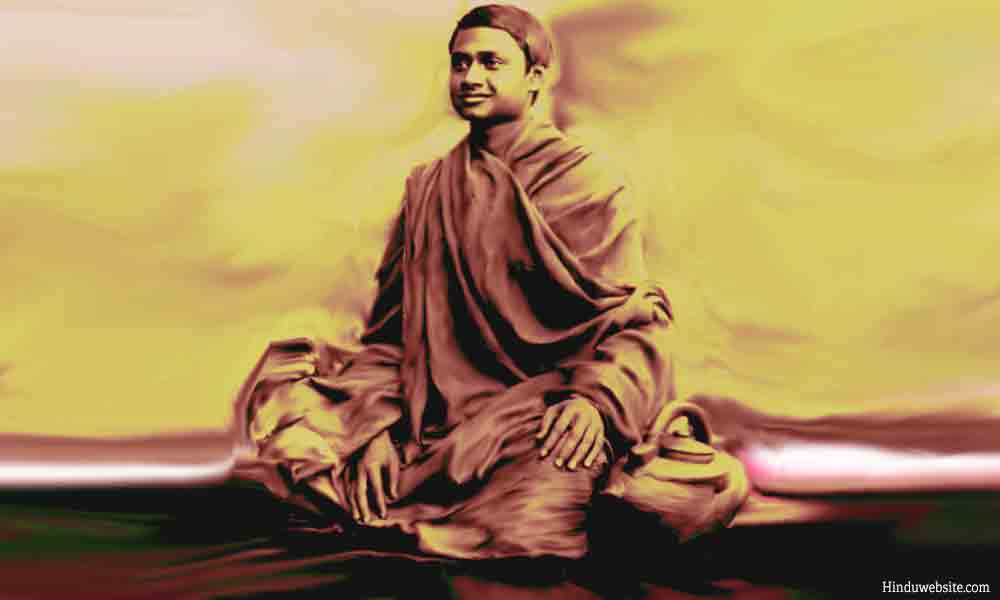
An Artistic Impression of Swami Paramananda
Preface
The translator's idea of rendering the Upanishads into clear simple English, accessible to Occidental readers, had its origin in a visit paid to a Boston friend in 1909. The gentleman, then battling with a fatal malady, took from his library shelf a translation of the Upanishads and, opening it, expressed deep regret that the obscure and unfamiliar form shut from him what he felt to be profound and vital teaching.
The desire to unlock the closed doors of this ancient treasure house, awakened at that time, led to a series of classes on the Upanishads at The Vedanta Centre of Boston during its early days in St. Botolph Street. The translation and commentary then given were transcribed and, after studious revision, were published in the Centre's monthly magazine, "The Message of the East," in 1913 and 1914.. Still further revision has brought it to its present form.
So far as was consistent with a faithful rendering of the Sanskrit text, the Swami throughout his translation has sought to eliminate all that might seem obscure and confusing to the modern mind. While retaining in remarkable measure the rhythm and archaic force of the lines, he has tried not to sacrifice directness and simplicity of style.
Where he has been obliged to use the Sanskrit term for lack of an exact English equivalent, he has invariably interpreted it by a familiar English word in brackets; and everything has been done to remove the sense of strangeness in order that the Occidental reader may not feel himself an alien in the new regions of thought opened to him.
Even more has the Swami striven to keep the letter subordinate to the spirit. Any Scripture is only secondarily an historical document. To treat it as an object of mere intellectual curiosity is to cheat the world of its deeper message. If mankind is to derive the highest benefit from a study of it, its appeal must be primarily to the spiritual consciousness; and one of the salient merits of the present translation lies in this, that the translator approaches his task not only with the grave concern of the careful scholar, but also with the profound reverence and fervor of the true devotee.
Editor
Boston, March, 1919
Check the Translations of Swami Paramananda
Suggestions for Further Reading
- The Isa Upanishad translated by Swami Paramananda
- The Katha Upanishad translated by Swami Paramananda
- The Kena Upanishad translation by Swami Paramananda
- The Wisdom of the Upanishads, Main Page
- 22 Minor Upanishads
- Introduction to the Upanishads of Hinduism
- A Brief Introduction to the Upanishads
- List of 108 Upanishads According To The Muktikopanishad
- Essays on The Upanishads
- Translation Of Various Upanishads
- Essays On Dharma
- Esoteric Mystic Hinduism
- Introduction to Hinduism
- Hindu Way of Life
- Essays On Karma
- Hindu Rites and Rituals
- The Origin of The Sanskrit Language
- Symbolism in Hinduism
- Essays on The Upanishads
- Concepts of Hinduism
- Essays on Atman
- Hindu Festivals
- Spiritual Practice
- Right Living
- Yoga of Sorrow
- Happiness
- Mental Health
- Concepts of Buddhism
- General Essays