
Chapter 3 - THE VEDAS, BRÂHMANAS AND THEIR PHILOSOPHY
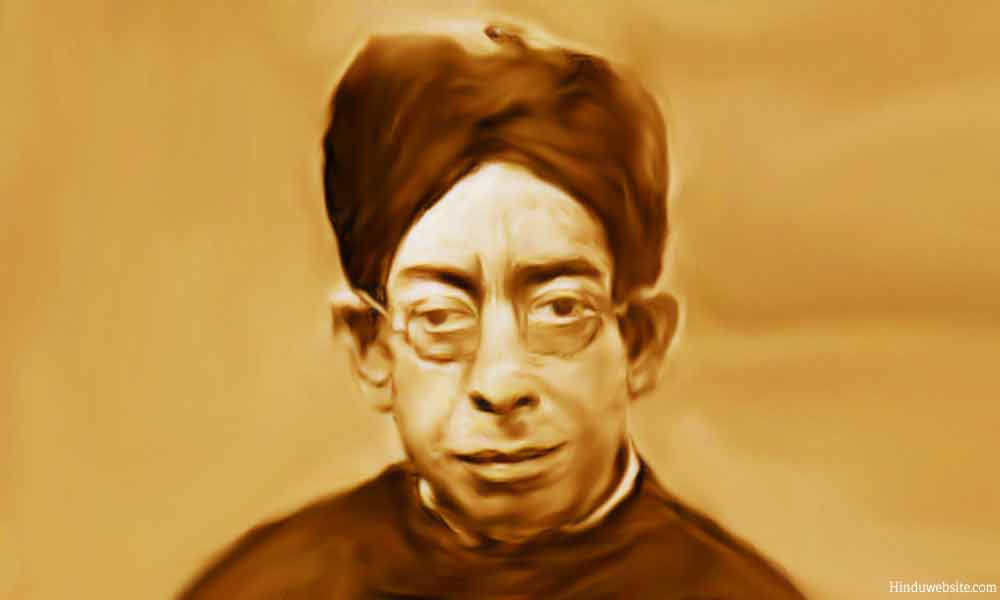
An artistic impression of Surendranath Dasgupta
| Ch1 || Ch2 || Ch3 || Ch4 || Ch5 || Ch6 || Ch7 ||Ch8 || Ch9 || Ch10 || Index ||
The Vedas and their antiquity.
The sacred books of India, the Vedas, are generally believed to be the earliest literary record of the Indo-European race. It is indeed difficult to say when the earliest portions of these compositions came into existence. Many shrewd guesses have been offered, but none of them can be proved to be incontestably true. Max Müller supposed the date to be 1200 B.C., Haug 2400 B.C. and Bâl Gangâdhar Tilak 4000 B.C. The ancient Hindus seldom kept any historical record of their literary, religious or political achievements.
The Vedas were handed down from mouth to mouth from a period of unknown antiquity; and the Hindus generally believed that they were never composed by men. It was therefore generally supposed that either they were taught by God to the sages, or that they were of themselves revealed to the sages who were the "seers" (_mantradrastâ_) of the hymns. Thus we find that when some time had elapsed after the composition of the Vedas, people had come to look upon them not only as very old, but so old that they had, theoretically at least, no beginning in time, though they were believed to have been revealed at some unknown remote period at the beginning of each creation.
The place of the Vedas in the Hindu mind.
When the Vedas were composed, there was probably no system of writing prevalent in India. But such was the scrupulous zeal of the Brahmins, who got the whole Vedic literature by heart by hearing it from their preceptors, that it has been transmitted most faithfully to us through the course of the last 3000 years or more with little or no interpolations at all. The religious history of India had suffered considerable changes in the latter periods, since the time of the Vedic civilization, but such was the reverence paid to the Vedas that they had ever remained as the highest religious authority for all sections of the Hindus at all times. Even at this day all the obligatory duties of the Hindus at birth, marriage, death, etc., are performed according to the old Vedic ritual.
The prayers that a Brahmin now says three times a day are the same selections of Vedic verses as were used as prayer verses two or three thousand years ago. A little insight into the life of an ordinary Hindu of the present day will show that the system of image-worship is one that has been grafted upon his life, the regular obligatory duties of which are ordered according to the old Vedic rites. Thus an orthodox Brahmin can dispense with image-worship if he likes, but not so with his daily Vedic prayers or other obligatory ceremonies. Even at this day there are persons who bestow immense sums of money for the performance and teaching of Vedic sacrifices and rituals. Most of the Sanskrit literatures that flourished after the Vedas base upon them their own validity, and appeal to them as authority. Systems of Hindu philosophy not only own their allegiance to the Vedas, but the adherents of each one of them would often quarrel with others and maintain its superiority by trying to prove that it and it alone was the faithful follower of the Vedas and represented correctly their views.
The laws which regulate the social, legal, domestic and religious customs and rites of the Hindus even to the present day are said to be but mere systematized memories of old Vedic teachings, and are held to be obligatory on their authority. Even under British administration, in the inheritance of property, adoption, and in such other legal transactions, Hindu Law is followed, and this claims to draw its authority from the Vedas. To enter into details is unnecessary. But suffice it to say that the Vedas, far from being regarded as a dead literature of the past, are still looked upon as the origin and source of almost all literatures except purely secular poetry and drama. Thus in short we may say that in spite of the many changes that time has wrought, the orthodox Hindu life may still be regarded in the main as an adumbration of the Vedic life, which had never ceased to shed its light all through the past.
Classification of the Vedic literature.
A beginner who is introduced for the first time to the study of later Sanskrit literature is likely to appear somewhat confused when he meets with authoritative texts of diverse purport and subjects having the same generic name "Veda" or "S'ruti" (from _s'ru_ to hear); for Veda in its wider sense is not the name of any particular book, but of the literature of a particular epoch extending over a long period, say two thousand years or so. As this literature represents the total achievements of the Indian people in different directions for such a long period, it must of necessity be of a diversified character. If we roughly classify this huge literature from the points of view of age, language, and subject matter, we can point out four different types, namely the Samhitâ or collection of verses (_sam_ together, _hita_ put), Brâhmanas, Âranyakas ("forest treatises") and the Upanisads. All these literatures, both prose and verse, were looked upon as so holy that in early times it was thought almost a sacrilege to write them; they were therefore learnt by heart by the Brahmins from the mouth of their preceptors and were hence called _s'ruti_ (literally anything heard)[Footnote ref 1].
The Samhitâs.
There are four collections or Samhitâs, namely Rg-Veda, Sâma-Veda, Yajur-Veda and Atharva-Veda. Of these the Rg-Veda is probably the earliest. The Sâma-Veda has practically no independent value, for it consists of stanzas taken (excepting only 75) entirely from the Rg-Veda, which were meant to be sung to certain fixed melodies, and may thus be called the book of chants. The Yajur-Veda however contains in addition to the verses taken from the Rg-Veda many original prose formulas. The arrangement of the verses of the Sâma-Veda is solely with reference to their place and use in the Soma sacrifice; the contents of the Yajur-Veda are arranged in the order in which the verses were actually employed in the various religious sacrifices. It is therefore called the Veda of Yajus--sacrificial prayers. These may be contrasted with the arrangement in the Rg-Veda in this, that there the verses are generally arranged in accordance with the gods who are adored in them. Thus, for example, first we get all the poems addressed to Agni or the Fire-god, then all those to the god Indra and so on. The fourth collection, the Atharva-Veda, probably attained its present form considerably later than the Rg-Veda. In spirit, however, as Professor Macdonell says, "It is not only entirely different from the _Rigveda_ but represents a much more primitive stage of thought.
[Footnote 1: Pânini, III. iii. 94.]
While the _Rigveda_ deals almost exclusively with the higher gods as conceived by a comparatively advanced and refined sacerdotal class, the _Atharva-Veda_ is, in the main a book of spells and incantations appealing to the demon world, and teems with notions about witchcraft current among the lower grades of the population, and derived from an immemorial antiquity. These two, thus complementary to each other in contents are obviously the most important of the four Vedas [Footnote ref 1]."
The Brâhmanas. [Footnote ref 2]
After the Samhitâs there grew up the theological treatises called the Brâhmanas, which were of a distinctly different literary type. They are written in prose, and explain the sacred significance of the different rituals to those who are not already familiar with them. "They reflect," says Professor Macdonell, "the spirit of an age in which all intellectual activity is concentrated on the sacrifice, describing its ceremonies, discussing its value, speculating on its origin and significance." These works are full of dogmatic assertions, fanciful symbolism and speculations of an unbounded imagination in the field of sacrificial details. The sacrificial ceremonials were probably never so elaborate at the time when the early hymns were composed. But when the collections of hymns were being handed down from generation to generation the ceremonials became more and more complicated. Thus there came about the necessity of the distribution of the different sacrificial functions among several distinct classes of priests. We may assume that this was a period when the caste system was becoming established, and when the only thing which could engage wise and religious minds was sacrifice and its elaborate rituals. Free speculative thinking was thus subordinated to the service of the sacrifice, and the result was the production of the most fanciful sacramental and symbolic system, unparalleled anywhere but among the Gnostics. It is now generally believed that the close of the Brâhmana period was not later than 500 B.C.
[Footnote 1: A.A. Macdonell's _History of Sanskrit Literature_, p. 31.]
[Footnote 2: Weber (_Hist. Ind. Lit_., p. 11, note) says that the word Brâhmana signifies "that which relates to prayer _brahman_." Max Muller (_S.B.E._, I.p. lxvi) says that Brâhmana meant "originally the sayings of Brahmans, whether in the general sense of priests, or in the more special sense of Brahman-priests." Eggeling (S.B.E. XII. Introd. p. xxii) says that the Brhâmanas were so called "probably either because they were intended for the instruction and guidance of priests (brahman) generally; or because they were, for the most part, the authoritative utterances of such as were thoroughly versed in Vedic and sacrificial lore and competent to act as Brahmans or superintending priests." But in view of the fact that the Brâhmanas were also supposed to be as much revealed as the Vedas, the present writer thinks that Weber's view is the correct one.]
The Âranyakas.
As a further development of the Brâhmanas however we get the Âranyakas or forest treatises. These works were probably composed for old men who had retired into the forest and were thus unable to perform elaborate sacrifices requiring a multitude of accessories and articles which could not be procured in forests. In these, meditations on certain symbols were supposed to be of great merit, and they gradually began to supplant the sacrifices as being of a superior order. It is here that we find that amongst a certain section of intelligent people the ritualistic ideas began to give way, and philosophic speculations about the nature of truth became gradually substituted in their place. To take an illustration from the beginning of the Brhadâranyaka we find that instead of the actual performance of the horse sacrifice (_as'vamedha_) there are directions for meditating upon the dawn (_Usas_) as the head of the horse, the sun as the eye of the horse, the air as its life, and so on. This is indeed a distinct advancement of the claims of speculation or meditation over the actual performance of the complicated ceremonials of sacrifice. The growth of the subjective speculation, as being capable of bringing the highest good, gradually resulted in the supersession of Vedic ritualism and the establishment of the claims of philosophic meditation and self-knowledge as the highest goal of life. Thus we find that the Âranyaka age was a period during which free thinking tried gradually to shake off the shackles of ritualism which had fettered it for a long time. It was thus that the Âranyakas could pave the way for the Upanisads, revive the germs of philosophic speculation in the Vedas, and develop them in a manner which made the Upanisads the source of all philosophy that arose in the world of Hindu thought.
The Rg-Veda, its civilization.
The hymns of the Rg-Veda are neither the productions of a single hand nor do they probably belong to any single age. They were composed probably at different periods by different sages, and it is not improbable that some of them were composed before the Aryan people entered the plains of India. They were handed down from mouth to mouth and gradually swelled through the new additions that were made by the poets of succeeding generations. It was when the collection had increased to a very considerable extent that it was probably arranged in the present form, or in some other previous forms to which the present arrangement owes its origin. They therefore reflect the civilization of the Aryan people at different periods of antiquity before and after they had come to India. This unique monument of a long vanished age is of great aesthetic value, and contains much that is genuine poetry. It enables us to get an estimate of the primitive society which produced it--the oldest book of the Aryan race. The principal means of sustenance were cattle-keeping and the cultivation of the soil with plough and harrow, mattock and hoe, and watering the ground when necessary with artificial canals. "The chief food consists," as Kaegi says, "together with bread, of various preparations of milk, cakes of flour and butter, many sorts of vegetables and fruits; meat cooked on the spits or in pots, is little used, and was probably eaten only at the great feasts and family gatherings. Drinking plays throughout a much more important part than eating [Footnote ref 1]." The wood-worker built war-chariots and wagons, as also more delicate carved works and artistic cups. Metal-workers, smiths and potters continued their trade. The women understood the plaiting of mats, weaving and sewing; they manufactured the wool of the sheep into clothing for men and covering for animals. The group of individuals forming a tribe was the highest political unit; each of the different families forming a tribe was under the sway of the father or the head of the family. Kingship was probably hereditary and in some cases electoral. Kingship was nowhere absolute, but limited by the will of the people. Most developed ideas of justice, right and law, were present in the country. Thus Kaegi says, "the hymns strongly prove how deeply the prominent minds in the people were persuaded that the eternal ordinances of the rulers of the world were as inviolable in mental and moral matters as in the realm of nature, and that every wrong act, even the unconscious, was punished and the sin expiated."[Footnote ref 2] Thus it is only right and proper to think that the Aryans had attained a pretty high degree
[Footnote 1: _The Rigveda_, by Kaegi, 1886 edition, p. 13.]
[Footnote 2: _Ibid_. p. 18.]
of civilization, but nowhere was the sincere spirit of the Aryans more manifested than in religion, which was the most essential and dominant feature of almost all the hymns, except a few secular ones. Thus Kaegi says, "The whole significance of the Rigveda in reference to the general history of religion, as has repeatedly been pointed out in modern times, rests upon this, that it presents to us the development of religious conceptions from the earliest beginnings to the deepest apprehension of the godhead and its relation to man [Footnote ref 1]."
The Vedic Gods.
The hymns of the Rg-Veda were almost all composed in praise of the gods. The social and other materials are of secondary importance, as these references had only to be mentioned incidentally in giving vent to their feelings of devotion to the god. The gods here are however personalities presiding over the diverse powers of nature or forming their very essence. They have therefore no definite, systematic and separate characters like the Greek gods or the gods of the later Indian mythical works, the Purânas. The powers of nature such as the storm, the rain, the thunder, are closely associated with one another, and the gods associated with them are also similar in character. The same epithets are attributed to different gods and it is only in a few specific qualities that they differ from one another. In the later mythological compositions of the Purânas the gods lost their character as hypostatic powers of nature, and thus became actual personalities and characters having their tales of joy and sorrow like the mortal here below. The Vedic gods may be contrasted with them in this, that they are of an impersonal nature, as the characters they display are mostly but expressions of the powers of nature. To take an example, the fire or Agni is described, as Kaegi has it, as one that "lies concealed in the softer wood, as in a chamber, until, called forth by the rubbing in the early morning hour, he suddenly springs forth in gleaming brightness. The sacrificer takes and lays him on the wood. When the priests pour melted butter upon him, he leaps up crackling and neighing like a horse--he whom men love to see increasing like their own prosperity. They wonder at him, when, decking himself with
[Footnote 1: _The Rigveda_, by Kaegi, p. 26.]
changing colors like a suitor, equally beautiful on all sides, he presents to all sides his front.
"All-searching is his beam, the gleaming of his light, His, the all-beautiful, of beauteous face and glance, The changing shimmer like that floats upon the stream, So Agni's rays gleam over bright and never cease."
[Footnote ref 1] R.V.I. 143. 3.
They would describe the wind (Vâta) and adore him and say
"In what place was he born, and from whence comes he? The vital breath of gods, the world's great offspring, The God where'er he will moves at his pleasure: His rushing sound we hear--what his appearance, no one."
[Footnote ref 2] R.V.X. 168. 3, 4.
It was the forces of nature and her manifestations, on earth here, the atmosphere around and above us, or in the Heaven beyond the vault of the sky that excited the devotion and imagination of the Vedic poets. Thus with the exception of a few abstract gods of whom we shall presently speak and some dual divinities, the gods may be roughly classified as the terrestrial, atmospheric, and celestial.
Polytheism, Henotheism and Monotheism.
The plurality of the Vedic gods may lead a superficial enquirer to think the faith of the Vedic people polytheistic. But an intelligent reader will find here neither polytheism nor monotheism but a simple primitive stage of belief to which both of these may be said to owe their origin. The gods here do not preserve their proper places as in a polytheistic faith, but each one of them shrinks into insignificance or shines as supreme according as it is the object of adoration or not. The Vedic poets were the children of nature. Every natural phenomenon excited their wonder, admiration or veneration. The poet is struck with wonder that "the rough red cow gives soft white milk." The appearance or the setting of the sun sends a thrill into the minds of the Vedic sage and with wonder-gazing eyes he exclaims:
"Undropped beneath, not fastened firm, how comes it That downward turned he falls not downward? The guide of his ascending path,--who saw it?"
[Footnote Ref 1] R.V. IV. 13. 5.
The sages wonder how "the sparkling waters of all rivers flow into one ocean without ever filling it." The minds of the Vedic
[Footnote 1: _The Rigveda_, by Kaegi, p. 35.]
[Footnote 2: _Ibid_, p. 38.]
people as we find in the hymns were highly impressionable and fresh. At this stage the time was not ripe enough for them to accord a consistent and well-defined existence to the multitude of gods nor to universalize them in a monotheistic creed. They hypostatized unconsciously any force of nature that overawed them or filled them with gratefulness and joy by its beneficent or aesthetic character, and adored it. The deity which moved the devotion or admiration of their mind was the most supreme for the time. This peculiar trait of the Vedic hymns Max Muller has called Henotheism or Kathenotheism: "a belief in single gods, each in turn standing out as the highest. And since the gods are thought of as specially ruling in their own spheres, the singers, in their special concerns and desires, call most of all on that god to whom they ascribe the most power in the matter,--to whose department if I may say so, their wish belongs. This god alone is present to the mind of the suppliant; with him for the time being is associated everything that can be said of a divine being;--he is the highest, the only god, before whom all others disappear, there being in this, however, no offence or depreciation of any other god [Footnote ref 1]." "Against this theory it has been urged," as Macdonell rightly says in his _Vedic Mythology_ [Footnote ref 2], "that Vedic deities are not represented as 'independent of all the rest,' since no religion brings its gods into more frequent and varied juxtaposition and combination, and that even the mightiest gods of the Veda are made dependent on others. Thus Varuna and Sûrya are subordinate to Indra (I. 101), Varuna and the As'vins submit to the power of Visnu (I. 156)....Even when a god is spoken of as unique or chief (_eka_), as is natural enough in laudations, such statements lose their temporarily monotheistic force, through the modifications or corrections supplied by the context or even by the same verse [Footnote Ref 3]. "Henotheism is therefore an appearance," says Macdonell, "rather than a reality, an appearance produced by the indefiniteness due to undeveloped anthropomorphism, by the lack of any Vedic god occupying the position of a Zeus as the constant head of the pantheon, by the natural tendency of the priest or singer in extolling a particular god to exaggerate his greatness and to ignore other gods, and by the
[Footnote 1: _The Rigveda_, by Kaegi, p. 27.]
[Footnote 2: See _Ibid._ p. 33. See also Arrowsmith's note on it for other references to Henotheism.]
[Footnote 3: Macdonell's _Vedic Mythology_, pp. 16, 17.]
growing belief in the unity of the gods (cf. the refrain of 3, 35) each of whom might be regarded as a type of the divine [Footnote ref 1]." But whether we call it Henotheism or the mere temporary exaggeration of the powers of the deity in question, it is evident that this stage can neither be properly called polytheistic nor monotheistic, but one which had a tendency towards them both, although it was not sufficiently developed to be identified with either of them. The tendency towards extreme exaggeration could be called a monotheistic bias in germ, whereas the correlation of different deities as independent of one another and yet existing side by side was a tendency towards polytheism.
Growth of a Monotheistic tendency; Prajâpati, Vis'vakarma.
This tendency towards extolling a god as the greatest and highest gradually brought forth the conception of a supreme Lord of all beings (Prajâpati), not by a process of conscious generalization but as a necessary stage of development of the mind, able to imagine a deity as the repository of the highest moral and physical power, though its direct manifestation cannot be perceived. Thus the epithet Prajâpati or the Lord of beings, which was originally an epithet for other deities, came to be recognized as a separate deity, the highest and the greatest. Thus it is said in R.V.x. 121 [Footnote Ref 2]:
In the beginning rose Hiranyagarbha, Born as the only lord of all existence. This earth he settled firm and heaven established: What god shall we adore with our oblations? Who gives us breath, who gives us strength, whose bidding All creatures must obey, the bright gods even; Whose shade is death, whose shadow life immortal: What god shall we adore with our oblations? Who by his might alone became the monarch Of all that breathes, of all that wakes or slumbers, Of all, both man and beast, the lord eternal: What god shall we adore with our oblations? Whose might and majesty these snowy mountains, The ocean and the distant stream exhibit; Whose arms extended are these spreading regions: What god shall we adore with our oblations? Who made the heavens bright, the earth enduring, Who fixed the firmament, the heaven of heavens; Who measured out the air's extended spaces: What god shall we adore with our oblations?
[Footnote 1: Macdonell's _Vedic Mythology_, p. 17.]
[Footnote 2: _The Rigveda_, by Kaegi, pp. 88, 89.]
Similar attributes are also ascribed to the deity Vis'vakarma (All-creator) [Footnote ref 1]. He is said to be father and procreator of all beings, though himself uncreated. He generated the primitive waters. It is to him that the sage says,
Who is our father, our creator, maker, Who every place doth know and every creature, By whom alone to gods their names were given, To him all other creatures go to ask him [Footnote ref 2] R.V.x.82.3.
Brahma.
The conception of Brahman which has been the highest glory for the Vedânta philosophy of later days had hardly emerged in the Rg-Veda from the associations of the sacrificial mind. The meanings that Sâyana the celebrated commentator of the Vedas gives of the word as collected by Haug are: (_a_) food, food offering, (_b_) the chant of the sâma-singer, (_c_) magical formula or text, (_d_) duly completed ceremonies, (_e_) the chant and sacrificial gift together, (_f_) the recitation of the hotr priest, (_g_) great. Roth says that it also means "the devotion which manifests itself as longing and satisfaction of the soul and reaches forth to the gods." But it is only in the S'atapatha Brâhmana that the conception of Brahman has acquired a great significance as the supreme principle which is the moving force behind the gods. Thus the S'atapatha says, "Verily in the beginning this (universe) was the Brahman (neut.). It created the gods; and, having created the gods, it made them ascend these worlds: Agni this (terrestrial) world, Vâyu the air, and Sûrya the sky.... Then the Brahman itself went up to the sphere beyond. Having gone up to the sphere beyond, it considered, 'How can I descend again into these worlds?' It then descended again by means of these two, Form and Name. Whatever has a name, that is name; and that again which has no name and which one knows by its form, 'this is (of a certain) form,' that is form: as far as there are Form and Name so far, indeed, extends this (universe). These indeed are the two great forces of Brahman; and, verily, he who knows these two great forces of Brahman becomes himself a great force [Footnote ref 3]. In another place Brahman is said to be the ultimate thing in the Universe and is identified with Prajâpati, Purusa and Prâna
[Footnote 1: See _The Rigveda_, by Kaegi, p. 89, and also Muir's _Sanskrit Texts_, vol. IV. pp. 5-11.]
[Footnote 2: Kaegi's translation.]
[Footnote 3: See Eggeling's translation of S'atapatha Brâhmana _S.B.E._ vol. XLIV. pp. 27, 28.]
(the vital air [Footnote ref 1]). In another place Brahman is described as being the Svayambhû (self-born) performing austerities, who offered his own self in the creatures and the creatures in his own self, and thus compassed supremacy, sovereignty and lordship over all creatures [Footnote ref 2]. The conception of the supreme man (Purusa) in the Rg-Veda also supposes that the supreme man pervades the world with only a fourth part of Himself, whereas the remaining three parts transcend to a region beyond. He is at once the present, past and future [Footnote ref 3].
Sacrifice; the First Rudiments of the Law of Karma.
It will however be wrong to suppose that these monotheistic tendencies were gradually supplanting the polytheistic sacrifices. On the other hand, the complications of ritualism were gradually growing in their elaborate details. The direct result of this growth contributed however to relegate the gods to a relatively unimportant position, and to raise the dignity of the magical characteristics of the sacrifice as an institution which could give the desired fruits of themselves. The offerings at a sacrifice were not dictated by a devotion with which we are familiar under Christian or Vaisnava influence. The sacrifice taken as a whole is conceived as Haug notes "to be a kind of machinery in which every piece must tally with the other," the slightest discrepancy in the performance of even a minute ritualistic detail, say in the pouring of the melted butter on the fire, or the proper placing of utensils employed in the sacrifice, or even the misplacing of a mere straw contrary to the injunctions was sufficient to spoil the whole sacrifice with whatsoever earnestness it might be performed. Even if a word was mispronounced the most dreadful results might follow. Thus when Tvastr performed a sacrifice for the production of a demon who would be able to kill his enemy Indra, owing to the mistaken accent of a single word the object was reversed and the demon produced was killed by Indra. But if the sacrifice could be duly performed down to the minutest detail, there was no power which could arrest or delay the fruition of the object. Thus the objects of a sacrifice were fulfilled not by the grace of the gods, but as a natural result of the sacrifice. The performance of the rituals invariably produced certain mystic or magical results by virtue of which the object desired
[Footnote 1: See _S.B.E._ XLIII. pp.59,60,400 and XLIV. p.409.]
[Footnote 2: See _Ibid_., XLIV, p. 418.]
[Footnote 3: R.V.x.90, Purusa Sûkta.]
by the sacrificer was fulfilled in due course like the fulfilment of a natural law in the physical world. The sacrifice was believed to have existed from eternity like the Vedas. The creation of the world itself was even regarded as the fruit of a sacrifice performed by the supreme Being. It exists as Haug says "as an invisible thing at all times and is like the latent power of electricity in an electrifying machine, requiring only the operation of a suitable apparatus in order to be elicited." The sacrifice is not offered to a god with a view to propitiate him or to obtain from him welfare on earth or bliss in Heaven; these rewards are directly produced by the sacrifice itself through the correct performance of complicated and interconnected ceremonies which constitute the sacrifice. Though in each sacrifice certain gods were invoked and received the offerings, the gods themselves were but instruments in bringing about the sacrifice or in completing the course of mystical ceremonies composing it. Sacrifice is thus regarded as possessing a mystical potency superior even to the gods, who it is sometimes stated attained to their divine rank by means of sacrifice. Sacrifice was regarded as almost the only kind of duty, and it was also called _karma_ or _kriyâ_ (action) and the unalterable law was, that these mystical ceremonies for good or for bad, moral or immoral (for there were many kinds of sacrifices which were performed for injuring one's enemies or gaining worldly prosperity or supremacy at the cost of others) were destined to produce their effects. It is well to note here that the first recognition of a cosmic order or law prevailing in nature under the guardianship of the highest gods is to be found in the use of the word Rta (literally the course of things). This word was also used, as Macdonell observes, to denote the "'order' in the moral world as truth and 'right' and in the religious world as sacrifice or 'rite'[Footnote ref 1]" and its unalterable law of producing effects. It is interesting to note in this connection that it is here that we find the first germs of the law of karma, which exercises such a dominating control over Indian thought up to the present day. Thus we find the simple faith and devotion of the Vedic hymns on one hand being supplanted by the growth of a complex system of sacrificial rites, and on the other bending their course towards a monotheistic or philosophic knowledge of the ultimate reality of the universe.
[Footnote 1: Macdonell's _Vedic Mythology_, p. 11.]\
Cosmogony--Mythological and philosophical.
The cosmogony of the Rg-Veda may be looked at from two aspects, the mythological and the philosophical. The mythological aspect has in general two currents, as Professor Macdonell says, "The one regards the universe as the result of mechanical production, the work of carpenter's and joiner's skill; the other represents it as the result of natural generation [Footnote ref. 1]." Thus in the Rg-Veda we find that the poet in one place says, "what was the wood and what was the tree out of which they built heaven and earth [Footnote ref. 2]?" The answer given to this question in Taittirîya-Brâhmana is "Brahman the wood and Brahman the tree from which the heaven and earth were made [Footnote ref 3]." Heaven and Earth are sometimes described as having been supported with posts [Footnote ref 4]. They are also sometimes spoken of as universal parents, and parentage is sometimes attributed to Aditi and Daksa.
Under this philosophical aspect the semi-pantheistic Man-hymn [Footnote ref 5] attracts our notice. The supreme man as we have already noticed above is there said to be the whole universe, whatever has been and shall be; he is the lord of immortality who has become diffused everywhere among things animate and inanimate, and all beings came out of him; from his navel came the atmosphere; from his head arose the sky; from his feet came the earth; from his ear the four quarters. Again there are other hymns in which the Sun is called the soul (_âtman_) of all that is movable and all that is immovable [Footnote ref 6]. There are also statements to the effect that the Being is one, though it is called by many names by the sages [Footnote ref 7]. The supreme being is sometimes extolled as the supreme Lord of the world called the golden egg (Hiranyagarbha [Footnote ref 8]). In some passages it is said "Brahmanaspati blew forth these births like a blacksmith. In the earliest age of the gods, the existent sprang from the non-existent. In the first age of the gods, the existent sprang from the non-existent: thereafter the regions sprang, thereafter, from Uttânapada [Footnote ref 9]." The most remarkable and sublime hymn in which the first germs of philosophic speculation
[Footnote 1: Macdonell's _Vedic Mythology_, p. 11.]
[Footnote 2: R.V.x. 81. 4.]
[Footnote 3: Taitt. Br. II. 8. 9. 6.]
[Footnote 4: Macdonell's _Vedic Mythology_, p. 11; also R.V. II. 15 and IV. 56.]
[Footnote 5: R.V.x. 90.]
[Footnote 6: R.V.I. 115.]
[Footnote 7: R.V.I. 164. 46.]
[Footnote 8: R.V.X. 121.]
[Footnote 9: Muir's translation of R.V.x. 72; Muir's _Sanskrit Texts_, vol. v.p. 48.]
with regard to the wonderful mystery of the origin of the world are found is the 129th hymn of R.V.x.
1. Then there was neither being nor not-being. The atmosphere was not, nor sky above it. What covered all? and where? by what protected? Was there the fathomless abyss of waters?
2. Then neither death nor deathless existed; Of day and night there was yet no distinction. Alone that one breathed calmly, self-supported, Other than It was none, nor aught above It.
3. Darkness there was at first in darkness hidden; The universe was undistinguished water. That which in void and emptiness lay hidden Alone by power of fervor was developed.
4. Then for the first time there arose desire, Which was the primal germ of mind, within it. And sages, searching in their heart, discovered In Nothing the connecting bond of Being.
6. Who is it knows? Who here can tell us surely From what and how this universe has risen? And whether not till after it the gods lived? Who then can know from what it has arisen?
7. The source from which this universe has risen, And whether it was made, or uncreated, He only knows, who from the highest heaven Rules, the all-seeing lord--or does not He know [Footnote ref 1]?
The earliest commentary on this is probably a passage in the S'atapatha Brâhmana (x. 5. 3.I) which says that "in the beginning this (universe) was as it were neither non-existent nor existent; in the beginning this (universe) was as it were, existed and did not exist: there was then only that Mind. Wherefore it has been declared by the Rishi (Rg-Veda X. 129. I), 'There was then neither the non-existent nor the existent' for Mind was, as it were, neither existent nor non-existent. This Mind when created, wished to become manifest,--more defined, more substantial: it sought after a self (a body); it practised austerity: it acquired consistency [Footnote ref 2]." In the Atharva-Veda also we find it stated that all forms of the universe were comprehended within the god Skambha [Footnote ref 3].
Thus we find that even in the period of the Vedas there sprang forth such a philosophic yearning, at least among some who could
[Footnote 1: _The Rigveda_, by Kaegi, p. 90. R.V.x. 129.]
[Footnote 2: See Eggeling's translation of _S'.B., S.B.E._ vol. XLIII. pp. 374, 375.]
[Footnote 3: _A.V._ x. 7. 10.]
question whether this universe was at all a creation or not, which could think of the origin of the world as being enveloped in the mystery of a primal non-differentiation of being and non-being; and which could think that it was the primal One which by its inherent fervour gave rise to the desire of a creation as the first manifestation of the germ of mind, from which the universe sprang forth through a series of mysterious gradual processes. In the Brâhmanas, however, we find that the cosmogonic view generally requires the agency of a creator, who is not however always the starting point, and we find that the theory of evolution is combined with the theory of creation, so that Prajâpati is sometimes spoken of as the creator while at other times the creator is said to have floated in the primeval water as a cosmic golden egg.
Eschatology; the Doctrine of Âtman.
There seems to be a belief in the Vedas that the soul could be separated from the body in states of swoon, and that it could exist after death, though we do not find there any trace of the doctrine of transmigration in a developed form. In the S'atapatha Brâhmana it is said that those who do not perform rites with correct knowledge are born again after death and suffer death again. In a hymn of the Rg-Veda (X. 58) the soul (_manas_) of a man apparently unconscious is invited to come back to him from the trees, herbs, the sky, the sun, etc. In many of the hymns there is also the belief in the existence of another world, where the highest material joys are attained as a result of the performance of the sacrifices and also in a hell of darkness underneath where the evil-doers are punished. In the S'atapatha Brâhmana we find that the dead pass between two fires which burn the evil-doers, but let the good go by [Footnote ref 1]; it is also said there that everyone is born again after death, is weighed in a balance, and receives reward or punishment according as his works are good or bad. It is easy to see that scattered ideas like these with regard to the destiny of the soul of man according to the sacrifice that he performs or other good or bad deeds form the first rudiments of the later doctrine of metempsychosis. The idea that man enjoys or suffers, either in another world or by being born in this world according to his good or bad deeds, is the first beginning of the moral idea, though in the Brahmanic days the good deeds were
[Footnote 1: See _S.B._ I. 9.3, and also Macdonell's _Vedic Mythology_, pp. 166, 167.]
more often of the nature of sacrificial duties than ordinary good works. These ideas of the possibilities of a necessary connection of the enjoyments and sorrows of a man with his good and bad works when combined with the notion of an inviolable law or order, which we have already seen was gradually growing with the conception of rta, and the unalterable law which produces the effects of sacrificial works, led to the Law of Karma and the doctrine of transmigration. The words which denote soul in the Rg-Veda are _manas_, _âtman_ and _asu_. The word _âtman_ however which became famous in later Indian thought is generally used to mean vital breath. Manas is regarded as the seat of thought and emotion, and it seems to be regarded, as Macdonell says, as dwelling in the heart[Footnote ref 1]. It is however difficult to understand how âtman as vital breath, or as a separable part of man going out of the dead man came to be regarded as the ultimate essence or reality in man and the universe. There is however at least one passage in the Rg-Veda where the poet penetrating deeper and deeper passes from the vital breath (_asu_) to the blood, and thence to âtman as the inmost self of the world; "Who has seen how the first-born, being the Bone-possessing (the shaped world), was born from the Boneless (the shapeless)? where was the vital breath, the blood, the Self (_âtman_) of the world? Who went to ask him that knows it [Footnote ref 2]?" In Taittîrya Âranyaka I. 23, however, it is said that Prajâpati after having created his self (as the world) with his own self entered into it. In Taittîrya Brâhmana the âtman is called omnipresent, and it is said that he who knows him is no more stained by evil deeds. Thus we find that in the pre-Upanisad Vedic literature âtman probably was first used to denote "vital breath" in man, then the self of the world, and then the self in man. It is from this last stage that we find the traces of a growing tendency to looking at the self of man as the omnipresent supreme principle of the universe, the knowledge of which makes a man sinless and pure.
Conclusion.
Looking at the advancement of thought in the Rg-Veda we find first that a fabric of thought was gradually growing which not only looked upon the universe as a correlation of parts or a
[Footnote 1: Macdonell's _Vedic Mythology_, p.166 and R.V. viii.89.]
[Footnote 2: R.V.i. 164. 4 and Deussen's article on Âtman in _Encyclopaedia of Religion and Ethics_.
construction made of them, but sought to explain it as having emanated from one great being who is sometimes described as one with the universe and surpassing it, and at other times as being separate from it; the agnostic spirit which is the mother of philosophic thought is seen at times to be so bold as to express doubts even on the most fundamental questions of creation--"Who knows whether this world was ever created or not?" Secondly the growth of sacrifices has helped to establish the unalterable nature of the law by which the (sacrificial) actions produced their effects of themselves. It also lessened the importance of deities as being the supreme masters of the world and our fate, and the tendency of henotheism gradually diminished their multiple character and advanced the monotheistic tendency in some quarters. Thirdly, the soul of man is described as being separable from his body and subject to suffering and enjoyment in another world according to his good or bad deeds; the doctrine that the soul of man could go to plants, etc., or that it could again be reborn on earth, is also hinted at in certain passages, and this may be regarded as sowing the first seeds of the later doctrine of transmigration. The self (_âtman_) is spoken of in one place as the essence of the world, and when we trace the idea in the Brâhmanas and the Âranyakas we see that âtman has begun to mean the supreme essence in man as well as in the universe, and has thus approached the great Âtman doctrine of the Upanisads.
Suggestions for Further Reading
- Chapter I - Introductory
- Chapter II - The Vedas, BrâhmaNas And Their Philosophy
- Chapter III - The Earlier UpaniSads (700 B.C.-600 B.C.)
- Chapter IV - General Observations On The Systems Of Indian Philosophy
- Chapter V - Buddhist Philosophy
- Chapter VI -The Jaina Philosophy
- Chapter VII - The Kapila And The Pâtañjala SâMkhya (Yoga)
- Chapter VIII - The Nyâya-Vaisesika Philosophy
- Chapter IX - MîmâMsâ Philosophy
- Chapter X - The S'aNkara School Of Vedânta
- Essays On Dharma
- Esoteric Mystic Hinduism
- Introduction to Hinduism
- Hindu Way of Life
- Essays On Karma
- Hindu Rites and Rituals
- The Origin of The Sanskrit Language
- Symbolism in Hinduism
- Essays on The Upanishads
- Concepts of Hinduism
- Essays on Atman
- Hindu Festivals
- Spiritual Practice
- Right Living
- Yoga of Sorrow
- Happiness
- Mental Health
- Concepts of Buddhism
- General Essays
Source: A History Of Indian Philosophy Surendranath Dasgupta Volume I First Edition: Cambridge, 1922. Produced by Srinivasan Sriram and sripedia.org, William Boerst and PG Distributed Proofreaders. While we have made every effort to reproduce the text correctly, we do not guarantee or accept any responsibility for any errors or omissions or inaccuracies in the reproduction of this text. Please refer the original text for any academic or serious studies.