
The Sikh Religion Its Gurus - Introduction
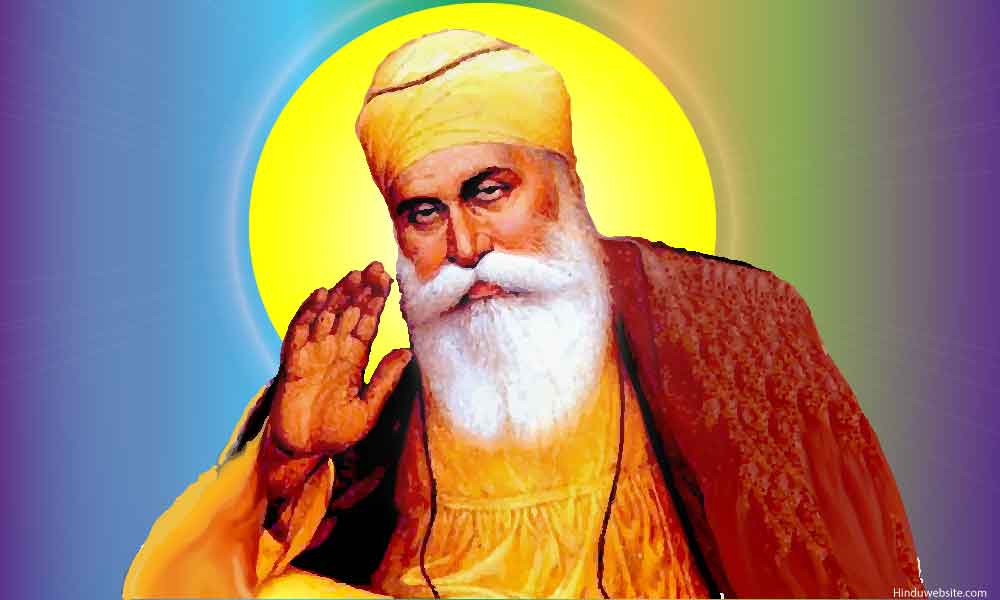
CHAPTER I
THE fifteenth century of the Christian era was a period of singular mental and political activity. Both in Europe and India men shook off the torpor of ages, and their minds awoke to the consciousness of intellectual responsibility. For this result, it is true, important preparations had been made in the fourteenth century, when the Christian reformers, Walter Lollard and John Huss, preached and suffered death for their opinions;[1] when the poetical literature of England assumed a tangible form from the genius of Chaucer and Gower; when the Musalmans in Europe penetrated into Thrace and Hungary; and when, after the overthrow and expulsion of Budhism from India by the astute and powerful Brahmans, there flourished the great exponents of Indian monotheism, the saint Kabir, and the enlightened Ramanand.
But it was reserved for the fifteenth century to bear the full fruits of the mental awakening of the fourteenth. In England the ancient language of Greece began to be studied; a further impulse was given to the reformation of the Christian religion; and villenage disappeared as a political institution. In France the Government was consolidated by the union of the great fiefs to the crown; and the daring monarch Charles VII made his successful expedition against the picturesque capital of Southern Italy. In Germany occurred the birth of Luther, and the revival and development of the invaluable art of printing in movable types.[2] In Italy there was a marvellous resuscitation of the fine arts, and
[1. Lollard and Huss were burned for heresy. Wickliffe would have suffered the same fate had not a paralytic attack anticipated the executioner.
2. Block printing was known in China before the Christian era.]
then were born the renowned navigators Columbus and Amerigo Vespucci, the great masters Michael Angelo, Raphael, and Leonardo da Vinci, and the illustrious patron of letters Lorenzo di Medici.
In Spain Ferdinand and Isabella, though they organized the inquisition in their intemperate religious zeal against the Saracens and Jews, were yet conspicuous for a worldly liberality which deserves the acknowledgement of posterity. In Portugal was born Vasco da Gama, who under the enterprising King Emanuel discovered the maritime route by the Cape of Storms to India. The Musalmans in Europe conquered Turkey and Greece, and seized on the ancient Italian city of Otranto. And in Asia, Taimur extended his victorious arms from Siberia on the north to the Arabian Sea on the south, and from the Ganges on the east to the Hellespont on the west.
There is a wonderful analogy between the spiritual condition of Europe and India during the dark ages. In Europe most religious works were written in Latin, in India they were in Sanskrit. In both continents all learning was in the hands of the priesthood, and this admittedly led to serious abuses. A great cyclic wave of reformation then overspread both continents. During the very period that Luther and Calvin in Europe were warning men of the errors that had crept into Christianity, several Indian saints were denouncing priestcraft, hypocrisy, and idolatry, and with very considerable success. Several of those great men who led the crusade against superstition, founded sects which still survive; but the most numerous and powerful of all is the great Sikh sect founded by Guru Nanak, which already forms a considerable section of the population of the Panjab, and which is scattered in greater or less numbers not only throughout the whole of India but Kabul, Kandahar, China, and Southern Asia.
A cognate cause is frequently assigned for the establishment of new religions, namely, that they appear at periods of great political or social depression, when it becomes necessary for men to have recourse to the superhuman for guidance and consolation. Then when the hour is darkest some prophet is born, perhaps in a lowly hamlet, to solace the heavy-laden and lift their thoughts to a brighter and happier world. A signal instance has been remarked by historians. Judaea was smarting from the tyranny and cruelty of Herod when he whom the most advanced races of the world call the Messiah was born.
The Gurus too appear to have been of the opinion that God sends a divine guide whenever required by the condition of the age and country. Guru Amar Das, the third Guru, wrote:--
When the world is in distress, it heartily prayeth.
The True One attentively listeneth and with His kind disposition granteth consolation.
He giveth orders to the Cloud and the rain falleth in torrents.
That is, the Guru comes by God's order and gives abundant instruction to all who may be prepared to receive it.
Indeed several events occurred during the Muhammadan conquests of India in the Middle Ages to force the Hindus to consider life in a serious aspect. Though many of the followers of Vishnu, Shiv, and the other gods of the Hindu dispensation adopted during that period the faith of the Arabian prophet, as the result of force or with a view to worldly advantages, yet others whose minds were powerfully directed to religious speculation sought safety from persecution and death in the loneliness of the desert or the retirement of the forest, and lived single-minded investigators of religious truth as in the primitive golden age of their country.
We shall here give, from the written accounts of Muhammadan historians, some examples of the treatment of Hindus by Muhammadan conquerors of India.
Shahab-ul[1]-Din, King of Ghazni, the virtual founder of the Muhammadan Empire in India (1170-1206), put Prithwi Raja, King of Ajmer and Dihli, to death in cold blood.
[1. The l is generally silent in such combinations.]
He massacred thousands of the inhabitants of Ajmer Who had opposed him, reserving the remainder for slavery. After his victory over the King of Banaras the slaughter of the Hindus is described as immense. None were spared except women and children, and the carnage of the men was carried on until, as it has been said, the earth grew weary of the monotony.[1]
In the Taj-ul-Ma'asir by Hasan Nizam-i-Naishapuri it is stated that when Qutb-ul-Din Aibak (A.D. 1194-1210) conquered Merath he demolished all the Hindu temples of the city and erected mosques on their sites. In the city of Koil, now called Aligarh, he converted Hindu inhabitants to Islam by the sword and beheaded all who adhered to their religion. In the city of Kalinjar he destroyed one hundred and thirteen Hindu temples, built mosques on their sites, massacred over one hundred thousand Hindus, and made slaves of about fifty thousand more. It is said the place became black as pitch with the decomposing bodies of the Hindus. And in the Tabaqat-i-Nasiri by Minhajul-Siraj it is stated that when Muhammad Bakhtyar Khilji conquered Bihar he put to the sword about one hundred thousand Brahmans, and burnt a valuable library of ancient Sanskrit works.
Abdulla Wassaf writes in his Tazjiyal-ul-Amsar wa Tajriyat ul Asar that when Ala-ul-Din Khilji (1295-1316) captured the city of Kambayat at the head of the gulf of Cambay, he killed the adult male Hindu inhabitants for the glory of Islam, set flowing rivers of blood, sent the women of the country, with all their gold, silver, and jewels, to his own home, and made about twenty thousand maidens his private slaves.
Ala-ul-Din once asked his qazi what was the Muhammadan law prescribed for Hindus. The qazi replied, 'Hindus are like the earth; if silver is demanded from them, they ought with the greatest humility to offer gold. And if a Muhammadan desire to spit into a Hindu's mouth, the Hindu should
[1. The Kâmilu-t Tawârîkh by ibn Asîr. See also Elphinstone's History of India.]
open it wide for the purpose. God created Hindus to be slaves of the Muhammadans. The Prophet hath ordained that, if the Hindus do not accept Islam, they should be imprisoned, tortured, and finally put to death, and their property confiscated.' At this the monarch smiled and said he had not been waiting for an interpretation of the sacred law. He had already issued an order that Hindus should only possess corn and coarse clothes sufficient to last them for six months.
During the reign of the same monarch men formerly in easy circumstances were reduced to beggary, and their wives obliged to resort to menial labour for their maintenance. In front of the palace were generally seen the corpses of forty or fifty Hindus. Hindus were punished with merciless severity for the most trifling offences. The monarch had his own brother and nephew flayed alive on the mere suspicion of disloyalty. He then had their flesh cooked and forced their children to eat it. What remained after the repast was thrown to the elephants to trample on.
The historian, Ibn Batuta, who visited India in the lime of the Emperor Muhammad Bin Tughlak, wrote of him: 'Such was his inexorable and impetuous character that on one occasion when the inhabitants of Dihli revolted against his oppression and wrote him a letter of remonstrance, he ordered them to quit the place for Daulatabad, a city in the Dakhan (Deccan), at a distance of forty days' journey. The order was so literally obeyed that when the Emperor's servants searched the city after the removal, and found a blind man in one of the houses and a bedridden one in another, the bedridden man was projected from a catapult and the blind one dragged by his feet to Daulatabad. But the latter's limbs dropped off on the way, and at the end of the journey only one leg was left, which was duly thrown into the new city, "for the order had been that all should go to this place." We shall subsequently see how Muhammad bin Tughlak persecuted the Maratha saint Namdev, an account of whose life and writings will be given in this work.
Amir Khusrau writes in his Tawarikh Alai or Khazain-ul-Futuh that when the Emperor Firoz Shah Tughlak (A.D. 1351-88) took the city of Bhilsa in Bhopal, he destroyed all its Hindu temples, took away their idols, placed them in front of his fort, and had them daily bathed with the blood of a thousand Hindus. Firoz Shah twice plundered the country of Malwa, and took away everything he could find except earthen pots.
Farishta relates that a Brahman called Budhan, who dwelt in a place called Kayathan or Kataen near Lakhnau (Lucknow), was put to death by Sikandar Khan Lodi for stating that as Islam was true, so also was the Hindu religion. The saint Kabir lived under Sikandar Khan Lodi, and was tortured by him.[1]
The Emperor Babar's cruelty to the inhabitants of Saiyidpur we shall find described by Guru Nanak, who was an eye-witness. Both he and his attendant were taken prisoners and obliged to work as slaves.
The Guru thus describes the Muhammadan rulers and the state of India in his time:--
This age is a knife, kings are butchers; justice hath taken wings and fled.
In this completely dark night of falsehood the moon of truth is never seen to rise.
I have become perplexed in my search;
In the darkness I find no way.
Devoted to pride, I weep in sorrow;
How shall deliverance be obtained?[2]
There is a glamour of romance cast round the person of the Emperor Jahangir, partly owing to the poetry of Moore and partly owing to his possession of Nur Jahan, the most beautiful and gifted woman of the East; but Jahangir's memory is entitled to no historical commiseration. His
[1. Farishta elsewhere describes Sikandar Khân Lodi as just, God-fearing, and religious. He prayed five times a day, bestowed large sums of money on indigent and religious persons, and was, according to the historian, a model of a Musalmân prince.
2. Mâjh ki Wâr.]
father Akbar was disposed to free thought in religion, and it was believed that in this he was encouraged by Abul Fazab the famous Persian historian. Jahangir caused Abul Fazal to be cruelly assassinated. After big accession he compassed the death of Nur Jahan's husband in order to possess her. He tells in his Memoirs how he disposed of robbers. 'I accomplished about this period the suppression of a tribe of robbers, who had long infested the roads about Agra; and whom, getting into my power, I caused to be trampled to death by elephants.'
Sir Thomas Roe, the British Ambassador at his Court, gives the following further information regarding Jahangir's method of dispensing justice: 'A band of one hundred robbers were brought in chains before the Great Mogul. Without any ceremony of trial, he ordered them to be carried away for execution, their chief being ordered to be torn in pieces by dogs. The prisoners were sent for execution to several quarters of the city, and executed in the streets. Close by my house the chief was torn in pieces by twelve dogs; and thirteen of his fellows, having their hands and feet tied together, had their necks cut by a sword, yet not quite through, and their naked and bloody bodies were left to corrupt in the streets.'
'The trials are conducted quickly, and the sentences speedily executed; culprits being hanged, beheaded, impaled, torn by dogs, destroyed by elephants, bitten by serpents, or other devices, according to the nature of the crimes; the executions being generally in the market-place. The governors of provinces and cities administer justice in a similar manner.'
The following gives Jahangir's treatment of harmless lovers: 'Happening to catch a eunuch kissing one of his women whom he had relinquished, he sentenced the lady to be put into the earth, with only her head left above the ground, exposed to the burning rays of the sun, and the eunuch to be cut in pieces before her face.'
Sir Thomas Roe describes how Jahangir vented his displeasure on some of his nobles: 'Some nobles who were near his person he caused for some offence to be whipped in his presence, receiving 130 stripes with a most terrible instrument of torture, having, at the ends of four cords irons like spur-rowels, so that every stroke made four wounds. When they lay for dead, he commanded the standers-by to spurn them with their feet, and the doorkeepers to break their staves upon them. Thus, cruelly mangled and bruised, they were carried away, one of them dying on the spot.'
Jahangir's son Khusrau rose in rebellion against him, and it is not a matter for surprise that he found many adherents. 'After Khusrau's arrest he was brought before his father, with a chain fastened from his left hand to his left foot, according to the laws of Changhez Khan. On the right hand of the Prince stood Hasan Beg, and on his left, Abdulrahim. Khusrau trembled and wept. He was ordered into confinement; but the companions of his rebellion were put to death with cruel torments. Hasan Beg was sewed up in a raw hide of an ox, and Abdulrahim in that of an ass, and both were led about the town on asses, with their faces towards the tail. The ox's hide became so dry and contracted, that before the evening Hasan Beg was suffocated; but the ass's hide being continually moistened with water by the friends of Abdulrahim, he survived the punishment. From the garden of Kamran to the city of Lahore two rows of stakes were fixed in the ground, upon which the other rebels were impaled alive; and the unhappy Khusrau, mounted on an elephant, was conducted between the ranks of these miserable sufferers.'
Further on we shall see that Jahangir caused Guru Arjan, the fifth Sikh Guru, to be tortured to death, partly on account of his religion and partly because he had extended to Prince Khusrau a friendly reception and hospitality.
Jahangir's grandson the Emperor Aurangzeb was brought up a very strict Muhammadan. The following, according to the Mirât-i-Alam of the historian Bakhtawar Khan, shows how he treated Hindus and their temples for the honour and glory of God and the success of what he considered the only true religion: 'Hindu writers have been entirely excluded from holding public offices; and all the worshipping places of the infidels, and the great temples of these infamous people have been thrown down and destroyed in a manner which excites astonishment at the successful completion of so arduous an undertaking.'
The following is from the Maâsir-i-Alamgiri: 'It reached the ears of His Majesty, the Protector of the Faith, that in the provinces of Thatha, Multan, and Banaras, but especially in the latter, foolish Brahmans were in the habit of expounding frivolous books in their schools, and that students, learned Mussalmans as well as Hindus, went there even from long distances, led by a desire to become acquainted with the wicked sciences there taught. The Director of the Faith consequently issued orders to all the governors of provinces to destroy with willing hands the temples and schools of the infidels, and to put an entire stop to the teaching and practice of idolatrous forms of worship. It was subsequently reported to his religious Majesty, leader of the Unitarians, that in obedience to his orders, the Government officers had destroyed the temple of Vishwanath at Banaras. In the thirteenth year of Aurangzeb's reign this justice-loving monarch, the constant enemy of tyrants, commanded the destruction of the Hindu temple of Mathura, and soon that stronghold of falsehood and den of iniquity was levelled with the ground. On its site was laid at great expense the foundation of a vast mosque.'
There arose a sect called Satnamis founded by Jagjivan Das, a native of Awadh (Oude). They appear to have taken many of their doctrines from the Sikhs. Their moral code is thus described: 'It is something like that of all Hindu quietists, and enjoins indifference to the world, its pleasures or its pains, implicit devotion to the spiritual guide, clemency and gentleness, rigid adherence to truth, the discharge of all ordinary, social, or religious obligations, and the hope of final absorption into the one spirit which pervades all things.'[1]
[1. H. H. Wilson's Religion of the Hindus.]
The Muhammadan historian thus describes this pious sect and their treatment by the Emperor Aurangzeb: 'A body of bloody miserable rebels, goldsmiths, carpenters, sweepers, tanners, and other ignoble beings, braggarts and fools of all descriptions became so puffed up with vainglory as to cast themselves headlong into the pit of destruction. Aurangzeb sent an army to exterminate and destroy these unbelievers. The heroes of Islam charged with impetuosity and crimsoned their sabres with the blood of these desperate men. The struggle was terrible. At length the Satnamis broke and fled, but were pursued with great slaughter.
'General Khan Jahan Bahadur arrived from jodhpur bringing with him several cartloads of idols taken from the Hindu temples which had been razed to the ground. Most of these idols, when not made of gold, silver, brass, or copper, were adorned with precious stones. It was ordered that some of them should be cast away in out-offices and the remainder placed beneath the steps of the grand mosque to be trampled under foot. There they lay a long time until not a vestige of them was left.
'In 1090 A.H. (A.D. 1680) Prince Muhammad Azam and Khan Jahan Bahadur obtained permission to visit Udaipur. Two other officers at the same time proceeded thither to effect the destruction of the temples of the idolaters, which are described as the wonders of the age, erected by the infidels to the ruin of their souls. Twenty Rajputs had resolved to die for their faith. One of them slew many of his assailants before receiving his death blow. Another followed and another until all had fallen. Many of the faithful also had been dispatched when the last of these fanatics had gone to hell.
'Soon after Aurangzeb himself visited the Rana's lake and ordered all its temples to be levelled with the ground. Hasan Ali Khan then made his appearance with twenty camels taken from the Rana, and reported that the temple near the palace and one hundred and twenty-two more in the neighbouring districts had been destroyed. He was rewarded by the emperor with the title of Bahadur.
'When Aurangzeb went to Chitaur, still one of the most beautiful of all ancient cities, he caused sixty-three temples there to be demolished. The Rana had now been driven forth from his country and his home, the victorious Ghazis had struck many a blow, and the heroes of Islam had trampled under their chargers' hoofs the land which this reptile of the forest and his predecessors had possessed for a thousand years.'
Aurangzeb's iconoclastic fury knew no bounds or moderation. 'Abu Turab, who had been commissioned by him to effect the destruction of the idol temples of Amber, the ancient capital of Jaipur, reported in person that three-score and six of these edifices had been levelled with the ground.'[1]
We shall further on see that it was Aurangzeb who put Guru Teg Bahadur, the ninth Guru of the Sikhs, to death in Dihli. According to the author of the Dabistan the emperor ordered the Guru's body to be quartered and the parts thereof to be suspended at the four gates of the city.[2] Aurangzeb also persecuted Guru Gobind Singh, the tenth and last Guru of the Sikhs, and forced him to fly from the Panjab; and it was a result of the same monarch's tyranny that Guru Gobind Singh's four sons lost their lives and that none of his descendants survived.
Many earnest thinkers and reformers lived under the above and other Muhammadan emperors of India, but they were either executed and none dared record their teachings and their fate, or accounts of them belong to Hindu religious history, and lie beyond the scope of the present work.
[1. On the conduct of the Muhammadan Emperors we have largely availed ourselves of the translations and narratives in Sir Henry Elliot's History of India. The original Persian histories are many of them difficult of access, and could not be consulted.
2. The Sikh chroniclers, as we shall subsequently see, give a different version of the mode of execution of Guru Teg Bahadur.]
CHAPTER II
The great Pandits and Brahmans of Hinduism communicated their instructions in Sanskrit, which they deemed the language of the gods. The Gurus thought it would be of more general advantage to present their messages in the dialects of their age. When Guru Amar Das was asked the reason for this, he replied: 'Well-water can only irrigate adjacent land, but rain-water the whole world. On this account the Guru hath composed his hymns in the language of the people, and enshrined them in the Gurumukhi characters, so that men and women of all castes and classes may read and understand them.' A Brahman urged: That religious instruction ought not to be communicated to every one, it being forbidden to instruct Sudars and women in the sacred lore.' The Guru thus oracularly replied:--
O father, dispel such doubts.
It is God who doeth whatever is done; all who exist shall be absorbed in Him.
The different forms, O God, which appear are ever Thine, and at the last they shall all be resolved in Thee.
He who is absorbed in the Guru's word, shall thoroughly know Him who made this world.
Thine, O Lord, is the word; there is none but Thee; where is there room for doubt?[2]
Guru Nanak spoke of himself as neither continent nor learned, and was in every respect the essence of humility. His advent was heralded by no prophecies, and consequently he was not obliged to make or invent incidents in
[1. It is laid down in the twelfth chapter of the Institutes of Gautam that if a Sûdar even hear the Veds his ears must be stopped either with molten lead or wax; if he read the Veds, his tongue must be cut out; and if he possess the Veds, his body must be cut in twain.
In the eighteenth slok of the ninth chapter of the Institutes of Manu it is laid down that women may not take part in any Vedic rites. Their doing so, or having any concern with Vedic texts, would be contrary to dharm. Women were therefore deemed as Sûdars, and beyond the pale of religion.
2. Gauri 51.]
his life conformable thereto. He preached against idolatry, caste distinction, and hypocrisy, and gave men a most comprehensive ethical code; but in so doing he never uttered a word which savoured of personal ambition or an arrogation of the attributes of the Creator. He appears to have been on fairly good terms with Muhammadans, but his disregard of caste prejudices and his uncompromising language led him into occasional difficulties with the Hindus, though he was never embroiled in violent scenes. On the whole he was generally beloved during his life, and at his death Hindus and Muhammadans quarrelled as to which sect should perform his obsequies.
The Granth Sahib contains the compositions of Guru Nanak, Guru Angad, Guru Amar Das, Guru Ram Das Guru Arjan, Guru Teg Bahadur (the ninth Guru), a couplet of Guru Gobind Singh (the tenth Guru), panegyrics of bards who attended on the Gurus or admired their characters, and hymns of mediaeval Indian saints, a list of whom will subsequently be given. The cardinal principle of the Gurus and Bhagats whose writings find place in the sacred books of the Sikhs was the unity of God. This is everywhere inculcated in the Sikh sacred writings with ample and perhaps not unnecessary iteration, considering the forces Sikhism had to contend with in an age of ignorance and superstition.
The hymns of the Gurus and saints are not arranged in the holy volume according to their authors, but according to the thirty-one rags or musical measures to which they were composed. The first nine Gurus adopted the name Nanak as their nom de plume, and their compositions are distinguished by Mahallas or quarters. The Granth Sahib is likened to a city and the hymns of each Guru to a ward or division of it. Thus the compositions of Guru Nanak are styled Mahalla one, that is, the first ward; the compositions of Guru Angad the second ward, and so on. After the hymns of the Gurus are found the hymns of the Bhagats under their several musical measures.
The Granth which passes under the name of Guru Gobind Singh, contains his Jâpji, the Akal Ustat or praise of the Creator, the Vachitar Natak or Wonderful Drama, in which the Guru gives an account of his parentage, his divine mission, and the battles in which he had been engaged. Then come three abridged translations of the Devi Mahatamya, an episode in the Markandeya Puran, in praise of Durga the goddess of war. Then follow the Gyan Parbodh, or awakening of knowledge; accounts of twenty-four incarnations of the Deity, selected because of their warlike character; the Hazare de Shabd; quatrains called sawaiyas, which are religious hymns in praise of God and reprobation of idolatry and hypocrisy; the Shastar Nam Mala, a list of offensive and defensive weapons used in the Guru's time, with special reference to the attributes of the Creator; the Tria Charitar, or tales illustrating the qualities, but principally the deceit of women; the Zafarnama, containing the tenth Guru's epistle to the Emperor Aurangzeb; and several metrical tales in the Persian language. This Granth was compiled by Bhai Mani Singh after the tenth Guru's death.
There are two great divisions of Sikhs, Sahijdharis and Singhs. The latter are they who accept the baptism inaugurated by Guru Gobind Singh, which will be described in the fifth volume of this work. All other Sikhs are called Sahijdharis. The Singhs, after the time of Guru Gobind Singh, were all warriors, the Sahijdharis those who lived at ease, as the word denotes, and practised trade or agriculture.[1] In the Singhs are included the Nirmalas and Nihangs. The Sahijdharis include the Udasis founded by Sri Chand, son of Guru Nanak; the Sewapanthis founded by a water-carrier of Guru Gobind Singh; the Ramraiyas, followers of Ram Rai, son of Guru Har Rai; the Handalis, to be subsequently described, and other sects of minor importance.
[1. Some say that the Sahijdharis received their name from the promises of certain Sikhs in the time of Guru Gobind Singh, that they would not accept his baptism at the time, but that they would gradually do so.]
The Sikh religion differs as regards the authenticity of its dogmas from most other great theological systems. Many of the great teachers the world has known have not left a line of their own composition, and we only know what they taught through tradition or second-hand information. If Pythagoras wrote any of his tenets, his writings have not descended to us. We know the teaching of Sokrates only through the writings of Plato and Xenophon. Budha has left no written memorials of his teaching. Kung fu-tze, known to Europeans as Confucius, left no documents in which he detailed the principles of his moral and social system. The Founder of Christianity did not reduce his doctrines to writing, and for them we are obliged to trust to the Gospels according to Matthew, Mark, Luke, and John. The Arabian Prophet did not himself reduce to writing the chapters of the Quran. They were written or compiled by his adherents and followers. But the compositions of the Sikh Gurus are preserved, and we know at first hand what they taught. They employed the vehicle of verses which is generally unalterable by copyists, and we even become in time familiar with their different styles. No spurious compositions or extraneous dogmas can, therefore, be represented as theirs.
It is not clear, however, that this contributes to the success of the Sikh religion. It appears that the very authenticity of the sacred books of a religion may militate against its general or permanent acceptance. The teachings of which there is no authentic record, are elastic and capable of alteration and modification to suit foreign countries and the aspirations and intellectual conditions of ages long subsequent to those in which they arose. No religion in its entirety is permanently adopted by a foreign country; and no religion when it spontaneously migrates can escape the assimilation of local ideas or superstitions. The followers of all religions are prone to indulge in the luxury of eclecticism. By a universal law they adhere to the dogmas most suitable for themselves, and reject what they deem the least important or the least practicable enjoined by the founders of their faiths.
It is curious that the greatest religious reforms have been effected by the laity. The clergy, apart from their vested interests, are too wedded to ancient systems, and dare not impugn their utility or authority. Pythagoras, who founded a religio-philosophical school and taught the transmigration of souls, was the son of a gem-engraver and not a priest by early training or association. Isaiah, the Hebrew poet, who gave consistency and splendour to Jewish sentiments, was not an ecclesiastic by profession, Moses had a brother who was a high priest, but he was not himself designed for the priesthood. Sokrates was a profound thinker and moral guide, but still a member of the laity who had emerged from the schools of the sophists. Budha was a prince brought up without any sacerdotal instruction. He conceived ideas of reform by profound contemplation and introspection. Christ was by trade a carpenter, and was never intended to expound the law, or play the part of a Jewish Rabbi. Muhammad of Makka was born an idolater, herded sheep and goats in early life, and appears to have had no religious instruction whatever until he had met the Hanif Waraka, his wife's cousin. The renowned Indian teacher Kabir was a weaver, who was so little of a professional priest that he denounced the Hindu and Muhammadan preachers of his age. And, as we shall see, Guru Nanak was not a priest either by birth or education, but a man who soared to the loftiest heights of divine emotionalism, and exalted his mental vision to an ethical ideal beyond the conception of Hindu or Muhammadan.
The illustrious author of the Vie de Jésus asks whether great originality will again arise or the world be content to follow the paths opened by the daring creators of ancient ages. Now there is here presented a religion totally unaffected by Semitic or Christian influences. Based on the concept of the unity of God, it rejected Hindu formularies and adopted an independent ethical system, ritual, and standards which were totally opposed to the theological beliefs of Guru Nanak's age and country. As we shall see hereafter, it would be difficult to point to a religion of greater originality or to a more comprehensive ethical system.
CHAPTER III
India contains a population who profess many religions. It would be a great mistake to put them all on the same footing. Some make for loyalty and others for what we may call independence. Some religions appear to require State support, while others have sufficient vitality to dispense with it. The Jewish religion has survived for many centuries without a temporal head and in the face of endless persecutions. Islam has spread in many lands, and does not solicit or require much support from temporal power. Muhammadans only claim the free exercise of their religion, and this is allowed them in India. Many members of other religions, believing that they are direct emanations from heaven, may not suppose that they require State countenance or support, but the student of comparative theology must be allowed to entertain a different opinion.
Our little systems have their day:
They have their day and cease to be.
To enumerate a few instances. When Constantine, the Roman Emperor of the West, after his conversion to Christianity, withdrew his support from the ancient religion of his country, it rapidly declined. Then vanished, in the words of Coleridge,
The intelligible forms of ancient poets,
The fair humanities of the old religion,
Its power, its beauty, and its majesty.
Budhism flourished in India, its parent home, many centuries ago, but the successors of the renowned Asoka, who were not so spiritual or enlightened as he, allowed their religion to be completely banished from Indian soil, like an exile, to find in foreign lands the repose and acceptance it had vainly sought in its own country: The great Emperor Akbar, by an eclectic process, evolved what he considered a rational religion from Islam, Hinduism, and Zoroastrianism, but it perished when it received no support but rather opposition from his son Jahangir. The religion of the Cross was banished from its parent home of Judaea and supplanted by the religion of the Crescent. Christianity, however, or the civilization which passes under its name, gained in other countries much more than it lost in its own. Organization and the material forces by which it is maintained have obviously contributed to that result.
The Emperor Akbar's historian, Abul Fazl, very clearly saw the advantage of State support to a religion. He says in his Ain-i-Akbayi: 'Men of deep insight are of opinion that even spiritual progress among a people would be impossible, unless emanating from the king, in whom the light of God dwells.'
As Budhism without State support completely lost its hold in India, so it is apprehended that without State support Sikhism will also be lost in the great chaos of Indian religious systems.
The dialects and languages of the Gurus are now largely forgotten. There are no readable or trustworthy commentaries or translations of their compositions in any language, and the Sikhs find it difficult or impossible to understand them. Added to this is the custom of writing the sacred hymns without any separation of words. As there is no separation of words in Sanskrit, the gyanis, or interpreters of the Gurus' hymns, deem it would be a profanation to separate the words of their sacred writings. It cannot be said that the object of the gyanis has been to keep all divine knowledge to themselves, but at any rate the result is, that the Sikh laity have now thrust aside the gyanis and their learning, and are content to dispense with both.
The sequel is a general relapse to Hinduism, which is principally a system of domestic ritual. Hinduism has six philosophical systems, two of which, the Sankhya and Mimansa, if pushed to their legitimate consequences, are practically atheistical. The followers of the Hindu god Shiv may curse the followers of the Hindu god Vishnu, and the followers of Vishnu may retaliate on the followers of Shiv. To be deemed an orthodox Hindu it is only necessary to be born in Hinduism and to conform to certain external observances, such as not eating or touching what its followers believe to be unclean, avoiding contact with persons who are deemed of lower caste, cooking food in a particular manner, and not allowing the shadow of strangers to fall on it. The old Levitical Law of Moses and its accessory regulations were sufficiently strict, but Hinduism surpasses all the religions that have ever been invented in a social exclusiveness which professes to be based on divine sanction.
Truly wonderful are the strength and vitality of Hinduism. It is like the boa constrictor of the Indian forests. When a petty enemy appears to worry it, it winds round its opponent, crushes it in its folds, and finally causes it to disappear in its capacious interior. In this way, many centuries ago, Hinduism on its own ground disposed of Budhism, which was largely a Hindu, reformation; in this way, in a prehistoric. period, it absorbed the religion of the Scythian invaders of Northern India; in this way it has converted uneducated Islam in India into a semi-paganism; and in this way it is disposing of the reformed and once hopeful religion of Baba Nanak. Hinduism has embraced Sikhism in its folds; the still comparatively young religion is making a vigorous struggle for life, but its ultimate destruction is, it is apprehended, inevitable without State support. Notwithstanding the Sikh Gurus' powerful denunciation of Brahmans, secular Sikhs now rarely do anything without their assistance. Brahmans help them to be born, help them to wed, help them to die, and help their souls after death to obtain a state of bliss. And Brahmans, with all the deftness of Roman Catholic missionaries in Protestant countries, have partially succeeded in persuading the Sikhs to restore to their niches the images of Devi, the Queen of Heaven, and of the saints and gods of the ancient faith.
CHAPTER IV
A few brief paragraphs, unburdened with detail, on the origin and progress of religion until it received its monotheistic consummation accepted by Guru Nanak appear to be necessary.
Statius, the Latin poet, expressed his opinion that it was fear which first made gods in the world.[1] Miserable and resourceless primitive man felt the inclemency and fury of the elements, and prayed and sacrificed to avert their wrath or to gain their favour. But as there were malignant, so there were benignant natural agencies which received devout and earnest worship. The Sun, which gives light and heat, appears to have been worshipped by all primitive peoples. He was, however, distant and non-tangible; but when fire was discovered, long ages after man had appeared on the surface of the earth, it appears to have received the greatest homage from the human race in all parts of the globe. By its means men warmed themselves, cooked their food, and smelted metals. It was to fire (Agni) the Indians of the Vedic period addressed some of their sublimest hymns; and its discovery and importance led the ancient Greeks to suppose that it must have been stolen from heaven, which had so long been parsimonious of its gifts.
As civilization progressed and the fruits of agriculture were added to the spontaneous gifts of nature, the bounty of the heavens was deemed necessary for man's comfort and sustenance. It was then that the sky, under the various names of Dyaus, {Greek Zeu's}, and Varuna, {Greek Ou?rano's}, was invoked, both in India and Greece, to shed its choicest blessings on crops and men.[2] Other deities arose as prompted or required by human necessities. Prithwi, the earth, as the parent of sustenance, logically and necessarily received, as the
[1. Primus in orbe deos fecit timor.' Theb. iii. 661.
2. For long years after the discovery and study of Sanskrit there was no doubt whatever cast on the identity of Varuna with Ouranos. Doubts have now arisen in the minds of some persons on account, it is stated, of phonetic difficulties.]
spouse of the sky, divine honours both in India and Europe.[1] Each deity addressed received all the homage and adoration that poetic fancy could lavish or imagine. His worshippers endeavoured to make him feel that he was the great god who ruled the world and controlled man and nature; and they hoped that by judicious flattery and plenteous sacrifice he would listen to and grant their passionate supplications.
The gods as well as their votaries appear to have lived in friendly contiguity both in India and in Greece. Jupiter had his temple near that of Venus as they are found to-day in the disentombed city of Pompeii. Near Delphi Apollo had exclusive sway even to the extent of relegating Jupiter into a subordinate position. Each province selected in the wide domain of Olympus some deity which it worshipped to the exclusion of all others. In India, though the worship of Shiv, which is associated with knowledge, is different from that of Vishnu, which is associated with devotion, and though the worshippers of both gods frequently quarrelled and addressed each other in injurious language, yet they were united by the common bond of Hinduism, and sometimes celebrated their worship in harmony.[2]
When man extended his horizon, the sufficiency and omnipotence of the gods ordinarily invoked began to be canvassed. In Greece the minor deities became completely subordinated to Zeus, the great ruler of Olympus. They could do everything but regulate human fate and action. That was reserved for the supreme deity alone:--
{Greek A!'pant? e?paxðh^ plh`n ðeoi^si koiranei^n.
e?leu'ðeros ga`r ou?'tis e?sti` plh`n Dio's.}[3]
In India a belief in an infinite, illimitable, and supreme power was gradually evolved by seers and philosophers
[1. Tacitus wrote of the ancient Germans--'Herthum, id est terram matrem, colunt eamque intervenire rebus hominum, invehi populis arbitrantur,' Germania, cap. xi.
2 An idol in a temple, Harihareshwar, on the outskirts of the Maisûr (Mysore) State contains the conjoint emblems of Vishnu and Shiv.
3 Aesch. Prom. Vinc. 49.]
ages before the emigration of the Aryans to Europe. Prajapati, who was represented as the father of the gods, the lord of all living creatures, gradually received exceptional human homage. There was also Aditi, who appears under various guises, being, in one passage of the Rig Veda, identified with all the deities, with men, with all that has been and shall be born, and with air and heaven. In this character she corresponded to the Greek Zeus;
{Greek Zeu`s e?sti`n ai?ðh'r, Zeu`s de` gh^, Zeu`s ou?rano's,
Zeu's toi ta` pa'nta xw?'ti tw^nd? u!pe'rteron,}[1]
and to the Latin Jupiter
Iupiter est quodcunque vides, quocunque moveris.[2]
But there appears again to have been even a more exalted concept of a divinity who was inexpressible and who could only be described by a periphrasis. He was bright and beautiful and great. He was One, though the poets called Him by many names.
###
Before there was anything, before there was either death or immortality, before there was any distinction between day and night, there was that One. It breathed breathless by itself. Other than it nothing has since been. Then was darkness, everything in the beginning was hidden in gloom, all was like the ocean, without a light. Then that germ which was covered by the husk, the, One, was produced.[3]
Guru Nanak, as we shall see, gave expansion to this conception of the one God:--
[1. Aesch. Frag.
2. Lucan, Pharsalia ix.
3 Rik Veda, X, 129. Tacitus indicates one God worshipped under different names by the Germans, and only perceived by the light of faith: 'Deorum nominibus appellant secretum illud quod sola reverentia vident.' It may be here noticed that Tacitus' account of Germany and its people is much more trustworthy than that of Caesar, who was a less philosophical writer. Caesar states that the Germans worshipped the sun, fire, and the moon, and them only.]
In the beginning there was indescribable darkness;
Then was not earth or heaven, naught but God's unequalled order.
Then was not day, or night, or moon, or sun; God was meditating on the void.
Then were not continents, or hells, or seven seas, or rivers, or flowing streams.
Nor was there paradise, or a tortoise, or nether regions;
Or the hell or heaven of the Muhammadans, or the Destroyer Death;
Or the hell or heaven of the Hindus, or birth or death nor did any one come or go.
Then was not Brahma, Vishnu, or Shiv;
No one existed but the One God.
Then was not female, or male, or caste, or birth; nor did any one feel pain or pleasure.
There was no caste or religious garb, no Brahman or Khatri.
No hom, no sacred feasts, no places of pilgrimage to bathe in, nor did any one perform worship.
There was no love, no service, no Shiv, or Energy of his;
Then were not Veds or Muhammadan books, no Simritis, no Shastars;
The Imperceptible God was Himself the speaker and preacher; Himself unseen He was everything.
When He pleased He created the world;
Without supports He sustained the sky.
He created Brahma, Vishnu, and Shiv, and extended the love of Mammon.
He issued His order and watched over all.[1]
For many centuries thinking men in India have rejected gods and goddesses, and made no secret of their faith in the sole primal Creator, by whatsoever name called.
An important question arose how the Supreme Being should be represented. He could not be seen, but He was believed to exist. The highest conception that primitive man could form of Him was that He was in man's own image, subject to the human passions of wrath, jealousy, revenge, love of praise, and adoration. This conception is what has been termed anthropomorphism-that is, that
[1. The Indian words in this hymn will subsequently be explained.]
God is in man's image, or, conversely, that God made man in his own image.[1]
When man's conception of God extended, and it was admitted that He had created the heavens and the earth, and held control over His boundless creation, it became difficult for the philosopher to imagine Him in human form. Were He such, it would appear to be a limitation of His omnipotence and omnipresence, and, moreover, the belief that God is infinite and governs His infinite creation, but at the same time is not included in it, though possibly intelligible to faith, is not equally so to reason. To overcome this difficulty the belief arose that God is diffused through all matter, and that it is therefore a part of Him. This belief is known as pantheism.
In India, pantheism may be said to be the creed of intellectual Hindus, but it cannot. be held to be a generally satisfying or useful cult to the world. When a man believes that he is a part of God, and that God, who pervades space, pervades him also, moral obligation must obviously be relaxed. Nor can supplications be satisfactorily addressed to nature, with its elemental forces, even though God be held to reside therein. Pantheism is too cold and too abstract to satisfy the reasonable aspirations of the human soul. And the fact admitted by most philosophers, that men are endowed with free will, must make them pause before they accept the pantheistic philosophy in its entirety. Moreover, to gratify his emotional instinct, man must have access in spirit to a personal God to appeal to in order to grant him favours, to afford him solace in affliction, to love him as a son, and as a kind and merciful friend to take an interest in him when he needs assistance. According to the Sikh Gurus, God was a being to be approached and
[1. The ancient Greeks also believed that God made man in the divine image. Thus Plato--{Greek W!s d`e kinhðe'n au?to` kai` zw^n e?no'hse tw^n a?ïdi'wn ðew^n gegono`s a?'galma o! gennh'sas path'r, h?gasðh te kai` eu?franðei`s e?'ti dh` ma^llon o!'moion pro`s to` para'deigma e?peno'hsen a?perga'sasðai} (The creative Father seeing that this image of the immortal gods had both motion and life was pleased, and in his delight considered how he might fashion it still more like its prototype'), Timaeus.]
loved as a fond and faithful wife loves her spouse, and human beings were to be regarded with equality as brothers, and not to be considered as divided into castes which were at variance with or despised one another.
But though the Sikhs believe in a personal God, He is not in man's image. Guru Nanak calls Him, Nirankar--that is, without form. Gur Das speaks of Him as formless, without equal, wonderful, and not perceptible by the senses. At the same time all the Gurus believed that He was diffused throughout creation. Guru Nanak wrote, 'Think upon the One who is contained in everything.' This same belief was again enunciated by Guru Ram Das, 'Thou, O God, art in everything and in all places.' And, according to Guru Gobind Singh, even God and His worshipper, though two, are one, as bubbles which arise in water are again blended with it. This belief, according to the Guru, admitted of no doubt or discussion.[1] It is the error of men in supposing distinct existence, together with the human attributes of passion and spiritual blindness, which produces sin and evil in the world and renders the soul liable to transmigration.
No religious teacher has succeeded in logically dissociating theism from pantheism. In some passages of the Guru's writings pantheism is, as we have seen, distinctly implied, while in other texts matter is made distinct from the Creator, but an emanation from Him. Although anthropomorphic theism is a religion, while pantheism is a philosophy, and anthropomorphic theism is generally held orthodox and pantheism heterodox, yet, on account of the difficulty of describing the Omnipresent and Illimitable in suitable human language, both religion and philosophy are inextricably
[1. Compare; {Greek ?Anðrw'pou ge psyxh', ei?'per ti kai` a?'llo tw^n a?nðrwpi'nwn, tou^ ðei'ou me'texei}, Xenoph. Memor.; 'Humanus autem animus decerptus ex divina mente cum alio nullo nisi cum ipso Deo, si hoc est fas dictu, comparari potest,' Cicero, Tusc. Disp.
2. Compare also the expressions attributed to Christ in the Gospel according to St. John, 'I and My Father are One,' 'I am in the Father and the Father in Me,' and again, 'I am in My Father, and ye in Me and I in you.']
blended by sacred as well as profane writers. Let us take a few examples:--
Doth not the Lord fill heaven and earth?--JEREMIAH.
God in whom we live, and move, and have our being.--ST. PAUL.
Spiritus intus alit totanique infusa per artus
Mens agitat molem, et magno se corpore miscet.--VIRGIL.
Estne Dei sedes nisi terra, et pontus, et aer,
Et caelum et virtus? Superos quid quaerimus ultra?
Iupiter est quodcunque vides, quocunque moveris.--LUCAN.
All in all and all in every part.--COWLEY.
Lives through all life, extends through all extent.
Spreads undivided, operates unspent.--POPE.
Deum rerum omnium causam immanentem, non vero transeuntem statuo.--SPINOZA.
Se Dio veder tu vuoi,
Guardalo in ogni oggetto;
Cercalo nel tuo petto;
Lo troverai in te!--METASTASIO.
An indefinite number of such examples might be cited.
CHAPTER V
In the hymns of the Gurus, Nirvan, or absorption in God, is proposed as the supreme object of human attainment; but a paradise called Sach Khand is also promised to the blest. There they recognize one another and enjoy everlasting beatitude. Several learned Sikhs, however, maintain that Nirvan and Sach Khand are practically the same.
Contrary to the practice of the ancient Indian ascetics, the Gurus held that man might obtain eternal happiness without forsaking his ordinary worldly duties. Reunion with the Absolute should be the supreme object of all Sikh devotion and aspirations.
My soul, seek shelter in God's holy name;
Pondering on this should'st thou all thought employ.
No more thou'lt grieve, hemmed in by mortal frame,
But gain in God Nirvana's final joy.
Nirvan, from nir out and va to blow, means in Sikh literature the cessation of individual consciousness caused by the blending of the light of the soul with the light of God. The Sikhs compare it to water blending with water:--
As water blends with water, when
Two streams their waves unite,
The light of human life doth blend
With God's celestial light.
No transmigrations then await
The weary human soul;
It hath attained its resting-place,
Its peaceful crowning goal.
Nirvan is to be obtained by meditation on God, with sufficient attention and iteration, and by a life spent in conformity with the Guru's teachings. Individual consciousness then ceases, and there is no further pain or misery.
A man may have performed good works on earth, but, if they be unattended with devout meditation and mental absorption on God, he cannot expect either Nirvan or Sach Khand, but must undergo purgation after death. After this the soul returns to a human body and begins anew its career, to end in either the supreme bliss of ultimate absorption or the supreme misery of countless transmigrations.
If man have done evil and laid up demerits, his punishment after death must be severe. When the punishment corresponds to his misdeeds, his soul must enter some lower animal and pass through a greater or lesser number of the eight million four hundred thousand forms of existence in creation, until its turn comes to enter the offspring of human parents. The soul thus reborn in a human being has again to proceed in its long struggle to obtain the boundless reward of Nirvan.
Longa dies, perfecto temporis orbe,
Concretam exemit labem, purumque reliquit
Aetherium sensum atque aurai simplicis ignem.[1]
Mind, whether known as reason or instinct of a greater or less degree, and whether an attribute of the brain, of the nervous system, or of the heart, is common to all animals. It is held in most religious systems to be distinct from the soul.[2] It induces the soul, under the impulse of goodness or passion, to perform good or evil acts. Both the mind and the soul are concomitants of life, which is a particular combination of certain elements existing in the body, and abides -is long as the bodily mechanism is in order and harmonious operation. When the mechanism has fallen out of gear by illness, accident, or old age, life departs, and with it the soul, which in some religious systems is held to perish with the body, in others to be immortal and individual, and in others again to transmigrate from one living creature to another. We are in this work only concerned with the soul in its migratory aspect.
In the Mosaic system God is represented as jealous and visiting the sins of the fathers upon the children even to future generations. The Indian philosopher feels that this belief is derogatory to God, and holds that the state of the soul after the death of the body depends on its acts (called Karma) while contained in the body. These acts attach to the soul, follow it, and determine its next abode.
Hindus, and all who have sprung from them, have never entertained any doubt as to the possibility of the wanderings of the soul in the bodies of all created animals. And not only Hindus, but some Europeans of exquisite intellectual fibre have accepted or coquetted with this belief, as if the
[1. Virgil, Aeneid vi. 7 45.
2. In the Tusculan Disputations Cicero quotes a paragraph he had written in a work on Consolation, in which he appears to treat soul and mind as identical. After referring to the soul as that which possesses feeling, understanding life, and vigour ('quicquid est illud, quod sentit, quod sapit, quod vivit, quod viget'), he states that the human mind is of the same kind and nature ('Hoc e genere atque eadem e natura, est humana mens'), Tusc. Disp. i. 27.]
minds of men of vivid imagination were of necessity recalling from the misty past--gathering from the fount of original knowledge-ideas evolved by primitive man long anterior, not only to European civilization, but to all Semitic history. Many persons have thought on beholding for the first time, in this life at any rate, scenes in foreign lands, that they had been previously familiar with their beauties and derived no new gratification from them. The tenacity with which the Greek philosopher Pythagoras held this doctrine, which he called metempsychosis, is well known. Well known, too, is the success with which he and his followers for a long time imparted their views to the Dorian aristocracy on this and kindred subjects, such as, for instance, the non-destruction of life. And according to the Phaedo of Plato, Sokrates appears to have proved the doctrine of Pythagoras to his own satisfaction.
To some of our English poets the belief has been one of curious interest and satisfaction. Thus Wordsworth:--
Our birth is but a sleep and a forgetting;
The soul that rises with us, our life's star
Hath had elsewhere its setting,
And cometh from afar;
Thus, too, Browning:--
At times I almost dream
I too have spent a life the sages' way,
And tread once more familiar paths.
And also Rossetti:--
I have been here before,
But how or when I cannot tell.
The soul when it separates from the body is likened in ancient Indian works to the moon on the day when it is invisible on account of its conjunction with the sun. The, soul exists as the moon exists, though it is not perceptible; and as the moon shines again when it progresses in its motion, so does the soul when it moves into another body.
The soul being in a state of mobility. and at the same time immortal, seeks a body for the performance of its functions, and, as it were, enters into a matrimonial alliance with it for the completion and perfection of both. As the same thread will penetrate a gold bead, a pearl, or an earthen ball, so the soul, bearing its burden of acts, will enter any body with which it comes in contact. This the soul is enabled to do by its possession of a covering of finer or grosser texture, which it takes with it from the last body it has inhabited. The soul thus passes from body to body in a revolving wheel, until it is purged of its impurities and deemed fit to blend with the Absolute, from which it originally emanated.
Paramâtama, the primal spirit, is the Supreme Being considered as the pervading soul of the universe. It is represented as light. Jîvâtama, the soul of each living being, is also light, an emanation from the Paramâtama and not material.
The lines of Milton may be accepted as a definition of the deity according to the Sikh conception:--
. . . . Since God is light
And never but in unapproached light
Dwelt from eternity-
Bright effluence of bright essence increate.
And of Thomas Campbell nearly to the same effect:--
This spirit will return to Him
Who gave its heavenly spark.
The Paramâtama is likened to an illimitable ocean, the Jîvâtama to a glass of water immersed in it. The glass is the subtile body or covering of the soul. If the glass itself be broken or taken away, the water in it, which corresponds to the Jîvâtama, blends with the water of the ocean. This is an exemplification of Nirvan.
According to Sikh ontology all animals have two bodies, one a solid material body and the other a subtile intangible body.[1] The jîvâtama is separated from the former at the
[1. St. Paul speaks of a spiritual body (I Cor. xv. 44).]
time of death, but not from the latter unless the state of Nirvan supervenes. While the jîvâtama is encased in a subtile body, it is susceptible of punishment.
Sokrates, in discussing the possibility of a separate existence after death, dilates on the pleasure it would afford to meet such men as Homer, Hesiod, &c.; but Plato has not recorded what Sokrates' sensations would be on meeting his tormentors and persecutors in the same happy region. John Stuart Mill, too, thought[1] that the most serious loss which would result to mankind from a disbelief in an after existence would be the despair of reunion with those dear to us who have ended their earthly life before us. An aspiration for such a reunion is easy to understand, and the hope of its realization has soothed the death-bed of many a believer in the soul's immortality. But all people are not equally dear to us, and it did not apparently occur to that eminent philosopher that, granted the hope of meeting those we love beyond the grave, there is also the possibility of meeting those who are not equally the objects of our affection--those who have perhaps embittered or even abridged our terrestrial existence, and who, it may be as the result of predestination or elective grace, are admitted to the sempiternal joys of paradise. To the believer in Nirvan there is no apprehension of such associations. Only those who are sufficiently purified can be absorbed in the Absolute, in the all-dazzling fount of God's infinite perfection and love. Here individual consciousness ceases, the supreme goal of existence is attained, and neither sorrow, misery, nor remembrance of earthly evils can be apprehended.
CHAPTER VI
About thirty miles south-west of the city of Lahore, the capital of the Panjab, and on the borders of the present civil districts of Gujranwala and Montgomery, stands the town of Talwandi, deep in a lonely forest. It is on the margin
[1. Essay on the Utility of Religion.]
of the Bar or raised forest tract which occupies the centre of the Panjab. The town is still girdled by a broad expanse of arborescent vegetation, which, when not whitened by the sand blown by the winds of the desert, wears through all seasons a cheerful appearance. The jal (Salvadora Persica) predominates, but there are also found the phulahi (Acacia modesta) and the jand (Prosopis spicigera). The wild deer is seen occasionally to appear startled at the traveller who disturbs the solitude of its domain, and the hare and the partridge cower cautiously among the thickets, deprecating molestation.
In this retreat was born Guru Nanak, the founder of the Sikh religion. His birth took place on the third day of the light half of the month of Baisakh (April-May) in the year 1526 of the Vikramaditya era, corresponding to A.D. 1469. As to the month in which he was born there are strange diversities of statement, which we shall subsequently notice. Guru Nanak's father was Kalu of the Bedi[1] section of the Khatri caste. He was by profession a village accountant, but added the practice of agriculture to this avocation. Kalu's father was Shiv Ram and his mother Banarasi. Kalu had one brother called Lalu, of whom little is known besides his name. Kalu was married to Tripta, daughter of Rama, a native of the Manjha[2] country. Tripta had a brother called Krishan, of whom history is as silent as of Lalu. Tripta bore to Kalu one daughter, Nanaki, and one son, Nanak. Nanaki married Jai Ram, a revenue official of high repute at Sultanpur, which is in the present native state of Kapurthala, and was then the capital of the Jalandhar Doab.
When Taimur had spread anarchy and devastation over Northern India, a dynasty of Saiyids, or descendants of the Prophet Muhammad, aspired to rule in Dihli in the name of the Mughal conqueror. To Dihli there was hardly any territory attached, and Ala-ul-din, the last of the Saiyid
[1. The meaning of this name will be explained when we come to the writings of the tenth Guru.
2. The Mâniha is the country between the rivers Râvi and Biâs.]
rulers, in contemptuous disregard for the small and troublesome dominion meted out to him by destiny, retired to the distant city of Badaun to end his days in religious and political tranquillity. He left Dihli and the fortunes of empire to Bahlol Khan Lodi, a, man whose ancestors had been enriched by commerce, and whose grandfather had been Governor of Multan under the famous monarch Firoz Shah Tughlak.
Bahlol Khan Lodi reigned from A.D. 1450 to A.D. 1488, and it was consequently near the middle of his reign that Guru Nanak, the founder of the Sikh religion, was born.
After the accession of Bahlol Khan Lodi, Daulat Khan, a relative of his, obtained power in the Panjab, and governed under the paramount authority of his kinsman. He lived in state at Sultanpur till defeated and deprived of his possessions by the Emperor Babar. The Panjab appears to have been already parcelled out to Musalman chiefs who were retainers of the sovereigns of Dihli. One of these chiefs, called Rai Bhoi, a Musalman Rajput of the Bhatti tribe, had been Zamindar or proprietor of Talwandi. After his death his heritage descended to his son Rai Bular, who governed the town at the birth and during the youth of Nanak.
Talwandi is said to have been originally built by a Hindu king called Raja Vairat. It was sacked and destroyed by fire and crowbar, like most Hindu towns and cities, during the Musalman invasions. Rai Bular restored it and built a fort on the summit of the tumulus, in which he lived the secure and happy ruler of a small village, some limited acres of cultivated land, and a boundless wilderness.
Although the age was one of religious intolerance and persecution, Rai Bular appears to have been the very reverse of a bigot. His father and he were converted Hindus, doubtless added to the ranks of Islam by a hasty circumcision and an enforced utterance of some Arabic sentences which they did not perfectly comprehend.
[1. The descendants of Râi Bulâr still exist in that part of the country.]
In such a solitude Rai Bular could not have been under the less worthy influences of Islam; and indifference, the parent of toleration, appears to have supervened on his Muhammadan religious training. But the human mind is so constituted, and the religious or emotional instinct so dominant ill human nature, that most men at some period of their lives are irresistibly impelled to religious speculation. Something, too, must be allowed f or Rai Bular's patriotic prejudices for a suffering though renounced faith. Talwandi shared not the tumults and excitements of the outer political world. It was a theatre meet for the training of a prophet or religious teacher who was to lead his countrymen to the sacred path of truth, and disenthral their minds from the superstitions of ages. Rai Bular in his little realm had ample time for reflection, and when he heard of Nanak's piety and learning, felt a mysterious interest in the clever and precocious son of Kalu.
The house in which Nanak was born lay a little distant from the fort. Probably Rai Bular and his family alone inhabited the ancient tumulus, while his tenants dwelt in he town of Talwandi on the plain. The town has now lost its old name, and is known as Nankana, in memory of the religious teacher to whom it had the honour of giving birth. When the Sikh religion had gained prominence, there was a temple erected on the spot where the Guru was born. It was afterwards rebuilt and enlarged by Raja Tej Singh, at the time when the Sikh arms had attained their greatest power and the Sikh commonwealth its widest expansion. Within the temple is installed the Granth Sahib, or sacred volume of the Sikh faith, intoned by a professional reader. The innermost shrine contains some cheap printed pictures of the Guru, and musicians beguile the day chanting the religious metrical compositions of the Gurus.
CHAPTER VII
We shall now examine the principal current accounts of Guru Nanak and give brief notices of their authors.
The oldest authentic account of the Guru was written by Bhai Gur Das. who flourished in the end of the sixteenth and the beginning of the seventeenth century, dying in A.D. 1629. He was first cousin of the mother of Guru Arjan, the fifth Guru of the Sikhs. He was Guru Arjan's amanuensis, and wrote out from his dictation the Adi[1] Granth, or sacred book of the Sikhs, which then contained the hymns of the first five Sikh Gurus and of the saints who preceded them. He next wrote what he called Wars or religious cantos. These are forty in number. The first War begins with the Sikh cosmology, and ends with a brief account of Guru Nanak and the succeeding Gurus to the date of Gur Das's composition. Gur Das's object was essentially religious. He delighted in singing the greatness of God, the littleness of man, and the excellence of the Guru. Besides the Wars, Gur Das wrote Kabits, which contains the Sikh tenets and a panegyric of the Gurus.
The details which Gur Das has given of Guru Nanak will be utilized in the life of that Guru. It is a matter of regret that he did not write a complete life of the Guru, as its details could at that time have been easily obtained. The date of the composition of his work is not given, but it is admitted on all hands that it was during the time of Guru Arjan. Making due allowance for Gur Das's protracted employment in copying and collating the sacred volume for Guru Arjan-a task which was completed in A.D. 1604--it may fairly be assumed that Gur Das wrote his own work not much more than sixty years after the demise of Guru Nanak, when some of his contemporaries
[1. The epithet Âdi, which means primitive or first, was bestowed on the Granth Sâhib of Guru Arjan to distinguish it from the Granth of Guru Gobind Singh, the tenth Guru, which was subsequently compiled by Bhâi Mani Singh.]
were still alive, and one of them at least retained the vigour of his intellectual faculties.
There was then living in the village of Ramdas [1] about twenty miles north of Amritsar, Bhai Budha, who had embraced the Sikh religion under Guru Nanak at Kartarpur, and who used to attend him on some of his peregrinations. This man was in the prime of life when Gur Das copied the Granth Sahib for Guru Arjan, and the latter made him reader and custodian of the sacred volume at Amritsar. Bhai Budha subsequently lived until the Guruship of Guru Har Gobind, when he died at the ripe age of one hundred and seven years. In such estimation was he held that he was specially appointed to impress the saffron tilak, or patch of Gurudom, on the foreheads of the Gurus of his time; and his descendants had the same honoured privilege as long as legitimate Gurus remained to be thus distinguished. He, however, has left no memoirs of the founder of his religion.
Mani Singh was the youngest of five sons of Bika of Kaibowal, in the Malwa country, and belonged to the Dullat section of the Hindu jats. The ruins of Kaibowal may now be seen near the village of Laugowal. When Guru Gobind Singh was going to Kurkhetar on a preaching excursion, Bika and his son Mani went to a place called Akoi to meet him and offer him their homage. Bika in due time returned home, leaving his son with the Guru. The Guru one day asked Mani to wipe the vessels from which the Sikhs had eaten, and, as an inducement, promised that as the vessels became bright so should his understanding. Mani wiped the dishes with great humility and devotion, and received baptism from the Guru as his reward. He remained a celibate and devoted his life to the Guru's service.
[1. This was Bhâi Budha's original name, and the village was called after him. The name Bhâi Budha was given him by Guru Nanak.
The word 'Bhâi' means brother. Guru Nanak, who disregarded caste and preached the doctrine of the brotherhood of man, desired that all his followers should be deemed brothers, and thus he addressed them. The title 'Bhâi' is now bestowed on Sikh priests and others who have made a special study of the Sikh sacred writings.]
When the tenth Guru found it necessary to go to the south of India, he took Mani Singh, among others, with him. At Nander, or Abchalanagar, as it is now called by the Sikhs, the Guru expounded to his followers, among whom Mani Singh was an enthusiastic listener, the recondite language of the Granth Sahib or the book par excellence.
After the Guru's death Bhai Mani Singh remained as Granthi, or reader of the Granth in the Har Mandar in Amritsar.[1] The Sikhs commissioned him, while so employed, to write them a life of Guru Nanak. They represented that the Minas, or descendants of Prithi Chand, had interpolated much incorrect matter in the biography of the Guru, whereby doubts were produced in the minds of orthodox Sikhs; and they commissioned Mani Singh to discriminate the true from the false, and compile a trustworthy life of the founder of their religion. He accordingly expanded the first of Bhai Gur Das's Wars into a life of Guru Nanak. It is called the Gyan Ratanawali. Mani Singh wrote another work, the Bhagat Ralanawali, an expansion of Gur Das's eleventh War, which contains a list of famous Sikhs up to the time of Guru Har Gobind. After the demise of Bhai Mani Singh the copyists interlarded several Hindu ideas in his works.
The hymns of the Adi Granth are arranged under the musical measures to which they were intended to be sung. Mani Singh thought it would be better and more convenient to compile the hymns of each Guru separately. He therefore altered the arrangement of the Granth Sahib, on which he was censured by the Sikhs. He apologized, and was subsequently pardoned by the members of his faith.
In A.D. 1738 Mani Singh asked permission of Zakaria Khan, the Viceroy of Lahore, to allow the Diwali[2] fair to
[1. Bhâi Gyân Singh's Panth Parkâsh.
2 The Diwâli, originally a festival observed only by Hindus in honour of Lakshmi, their goddess of wealth, on the 15th day of Kârtik (Oct.-Nov.). It was the date on which Bhâi Budha the first Granthi {footnote p. lxxvi} completed his perusal of the Granth Sahib, and it consequently became a Sikh holiday also.]
be held in Amritsar. The Viceroy gave permission on condition that Mani Singh undertook to pay a poll-tax for every Sikh who attended. Mani Singh accepted this condition, and sent circulars to the Sikhs to attend and hold a special Sikh gathering. The Viceroy sent troops to watch the movements of the Sikhs, but the Sikhs, mistaking their intention, dispersed. The result was that Mani Singh was unable to pay the stipulated tax. Upon this he was taken to Lahore for punishment. Zakaria Khan asked his Qazi what the punishment should be. The Qazi replied that Mani Singh must either accept Islam or suffer disjointment of his body. Mani Singh heroically accepted the latter alternative. The Viceroy adjudged this barbarous punishment, nominally on account of his victim's nonpayment of the tax, but in reality on account of his influence as a learned and holy man in maintaining the Sikh religion. Mani Singh manifested no pain on the occasion of his execution. He continued to his last breath to recite the Japji of Guru Nanak and the Sukhmani of Guru Arjan.
Bhai Santokh Singh, son of Deva Singh, was born in Amritsar in A.D. 1788. He received religious instruction in the Sikh faith from Bhai Sant Singh in his native city, and in the Hindu religion from a Pandit in Kaul in the Karnal district. He found a patron in Sardar Megh Singh of Buria, in the present district of Ambala in the Panjab, and under his auspices translated a work called Amar Kosh from the Sanskrit. In A.D. 1823 he wrote the Nanak Parkash, an exposition of the life and teachings of Guru Nanak.
After this Bhai Santokh Singh entered the employ of Maharaja Karm Singh of Patiala. In A.D. 1825, Bhai Ude Singh of Kaithal obtained his services from the Maharaja. In Kaithal Bhai Santokh Singh, with the aid of the Brahmans whom Bhai Ude Singh had placed at his disposal, translated several works from the Sanskrit. He then set about writing the lives of the remaining Gurus, and this task he completed during the rainy season of A.D. 1843 under the name of 'Gur Partap Suraj', popularly known as the 'Suraj Parkash', in six ponderous volumes. The lives of the Gurus, from the second to the ninth, inclusive, are divided into twelve ruts or sections, corresponding to the signs of the Zodiac. The life of the tenth Guru is presented in six ruts, or seasons, corresponding to the six Indian seasons, and into two ains, the ascending and descending nodes. The whole work is written in metre, and in difficult Hindi, with a large admixture of pure Sanskrit words. Santokh Singh's other works are a paraphrase of the Japji of Guru Nanak and of the Sanskrit works Atam Puran and Valmik's Ramayan.
Bhai Ram Kanwar, a lineal descendant of Bhai Budha, was specially favoured by receiving the pahul, or baptism by the dagger, from Guru Gobind Singh himself; and on that occasion the name of Bhai Gurbakhsh Singh was bestowed on him.[1] Bhai Gurbakhsh Singh survived by twenty-five years the tenth and last Guru, and dictated his history to Bhai Sahib Singh. To the writings of the latter, which are now no longer extant, Bhai Santokh Singh is said to have been indebted. It is, however, doubtful whether Bhai Santokh Singh had access to any trustworthy authority. From his early education and environment he was largely tinctured with Hinduism. He was unquestionably a poet, and his imagination was largely stimulated by copious draughts of bhang and other intoxicants in which he freely indulged. The consequence was that he invented several stories discreditable to the Gurus and their religion. Some of his inventions are due to his exaggerated ideas of prowess and force in a bad as well as in a good cause--a reflex of the spirit of the marauding age in which he lived. His statements accordingly cannot often be accepted as even an approach to history.
[1. The genealogy of Bhâi Gurbakhsh Singh is as follows: Bhâi Budha, who lived from the time of Guru Nânak to that of Guru Har Gobind, begot Bhâna, who begot Sarwan, who begot Jalâl, who begot Jhanda, who begot Gurditta, who begot Bhâi Râm Kanwar (Gurbakhsh Singh).]
We shall now notice works called Janamsakhis, which profess to be biographies of Guru Nanak. These compositions were obviously written at very different epochs after the demise of the Guru, and give very different and contradictory details of his life. In all of them miraculous acts and supernatural conversations are recorded. The question of these Janamsakhis is of such supreme importance, as showing the extent to which pious fiction can proceed in fabricating details of the lives of religious teachers,[1] that we must devote some space to a consideration of them.
One of the most popular Janamsakhis is a large volume of 588 folio pages lithographed at Lahore. It is plentifully embellished with woodcuts, and its editor states that in its compilation he has expended vast pains, having collated books which he had brought from great distances at vast trouble and expense. He boasts that no one can produce such a book. If any one dare reprint it without his permission, he shall be sued and mulcted in damages in a court of justice. The work is apparently based on Bhai Santokh Singh's Nanak Parkash.
To gain credence for a biography it is of course necessary to have a narrator, and to be assured that the narrator is no fictitious person. In the present, and indeed in all the popular Janamsakhis, which no doubt have been compiled by altering some one original volume, a person called Bhai Bala is made the narrator. He is represented as having been three years younger than Guru Nanak, and as having accompanied him in the capacity of faithful and confidential
[1. Compare the manner in which Janamsakhis or gospels were multiplied in the early Christian Church. 'Vast numbers of spurious writings bearing the names of apostles and their followers, and claiming more or less direct apostolic authority, were in circulation in the early Church-Gospels according to Peter, to Thomas, to James, to Judas, according to the Apostles, or according to the Twelve, to Barnabas, to Matthias, to Nicodemus, &c.; and ecclesiastical writers bear abundant testimony to the early and rapid growth of apocryphal literature.' Supernatural Religion, Vol. i, p. 292. It may be incidentally mentioned that it was the Gospel according to Barnabas which Muhammad used in the composition of the Quran.]
attendant in all his wanderings. Bala is said to have dictated the biography to Paira by order of Guru Angad, the Guru next in succession to Guru Nanak. What the value of this Janamsakhi is we shall briefly consider.
It is generally written in the current Panjabi dialect, with a slight admixture of archaic words, and no more corresponds with the dialect of the age of Guru Nanak and Guru Angad, whose compositions have descended to us and can be examined, than the English of the present day corresponds with that of Chaucer or Piers Plowman. If Paira wrote from Bala's dictation, where is the original volume, which of course was written in the language of the time? When Bala proffered to dictate the biography, Guru Angad, who was well acquainted with Guru Nanak, knew so little of Bala that he is represented as having asked him whose disciple he was, and if he had ever seen Nanak. This does not appear as if Bala, supposing him to have ever existed, had been an eye-witness of Guru Nanak's deeds, or a trustworthy authority for the particulars of his life. If he had been, his fitness for the duty of biographer would have been well known to Guru Angad, who was a constant companion of Guru Nanak in the end of his life.
In Gur Das's eleventh War is found a list of well-known Sikhs up to his time. He does not state what Sikhs were converted by or lived in the time of each Guru. Mani Singh, in the Bhagat Ratanwali, has given the same list with fuller particulars of the Sikhs. Among them Bhai Bala is not mentioned. This Janamsakhi professes to have been written in the Sambat year 1592,[1] when Guru Nanak was still alive, and three years before Angad had obtained the Guruship. An earlier recension of the same biography professes to have been written in Sambat 1582, or thirteen years before the demise of Guru Nanak.
There were three great schisms of the Sikh religion which led to the falsification of old, or the composition of new Janamsakhis. The schismatics were known as the Udasis,
[1. The Sambat or Vikramâditya era is fifty-seven years prior to annus domini.]
the Minas, and the Handalis. The first schism of the Sikhs began immediately after the demise of Guru Nanak.[1] Some of his followers adopted Sri Chand, his elder son, as his successor, and repudiated the nomination of Guru Angad. The followers of Sri Chand were termed Udasis, or the solitary; and they now constitute a large body of devout and earnest men. Anand Ghan, one of their number, has in recent times written the life of Guru Nanak. It contains an apotheosis of Sri Chand, and states that he was an incarnation of God, and the only true successor of Guru Nanak.
The second schismatical body of the Sikhs were the Minas. Ram Das, the fourth Guru, had three sons, Prithi Chand, Mahadev, and Arjan. Prithi Chand proved unfilial and disobedient, Mahadev became a religious enthusiast, while Arjan, the youngest, followed in the steps of his father. To Arjan, therefore, he bequeathed the Guruship. Prithi Chand he stigmatized as Mina or deceitful, a name given to a robber tribe in Rajputana. Prithi Chand, however, succeeded in obtaining a following, whom he warned against association with the Sikhs of Guru Arjan. Consequently enmity between both sects has existed up to the present time. Miharban, the son of Prithi Chand, wrote a Janamsakhi of Guru Nanak in which he glorified his own father. Here there was ample opportunity for the manipulation of details. It is in this Janamsakhi of the Minas we first find mention of Bhai Bala.
The Handalis, the third schismatic sect of the Sikhs, were the followers of Handal, a Jat of the Manjha, who had been converted to the Sikh religion by Guru Amar Das,
[1. There are now several sects of the religion of Guru Nanak. It appears from the testimony of St. Paul that the early Christian Church was similarly divided. 'For it hath been declared unto me of you, my brethren, by them which are of the house of Chloe, that there are contentions among you. Now this I say that every one of you saith, I am of Paul; and I of Apollos; and I of Cephas; and I of Christ. Is Christ divided? was Paul crucified for you? or were you baptized in the name of Paul?' (i Cor. i. 11-13). Schisms appear to be the law of all religions. They began in Islâm after the death of the Prophet's companions. Islâm, it is said, now numbers seventy three different sects.]
the third Sikh Guru. Bidhi Chand, a descendant of Handal, was a Sikh priest at Jandiala, in the Amritsar district. He took unto himself a Muhammadan woman, whom he attached to him rather by ties of love than of law, and upon this he was abandoned by his followers.
He then devised a religion of his own, and compiled a Granth and a Janamsakhi to correspond. In both he sought to exalt to the rank of chief apostle his father Handal, and degrade Guru Nanak, the legitimate Sikh Guru. For this purpose creative fancy was largely employed. To serve the double object of debasing Guru Nanak and justifying himself to men, he stated that Nanak had also taken unto himself a Muhammadan woman bound to him by no bonds save those of lucre and ephemeral affection.
According to this biographer, Guru Nanak, on his journey to Sach Khand, the true region, or the Land of the Leal, met the Hindu saint Dhru. One day while on earth Dhru sat on his father's lap, and was removed by his step-mother. For this trivial slight he left his home and turned his thoughts to God. God accepted his worship, and in recognition thereof offered him the highest place in heaven. The pole, as not moving, is supposed to have the position of honour, and there Vishnu set him in the centre of the stars. Dhru began to converse with Guru Nanak, and told him that only one man, Kabir, had previously been able to visit that select and happy region. Here there was a covert depreciation of Guru Nanak. Kabir, a famous religious teacher, by caste a weaver, was his precursor, and the Handali's object was to show that Guru Nanak was a follower of Kabir and not an original thinker. Guru Nanak is then represented to have said that a third man, Handal, was approaching, and would be present in the twinkling of an eye.
Guru Nanak, proceeds the Handali writer, continued his journey to Sach Khand, and there found Kabir fanning God, who is represented as the four-armed Hindu deity Vishnu. A rude drawing in the Handali Janamsakhi represents God and Kabir in truly anthropomorphic fashion as a priest and his attendant disciple.
Nanak informed God that he had not fully carried out the orders he had obtained prior to his departure to earth and his human manifestation. He had only promulgated God's message in three directions. The western portion of the world remained still ignorant and unvisited. He was therefore remanded by God to fully accomplish his mission. On his return to earth he met in one of the lower worlds a Jogi with whom, as. was his wont, he entered into familiar conversation. The Jogi, in reply to Nanak's question, told him that he had been, in a previous state of existence in the Treta age, a servant of Raja Janak, King of Mithila, and father-in-law of the renowned deified hero Ram Chandar. Nanak is made to confess to him that he, too, had been a servant of Raja Janak, and that they had both served under, the same roof in the same menial capacity. The Jogi then questioned Nanak as to his secular position in the Dwapar age. Nanak is represented as saying with the same unsuspecting frankness that he had been the son of a teli or oil-presser, a trade held to be offensive and degrading to Hindus. Thus was the depreciation of Guru Nanak complete.
Such were the fictitious narratives introduced into the Janamsakhis, and, the reins of fancy having once been let loose, it was difficult for the Handalis to know at what goal to pause. The result was a total transformation of the biographies of Guru Nanak which they had found in existence. This occurred about the year A.D. 1640. Bidhi Chand died in the year A.D. 1654. His successor was Devi Das, whom his Musalman companion bore him.
The Handali heresy was opportune for its followers. Zakaria Khan Bahadur, the Muhammadan Governor of the Panjab, about a century afterwards, set a price on the head of every Sikh. At first he offered twenty-five, then ten, and finally five rupees. The heads of Sikhs were supplied in abundance by both Musalmans and Hindus,[1]
[1. It was, as we shall subsequently see, a Brâhman who betrayed the sons of Guru Gobind Singh, and placed them at the disposal of the Muhammadan Governor of Sarhind, who barbarously murdered them.]
and the price offered was consequently reduced by degrees. The Handalis protested to the officials of Zakaria that they were not Sikhs of Nanak, but a totally different sect who merited not persecution; and in proof of this they pointed to their Granth, and their Janamsakhi, and to the Musalman companion of Bidhi Chand. Notwithstanding these subterfuges, the Handalis were subsequently persecuted and deprived of their land by Maharaja Ranjit Singh, but they still exist as a small community, whose head quarters are at Jandiala, where the guardians of their temple enjoy a jagir or fief from the British Government. They are now .known by the name of Niranjanie, or followers of the bright God (Niranjan).
In the present age, accustomed as we are to the use and multiplication of printed books, it is not at once easy to realize how records of every description could have been forged, altered, and destroyed in an age when manuscripts only existed. It must be remembered that books then were few, and that combinations among their possessors, especially if supported by political power or religious fanaticism, could easily be effected. The Handalis apparently had sufficient influence to destroy nearly all the older accounts of the life: of Guru Nanak.
But, apart from this altogether, there is no doubt that there was a great destruction of Sikh manuscripts during the persecution of the Sikh faith by the Muhammadan authorities. Sikh works or treatises preserved in shrines became special objects of attack. Their existence was known and could not be denied by the Sikh priests, and systematic raids were organized to take possession of them. It was only copies preserved by private individuals, living at a distance from the scenes of persecution, which had any chance of escape from the fury of the Moslems.[1]
[1. This finds a parallel in the destruction of Christian writings by fanatical Romans prior to the time of the Emperor Constantine. The records of the Christian persecutions show that the Christian priests who surrendered their sacred writings subsequently received severe treatment at the hands of their co-religionists. Compare the manner {footnote p. lxxxiv} in which the Gospel according to the Hebrews, the Memoirs of the Apostles, and other valuable Christian records used by the early fathers of the Church, have been destroyed and lost for ever to the world.]
All the Handali and modem Janamsakhis give Kartik as the month in which Baba Nanak was born. In Mani Singh's and all the old Janamsakhis the Guru's natal month is given as Baisakh. The following is the manner in which Kartik began to be considered as the Guru's natal month: There lived in the time of Maharaja Ranjit Singh, at Amritsar, Bhai Sant Singh Gyani, who was held in high estimation by that monarch. Some five miles from Amritsar is an ancient tank called the Râm Tirath or place of pilgrimage of the Hindu god Ram. At that place a Hindu fair was and is still held at the time of the full moon in the month of Kartik. The spot is essentially Hindu, and it had the further demerit in the eyes of the Bhai of having been repaired by Lakhpat, the prime minister of Zakaria Khan Bahadur, the inhuman persecutor of the Sikhs. Bhai Sant Singh desired to establish an opposition fair in Amritsar on the same date, and thus prevent the Sikhs from making the Hindu pilgrimage to Ram Tirath. He gravely adopted the Handali date of Guru Nanak's birth, and proclaimed that his new fair at Amritsar at the full moon in the month of Kartik was in honour of the nativity of the founder of his religion.
There is no doubt that Guru Nanak was born in Baisakh. All the older Janamsakhis give that as Guru Nanak's natal month. As late as the Sambat year 1872 it was in Baisakh that the anniversary fair of Guru Nanak's birth was always celebrated at Nankana. And finally the Nanak Parkash, which gives the full moon in Kartik, Sambat 1526, as the time of Guru Nanak's birth and the tenth of the dark half of Assu, Sambat 1596, as the date of his death, states with strange inconsistency that he lived seventy years five months and seven days,[1] a total which is irreconcilable with these dates, but it is very nearly reconcilable with the date of the Guru's birth given in the old Janamsakhi.
[1. The usually accepted horoscopes and ages of the Gurus are given in a work called the Gur Parnâli.]
How the month of Kartik was subsequently ratified by orthodox Sikhs as the month of Guru Nanak's nativity is also a curious instance of the manner in which religious anniversaries and observances can be prescribed and adopted. Bhai Harbhagat Singh, of Shahid Ganj in Lahore, was a Sikh of high consideration. He long debated in his own mind whether he would accept Baisakh or Kartik as the month of Guru Nanak's nativity. At last he submitted the matter to the arbitrament of chance. He wrote the word Baisakh on one slip of paper and Kartik on the other, placed both papers in front of the Granth Sahib, and sent an unlettered boy, who had previously performed religious ablution in the sacred tank, to take up one of them. The boy selected the one on which Kartik had been written.[1]
Other reasons, too, for the alterations of the date can easily be imagined. In the beginning of the month of Baisakh there have been large Hindu fairs held from time immemorial to celebrate the advent of spring. These fairs were visited by the early Sikhs as well as by their Hindu countrymen; and it would on many accounts have been very inconvenient to make the birth of Guru Nanak synchronize with them. The comparatively small number of Sikh visitors at a special Sikh fair in the early days of the Sikh religion would have compared unfavourably with the large number of Hindu pilgrims at the Baisakhi fair, and furthermore, the selection of the month of October, when few Hindu fairs are held, and when the weather is more suitable for the distant journey to Nankana, would probably lead to a large gathering of Hindus at a Sikh shrine.
One difference of opinion among the victims of priestcraft is apt to produce many. When the month of Kartik was adopted by the Handalis as Guru Nanak's birth time, a discussion arose as to whether it was the lunar or the solar
[1. In the East sacred books are often employed in this way for purposes of divination. In the Middle Ages the Bible, and in earlier times the poems of Homer, Virgil, and others, were used for the same purpose.]
Kartik, there being a considerable difference between these forms of chronology. The partisans of the lunar Kartik, however, prevailed, the lunar month being the earlier form of calculation, and consequently the most acceptable to all persons whose religion is based on any form of Hinduism, Generally the confusion of solar and lunar chronology is the cause of much perplexity and qualms of conscience to the pious.[1]
The last Janamsakhi which we shall notice was written by a Sikh called Sewa Das.[2] Of this we have obtained several copies. One of them in our possession bears the date Sambat 1645 = A.D. 1588. It was therefore completed at least sixteen years before the compilation of the Granth Sahib by Guru Arjan, which is admitted to have taken place in A.D. 1604. Its language is that of Pothohar, the country between the Jihlam and the Indus, and its written character is unmistakably more ancient than that of any other Gurumukhi book now in existence.
This Janamsakhi appears to have escaped the notice of both Gur Das and Mani Singh. Had Gur Das seen it, he would doubtless have given a fuller account of the life of Guru Nanak; and, had it been known to Mani Singh, he would probably have referred to it or criticized its details. While persecutions of the Sikhs were raging south of Lahore, and the other detailed memoirs of Guru Nanak's life, including those of Bhai Mani Singh, were destroyed, this Janamsakhi was preserved in Pothohar, where Moslem bigotry. was not then aggressively exercised.
In this biography there is no mention whatever of Bhai
[1. The late Bhâi Gurumukh Singh, who first gave the author these details, afterwards put himself at the head of a deputation to move the Government of the Panjâb to declare the fictitious anniversary of Guru Nânak's birth a public holiday. That Government accordingly added a second Sikh holiday to the already long list of Christian, Hindu, and Muhammadan holidays sanctioned in its calendar. The other special Sikh holiday is the Hola Mahalla, the day on which the tenth Guru held a mimic battle for the instruction of his troops.
2. The late Sir Atar Singh, Chief of Bhadaur, gave the author this information.]
{p. xxxvii}
Bala. There is, however, mention made of Mardana, who undoubtedly accompanied Baba Nanak as his minstrel in most, if not all, of his wanderings. This Janamsakhi again is deformed by mythological matter which Baba Nanak himself would have been the first to repudiate.
Notwithstanding exaggerations, such as occur in all religions which deal with avatars or incarnations, the Janamsakhi now under consideration is beyond dispute the most trustworthy detailed record we possess of the life of Guru Nanak. It contains much less mythological matter than any other Gurumukhi life of the Guru, and is a much more rational, consistent, and satisfactory narrative. At the same time it is, of course, the product of legend and tradition, but these have, in at least one memorable instance, been thought more trustworthy than written records in such cases.[1] We shall make this ancient Janamsakhi the basis of our own details of the life of Guru Nanak[2], supplementing it when necessary by cullings from the later lives of the Guru. At the same time we must premise that several of the details of this and of all the current Janamsakhis appear to us to be simply settings for the verses and sayings of Guru Nanak. His followers and admirers found dainty word-pictures in his compositions. They considered under what circumstances they could have been produced, and thus devised the framework of a biography in which to exhibit them to the populace.
The deeds that have been done, the prophecies that have been uttered, and the instruction that has been imparted by that great procession of holy men, the Sikh Gurus, will be found described in the following pages. In the Gurus the East shook off the torpor of ages, and unburdened itself
[1. Papias, a father of the Christian Church, who flourished about A.D. 130, wrote that he considered what he obtained from the living and abiding voice of men would profit him more in obtaining accurate details of the life of Christ than what was recorded in the gospels.
2. That accomplished Sikh scholar and saintly man, the late Bhâi Dit Singh, has also made the Janamsakhi that we use the basis of his Gurumukhi life of Guru Nânak.]
of the heavy weight of ultra-conservatism which had paralysed the genius and intelligence of its people. Only those who know India by actual experience can adequately appreciate the difficulties the Gurus encountered in their efforts to reform and awaken the sleeping nation.
Those who, secure in their own wisdom and infallibility, and dwelling apart from the Indian people spurn all knowledge of their theological systems, and thus deem Sikhism a heathen religion, and the spiritual happiness and loyalty of its followers negligeable items, are men whose triumph shall be short-lived and whose glory shall not descend with the accompaniment of minstrel raptures to future generations. I am not without hope that when enlightened rulers become acquainted with the merits of the Sikh religion they will not willingly let it perish in the great abyss in which so many creeds have been engulfed.
Suggestions for Further Reading
- Essays On Dharma
- Esoteric Mystic Hinduism
- Introduction to Hinduism
- Hindu Way of Life
- Essays On Karma
- Hindu Rites and Rituals
- The Origin of The Sanskrit Language
- Symbolism in Hinduism
- Essays on The Upanishads
- Concepts of Hinduism
- Essays on Atman
- Hindu Festivals
- Spiritual Practice
- Right Living
- Yoga of Sorrow
- Happiness
- Mental Health
- Concepts of Buddhism
- General Essays
Source: THE SIKH RELIGION ITS GURUS, SACRED WRITINGS AND AUTHORS BY MAX ARTHUR MACAULIFFE. GURU ARJAN IN SIX VOLUMES VOL. I Oxford University Press 1909