
Mahanirvana Tantra - Chapter 11
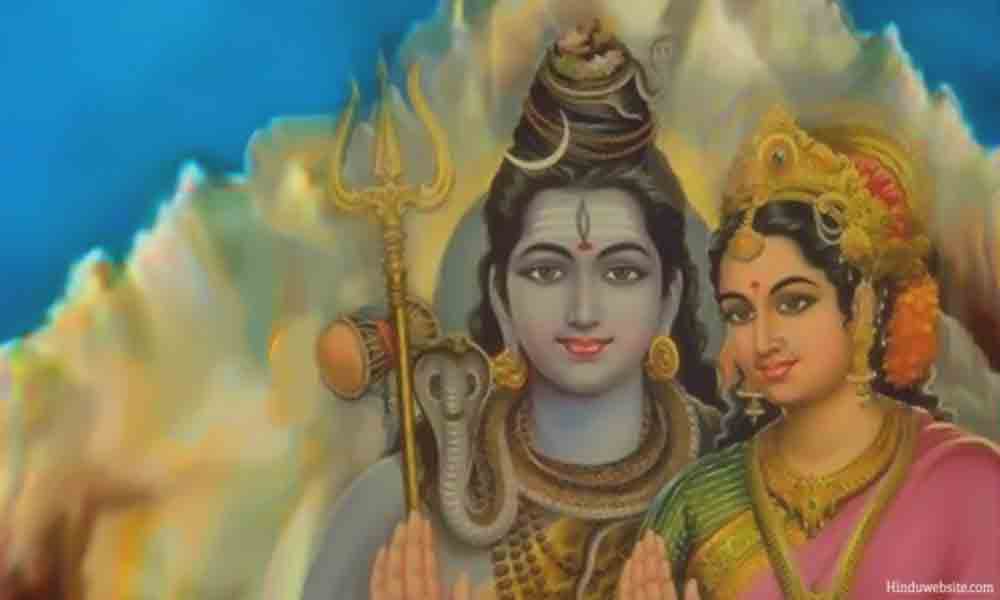
The Account of Expiatory Rites
LISTENING to the injunctions of Shambhu relating to the different castes and stages of life, Aparna was greatly pleased, and questioned Shangkara thus (1):
Shri Devi said:
Thou hast, O Lord! out of Thy kindness for Me and in Thy omniscience, spoken of the customs and the rules of religious conduct and sacraments for the well-being of the world (2). But the men of the Kali Age, being wicked, and blinded by anger and lust, atheists, of wavering minds and addicted to the gratification of their senses, will not in their ignorance and folly follow the way laid down by Thee; it behoves Thee, O Ishana! to say what will be the means of their liberation (3-4).
Shri Sadashiva said:
Thou hast asked well, O Devi! Thou who art the Benefactress of the world, the Mother of the world, Thou art Durga, Thou liberatest people from the bonds of birth and the toils of this world (5). Thou art the Primordial One, Thou fosterest and guardest this world, Thou art beyond the most excellent; Thou, O Devi! supportest the moving and the motionless Universe (6). Thou art Earth, Thou art Water, Thou art Fire, Thou art Air,
Thou art the Void, Thou art consciousness itself, Thou art the mahat-tattva (7). Thou art life in this world;
Thou art the knowledge of self, and Thou art the Supreme Divinity. Thou art the senses; Thou art the mind, Thou art the intellect; Thou art the motion and existence of the Universe (8).
Thou art the Vedas, Thou art the Pranava, Thou art the Smritis, the Sanghitas, the Nigamas, the Agamas, and the Tantras, Thou pervadest all the Shastras, and art the Abode of all that is good (9). Thou art Mahakali,
Mahalakshmi, Maha-nila-sarasvati, Mahodari, Mahamaya, Maharaudri, and Maheshvari; Thou art Omniscient and full of knowledge, there is nothing which Thou knowest not; yet, O Wise One! since Thou askest Me, I will speak of it for Thy pleasure (10-11).
Thou hast truly spoken, O Devi! of the ways of men, who, knowing what is for their welfare, yet, maddened by sinful desire for things which bring immediate enjoyment, and devoid of the sense of right and wrong, will desert the True Path. I speak now of that which will contribute to their salvation (12-13).
In the doing of what is forbidden and in the omitting of what is enjoined men sin, and sins lead to pain, sorrow, and disease (14).
O Kula-nayika! know that there are two kinds of sin that which contributes merely to the injury of one s own self, and that which causes injury to others (15). Man is released of the sin of injuring others by the punishment inflicted by the King, and from other sins by expiatory rites and Samadhi (16).
Those sinful men who are not purified by either punishment or expiation cannot but go to hell, and are despised both in this world and the next (17).
O Adya! I shall first of all speak of the Rules relating, O Maheshvari! to punishment by the King. The King who deviates from these himself goes upon the downward path (18).
In the administration of justice, servants, sons, mendicants, friends, and foes should all be treated alike (19).
If the King is guilty of any sin himself, or if he should have wronged one who is not guilty, then he may purify himself by fasting and by placating those he has wronged by gifts (20). If the King should consider that he is guilty of any sin which is punishable by death, he should then abdicate his kingdom and go to a forest, and there labour for his liberation and penances (21). The King should not, without sufficient reason, inflict heavy punishment on persons guilty of a light offence, nor should he inflict light punishment on persons guilty of a great offence (22). But the punishment by which many offenders may be deterred from ill-doing, and (punishment) in the case of an offender who is fearless of crimes, should be heavy, although the offence be a light one (23).
In the case of one who has committed the offence but once only and is ashamed of his ill-deed, or of one who fears crime and is a respectable man, a light punishment should be inflicted, even if the offence be a grave one (24).
If a Kaula or a Brahmana is guilty of a slight offence, they should even, though highly honourable, be punished by the King by a rebuke (25).
The King who does not bestow adequate rewards and punishments after consultation with his ministers is a great sinner (26).
A son should not leave his mother and father, the subjects should not leave their King, nor the wife her husband, even though they are greatly guilty (27).
The subjects should actively protect the kingdom, property, and life of the just King; otherwise they will go upon the downward path (28).
Shiva! those who knowingly go with their, mother, daughter, or sister, those who have killed their Maha-gurus, those who have, after having taken refuge in the Kula Faith, abandoned it, and those who have broken the trust placed in them, are great sinners (29-30).
Shiva! the punishment of those that go with their mother, sister, and daughter is death, and if the latter are wilful participants the same punishment should be inflicted upon them (31).
The sinful man who with a lustful mind goes to the bed of his mother or father s sister, or daughters-in-law, or mothers-in-law (wife s mother), the wife of his preceptor, the wife of his maternal or paternal grandfather, the daughter or wife of his mother or father s brother, the wife or daughter of his brother, the sister s daughter, the master s wife or daughter, or with an unmarried girl, should be punished by castration, and these women also if they are wilful participants in the crime should be punished by the cutting of their noses and turning them out of the house that they may be released from sin (32-34).
The punishment of the man who goes with the wife or daughter of a sapinda, or with the wife of a man who has trusted him, is to be deprived of all his property and to have his head shaved (35).
If through mistake (by ignorance) one should happen to marry any of these, either in Brahma or Shaiva form, then she should at once be disespoused (36).
A man who goes with the wife of another man of the same caste as himself, or of a caste inferior to his own, should be punished by the imposition of a fine and by being kept on a diet of grains for one month (37).
If a Kshatriya, Vaishya, Shudra, or Samanya, O Thou of Beauteous Face! goes with a Brahmana woman knowing her to be such, then his punishment is castration, and the Brahmana woman should be disfigured and banished from his kingdom by the King. For such as go with the wives of Viras, and for such wives, the punishment should be the same (38-39).
The wicked man who enjoys the wife of one of a higher caste should be heavily fined, and kept on a diet of grains for three months (40).
And if the woman is a wilful party, she should be punished as above mentioned. If the wife is the victim of a rape, then she should be separated from, but maintained by, her husband (41).
A wife, whether married according to Brahma or Shaiva form, should in all cases be renounced if she has gone with another even if it be only once, and then whether of her own desire or against it (42).
Those who have intercourse with public women, or with cows or other animals, should, O Deveshi! be purified by being kept on a diet of grains for three nights (43).
The punishment of those wicked men who have unnatural intercourse with a woman is death; this is the injunction of Shambhu (44).
A man who ravishes a woman, even if she be the wife of a Chandala, should be punished by death, and should never be pardoned (45).
A man should consider as wife only that woman who has been married to him according to Brahma or Shaiva form. All other women are the wives of others (46).
A man who with lust looks at another man s wife should fast for a day to purify himself. He who accosts her in a secret place should fast for two days. He who touches her should fast for four days; and he who embraces her should fast for eight days to purify himself (47).
And the woman who with a lustful mind behaves in the same manner should purify herself by following the same rules of fasting (48).
The man who uses offensive language towards a woman, who sees the private parts of a woman who is not his wife, and laughs derisively at her, should fast for two days to purify himself (49).
A man who shows his naked body to another, or who makes another person naked, should cease eating for two days to purify himself (50).
If the husband proves that his wife has had intercourse with another, then the King should punish her and her paramour according to the injunction laid down (51).
If the husband (has good cause to believe and yet) is unable to prove the faithlessness of his wife, then he should separate from her, but he should maintain her if she remains under his control (52).
If the husband, on seeing his wife enjoying with her paramour, kills her with her paramour, then the King should not punish him with death (53).
If the husband prohibits the wife to go to any place or to talk with anyone, then the wife should neither go to that place nor talk with that person (54).
If, on the death of the husband, the widow lives with the relatives of the husband under their control, following the customs of a widow s life, or in their absence she lives with the relatives of her father, then she deserves to inherit her husband s property (55).
The widow should not eat twice a day, nor should she eat food cooked by one who is not her husband s Agnate; she should renounce sexual enjoyment, animal food, jewels, sleeping on soft beds, and coloured clothes (56).
The widow faithful to her Dharmma should not anoint herself with fragrant ointments, she should avoid village gossip, and should spend her time in the worship of the Deities and in the performance of Vratas (57).
In the case of the boy who has neither father, mother, nor paternal grandfather, the mother s relatives are the best guardians (58). The mother s mother, mother s father, mother s brother, mother s brother s son, mother s father s brother, these are the relatives on the mother s side (59).
Father s mother, father, brother, father s brother s and sister s sons, father s father s brother, are known as paternal relatives (60).
The husband s mother, father, brother, the husband s brother s and sister s sons, and the husband s father s brothers, all these are known as the relatives of the husband (61).
Ambika! the King should compel a man, according to his means, to give food and clothes to his father, mother, father s father, father s mother, the wife whose son cannot support her, and to the maternal grandfather and grandmother, who are poor and have no son (62-63).
If a man speaks rudely to his wife he must fast for a day, if he beats her he must go without food for three days, and if he causes her bloodshed then he must fast for seven days (64).
If a man in his anger or folly calls his wife his mother, his sister, or daughter, then he should purify himself by fasting seven days (65).
If a girl be married to an impotent man, then the King should cause her to be married again, even if the fact is discovered after the lapse of some time. This is Shiva s injunction (66).
If a girl becomes a widow before consummation of marriage, she also ought to be remarried. This also is the command of Shiva (67).
The woman who is delivered of a child within six months of her marriage, or after the lapse of a year following her husband s death, is not a wife, nor is the child legitimate (68).
The woman who causes a miscarriage before the completion of the fifth month, as well as the person who helps her thereto, should be heavily punished (69).
The woman who after the fifth month destroys the child in her womb, and the person who helps her thereto, are guilty of killing a human being (70).
The cruel man who wilfully kills another man should always be sentenced to death by the King (71).
The King should correct the man who kills another man through ignorance, or in a fit of passion, or by mistake, either by taking his property from him or by giving him a severe beating (72).
The man who tries to compass his own death, whether by himself or by the aid of another, should be awarded the same punishment as the man who kills another through ignorance (73).
The man who kills another in a duel, or kills an enemy who attempts to kill him, is not guilty of any offence (74).
The King should punish the man who has maimed another by maiming him, and the man who has beaten another by having him beaten (75).
The wicked man who flings any missile, or lifts his hand to strike a Vipra, or one who should be honoured, or who strikes either of them, should be punished by a pecuniary fine for the first offence, and by the burning of his hand for a second offence (76).
If a man dies consequent upon a wound inflicted by any weapon or otherwise after six months, then the offender should be punished for the assault, and shall not be punished with death by the King (77).
If the King kills subverters of his government, men who plot to usurp his kingdom, servants secretly befriending the King s enemies, men creating dissatisfaction against the King among the troops, subjects who wish to wage war against the King, or armed highway robbers, he shall not be guilty of any sin (78-79).
The man who kills another, compelled by his master s order, is not himself guilty of the killing, for it is the master s killing. This is the command of Shiva (80).
If a man s death is caused by a beast belonging to, or weapons in the hand of, a careless man, then the latter should be punished by a pecuniary or bodily punishment (81).
Those detestable persons who disobey the King s command, who are arrogant in their speech in the King s presence, or who decry the Kula faith, should be punished by the King (82).
He who misappropriates property entrusted to him, the malicious man, the cheat, he who creates ill-feeling between men, or who makes people quarrel with one another, should be banished from the kingdom by the King (83).
The King should banish from his kingdom those abandoned and wicked-minded men who give away their sons and daughters in marriage for money, and who give their daughters (in marriage) to impotent husbands (84).
Persons who attempt to harm others by the spreading of baseless calumnies should be punished by the just King in accordance with their offence (85).
The King should compel the calumniator to pay the sufferer money commensurate with the harm done (86).
For such persons as steal gems, pearls, gold, and other metals, the punishment should be either the cutting off of the hand or the entire arm, according to the value of the stolen property (87).
Those who steal buffaloes, horses, cattle, jewels, etc., and infants, should be punished by the King as thieves (88).
Thieves who steal food and articles of small value should be corrected by being kept on a diet of grains for a week or a fortnight (89).
O Adored of the Devas! the traitor and the ingrate can never attain liberation by sacrifices, votive observances, penances, acts of charity, and other expiatory rites (90).
The King should, after severely punishing them, exile from his dominion men who give false evidence, or who are partial as arbitrators (91).
The testimony of six, four, or even three witnesses is sufficient to prove a fact; but, O Shiva! the testimony of two witnesses of well-known piety is enough (92).
Beloved! if witnesses contradict one another on questions of place, time, and other details of fact, then their testimony should be rejected (93).
O Beloved! the word of the blind and the deaf should be accepted as evidence, and the signs and writing of a dumb man and of one who is both deaf and dumb should also be accepted (94).
Of all evidence and in all cases, and particularly in litigation, documentary evidence is the best, as it does not perish and always endures (95).
The man who fabricates a writing for his own use or for the use of another should be punished with double the punishment of a false witness (96).
The statement on oath, on his own behalf, of a careful and unerring man is of a higher probative value than the word of many witnesses (97).
O Parvvati! as all virtues find their support in Truth, so do all vices find their support in untruth (98).
Therefore, the King shall incur no blame by chastizing those who are devoid of Truth and are the receptacle of all vices. This is the command of Shiva (99).
Devi! if a man says, "I tell the truth," at the same time touching any of the following a Kaula, the Guru, a Brahmana, water of Ganga, an image of a Devata, a Kula religious Book, Kulamrita, or the offerings made to a Deity, he has taken an oath. If after that he speaks an untruth, then he will go to hell for one Kalpa (100-101).
An oath that an act which is not sinful will be or will not be done, should always be kept by men (102).
The man who has broken his oath should purify himself by a fortnight s fast; and one who has broken it by mistake should live on grains for twelve days (103).
Even the Kula-dharmma, if not followed according to Truth and the injunctions, not only fails to secure final liberation and beatitude, but leads to sin (104).
Wine is Tara Herself in liquid form, is the Saviour of beings, the Mother of enjoyment and liberation, who destroys danger and diseases, burns up the heaps of sins, and purifies the world.O Beloved! She grants all success, and increases knowledge, intellect, and learning, and, O Adya! She is ever worshipped by those who have attained final liberation and those who are desirous of attaining final liberation, by those that have become and those striving to be adepts, and by Kings and Devas for the attainment of their desires (105-107).
Mortals who drink wine with their minds well under control and according to the injunctions (of Shiva) are, as it were, Immortals on earth (108).
By partaking, in accordance to the injunctions, of any of the tattvas, man becomes like unto Shiva. What, then, is the result of partaking of all the five Tattvas? (109).
But the drinking of this Devi Varuni in disregard of the injunctions destroys the intellect (understanding), life, fame, and wealth of men (110).
By the excessive drinking of wine the drunkard destroys the understanding, which is the means for the attainment of the fourfold end of human existence (111).
Only harm at every step, both to himself and to others, comes out of a man whose mind is distracted and who knows not what should and what should not be done (112).
Therefore, the King or the Lord of the Chakra should correct by bodily and pecuniary punishments those who are over-addicted to wine and intoxicating drugs (113).
The understanding of men is clouded by the drinking of wine, whether in small or large quantities, according to the difference in the quality of the wine, to the temperament of the individuals, to the place where and the time when it is taken (114).
Therefore, excessive drinking is to be judged, not from the quantity drunk, but from the result as shown in difficulty of speech and from the unsteadiness of hands, feet, and sight (115).
The King should burn the tongues and confiscate the money of, and inflict corporal punishments on, men who hold not their senses under control, whose minds are distracted by drink, who deviate from the duty they owe to Devas and Gurus, who are fearful to behold, who are the source of all folly, who are sinful, and transgressors of the injunctions of Shiva, and bring ruin on themselves (116-117).
The King should severely chastise and fine the man who is unsteady in hands, feet, or in speech, who is bewildered, maddened, and beyond himself with drink (118).
The King, who labours for the happiness of his subjects, should inflict pecuniary punishment on the drunkard who is guilty of evil language and is devoid of fear and shame (119).
O Kuleshvari! a Kaula, even if he has been initiated a hundred times, should be regarded as a Pashu, and expelled from the Kula community (120).
The Kaula who drinks excessively of wine, be it consecrated or not, should be renounced by all Kaulas and punished by the King (121).
The drunken twice-born man who makes his Brahmi wife drink wine should purify both himself and his wife by living on a diet of grains for five days (122).
The man who has drunk wine which has not been sanctified should purify himself by fasting for three days, and who has eaten meat which has not been sanctified should fast for two days (123).
If a man partakes of fish and parched food which have not been sanctified, he should fast for a day, but who participates in the fifth tattva without conforming to the rites should be corrected by the King s punishment (124).
He who knowingly eats human flesh or beef should purify himself by a fortnight s fast. This is the expiation for this sin (125).
Beloved! a man who has eaten the flesh of animals of human shape, or of carnivorous animals, should purify himself by a three days fast (126).
The man who partakes of food cooked by Mlechchhas, Chandalas, and Pashus, who are the enemies of the Kula creed, is purified by a fortnight s fast (127).
And, O Kuleshvari! if anyone knowingly partakes of the leavings of these, then he should fast for a month to purify himself, and if he has done so unknowingly he should fast for a fortnight (128).
The injunction is that if a man partakes of food cooked by a man of a caste inferior to his own, he should, to purify himself, fast for three days (129).
By the partaking of food of a Pashu, Chandala, and Mlechchha, which has been placed in the Chakra or in the hands of a Vira, no sin is incurred (130).
One who partakes of forbidden food at a time when food is scarce, in times of famine and danger, or when life is at stake, is guiltless of any transgression (131).
If food is eaten on the back of an elephant, or on a block of stone, or on a piece of wood, which can be carried only by several men, or in places where nothing objectionable is actually perceived, there is no fault (132).
Animals the flesh of which is forbidden, as also diseased animals, should not be killed even for the purpose of sacrifice to the Devas. By killing such animals sin is incurred (133).
If anyone knowingly kills a bull, then he shall do penance (as described below), and if he does so unknowingly he shall do half of such penance. This is the command of Shangkara (134).
So long as the penance is not performed he shall not shave or pare his nails nor wear clean raiments (135).
Shiva! he should fast for a month, and should live on grains for another month, and should live eating food which he has begged during the third month. This is called Krichchhra-Vrata (136).
At the end of the penance he should shave his head and free himself from the sin of wilful killing of the bull by feasting Kaulas, relatives (Agnates), and Bandhavas (137).
If the death of a cow or bull is caused by want of care, the expiation is an eight days fast for a Brahmana, and for a Kshatriya or inferior castes fasting for six, four, and two days (138).
O Kaulini! the sin of wilfully slaughtering an elephant or a camel, or a buffalo, or a horse is expiated by a three days fast (139).
Expiation for killing a deer, sheep, goat, or a cat, is a fast for one whole day and a night, and one who has killed a peacock, a parrot, or a gander should abstain fom food till sunset of the day on which the sin is committed (140).
If anyone kills any other inferior animal which possesses bones, he should live on vegetable food for a night. The killing of a boneless animal is expiated by repentance (141).
There is no blame upon Kings who kill beasts, fish, and oviparous creatures when hunting; for hunting, O Devi! is an immemorial practice among Kings (142).
Killing should always be avoided, O Gentle One! except if it be for the purpose of sacrifice to a Deva. The man who kills according to the injunctions sins not (143).
Should a man be unable to complete a religious devotion which he has undertaken, if he walks across the remnants after the worship of any Devata, or if he touches an image of a Deva when he is unclean, then in all such cases he should recite the Gayatri (144).
The father, the mother, and the giver of the Brahman are the Maha-gurus. He who speaks ill of, or towards, them should, in order to purify himself, fast for five days (145).
Similarly, O Beloved! if anyone speaks ill of other persons entitled to respect, Kaulas and Vipras, then he should purify himself by fasting two days and a half (146).
A man may for the acquisition of wealth go to any country, but he should avoid such countries and Shastras as prohibit Kaulika rites (147).
The man who of his own free-will goes to a country where the Kaula-dharmma is prohibited falls from his status, and should be purified by Purnabhisheka (148).
In expiatory penance, that which is recognized as a fast is going without food for eight yamas from sunrise (149).
The fast is, however, not broken should one drink a handful of water or eat the air for the preservation of his life (150).
If one is unable, by reason of old age or disease, to fast, then, in lieu of each fast, he should feast twelve Brahmanas (151).
The sins of speaking ill of others, self-laudation, evil habits, impropriety in speech or action, should be expiated by repentance (152).
All other sins, whether committed knowingly or unknowingly, are destroyed by repeating the Gayatri of the Devi and feeding the Kaulas (153).
These general rules are applicable to men, women, and the sexless; the only difference is that in the case of the women the husband is their Maha-guru (154).
Men who are suffering from very great disease and those who are always ailing become purified and entitled to perform rites relating to the Devas and the Pitris by giving away gold (155).
A house which has been defiled by unnatural death, or which has been struck by lightning, should be purified by one hundred Vyahriti Homas (156).
If the dead body of an animal possessing bones be found in a lake, tank, or well, then it should be at once taken out, and the same should be purified (157).
The method of purifying such places is as follows: Twenty-one jars of pure water should, after being consecrated with Purnabhisheka Mantra, be poured into it (158).
If such places contain but a small quantity of water, and this has been polluted by the stench of the dead body, then they should be dewatered and the loose mud removed therefrom, and when this has been done water should be poured in the manner described (159).
If they contain water of sufficient quantity to drown an elephant, then a hundred jars of water should be removed, and then consecrated water should be poured into them (160).
If not so purified, then the waters of the reservoirs polluted by the touch of the dead body become undrinkable, and the reservoir cannot be consecrated (161).
Bathing in these reservoirs is useless, and any rite performed with their waters becomes fruitless, and any person using the water for any purpose whatever should remain without food for a day and take Panchamrita to purify himself (162).
Should anyone perchance see a wealthy man who begs, a warrior averse to battle, a detractor of the Kula dharmma, a lady of the family who drinks wine, a man who is a traitor, or a learned man addicted to sin, then in any of these cases he should view the Sun, utter the name of Vishnu, and bathe in the clothes which he is wearing at the time (163-164).
Men of the twice-born classes should, if they sell donkeys, fowls, or swine, or if they engage in any low pursuits, purify themselves by observing the three days vrata (165).
The Tri-dina-vrata, O Ambika! is thus performed: the first day is to be spent in fasting, the second day is to be spent in eating grain meals only, and the third in drinking water only (166).
The man who, without being asked, enters a room the door of which is closed, and one who speaks of things which he has been asked to keep secret, should go without food for five days (167).
The man who from pride fails to rise when he sees anyone worthy of veneration coming towards him, or when he sees the Kula Scriptures being brought in, should go without food for a day in order to purify himself (168).
In this Shastra spoken by Shiva the meanings of the words used are plain; those who put far-fetched meanings upon them go the downward path (169).
I have spoken to thee, O Devi! of that which is the Essence of essences, of that which is above the most excellent, of that which conduces to the well-being (of men) in this worId and the next, as also of that which is both purifying and beneficent and according to Dharmma (170).
End of the Eleventh Joyful Message, entitled "The Account of Expiatory Rites."
Suggestions for Further Reading
- Chapter 1 - Questions relating to the Liberation of Beings
- Chapter 2 - Introduction to the Worship of Brahman
- Chapter 3 - Description of the Worship of the Supreme Brahman
- Chapter 4 - Introduction of the Worship of the Supreme Prakriti
- Chapter 5 - The Formation of the Mantras, Placing of the Jar, and Purification of the Elements of Worship
- Chapter 6 - Placing of the Shri-patra, Homa, Formation of the Chakra, and other Rites
- Chapter 7 - Hymn of Praise (Stotra), Amulet (Kavacha), and the description of the Kula-tattva
- Chapter 8 - The Dharmma and Customs of the Castes and Ashramas
- Chapter 9 - The Ten Kinds of Purificatory Rites (Sangskara)
- Chapter 10 - Rites relating to Vriddhi Shraddha, Funeral Rites, and Purnabhisheka
- Chapter 11 - The Account of Expiatory Rites
- Chapter 12 - An Account of the Eternal and Immutable Dharmma
- Chapter 13 - Installation of the Devata
- Chapter 14 - The Consecration of Shiva-linga and Description of the Four Classes of Avadhutas
- Essays On Dharma
- Esoteric Mystic Hinduism
- Introduction to Hinduism
- Hindu Way of Life
- Essays On Karma
- Hindu Rites and Rituals
- The Origin of The Sanskrit Language
- Symbolism in Hinduism
- Essays on The Upanishads
- Concepts of Hinduism
- Essays on Atman
- Hindu Festivals
- Spiritual Practice
- Right Living
- Yoga of Sorrow
- Happiness
- Mental Health
- Concepts of Buddhism
- General Essays
Source: Mahanirvana Tantra Tantra of the Great Liberation, Translated by Arthur Avalon (Sir John Woodroffe) [1913]. While we have made every effort to reproduce the text correctly, we do not guarantee or accept any responsibility for any errors or omissions or inaccuracies in the reproduction of this text.