
Historicity and Biography of Aesop of Aesop's Fables
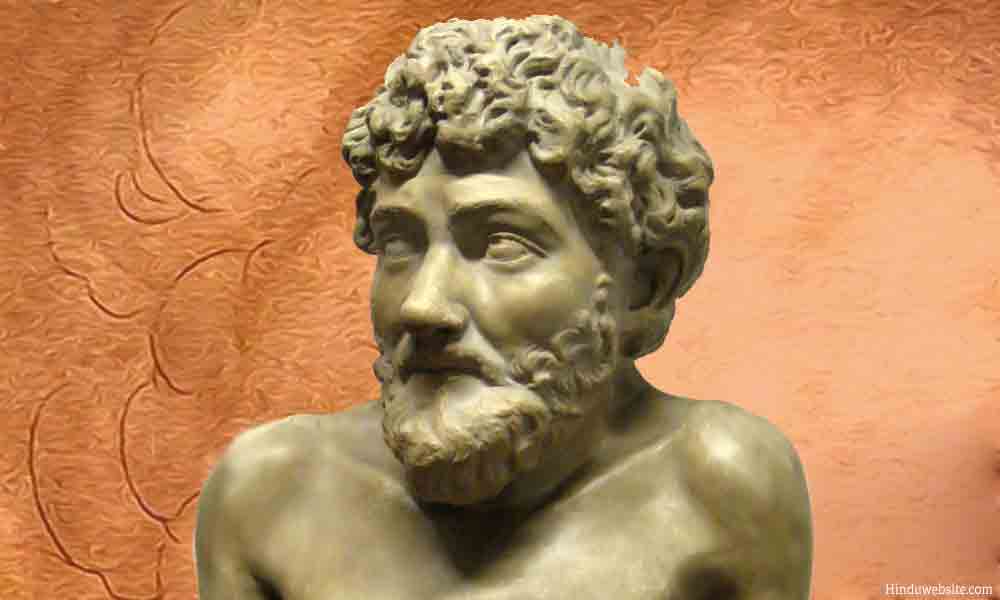
Aesop. Cast in Pushkin museum from original in Art Collection of Villa Albani, Roma
|| Abundance || Stress || Career || Communication || Concentration || Creativity || Emotions || Self-Esteem || Fear || Happiness || Healing || Intuition || Leadership || Love || Maturity || Meditation || Memory || Mental Health || Peace || Mindfulness || Inspiration || Negotiation || Personality || Planning || PMA || Reading || Relationships || Relaxation || Success || Visualization || The Secret || Master Key System || Videos || Audio || Our Books || Being the Best || Resources ||
Summary: This essay is about the historicity and biography of Aesop, the creator of Aesop's Fables.
Aesop was a sixth or seventh Century BC, Greek storyteller, who is credited with many fables that are now popularly known as Aesop's Fables. His tales bring to life many animate and inanimate objects who talk and act with intelligence and possess human like characteristics. Although several of his fables are popular and found their way into the story telling traditions of many languages and cultures, little is known about him. Some even doubt whether historical Aesop even existed at all.
Details of Aesop’s life can be gleaned from the works of ancient writers and historians such as Aristotle, Herodotus, and Plutarch. According to Greek sources, Aesop was born in 620 BC in Thrace on the Black Sea Coast, which later became the city of Mesembria. Subsequent sources from the Roman period suggest that he was probably from Phrygia, Sardisa or Lydia. In the works of Aristotle and Herodotus he is mentioned as a slave of first of Xanthus and later Iadmon from Samos. He probably gained freedom, since it is also stated that he worked as an advocate for a wealthy Samian, and subsequently died in Delphi.
According to Plutarch, he went to Delphi on a diplomatic mission on behalf of King Croseus of Lydia, where he met his end, as he said to have insulted the Delphians and incurred their wrath. Before his death he also said to have dined with the Seven Sages of Greece along with his friend Solon from Sardis. According to some even these details have no historical validation and may be fictional, especially his alleged death in Delphi in the hands of an angry mob.
According to one version, which was first proposed by Planudes, a Byzantine scholar of the 13th century, Aesop was an African from Ethiopia. Richard A. Lobban believes that the description of several of African animals and "artifacts" in Aesop’s fables is circumstantial evidence" to suggest that “Aesop may have been a Nubian folk teller.” In some ancient sources, his name was also spelled as Esope and Isope.
The Aesop Romance, also known as The Life of Aesop, which was part of a folk tradition long before it was rendered into writing in the second century AD, contains a highly fictionalized version of his life. It describes that he was originally slave of Xanthus. Ugly and inarticulate, he was granted the power of speech and storytelling ability by the goddess Isis due to the kindness of a priestess. By the dint of his newfound talents, he gained freedom and became a personal advisor to many kings and city states. The story also suggests that he traveled to Delphi and met his end in the hands of angry mob, to whom he narrated insulting fables and earned their wrath. Scholars consider the Aesop Romance is a pure fiction and lacks historical validity.
Although many fables and stories are in circulation in his name and Herodotus called him a writer of fables and Aristophanes stated that he read Aesop, no writings of Aesop have survived. Some believe that a written version of his fables might have existed in the past around fifth century BCE. However, his writings survived the ravages of time not only through oral traditions but also in the writings and compilations of subsequent writes such as Demetrius of Phalerum, Phaedrus (first century BC, Babrius, Titianus (3rd century AD), Avianus (fourth century AD) and so on. Most of these collections are also lost.
Overtime, Aesop’s fables also underwent many changes and revisions, as they were translated into other languages or passed on from one oral tradition to another. As a result, the collection of fables which we have today in his name bear little resemblance to his original ones. It is also difficult to determine the chronological order of his tales or which ones were the earliest and which ones were subsequent.
The ethical aspect of Aesop’s fables
Aesop's fables are as relevant today as they were centuries ago. Like the Panchatantra of ancient India or the Jataka tales of the Buddhist lore, Aesop's fables have fired the imagination of generations of young minds since ancient times, reminding them of the age old moral values and the importance of being good and practicing virtue in a world filled with diverse characters and immense possibilities.
The fables are remarkably simple in expression but convey appealingly the deeper truths of human life and character, leaving a lasting impression upon the readers and listeners alike. Although some of the stories are as old as our civilization, they are as relevant today as they were thousands of years ago. Many perhaps do not know that some of the best remembered and well-known sayings like "self-help is the best help" or "much ado about nothing" or "look before you leap", are derived from Aesop's Fables only.
Connection with ancient India
It is possible Aesop might have gleaned a number of stories from ancient sources, including those of India, improvising upon some of them and adding some of his own. India has a long tradition of storytelling. Most of the ancient literary works of India, including the Vedas, the Ramayana and the Mahabharata, survived for centuries through oral tradition only, before they were rendered into writing. Some of the ancient folktales and stories of India do match Aesop’s wit and wisdom in narrative style, symbolism, moral value and characterization.
The striking similarities between some stories of the Panchatantra and those of Aesop suggest that both works might have shared some ideas and inspiration from the same melting pot of ancient folklore and storytelling. It is possible that the stories might have traveled both ways, along the trade routes and through the merchant caravans, marching armies and wandering tribes, and became part of the native folklore...
Trade relations existed between India and Greece even prior to the invasion of Alexander, and there was free flow of ideas between the two ancient civilizations. There is a possibility that some of the fables of Aesop were derived from Indian and Buddhist traditions, through merchants and travelling monks from the Indian subcontinent, especially from the hinterland of Gandhara, or the present-day Afghanistan.
The Wisdom of Aesop
Aesop’s Fables contain many moral teachings. Through simple stories, Aesop conveyed profound truths about human life, character, behavior, and moral norms. They are ageless and still relevant today as they were in the ancient world. The following are a few important morals from Aesop’s Fables
- Notoriety is often mistaken for fame.
- Do not let anything turn you from your purpose.
- If you are wise you will not be deceived by the innocent airs of those whom you have once found to be dangerous.
- The tyrant will always find a pretext for his tyranny.
- Like attracts like.
- Familiarity breeds contempt.
- Obscurity often brings safety.
- Appearances are deceptive.
- Ah, people often grudge others what they cannot enjoy themselves.
- A liar will not be believed, even when he speaks the truth.
- Yield to all and you will soon have nothing to yield.
- Fine clothes may disguise, but silly words will disclose a fool.
- The strong and the weak cannot keep company.
- United we stand, divided we fall.
- Gods help them who help themselves.
- Please all, and you will please none.
- Wealth unused might as well not exist.
- It is easy to propose impossible remedies.
- He that has many friends, has no friends.
- Never trust the advice of a man in difficulties.
- Precious things are for those who can prize them.
- Gratitude and greed do not go together.
- Better beans and bacon in peace than cakes and ale in fear
- Expect no "No gratitude from the wicked.
- Foolish curiosity and vanity often lead to misfortune
- Do not tell others how to act unless you can set a good example
- Those who try to deceive may expect to be paid in their own coin.
- It is one thing to say that something should be done, but quite a different matter to do it
- Do not let your vanity make you overestimate your powers
- Do not attempt too much at once.
- Self-help is the best help.
- Heaven helps those who help themselves.
- Do not say anything at any time that you would not say at all times.
- Poverty with security is better than plenty in the midst of fear and uncertainty.
Suggestions for Further Reading
- The Power of Determination
- Factors Which Contribute to Happiness
- Mental Maturity and Adult Behavior
- The Power of Your Thoughts
- To Think Outside the Box and Its True Meaning
- How to Avoid Stereotyping People
- Meditation and Levitation
- Enjoying the Simple Pleasures of Life
- 10 Reasons Why Plans Fail
- Thought, Energy and Manifestation
- How to Deal With Unpleasant Situations
- Stop Blaming Others
- Ten Effective Ways to Improve Your Self Esteem
- Determination, The Sustaining Power
- Are you Bored With Your Life?
- What Do You Think Success Means?
- Why People Worship Celebrities and Film Stars?
- Dealing with Adversity
- The Success Mindset
- Why Older Workers Find It Difficult to Get a Job?
- Invite Peace Into Your Life
- How to Practice Forgiveness in Daily Life
- Effective Listening Skills
- Being the Best - A Book on Self-help
- Think Success : Essays on Self-help
- Essays On Dharma
- Esoteric Mystic Hinduism
- Introduction to Hinduism
- Hindu Way of Life
- Essays On Karma
- Hindu Rites and Rituals
- The Origin of The Sanskrit Language
- Symbolism in Hinduism
- Essays on The Upanishads
- Concepts of Hinduism
- Essays on Atman
- Hindu Festivals
- Spiritual Practice
- Right Living
- Yoga of Sorrow
- Happiness
- Mental Health
- Concepts of Buddhism
- General Essays
References
1. Aesop, From Wikipedia, the free encyclopedia
2. Works by Aesop at Project Gutenberg
3. Works by or about Aesop at Internet Archive