
The Seven Fundamental Teachings of the Bhagavadgita
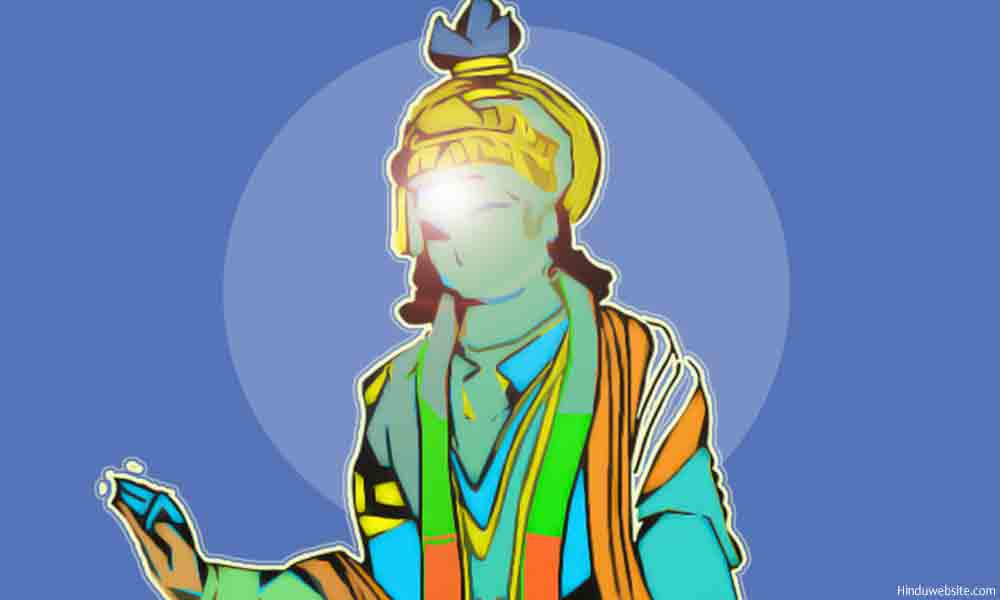
The Bhagavadgita is a spiritual discourse delivered by Lord Krishna in the middle of the battlefield. It contains 18 chapters, which deal with a variety of subjects such as the nature of the self, the need to restrain the mind and the senses, withdrawing them from the sense objects through the practice of yoga, performing desireless actions, the vision of the Universal Self, the qualities of Nature, incarnation of God and reincarnation of individual souls, devotion to God, liberation and so on.
The various topics discussed in the scripture can be grouped under four main headings: the individual self, God or the Universal Self, the relationship between the two and liberation of the individual self. The Bhagavadgita encourages us to perform our obligatory duties as a sacrificial offering to God and not to turn our back upon them. It explains how delusion arises and how we become bound to our present conditions, suggesting the various alternatives that are available to us to escape from them.
The main paths
Although on a superficial note the Bhagavadgita seems to favor the path of devotion, a careful student of the scripture cannot ignore its obvious connection with the other paths described in it such as jnanayoga (the path of knowledge), karmayoga (the path of action) and karma sanyasa yoga (the path of renunciation of attachment to the fruit of our actions).
Jnanayoga is the first stage. Every student engaged in the religious studies is a practitioner of this path. On this path a person acquires the knowledge of the inner self through study and contemplation and becomes aware of the importance of realizing his true self and achieving salvation.
After a person spends time acquiring the knowledge of the scriptures, he should turn to karma yoga to discharge his responsibilities towards himself, his family and society by performing his obligatory duties in deference to his dharma and as a sacrificial offering to God.
The culmination of the practice of karmayoga is karma sanyasa yoga in which the seeker realizes either because of the knowledge he has already gained or through experience that it is not actions but attachment to the results of his actions which is responsible for his bondage. So he begins to perform his actions without desire and attachment, renouncing the sense of doer-ship and offers the fruit of his actions to God.
When a seeker practises these different types of yoga for a considerable time, he develops sattva or purity and divine qualities which are enumerated in the Bhagavadgita. With these refinements in his lower self or the outer consciousness, he eventually comes to the fourth and the final stage, which make him fit for the practice of bhakti yoga, or the yoga of devotion. In this stage he experiences intense devotion and unconditional love for God. He surrenders to God completely and spends his time in His service and contemplation. His mind and senses become fixed on the thoughts of God. He sees Him everywhere and in himself and experience oneness with Him.
Having developed distaste for the things of the world, he withdraws mentally from the distractions of the external world and contemplates upon God. As his mind is now totally occupied with the thoughts of God, he lives in the constant pain of not being able to find Him. When his devotion reaches its crescendo, God reciprocates with abundant love, just as He promised in the Bhagavadgita, and releases Him from the bonds of mortal life forever.
A holistic teaching of duty, discipline and devotion
Thus we can see that the Bhagavadgita is not just about bhakti yoga but a holistic spiritual effort which demands from people physical and mental purity, self-control, performance of duty, renunciation and devotion to God for their liberation. We learn from it that while bhakti yoga is the most direct solution to achieve liberation its true practice is possible only for those who have progressed on the path of salvation through their previous effort.
True devotion in which all sense of egoism becomes dissolved and only the thought of God remains is a product of years of practice and self-discipline. It is possible only for those who are able to restrain their senses, stabilize their minds, cultivate purity and perform their obligatory duties in the amidst of society and their families.
Only those whose hearts and minds are infused with the love of God can practise true devotion. Where there is love for one's self, there is truly not much love left for God. Where there is a consideration for the self, devotion to God is just an excuse for furthering that self. Therefore, people who claim themselves to be devotees of God should search their hearts and minds to see how their egos are still active and seeking.
If you are still in love with yourself, will it be possible for you to love God unconditionally all the time? This question, we must all ask ourselves to see whether we are qualified enough to be considered the true devotees of God. The fact becomes obvious when we study the Bhagavadgita from a wider perspective and begin to connect the various seemingly divergent approaches and practices discussed by it into one broad based solution.
Classical interpretations
The Bhagavadgita has been interpreted in many ways from ancient times, by scholars belonging to various religious traditions or sampradayas in support of their respective schools of thought. For example, Shankaracharya (8th-9th century A. D) wrote a commentary upon it from the perspective of advaita vedanta or the philosophy of monism, declaring Brahman to be the only reality and ignorance as the main cause for our inability to recognize the truth.
Sri Ramanuja (11th century A. D) interpreted it from the perspective of Vishishtadvaita or the philosophy of qualified monism. He argued that while God is the One and the only Reality He was not without attributes. The individual souls are similar to Him in their essence, yet they are not completely identical, because there is a subtle distinction between the two, which cannot be clearly defined but which cannot be denied either.
Sri Machavacharya (the 11th-12th century AD), a great proponent of the dualistic (dvaita) school of philosophy, wrote a commentary (Gitabhasya) and an interpretation (Gitatatparya) upon it, stating that God and individual souls are distinct and different and that individual souls can gain liberation through self-surrender and devotion to God.
Also deserving a mention in this regard are Nimbarka (12th century A. D), his disciple Kesavakasmirin, Vallbha (15th century A. D), the proponent of suddhadvaita or pure non-dualism, B.G. Tilak, Sri Aurobindo, M.K.Gandhi and Sri Swami Prabhupada. All these eminently scholarly and spiritual people interpreted the Bhagavadgita according to their respective beliefs. In the scripture itself, Lord Krishna mentions a lineage of scholars who received the knowledge contained in it at different times in the history of mankind.
The seven teachings
While the scripture has been the subject of different interpretations, we can identify in it the following seven fundamental teachings or instructions. These seven teachings sum up the philosophy of the Bhagavadgita and help us develop the necessary qualities and discipline to progress eventually on the path of devotion towards our liberation.
1. Know the reality of the world in which you live. Know it to be impermanent, unreal and the source of your suffering and delusion.
2. Know the Reality about yourself, who you are and what you are really. Know that you are neither your body nor your mind, but the true self that can neither be slain nor hurt. It is eternal, divine and transcendental.
3. Know that the senses are responsible for your desires, attachment and the instability of your mind and that by restraining your senses you can achieve the stability of your mind and become impervious to the pairs of opposites, such as pain and pleasure, which is the key to self-realization.
4. Cultivate buddhi or your discriminating intelligence to discern true knowledge, and practice wisdom so that you will know the difference between truth and untruth, reality and illusion, your false self and true self, the divine qualities and demonic qualities, knowledge and ignorance and how true knowledge illuminates and liberates while ignorance veils your wisdom and holds you in bondage.
5. Know the true nature of action and inaction and how actions bind you to the world and cause you suffering. know that it is not actions but the desires and the attachment behind your actions which are responsible for your karma. Know the truth about the doer-ship and who the real doer is. Do not seek to escape from your responsibility because not doing your obligatory duties is also bad karma. To neutralize your karma, perform your actions without desires, without attachment and without seeking the fruit of your actions, as a sacrificial offering to God, accepting Him as the True Doer and yourself as a mere instrument. Know that true renunciation is the renunciation of your desires and the fruit of your actions.
6. Know the Supreme-Self to be the all-pervading and all-knowing Creator of all. Accept Him to be the cause of everything and the real Doer in your life. Surrender yourself to Him completely and offer Him everything that you have.
7. Cultivate the quality of sattva or purity so that you can experience true love for God and know the true meaning of devotion, surrender and sacrifice. Restraining your mind and senses, focusing your mind on the thoughts of God, and surrendering yourself to Him completely. Make your life and actions as true offerings to Him, acknowledging His role in all your affairs and expressing your gratitude. If you persist in your practice, you will begin to experience total devotion to God and His unconditional love. He will take full responsibility for your life and manage your affairs for you.
Suggestions for Further Reading
- The Samkhya Philosophy and 24 Principles of Creation
- The Bhagavadgita On The Problem Of Sorrow
- The Concept of Atman or Eternal Soul in Hinduism
- The Practice of Atma Yoga Or The Yoga Of Self
- The Problem of Maya Or Illusion and How To Deal With It
- Belief In Atman, The Eternal Soul Or The Inner Self
- Brahman, The Highest God Of Hinduism
- The Bhagavad Gita Original Translations
- The Bhagavadgita, Philosophy and Concepts
- Bhakti yoga or the Yoga of Devotion
- Hinduism And The Evolution of Life And Consciousness
- Why to Study the Bhagavadgita Parts 1 to 4
- The Triple Gunas, Sattva, Rajas and Tamas
- The Practice of Tantra and Tantric Ritual in Hinduism and Buddhism
- The Tradition Of Gurus and Gurukulas in Hinduism
- Origin, Definition and Introduction to Hinduism
- Hinduism, Way of Life, Beliefs and Practices
- A Summary of the Bhagavadgita
- Avatar, the Reincarnation of God Upon Earth
- The Bhagavadgita on Karma, the Law of Actions
- The Mandukya Upanishad
- The Bhagavadgita On The Mind And Its Control
- Symbolic Significance of Numbers in Hinduism
- The Belief of Reincarnation of Soul in Hinduism
- The True Meaning Of Renunciation According To Hinduism
- The Symbolic Significance of Puja Or Worship In Hinduism
- Introduction to the Upanishads of Hinduism
- Origin, Principles, Practice and Types of Yoga
- Hinduism and the Belief in one God
- Essays On Dharma
- Esoteric Mystic Hinduism
- Introduction to Hinduism
- Hindu Way of Life
- Essays On Karma
- Hindu Rites and Rituals
- The Origin of The Sanskrit Language
- Symbolism in Hinduism
- Essays on The Upanishads
- Concepts of Hinduism
- Essays on Atman
- Hindu Festivals
- Spiritual Practice
- Right Living
- Yoga of Sorrow
- Happiness
- Mental Health
- Concepts of Buddhism
- General Essays