
The Causes of Sorrow And Suffering
This essay is about the causes and the essential purpose of suffering and the role it plays in our spiritual transformation and liberation.
Sorrow plays a vital role in our lives as a transformative power. It arises and torments us in many ways as part of our learning and improving. Therefore, a proper understanding of the causes of sorrow and its contributing factors is essential to find a suitable philosophy of life, with which you can effectively resolve it and establish stability and inner peace.
The primary purpose of sorrow is to teach you valuable lessons and correct your mistakes and failings. Over time, as you go through the rut of life, it infuses you with light and wisdom so that you can become wiser with discernment and progress on the path of liberation, practicing a divine way of life as a sacrifice and an obligation to God.
When you realize the true purpose of suffering, which happens due to a self-cleansing, spiritual effort, you accept suffering as a learning process and view it as an opportunity rather than a threat. Suffering then becomes a guide, a teacher of light and wisdom in the world of darkness who opens your mind to the hidden truths of life. It is as if menacing, thundering clouds in a dark and ominous sky have miraculously transformed into purifying and life-nourishing water to purify the earth and all beings, which are directly in its path. By learning valuable lessons from suffering and accepting it as an essential part of self-purification and transformation, you can make suffering a source of enlightenment rather than sepulchral darkness and misery.
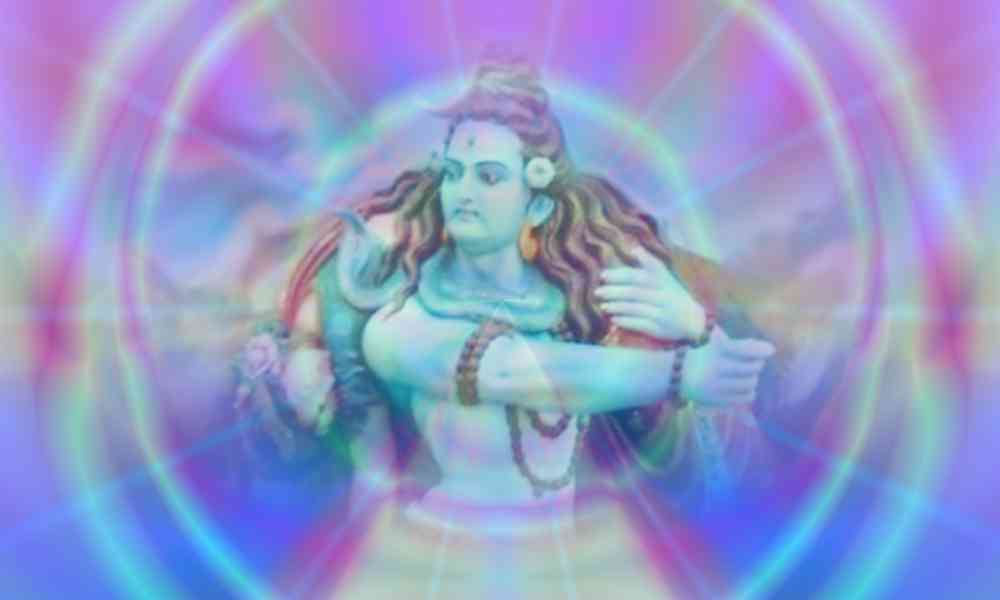
All living beings experience suffering. The intelligent, self-aware ones suffer even more. It manifests in us as physical and mental pain, ailments, sickness, hunger, afflictions, modifications, violence, emotional disturbances, lack of freedom, predominance of evil and so on. Suffering often transforms into rage as it happened in case of Lord Shiva when he lost his consort, Sati, due to unfortunate circumstances. In his case, rage again turned into grief when he realized the loss, which lasted for a long time. Such examples prove that all emotions are part of suffering, arise from suffering and subside into suffering. It applies to even human happiness since it is never permanent, nor indestructible.
The factors that lead to suffering
Transience or change, attachment, desire, sensory activity, ignorance and illusion, egoism, and absence of faith and belief in oneself and God are some causes of suffering to which human beings are vulnerable. By knowing them and understanding them, one can find suitable solutions to stabilize the mind and experience peace and happiness. In the following discussion, we will examine the seeds of suffering or the primary causes of suffering and their source.
1. God
One of the misconceptions regarding God is that he is the source of all positive things in life while evil is chiefly responsible for our suffering. However, the truth is that God is the source of all. Nothing happens without his will. Therefore, it naturally follows that God must be the source of all suffering also. As the teacher of the world, he uses suffering to teach valuable lessons and facilitate our progress upon earth. Therefore, the wise ones consider suffering a gift from God rather than a curse. If they are suffering during austerities, they know that they have a lot of work to do to achieve perfection. However, the suffering he causes is universal according to the inherent laws of Dharma and without a motive. The suffering, which is inflicted upon oneself or others because of a motive or desire-ridden actions, is evil, but the suffering which arises from the inherent laws of Dharma for the purpose of creation or continuation of the world, becomes a transformative force.
2. Nature
In God’s pure consciousness, there is no suffering. The soul is not subject to suffering even in the bound state because it is free from modifications. Suffering is to the mind and body only. In the infinite, absolute state, God is pure bliss and unending happiness. The highest heaven of God symbolizes these states. Whatever suffering he induces in the mortal beings is done through Nature, his dynamic force, as a projection or superimposition. Suffering arises in the field of Nature as an inseparable condition of life. It is a state of modification, a dependent condition, which manifests in the field of Nature when certain causes and conditions are present. They are described below.
3. Bondage
Suffering arises because we are bound to Nature. This is itself is a great source of misery. In the microcosm, we are bound to the mind and body and in the macrocosm, to the elements, food, water and air mainly due to hunger, thirst and other desires or due to injury, disturbance and hurt. Since we cannot escape from them and since we depend upon many material things for our survival and nourishment we are always at the mercy of others and vulnerable to pain and suffering when they are absent. The ultimate bondage is bondage to the cycle of births and rebirths, from which mortal beings cannot easily escape until they overcome desires and the modifications of Nature.
4. Triple modes
Sattva, Rajas and Tamas are the triple modes (gunas) of Nature, which are found in every aspect of creation. You experience peace when they are in a restful mode or in perfect balance. When that balance is disturbed, you experience instability and turmoil. The triple modes create different mental and emotional states in you and subject you to varying degrees of suffering. They also induce in beings various desires and thereby bind them to things. As people are drawn to worldly things, and as they indulge in desire-ridden actions, they become subject to the twin states of attraction and aversion. In the process, you experience loss and gain, heat and cold, pain and pleasure, and union and separation from the things, which you like and dislike. That is suffering in itself.
5. Triple impurities
The Gunas induce in us the triple impurities of egoism, attachments and delusion. Egoism is the feeling that you are a separate and independent entity, and you have to take care of yourself through your own actions. Thereby, when you face problems, you feel even more alone and withdraw into your own shelf or look to yourself for solutions and experience fear and anxiety. Attachments aggravate your suffering, as you cannot easily break away from your habits, likes and dislikes. You cannot also think objectively, nor find right solutions. We consider it delusion or lack of mental clarity, judgment, objectivity and rational thinking. Because of that, people make mistakes, experience confusion and suffer from the consequences of their bad choices.
6. Karma
Karma arises when you take undue credit for your actions and possessions. Nothing truly belongs to you. You are a guest on the planet Earth, which belongs to God, and which is pervaded as well as enveloped by him. When you own a piece of his property or take credit for your actions for which he is the source, you attract the consequences and suffer from them. It is very similar to what happens if you take home the money, which belongs to a Company where you work and spend it for your own needs, or if you claim as yours what belongs to another person or entry. Hindu law books consider it asteya, taking what does not truly belong to you. Only God can save you from the karma, which arises from it when you give him due credit and perform your actions as a service or obligation to God.
7. Rebirth
The seeds of suffering are primarily sown in your past lives. If you have committed sins in the past, you have to settle the account in this life or in future lives. Karma is both consequential and cumulative. Hence, some types of suffering can never be fully resolved or mitigated. In such cases, one has to endure suffering. For the same reason, liberation when one is alive does not necessarily guarantee freedom from physical suffering. Spiritual people who achieve liberation when they are still alive often leave their bodies in stoical suffering, as they suffer from terminal and incurable diseases. The seeds of such suffering are past life impressions (samskaras) and unresolved predominant desires. Until they are fully burned, suffering continues.
8. Delusion
According to Hinduism, all beings are subject to delusion, which in simple terms means mistaking one for another. For example, mistaking truth for falsehood and vice versa, or mistaking the body for the Self is due to delusion only. Such confusion arises from lack of knowledge and discernment. When intelligence (buddhi) is not pure, one cannot clearly perceive things. The gunas are chiefly responsible for this condition, which clogs the mind and creates confusion and turbulence. When people are deluded they make mistakes and resort to wrong methods, which in turn lead to their suffering. It is similar to what happens, when you are in darkness. You cannot see things clearly and stumble or falter. The mental darkness goes away when the mind is illuminated with right knowledge and intelligence is purified with the predominance of sattva.
9. Ignorance
All beings are subject to varying degrees of ignorance, according to their gunas and past karmas. Ignorance manifests variously in all of us. Ignorance of Self, your true nature, your true abilities and potentials, methods of resolving problems or taking right decisions, approaches to liberation, the knowledge of scriptures, the causes of suffering, etc., these are a few important examples of ignorance which have a strong bearing upon our Wellbeing and happiness. Unfortunately, ignorance cannot be overcome with the help of senses or intellectual knowledge. They are certainly helpful, but do not lead to self-realization. Ignorance is dispelled when the knowledge of Self arises in a person, and he becomes absorbed in it.
10. Duality
Suffering is experienced as long as the duality of the subject and object exists. You suffer because you consciously experience it as you interact with the world. In that state, you are the subject, the world is the object, and suffering is the product of that interaction. We also experience suffering when we interact with the dualities of the world such as heat and cold, pain and pleasure or loss and gain, and become attached to them through attraction and aversion. You feel happy and comfortable when you are with what you like and unhappy when you are without them or made to deal with what you dislike. You cannot remove the dualities of the world from your life or consciousness. However, you can withdraw from them and cultivate indifference and equanimity.
11. Impermanence
We live in an impermanent world and in perishable mind and body. Their impermanence, coupled with desires and attachments, makes our lives insecure, uncertain and unpredictable. We cannot forever hold on to anything here, nor can we take anything for granted. Our fortunes and circumstances change, while our relationships do not always remain the same. Aging and the worsening conditions of our minds and bodies create a lot of suffering. We also suffer as our old relationships crumble and we increasingly depend upon others for our survival and Wellbeing. Further, although we are adaptable, we do not readily embrace change since it creates a lot of uncertainty. Thus, impermanence creates suffering and instability in our lives, which can be resolved only when we cultivate detachment and learn to let go of things.
12. Death
We grieve for the departed. We fear the possibility of death. Although we are life oriented, the fear of death dominates our thoughts, choices and actions. We cannot easily overcome the loss of our loved ones. In some, the death of a beloved person leaves permanent scars. The stronger the attachment, the deeper is the grief. The idea of death also creates in us concern for future and our existence in the afterlife. For most of us, death is a major source of suffering, which can be overcome only by cultivating equanimity, acknowledging our immortal, spiritual nature and developing faith in God.
Suffering as God’s chisel
Suffering is the transformational force of God and Nature. Through suffering, we evolve to be better human beings. As we learn our lessons from each suffering and move on, we become wiser and skillful. It continues until we learn all the intended lessons and become perfect. People, who create suffering in our lives, are part of the learning process, which is aimed to purify our minds and bodies and facilitate our liberation. If you want to be free from suffering, you must identify the causes, why you created it and what lessons you wanted to learn. The knowledge becomes clearer, as you pay attention to these aspects of your suffering, and open your mind to the wisdom it brings. Learning from your suffering is the best way to mitigate your suffering and make progress.
Undoubtedly, Suffering is a purification and transformative process, which culminates in your liberation. It is the outpouring of divine love, which is wrapped in a rather unpleasant form and given to you as a gift for your progress, healing and perfection or as a punishment to show you the way when you stumble, fail and falter or lose your way because of distractions. In suffering, the impurities of your mind and body are burned. Your karma is resolved or accounted for, and your latent impressions are erased. God is the sculptor of your life. Through the painful process of cutting, chiseling, shaping and polishing your tamasic mind and body, he transforms you into a divine being.
The sudden awakening through an intense churning (samvedana or samvega), caused by circumstances and suffering which leads to self-realization, is the central theme of all the renunciant paths in Hinduism. Renunciation is prescribed not to escape from existential suffering, but to bear with it with stoical indifference and overcome it through inner freedom.
The Bhagavad-Gita is a revelation for those who have known suffering, who understand it and genuinely want to be liberated from it. The scripture is a book of solutions. It shows the way to the people who have a genuine desire to escape from the suffering of the mortal world and their bondage to the cycle of births and deaths. Even to those who want a temporary relief from suffering and moral confusion the book offers many solutions. Most importantly, it teaches you how to fight the battles of life and overcome suffering through righteous means.
Suggestions for Further Reading
- The Bhagavadgita On The Problem Of Sorrow
- The Yoga of Sorrow, Change and Suffering
- The Many Faces of Sorrow and Suffering
- Suffering from a Hindu Perspective
- Suffering According to the Bhagavadgita
- When fear comes kiss its face
- Dealing with Adversity
- The Samkhya Philosophy and 24 Principles of Creation
- The Bhagavadgita On The Problem Of Sorrow
- The Concept of Atman or Eternal Soul in Hinduism
- The Practice of Atma Yoga Or The Yoga Of Self
- The Problem of Maya Or Illusion and How To Deal With It
- Belief In Atman, The Eternal Soul Or The Inner Self
- Brahman, The Highest God Of Hinduism
- The Bhagavad Gita Original Translations
- The Bhagavadgita, Philosophy and Concepts
- Bhakti yoga or the Yoga of Devotion
- Hinduism And The Evolution of Life And Consciousness
- Why to Study the Bhagavadgita Parts 1 to 4
- The Triple Gunas, Sattva, Rajas and Tamas
- The Practice of Tantra and Tantric Ritual in Hinduism and Buddhism
- The Tradition Of Gurus and Gurukulas in Hinduism
- Origin, Definition and Introduction to Hinduism
- Hinduism, Way of Life, Beliefs and Practices
- A Summary of the Bhagavadgita
- Avatar, the Reincarnation of God Upon Earth
- The Bhagavadgita on Karma, the Law of Actions
- The Mandukya Upanishad
- The Bhagavadgita On The Mind And Its Control
- Symbolic Significance of Numbers in Hinduism
- The Belief of Reincarnation of Soul in Hinduism
- The True Meaning Of Renunciation According To Hinduism
- The Symbolic Significance of Puja Or Worship In Hinduism
- Introduction to the Upanishads of Hinduism
- Origin, Principles, Practice and Types of Yoga
- Hinduism and the Belief in one God
- Essays On Dharma
- Esoteric Mystic Hinduism
- Introduction to Hinduism
- Hindu Way of Life
- Essays On Karma
- Hindu Rites and Rituals
- The Origin of The Sanskrit Language
- Symbolism in Hinduism
- Essays on The Upanishads
- Concepts of Hinduism
- Essays on Atman
- Hindu Festivals
- Spiritual Practice
- Right Living
- Yoga of Sorrow
- Happiness
- Mental Health
- Concepts of Buddhism
- General Essays