
How the Ego Manipulates Human Behavior
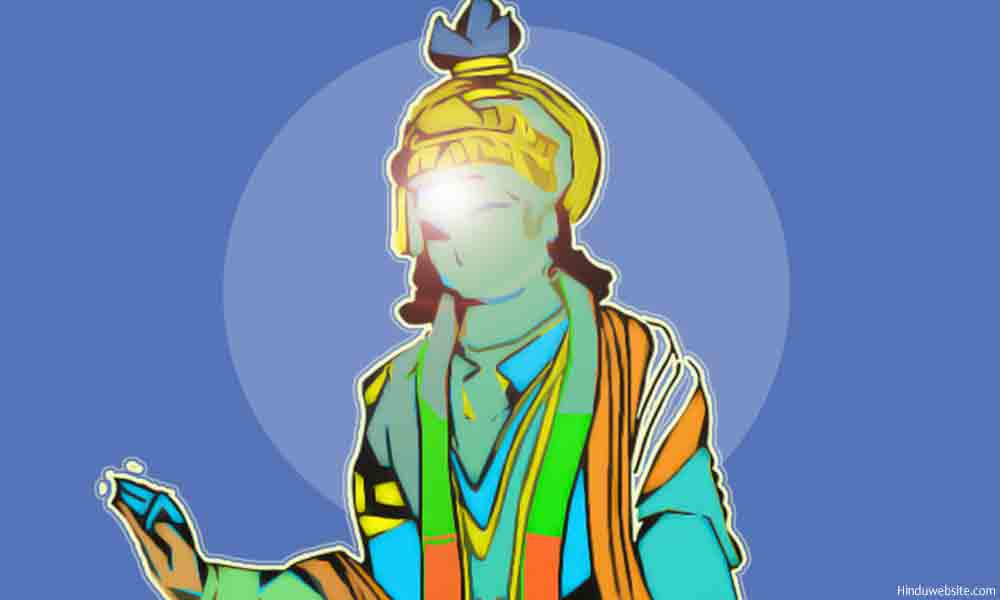
Chapter 2, Verse 5
5. It is better to lead the life of a beggar in this world than to kill these great souls who are my teachers and elders. If we kill them we have to live and enjoy the rest of our lives with blood stained hands.
The ego is a creation of the world and Nature. It is part of the being, not the soul. The ego and the mind are conditioned by the world and by society to engage in worldly activities according to their desires and expectations. Many problems which people face in this world arise because they are afraid of disregarding the social and moral norms and incurring the disapproval of others by telling the truth or being honest. The ego of a person wears many masks to protect the person from criticism and helps him achieve his ends if necessary by hiding his hidden intentions and true nature.
For that end, the ego manipulates human behavior whereby a person resorts to many illogical arguments and justifications to go around facts and achieve his ends, if necessary by sacrificing his values and relationships. In this verse, Arjuna was expressing his fear of losing his reputation, which may outwardly appear as convincing, but in truth he was rationalizing his actions with a few irrational thoughts and false arguments.
The truth is he was unwilling to kill his relations and friends in the battlefield although they did him no good. It was because he did not want to earn a bad reputation and social disapproval. In his anxiety, he conveniently ignored that as a Kshatriya he had an obligatory duty to participate in the war and fight them. He also forgot that a Kshatriya was not expected to abandon the battlefield or refuse to fight.
Most people are familiar with this behavior. People who are forced to take a tough decision in the line of their duties may try to go around it to avoid criticism or disapproval. No one wants to be unpopular, displease someone or go against social norms or popular opinion by taking unpleasant decisions. Yet sometimes you cannot avoid that responsibility because the consequences of not doing anything may be more severe than doing it. It is in such moments your honesty, character and integrity are thoroughly tested.
Such situations do arise in our lives and test our strength and integrity. No one wants to appear bad in the eyes of others or engage in actions which alienate them from others or cause them ignominy. Those who lack courage or moral values engage in self-deception and hypocrisy to justify their actions or avoid taking tough decisions. They may wear masks, hide their real feelings and intentions, use tact and diplomacy, quote morals and ethics or do their best to avoid being direct or confrontational. If at all they appear to be frank and honest, it may be just a ploy to sidetrack the issues or mislead others.
The deceptive behavior stems from the ego, as part of self-preservation. The ego invents its own value system to justify its actions or opinions with convincing arguments. Those values may be in conformity with prevailing norms and values of society, but in reality, they are meant to cloak the truth and save the person from social disapproval. For the ego, religion is just a tool to further its agenda. Because of it, people may outwardly appear religious and moral to earn public acceptance, but inwardly they may be selfish and insincere.
The ego also clouds the intelligence with evil thoughts and selfish desires, whereby one cannot correctly discern truth, exercise discretion or use it for righteous purposes. You can see it happening in many aspects of our society today. Although we consider this to be the information age, unscrupulous people use information to create confusion or mislead others. They take the same event and interpret it differently according to their beliefs and ideologies to support their arguments. As a result, we do not know who is speaking truth or whom we can trust.
Arjuna was not a bad person. He was a warrior of great integrity and reputation. Therefore, we cannot attribute any evil intentions to him. He was just confused, and in that confusion resorted to a few irrational arguments. In this verse, he used an unreasonable argument to justify his action. In his anxiety to avoid fighting great souls like Bhishma and Drona, he overlooked that he had a princely duty and a moral obligation to participate in the war and do his part. A warrior has the obligatory duty to fight and kill anyone in the battlefield or be killed if he loses, irrespective of whether the opponent is an elder, teacher, relation, friend or an important person. Arjuna conveniently ignored it and used out of context a few moral values about killing to avoid bloodshed. In that confusion, he even thought that the profession of begging was better than living with bloodstained hands.
Note : These commentaries are not part of the Bhagavadgita Complete Translation.
Suggestions for Further Reading
- The Samkhya Philosophy and 24 Principles of Creation
- The Bhagavadgita On The Problem Of Sorrow
- The Concept of Atman or Eternal Soul in Hinduism
- The Practice of Atma Yoga Or The Yoga Of Self
- The Problem of Maya Or Illusion and How To Deal With It
- Belief In Atman, The Eternal Soul Or The Inner Self
- Brahman, The Highest God Of Hinduism
- The Bhagavad Gita Original Translations
- The Bhagavadgita, Philosophy and Concepts
- Bhakti yoga or the Yoga of Devotion
- Hinduism And The Evolution of Life And Consciousness
- Why to Study the Bhagavadgita Parts 1 to 4
- The Triple Gunas, Sattva, Rajas and Tamas
- The Practice of Tantra and Tantric Ritual in Hinduism and Buddhism
- The Tradition Of Gurus and Gurukulas in Hinduism
- Origin, Definition and Introduction to Hinduism
- Hinduism, Way of Life, Beliefs and Practices
- A Summary of the Bhagavadgita
- Avatar, the Reincarnation of God Upon Earth
- The Bhagavadgita on Karma, the Law of Actions
- The Mandukya Upanishad
- The Bhagavadgita On The Mind And Its Control
- Symbolic Significance of Numbers in Hinduism
- The Belief of Reincarnation of Soul in Hinduism
- The True Meaning Of Renunciation According To Hinduism
- The Symbolic Significance of Puja Or Worship In Hinduism
- Introduction to the Upanishads of Hinduism
- Origin, Principles, Practice and Types of Yoga
- Hinduism and the Belief in one God
- Essays On Dharma
- Esoteric Mystic Hinduism
- Introduction to Hinduism
- Hindu Way of Life
- Essays On Karma
- Hindu Rites and Rituals
- The Origin of The Sanskrit Language
- Symbolism in Hinduism
- Essays on The Upanishads
- Concepts of Hinduism
- Essays on Atman
- Hindu Festivals
- Spiritual Practice
- Right Living
- Yoga of Sorrow
- Happiness
- Mental Health
- Concepts of Buddhism
- General Essays