Jainism - Philosophy and Doctrine
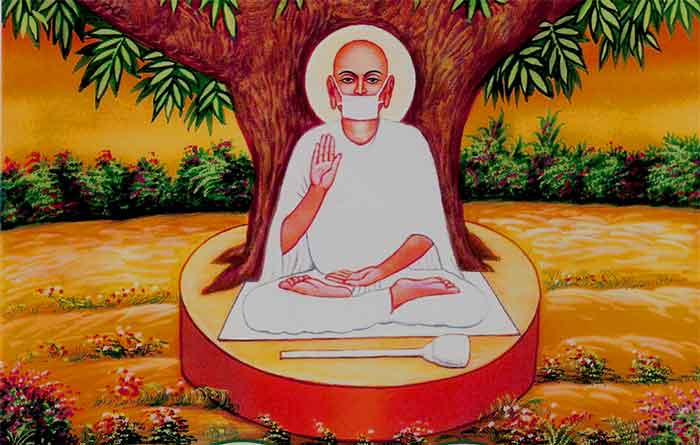
Jain philosophy is one of India’s most ancient and refined philosophical systems, distinguished by its uncompromising adherence to nonviolence, ethical purity, and souls’ liberation. Rooted in the teachings of the Tirthankaras, most notably Vardhamana Mahavira, it presents a worldview in which every living being possesses an eternal, conscious soul (jiva) bound by the subtle matter of karma. Liberation is achieved not through divine intervention but through personal effort, self‑discipline, and the gradual shedding of karmic impurities.
At the heart of Jain metaphysics is a dualistic framework: jiva (consciousness) and ajiva (non‑conscious substances such as matter, space, time, motion, and rest). Association and interaction between these two categories generates bondage, while disciplined restraint dissolves it. Karma, in Jainism, is not merely a moral principle bound by cause-and-effect relationships but a fine material substance that adheres to the soul through passions, desires, and careless actions. Austerity, ethical conduct, and mindfulness prevent new karmic influx and burn away accumulated residues.
Jain ethics is famously expressed through the Five Great Vows, nonviolence, truthfulness, non‑stealing, celibacy, and non‑possessiveness. They constitute the core of Jain Dharma. For monks and nuns the vows are absolute; for lay followers they are ideals and steppingstones to be practiced as guidelines to settle on the path and strengthen their resolve. Nonviolence (ahimsa) is the foundation of all other virtues, extending not only to humans and animals but to the smallest forms of life.
Jain epistemology adds a distinctive dimension through Anekantavada, the doctrine of many‑sided reality, which teaches that truth is complex and cannot be captured from a single viewpoint. Its related methods, Syadavada and Nayavada, encourage intellectual humility and contextual understanding.
Together, these principles form a coherent path of ethical living, disciplined awareness, and spiritual purification, guiding the aspirant toward the soul’s natural state of infinite knowledge, bliss, and freedom. Jain tradition is the most difficult to practice. Yet, it is as consistent as it is uncompromising in its goals to rise to the highest levels of purification as a precondition to achieve liberation.
The Nigantha Nataputta, sir, who knows and sees all things, who claims perfect knowledge and faith (in the following terms) : 'walking and standing, sleeping or waking, I am always possessed of perfect knowledge and faith' teaches the annihilation by austerities of the old Karma, and the prevention by in activity of new Karma. When Karma ceases, misery ceases ; when misery ceases, perception ceases ; when perception ceases, every misery will come to an end. In this way a man is saved by pure annihilation of sin (niggara) which is really effective. Anguttara Nikaya
'The true ascetic should possess twenty-seven qualities, for he must keep the five vows, never eat at night, protect all living things, control his five senses, renounce greed, practise forgiveness, possess high ideals, and inspect everything he uses to make sure that no insect life is injured. He must also be self-denying and carefully keep the three gupti, he must endure hardships in the twenty-two ways, and bear suffering till death.' - A Magadhi Sloka