
Science and Religion in Ancient India
Since the earliest times, religion has always been a major obstacle in our progress upon earth. We have not been able to pursue science fully because of our religious beliefs and strong convictions about man and God. Religion, which is supposed to ennoble man and refine his behavior, created a number of problems for the humankind.
Instead of creating a peaceful and harmonious society, which it always promised under different names and in disguises, it created discard and wars among people and nations. In the orient, religion lulled people into the belief that the world was an unreal and unsuitable place to live. In the west, it prevented people from studying the world objectively and acknowledging scientific facts that were in conflict with established religious beliefs.
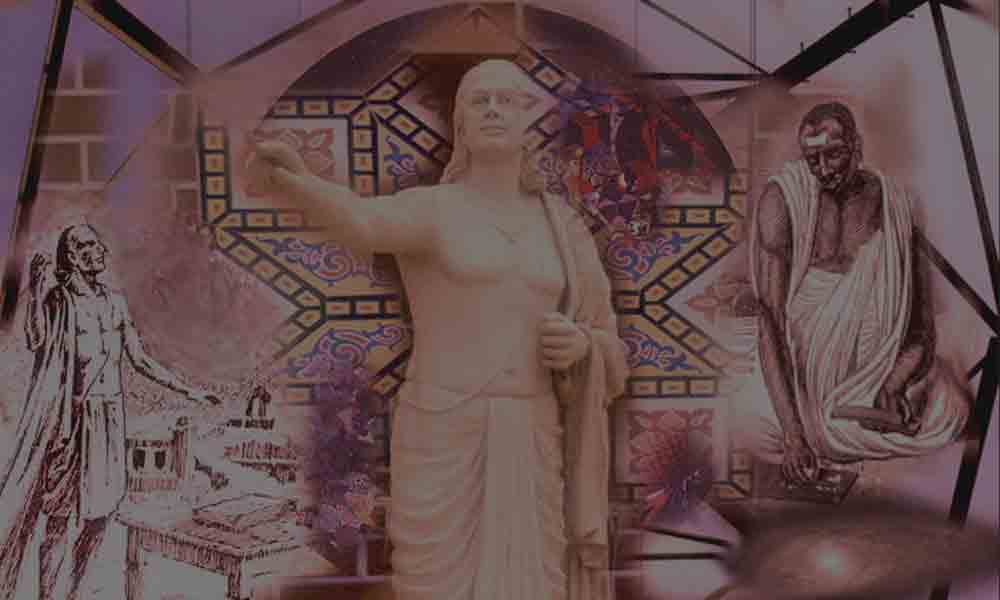
Compared to the western world, in ancient India people pursued scientific knowledge with greater freedom. They made great advances in understanding the elements, metals, chemicals, health, medicine, space, astronomy, mathematics, constellations, animal sciences, yoga and magic. There were however many limitations to what they learned. They were not able to unravel the mysteries of the world completely because they pursued knowledge primarily to overcome their ignorance of the Self and attain liberation. Knowledge of the Self was considered the most superior, while all other types of knowledge were subordinated to it.
Pursuit of any knowledge that was not meant to liberate people from the cycle of births and deaths or the impermanence and delusion of the world was considered adharma or irreligious. If people studied Nature or the material world, it was primarily to understand its mechanism and use such knowledge to transform the mind and body and escape from its control. They viewed the world as a combination of pure consciousness and matter or the Supreme Self (Purusa) and Prakriti (Nature). The whole material universe was viewed as the Field (kshetra), and God or Brahman as the Knower of the Field (kshetrajna). In the beings they were represented by the body and the Self respectively. The study of the world and Nature was not discouraged as long as it was subordinated to the primary aim of acquiring knowledge that would lead to liberation.
However, while this approach gave them a great opportunity to study the world and understand its essential significance from a theological and philosophical perspective, it did not give them the required freedom or objectivity to pursue scientific truths or practice scientific methods of study and exploration. The following factors played a major role in this regard.
1. All schools acknowledged the Vedas as supreme. If a fact was not corroborated by the Vedas, it was summarily rejected. This discouraged people from going beyond the religious knowledge that was enshrined in the scriptures and explore things anew.
2. People were grounded in certain beliefs and superstitions, which prevented them from looking at the world more objectively or truthfully. They were not willing to accept any ideas that stood in stark contrast to their own.
3. Education was geared to teach religious or scriptural knowledge. There was no special incentive for students to pursue science or related fields. There was also no patronage for those who pursued them. The rulers supported those who had the ability to assist them with their religious knowledge or spiritual power to enhance their power and prestige and ignored the rest.
4. Society was not open. People believed in keeping professional secrets to themselves or within their children. They practiced professions based on caste lines and tried to keep professional secrets within their own families or caste based communities. Therefore, there was no free exchange of ideas.
These limitations stifled the pursuit of science and technology in ancient India. Although, compared to other places, they made great advances, it was not adequate to herald the kind of radical changes which were witnessed in Europe much later. Religious beliefs played a prominent role in ancient Hindu society in understanding the world and human nature. At the same time it prevented people from pursuing truth whole heartedly. The problem still exists, not just in Hindu society, but everywhere. Even today people have reservations about the pursuit of certain scientific studies, which in their opinion may lead to dangerous consequences and which may endanger our very survival. Their apprehensions are well justified because we have seen in the past how science and technology can be used or misused for destructive and harmful purposes.
Religion is still an obstacle in our study and understanding of the world truthfully; and perhaps it will continue to remain so until we manage to stretch our minds and our methods of study beyond the present limitations and until we become more humane, tolerant and rational. As the only known intelligent specifies in the known part of the universe, we have yet to learn to play the role of guardians of life of not just humans but all life forms. We have to learn to believe in the good of human beings and make it a reality, rather than looking at an imaginary heaven as the only place worth living. So far we have treated our world as a dark and miserable place from which we need an escape, ascribing all the good and bright qualities to the higher worlds of light and happiness, of which we have no clue except what is stated in the scriptures.
The earth is the only known planet in the universe where life exists in such great diversity and which we can perceive here and now in the backdrop of many astounding images of incredible and wondrous Nature. Every living entity that exists on earth is precious and unique. We need to preserve the earth and its rich heritage in honor of God and His creation, instead of wistfully aspiring for its destruction in the hope of entering rapturously into a world of eternity.
Suggestions for Further Reading
- The Arthashastra of Kautilya
- Atheism in ancient India
- Distortions in Indian History, Dealing With Core Issues
- Fate, Freewill and Fatalism in Hinduism
- Hinduism and socialism
- Vedic Sacrifice
- The Life and Philosophy of Pythagoras
- Pythagorean Mathematics
- The Nature of Supermind by Sri Aurobindo
- Sri Aurobindo on Astrology
- Essays On Dharma
- Esoteric Mystic Hinduism
- Introduction to Hinduism
- Hindu Way of Life
- Essays On Karma
- Hindu Rites and Rituals
- The Origin of The Sanskrit Language
- Symbolism in Hinduism
- Essays on The Upanishads
- Concepts of Hinduism
- Essays on Atman
- Hindu Festivals
- Spiritual Practice
- Right Living
- Yoga of Sorrow
- Happiness
- Mental Health
- Concepts of Buddhism
- General Essays