Texts on Taoism or Daoism: The Tao Te Ching and Related Scriptures
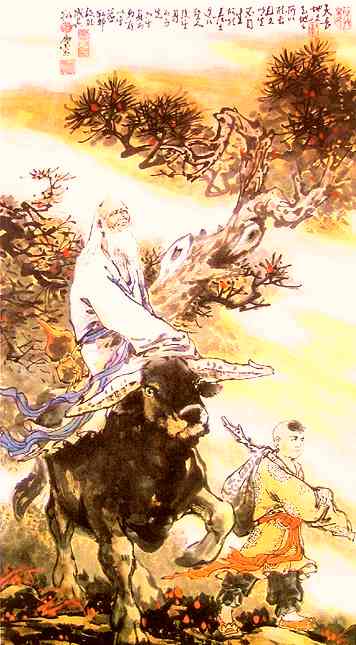
Summary: This page presents a scholarly compilation of texts on Taoism and Daoism, with particular focus on the Tao Te Ching (Daodejing), the foundational Chinese classic traditionally attributed to Laozi (Lao Tzu) in the 6th century BCE. The Tao Te Ching, whose name derives from its opening words meaning "way," "virtue," and "classic," remains a central text in Eastern philosophy. Readers will find detailed information about this seminal work's origins, authorship debates, and its significance within Taoist tradition.
The Tao Te Ching, more accurately rendered in modern Pinyin (the official Romanization system for Standard Mandarin Chinese) as the Daodejing, is one of the foundational works of Chinese thought and one of the most translated books in world literature. The title is usually understood as “The Classic of the Way and Virtue (or Power),” referring to its two key ideas: dao, the Way or underlying order of reality, and de, the inner potency, virtue, or efficacy through which that Way is embodied in life and government. In traditional Chinese history the text was attributed to Lao-tzu, or Laozi, the “Old Master,” who was said to have lived in the sixth century BCE and to have served as an archivist at the Zhou court. Yet modern scholarship treats that attribution cautiously and generally understands the work as a layered composition that took shape over time.
The historical background of the Tao Te Ching is crucial to understanding its tone. It emerged from an age in which the authority of the Zhou dynasty had weakened and competing states struggled for power. Thinkers of the period proposed different remedies for disorder: Confucians emphasized ritual, ethics, and cultivated social roles; Legalists stressed law, discipline, and centralized control; Mohists advocated universal concern and practical utility. The Tao Te Ching offers a strikingly different response. It presents an ideal of restraint rather than force, simplicity rather than display, and alignment with natural processes rather than domination. The ruler praised in the text governs with minimal interference, allowing people to live without excessive burdens, while the sage acts through wuwei, often translated “non-action,” though the phrase more accurately suggests action that is unforced, non-coercive, and in harmony with the grain of things. This teaching did not call for passivity in the modern sense; rather, it criticized artificiality, excess ambition, and policies that disturb the deeper balance of life.
Important archaeological discoveries in the twentieth century greatly changed modern understanding of the book. The silk manuscripts excavated at Mawangdui in 1973, dating from the second century BCE, preserve two early versions of the text and notably place the De section before the Dao section. Even more significant for dating are the bamboo slips found at Guodian in 1993, which are generally dated to around the late fourth century BCE and contain portions closely related to the received text. These finds show that sayings associated with the Laozi were already circulating before the Qin and Han imperial periods, even if the final 81-chapter form became fixed later. They also confirm that the text had a fluid transmission history: chapter order, wording, and arrangement varied, and early manuscripts were not always divided exactly as in later editions. For this reason, scholars today often distinguish between the traditional figure of Lao-tzu and the historical formation of the text itself. The classic name Tao Te Ching became common in the Han period, while in earlier sources the work was often referred to simply as the Laozi.
Philosophically, the power of the Tao Te Ching lies in its paradoxical language. It repeatedly claims that what is soft overcomes what is hard, that emptiness is useful, and that the highest excellence avoids self-assertion. Such aphorisms are not ornamental; they express a worldview in which reality is dynamic, relational, and resistant to rigid categories. The dao cannot be fully named because language fixes what is in fact prior to all distinctions. The text therefore uses images of water, valleys, uncarved wood, and the female or maternal principle to suggest generative power without aggression. Water is especially important because it nourishes all things while seeking the lowest places, thereby becoming a model of humility and effective strength. This combination of metaphysical suggestiveness and practical advice helped the work speak at once to rulers, recluses, philosophers, and religious seekers. In political thought it could be read as counsel for prudent government; in personal ethics as a guide to modesty, self-cultivation, and freedom from acquisitiveness; and in later religious Daoism as a sacred scripture with cosmological and spiritual significance.
The influence of the Tao Te Ching on Chinese civilization has been immense. It became a central text of both philosophical and religious Daoism, but its language and concepts also entered the vocabulary of other traditions. When Buddhism entered China during the Han period and developed further in the centuries that followed, translators and interpreters often used Daoist terms to convey Buddhist ideas to Chinese readers. Beyond philosophy and religion, the work inspired poetry, painting, calligraphy, landscape aesthetics, medicine, martial traditions, and gardening, all of which could draw on its appreciation of balance, natural process, and the hidden power of stillness.
In the modern world, the text has traveled far beyond East Asia and has been read as philosophy, wisdom literature, political reflection, and spiritual meditation. At the same time, historical scholarship distinguishes between the legendary Lao-tzu and the long process of composition, compilation, commentary, and transmission that produced the received work. In our Sacredscript folder, we have only one text: the Tao-te Ching by Lao-tzu (580–500 BCE), translated by J. Legge (Sacred Books of the East, Vol. 39) [1891], which we are presenting below.
Tao-te Ching,by Lao-tzu (580 - 500 BC).
Taoism along with Buddhism and Confucianism dominated the ancient and medieval Chinese thought and spiritual life. Even today it has not lost its appeal and still widely read by many in various parts of the world. This translation is rendered by J. Legge (Sacred Books of the East, Vol 39) [1891]
Note: This introduciton was partly produced with AI assistance and reviewed for accuracy and improvements.