
The True Foundation of Spiritual Life
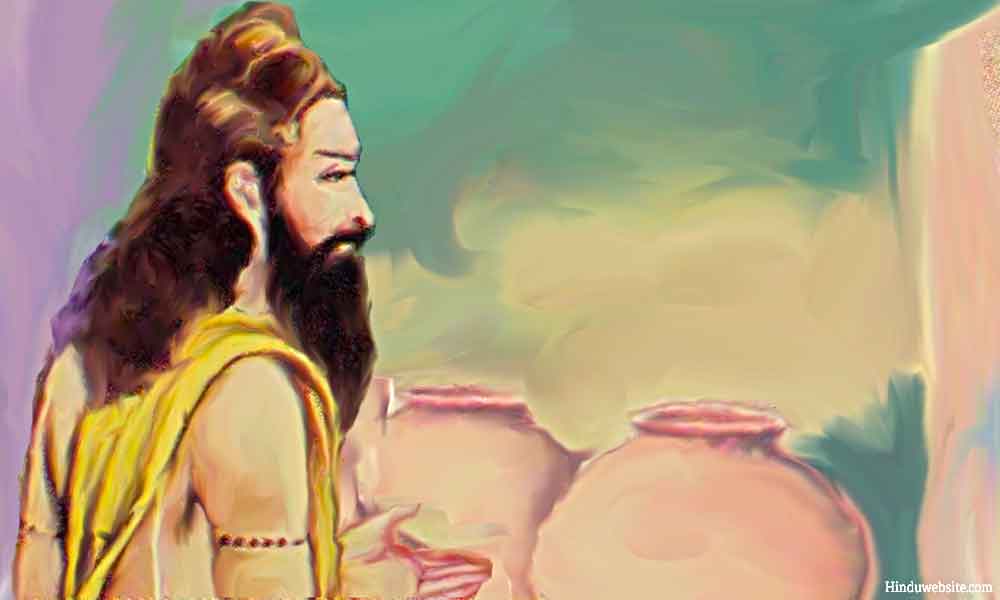
There is a bridge between time and eternity; and this bridge is Atman, the spirit of man. Neither day nor light cross that bridge, nor old age, nor death, nor sorrow. Evil or sin cannot cross that bridge, because the world of the Spirit is pure. This is why when this bridge has been crossed, the eyes of the blind can see, the wounds of the wounded are healed, and the sick man becomes whole from his sickness - Chandogya Upanishad
May we follow the path of goodness as the sun and the moon follow their path. May we associate again and again with liberal, the non-harming, the knowing. - Rig Veda 51.15
May good thoughts come to us from every side, pure, unobstructed, over flowing - Rig Veda, 89.1
Spirituality truly Means
Whether we are in pursuit of material success or spiritual enlightenment, virtue and morality matter. Spirituality truly means morality or the practice of morality. It is the first prerequisite for spiritual life.
Spirituality means being spiritual in nature. It involves the practice of purity and religiosity for inner transformation to bring out the best and the highest in the human personality. In spiritual life you focus upon you inner Self rather than your mind and body. You consider your inner Self as your true body. It represent the best and the highest and the very godliness in you. Spiritual people are primarily moral people because morality is the true foundation of spirituality. Since morality is the foundation to manifest the qualities of God in you, all religions preach righteous conduct and how to practice it by observing various moral percepts.
Peace and happiness and self-realization can be achieved only with a strong moral foundation. Practice of virtue inculcates a sense of social and moral responsibility in our collective consciousness and certain orderliness and discipline in our behavior, without which we cannot survive or live peacefully upon earth. We have the potential either to be a god or a demon. In each of us, good and evil tendencies wage a continuous battle for control and supremacy and the struggle intensifies as our world becomes increasingly chaotic. Each and every moment in our lives, we are presented with this choice, to choose between the good and the evil and the right and wrong. What we choose determines the course of our lives and the fate of our world. The progress of our civilization and our survival as a species rest upon the simple belief that doing good, being good and staying good on our part would lead to our collective good.
We cannot act irresponsibly towards one another and expect some good to come out of it eventually. Our interconnectedness makes it almost impossible to isolate evil in an individual and deal with it as if it does not belong here. As the world is increasingly drawn towards materialism, the practice of virtue becomes all the more relevant. A great saivite guru once remarked that in the days of the Ramayana, the demons used to live in distant lands and enter the human world once in a while to cause trouble or disturb the rishis. In the days of the Mahabharata, they began participating in the human affairs in the guise of friends and family. Nowadays, in the age of Kali, they had actually started living inside us. This is a sad development but true. Evil is now ensconced deep in the consciousness of everyone. To be free from it, we have to fight the great epic battles of Ramayana and Mahabharata within ourselves by invoking the power of God and remaining on the path of virtue.
Religion and Morality
All religions recognize the importance of morality in our lives. On the surface, it looks like religion and morality are inseparable. But this is not true. We can say religion and morality are somewhat vaguely interrelated and the practice of one does not necessarily mean the practice of the other. For instance, a religious person need not be moral and a moral person need not be religious. Religion may try to regulate the moral life of an individual, but a person cannot be called moral just because he has taken to religion or practicing it. We cannot also say that an atheist is immoral simply because he or she lacks faith, or argue that someone who has committed a mortal sin is virtuous just because he happens to be a monk or a religious figure.
The line of thought that separates religion from morality is of recent origin in the west, following the dawning of the age of reason and the advancement of scientific thinking, but it has been prevalent in Asia since ancient times. Some of the notable religions and philosophies of the east, including Buddhism and Jainism, have been atheistic. The Samkhya and Yoga philosophies do not believe in God, but they teach the practice of morality as a necessary condition for the liberation of individual beings. Even though we may argue that religion and morality are distinct subjects, we cannot fail to notice the important role played by all major world religions in keeping the world on the side of righteousness and making people feel responsible for their actions. A state may introduce laws to make its people follow certain rules. But it cannot replace religion because it cannot influence the inner world of its subjects. Law can only enforce legal obligations we are expected to honor, not moral conduct.
Morality in World Religions
In Hinduism, dharma (observation of religious and moral law) is the first of the four chief aims (Purusharthas) of human life1. Morality is also implied in the theory of karma, according to which each individual is responsible for his or her actions. Hindu scriptures declare that the people indulge in various actions according to the three qualities, namely sattva (purity), rajas (vitality) and tamas (darkness) and suffer from the consequences of their actions in proportion to the predominant quality present in them. The scriptures recommend that to escape from the hand of karma one should strive to improve the quality of sattva by cultivating virtue and doing good deeds.
The Eightfold Path of Buddhism is basically a course in virtuous living on the path of righteousness (dharma), which would lead to Nirvana or liberation. The Eightfold Path consists of right understanding, right thought, right speech, right action, right livelihood, right effort, right mindfulness and right concentration. Sila or right conduct is an important concept of Buddhism, which can be practiced through right speech, right action and right livelihood. Dhammapada declares, "The evil-doer mourns in this world, and he mourns in the next, he mourns in both. He mourns and suffers when he sees the evil of his own work."
Jainism declares that without proper conduct, there is no liberation2. In Jainism both the lay followers and monks and nuns have to undertake certain vows and follow a strict code of conduct for their spiritual development and ultimate liberation3. Right conduct, along with right beliefs and right knowledge are considered to be the Three Jewels, or the three guiding principles of Jainism. Right conduct is not a mere mechanical obedience to virtue, but a spontaneous outcome of inner purification achieved through the practice of austerities and penances. One can stop (samvara) the entry of karmic substance into the soul, through the purification of the mind and the body, by good conduct and by developing virtues as prescribed in the scriptures.
In Sikhism there is an emphasis on cultivation of virtues and removal of vices. Guru Nanak, the founder of Sikhism, was known for his stand against superstition and social inequality and his emphasis on good conduct, inner purity and devotion to God. Speaking against outward religious observances, he said, "Let good conduct be thy fasting." Guru Arjun Dev, one of the notable Sikh Gurus, emphasized self-control and inner discipline. He declared, "Whosoever controls the mind, he is a pilgrim." According to Sikhism, lust, greed, attachment, anger and pride are be the five cardinal vices, which need to be overcome through prayer, service and charity.
In Islam, good deeds are as important as the five pillars of practices4. Prophet Muhammad declared that on the Judgment day men would be judged by their actions. He said to have remarked, "God does not judge you according to your appearance and your wealth, but he looks at your hearts and looks into your deeds." Regarding morals, he said, "The most perfect of the believers in faith are the best of them in morals and the best among them are those who are best to their wives." The Quran says, "Whoever does a good deed, he shall be repaid ten-fold; and whoever does evil, he shall be repaid with evil."
If Karma is central to Hinduism, Buddhism and Jainism, sin is central to Christianity. According to its beliefs, sin is what keeps man from reaching God. It is disobeying His law, turning away from Him and His love, indulging in wrong doings and challenging His supremacy. One can absolve oneself from sin by penitence and by making a sincere confession before a priest and not repeating it again. The Sermon on the Mount is perhaps one of the best discourses on morals ever preached by a Prophet. The Bible is not just a book of fables and parables about the life of Jesus and other Christians, but a book of virtue. The Ten Commandments of the Old Testament serve as a true measure of one's conduct upon earth against the law of God.
According to Judaism the world stands upon three things, which are very much like the three Jewels of Jainism: Torah (the holy knowledge), Avodah (religious practices) and Gemilut chasadim (loving deeds). Moses had a tough time trying to teach his men follow the righteous path as chosen by God for the Israelites. Time and again they betrayed him and tested his patience, as they wandered in the wilderness in search of their true land. The Ten Commandments of the Old Testament and the 613 commandments found in the Levictus and other books are but long lists of divine laws meant to regulate the lives of Jewish people. They are not meant to secure a heavenly world some time in future, but a holy and perfect life here and now by protecting them from the evil and worldly influences.
Cultivation of Virtues
All religions prescribe a code of conduct for their followers to help them achieve liberation. While there may be wide variations in what each religion considers as appropriate and necessary for the good of their followers, there are certain norms religions to discern the right from the wrong and to decided acceptable norms of human behavior and religious conduct. The prescribe rules are about what scriptures you should study and what you should avoid and what knowledge you should acquire and what you should renounce. There are rules concerning how to validate standards (pramana) of knowledge and rely upon them. In some traditions knowledge is categorized into higher knowledge and lower knowledge, one that leads to liberation and the other that leads to worldly success. It is also classified sometimes as right knowledge and false knowledge, one that is based upon truth and the other that is rooted in ignorance and delusion.
There are rules regarding how to acquire knowledge and by which methods. Self-study (svadhyaya) is an established practice in some traditions to gain mental purity and proper perspective of religious and spiritual concepts. There are also rules and procedures about whose words, opinions and interpretations one should accept as final in case of doubt and disbelief. Every religion upholds one or more texts as the final authority or the very revelation of God for people to follow. Those who cannot study them are asked to learn from others by listening to them. Certain texts are prohibited for study in all traditions because they seem to arouse negative passions or contradict what the traditions uphold as the authority.
There are norms concerning how to approach God, how to worship Him and relate with Him mentally and spiritually, what we can seek from Him and what we should not, how we should surrender to Him and what we should offer to Him as a token of our surrender and devotion. How God should be viewed and worshipped are major issues upon which our religions are divided. Every religion upholds certain methods of worship and prohibits others. Prayer is the most common method. Personal relationship with God is also encouraged by all.
We also have norms in all traditions about how to purify the lower nature and what methods we should follow. They aim to control the baser instincts and human passions and cultivate equanimity towards the pairs of opposites. They uphold certain qualities as divine and such as detachment, truthfulness, non-violence, non-stealing, devotion, surrender to God, compassion, selflessness, charity, dispassion, self-control, humility as virtues while they condemn selfishness, egoism, pride, greed, envy, cruelty and anger as evil and immortal. They distinguish between the behavior which is conducive to spiritual liberation and that which is an obstacle. Good behavior is encouraged with the promise of heavenly rewards and eternal freedom while negative behavior is discouraged with the threat of eternal condemnation and continuous suffering. In the Bhagavadgita5 Krishna says, "Divine virtues are for liberation, but non-divine qualities are regarded as binding." We find similar approach in all other religions.
All religions prescribe norm for right conduct. Every religion tells us how important it is to treat others with respect and dignity as an aspect of God. They encourage their followers live selflessly, surrender to God and spread good thoughts everywhere. They prescribe norms and daily code of conduct, so that people can do their religious duty and fulfill their personal obligations towards themselves, others and also God.
Transcending Morality
On our path to spiritual freedom we reach a stage where we have to overcome every attachment including our attachment to our religious mindset and moral values. We know that like everything else in the material and objective world, our morals and values, and our notions of what is right and what is wrong, are all relative to some standard or belief or context which we uphold as the true measure. Our moral and material values serve a definite purpose in the progress or our civilization and in maintaining certain order and structure in our society. They are immensely helpful in preparing us for our spiritual liberation and promoting the right values that are necessary to deal with our baser instincts and selfishness. But they may not always stand the test of truth and may not always serve a righteous cause. For example what is right for one may be wrong for another. What is victory for one in a war, may be a cruel act of imperialism for another. What one considers as justice in hanging a worst criminal may be an appalling example of human judgment. Apart from these moral dilemmas, at times we also have to deal with ambiguity, where our standards of knowledge and morality are not adequate enough to present us a clear picture of right and wrong. These are the gray areas about our scriptures also do not provide right solutions. While practice of morality is an essential precondition for spiritual practice, once a certain level of perfection is reached, one should grow out of one’s attachments for a certain way of life and certain values in order to become fully liberated. This does not mean that one can throw all caution to winds and ignore the very laws that lit the path of enlightenment. It only means after a certain state in the spiritual practice the aspirants should stop being judgmental and opinionated, with a holier than thou attitude. They should renounce their personal prejudices and moral values also as a part of their effort to cultivate tolerance, understanding, compassion and forgiveness.
One should not come to spiritualism out of despair or to escape from the harsh realities of life. One may find some initial comfort in such a choice, but in the end it will only lead to more pain and suffering. You may escape into the closed walls of an ashram from the world, but you cannot escape from the world that exists in you. Spiritual practice is not about observing the established norms of external conduct, without corresponding inner transformation. One cannot build spiritual life on a shaky foundation that is devoid of morality and inner purity. Whether it is in Hinduism, Buddhism or Islam or Christianity, the practice of morality is an essential and important part of one’s spiritual transformation. Whatever may be the religion you practice, soul-centered life is much harder to practice than many people imagine. It is a path riddled with innumerable hardship and challenges, where you have to systematically deny yourself what the world seeks. A deeply religious and disciplined life is the most difficult of all lifestyles. A spiritual person has a responsibility not towards himself but the entire world. He should never betray the trust the world reposes in him on account of his outward spiritual conduct.
Suggestions for Further Reading
- Healing Through Compassion
- Creating Harmony In You And Around You
- Spiritual Laws That Govern Our Lives
- Are You Different From Others?
- A Healthy Recipe for Life
- How You Can Attract Abundance, Healing Others
- The Power of Intention
- Finding Your Peace and Harmony
- Three Important Mind Tools
- Truths About Pain and Suffering
- Spirituality For Worldly People
- Finding Your Soul
- Friendship with God
- God As Your Role Model
- Hinduism, Buddhism, Jainism, Sikhism, Zoroastrianism and Other Resources
- Famous Quotations on Spirituality
- Seeing God Everywhere
- Mental Liberation: Achieving Mental Freedom
- Individuality in the Five Sheaths (Kosas) of the Body
- Hinduwebsite - Essays on Practical Spirituality
- Present Moment Awareness in Everyday Life
- Emptying Your Mind and Becoming Zero
- The Bhagavad-Gita on Suffering
- The Way of Peace by James Allen
- Awakening Your Mind and Body To Higher Consciousness
- For the Ego Religion is a Tool
- Conquering Fear
- Healing Your Consciousness - Advanced Self-healing Techniques
- How to Solve Problems With Spiritual Help?
- Relevance of Scriptures in Modern Life
- Making Peace With The Imperfections of Your Existence
- Materialism and Spirituality, The Two Paths of Life
- The Soul and the Mind
- Morality and Nature in Good Vs. Evil
- What is Your Natural State of Mind?
- Why Gandhi's Non-violence Was not True Non-violence
- Objective Concentration Techniques
- The Soul, The Ego and The Process of Liberation
- Tapping Into The Hidden Intelligence
- Ten Reflections For a Spiritual Person
- The Mind and The Illusion of Reality
- Books on Vegetarian Cooking
- Is Enlightenment the Right Word for Spiritual Liberation?
- Who Am I?
- Why do we want our World to End?
- Why is Life Such a Struggle?
- The Witness Self or the Observing Self
- Essays On Dharma
- Esoteric Mystic Hinduism
- Introduction to Hinduism
- Hindu Way of Life
- Essays On Karma
- Hindu Rites and Rituals
- The Origin of The Sanskrit Language
- Symbolism in Hinduism
- Essays on The Upanishads
- Concepts of Hinduism
- Essays on Atman
- Hindu Festivals
- Spiritual Practice
- Right Living
- Yoga of Sorrow
- Happiness
- Mental Health
- Concepts of Buddhism
- General Essays