
Sikhism, Basic Concepts
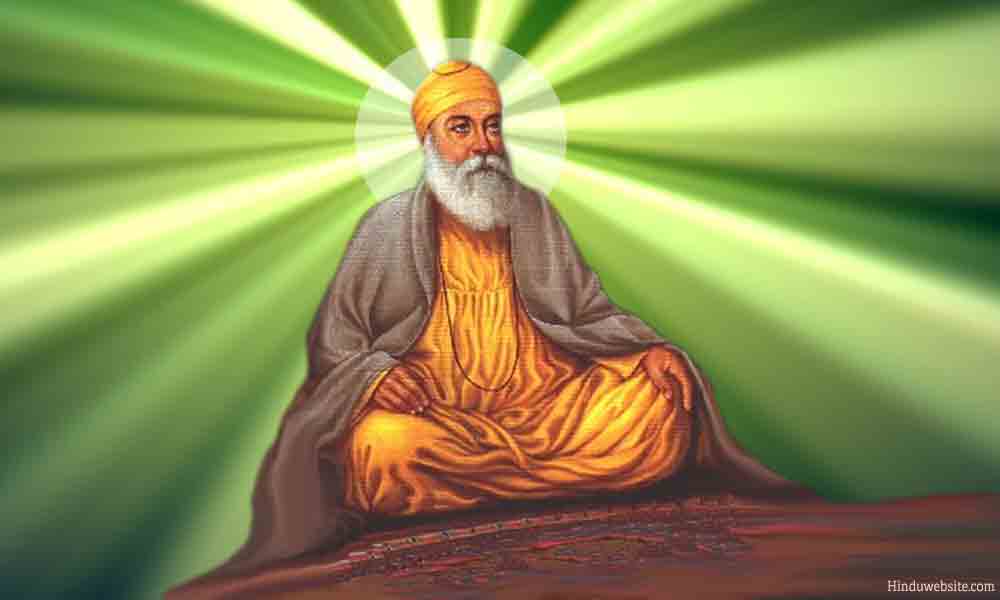
An Artistic Impression of Guru Nanak, the Founder of Sikhism
Sikhism originated in the 15th Century from the teachings of its founder Guru Nanak, who was born as a Hindu but renounced its major beliefs at an early age to find a path of his own. The result was Sikhism, which is now the fifth largest organized world religion. The religion was born in the Punjab Province of the Indian Subcontinent, which is now partly in Pakistan and partly in India. It continues to be the dominant religion of the Punjab state of India. The basis of Sikhism is Adi Granth or the Guru Granth Sahib. It is the holy book of the Sikhs, consisting of a vast collection of hymns and sacred wisdom from several Hindu scriptures and the writings of Sikh Gurus
While we do not clearly know the true meaning of Sikh, Sikhism, which is an English word, is derived from the teachings of its ten Gurus. Hence it is also known as Gurumat, meaning the opinions or the thinking of the gurus. Guru Grath Sahib is a truly a collection of gurumat.
Sikhism is centered around basic tenet that God is one, while he may have numerous names and forms. Another important concept of Sikhism is community service and equality of human beings. The religion is historically known for the tradition of Langars, or community kitchens where food is freely distributed to one and all. Sikhism is also an inclusive religion and holds all religions as valid and rejects the division of people based upon their color or creed.
Although Sikhism has a historic and geographic affinity with Hinduism, it is not derived from Hinduism. In contrast to Hinduism, it is monotheistic religion and do not approve worship of images, since it holds that God is infinite, formless, invisible, eternal and indestructible. Sikhism has also elements of Islam, especially with regard to the nature of God.
The following are a few important concepts of Sikhism
God
Sikhism is affirmatively monotheistic and acknowledges a single supreme universal God who has no form, no particular name, and no second. God the one Supreme Reality is symbolized by Omkar. Hence he is also known as Ek Omkar, which is interpreted by some scholars as ekk Oankar, meaning one God (Omkar Brahman) without form. The Guru Granth Sahib begins with this phrase as part of the seed mantra (mulmantra), which is reproduced below. It portrays the view of God as envisioned in Sikhism.
ikk ōnkār satināmu karatā puraku nirapǎ'u niraver akāl mūrat ajūnī sepàng gurprasād
One Omkar, having the name of Truth, Creator of all, Without Fear, Without Hatred, Eternal, Unborn, Self-existent, and the giver of Guru's blessings.
God is the creator of all, but the purpose of his creation none can fathom. His creation is neither a projection nor a dream, but a reality. However, it is impermanent and subject to change and decay.
Adi Granth or Guru Granth Sahib
The sacred book of the Sikhs containing 1430 pages and 5894 sayings and hymns of various Sikh gurus, 15 Hindu and Muslim saints form various parts of India. Of these Guru Nanak contributed 974 hymns composed in 18 ragas. Compiled in the sixteenth century and composed entirely in lyrical form, the hymns are mostly devotional in nature and are sung by the Sikh devotees melodiously with utmost devotion, love and humility during various public or private ceremonies and functions. The Guru Granth Sahib can be truly called the essence of all religions, since it contains hymns and verses from many sacred books of various religions and sects of Hinduism. You can read the entire translation of this scripture from our Sacred Scriptures Archives.
Japji or Japji Sahib
Japji is the thirty eight short poems of Nanak which appear at the beginning of the Adi Granth, which contain the essential teachings and beliefs of Sikhism. It is derived from the Sanskrit word Japa, meaning chanting or recitation. Japji begins with the Mulmantra or the Seed mantra, which is mentioned before. The poems are rendered in various ragas (musical modes) and are sung by the devotees as a mark of devotion and respect to the Guru. For the Sikhs the Japji constitutes the essence of Sikhism. It recitation would lead to understanding, knowledge and wisdom. Regarding Japji Sahib, Taoshobuddha wrote thus, "Japji Sahib is the expression of Truth as envisaged by Nanak. The entire Sikh religion revolves around Japji Sahib and Nanak. Both Nanak and Japji Sahib are inseparable. Both are the two sides of the same coin. Ek Onkar Satnma is the heartbeat of Nanak and Japji Sahib is the fragrance of the inner flowering."
Mul Mantra
Placed at the very beginning of the Adi Granth, by Guru Arjun, the Mulmantra is an invocation to Supreme God with a reference to some of His attributes. It reads as follows:
ikk ōnkār satināmu karatā puraku nirapǎ'u niraver akāl mūrat ajūnī sepàng gurprasād
One Omkar, having the name of Truth, Creator of all, Without Fear, Without Hatred, Eternal, Unborn, Self-existent, and the giver of Guru's blessings.
The Mul Mantra is a declaration of faith, an acknowledgement of God in His Supreme Glory, and an expression of devotion to the Supreme Being.
Hukum
It is the inviolable divine will or commandment. According to the Adigranth, the Hukum (order) of God is responsible for the entire creation and the existence of every thing in this world. All things, our joys as well as our suffering, prosperity and adversity, births and deaths, transmigration of beings, every thing that was, that is and that is yet to come, happen because of the divine Hukum. The Hukum is the ultimate and there is nothing beyond it or comparable to it.
Naam
In Sikhism we frequently come across references to the word naam, which when literally translated means, "the name". As Nanak affirms, all names are created by human beings, but there is one name that is not given by any human, and it is Omkar. Omkar is authentic, original, eternal, and transcendental. Ek Omkar is the true name (Sat Naam). It is through the constant and sincere repetition and remembrance of the Name (Naam Japa) that God (rub) reveals Himself to the human beings. The constant repetition of God's name is the door way to salvation and freedom from the cycle of birth and deaths. Japa is an ancient Indian practice. In Sikhism the emphasis is more upon listening and the inward remembrance of God's name rather than the outward physical and mechanical repetition of his name.
Shabad
While Naam Japa is mostly an inward and meditative practice, Shabak Kirtan is mostly an outward expression of devotion in the form of singing. Hence, the practice is commonly known as Shabad kirtan. Shabad literally means the word., and in the context of Sikhism it is either the word of God or the holy book, the Guru Granth Sahib. It has the same significance as Naam Japa in the religious life of an individual. It is through hearing the word and understanding it and by repeating the Name that one becomes free from the effects of previous karmas. Shabad kirtan, singing the glorious Name of God is thus an important and essential religious activity of a devoted Sikh. The repetition of word is not just an outward mechanical activity, but something very deeper and devotional that brings one in touch with God. Singing is one part of the practice and listening is the other part. By listening the names of God with attention and devotion one attains peace and tranquility. The Adi Granth affirms that by listening to the Word a seeker becomes equal to Shiva, Brahma and Indra. By listening to it he becomes praiseworthy, learns the secrets of Yoga, acquires the wisdom contained in the sacred scriptures, overcomes sorrow and suffering, gains truth, fulfillment and knowledge. Listening to the word has the effect of bathing in all the holy places. No one can truly comprehend the grandeur of it, nor can describe it truly. It can be understood only through our thoughts, by concentrating our minds upon it. Nanank's prayer is not a simple worldly prayer seeking things from God. In that prayer there is no desire, no ego, no seeking, and no attempt to be free from sins or become virtuous. It is a means to remember God, to transcend the limitations and reach the imperishable (akshar). The prayers are not meant to please God. He does not need our prayers. It is the means to reach the inner sound, the imperishable reality hidden in all. Listening with the inner mind is important. It is by hearing the word the one acquire knowledge and wisdom, becomes sinless, and becomes absorbed in the thoughts of God.
Guru, the Teacher
The tradition of Guru has great importance in almost all religious traditions of Indian origin. Guru is a Sanskrit word meaning the one who takes way the darkness from the mind. The concept of Guru occupies even greater importance in Sikhism, since it is based upon the teachings of its ten Gurus. In Sikhism, as in many Indian traditions, the word is used to denote both God and a teacher. God is the highest and the source of all knowledge, but it is Guru who brings the wisdom of God to his devotees. Therefore, Sikhism holds the Guru (teacher or master) as the ladder, the connecting point, the teacher leader (mir-pir), and the means by which one attains God. A true Guru shows the way to his disciples through his kindness. Through him a disciple becomes complete, all his troubles are dispelled, whereby he becomes joyful, over comes death, finds life's greatest treasures and becomes one with Truth. Nanak was the first Guru in a tradition of ten Gurus, who made significant contribution to Sikhism and made it a living faith in India during medieval period. The following is the list of the ten gurus of Sikhism.
| Order | Name | Period |
| 1 | Guru Nanak | 1469-1539 |
| 2 | Guru Angad | 1540-1552 |
| 3 | Guru Amar Das | 1479-1574 |
| 4 | Guru Ram Das | 1534-1581 |
| 5 | Guru Arjan | 1563-1606 |
| 6 | Guru Har Gobind | 1595-1644 |
| 7 | Guru Har Rai | 1630-1661 |
| 8 | Guru Har Krishan | 1656-1664 |
| 9 | Guru Tegh Bahadur | 1621-1675 |
| 10 | Guru Gobind Singh | 1656-1708 |
Caste and Sikhism
Sikhism does not recognize the caste distinctions of Hindu society. Guru Nanak showed the way by openly criticizing the caste system prevailing during his time and the Gurus who followed him admitted many lower caste Hindus into Sikhism and paved the way for a more equitable society in the Punjab.
Delusion or Maya
While the concept of Maya is very comprehensive in Hinduism, in Sikhism it is used in a limited sense to imply the deluded behavior of using wrong means and pursuing wrong goals for limited ends. Delusion arises as people succumb to the temptations of the five thieves who steal the soul's chances of attaining liberation by keeping it separate from God. They are the ego, anger, greed, attachment, and lust. Through devotion and devotional practices one can overcome their influence and become free from Maya so that they reach God by earning his grace.
Rituals and Sikhism
According to Sikhism, rituals, pilgrimages, idol worship, sacraments etc., are a mere waste of time and do not in any way contribute to ones liberation. In the Adi Granth, we are told that mere recitation of the scriptures without performing ones spiritual duty leads only to pain and suffering. If the mind is unclean how can it be purified through the worship of stones, study of the Puranas or the Vedas, going on pilgrimages, living in the forests, or leading an ascetic life? The only way to liberation is to remember the Name, to constantly meditate upon the Name, follow the Guru and accept the Word as final.
Karma and rebirth
Sikhism accepts the ancient Hindu belief in karma and rebirth. However Sikhism preaches a far simpler way to end transmigration of souls. It is through the grace of God, by constantly repeating the name of God and contemplating upon Him. By leading a life of pure devotion, virtuous living and true humility one can liberate oneself from the cycle of births and deaths. Good actions do lead to good karma, but there is no place here for ascetic practices or mere performance of superficial rituals. Guru Nanak preached that the birth is due to ones karma, but the final liberation is due to God's grace.
Sikhism believes that it is not God, but ones own actions which are responsible for ones suffering. A person can change his life and the effects of his karma by living a virtuous life and performing good deeds. No amount of ritualism and superficial chanting of mantras would help him, but only the grace of God which comes to a devotee through pure devotion and complete submission to His name and word.
Moksh or Liberation
The concept of liberation in Sikhism is similar to the one found in many sects of Hinduism, especially the theistic traditions of Vaishnavism and Saivism. The life of a human being is unique because it is attained after several births and offers a unique opportunity for the bound souls to return to the Source. Despite the problem of karma, a person can attain liberation through devotion by earning the grace of God. The best way to attain liberation is to lead a virtuous life, avoid sin, delusion (Maya) and evil actions, practice Truth, and serve God through service, Naam Japa, Shabad Kirtan, Truthfulness, and Satsangs, or association with God's devotees.
Basic Beliefs
The Sikhs must believe in these values:
Equality: All humans are equal before God.
God's spirit: All creatures have God's spirits and must be properly respected.
Personal right: Every person has a right to life.
Actions count: Salvation is obtained by one's actions, including good deeds, remembrance of God, etc.
Living a family life: Encouraged to live as a family unit to provide and nurture children.
Sharing: It is written in scripture that Sikhs must give a minimum of 10 percent of their earnings as well as 10 percent of their life to the service of helping others and in the service of God.
Accept God's will: Develop your personality so that you recognize happy events and miserable events as one.
The four fruits of life: Truth, contentment, contemplation and Naam, (in the name of God).
Prohibited behavior
Non-logical behavior: Superstitions and rituals are not meaningful to Sikhs (pilgrimages, fasting, bathing in rivers, circumcision, worship of graves, idols or pictures, compulsory wearing of the veil for women, etc.). Material obsession: ("Maya") Accumulation of materials has no meaning in Sikhism. Wealth such as gold, common stock portfolios, commodities, and real estate will all be left here on Earth when you depart. Do not get attached to them.
Sacrifice of creatures: (Sati). Widows throwing themselves in the funeral pyre of their husbands, slaughtering lambs and calves to celebrate holy occasions, etc. are forbidden. Non-family-oriented living: A Sikh is encouraged not to live as a recluse, hermit, humble savant, yogi, etc. Worthless talk: Bragging, gossip, lying, etc. are not permitted.
Intoxication: Alcohol, drugs, tobacco, and consumption of other intoxicants are discouraged. Priestly class: Sikhs do not have to depend on a priest for performing any religious functions. They are not supposed to follow a class/caste system where the priestly class reigns highest. Everyone is equal. Prejudicial Behavior: Sikhs should not discriminate based on caste, race, class, sexual orientation or gender. Discrimination and unjust behavior is considered completely against Sikh teachings. The Three Golden Rules:
Nam Japa:
As explained before, this includes meditation and prayer on the Name of God in Sikhism, which is "Waheguru", it is also called the 'Gur-Manter'. Naam Japna is the repetition of this name. Kirat Karo: - Honest earnings, labor, etc. while remembering the Lord. Vand Chakko: - Share with others in need, free food (langar), donate 10% of income Dasvand, 10% of time in doing work to better humanity. The three cardinals virtues of Sikhism
- Humility and Charity
- Devotion and contemplation of God.
- Creativity and virtuous activity.
Langar
Langar is the term used in the Sikh religion for the free, vegetarian-only food served in a Gurudwara and eaten by everyone sitting as equals. The practice was introduced by Guru Nanak Dev Ji to break the caste system that was prevalent in India during the 13th and 14th centuries. This practice is one of the Three Pillars of Sikhism and symbolizes the desire of Sikhs to eradicate hunger. The Sikhs are encouraged to donate ten percent (daswandh) of their wealth, time, or resources to a worthy cause, of which Langar Sewa is one. At Langar, only vegetarian food is served. This is done to ensure that all people, with whatever dietary restrictions (for example Jains, Jews, or Muslims) will feel welcome to eat as equals.
Ardas
The Ardas are the Sikh daily prayers. In Sikhism, these prayers are made after washing and before eating. Though these prayers vary by sect, all observe them as an important part of the day. Ardas is a unique prayer based on the fact that it is one of the few well-known prayers in the Sikh religion that was not written in its entirety by the Gurus. The Ardas cannot be found within the pages of the Guru Granth Sahib because it is a continually changing devotional text that has evolved over time in order for it to encompass the feats, accomplishments, and feelings of all generations of Sikhs within its lines. Taking the various derivation of the word Ardas into account, the basic purpose of this prayer is an appeal to Waheguru for his protection and care, as well as being a plea for the welfare and prosperity of all mankind, and a means for the Sikhs to thank Waheguru for all that he has done.
Gurudwara
A Gurudwara, meaning "the doorway to God", is the Sikh place of worship and may be referred to as a Sikh temple. In the early days of the Sikh Gurus, before the first Gurudwara, followers of Guru Nanak formed a congregation whose venue was known as a dharamsala (place or seat of religion). A Gurudwara always houses the Sikh holy book, the Guru Granth Sahib and displays a triangular orange flag called the Nishan Sahib.
The Guru Granth Sahib is housed in the main hall known as the Darbar hall. In most modern Gurudwaras, the hall is large and will house many hundreds of visitors. Devotees will sit cross-legged on the floor. All those who enter the hall must remove their shoes and cover their heads before entering. On entering the hall, devotees walk slowly and respectfully to the main throne on which the Guru Granth Sahib rests. Devotees then stand before the Holy Scriptures, often say a silent prayer, offer a donation (if able), then bow humbly.
The Sikhs treat their holy Book like a living teacher or guru. This act of respect is not to be taken as an act of worship as Sikhs are only allowed to worship the One God, for which the word in Punjabi is Waheguru. At night, the Guru Granth Sahib is placed in a resting room known as the Sach Khand (which translates to True/Pure Domain/Paradise).
A typical layout for the Darbar hall. Men and women usually sit on separate sides of the hall. In most — but not all — Gurudwaras, men and women typically end up sitting on different sides of the room, separated in the middle by a pathway that leads to the Guru Granth Sahib. Children of either gender may sit on either side. Some Gurudwaras, especially smaller ones, do not have any division.
People of all religious backgrounds or of no religious faith are welcomed into a Sikh Gurudwara. However, it is necessary that any visitors remove their shoes and cover their head with a rumal before entering the Darbar Sahib. Visitors are also forbidden to go into the Gurudwara while they are inebriated or possess alcohol, cigarettes or any intoxicating substances.
The Golden Temple All Gurudwaras contain a Langar hall. This is a communal room where meals are served. Some temples may have tables and chairs, but in most, devotees sit on the floor. Various utility rooms and a large kitchen are also present in Gurudwaras and some of the larger temples may also have bedrooms for a few devotees to stay overnight.
The most famous Gurudwara is the Golden Temple, also known as Harmandir Sahib in Amritsar.
Suggestions for Further Reading
- Basic concepts of Sikhism
- Guru Nanak Dev
- The teachings of Guru Nanak
- The Ten Gurus of Sikhism
- Best Websites On Sikhism
- Best Websites On Sikhism, Part 2
- Sikhism - Websites and General Resources
- Websites About Sikh Organizations and Guru Dwaras
- The Guru Granth Sahib - The Holy Book Of The Sikhs
- The Sikh Religion Its Gurus - Life Of Guru Nanak - Asa Ki War
- Divine Services By Guru Nanak And Other Gurus - Japji
- Rahiras
- Additional Slokas
- The Sohila
- Hymns Of Guru Nanak, Sri Rag
- Thus Sayeth Gurbani- a Book Review With Quotations
- God in the Gurbani
- A Book Review Three Phases of Struggle
- Books On Sikhism And Sikh Faith
- Essays On Dharma
- Esoteric Mystic Hinduism
- Introduction to Hinduism
- Hindu Way of Life
- Essays On Karma
- Hindu Rites and Rituals
- The Origin of The Sanskrit Language
- Symbolism in Hinduism
- Essays on The Upanishads
- Concepts of Hinduism
- Essays on Atman
- Hindu Festivals
- Spiritual Practice
- Right Living
- Yoga of Sorrow
- Happiness
- Mental Health
- Concepts of Buddhism
- General Essays