Biography of Sant Kabir, India's Mystic Poet and Bhakti Saint
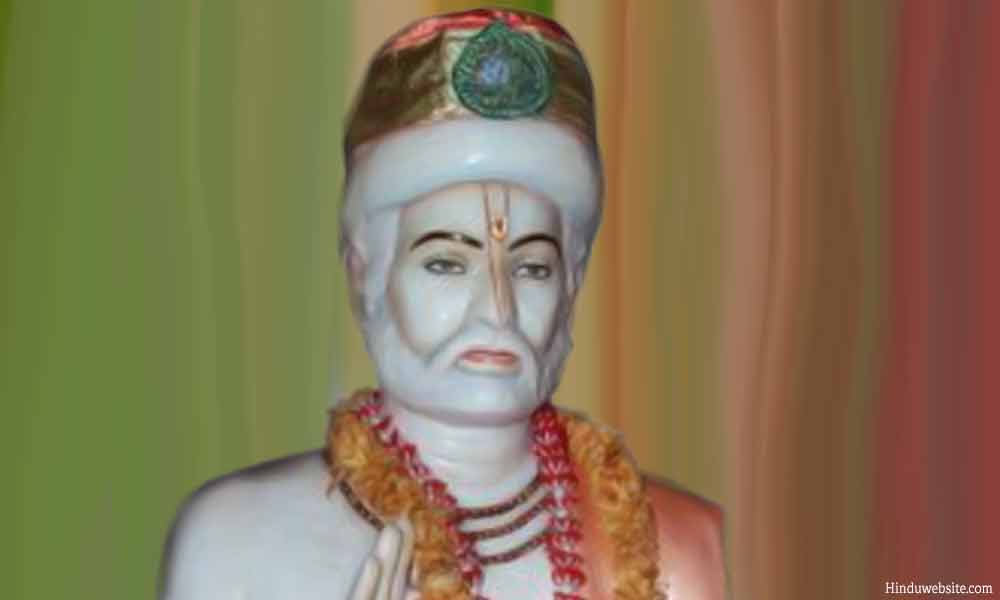
Summary: This page presents a scholarly biography of Kabir (Kabirdas), the renowned devotional poet saint of medieval India whose spiritual teachings transcended religious boundaries. Adopted by Muslim weavers near Varanasi, Kabir became a central figure in the bhakti movement, expressing through his devotional songs the ideal of universal humanity and divine grace. Readers will discover the legendary origins, spiritual significance, and enduring influence of this influential saint in Hindu and Indian spiritual traditions.
We do not know the details of the birth of Kabir or Kabirdas, which is, in fact, common in the case of many saintly figures of India until modern times. A devotional (bhakti) saint-poet, who expressed through his songs the ideal of seeing all of humanity as one, his name, Kabir, is often interpreted as Guru's Grace. According to legend, the childless Muslim weavers Niru and Nimma found him near Lahara Tara lake, adjacent to the holy city of Varanasi, and adopted him.
A weaver by profession, Kabir ranks among the world's greatest poets. Back home in India, he is perhaps the most quoted author. The Holy Guru Granth Sahib contains over 500 verses by Kabir. The Sikh community, in particular, and others who follow the Holy Granth, hold Kabir in the same reverence as the other ten Gurus. Although he was drawn deeply into spiritual life, he openly criticized all sects and gave a new direction to Indian philosophy through his straightforward approach to various aspects of human existence. It is for this reason that Kabir is held in high esteem all over the world. To call Kabir a universal Guru is not an overstatement. Kabir is also considered one of the early northern Indian Sants. He is traditionally said to have lived to be 120 years old, approximately during the [15th to 16th century], a period of rich spiritual and social change in India.
Kabir was associated with the Sant Mat, a loosely related group of teachers (Sanskrit: Guru) that assumed prominence in the northern part of the Indian subcontinent from about the 13th century. Their teachings were distinguished theologically by inward, loving devotion to a divine principle, and socially by an egalitarianism opposed to the qualitative distinctions of the Hindu caste hierarchy and to the religious differences between Hindu and Muslim.
The Sants were not homogeneous, consisting mostly of spiritual personalities whose socio-religious attitudes were based on bhakti (devotion), as described a thousand years earlier in the Bhagavad Gita. Sharing as few conventions with each other as with the followers of the traditions they challenged, the Sants appear more as a diverse collection of spiritual personalities than as a specific religious tradition. However, they acknowledged a common spiritual root. The first generation of north Indian Sants, which included Kabir, appeared in the region of Benares in the mid-15th century. Preceding them were two notable 13th- and 14th-century figures, Namdev and Ramananda. The latter, a Vaishnava ascetic, initiated Kabir, Raidas, and other Sants, according to tradition. Ramanand's story is told differently by his lineage of Ramanandi monks, by other Sants preceding him, and later by Guru Nanak and the subsequent Sikh Gurus. What is known is that Ramananda accepted students of all castes, a fact that was contested by the orthodox Hindus of that time, and that his students formed the first generation of Sants.
His Teachings and Philosophy
Kabir was influenced by the prevailing religious beliefs of his time, such as old Brahmanical Hinduism, Hindu and Buddhist Tantrism, the teachings of Nath yogis, and the personal devotionalism of South India, mixed with the imageless God of Islam. The influence of these various doctrines is clearly evident in Kabir's verses. Even though he is often presented as a synthesizer of Hinduism and Islam, this observation has also been regarded as a false one.
The basic religious principles he espouses are simple. According to Kabir, all life is an interplay of two spiritual principles. One is the personal soul (Jivatma), and the other is God (Paramatma). It is Kabir's view that salvation is the process of bringing these two divine principles into union. The social and practical manifestation of Kabir's philosophy has rung through the ages. It represented a synthesis of Hindu and Muslim concepts. From Hinduism, he accepts the concept of reincarnation and the law of karma. From Islam, he takes the outer practices of Indian Sufi ascetics and Sufi mysticism. Not only did Kabir influence Muslims and Hindus, but he was also one of the major inspirations behind Sikhism. Despite legend claiming that Kabir met Guru Nanak, their lifespans do not overlap in time. The presence of much of his verse in Sikh scripture, and the fact that Kabir was a predecessor of Nanak, has led some Western scholars to describe him as a forerunner of Sikhism mistakenly.
His greatest work is the Bijak (that is, the Seedling), an expression of the fundamental One. This collection of poems demonstrates Kabir's own universal view of spirituality. His vocabulary is replete with ideas regarding Brahman and Hindu concepts of karma and reincarnation. His Hindi was vernacular and straightforward, much like his philosophy. He often advocated leaving aside the Qur'an and the Vedas and simply following the Sahaja path, or the Simple/Natural Way to oneness in God. He believed in the Vedantic concept of atman. Still, unlike earlier orthodox Vedantins, he followed this philosophy to its logical end by spurning the Hindu caste system and the worship of murti, showing clear affinity with both bhakti and Sufi ideas. A major part of Kabir's work as a Bhagat was collected by the fifth Sikh Guru, Guru Arjan Dev, and forms a part of the holy Sikh scripture, the Guru Granth Sahib.
While many ideas persist as to who his living influences were, the only Guru of whom he ever spoke was Satguru. Kabir never made mention of any human guru in his life or verses; the only reference found in his verses is to God as Satguru. Traditionally, the Vaishnav saint Ramananda is held to be his guru.
Poetry
"The poetry of mysticism might be defined on the one hand as a temperamental reaction to the vision of Reality: on the other, as a form of prophecy. As it is the special vocation of the mystical consciousness to mediate between two orders, going out in loving adoration towards God and coming home to tell the secrets of Eternity to other men, so the artistic self-expression of this consciousness has also a double character. It is love-poetry, but love-poetry which is often written with a missionary intention. Kabîr's songs are of this kind: out-births at once of rapture and of charity. Written in the popular Hindi, not in the literary tongue, they were deliberately addressed—like the vernacular poetry of Jacopone da Todì and Richard Rolle—to the people rather than to the professionally religious class; and all must be struck by the constant employment in them of imagery drawn from the common life, the universal experience. It is by the simplest metaphors, by constant appeals to needs, passions, relations which all men understand--the bridegroom and bride, the guru and disciple, the pilgrim, the farmer, the migrant bird--that he drives home his intense conviction of the reality of the soul's intercourse with the Transcendent. There are in his universe no fences between the "natural" and "supernatural" worlds; everything is a part of the creative Play of God, and therefore--even in its humblest details—capable of revealing the Player's mind."
His poems resonate with praise for the true Guru who reveals the divine through direct experience, and they denounce more usual ways of attempting God-union, such as chanting, austerities, and the like. His verses, which, being illiterate, he never expressed in writing and which were spoken in vernacular Hindi, often began with some strongly worded insult to get the attention of passers-by. Kabir has enjoyed a revival of popularity over the past half-century as arguably the most acceptable and understandable of the Indian Sants, with a special influence over spiritual traditions such as Sant Mat and Radha Soami. Prem Rawat ('Maharaji') also refers frequently to Kabir's songs and poems as the embodiment of deep wisdom.
Religious affinity
Kabir did not classify himself as Hindu or Muslim, Sufi or Bhakta. The legends surrounding his lifetime attest to his strong aversion to established religions. From his poems, expressed in homely metaphors and religious symbols drawn indifferently from Hindu and Mohammedan belief, it is impossible to say of their author that he was Brahman or Sufi, Vedantin or Vaishnavite. He is, as he says himself, "at once the child of Allah and of Ram." In fact, Kabir always insisted on the concept of ‘Koi bole Ram Ram, koi Khudai,’ which means that someone may chant the Hindu name of God and someone may chant the Muslim name of God, but God is the one who made the whole world.
In Kabir's wide and rapturous vision of the universe, he never loses touch with common life. His feet are firmly planted upon earth; his lofty and passionate apprehensions are perpetually controlled by the activity of a sane and vigorous intellect, by the alert common sense so often found in persons of real mystical genius. The constant insistence on simplicity and directness, the hatred of all abstractions and philosophizing, and the ruthless criticism of external religion are among his most marked characteristics. God is the Root whence all manifestations, material and spiritual alike, proceed; and God is the only need of man—"happiness shall be yours when you come to the Root." Hence, to those who keep their eye on the one thing needful, denominations, creeds, ceremonies, the conclusions of philosophy, and the disciplines of asceticism are matters of comparative indifference. They represent merely the different angles from which the soul may approach that simple union with Brahma, which is its goal, and are useful only insofar as they contribute to this consummation. So thorough-going is Kabir's eclecticism that he seems by turns Vedantins and Vaishnavite, Pantheist and Transcendentalist, Brahmin and Sufi. In the effort to tell the truth about that ineffable apprehension, so vast and yet so near, which controls his life, he seizes and twines together—as he might have woven together contrasting threads upon his loom—symbols and ideas drawn from the most violent and conflicting philosophies and faiths.
His birth and death are surrounded by legends, as nothing certain is known about either. He grew up in a Muslim weaver family, but some say he was really the son of a Brahmin widow and was adopted by a childless couple. When he died, his Hindu and Muslim followers started fighting over the last rites. In Maghar, his tomb or Dargah and Samadhi Mandir still stand side by side.
Another legend surrounding Kabir is that shortly before his death, he bathed in both the river Ganges and the Karmnasha to wash away both his good deeds and his sins.
One popular legend of his death, which is even taught in schools in India (more in a moral context than a historical one), says that after his death, his Muslim and Hindu devotees fought over his proper burial rites. The problem arose because Muslim custom called for the burial of the dead, whereas Hindus cremated their dead. The scene is depicted as two groups fighting around his coffin, one claiming that Kabir was a Hindu and the other claiming that Kabir was a Muslim. However, when they finally opened Kabir's coffin, they found that the body was missing; in its place was a small book in which the Hindus and Muslims wrote all his couplets that they could remember, though some say that a bunch of his favorite flowers had been placed there instead. The legend goes on to state that the fighting was resolved, and both groups looked upon the miracle as an act of divine intervention.
Kabir is revered as Satguru by the Kabirpanthi spiritual group, based in Maghar.
Attribution: Some of the content for this article has been adapted from Wikipedia under the GNU Free Documentation License (GFDL), with additions, improvements, and corrections by Jayaram V.