
The Symbols of Pythagoras
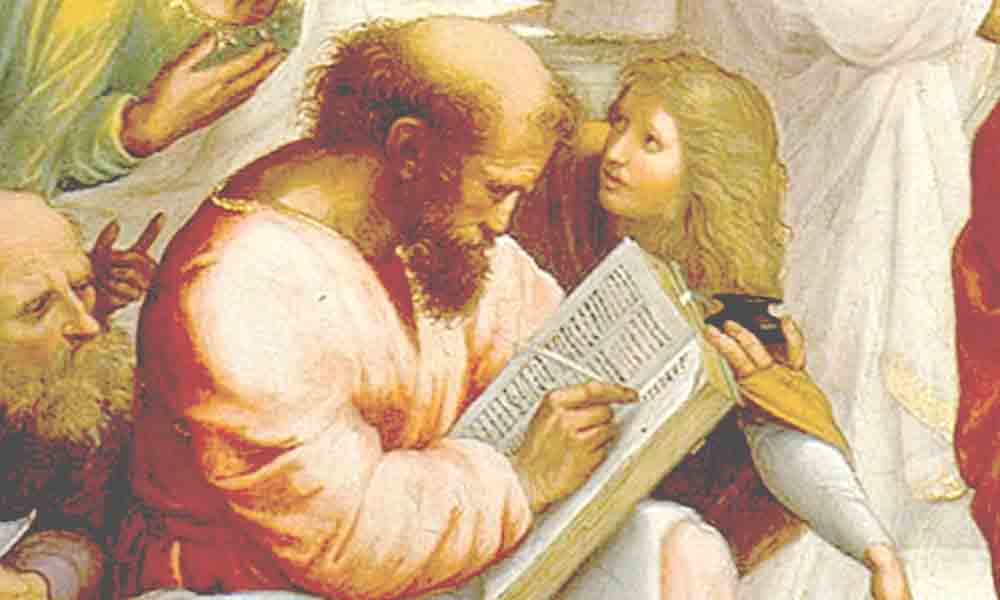
All the Symbols are exhortatory in common to the whole of virtue; but particularly each to some particular virtue. Different symbols also are differently adapted to parts of philosophy and discipline. Thus for instance the first Symbol directly exhorts to piety and divine science.
SYMBOL 1.
When going to the temple to adore Divinity neither say nor do any thing in the interim pertaining to the common affairs of life.
Explanation.--This Symbol preserves a divine nature such as it is in itself pure and undefiled: for the pure is wont to be conjoined to the pure. It also causes us to introduce nothing from human affairs into the worship of Divinity; for all such things are foreign from, and contrary to, religious worship. This Symbol also greatly contributes to science; for in divine science it is necessary to introduce nothing of this kind; such as human conceptions, or those pertaining to the concerns of life. We are exhorted to nothing else, therefore, by these words than this: that we should not mingle sacred discourses and divine actions with the instability of human manners.
SYMBOL 2.
Neither enter into a temple negligently, nor in short adore carelessly, not even though you should stand at the very doors themselves.
Explanation.--With the preceding this symbol also accords. For if the similar is friendly and allied to the similar, it is evident that since the gods have a. most principal essence among wholes, we ought to make the worship of them a principal object.
But he who does this for the sake of anything else, gives a secondary rank to that which takes the precedency of all things, and subverts the whole order of religious worship and knowledge. Besides, it is not proper to rank illustrious goods in the subordinate condition of human utility, nor to place our condition in the order of an end, but things more excellent, whether they be works or conceptions, in the condition of an appendage.
SYMBOL 3.
Sacrifice and adore unshod.
Explanation.--An exhortation to the same thing may also be obtained from this Symbol. For it signifies that we ought to worship the gods and acquire a knowledge of them orderly and modestly, and in a manner not surpassing our condition on earth. It also signifies that in worshipping them, and acquiring this knowledge, we should be free from bonds, and properly liberated. But the Symbol exhorts that sacrifice and adoration should be performed not only in the body, but also in the energies of the soul; so that these energies may neither be detained by passions, nor by the imbecilities of the body, nor by generation, with which we are externally surrounded, But everything pertaining to us should be properly liberated, and prepared for the participation of the gods.
SYMBOL 4.
Disbelieve nothing wonderful concerning the gods, nor concerning divine dogmas.
Explanation.--This Symbol in like manner exhorts to the same virtue. For this dogma sufficiently venerates and unfolds the transcendency of the gods. Affording us a viaticum and recalling to our memory that we ought not to estimate divine power from our judgment. But it is likely that some things should appear difficult and impossible to us, in consequence of our corporeal subsistence, and from our being conversant with generation and corruption; from our having a momentary existence; from being subject to a variety of diseases; from the smallness of our habitation; from our gravitating tendency to the middle; from our somnolency, indigence and repletion; from our want of counsel and our imbecility; from the impediments of our soul, and a variety of other circumstances, although our nature possesses many illustrious prerogatives. At the same time, however, we perfectly fall short of the gods, and neither possess the same power with them, nor equal virtue, This Symbol, therefore, in a particular manner introduces the knowledge of the gods, as beings who are able to effect all things. On this account it exhorts us to disbelieve nothing concerning the gods. It also adds, nor about divine dogmas, that is to say, these belonging to the Pythagoric philosophy. For these being secured by discipline and scientific theory, are alone true and free from falsehood, being corroborated by all various demonstration accompanied with necessity. The same Symbol also is capable of exhorting us to the science concerning the gods; for it urges us to acquire a science of that kind through which we shall be in no respect deficient in things asserted about the gods. It is also able to exhort the same things concerning divine dogmas. and a disciplinative progression, For disciplines alone give eyes to and produce light about all things in him who intends to consider and survey them. For from the participation of disciplines, one thing before all others is effected, that is to say, a belief in the nature, essence, and power of the gods, and also in those Pythagoric dogmas which appear to be prodigious to such as have not been introduced to, and are uninitiated in, disciplines. So that the precept disbelieve not is equivalent to participate, and acquire, those things through which you will not disbelieve; that is to say, acquire disciplines and scientific demonstrations.
SYMBOL 5.
Declining from the public ways, walk in unfrequented paths.
Explanation.--I think that this Symbol also contributes to the same thing as the preceding. For this exhorts us to abandon a popular and merely human life; but thinks fit that we should pursue a separate and divine life. It also signifies that it is necessary to look above common opinions; but very much to esteem such as are private and arcane; and that we should despise merely human delight; but ardently pursue that felicitous mode of conduct which adheres to the divine will. It likewise exhorts us to dismiss human manners as popular, and to exchange for these the religious cultivation of the gods, transcending a popular life.
SYMBOL 6.
Abstain from Melanurus 1; for it belongs to the terrestrial gods.
Explanation.--This Symbol also is allied to the preceding. Other particulars therefore pertaining to it we shall speak of in our discourse about the Symbols. 2 So far then as it pertains to exhortation it admonishes us to embrace the celestial journey, to conjoin ourselves to the intellectual gods, to become separated from a material nature, and to be led, as it were in a circular progression to an immaterial and pure life. It further exhorts us to adopt the most excellent worship of the gods, and especially that which pertains to the primary gods. 3 Such, therefore, are the exhortations to the knowledge and worship of Divinity. The following Symbols exhort to wisdom.
SYMBOL 7.
Govern your tongue before all other things, following the gods.
Explanation.--For it is the first work of wisdom to convert reason to itself and to accustom it not to proceed externally, but to be perfected in itself and in a conversion to itself. But the second work consists in following the gods. For nothing so perfects the intellect as, when being converted Into Itself, it at the same time follows Divinity.
SYMBOL 8.
The wind is blowing, adore the wind.
Explanation.--This Symbol also is a token of divine wisdom. For it obscurely signifies that we ought to love the similitude of the divine essences and powers, and when their words accord with their energies, to honour and reverence them with the greatest earnestness.
SYMBOL 9.
Cut not fire with a sword. 1
Explanation.--This Symbol exhorts to prudence. For it excites in us an appropriate conception with the respect to the propriety of not opposing sharp words to a man full of fire and wrath, nor contending with him. For frequently by words you will agitate and disturb an ignorant man, and will yourself suffer things dreadful and unpleasant. Heraclitus also testifies to the truth of this Symbol, for he says, "It is difficult to fight with anger; for whatever is necessary to be done, benefits the soul." For many by gratifying anger have changed the condition of the soul, and have made death preferable to life. But by governing the tongue and being quiet, friendship is produced from strife, the fire of anger being extinguished, and you yourself will not appear to be destitute of intellect.
SYMBOL 10.
Remove yourself from every vinegar bottle.
Explanation.--The truth of the preceding is testified by the present Symbol. For it exhorts to prudence and not to anger; since that which is sharp in the soul and which we call anger is deprived of reasoning and prudence. For anger boils like a kettle heated by the fire, being attentive to nothing but its own emotions, and dividing the judgment into minute parts. It is proper therefore that the soul being established in quiet should turn from anger, which frequently attacks itself as if it touched sounding brass. Hence it is requisite to suppress this passion by the reasoning power.
SYMBOL 11.
Assist a man in raising a burden; but do not assist him in laying it down.
Explanation.--This Symbol exhorts to fortitude, for whoever takes up a burden signifies an action of labour and energy; but he who lays one down, of rest and remission. So that the Symbol has the following meaning. Do not become either to yourself or another the cause of an indolent and effeminate mode of conduct; for every useful thing is acquired by labour. But the Pythagoreans celebrate this Symbol as Herculean, thus denominating it from the labours of Hercules. For, during his association with men, he frequently returned from fire and everything dreadful, indignantly rejecting indolence. For rectitude of conduct is produced from acting and operating, but not from sluggishness.
SYMBOL 12.
When stretching forth your feet to have your sandals put on, first extend your right foot; but when about to use a foot-bath, first extend your left foot.
Explanation.--This Symbol exhorts to practical prudence, admonishing us to place worthy actions about us as right-handed; but entirely to lay aside and throw away such as are base, as being left-handed.
SYMBOL 13.
Speak not about Pythagorean concerns without light.
Explanation.--This Symbol exhorts to the possession of intellect according to prudence. For this is similar to the light of the soul, to which being indefinite it gives bound, and leads it, as it were, from darkness into light. It is proper, therefore, to place intellect as the leader of everything beautiful in life, but especially in Pythagorean dogmas; for these cannot be known without light.
SYMBOL 14.
Step not beyond the beam of the balance.
Explanation.--This Symbol exhorts us to the exercise of justice, to the honouring equality and moderation in an admirable degree, and to the knowledge of justice as the most perfect virtue, to which the other virtues give completion, and without which none of the rest are of any advantage. It also admonishes us that it is proper to know this virtue not in a careless manner, but through theorems 1 and scientific demonstrations.
But this knowledge is the business of no other art and science than the Pythagorean philosophy alone, which in a transcendent degree honours disciplines before everything else.
SYMBOL 15.
Having departed from your house, turn not back; for the furies will be your attendants.
Explanation.--This Symbol also exhorts to philosophy and self-operating energy according to intellect. It clearly manifests too and predicts, that having applied yourself to philosophy, you should separate yourself from everything corporeal and sensible, and truly meditate upon death, proceeding, without turning back, to things intelligible and which always subsist according to the same and after a similar manner, through appropriate disciplines; for journeying is a change of place; and death is the separation of the soul from the body. But we should philosophize truly and without sensible and corporeal energies, employing a pure intellect in the apprehension of the truth of things, which knowledge, when acquired, is wisdom. But having applied yourself to philosophy, turn not back nor suffer yourself to be drawn to former objects and to corporeal natures together with which you were nourished. For by so doing you will be attended by abundant repentance, in consequence of being impeded in sane apprehensions by the darkness in which corporeal natures are involved. But the Symbol denominates repentance, the furies.
Symbol 16.
Being turned to the sun, make not water.
Explanation.--The exhortation of this Symbol is as follows: Attempt to do nothing which is merely of an animal nature; but philosophize, looking to the heavens and the sun. Let the light of truth also be your leader, and remember that no abject conceptions must be admitted in philosophy; but ascend to the gods and wisdom through the survey of the celestial orbs. Having likewise applied yourself to philosophy and purified yourself by the light of truth which is in it; being also, converted to a pursuit of this kind, to theology, to physiology, and so astronomy, and to the knowledge of that cause which is above all these; no longer do anything of a merely brutal nature.
SYMBOL 17.
Wipe not a seat with a torch.
Explanation.--This Symbol also exhorts the same thing. For since a torch is of a purifying nature In consequence of its rapid and abundant participation of fire, in the same manner as what is called sulphur, the Symbol not only exhorts not to defile it, since it is itself abstergent of defilements, nor to oppose its natural aptitude by defiling that which is an impediment to defilement; but rather that we should not mingle the peculiarities of wisdom with those of the merely animal nature. For a torch through the bright light it emits is compared to philosophy; but a seat through its lowly condition to the merely animal nature.
SYMBOL 18.
Nourish a cock; but sacrifice it not; for it is sacred to the sun and the moon.
Explanation.--This Symbol advises us to nourish and strengthen the body and not neglect it, dissolving and destroying the mighty tokens of union, connection, sympathy, and consent of the world. So that it exhorts us to engage in the contemplation and philosophy of the universe. For though the truth concerning the universe is naturally occult, and sufficiently difficult of investigation, it must, however, at the same time, be enquired into and investigated by man, and especially through philosophy. For it is truly impossible to be discovered through any other pursuit. But philosophy, receiving certain sparks, and as it were viatica, from nature, excites and expands them into magnitude, rendering them more conspicuous through the disciplines which it possesses. Hence, therefore, we should philosophize.
SYMBOL 19.
Sit not upon a bushel.
Explanation.--The Symbol may be considered more Pythagorically, beginning from the same principles with those above. For since nutriment is to be measured by the corporeal and animal nature, and not by a bushel, do not pass your life in indolence nor without being initiated into philosophy; but dedicating yourself to this, rather provide for that part of you which is more divine, which is soul, and much more for the intellect which soul contains; the nutriment of which is measured, not by a bushel, but by contemplation and discipline.
SYMBOL 20.
Nourish not that which has crooked nails.
Explanation.--This Symbol also in a more Pythagorean manner advises us to communicate and impart, and prepare others to do so, accustoming them to give and receive without depravity and abundantly; not indeed receiving everything insatiably and giving nothing. For the physical organization of animals with crooked nails is adapted to receive rapidly and with facility, but by no means to relinquish what they hold, or impart to others, through the opposition of the nails in consequence of their being crooked; just as the fish called crangœ 1, are naturally adapted to draw anything to themselves with celerity, but relinquish it with difficulty, unless by turning from, we avoid them. But hands were indeed suspended from us by nature, that through them we might both give and receive, and the fingers, also, are naturally attached to the hands, straight and not crooked. In things of this kind, therefore, we must not imitate animals with crooked nails, since we are fashioned by our maker in a different way, but should rather be communicative and impart to each other, being exhorted to a thing of this kind by the fabricators of names themselves, who denominated the right hand more honourable than the left, not only from receiving but from being capable of imparting. We must act justly therefore, and through this philosophize. For justice is a certain retribution and remuneration equalizing the abounding and deficient by reciprocal gifts. 2
SYMBOL 21.
Cut not in the way.
Explanation.--This Symbol manifests that truth is one, but falsehood multifarious. But this is evident from hence, that what any particular thing is can be predicted only in one way, if it be properly predicted; but what it is not, may be predicted in infinite ways. Philosophy, too, appears to be a path or way. The Symbol therefore says, Choose that philosophy, and that path to philosophy in which there is no division, and in which you will not dogmatize things contradictory to each other, but such as are stable and the same with themselves, being established by scientific demonstration through disciplines and contemplation; which is the same thing as if it said, Philosophize Pythagorically. And this is indeed possible. But the philosophy which proceeds through things corporeal and sensible, and which is employed by the moderns even to satiety, which likewise considers Divinity, qualities, the soul, the virtues, and in short all the most principal causes of things to be body,--this philosophy easily eludes the grasp, and is easily subverted. 1 And this is evident from the various arguments of its advocates. On the other hand, the philosophy which proceeds through things incorporeal, intelligible, immaterial, and perpetual, and which always subsist according to the same, and in a similar manner, and never, as far as possible to them, admit either corruption or mutation, being similar to their subjects,--this philosophy is the artificer of firm, stable, and undeviating demonstrations. The precept, therefore, admonishes us when we philosophize, and Proceed in the way pointed out, to fly from the snares of, and avoid all connection with, things corporeal and multifarious, but to become familiar with the essence of the incorporeal natures, which at all times are similar to themselves, through the truth and stability which they naturally contain.
SYMBOL 22.
Receive not a swallow into your house.
Explanation.--This Symbol admonishes as follows: Do not admit to your dogmas a man who is indolent, who does not labour incessantly, and who is not a firm adherent to the Pythagorean sect, and endued with intelligence; for these dogmas require continued and most strenuous attention. and an endurance of labour through the mutation and circumvolution of the various disciplines which they contain. But it uses the swallow as an image of indolence and an interruption of time, because this bird visits us for a certain part of the year, and for a short time becomes as it were our guest; but leaves us for the greater part of the year and is not seen by us.
SYMBOL 23.
Wear not a ring.
Explanation.--We should understand this Symbol as an exhortation to the Pythagorean doctrine as follows: A ring embraces those that wear it after the manner of a bond; and a peculiarity of it is neither to pinch nor pain the wearer, but in a certain respect to be accommodated and adapted to him. But the body is a bond of this kind to the soul. The precept, therefore, Wear not a ring, is equivalent to, Philosophize truly, and separate your soul from its surrounding bond. For philosophy is the meditation of death and the separation of the soul from the body. Betake yourself, therefore, with great earnestness to the Pythagorean philosophy, which through intellect separates itself from all corporeal natures, and is conversant through speculative disciplines with things intelligible and immaterial. Liberate yourself also from sin and from those occupations of the flesh which draw you aside from, and impede the philosophic energy; likewise from superabundant nourishment and unseasonable repletion, which confine the soul like a bond and incessantly introduce a crowd of diseases, and interruptions of leisure.
SYMBOL 24.
Inscribe not the image of God in a ring.
Explanation.--This Symbol, conformably to the foregoing conception, employs the following exhortation: Philosophize, and before everything consider the gods as having an incorporeal subsistence. For this is the most principal root of the Pythagorean dogmas, from which nearly all of them are suspended, and by which they are strengthened even to the end. Do not, therefore, think that the gods use such forms as are corporeal, or that they are received by a material subject and by body as a material bond, like other animals. But the engravings in rings exhibit the bond which subsists through the ring, its corporeal nature, and sensible form, and the view, as it were, of some partial animal which becomes apparent through the engraving; from which especially we should separate the genus of the gods as being eternal and intelligible, and always subsisting according to the same and in a similar manner, as we have particularly, most fully, and scientifically shown in our discourse concerning the gods. 1
SYMBOL 25.
Behold not yourself in a mirror by the light of a lamp.
Explanation.--This Symbol advises us in a more Pythagorean manner to philosophize, not betaking ourselves to the imaginations belonging to the senses, which produce indeed a certain light about our apprehensions of things; but this light resembles that of a lamp, and is neither natural nor true. It admonishes us, therefore, rather to betake ourselves to scientific conceptions about intellectual objects, from which a most splendid and stable purity is produced about the eye of the soul, resulting from all intellectual conceptions and intelligibles, and the contemplation about these, and not from corporeal and sensible natures. For we have frequently shown that these are in a continual flux and mutation, and do not in any manner subsist stably and similar to themselves, so as to sustain a firm and scientific apprehension and knowledge in the same manner as the objects of Intellectual vision.
SYMBOL 26.
Be not addicted to immoderate laughter.
Explanation.--This Symbol shows that the passions are to be subdued, Recall, therefore, Into your memory right reason, and be not inflated with prosperity nor abject in calamity; being persuaded that no worthy attention takes place in either of these. But this Symbol mentions laughter above all the passions, because this alone is most conspicuous, being, as it were, a certain efflorescence and inflammation of the disposition proceeding as far as to the face. Perhaps, too, it admonishes us to abstain from immoderate laughter, because laughter is the peculiarity of man with respect to other animals; and hence he is defined to be a risible animal. It is shown, therefore, by this precept, that we should not firmly adhere to the human nature, but acquire by philosophizing am imitation of divinity to the utmost of our power; and withdrawing ourselves from this peculiarity of man, prefer the rational to the risible in the distinction and difference which we make of him with respect to other animals.
SYMBOL 27.
Cut not your nails at a sacrifice.
Explanation.--The exhortation of this Symbol pertains to friendship. For of our relations and those allied to us by blood, the nearest of kin are brothers, children, and parents, who resemble those parts of our body which when taken away produce pain and mutilation by no means trifling; such as fingers, hands, ears, nostrils, and the like. But others who are distantly related to us, such as the daughters of cousins, or the sons-in-law of uncles, or others of this kind, resemble those parts of our body from the cutting off of which no pain is produced; such as hair, nails, and the like. The Symbol, therefore, wishing to indicate those relations who have been for a time neglected by us through the distance of their alliance, employs the word nails, and says: Do not entirely cast off these; but if at sacrifices, or any other time, you have neglected them, draw them to you, and renew your familiarity with them.
SYMBOL 28.
Offer not your right hand easily to everyone.
Explanation.--The meaning of this Symbol is, Do not draw up, nor endeavour to raise, by extending your right hand, the unadapted and uninitiated. It also signifies that the right hand is not to be given easily even to those who have for a long time proved themselves worthy of it through disciplines and doctrines, and the participation of continence, the quinquennial silence, 1 and other probationary trials.
SYMBOL 29.
When rising from the bed-clothes, roll them together and obliterate the impression of the body.
Explanation.--This Symbol exhorts that, having applied yourself to philosophy, in the next place you should familiarize yourself with intelligible and incorporeal natures.
Rising therefore from the sleep and nocturnal darkness of ignorance, draw off with you nothing corporeal to the daylight of philosophy, but purify and obliterate from your memory all the vestiges of that sleep of ignorance.
SYMBOL 30.
Eat not the heart.
Explanation.--This Symbol signifies that it is not proper to divulse the union and consent of the universe. And still further it signifies this, Be not envious, but philanthropic and communicative; and from this it exhorts us to philosophize. For philosophy alone among the sciences and arts is neither pained with the goods of others, nor rejoices in evils of neighbours, these being allied and familiar by nature, subject to the like passions, and exposed to one common fortune; and evinces that all men are equally incapable of foreseeing future events. Hence it exhorts us to sympathy and mutual love, and to be truly communicative, as it becomes rational animals.
SYMBOL 31.
Eat not the brain.
Explanation.--This Symbol also resembles the former; for the brain is the ruling instrument of intellectual prudence. The Symbol, therefore, obscurely signifies that we ought not to dilacerate nor mangle things and dogmas which have been the objects of judicious deliberation. But these will be such as have been the subject of intellectual consideration, becoming thus equal to objects of a scientific nature. For things of this kind are to be surveyed, not through the instruments of the irrational form of the soul, such as the heart and the liver; but through the pure rational nature. Hence to dilacerate these by opposition, is inconsiderate folly; but the Symbol rather exhorts us to venerate the fountain of intelligence and the most proximate organ of intellectual perception, through which we shall possess contemplation, science, and wisdom; and by which we shall truly philosophize, and neither confound nor obscure the vestiges which philosophy produces.
SYMBOL 32.
Indignantly turn from your excrements and the parings of your nails.
Explanation.--The meaning of this Symbol is as follows: Despise things which are connascent with you, and which in a certain respect are more destitute of soul, since things which are more animated are more honourable. Thus also when you apply yourself to philosophy, honour the things which are demonstrated through soul and intellect without sensible instruments, and through contemplative science, but despise and reject things which are opined merely through the connascent instruments of sense without intellectual light, and which are by no means able to acquire the perpetuity of intellect.
SYMBOL 33.
Receive not Erythinus. 1
Explanation.--This Symbol seems to be merely referred to the etymology of the name. Receive not an unblushing and impudent man, nor on the contrary one stupidly astonished, and who in everything blushes and is humble in the extreme through the imbecility of his intellect and dianötic 2 power. Hence this also is understood: Be not yourself such a one.
SYMBOL 34.
Obliterate the mark of the pot from the ashes.
Explanation.--This Symbol signifies, that he who applies himself to philosophy should consign to oblivion the confusion and grossness which subsists in corporeal and sensible demonstrations, and that he should rather use such as are conversant with intelligible objects. But ashes are here assumed instead of the dust in the tables, in which the Pythagoreans completed their demonstrations. 1
SYMBOL 35.
Draw not near to that which has gold, in order to produce children.
Explanation.--The Symbol does not here speak of a woman, but of that sect and philosophy which has much of the corporeal in it, and a gravitating tendency downwards. For gold is the heaviest of all things in the earth, and pursues a tendency to the middle, which is the peculiarity of corporeal weight; but the term to draw near not only signifies to be connected with, but always to approach towards, and be seated near, another.
SYMBOL 36.
Honour a figure and a step before a figure and a tribolus.
Explanation.--The exhortation of this Symbol is as follows: Philosophize and diligently betake yourself to disciplines, and through these, as through steps, proceed to the thing proposed; but reject the progression through those things which are honoured and venerated by the many. Prefer also the Italic philosophy, 1 which contemplates things essentially incorporeal, to the Ionic, 2 which makes bodies the principal object of consideration.
SYMBOL 37.
Abstain from beans.
Explanation.--This Symbol admonishes us to beware of everything which is corruptive of our converse with the gods and divine prophecy.
SYMBOL 38.
Transplant mallows indeed in your garden; but eat them not.
Explanation.--This Symbol obscurely signifies that plants of this kind turn with the sun, and it thinks fit that this should be noticed by us. It also adds transplant, that is to say, observe its nature, its tendency towards, and sympathy with, the sun; but rest not satisfied, nor dwell upon this, but transfer, and as it were transplant your conception to kindred plants and pot-herbs, and also to animals which are not kindred, to stones, and rivers, and in short to natures of every kind. For you will find them to be prolific and multiform, and admirably abundant; and this to one who begins from the mallows, as from a root and principle, is significant of the union and consent of the world. Not only, therefore, do not destroy or obliterate observations of this kind, but increase and multiply them as if they were transplanted.
SYMBOL 39.
Abstain from animals.
Explanation.--This Symbol exhorts to justice, to all the honour of kindred, to the reception of similar life, and to many other things of a like kind. From all this, therefore, the exhortatory type through symbols becomes apparent, which contains much in it of the ancient and Pythagorean mode of writing.
Suggestions for Further Reading
- The Pythagorean Sentences of Demophilus
- The Golden Verses of Pythagoras
- The Life and Philosophy of Pythagoras
- Secret Significance of Numbers and Pythagorean Mathematics
- Pythagoras, Pythagorean Wisdom, and Philosophy
- The Pythagorean Ethical Sentences From Stobaeus
- The Symbols of Pythagoras
- The Sevenfold Nature of Human Body
- The Historical Christ, The Story of Jesus From Occult Sources
- Thought Forms By Dr.Annie Besant
- Thoughts and Aphorisms of Sri Aurobindo
- Sri Aurobindo on Astrology
- Man and Battle for Life From The Essays on the Bhagavdgita by Sri Aurobindo
- Sri Aurobindo on Yoga
- Essay on rebirth by Sri Aurobindo
- The Reincarnating Soul by Sri Aurobindo
- An Essay on the Upanishads by Sri Aurobindo
- An Essay on the Vedas by Sri Aurobindo
- The Prayers and Meditations of the Divine Mother
- Writings and Quotationsof Jiddu Krishnamurthy
- Papaji Discourses
- Inspiarational Thoughts and Quotations
- Supreme Personality by Dr. Delmer Eugene Croft
- The Days and Nights of Brahma
- Life After Death
- The Seven Creations
- The Formation of Solar System
- The Zodiac and Its Antiquity
- Free EBooks and Texts on Greek Philosophy
- Essays On Dharma
- Esoteric Mystic Hinduism
- Introduction to Hinduism
- Hindu Way of Life
- Essays On Karma
- Hindu Rites and Rituals
- The Origin of The Sanskrit Language
- Symbolism in Hinduism
- Essays on The Upanishads
- Concepts of Hinduism
- Essays on Atman
- Hindu Festivals
- Spiritual Practice
- Right Living
- Yoga of Sorrow
- Happiness
- Mental Health
- Concepts of Buddhism
- General Essays
Footnotes
73:1 According to Œlian and Suldas, Melanurus is a fish; but as the word signifies that which has a black termination, it is very appropriately used as a Symbol of a material nature.
73:2 Iamblichus most likely alludes here to a more copious work on this subject, which is lost.
74:3 Viz., those gods that are characterized by intellect, and the Intelligible, concerning which see Taylor's introduction to and notes on the Parmenides of Plato.
75:1 Or, stir not up fire with a sword.--Dacier.
78:1 The justice to which we are exhorted, in this Symbol, belongs to the theoretic virtues, concerning which see Taylor's notes on the Phædo of Plato.
83:1 The crangœ are fish belonging to the genus cancer.
84:2 Aristotle has discussed with his usual accuracy everything pertaining to the nature of justice in the fifth book of his Nicomachean Ethics.
85:1 By this it appears that the philosophy which is wholly busied in the investigation of sensibles, similar to that which has been so industriously studied in a neighbouring country, and propagated in this, was very prevalent in the time of Iamblichus.
89:1 This work appears to be lost.
92:1 This alludes to the silence of five years imposed by Pythagoras on a great part of his auditors.
96:1 This is said to be a fish of a red colour.
96:2 This is that power of the soul which reasons scientifically.
97:1 This is, by drawing diagrams.
98:1 That is, the philosophy of Pythagoras, which is called Italic, because it was first propagated in Italy.
98:2 Thales was the founder of this sect, and the most illustrious professors of it were Anaximander, Anaximenes, Anaxagoras, and Archelaus.
Source: The Golden Verses of Pythagoras And Other Pythagorean Fragments Selected and Arranged by Florence M. Firth With an Introduction by Annie Besant [1904]