
Bhakti Marg, the Path of Devotion
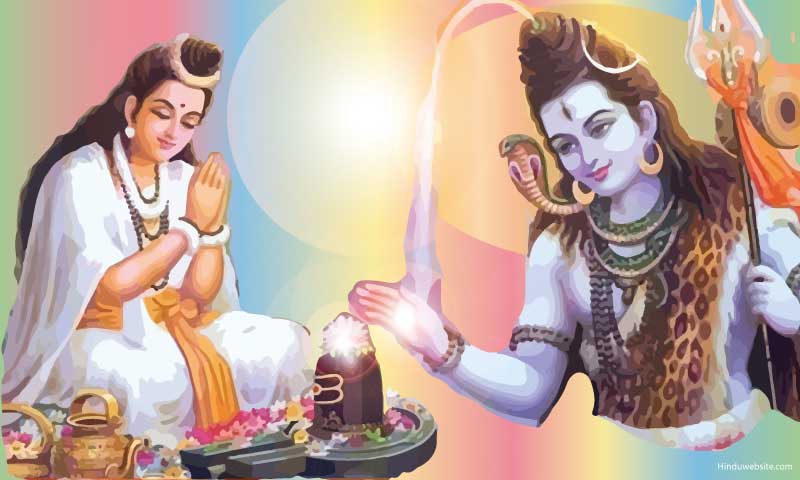
Bhakti means devotion. Bhakti marg refers to the path of love. It is also known as Bhakti Yoga. On this path devotees develop a deep love and devotion to their personal gods, through transformative and purification practices to attain oneness with them. They engage their minds in their contemplation and gradually remove all traces of desires, attachments, egoism and other impurities.
According to the Bhagavadgita, bhakti yoga is the simplest path to attain liberation. However, it is not easy to practice it in its purest form. According to some, Bhakti is the culmination of all other yogas, and one can practice true devotion only after years of effort and achieving perfection in other disci8plines such as karma yoga, jnanayoga, atma samyama yoga, etc. In the following discussion, we trace the origin and development of Bhakti Marg.
Ancient Period
The Bhakti Movement was essentially founded in South India and later spread to the North during the late medieval period. The notion of 'Bhakti' (loosely translated as devotional love to God) prevailed in the Indian subcontinent from antiquity. A nascent consciousness of what 'Bhakti' constitutes was already to be found in the earliest Vedas, especially in relation to such deities as Varuna. A clearer expression of Bhakti began to be formed during the so-called Epic Period and the Puranic periods of Hindu history. Texts such as the Bhagavad Gita and the Bhagavata Purana clearly explored Bhakti Yoga or the Path of Devotion as a means to salvation.
The Bhakti Movement itself is a historical-spiritual phenomenon that crystallized in South India during Late Antiquity. It was spearheaded by devotional mystics (later revered as Hindu saints) who extolled devotion and love to God as the chief means of spiritual perfection. The Bhakti movement in South India was spearheaded by the sixty-three Nayanars (Shaivite devotees) and the twelve Alvars (Vaishnavaite devotees).
Among the earliest Shaivite mystics was Karaikkal Amaiyar, who probably lived around the late 5th century AD or perhaps the early 6th century. She was said to be a contemporary of the Vaishnavaite saints Bhuttalwar and Peialwar. Kannapa Nayanar was also an early Shaiva Bhakti saint. But most famous among the Shaiva Bhakti saints were the 'Nalvar' (The Four Eminent Ones), namely Sundarar, Appar, Sambandar and Manikkavasagar. Their devotional hymns are ecstatic, lyrical and moving.
The Vaishnavaite Bhakti movement was contemporaneous with the Shaiva Bhakti movement. The hymns of the twelve alvars are held together as the 'Nalayira Divya Prabandham' and recited (as are the Shaiva texts) in temple rituals. Whilst all the saints are held in great reverence, Andal (or Goda-devi) in particular holds a special place among the Vaishnava saints. Not only is she the only female Vaishnava saint but also her hymns are among the best expressions of bridal mysticism in the Hindu religion.
The twelve Alvars and the sixty-three Nayanars nurtured the incipient bhakti movement in South India under the Pallavas and Pandyas in the fifth to seventh centuries AD. They constitute [[South India's 75 Apostles of Bhakti] and were greatly influential in determining the expression of faith in South India. The path of devotion as expounded by these mystics would later be incorporated into Ramanuja and Madhva philosophical systems.
Medieval Period
During the 12th and 13th centuries A.D., the Virashaiva movement and, during the rule of the Vijayanagar Empire in South India, the Haridasa movement spread from present-day Karnataka. The Virashaiva movement spread the philosophy of Basavanna, a Hindu reformer. The seeds of Carnatic music were sown, and the philosophy of Madhvacharya was propogated by the Kannada Haridasas.The Haridasa movement presented, like the Virashaiva movement, another strong current of Bhakti, pervading the lives of millions. The Haridasas presented two groups – Vyasakuta and Dasakuta. The former were required to be proficient in the Vedas, Upanishads and other Darshanas, while the Dasakuta merely conveyed the message of Madhvacharya through the Kannada language to the people. The philosophy of Madhvacharya was preserved and perpetuated by his eminent disciples like Vyasatirtha or Vyasaraja Naraharitirtha, Vadirajatirtha, Sripadaraya, Jayathirtha and others. In the fifteenth century, the Haridasa movement took shape under Sripadaraya of Mulbagal; but his disciple Vyasatirtha provided it a strong organizational base. He was intimately associated with the Vijayanagar Empire, where he became a great moral and spiritual force. His eminent disciples were Purandaradasa and Kanakadasa.
The late Bhakti movement led to the proliferation of regional poetic literature in the various vernacular languages of India. The Bhakti movement in what is now Karnataka resulted in a burst of poetic Kannada literature in praise of Lord Vishnu. Some of its leaders include Purandara Dasa and Kanaka Dasa, whose contributions were essential to Carnatic music. The later Carnatic Trinity is also no doubt a product of this long Bhakti Movement.
The Bhakti movement began to spread to the North during the late medieval ages when North India was under Muslim domination. There was no grouping of the mystics into Shaiva and Vaishnava devotees as it was in the South. The movement was spontaneous and the various mystics had their own version of devotional expression. Unlike in the South where devotion was centred on both Shiva and Vishnu (in all his forms), the Northern devotional movement was more or less centred on Rama and Krishna, both of whom were incarnations of Vishnu. Though this did not mean that the cult of Shiva or of the Devi went into decline. In fact for all of its history the Bhakti movement co-existed peacefully with the other movements in Hinduism. It was initially considered unorthodox as it rebelled against caste distinctions and made disregarded Brahmanic rituals which according to Bhakti saints not necessary for salvation. In the course of time however, owing to its immense popularity among the masses (and even royal patronage) it became 'orthodox' and continues to be one of the most important modes of religious expression in modern India.
In the period between the 14-17th centuries, a great bhakti movement swept through Northern India initiated by a loosely associated group of teachers or 'Sants'. Caitanya, Vallabha, Meera Bai, Kabir, Tulsi Das, Tukaram and other mystics spearheaded the Bhakti movement in the North. Their teachings were that people could cast aside the heavy burdens of ritual and caste and the subtle complexities of philosophy and simply express their overwhelming love for God. This period was also characterised by a spate of devotional literature in vernacular prose and poetry in the ethnic languages of the various Indian states or provinces.
As aforementioned whilst many of the Bhakti mystics focused their attention on Krishna or Rama, it did not necessarily mean that the cult of Shiva was marginalised. The growth of the Vira-Shaiva and the older Shaiva Siddhanta schools in this period, which incorporated Bhakti into their teachings are testimony to the growth of the Shaiva faith in this period. In the thirteenth century Basava founded the Vira-Shaiva school or Virashaivism. He rejected the caste system, denied the supremacy of the Brahmins, condemned ritual sacrifice and insisted on bhakti and the worship of the one God, Shiva. His followers were called Vira-Shaivas, meaning "stalwart Shiva-worshippers".
The Saiva-Siddhanta school is a form of Shaivism (Shiva worship) found in the south and is of hoary antiquity. It incorporates the teachings of the erstwhile Shaiva nayanars and espouses the belief that Shiva is Brahman and his infinite love is revealed in the divine acts of the creation, preservation and destruction of the universe, and in the liberation of the soul. Seminal Bhakti works in Bengali include the many songs of Ramprasad Sen. His pieces (known as Shyama Sangeet, or Songs of the Dark Mother) are still actively sung today in West Bengal. Coming from the 17th century, they cover an astonishing range of emotional responses to Ma Kali, detailing complex philosophical statements based on Vedanta teachings and more visceral pronouncements of his love of Devi. Using inventive allegory, Ramprasad had 'dialogues' with the Mother Goddess through his poetry, at times chiding her, adoring her, celebrating her as the Divine Mother, reckless consort of Shiva and capricious Shakti, the universal female creative energy, of the cosmos.
Important personalities
Ramananda (15th Century): The leader of the bhakti movement focusing on the Lord as Rama was Ramananda. Very little is known about him, but he is believed to have lived in the first half of the 15th century. He taught that Lord Rama is the supreme Lord, and that salvation could be attained only through love for and devotion to him, and through the repetition of his sacred name. Ramananda's ashram in Varanasi became a powerful centre of religious influence, from which his ideas spread far and wide among all classes of Indians. One of the reasons for his great popularity was that he renounced Sanskrit and used the language of the people for the composition of his hymns. This paved the way for the modern tendency in northern India to write literary texts in local languages.
Shri Madhvacharya (1238-1317) identified God with Vishnu. His view of reality is purely dualistic in that he understood a fundamental differentiation between the ultimate Godhead and the individual soul, and the system is therefore called Dvaita (dualistic) Vedanta. Madhva is considered one of the influential theologians in Hindu history. His influence was profound, and he is one of the fathers of the Vaishnava Bhakti movement. Great leaders of the Vaishnava Bhakti movement in Karnataka like Purandara Dasa, Kanaka Dasa, Raghavendra Swami and many others were influenced by Dvaita traditions.
Vallabhacharya (1479 - 1531) called his system of thought Shuddhadvaita (pure monism). According to him, it is by God's grace alone that one can obtain release from bondage and attain Krishna's heaven. This heaven is far above the "heavens" of Brahma, Vishnu and Shiva, for Krishna is himself the eternal Brahman.
Chaitanya Mahaprabhu (1486 - 1534) defined his system of philosophy as Achintya Bheda-Bheda (inconceivable and simultaneous oneness and difference). It synthesizes elements of monism and dualism into a single system. Chaitanya's philosophy is taught by the contemporary International Society for Krishna Consciousness, better known as the Hare Krishna movement.
Srimanta Sankardeva (1449-1568) named his religion ek sarana naam dharma and propagated it in Assam. An example of dasa bhakti, in this form there was no place for Radha. The most important symbol of this religion is the naamghor or prayer hall, which dot Assam's landscape. This form of worship is very strong in Assam today, and much of the traditions are maintained by the monastries called Satras.
Ramanuja: Sri Ramanuja Acharya (traditionally dated 1017–1137 CE) was an Indian philosopher and is recognized as the most important saint of Sri Vaishnavism. He held the Vishishtadvaita or qualified Nondualist belief that the world and Brahman were united, like a soul and a body are. Ramanuja's philosophy is referred to as Vishishtadvaita because it combines Advaita (oneness of God) with Vishesha (attributes). The philosophy is monotheistic. His version of Indian Nondualism differed from Adi Shankara's because he acknowledged the existence of differences, and believed that the identity of an object as a part was as important as the unity of the whole. The Vaishnava Theology espoused by Ramanuja posits that Brahman is not devoid of attributes but is expressed as a personal God, full of infinite good qualities, as Narayana. The Adishesha on whom Lord Ranganatha of Srirangam rests is believed to be Ramanuja.
Chaitanya Mahaprabhu (1486 - 1534), was an ascetic Hindu monk and social reformer in 16th century Bengal, India (present-day West Bengal and Bangladesh). A great proponent of loving devotion for God bhakti yoga, Chaitanya worshiped the Lord in the form of Radha-Krishna. Gaudiya Vaishnava followers revere him as Krishna Himself descended in the mood of Radharani. He was also known as Gaura (Sanskrit for "the fair / golden one") due to his skin complexion, as well as Nimai due to being born under a Neem tree. There are numerous biographies of Chaitanya, the most popular ones being Sri Chaitanya Charitamrita of Krishnadasa Kaviraja Gosvami and the earlier Chaitanya Bhagavata of Vrindavana Dasa Thakura, both written in the Bengali language. In the 20th century the teachings of Chaitanya were brought to the West by A.C. Bhaktivedanta Swami Prabhupada, a representative of the Saraswata (i.e. disciples of Bhaktisiddhanta Sarasvati Thakura) branch of Chaitanya's tradition. Also, in the 21st century this representation of Vaishnava bhakti has been studied through the academic medium of Krishnology. Saraswata gurus and acharyas, members of the Goswami lineages and several other Hindu sects which revere Chaitanya Mahaprabhu, including devotees from the major Vaishnava holy places in Mathura District, West Bengal and Orissa, also established temples dedicated to Krishna and Chaitanya outside India in the closing decades of the 20th century.
Suggestions for Further Reading
- Bhakti, Spiritual Devotion To God
- The Practice of Satsang in Modern Life
- Bhakti yoga or the Yoga of Devotion
- Divine Qualities Necessary for Self-realization
- Qualities of God's Best Devotees
- The Concept of Atman or Eternal Soul in Hinduism
- The Problem of Maya Or Illusion and How To Deal With It
- Belief In Atman, The Eternal Soul Or The Inner Self
- Brahman, The Highest God Of Hinduism
- The Bhagavad Gita Original Translations
- The Bhagavadgita, Philosophy and Concepts
- Bhakti yoga or the Yoga of Devotion
- Hinduism And The Evolution of Life And Consciousness
- Why to Study the Bhagavadgita Parts 1 to 4
- Origin, Definition and Introduction to Hinduism
- Symbolic Significance of Numbers in Hinduism
- The Belief of Reincarnation of Soul in Hinduism
- The True Meaning Of Renunciation According To Hinduism
- The Symbolic Significance of Puja Or Worship In Hinduism
- Introduction to the Upanishads of Hinduism
- Origin, Principles, Practice and Types of Yoga
- Essays On Dharma
- Esoteric Mystic Hinduism
- Introduction to Hinduism
- Hindu Way of Life
- Essays On Karma
- Hindu Rites and Rituals
- The Origin of The Sanskrit Language
- Symbolism in Hinduism
- Essays on The Upanishads
- Concepts of Hinduism
- Essays on Atman
- Hindu Festivals
- Spiritual Practice
- Right Living
- Yoga of Sorrow
- Happiness
- Mental Health
- Concepts of Buddhism
- General Essays
Source: Adapted with some modifications from the Wikipedia article "Bhakti Movement" and other related articles under the G.N U Free Documentation License.