
Ascetic Traditions and Practices in Hinduism
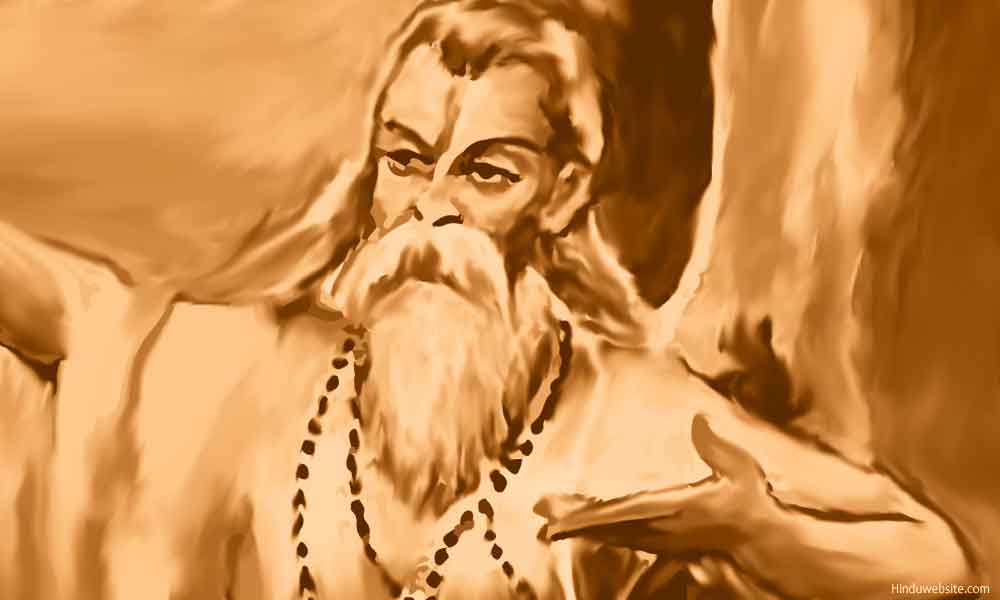
Ascetic practices and ascetic traditions occupy an important place in Hinduism. They played a significant role in shaping its outlook and attitude and its religious and spiritual philosophy. It is the ground from which much of the Hindu tradition sprouted and where many spiritual teachers experimented with their lives and formulated great philosophical doctrines and the great teachings of the Upanishads. From the days of the Kesins who were mentioned in the Rigveda, to the Mundakas of the Upanishads to the present day guru tradtions, the story of Hinduism has been forged largely in the fire and heat generated by the austerities and sacrifices of numerous ascetics who turned away from the world to probe into the mysteries of life.
Traditionally, asceticism has been the recognized and widely approved means in Hindusim to achieve liberation. Even today, it is the most effective and prescribed path for those who want to escape from the cycle of births and deaths. Ascetic traditions played an important role in the development of Hinduism and its spiritual knowledge. It is the heart and soul of Hinduism. The development of yoga and yoga practices was a direct result of the emergence of asceticism in Hinduism. It is difficult to say whether ascetic traditions of Hinduism were older than the Vedic ritual religion. There are however indications that ascetic traditions and ceremonial and sacrificial traditions grew side by side in remote antiquity and at some point both became a part of the Hindu way of life which aimed to balance human life by a compromise of sorts prescribing the four aims, namely dharma (religious duty), artha (wealth), kama (pleasure) and moksha (liberation). In this article we will examine the importance of ascetic traditions in the development of Hinduism and in shaping its fundamental spiritual base and essential philosophy.
Religious life in early vedic period was characterized by rituals. Vedic people performed rituals to deal with the uncertainties of life. Those who possessed the knowledge of rituals enjoyed special privileges. Kings and nobility vied with one another, seeking their help and intervention in invoking gods for peace and prosperity, victory against enemies and insurance against natural calamities, disease and danger. During this period vedic religion suffered from a preponderance of the procedural and material aspects of rituals and ritual purity rather than the spiritual and metaphysical aspects of transcendental experience and self realization.
Philosophical Notions about Rituals
In the later vedic period philosophical speculation about rituals gained ground. We see a symbolic correlation emerging between the mechanical aspects of rituals and the deeper issues of human existence. In the Aranyakas and the Upanishads we find a reevaluation of the knowledge of rituals and its subordination to the spiritual knowledge of the self or the knowledge of atman and Brahman. The knowledge of ritual still mattered in society. But in the minds of the seers, who lived in the forests, it was lower knowledge compared to the higher knowledge of self.
Emphasis was now more on the internalization of rituals and control of mind and body by withdrawing the senses, practicing yoga of self control, inner purity, proper conduct and renunciation. There was speculation about the role of karma, bondage to the cycle of births and deaths and a permanent solution to the problem of human suffering. In the ritual of life, the outer was meant to be sacrificed for the inner and the lower for the higher.
In the microcosm of the individual, the seers found a new universe, inhabited by divinities and energies corresponding with those of the cosmos, giving them enough justification for the internalization of ritual as an act of personal sacrifice and inner purification to achieve self-realization. We are not sure how this reorientation in purpose and perception took place. Probably it was a reaction against the growing popularity of some ascetic traditions in the subcontinent which called for a change in their approach from the outer aspects of life to the inner.
The Rise of Asceticism and Renouncer Traditions
In the Upanishads and the Aranyakas we find echoes of the growing importance of asceticism against the backdrop of a society that was preoccupied with the performance of rituals and the wealth that accrued out of them. Urban settlements, expansion of empires, frequent wars and trade with foreign countries added to the complexity of life and necessitated a change in outlook and the need for a religious tradition that would act like a balm soothing the agitated nerves and helping people cope with the problems of death and disease.
Asceticism was thus a natural outcome of a tradition that was steeped in empty ritualism and failed to satisfy the spiritual needs of life. It emerged as a reactionary and evolutionary process against the simplistic and outdated solutions offered by vedic religion. It attempted to resolve the problems of human suffering, catastrophes, death and disease from a wider perspective, which the vedic mantras could not resolve despite the blessings of the priests and the money paid to them.
By 6th century BC dissolution with the vedic tradition reached its culmination. Hundreds of ascetic sects and new religious traditions sprouted all over the subcontinent and challenged its authority. Buddhism and Jainism posed a much greater threat to vedic ritualism, offering at the same time more appealing and intellectually satisfying alternative solutions to the problems of human misery and suffering.
These sects appealed to all sections of society ignoring the caste distinctions. They viewed the problem of human suffering as a product of ignorance and tried to interpret the relationship between the individual and the rest of the world in terms of illusion and duality. They speculated upon the permanence or impermanence of individual self, the universal self and the relationship between the two. They attempted to analyze the nature of human personality and its constituent parts and principles. They pondered upon the role of nature in the creation of life and whether there was something beyond and above nature that regulated the process of creation.
Out of this churning of the human thought, which was perhaps unprecedented in the religious history of mankind, starting roughly from about 1000 BC to 600 BC, emerged many powerful and brilliant concepts like yoga, karma, maya, prakriti and bondage, which constituted the core of Hinduism in subsequent times. The rise of ascetic sects coincided with growing skepticism about vedic traditions. The idea that individuals were born repeatedly through the mechanism of karma in order to fulfill the purpose of their creation gained ground, giving rise to many schools of philosophy. They offered a plethora or metaphysical explanations to explain the origin of life and the evolutionary process in which individual souls advance from one level to another through a laborious process of pain and suffering.
Makkhali Gosala (560-484 B.C.) of the Ajivika sect, Vardhamana Mahavira (547-467 B.C.), the 24th Thirthankara of Jainism, and the Buddha (550-483 B.C.) the founder of Buddhism were some of the great personalities who belonged to this period of great introspection and spiritual enquiry preceding the Mauryan empire. These spiritual leaders set a personal example by renouncing the comforts of worldly life which the vedic priests hankered after. They showed least consideration for caste distinctions and the social order upheld religiously by the vedic society. They renounced the world, practiced detachment and indulged in various kinds of austerities ranging from the extreme measures of self-torture and self-immolation to the more moderate measures of fasting and restraint. They practiced yoga, meditation concentration as means of self-control. They debated among themselves trying to disapprove their opponents. Some of them even plotted against their opponents with diabolical schemes to discredit them in the eyes of the public. Their philosophy was borne out of their personal experience. It touched the hearts of many because of its direct appeal and emphasis on the problem of human suffering.
Similarities among the Ascetic Sects
The vedic tradition collectively referred the wandering ascetics as Sramanas or those who labored (srama) for their liberation. The sramanas dotted the length and breadth of the subcontinent, propagating a diverse range of beliefs. Some of them like the Ajivakas, the Kapalikas and the Kalamukhas belonged to theistic sects. They believed in god and soul and worshipped the universal self as a personal god. Some like the Lokayatas, Charvakas and the Jainas belonged to atheistic sects. They did not believe in an absolute God as the cause of all causes. Some of them believed in the existence of soul and afterlife, but others like the lokayatas believed in neither souls nor life after death. Some like the Buddhists had an ambivalent approach towards an absolute self and maintained silence, considering it to be an irrelevant subject in the matter of liberation.
The vedic people treated the sramanas conditionally without wasting an opportunity to scorn those whom they detested or feared, using derogatory epithets such as yatis (wanderers), vratyas (untouchables) and ajivikas (beings lacking in vitality). Greater the alienation of the ascetics from the Vedas, the stronger was their reaction and criticism.
Some sects focused on the urban communities, while some preferred to stay in seclusion maintaining secrecy. The Buddha and Mahavira focused mainly on the urban communities, while Gosala preferred to stay away from them. He even questioned the intentions of Mahavira in spreading his beliefs. Despite these differences, the ascetic sects agreed on some fundamental ideas and concepts, which are mentioned below. Interestingly, they also constitute the core beliefs of modern day Hinduism
1.Suffering (dukha) is an integral part of human life and it is aggravated by the action of the senses and desires. Man should not aim for acquisition of wealth and empires but complete liberation from the very need to strive and achieve.
2.Individual actions (karma) would result in bondage. Practice of virtue through restraining of the senses and detachment from the sense objects would lead to emancipation from suffering
3.The body, the mind and the senses are impediments in cultivating higher awareness. They need to be restrained through various means such as austerities or practice of yoga or meditation to achieve the transcendental state of liberation.
4.Identification of oneself with the false self will result in bondage. When this identity is removed liberation is achieved.
Asceticism vs Brahmanism
The rise of asceticism posed many challenges to the established traditions of Brahmanism. By the time Alexander came to India with his army, the popularity of asceticism was so evident that it was the individual ascetics, probably the Jain ascetics, living in isolation in deep forests, who attracted his attention rather than the rituals of the traditional vedic society. With its emphasis on rites and rituals, the inviolable supremacy of the Vedas, varnas (castes), purusharthas ( the four aims of life), varnasharama dharma ( the four stages of human life) and the rites of passage, Brahmanism found itself isolated and challenged by the new traditions that were slowly finding acceptance in both rural and urban areas.
Brahmanism met the challenge posed by the ascetic sects by drawing strength from the Vedas and finding answers in the Upanishads which had the depth and the vision to match their arguments and speculation. The idea of asceticism and renunciation that seemed so opposed to Brahmanism on the surface were actually the same ideals propounded in the Upanishads and practiced by vedic seers for centuries. For the puritanical followers of Vedism, harassed by the notions of empty ritualism and self-interest, the Upanishads provided justification to strike a conciliatory approach towards some of the ascetic movements and acknowledge them as movements with in its own tradition. Those that did not fit into the philosophical notions and the world view of the Vedas were either ignored or condemned.
This strategy brought new vigor into Brahmanism, increased the breadth and scope of its vision and resulted in the assimilation of many new traditions such as Vaishnavism, the Puranic (adi) Saivism, many concepts of Jainism, some practices of the Ajivilkas and the six schools of philosophy including the Yoga of Patanjali as inseparable trends with in its own tradition. The Bhagavadgita is a fine example of how these different traditions were assimilated into one acceptable and integrated philosophy without compromising the authority of the Vedas. If Buddhism and Jainism escaped the same fate and maintained their distinction as separate religious traditions, it was mainly because of the charismatic appeal of the Buddha and Mahavira and the missionary zeal with which they and their followers propagated their beliefs and maintained their identities giving little scope for the possibility of any reconciliation.
In Yoga and Samkhya, Vedism found a simple but effective reconciliation between the mind and the body and the tenets of the Samhitas and the deeper philosophy of the Upanishads. Integration of these two into vedic religion ensured the continuity of an age old tradition that was obsessed with rituals and its progression, with few adjustments, into a more viable and intellectually satisfying alternative, without undermining the authority of the Vedas and the body of rituals it upheld.
The Keshins of the Rigveda
In the Tenth Mandala of the Rigveda there is a hymn addressed to a special class of ascetics (munis) known as keshins, who wore long locks of hair, practiced breath control and possessed supernatural abilities to transcend time and space. The keshins or munis are extolled in the following manner:
1. HE with the long loose locks supports Agni, and moisture, heaven, and earth: He is all sky to look upon: he with long hair is called this light. 2 The Munis, girdled with the wind, wear garments soiled of yellow hue. They, following the wind's swift course go where the Gods have gone before. 3 Transported with our Munihood we have pressed on into the winds: You therefore, mortal men. behold our natural bodies and no more. 4 The Muni, made associate in the holy work of every God, Looking upon all varied forms flies through the region of the air. 5 The Steed of Vata, Vayu's friend, the Muni, by the Gods impelled, In both the oceans hath his home, in eastern and in western sea. 6 Treading the path of sylvan beasts, Gandharvas, and Apsarases, He with long locks, who knows the wish, is a sweet most delightful friend 7 Vayu hath churned for him: for him he poundeth things most hard to bend, When he with long loose locks hath drunk, with Rudra, water from the cup.
There is no doubt from the hymn that the munis were an important class of ascetics revered by the Vedic people for their association with the rituals and the holy work of every god. The munis had supernatural powers, with which they could travel in the air and fly like the Gandharvas and the Apsaras, looking at the forms upon the earth. When they, with (their minds focused on) Rudra, drank waters ( breathed in pranic energy or life energy) from the cup (of life), that is when they practiced some form of kundalini or breath control, vayu (air) did wonders for them accomplishing the most difficult things.
Keshins Were Worshippers of Lord Siva
The kesins were not mentioned by the Rigvedic seers with disdain but with reverence. There is also a word of caution for the mortal men who cannot see them (or their hidden powers) beyond their natural bodies for who they truly are. Their supernatural ability is mentioned in association with Vayu or wind god alluding to some ancient form of breathing practices that gave them the special ability to transcend their minds and bodies. They probably worshipped Rudra or Siva who himself possessed long locks and was a real keshin. As they drew in their breath and held it for long at will, Vayu obliged them and did wonders for them. The Keshins were mysterious beings and the fact that they were mentioned in the Rigveda in association with Rudra compounds the mystery. The hymn probably alludes to the increasing influence of Saiva sects upon vedic tradition which is also confirmed by the descriptions of Siva in the Svetavatara Upanishad as Brahman himself.
Vratyas
The Atharvaveda mentions vratyas as a band of ascetic warriors who practiced a tradition of their own which was probably a mixture of early forms of tantricism and ceremonial worship of ancient deities through magical rituals. According to some historians the Vratyas were probably an early band of vedic Aryans who were excommunicated by their successors for some religious reasons. One of the arch enemies of Indra was Vratasura whom Indra slew in order to release waters from the clouds. Symbolically Vratasura was considered to be a dark cloud and Indra as the ruler of heavens slew him to release the waters and make the earth fertile.
We are not sure whether the Vratyas were connected to Vratasura in any way. The Vedic scriptures made a provision to readmit vratyas into vedic society through purification rituals. Some historians believe that vratyas started the tradition of warrior ascetics and that the present vedic practice of doing vrata (a sacrificial ceremony of longer duration) seeking favors from a personal deity is probably an ancient tradition practiced by the Vratyas and adopted by Vedic tradition subsequently. It is also possible that the Vratyas were probably early worshippers of Siva and mother goddess and had some close affinity with early Dravidian tribes who inhabited parts of northern and eastern India.
The Legacy of Hindu Asceticism
Modern Hinduism owes a great deal to the ancient ascetic sects. Perhaps without contribution from these sects, Hinduism would have been a mere ritualistic tradition. If Vedic rituals provided the body to Hinduism, the ascetic traditions provided the mind and the Vedas the soul to make it a religion of many dimensions and deeper spiritual values.
The Bhagavadgita is a summary of the diverse traditions that prevailed in ancient India and their reinterpretation in the light of the Vedas and vedic beliefs. The six schools of Hindu philosophy, the theories of monism, dualism and qualified monism, owe a great deal to the ancient ascetic traditions which pondered upon the subject of human consciousness and its connection with the universal consciousness. The Buddha and Mahavira were products of these sects. Before they received enlightenment, they spent considerable time in the company of wandering ascetics, absorbing their knowledge and ideas. /p>
The rise of Saivism and Vaishanavism and their assimilation into vedic religion and the elevation of Vishnu and Siva into Hindu trinity was hastened by the growing popularity of Jainism and Buddhism in the urban areas. With its puritanical features and emphasis on karma and devotion, Vaishnavism matched Jainism emphasizing bhakti as the means of liberation, while with its spiritual depth and meditative approach Saivism matched Buddhism emphasizing jnana or knowledge as the means of liberation. Lord Vishnu and Lord Siva provided the much needed buffer for the vedic religion against the charismatic appeal of Mahavira and the Buddha in containing the spread of the two religions in the subcontinent.
If Hinduism survived centuries of oppression in the hands of foreign powers who practiced different religions and emerged as a religion of great spiritual depth and vitality, it is because of the contribution made by thousands of ascetics, gurus, babas, yogis, munis and sanyasis in their individual capacities. Through their knowledge and selfless service they kept the tradition alive, invigorating it from time to time by reviving old and forgotten traditions and with new knowledge. They compensated for the lack of central leadership and missionary activity. The ascetics continue to dominate Hinduism even today and have been playing vital role in keeping its traditions and practices alive. Every Hindu ought to salute them for their valuable contribution in keeping Hinduism alive and vibrant.
Suggestions for Further Reading
- The History, Practice, Benefits and Types of Yoga
- The yoga techniques and practices
- The Ajivika Sect of Ancient India
- True Sanyas or Renunciation
- Sanyas and true sanyasi
- Om, Aum, Pranava or Nada in Mantra and Yoga traditions
- Brahmacharya or Celibacy in Hinduism
- Brahman According to Advaita and Dvaita in Hinduism
- Brahman As The Priest of the Creation Sacrifice
- Creation in Hinduism As a Transformative Evolutionary process
- Hinduism - The Faith Eternal
- Understanding Death and Impermanence
- Jivanmukti, the state of Liberation
- The Meaning of Nirvana
- Panca Darsana - A New Theory of Knowledge
- Famous Saints of Hinduism From Maharashtra
- Why Hinduism is a Preferred Choice for Educated Hindus
- prajnanam brahma - Brahman is Intelligence
- Maslow's Hierarchy Of Needs From The Perspective Of Hinduism
- The Defintion and Concept of Maya in Hinduism
- The Meaning of Nirvana
- Self-knowledge, Difficulties in Knowing Yourself
- Hinduism - Sex and Gurus
- The Construction of Hinduism
- The Meaning and Significance of Heart in Hinduism
- The Origin and Significance of the Epic Mahabharata
- The True Meaning of Prakriti in Hinduism
- Three Myths about Hinduism
- What is Your Notion of God?
- Why Hinduism is a Preferred Choice for Educated Hindus
- Essays On Dharma
- Esoteric Mystic Hinduism
- Introduction to Hinduism
- Hindu Way of Life
- Essays On Karma
- Hindu Rites and Rituals
- The Origin of The Sanskrit Language
- Symbolism in Hinduism
- Essays on The Upanishads
- Concepts of Hinduism
- Essays on Atman
- Hindu Festivals
- Spiritual Practice
- Right Living
- Yoga of Sorrow
- Happiness
- Mental Health
- Concepts of Buddhism
- General Essays