
How To Choose Your Spiritual Guru?
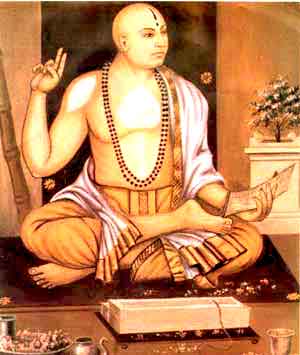
According to Hindu tradition, a guru is an enlightened master, a perfect being who appears among people, out of unconditional love, to help them return to their source. He is like a bodhisattva, who sets aside his own priorities for the welfare of the world. Those who come into contact with an enlightened master are deemed ripe for salvation, because he gives them a unique opportunity to hasten their liberation partly through their efforts and partly through his blessings.
A true master comes to this world rarely. He becomes a guru after prolonged practice over several lives. His mere presence in the world electrifies the atmosphere and inspires millions of people to turn to spiritualism. Slowly but surely he transforms the people who come into contact with him through his teachings and techniques. Hinduism survived over the centuries because of the selfless service of several teacher traditions and ascetic movements. They protected the tradition and preserved its practices through carefully guarded conventions in which the master passed on the right knowledge to a few chosen disciples who in turn continued the practice down the line. Without their commitment and continued effort over these centuries, Hinduism would have been extinct by now.
There is so much controversy surrounding the tradition of gurus that when we hear about a guru we don’t know whether he or she is a really enlightened person, a genuine master, a miracle worker, a charlatan, a magician or an imposter. The problem is complicated further by the activities of a few controversial people and the scandals erupting occasionally over the news channels about their alleged misconduct and corrupt practices. Hindu society is now matured enough to understand the risks involved in following spiritual masters blindly. The connection between a spiritual guru and their disciples is emotional, personal and spiritual. It is based on trust, faith, innocence and the promise of liberation. In the following sections we will try to explore the mystery and the aura associated with spiritual masters and their relevance and significance in the spiritual progress of the world.
Pros
Those who believe in their spiritual masters and follow them sincerely defend the institutions of gurus. They speak positively about their life altering experiences, miraculous events and their association with their gurus and uphold their value and importance in the spiritual progress of the mankind. Some well known arguments put forward by them in favor of the institution of gurus are listed below.
1. Gurus are dispellers of darkness. They play an important role in the spiritual advancement of people by providing them with right knowledge and right direction.
2. Gurus have extraordinary powers. They can transform people through their teachings, and sometimes with a mere glance or touch.
3. Gurus play a vital role in the continuation of Hindu tradition. They uphold its tenets and act as its protectors and spokesmen.
4. An enlightened guru is God in human form. He has the permission from God to speak and act on His behalf. He has no ego because his ego is filled with the presence of God. Serving him is therefore equal to serving God.
5. Gurus have miraculous powers. Because they have emptied themselves, they can easily enter other people’s consciousness and know what is happening there. They can read other people’s minds, travel astrally to remote places and heal the sick and the disabled with their powerful thoughts and vibrations.
6. It is said that a true spiritual master has the ability to neutralize the ill effects of karma, transfer their spiritual energy to others or hasten a disciple's spiritual progress.
7. Gurus often indulge in erratic, outrageous and abnormal behavior to discourage people coming to them. One should never judge them on the basis of their appearance or behavior.
Cons
Those who are opposed to the gurus for religious or ideological reasons or who had unpleasant experiences and encounters with them develop a deep distrust in the very institution of gurus and do not support the tradition. They cite the examples of how gurus dupe gullible people and do irreparable damage to society and the humanity in the name of God and religion. People who argue in this manner are not necessarily atheistic or irreligious. They may be very religious people who do not believe in the need for gurus or in the intervention of middle men between them and God. Some of the arguments put forward by those who do not believe in the tradition of gurus are listed below.
1. There are many bogus gurus who do immense harm to the public through fraud and deception.
2. The bogus gurus misuse their status and identity in society to collect money, abuse children or exploit women purely for sexual activity.
3. The deceptive gurus indulge in self-promotion, criminal activities and anti- social behavior. Cases of murder, land grabbing and accounting fraud are not uncommon against them.
4. Some become gurus on account of heredity, family status or connection with the original guru. Once they succeed, they misuse their power and position.
5. There is nothing new in what most gurus teach. The information is already there in the scriptures. They just add their personal touch and a brand name and pass it on as their own.
6. Many gurus encourage personality cult and blind following. They do not clarify rumors and stories about their miraculous powers or clear people's doubt. They deliberately distort their past achievements and allow people to engage in rumors and gossip to let their past remain a mystery.
7. Many gurus seek wealth and political power to promote themselves and their interests, showing undue favors to questionable characters and giving them private audience, while the common people are simply waved at and kept at distance. They also take undue interest in people coming from abroad and travel frequently to foreign countries to extend their power base and promote their own institutions.
8. The movement initiated by the gurus usually degenerate after their death. Their followers quarrel among themselves and start their own movements, each claiming close proximity to the departed gurus. Such power struggle among the close confidents of gurus shows lack of discretion and personal failure on their part in choosing their disciples and transforming them.
Gurus and their significance
The spiritual gurus come in all sizes and shapes. There are some who are really genuine and enlightened and some who are false and mischievous. It is not easy to distinguish one from another by their teachings or their appearance because outwardly they follow the same traditions and speak more or less the same language. With some training and preparation, it is not difficult for an intellectually active person to pass himself or herself as a spiritual master. Therefore people ought to be careful in selecting their spiritual mentors. Choosing a wrong guru can seriously diminish one's chances of salvation. Having trust in God is always helpful, but taking certain precautions about one's own spiritual life is prudence, especially in a world where truth is not what it seems to be. Spiritual journey is far more risky and arduous than crossing the Himalayas. Much depends upon whom you select as your guru and what is your equation with him or her. There is no apparent advantage in going to a capable guru if he or she is too busy to pay you any attention. You should know what to look for and what to avoid in selecting your spiritual guru, using the faculties of reason and common sense and keeping your emotions and your sense of dependence under control.
God comes to us in many forms, but He comes especially in the form of spiritually enlightened masters to show us the way. He speaks to us through them to address our need for spiritual guidance and inspiration. When you are empty, God fills in the vacuum. Gurus are such because they are empty in themselves and are filled with the presence of God. In Kashmiri Saivism, a guru is considered to be the primary source of liberation. Abhinavagupta, one of the chief proponents of the sect, suggested that of the three means available for liberation, the grace of Siva in the form of a spiritual guru (sambavopaya) was the most effective. He considered it to be more important than the other two means, namely the use of spiritual energy such as kundalini (saktopaya) and the use of egoistic effort (anavopaya) in the service of God such as serving godly people or religious institutions or doing menial work inside a temple. There is also a widespread belief among certain traditions of Hinduism that gurus have the ability to transfer their spiritual energy (shakti) to their followers and enlighten them instantly, using a special technique called shaktipatha. There are some gurus in India who claim to have the ability to awaken the kundalini en masse in groups of people by holding a group meditation session or by gently touching them each on the forehead or the back. Since gurus enjoy such high regard in our tradition, it is very easy for people to fall into the trap of bogus gurus. Therefore, when we are looking for a guru, we have to make sure that we are making the right decision and not falling into a self-induced trap.
The importance of discernment (buddhi)
Our world presents to us a complex and ever changing reality, where it is difficult to discern truth behind a facade of appearances. Just as there is falsehood lurking behind truth, there are fake gurus in the guise of genuine masters. Sometimes we come into their grip because of our previous karmas. The false gurus interfere with our spiritual progress. They create confusion in our minds and lead us astray. In this world things are not what they appear to be and not what they are. The world is created to cause distraction and so we cannot expect it to be different. With our limited knowledge and faculties, it is difficult to know who is who. It is not difficult for charlatans and impostors to pose as virtuous gurus, especially when we have such stereotypic images of gurus and sadhus in our minds. Outwardly they all look the same, except for minor differences in their appearance and demeanor such as the color of their dress or the manner in which they grow their hair. The diversity of Hinduism and its antiquity, coupled with the absence of a centralized religious authority, provide ample opportunities to the pretentious and the dubious people to pose as spiritual gurus, claiming connection with an ancient master or a forgotten tradition.
A guru should be chosen with caution, just as you would select a lawyer, doctor or tax consultant. In case of a guru you may have to be even more careful because of the consequences and their lasting effect. A fake doctor may endanger your life or health, but a pretentious guru will delay your salvation for many lives to come. Many lives are wasted by fake gurus, playing upon others' religious sentiments and misleading them into total submission. Imagine spending your whole life with a spiritual master only to realize in the end that all the while you were chasing a mirage! Many who surrender to the whims of false gurus are destroyed forever. Some persist on the path even after they come to know about them. They refuse to acknowledge truth even after seeing inconsistencies and disturbing signs in the conduct of their masters. As if propelled by fate, they willingly follow a perilous path that culminates in their self-destruction.
Finding a genuine guru is vital
Salvation follows a difficult process of self-transformation. It demands many personal sacrifices on the part of the aspirants, both physically and mentally to undergo a vigorous self-cleansing process without any guarantees and promise of solace. It is a journey through a treacherous course of unknown risks and destabilizing forces, in which the path appears and disappears as you move forward, filled with snares of distraction and demons of deception, which is why we need a guru in the first place. Only a guru can show us the way through the dense forest of delusion and protect us from harm by taking responsibility for our lives and actions. He neutralizes our karma and saves us from evil. A fake guru does the opposite. He throws us to the demons of doubt and despair and leaves us to our fate. With his ignorance and incompetence, he compounds our problems and leads us into the dark caverns of ignorance and intemperance. According to Hindu beliefs, a guru comes to us by the grace of God, according to our preparation, readiness, aspiration, karma and faith. Just as the aspirants are eager to find their gurus, the gurus are also eager to find their followers. Their coming together is said to be an event of great significance for both of them and also the world in general, as it happened in case of Sri Ramakrishna and Swami Vivekananda, because their association has the potential to elevate the entire earth consciousness by suffusing it with powerful vibrations and the promise of great progress.
The difference between a guru and a teacher
In ancient India there was a clear distinction between a spiritual master (guru) and an ordinary teacher (adhyapak). A guru commanded more respect in society than a teacher because he selected students on merit and assumed responsibility for their lives for the duration of their stay with him. They lived in his household, receiving knowledge from him directly, mastering the scriptures, while he took care of them, without expecting or insisting any monetary benefit or rewards in return. He taught them as he pleased, provided they stood up to his standards and expectations. A teacher on the other hand, taught the students by charging them money, without taking responsibility for their personal care. A guru, in ancient India, was not an ordinary person. He was an enlightened master, who lived in a forest, while a teacher was a mere professional, who lived amidst people and helped his students excel in their chosen fields of study. At the end of their education, it was customary for the students to reward their gurus with a gift (dakshina), without their asking, while the teacher received remuneration regularly for his services. The teachers were mostly this worldly, while the gurus were other worldly. The teachers taught the way to live in the world and succeed, while the gurus helped their students to transcend themselves and become self-aware. The teachers focused on the knowledge of rituals (karmakanda) while the gurus on the knowledge of the Self (atma-jnanam). As is evident from the Isa Upanishad, in ancient India both the approaches were deemed necessary for the continuation of dharma and education of people. The lower knowledge helped people in their worldly pursuits, while the higher knowledge led them to liberation.
Over the centuries the traditional roles of both the gurus and teachers underwent considerable change. The gurus now act more as spokesmen of dharma and messengers of faith, wielding considerable power and authority, while the teachers have become degraded into mere working class with a limited role and diminished prestige. The gurus now show no discomfort in accepting money and donations from their followers and prefer to live amidst people rather than in the forests. This development has the potential to corrupt and disrupt the very institutions and ideals they establish and promote. At the height of their popularity, some gurus become embroiled in controversies and court cases because of the petty jalousies and rivalries among his own followers. At the same time it also gives them the freedom to translate their ideals and vision in the desired direction and establish viable institutions to serve the poor and the needier sections of society.
Surrendering to God
You can either let things happen to you or make things happen. One is the way of the spirit and the other is the way of the world. In spiritual matters, the first one is the recommended option. So choose your guru passively, with faith in God, lighting up the interiors of your heart and mind. Let him come to you through the will of God, according to your deepest aspiration. Often in our eagerness and out of impatience, we try to regulate our lives. It may not always be the best course, since we have many limitations.
We solve our problems more effectively, when we seek the help of the higher intelligence that resides in us. Place your trust in God and allow Him to introduce you to a right master. If you do not believe in God, seek the help of your inner self. If you do not believe in it either, follow your deepest and most genuine aspiration and let it create the right conditions for you. In any case wait for a master to manifest in your life and help you reach the other shore. Until it happens, keep your faith and aspiration alive, reading the scriptures, practicing yoga and meditation and cultivating virtues.
A guru will not be interested in helping you, unless you are ready for the journey and willing to make necessary sacrifices and adjustments in your life for your self-transformation. So seeking the guidance and help of gurus may not be a good idea, if you are not mentally and physically prepared for spiritual life. If material spiritualism is what you are after, you should not blame anyone when you come under the influence of a materialistic spiritual guru who is more interested in your wealth and your status than in your spiritual merit.
Know why you need a guru
People seek gurus for various reasons, ranging from purely selfish and materialistic to highly spiritual. You should check your motives in seeking a guru and know why you need him in the first place. Is it because you are looking for a mental crutch or to fill a vacuum in your life? A guru is not a substitute for your parents, children or spouse. You should not seek a guru because you are trying to fill some emptiness in your life. You should seek him because you want to be liberated and because you want to escape from the consequences of your actions to find stability in yourself. You do it because you want to be free from all the distracting and disturbing events in your life.
You should not look for a guru unless you are seeking liberation (moksha) or have a serious aspiration for it. A guru is not a replacement for a shrink or a life coach. You will not go to him because you have problems in your life and you want him to use his powers to resolve them for you. You should not seek his help because you are bored with your life and looking for some excitement. A guru may do all this on his own, but it is not why people should seek a guru. Spiritual practice is a serious endeavor. It demands a certain state of mind and uncompromising discipline. Unless you are serious about it, you should remain confined to worldly activities, pursuing the other three aims: religious duty (dharma), wealth (artha) and worldly pleasures (kama).
There should be no illusions in your mind about your relationship with your guru and what you can expect from him. A true guru is detached from the world. He is free from all desires (vasanas) and latent impressions (samskaras). He is not interested in anyone or anything in particular, because he is not bound to the world or its ways. In his enlightened mind he treats everyone equally as an aspect of God. Otherwise he would not be qualified for the responsibility of a guru. True masters may at times show annoyance and deference, but they do so mostly to discipline their students. An enlightened master has no personality of his own. It is replaced either by his higher self or by the presence of God. Although he lives amidst the world, he is not part of it.
When you seek a guru, examine your own intentions and try to be honest with yourself. There is nothing wrong with seeking your guru's help to resolve some personal problems in your life. People do it all the time. But it should not be the only reason why one should go to him. A guru is a dispeller of illusions, not their perpetuator. He may help you in resolving some worldly matters, not because he wants you to remain this worldly but because he knows that his involvement is part of the divine plan and it is critical to your life and further progress on the path. If you are not serious about your spiritual life, you will eventually become disappointed with your guru and leave him or go to another master to repeat the same story. We often hear stories about people, who turn against their own gurus and become their bitter enemies and the worst critics. It happens because either the gurus are dishonest or their disciples are deluded.
A guru is not a substitute for virtue and purity
Spiritual life is not for those who are not willing to practice virtue and morality or control their fickle minds. You cannot be insincere and impure in your thoughts and actions and expect your guru to take care of the difficulties that arise because of them. Spiritual practice demands a serious commitment on your part. There is a reason why in the classical (ashtanga) yoga the rules and restrictions (yamas and niyamas) come first, while the practice of transcendental states (samadhi) comes in the end. There is also a reason why dharma (religious observances) is placed before the other three aims of human life (purusharthas). Virtue or righteous conduct is the foundation of spiritual life. Without it the doors of enlightenment remain shut. One should cultivate the divine qualities and stay clear of the demonic qualities mentioned in the Bhagavadgita.
Many entertain the false notion that if you worship (pooja) the divinities and pay them some respect, they would be highly pleased and help you in your spiritual effort. But it is not sufficient. Without virtue the gates of enlightenment do not open for you. You might have heard that with simple devotion (bhakti) one can please God and become liberated. It is a fallacious belief. You can practice true devotion to God (iswara pranidhana) only when your heart and mind are filled with the illumination of purity (sattva). Also, please do not assume that as a rule your guru will overlook your impurities and take care of your sins because he has taken particular liking for you and given you an approving look. Sometimes he may help people, for reasons completely beyond our grasp. But he would not encourage anyone to stray from the path. A guru looks for people who are sincere and pure and who are willing to go through the hardships to overcome their imperfections. He prefers them to the millions, who are caught in the web of worldly pursuits and go to a guru to assuage their fears and feelings of guilt.
Know the distinction between God and guru
God is the highest guru, but the person of a guru is not God. If you don’t know the distinction, very likely you will get involved with personality worship and begin to venerate your guru as God incarnate. In Hinduism there is a clear distinction between an incarnation and a manifestation of God. Every animate and inanimate object in the universe is a manifestation. God is present in them as the inmost self, in a state of duality and passivity. An incarnation is different. In an incarnation God is directly and actively involved. An incarnation is a dynamic and conscious manifestation of God. We have only a few major incarnations and their number is said to be predetermined. We should not therefore equate a guru as an incarnation of God and worship him as such.
You may see God in your guru and treat him like one, but you do so only for spiritual reasons. A truly enlightened spiritual master has no ego or no personality of his own. Since he undergoes self-purification, he lets the radiance and the consciousness of his self shine through him. When an enlightened master speaks to you, he lets his awakened self communicate with you directly. Since his thoughts and actions are not colored by his egoism, he lets the wisdom, the awesome power and brilliance of his inmost self shine through him. If there is a reason why we should equate a guru with God it is this. So you may worship the self in the guru because it has become free, but not the personality of the guru, or his physical form, which will wither and fall away eventually. A television or a radio set is just a communication tool. You are not going to worship it because it has delivered a very enlightening spiritual message. So is the case with a guru. A guru brings you in contact with the awakened self which is present in him. He allows the power of the self speak through him and touch all those who come into its presence. In the Brihadaranyaka Upanishad, Yajnavalkya says to his wife Maitreyi very aptly, "It is not for the love of a wife that wife is dear but for the love of the soul in wife that wife is dear." And he extends the same concepts to several things. It as well applies to the spiritual teachers whom we love and respect. We should respect them not because they are great masters but because of the the presence of awakened souls in them.
Find a guru who can guide you personally
In the seventh chapter of the Bhagavadgita, LordKrishna describes four types of people who worship him: men in pain, seekers of knowledge, seekers of wealth and seekers of enlightenment. Of them he says the last kind, the men of wisdom are dearest to him because they identify themselves with him and are forever established in him. Lord Krishna does not demean the first three. He calls them noble (udara), but considers the last group of men as the noblest. We can use the same analogy to categorize the people who seek a guru. The first kind go to him because they have some problem, an incurable disease, financial problems, domestic disputes or some disability and they want their guru to help them with his blessings, knowledge, advice, suggestion or some supernatural ability. A few people go to him because they are interested in gaining knowledge. They are curious about spiritual subjects and want to dabble with them intellectually, without being serius. They approach him to listen to his discourses, read his books, talk to him about some religious or spiritual matter, clarify their doubts or learn some techniques of spiritual practice such as yoga or ritual worship. People in the third category go to him for some material gain. They want him to help them get a job, a coveted position, success in some venture, victory in elections or similar gains. Finally there are those who go to him because they want him to guide them on the path of liberation. The first three types of people come under the category of lay practitioners and the last ones under the category of advanced practitioners.
If you approach a guru purely for material or personal gains or resolve some family problem, it doesn’t matter whether you see him regularly or only once in a while. In the ancient times the gurus used to live in secluded places, away from the general public and guide a few people on the path of liberation. They were difficult to be pleased and they took long time before they admitted new students into their presence and imparted them the secret knowledge. They met worldly people occasionally, but whenever they were approached for help by worthy people, they helped them generously. Nowadays most of the gurus live amidst society and travel constantly organizing meetings, satsangs, initiation ceremonies and special yoga classes. They are very busy travelling around the world and meeting people from various backgrounds. So for many who want to seek some personal gain or benefit out of their association with their gurus, it does not matter, whether they can meet their gurus everyday or once in a while. They can either meet them in person, or over phone or through an email to get the answers they seek. But if you seek a guru for enlightenment or liberation and if you want him to initiate you in a proper manner into spiritual life, you have to choose your guru carefully, making sure that he or she is available to you on a regular basis and respond to you promptly. If you cannot reach him or if he is inaccessible, you may have problems dealing with your difficulties on the path and you may not be able to seek the guidance when you need it most. If you think your guru can communicate with you supernaturally or clairvoyantly across the oceans and continents, first check your convictions with him before you delude yourself. It is also true that sometimes the gurus deliberately ignore their most sincere followers to teach them some lessons or remove the sense of dependency and attachment. Whatever may be the nature of your relationship with your guru, you must have unflinching faith in him
Conclusion
In line with the teachings of the Brihadaranyaka Upanishad, it is not for the love of a guru that a guru is dear but for the love of self in the guru that a guru is dear. We live in an uncertain world. Our lives are unpredictable. We have limited abilities in coping with the problems of our lives. So is the case with using our perceptions, knowledge, intelligence and discretion. We also live under many illusions about ourselves, others and the world in general. We do not know clearly what we know and what we can do. We are a mystery to ourselves and others. Under these circumstances it is prudent to seek the wisdom of gurus, who seem to have all answers to our problems and who can unravel the mysteries surrounding our existence. It is comforting to know that we have people amidst us who can provide us with some wisdom and direction in an uncertain world and watch our backs, while we are engaged in our daily battles. We should not misuse our connection with them for selfish or worldly reason. We should not try to seek their attention for egoistic satisfaction or drag them into our materialistic spiritualism. They are here to disentangle us from worldly activities and provide guidance to those who are serious about their liberation. If you are not serious about it, you should better do something else and be happy with your worldly pursuits. But if you are serious, you should better focus on their teachings rather on how you can get closer to them so that you can show off to the world how important you are or how spiritual you think you are. If you are not careful and if you are not serious, your ego will use the very spiritualism to pull you deeper and deeper into the worldly life under the pretext of spiritualizing your life and your actions. You may escape from the world, but to escape from your own delusions you need the guidance of a truly enlightened spiritual master in whose discernment there is a true reflection of God’s eternal wisdom.
Suggestions for Further Reading
- Om, Aum, Pranava or Nada in Mantra and Yoga Traditions
- Brahmacharya or Celibacy in Hinduism
- Atheism and Materialism in Ancient India
- Solving the Hindu Caste System
- How To Choose Your Spiritual Guru?
- Creation in Hinduism As a Transformative Evolutionary Process
- Wealth and Duty in Hinduism
- Do You Have Any Plans For Your Rebirth or Reincarnation?
- Understanding Death and Impermanence
- Lessons from the Dance of Kali, the Mother Nature
- Letting your God live in You - The True Essence of the Hindu Way of Life
- prajnanam brahma - Brahman is Intelligence
- Maslow's Hierarchy Of Needs From The Perspective Of Hinduism
- The Defintion and Concept of Maya in Hinduism
- The Meaning of Nirvana
- Self-knowledge, Difficulties in Knowing Yourself
- Hinduism - Sex and Gurus
- The Construction of Hinduism
- The Meaning and Significance of Heart in Hinduism
- The Origin and Significance of the Epic Mahabharata
- The True Meaning of Prakriti in Hinduism
- Three Myths about Hinduism
- What is Your Notion of God?
- Why Hinduism is a Preferred Choice for Educated Hindus
- Essays On Dharma
- Esoteric Mystic Hinduism
- Introduction to Hinduism
- Hindu Way of Life
- Essays On Karma
- Hindu Rites and Rituals
- The Origin of The Sanskrit Language
- Symbolism in Hinduism
- Essays on The Upanishads
- Concepts of Hinduism
- Essays on Atman
- Hindu Festivals
- Spiritual Practice
- Right Living
- Yoga of Sorrow
- Happiness
- Mental Health
- Concepts of Buddhism
- General Essays