
Mahanirvana Tantra - Chapter 13
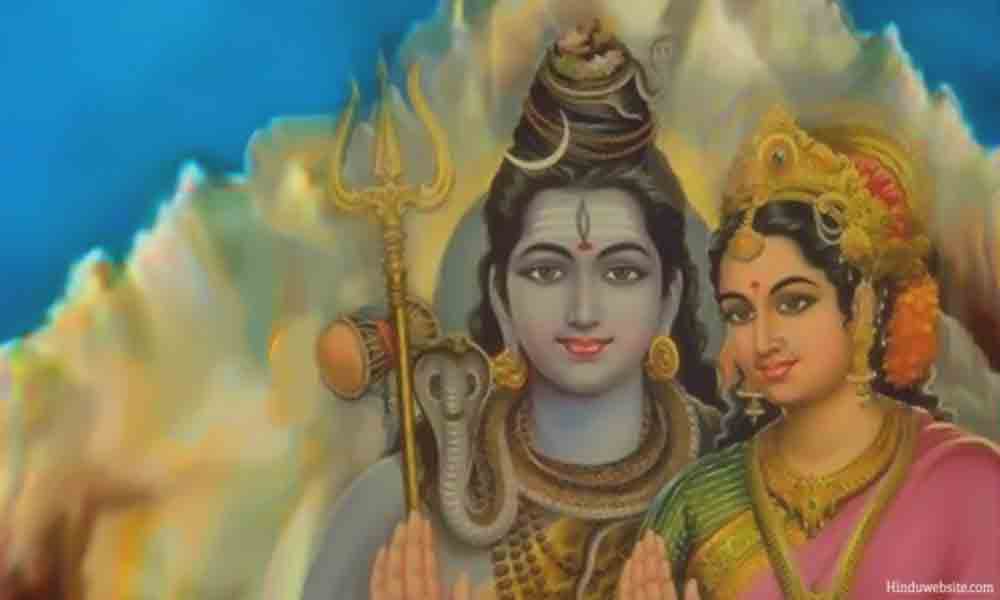
Installation of the Devata
PARVATI, the Mother of the three worlds, Her mind engrossed with thoughts for the purification of men polluted with the impurities of the Kali Age, humbly asked Mahesha, the Deva among Devas, who had thus spoken of the essence of all the Nigamas, which is the seed of heaven and final liberation (as follows) (1):
Shri Devi said:
How should the form of Mahakali be thought of, She who is the Great Cause, the Primordial Energy, the Great Effulgence, more subtle than the subtlest elements? (2).
It is only that which is the work of Prakriti which has form. How should She have form? She is above the most high. It behoves thee, O Deva! to completely remove this doubt of mine (3).
Shri Sadashiva said:
Beloved! I have already said that to meet the needsof the worshippers the image of the Devi is formed according to Her qualities and actions (4).
As white, yellow, and other colours all disappear in black, in the same way, O Shailaja! all beings enter Kali (5).
Therefore it is that by those who have attained the knowledge of the means of final liberation, the attributeless, formless, and beneficent Kalashakti is endowed with the colour of blackness (6).
As the eternal and inexhaustible One image of Kala and soul of beneficence is nectar itself, therefore the sign of the Moon is placed on her forehead (7). As She surveys the entire universe, which is the product of time, with Her three eyes the Moon, the Sun, and Fire therefore she is endowed with three eyes (8).
As She devours all existence, as She chews all things existing with her fierce teeth, therefore a mass of blood is imagined to be the apparel of the Queen of the Devas (at the final dissolution) (9).
As time after time She protects all beings from danger, and as She directs them in the paths of duty, her hands are lifted up to dispel fear and grant blessings (10).
As She encompasses the universe, which is the product of Rajoguna, she is spoken of, O Gentle One! as the Devi who is seated on the red lotus, gazing at Kala drunk with intoxicating wine and playing with the universe. The Devi also, whose substance is intelligence, witnesseth all things (11-12).
It is for the benefit of such worshippers as are of weak intelligence that the different shapes are formed according to the attributes (of the Divinity) (13).
Shri Devi said:
What merit does the worshipper gain who makes an image of the Great Devi of mud, stone, wood, or metal, in accordance with the representation described by Thee for the salvation of humanity, and who decks the same with clothes and jewels, and who, in a beautifully decorated house, consecrates it? (14-15).
O Lord! out of Thy kindness for me, reveal this also, with all the particular rules according to which the image of the Devi should be consecrated (16).
Thou hast already spoken of the consecration of Tanks, Wells, Houses, Gardens, and the images of Devas, but Thou didst not speak in detail (17).
I wish to hear the injunctions relating to them from thy lotus-mouth. Out of thy kindness, speak, O Para-meshana! if it pleases Thee (18).
Shri Sadashiva said:
O Parameshvari! this supreme essence about which Thou hast asked is very mysterious. Do thou, therefore, listen attentively (19).
There are two classes of men those who act with, and without, a view to the fruits of action. The latter attain final liberation. I am now speaking of the former (20).
Beloved! the man who consecrates the image of a Deva goes to the region of such Deva, and enjoys that which is there attainable (21).
He who consecrates an image of mud stays in such region for ten thousand kalpas. He who consecrates an image of wood stays there ten times that period. In the case of the consecration of a stone image the length of stay is ten times the latter period, and in the case of the consecration of a metal image it is ten times the last-mentioned period (22).
Listen to the merit which is acquired by the man who, in the name of any Deva, or for the attainment of any desire, builds and consecrates and gives away a temple made of timber and thatch and other materials, or renovates such a temple, decorated with flags and images of the carriers of the Deva (23).
He who gives away a thatched temple shall live in the region of the Devas for one thousand koti years (24).
He who gives away a brick-built temple shall live a hundred times that period, and he who gives away a stone-built temple, ten thousand times the last-mentioned period (25).
Adya! the man who builds a bridge or causeway shall not see the region of Yama, but will happily reach the abode of the Suras, and will there have enjoyment in their company (26).
He who dedicates trees and gardens goes to the region of the Devas, and lives in celestial houses surrounded by Kalpa trees in the enjoyment of all desired and agreeable enjoyments (27).
Those who give away ponds and the like for the comfort of all beings are washed of all sins, and, having attained the blissful region of Brahma, reside there a hundred years for each drop of water which they contain (28).
Devi! the man who dedicates the image of a Vahana for the pleasure of any Deva shall live continually in the region of such Deva, protected by Him (29).
Ten times the merit which is acquired on earth by the gift of a Vahana made of mud is acquired by the gift of one made of wood, and ten times the latter is acquired by the gift of one made of stone. Should one made of brass or bell-metal or copper, or any other metal, be given, then the merit is multiplied in each case tenfold (30-31).
The excellent worshipper should present a great lion to the temple of Devi, a bull to the temple of Shangkara, and a Garuda to the temple of Keshava (32).
The geat lion has sharp teeth, a ferocious mouth, and mane on his neck and shoulder. The claws of his four feet are as hard as the thunderbolt (33).
The bull is armed with horns, is white of body, and has four black hoofs, a large hump, black hair at the end of his tail, and a black shoulder (34).
The Garuda is winged, has thighs like a bird, and a face like a man s, with a long nose. He is seated on his haunches, with folded palms (35).
By the present of flags and flag-staffs the Devas remain pleased for a hundred years. The flag-staff should be thirty-two cubits long (36), and should be strong, without defects, straight, and pleasant to look at. It should be wrapped round with a red cloth, with a chakra at its top (37)
The flag should be attached to the top of the staff, and should be marked with the image of the carrier of the particular Devata. It should be broad at the part nearest the staff and narrow at the other end. It should be made of fine cloth. In short, whatever ornaments the top of the flag-staff is a flag (38).
Whatever a man presents with faith and devotion in the name of a Deva, be it clothes, jewels, beds, carriages, vessels for drinking and eating, pan plates, spittoon, precious stones, pearl, coral, gems, or anything else with which he is pleased, such a man will reach the region of such Deva and receive in turn a Koti times the presents he made (39-40).
Those who worship with the object of attaining a particular reward gain such reward which (however) is as destructible as a kingdom acquired in a dream. Those, however, who rightly act without hope of reward attain nirvana, and are released from rebirth (41).
In ceremonies relating to the dedication of a reservoir of water, a house, a garden, a bridge, a causeway, a Devati, or a tree, the Vastu Spirit should be carefully worshipped (42).
The man who performs any of these ceremonies without worshipping the Vastu-Daitya is troubled by the Vastu-Daitya and his followers (43).
The twelve followers of the Vastu Daitya are Kapi-lasya, Pingakesha, Bhishana, Raktalochana, Kotara-raksha, Lambakarna, Dirghajanggha, Mahodara, Ashvatunda, Kakakantha, Vajravahu, and Vratantaka, and these followers of Vastu should be propitiated with great care (44-45).
Now, listen! I am speaking of the Mandala where the Vastu-Purusha should be worshipped (36).
On an altar or on a level space, which has been well washed with pure water, a straight line should be drawn, one cubit in length, from the Vayu to the Ishana corner.
In the same manner another line should be drawn from the Ishana to the Agni corner, and another from the Agni to the Nairita corner, and then from the Nairita to the Vayu corner (47-48).
By these straight lines a square mandala should be drawn (49). Then two lines should be drawn from corner to corner (diagonally) to divide the mandala into four parts, like four fish-tails (50).
The wise man should then draw two lines, one from the West to the East, and the other from the North to the South, through the point where the diagonal lines cut one another, so as to pass through the tip of the fish-tails (51).
Then four diagonal lines should be drawn connecting the corners of the four inner squares so formed by the lines at each of the corners (52).
According to these rules, sixteen rooms should be drawn with five different colours, and an excellent yantra thus made (53).
In the four middle rooms draw a beautiful lotus with four petals, the pericarp of yellow and red colour, and the filaments of red (54).
The petals may be white or yellow, and the interstices may be coloured with any colour chosen (55).
Beginning with the corner of Shambhu, the twelve rooms should be filled up with the four colours viz., white, black, yellow, and red (56).
In filling up the rooms one should go towards one s right, and in the worship of the Devas therein one should go to the left (57).
The Vastu Spirit should be worshipped in the lotus, and the twelve daityas, Kapilasya and others, should be worshipped in the twelve rooms, beginning with the Ishana corner (58).
Fire should be consecrated according to the injunctions laid down for Kushandika, and after offer of oblations to the best of one s ability, the Vastu-yajna should be concluded (59).
I have thus described, O Devi! the auspicious Vastu worship, by the performance of which a man never suffers dangers from Vastu (and his followers) (60).
Shri Devi said:
Thou hast described the mandala of, and the injunctions relating to, the worship of Vastu, but thou hast not spoken of the Dhyana, my husband; do thou now reveal it (61).
Shri Sadashiva said:
I am speaking of Dhyana of the Vastu-Rakshasa, by constant and devoted repetition of which all dangers are destroyed. O Maheshani! do thou listen (62).
The Deva Vastu-pati should be meditated upon as four-armed, of great body, his head covered with matted hair, three eyed, of ferocious aspect, decked with garlands and earrings, with big belly and long ears and hairy body, wearing yellow garments, holding in his hand the mace, the trident, the axe, and the Khatvanga. Let him be pictured as (red) like the rising Sun and like the God of Death to one s enemies, seated in the padmasana posture on the back of a tortoise, surrounded by Kapilasya and other powerful followers, carrying swords and shields (63-66).
Whenever there is panic caused by pestilence or epidemics, an apprehension of any public calamity, danger to one s children, or fear arising from ferocious beasts or Rakshasas, then Vastu with his followers should be meditated upon as above, and then worshipped, and thus all manner of peace may be obtained by the offer of oblations of sesamum-seeds, ghee, and payasa (67-68).
O Suvrata! in these rites the Grahas and the ten Dikpalas should be worshipped in the same way as Vastu is worshipped (69).
Brahma, Vishnu, Rudra, Vani, Lakshmi, the celestial mothers, Ganesha, and the Vasus, should also be worshipped (70).
O Kalika! if in these rites the Pitris are not satisfied, then all which is done becomes fruitless, and there is danger in every stage (71).
Therefore, O Maheshi! in all these rites Abhyudayika. Shraddha should be performed for the satisfaction of the Pitris (72).
I shall now speak of the Graha-yantra, which is the cause of all kinds of peace. If Indra and all the planets are worshipped, then they grant every desire (73).
In order to draw the yantra three triangles should be drawn with a circle outside them, and outside, but touching the circle, eight petals should be drawn (74).
Then should a beautiful Bhupura be drawn (outside the yantra) with four entrances, and (outside the Bhupura) between the East and North-East corners a circle should be drawn with its diameter the length of a pradesha, and between the West and the South-West corners another similar circle should be drawn (75-76).
Then the nine corners should be filled up with colours of the nine planets, and the left and right sides of the two inner triangles should be made white and yellow, and the base should be black. The eight petals should be filled up with the colours of the eight regents of the quarters (77-78).
The walls of the Bhupura should be decorated with white, red, and black powders, and, O Devi! the two circles outside the Bhupura should be coloured red and white, and the intervening spaces of the yantra may be coloured in any manner the wise may choose (79-80).
Listen now to the order in which each planet should be worshipped in the particular chambers, and in which each Dikpati should be worshipped in the particular petals, and as to the names of the Devas who are present at each particular entrance (81).
In the inner triangle the Sun should be worshipped, and in the angles of the two sides Aruna and Shikha. Behind him with the garland of rays the two standards of the two fierce ones (Shikha and Aruna) should be worshipped (82).
Worship the maker of nights in the corner above the Sun on the East, in the Agni corner Mangala, on the South side Budha, in the Nairrita corner Vrihaspati, on the West Shukra, in the Vayu corner Shani, in the corner on the North Rahu, and in the Ishana corner Ketu, and, lastly, round about the Moon the multitude of stars (83-84). Sun is red, Moon is white, Mangala is tawny, Budha is pale or yellowish-white, Vrihaspati is yellow, Shukra is white, Shani is black, and Rahu and Ketu are of variegated colour; thus I have spoken of the different colours of the Grahas (85-86).
The Sun should be meditated upon as having four hands, in two of which he is holding lotuses; and of the other two, one hand is lifted up to dispel fear, and the other makes the sign of blessing. The Moon should be meditated upon as having nectar in one hand, and the other hand in the attitude of giving. Mangala should be meditated upon as slightly bent and holding a staff in his hands. Budha, the son of Moon, should be meditated upon as a boy, the locks of whose hair play about upon his forehead. Guru should be meditated upon with a sacred thread, and holding a book in one hand and a string of Rudraksha beads in the other; and the Guru of Daityas should be meditated upon as blind of one eye, and Shani as lame, and Rahu as a trunkless head, and Ketu as a headless trunk, both deformed and wicked (86-87).
Having worshipped each of the planets in this manner, the eight Dikpalas, Indra and others, beginning from the East, should be worshipped (89).
He of a thousand eyes, of a yellow colour, should first be worshipped. He is dressed in yellow silk garments, and, holding the thunder in his hand, is seated on Airavata (90).
The body of Agni is of red hue. He is seated on a goat; in his hand is the Shakti. Yama is black, and, holding a staff in his hand, is seated on a bison. Nirriti is of dark green colour, and, holding a sword in his hand, is seated on a horse. Varuna is white, and, seated on an alligator, holds a noose in his hand. Vayu should be meditated on as possessed of a black radiance, seated on a deer and holding a hook. Kuvera is of the colour of gold, and seated on a jewelled lion-seat, holding the noose and hook in his hands. He is surrounded by Yakshas, who are singing his praises. Ishana is seated on the bull; he holds the trident in one hand, and with the other bestows blessings, He is dressed in raiments of tiger-skin, and his effulgence is like that of the full moon (91-95).
Having thus meditated upon and worshipped them in their order, Brahma should be worshipped in the upper circle, which is outside the mandala, and Vishnu in the lower one. Then the Devatas at the entrances should be worshipped (96).
Ugra, Bhima, Prachanda, and Isha, are at the eastern entrance; Jayanta, Kshetra-pala, Nakulesha, and Vrihat-shirah, are at the southern entrance; at the door on the west are Vrika, Ashva, Ananda, and Durjaya; and Trishirah, Purajit, Bhimanada, and Mahodara are at the northern entrance. As protectors of the entrances, they are all armed with weapons, offensive and defensive (97-98).
Suvrata! listen to the meditation on Brahma and Ananta. Brahma is of the colour of the red lotus, and has four hands and four faces. He is seated on a swan. With two of his hands he makes the signs which dispel fear and grant boons, and in the others he holds a garland and a book. Ananta is white as the snow, the Kunda flower, or the Moon. He has a thousand hands and a thousand faces, and he should be meditated upon by Suras and Asuras (99-101).
Beloved! I have now spoken of the meditation, the mode of worship, and the yantra. Now, my beloved, listen to their Mantras in their order, beginning with the Vastu Mantra (102).
Mantras
When Ksha-kara is placed on the Carrier of Oblations. and the long vowels are then added to it, and ornamented with the nada-vindu, the six-lettered Vastu Mantra is formed (103).
The Suryya Mantra is thus formed: first the tara should be said; then the Maya; then the word tigma-rashme; then the word arogya-daya (in the dative singular); and, last of all, the wife of Fire (104).
The recognized or approved Mantra of Soma is formed by saying the vijas of Kama, Maya and Vani, then Amrita-kara, amritam plavaya plavaya svaha (105).
The Mantra of Mangala is proclaimed to be Aing hrang hring sarva-dushtan nashaya nashaya svaha (106).
The Mantra of the son of Soma is Hrang, Shring, Saumya sarvan kaman puraya svaha(107).
The Mantra of the Sura-Guru is formed thus: Let the tara precede and follow the Vija of Vani, and then say, Abhishtam yachchha yachchha, and lastly svaha (108).
The Mantra of Shukra is Shang, Shing, Shung, Shaing, Shaung, Shngah (109).
The Mantra of the Slowly Moving One is Hrang hrang hring hring sarva-shatrun vidravaya vidravaya Martan-dasunave namah Destroy, destroy all enemies I bow to the son of Martanda (110).
The Mantra of Rahu is Rang, Hraung, Bhraung, Hring Soma-shatro shatrun vidhvangsaya vidhvangsaya Rahave namah--O Enemy of Soma (Moon)! destroy, destroy all enemies. I bow to Rahu (111).
Krung, Hrung, Kraing to Ketu is proclaimed to be the Mantra of Ketu (112).
Lang, Rang, Mring, Strung, Vang, Yang, Kshang, Haung, Vring, and Ang are in their order the ten Mantras of the ten Dikpalas, beginning with Indra and ending with Ananta (113).
The names of the other attendant Devas are their Mantras; in all instances where there is no Mantra mentioned this is the rule. (114).
Sovereign Mistress of the Devas! the wise man should not add Namah to Mantras that end with the word Namah, nor should he put the wife of Vahni to a Mantra that ends with Svaha (115).
To the Planets and others should be given flowers, clothes, and jewels, but the colour of the gifts should be the same as that of the respective Planets; otherwise they are not pleased (116).
The wise man should place fire in the manner prescribed for Kushandika, and perform homa either with flowers of variegated colours or with sacred fuel (117).
In rites for the attainment of peace or good fortune, or nourishment or prosperity, the Carrier of Oblations is called Varada; in rites relating to consecration he is called Lohitaksha; in destructive rites he is called Shatruha (118).
Maheshani! in Shanti, Pushti, and Krura rites the man who sacrifices to the Planets will obtain the desired end (119).
As in the rites relating to the consecration the Devas should be worshipped and libations offered to the Pitris, so also should there be the same sacrifices to Vastu and the Planets (120).
Should one have to perform two or three consecratory and sacrificial rites on the same day, then the worship of the Devas, the Shraddha of the Pitris, and consecration of fire are required once only (121).
One who desires the fruit of his observances should not give to any Deva reservoirs of water, houses, gardens, bridges, causeways, carriers, conveyances, clothes, jewels, drinking-cups, and eating-plates, or whatever else he may desire to give, without first sanctifying the same (122-123).
In all rites performed with an ultimate object the wise one should in all cases perform a sangkalpa, in accordance with directions, for the full attainment of the good object (124).
Complete merit is earned when the thing about to be given is first sanctified, worshipped, and mentioned by name, and then the name of him to whom it is given is pronounced (125).
I will now tell you the Mantras for the consecration of reservoirs of water, houses, gardens, bridges, and cause-ways. The Mantras should always be preceded by the Brahma-Vidya (126).
Mantras
Reservoir of Water! thou that givest life to all beings! thou that art presided over by Varuna! may this consecration of thee (by me) give satisfaction to all beings that live and move in water, on land, and in air (127).
House made of timber and grass! thou art the favourite of Brahma; I am consecrating thee with water; do thou be always the cause of pleasure (128).
When consecrating a house made of bricks and other materials, one should say: "House made of bricks," etc. (129).
Mantras
Garden! thou art pleasant by reason of thy fruits, leaves, and branches, and by thy shadows. I am sprinkling thee with the sacred water (of sacred places); grant me all my wishes (130).
Bridge! thou art like the bridge across the Ocean of Existence, thou art welcome to the wayfarer; do thou, being consecrated by me, grant me the fitting reward thereof (131).
Causeway! I am consecrating thee, as thou helpest people in going from one place to another: do thou likewise help me in my way to Heaven (132).
The wise ones shall use the same Mantra in consecrating a tree as is prescribed for the sprinkling of a garden (133).
In consecrating all other things, the Pranava, Varuna, and Astra should be used (134).
Those vahanas that can (or ought to be) bathed should be bathed with the Brahma-gayatri; others should be purified by arghya-water taken up with the ends of kusha grass (135).
After performing prana-pratishtha, calling it by its name, the vahana called by its name should be duly worshipped, and when decked out should be given to the Devata (136).
Whilst consecrating a reservoir, Varuna, the lord of aquatic animals, should be worshipped. In the case of a house, Brahma, the lord of all things born, should there be worshipped. Whilst consecrating a garden, a bridge a causeway, Vishnu, who is the protector of the universe, the soul of all, who witnesseth all and is omnipresent, should be worshipped (137).
Shri Devi said:
Thou hast spoken of the different injunctions relating to the different rites, but thou hast not yet shown the order in which man should practise them (138).
Rites not properly performed according to the order enjoined do not, even though performed with labour, yield the full benefit to men who follow the life of Karmma (139).
Shri Sadashiva said:
O Parameshani! thou art beneficent like a mother. What thou hast said is indeed the best for men whose minds are occupied with the results (of their efforts) (140).
The practices relating to the aforementioned rites are different. Devi! I am relating them in their order, beginning with the Vastu-yaga. Do thou listen attentively (141).
(He who wishes to perform the Vastu-yaga) should the day previous thereto live on a regulated or a restricted diet. After bathing in the early auspicious hour of morning, and performing the ordinary daily religious duties, he should worship the Guru and Narayana (142).
The worshipper should then, after making sangkalpa, worship Ganesha and others for the attainment of his own object, according to the rules shown in the ordinances (143).
Dhyanam
Worship Ganapati who is of the colour of the Bandhuka flower, and has three eyes; whose head is that of the best of elephants; whose sacred thread is made of the King of Snakes; who is holding in his four lotus hands the conch, the discus, the sword, and a spotless lotus; on whose forehead is the rising young moon; the shining effulgence of whose body and raiments is like that of the Sun; who is decked with various jewels, and is seated on a red lotus (144).
Having thus meditated upon and worshipped Ganesha to the best of his ability, he should worship Brahma, Vani, Vishnu, and Lakshmi (145).
Then, after worshipping Shiva, Durga, the Grahas, the sixteen mothers, and the Vasus in the Vasudhara, he should perform the Vriddhishraddha (146).
Then the mandala of the Vastu-daitya should be drawn, and there the Vastu-daitya with his followers should be worshipped (147).
Then there make a sthandila and purifying fire as before; first perform Dhara-homa, and then commence Vastu-homa (148).
Oblations should be offered to the Vastu-purusha and all his followers according to the best of one s ability. The sacrifice should be brought to a close by the gift of oblations to the Devas worshipped (149).
When Vastu-yajna is separately performed, this is the order which is prescribed, and in this order also the sacrifice to the planets should be performed (150).
Moreover, the Planets being the principal objects of worship, they should not be subordinately worshipped. The Vastu should be worshipped immediately after the sangkalpa (151).
Ganesha and the other Devas should be worshipped as in Vastu-yaga. I have already spoken to you of the Yantra and Mantra and Dhyana of the Planets (152).
I have, O Gentle One! during my discourse with thee spoken of the order to be observed in the yajnas of the planets and of Vastu. I shall now speak to thee of the various praiseworthy acts, beginning with the consecration of wells (153).
After making sangkalpa in the proper manner, Vastu should be worshipped either in a mandala, or a jar, or a Shilagrama, according to inclination (154).
Then Ganapati should be worshipped, as also Brahma and Vani, Hari, Rama, Shiva, Durga, the Planets, the Dikpatis (155).
Then the Matrikas and the eight Vasus having been worshipped, Pitrikriya should be performed. Since Varuna is principal Deva (for the purposes of this ceremony), he should then be worshipped with particular care (156).
Having worshipped Varuna with various presents to the best of his ability, Varuna Homa should then be performed in Fire duly consecrated (157). And after offering oblations to each of the Devas worshipped, he should bring the Homa rite to an end by giving the Purnahuti (158).
Then he should sprinkle the excellent well, decorated with flagstaffs and flags, garlands, scents, and vermilion, with the Prokshana Mantra, spoken of before (159).
Then he should, in the name of the Deva, or for the attainment of the object of his desire, give away the well or tank for the benefit of all beings (160).
Then the most excellent worshipper should make supplication with folded palms as follows:
"Be well pleased, all beings, whether living in the air or on earth or in water; I have given this excellent water to all beings; may all beings be satisfied by bathing in, drinking from, or plunging into this water; I have given this common water to all beings. Should anyone by his ownmisfortune be endangered in this, may I not be guilty of that sin, may my work (good work) bear fruit!" (161-163).
Then presents should be made, and Shanti and other rites performed, and thereafter Brahmanas, Kaulas, and the hungry poor should be fed. Shive! this is the order to be observed in the consecration of all kinds of reservoirs of water (164-165).
In the consecration of a Tadaga and other kinds of reservoirs of water there should be a Nagastambha and some aquatic animals (166).
Aquatic animals, such as fish, frogs, alligators, and tortoises, should be made of metal, according to the means of the person consecrating (167). There should be made two fish and two frogs of gold, two alligators of silver, and two tortoises, one of copper and another of brass (168).
After giving away the Tadaga or Dirghika or Sagara with these aquatic animals, Naga should, after having been supplicated, be worshipped (169).
Ananta, Vasuki, Padma, Mahapadma, Takshaka, Kulira, Karkata, and Shankha all these are the protectors of water (170).
These eight names of the Nagas should be written on Ashvattha leaves, and, after making japa of the Pranava and the Gayatri, the leaf should be thrown into a jar (171).
Calling upon Sun and Moon to witness, the leaves should be mixed up together, and one-half should be drawn therefrom, and the Naga whose name is drawn should be made the protector of water (172).
Then a wooden pillar, auspicious and straight, should be brought and smeared with oil and turmeric, and bathed in consecrated water, to the accompaniment of the Vyahriti and the Pranava, and then the Naga who has been made the protector of the water should be worshipped with the Shaktis Hri, Shri, Kshama, and Shanti (173-174).
Mantra
O Naga! Thou art the couch of Vishnu, Thou art the adornment of Shiva; do Thou inhabit this pillar and protect my water (175).
Having thus made supplication to Naga, the pillar should be set in the middle of the reservoir, and the dedicator should then go round the Tadaga, keeping it on his right (176).
If the pillar has been already fixed, then the Naga should be worshipped in a jar, and, throwing the water of the jar into the reservoir, the remainder of the rites should be performed (177).
Similarly, the wise man who has taken a vow to consecrate a house should perform the rites, beginning with the worship of Vastu, and ending with that of the Vasus, and perform the rites relating to the Pitris as prescribed for the consecration of a well, and the excellent devotee should worship Prajapati and do Prajapatya homa (178-179).
The house should be sprinkled with the Mantra already mentioned, and then worshipped with incense, etc.; after that, with his face to the Ishana corner, he should pray as follows (180):
Mantra
"O Room (or House)! Prajapati is thy Lord; decked with flowers and garlands and other decorations, be thou always pleasant for our happy residence." (181).
He should then offer presents, and, performing Shanti rites, accept blessings. Thereafter he should feed Vipras, Kulinas, and the poor to the best of his ability (182).
O Daughter of the Mountain! if the house is being consecrated for someone else, then in the place "our residence" should be said "their residence"; and now listen to the ordinances relating to the consecration of a house (or room) for a Deva (183).
After consecrating the house in the above manner, the Deva should be approached with the blowing of conch-shells and the sound of other musical instruments, and he should be supplicated thus (184):
Mantra
Rise, O Lord of the Deva among Devas! thou that grantest the desires of thy votaries! come and make my life blessed, O Ocean of Mercy! (185).
Having thus invited (the Deva) into the room, he should be placed at the door, and the Vahana should be placed in front of Him (186).
Then on the top of the house a trident or a discus should be placed, and in the Ishana corner a staff should be set with a flag flying from it (187).
Let the wise man then decorate the room with awnings, small bells, garlands of flowers, and mango-leaves, and then cover the house up with celestial cloth (188).
The Deva should be placed with his face to the North, and in the manner to be described he should be bathed with the things prescribed. I now am speaking of their order; do thou listen (189).
After saying Aing, Hring, Shring, the Mula Mantra should be repeated, and then let the worshipper say:
Mantra
I am bathing thee with milk; do thou cherish me like a mother (190).
Repeating the three Vijas and the Mula Mantra aforesaid, let him then say:
Mantra
I am bathing thee to-day with curds; do thou remove the heat of this mundane existence (191).
Repeating again the three Vijas and the Mula Mantra, let him say:
Mantra
O Giver of Joy to all! being bathed in honey, do Thou make me joyful (192).
Repeating the Mula Mantra as before, and inwardly reciting the Pranava and the Savitri, he should say:
Mantra
I am bathing Thee in ghee, which is dear to the Devas, which is longevity, seed, and courage; do Thou, O Lord! keep me free from disease (193).
Again repeating the Mula Mantra, as also the Vyahriti and the Gayatri, let him say:
Mantra
O Devesha ! bathed by me in sugar water, do Thou grant me (the object of) my desire (194).
Repeating the Mula Mantra, the Gayatri, and the Varuna Mantra, he should say:
Mantra
I am bathing thee with cocoanut-water, which is the creation of the Vidhi, which is divine, which is welcome to Devas, and is cooling, and which is not of the world; I bow to thee (195).
Then, with the Gayatri and the Mula Mantra, the Deva should be bathed with the juice of sugar-cane (196).
Repeating the Kama Vija and the Tara, the Savitri, and the Mula Mantra, he should, whilst bathing the Deva, say:
Mantra
Be thou well bathed in water scented with camphor, fragrant aloe, saffron, musk, and sandal; be thou pleased to grant me enjoyment and salvation (197).
After bathing the Lord of the World in this manner with eight jarfuls (of water, etc.), He should be brought inside the room and placed on His seat (198).
If the image be one which cannot be bathed, then the Yantra, or Mantra, or the Shalagrama-shila, should be bathed and worshipped (199).
If one be not able to bathe (the Deva) in manner above, then he should bathe (Him) with eight, seven, or five jars of pure water (200).
The size and proportions of the jar has been already given whilst speaking of Chakra worship. In all rites prescribed in the Agmas that is the jar which is appropriate (201).
Then the Great Deva should be worshipped according to the injunctions to be followed in His worship. I shall speak of the offerings. Do thou, O Supreme Devi! Listen (202).
A seat, welcome, water to wash the feet, offerings, water for rinsing the mouth, Madhuparka, water for sipping, bathing water, clothes and jewels, scents and flowers, lights and incense-sticks, edibles and words of praise, are the sixteen offerings requisite in the worship of the Devas (203-204).
Padya, Arghya, Achamana, Madhuparka, Achamya, Gandha, Pushpa, Dhupa, Dipa, Naivedya these are known as Dashopachara (ten requisite offerings) (205).
Gandha, Pushpa, Dhupa, Dipa, and Naivedya, are spoken of as the Panchopachara (five offerings) in the worship of a Deva (206).
The articles should be sprinkled with water taken from the offering with the Weapon Mantra, and be worshipped with scents and flowers, the names of separate articles being mentioned. (207)
Mentally repeating the Mantra that is about to be said, as also the Mula Mantra, and the name of the Deva in the dative case, the words of gift should be repeated (208).
I have told you of the way in which the things to be given to the Devas should be dedicated. The learned man should in this manner give away an article to a Deva (209).
I have shown (whilst describing) the mode of worship of the Adya Devi how Padya, Arghya, etc., should be offered, and how Karana should be given (210).
To such of the Mantras as were not spoken then, do thou, O Beloved ! listen to them here; these should be said when Asana and other requisites are offered (211).
Mantra
(O Deva!) Thou who residest within all beings! who art the innermost of all beings! I am offering this seat for Thee to sit. I bow to Thee again and again (212).
O Deveshi! after giving the excellent asana in this way, the giver of the asana sbould with folded arms bid him welcome as follows (213):
Mantra
(O Deva!) Thou art He whom even the Devas seek for the accomplishment of their objects, yet for me Thy auspicious visit has easily been obtained. I bow to Thee, O Supreme Lord! (214).
My life s aim is accomplished to-day; all my efforts are crowned with success; I have obtained the fruits of my tapas all this by Thy auspicious coming (215).
Ambika! the Deva should thus be invited, prayed to, and questioned as to His auspicious coming, and then, taking padya, the following Mantra should be repeated (216):
Mantra
By the mere touch of the washings of Thy feet the three worlds are purified; I am offering Thee padya for washing Thy lotus feet (217). He by whose grace is attained all manner of supreme bliss, to Him who is the Soul of all beings I offer this Anandarghya (218).
Then pure water which has been scented with nutmeg, cloves, and kakkola, should be poured out, and taken and offered with the following (219):
Mantra
(O Lord!) By the mere touch of that which Thou hast touched the whole of this impure world is purified; for washing that lotus mouth I offer thee this achamaniya (220).
Then, taking madhuparka, offer it with devotion and with the following (221):
Mantra
For the destruction of the three afflictions, for the attainment of uninterrupted bliss, I give Thee to-day, O Parameshvara! this madhuparka; be Thou propitious (222).
By the mere touch of anything which has touched Thy mouth things impure become pure: this punarachama-niyam is for the lotus mouth of Thine (223).
Taking water for the bath, and pouring it and consecrating it as before, it should be placed before the Deva, and the following Mantra should be repeated (224):
Mantra
To Thee whose splendour envelops the world, from whom the world was born, who is the support of the world, do I offer this water for Thy bath (225).
When offering bathing water, clothes, and edibles, achamaniya should be given as each is offered, and, after offering other articles, water should be given only once (226).
Bringing the cloth consecrated as aforementioned, holding it up with both hands, the wise man should repeat the following (227):
Mantra
Without any raiments as Thou art, Thou hast kept Thy splendour or glory concealed by Thy maya. To Thee I offer these two pieces of cloth. I bow to Thee (228).
Taking different kinds of ornaments made of gold and silver and other materials, and sprinkling and consecrating them, he should offer them to the Deva, uttering the following (229):
Mantra
To Thee who art the ornament of the Universe, who art the one cause of the beauty of the universe, I offer these jewels for the adornment of Thy illusion-image (230).
Mantra
To Thee who by the subtle element of smell hast created the earth which possesses all scents, to Thee, the Supreme Soul, I offer this excellent scent (231).
Mantra
By me have been dedicated with devotion beautiful flowers, and charming and sweet scents prepared by Devas: do Thou accept this fiower (232).
Mantra
This incense-stick is the sap of the trees; it is Divine, and possesses a delicious scent, and is charming, and is fit to be inhaled by all beings. I give it to Thee to smell (233).
Mantra
Do Thou accept this light which illumines and has a strong flame, which removes all darkness, and which is brightness itself, and makes bright that which is around it (234).
Mantra
This offering of food is of delicious taste, and consists of various kinds of edibles. I offer it to Thee in a devout spirit; do Thou partake of it (235).
Mantra
O Deva! this clear drinking-water, perfumed with camphor and other scents which satisfies all, I offer to Thee Salutation to Thee (236).
The worshipper should then offer pan made with camphor, catechu, cloves, cardamums, and, after offering achamaniya, bow to Him (237).
If the offerings are presented along with the vessels in which they are contained, then the names and description of the offerings may jointly be repeated when making the present, or the names (or description) of the vessels may separately be said and the same given (238).
Having worshipped the Deva in this manner, three double handfuls of flowers should be given to the Deva. Then, sprinkling the temple and its awnings with water, the following Mantra should be said with folded palms (239):
Mantra
Temple! thou art adorable of all men; thou grantest virtue and fame. In affording a resting-place to this Deva, do thou be like unto Sumeru (240). Thou art Kailasa, thou art Vaikuntha, thou art the place of Brahma, since thou art holding the Deva, who is the adored of the Devas within thee (241).
Since thou holdest within thyself the image of Him whose body is produced by Maya, and within whose belly exists this universe, with all that is movable and immovable therein (242). Thou art the equal of the Mother of the Devas; all the holy places are in thee; do thou grant all my desires, and do thou bring me peace. I bow to thee (243).
Having thus praised the temple decorated with the discus, flag, etc., and worshipped it three times, the worshipper should give it to the Deva, mentioning the object of his desire (444).
Mantra
To Thee, whose abode is the universe for Thy residence, I dedicate this temple.O Maheshana! do Thou accept it and in Thy mercy abide here (245).
Having said this and having made presents, the Deva to whom the temple has been dedicated should be placed on the altar to the accompaniment of the music of conches, horns, and other instruments (246).
He should then touch the two feet of the Deva and utter the Mula Mantra, and say, Sthang! Sthing! be Thou steady; this temple is made by me for Thee, and, having fixed the Deva there, he should pray again to the temple thus (247):
Mantra
Temple! be thou always in every way pleasant for the residence of the Deva; thou hast been dedicated by me; may the Lokas be lasting and without danger for me (248).
Help my fourteen generations of ancestors, my fourteen generations of successors, and me and the rest of my family to find places to reside in the abode of the Devas (249).
May I, by thy grace, attain the fruits attainable by performing all forms of yajnas, by visiting all the places of pilgrimage (250).
May my line continue so long as this world, so long as these mountains, so long as the Sun and Moon endure (251).
The wise man, after having thus addressed the temple and worshipped the Deva, should dedicate mirrors and other articles and the flag to Him (252).
Then the Vahana appropriate to the Deity should be given. To Shiva should be given a bull. Then pray to Him thus (253):
Mantra
O Bull! thou art large of body, thy horns are sharp, thou killest all enemies, thou art worshipped even by the Tridashas, as thou carriest on thy back the Lord of the Devas (254).
In thy hoofs are all the holy shrines, in thy hair are all the Vedic Mantras, in the tip of thy teeth are all the Nigamas, Agamas, and Tantras (255).
May the husband of Parvati, pleased with this gift of thee, give me a place in Kailasa, and do thou protect me always (256).
O Maheshani! do Thou listen to the manner of prayer upon giving a lion to Mahadevi or a Garuda to Vishnu (257).
Mantra
Thou didst display thy great strength in the wars between the Suras and the Asuras; thou didst give victory to the Devas, and didst destroy the Demons. Thou formidable one, thou art the favourite of the Devi, thou the favourite of Brahma, Vishnu, and Shiva; with devotion I am dedicating thee to the Devi; do thou destroy my enemies. I bow to thee (258-259).
O Garuda! most excellent bird! Thou art the favoured one of the husband of Lakshmi; Thy beak is hard like adamant; Thy talons are sharp, and golder are Thy wings. I bow to Thee, O Indra among birds! I bow to Thee, O King of birds! (260).
As Thou abidest near Vishnu with folded palms, do Thou, O Destroyer of the pride of enemies! help me to be there as Thou art (261). When Thou art pleased, the Lord of the Universe is pleased, and grants success (262).
When a gift is made to any Deva, an additional present should be made to the Deva for His acceptance of such gifts, and the merit of such rites should also be given to Him in a spirit of devotion (263).
He should then, with dancing, singing, and music, go round the temple, accompanied by his friends and kinsmen, keeping the temple on his right, and, having bowed to the Deva, feed the twice-born! (264).
This is the way in which a temple to a Deva should be dedicated, and the same rule is to be observed in the dedication of a garden, a bridge, a causeway, or a tree (265).
With this difference only: that in these rites the ever-existing Vishnu should be worshipped; but Puja and Homa, etc., are the same as in the case of the dedication of a temple (266).
No temple or other thing should be dedicated to a Deva whose image has not been consecrated. The rules laid down above are for the worship of and dedication to a Deva who has been worshipped and consecrated (267).
I shall now speak of the manner in which the auspicious Adya should be installed, and by which the Devi grants quickly all desires (268).
On the morning of the day (of Pratishtha) the worshipper should, after bathing and purifying himself, sit facing the North, and, having taken Sangkalpa, worship the Vastu-devata (269).
After performing the worship of the planets, the Protectors of the Quarters, Ganesha and others, and having performed the Shraddha of his Pitris, he should approach the image with a number of devout Vipras (270).
The excellent worshipper should then bring the image to the temple which has been dedicated, or to some other place, and there duly bathe it (271).
It should first be bathed with water, then with sandy earth, then with mud thrown up by the tusk of the boar or elephant, then with mud taken from the door of a Veshya, and then with mud from the lake of Pradyumna (272).
The wise man should then bathe the image with Pancha-kashaya and Pancha-pushpa, and three leaves, and then with scented oil (273).
The decoctions of Vatyala, Vadari, Jambu, Vakula, and Shalmali, are called the five Kashayas for bathing the Devi (274).
Karavira, Jati, Champaka, Lotus, and Patali, are the five flowers (275).
By three leaves are meant the leaves of Varvvara, Tulasi, and Vilva (276).
With the above-mentioned articles water should be mixed, but no water should be put into scented oil and the five nectars (277).
He should, after repeating the Vyahriti, the Pranava, the Gayatri, and the Mula Mantra, say, "I bathe thee with the water of these articles" (278).
The wise man should then bathe the image with the eight jars filled with milk and other ingredients in manners aforementioned (279).
The image should then be rubbed with powdered white wheat or sesamum cakes, or powdered shali rice, and thus cleansed (280).
After bathing the image with eight jars of holy water, and rubbing it with cloth of fine texture, it should bc brought to the place of worship (281).
Should one be unable to perform all these rites, then he should in a devout spirit bathe the image with twenty-five jars of pure water (282).
On each occasion that the Great Devi is bathed she should, to the best of one s ability, be worshipped (283).
Then, placing the image on a well-cleaned seat, She should be worshipped by offering padya, arghya, etc., and then prayed to (as follows) (284):
Mantra
O Image! thou that art the handicraft of Vishvakarmma, I bow to thee; thou art the abode of the Devi, I bow to thee; thou fulfillest the desire of the votary, I bow to thee (285).
In thee I worship the most excellent primordial Supreme Devi; if there be any defect in thee by reason of the want of skill of him who has fashioned thee, do thou make it good; I bow to thee (286).
He should then restrain his speech, and, placing his hand over the head of the Image, inwardly do japa of the Mula Mantra one hundred and eight times, and thereafter do Anga-nyasa (287).
He should then perform Shadanga-nyasa and Matri-kanyasa on the body of the Image, and, when performing Shadanga-nyasa, add one after the other the six long vowels to the Vija (288).
The eight groups of the letters of the alphabet preceded by the Tara, Maya, and Rama, with the Vindu, added to them, and followed by Namah, should be placed in different parts of the body of the Deva (289).
The wise man should place the vowels in the mouth; kavarga in the throat; chavargaon the belly; tavarga on the right and tavarva on the left arm; pavarga on the right thigh, and yavarga on the left thigh, and shavarga on the head (290-291).
Having placed these groups of the letters of the alphabet on different parts of the image (the worshipper) should perform Tattva-nyasa (as follows): (292)
Place on the two feet Prithivi-tattva; on the Linga Toya-tattva; on the region of the navel Tejas-tattva; on the lotus of the heart Vayu-tattva; on the mouth Gagana-tattva; on the two eyes Rupa-tattva; on the two nostrils Gandha-tattva; on the two ears Shabda-tattva; on the tongue Rasa-tattva; on the skin Sparsha-tattva. The foremost of worshippers should place Manas-tattva between the eyebrows, Shiva-tattva, Jnana-tattva, and Para-tattva on the lotus of a thousand petals; on the heart Jiva-tattva and Prakriti-tattva. Lastly, he should place Mahat-tattva and Ahangkara-tattva all over the body. The tattvas should, whilst being placed, be preceded by Tara, Maya, and Rama, and should be uttered in the dative singular, followed by namah (293-297).
Repeating the Mula Mantra, preceded and followed by each of the Matrika-varnas, with vindu added to them, and followed by the word namah, Matrika-nyasa should be performed at the Matrikasthanas (298). (The worshipper should then say):
Mantra
(Although) Thy radiance embraces all the sacrifices, and although Thy body embraces all being, this is the image that has been made of Thee. I place Thee here (299).
Thereafter the Devi should be meditated upon and invoked, according to the rules of worship, and after Prana-pratishtha the Supreme Devata should be worshipped (300).
The Mantras which are prescribed for the dedication of a temple to a Deva should be used in this ceremony, the necessary changes in gender being made (301).
The Devi should then be invoked into the fire, which has in due form been consecrated by the offer of oblations to the Devatas who are to be worshipped; and thereafter the Devi should be worshipped, and jata-karmma, etc., should be performed (302).
The Sangskaras are six in number viz., Jatakarmma, Namakarana, Nishkramana, Annaprashana, Chudikarana, and Upanayana this has been said by Shiva (303).
Repeating the Pranava, the Vyahritis, the Gayatri, the Mula Mantra, the worshipper used in the injunctions should say, "thine," and then the name of (the sangskara) jatakarmma, and others, and uttering, "I perform, Svaha," offer five oblations at the end of each sangskara (304-305).
Thereafter repeating the Mula Mantra and the name (given to the Devi), one hundred oblations should be offered, and the remnants of each oblation should be thrown over the head of the Devi (306).
The wise man, after having brought the ceremony to a close by Prayashchitta and other rites, should feed and thus please Sadhakas and Vipras and the poor and the helpless (307).
Should anyone be unable to perform all these rites, he should bathe (the Deva) with seven jars of water, and, having worshipped to the best of his ability, repeat the name of the Devi (308).
Beloved! I have now spoken to Thee of the Pratishtha of the illustrious Adya. In a similar way should men versed in the regulations carefully perform the Pratishtha of Durga and other Vidyas, Mahesha, and other Devatas, and of the Shiva-lingas that may be moved (309-310).
End of the Thirteenth Joyful Message, entitled "Installation of the Devata."
Suggestions for Further Reading
- Chapter 1 - Questions relating to the Liberation of Beings
- Chapter 2 - Introduction to the Worship of Brahman
- Chapter 3 - Description of the Worship of the Supreme Brahman
- Chapter 4 - Introduction of the Worship of the Supreme Prakriti
- Chapter 5 - The Formation of the Mantras, Placing of the Jar, and Purification of the Elements of Worship
- Chapter 6 - Placing of the Shri-patra, Homa, Formation of the Chakra, and other Rites
- Chapter 7 - Hymn of Praise (Stotra), Amulet (Kavacha), and the description of the Kula-tattva
- Chapter 8 - The Dharmma and Customs of the Castes and Ashramas
- Chapter 9 - The Ten Kinds of Purificatory Rites (Sangskara)
- Chapter 10 - Rites relating to Vriddhi Shraddha, Funeral Rites, and Purnabhisheka
- Chapter 11 - The Account of Expiatory Rites
- Chapter 12 - An Account of the Eternal and Immutable Dharmma
- Chapter 13 - Installation of the Devata
- Chapter 14 - The Consecration of Shiva-linga and Description of the Four Classes of Avadhutas
- Essays On Dharma
- Esoteric Mystic Hinduism
- Introduction to Hinduism
- Hindu Way of Life
- Essays On Karma
- Hindu Rites and Rituals
- The Origin of The Sanskrit Language
- Symbolism in Hinduism
- Essays on The Upanishads
- Concepts of Hinduism
- Essays on Atman
- Hindu Festivals
- Spiritual Practice
- Right Living
- Yoga of Sorrow
- Happiness
- Mental Health
- Concepts of Buddhism
- General Essays
Source: Mahanirvana Tantra Tantra of the Great Liberation, Translated by Arthur Avalon (Sir John Woodroffe) [1913]. While we have made every effort to reproduce the text correctly, we do not guarantee or accept any responsibility for any errors or omissions or inaccuracies in the reproduction of this text.