
Books On The History Of Hinduism And India
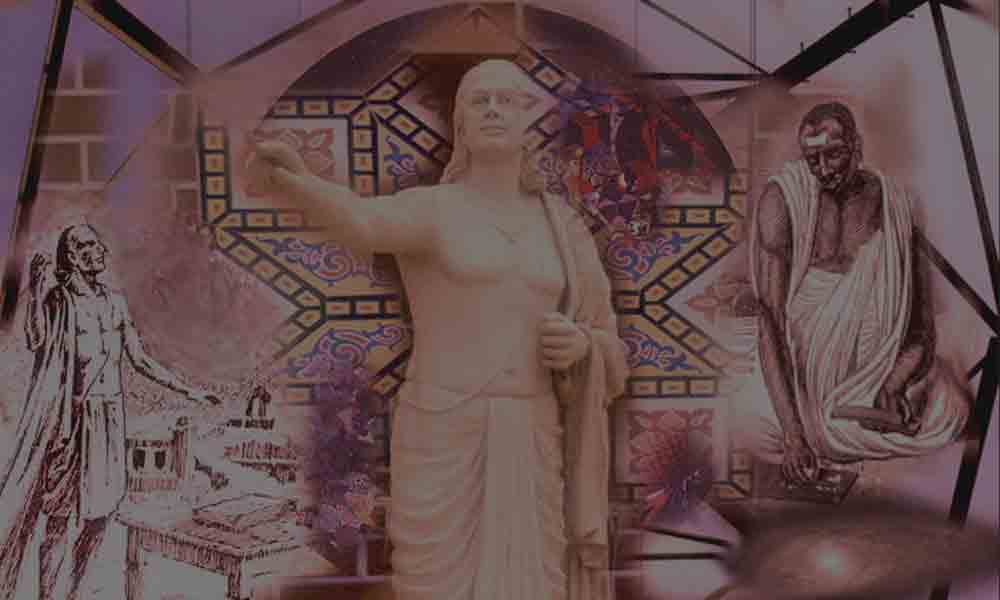
Find here a list of selected books on the history of India from antiquity to the modern day, palaces, art, artchitecture, religious and cultural development.
Books on Hinduism History by Category
Indus Valley Civilization
Recommended Books
Ancient Futures: Learning from Ladakh - Helena Norberg-Hodge
The Shape of Ancient Thought: Comparative Studies in Greek and Indian Philosophies - Thomas McEvilley
Vedic Astrology Simply Put: An Illustrated Guide to the Astrology of Ancient India - William Levacy
Vimana Aircraft of Ancient India and Atlantis (Lost Science Series) - David Hatcher Childress
Alien Identities : Ancient Insights into Modern UFO Phenomena - Richard L. Thompson
Savitri: A Tale of Ancient India - Aaron Shepard
Ancient India (People of the Ancient World) - Virginia Schomp
The Ajanta Caves: Ancient Paintings of Buddhist India - Benoy K. Behl
Ancient Angkor (River Book Guides) - Claude Jacques
History: Fiction or Science? Chronology 2 (Chronology) - Anatoly Fomenko
Indian Art (World of Art) - Roy C. Craven
In Search of the Cradle of Civilization - Georg Feuerstein
How to Kill a Dragon: Aspects of Indo-European Poetics - Calvert Watkins
The Healing Hand: Man and Wound in the Ancient World (Commonwealth Fund Publications) - Guido Majno
World Drama: An Anthology, Vol. 1: Ancient Greece, Rome, India, China, Japan, Medieval Europe, and England - Barrett H. Clark
The Law Code of Manu (Oxford World's Classics) - Patrick Olivelle
KAMA SUTRA OF VATSYAYANA, THE - KINDLE EDITION [ENG] - Vatsyayana
Vedic Astrology Deck: Find Your Hidden Potential Using India's Ancient Science of the Stars - Jeffrey Armstrong
The Quest for the Origins of Vedic Culture: The Indo-Aryan Migration Debate - Edwin Bryant
The Mathematics of Egypt, Mesopotamia, China, India, and Islam: A Sourcebook - Annette Imhausen
Art Of Ancient India - Susan L. Huntington
India: Exploring Ancient Civilizations - Marilynn G. Barr
A Coloring Book of Ancient India - Bellerophon Books
The Last Atlantis Book You'll Ever Have to Read!: The Atlantis-Mexico-India - Gene D. Matlock
The Aryan Debate (Oxford in India Readings) - Thomas R. Trautmann
Krishnamurti: Reflections on the Self - Jiddu Krishnamurti
Medieval Siege Weapons (2): "Byzantium, the Islamic World & India AD 476-1526" (New Vanguard) - David Nicolle
Rama and the Demon King: An Ancient Tale from India - Jessica Souhami
Wisdom's Daughter: A Novel of Solomon and Sheba - India Edghill
The Empire of the Great Mughals: History, Art and Culture - Annemarie Schimmel
Ancient Cities of the Indus Valley Civilization - Jonathan Mark Kenoyer
Ancient Traditions Future Possibilities: Rhythmic Training Through the Traditions of Africa, Bali and India - Matthew C. Montfort
The Greeks in Bactria and India - W. W. Tarn
Early India: From the Origins to AD 1300 - Romila Thapar
Asceticism and Healing in Ancient India: Medicine in The Buddhist Monastery (Indian Medical Tradition) - Kenneth G. Zysk
The Complete Illustrated Guide to Ayurveda: The Ancient Indian Healing Tradition (Complete Illustrated Guide to) - Gopi Warrier
Ancient India Thematic Unit - MICHELLE BREYER
The Inscriptions of the Indus Civilization - Rainer Hasenpflug
National Geographic Investigates: Ancient India: Archaeology Unlocks the Secrets of India's Past (NG Investigates) - Anita Dalal
Steps to Water: The Ancient Stepwells of India - Morna Livingston
Sacrificed Wife/Sacrificer's Wife: Women, Ritual, and Hospitality in Ancient India - Stephanie W. Jamison
Ancient India: Find Out About Series - Daud Ali
Ancient Healing Secrets: Pracitical Cures from Egypt, China, India, South America, Russia, Sandinavia, and More - Dian Dincin Buchman
Concise Sanskrit-English Dictionary - Vasudeo Govind Apte
The Dravidians: On the Original Inhabitants of Bharatvarsa or India - Gustav Oppert
Algebra in Ancient and Modern Times (Mathematical World) - V. S. Varadarajan
What Life Was Like in the Jewel in the Crown: British India, Ad 1600-1905 (What Life Was Like) - Time-Life Books
Arrian: Anabasis of Alexander, Books 5-7. Indica. (Loeb Classical Library No. 269) - Arrian
Kabir: The Weaver's Songs (Penguin Classics) - Kabir
Dropping the Bow: Poems of Ancient India (Companions for the Journey) - Andrew Schelling
Coins Of Ancient India From The Earliest Times Down To The Seventh Century A.D. - Alex Cunningham
The Emperor Of The Sorcerers, Vol. 1 (Clay Sanskrit Library) - Budhasvamin
Computing Science in Ancient India - T.R.N.; Kak, Subhash Rao
Rama and Sita: A Tale from Ancient Java - David Weitzman
Maha-Bharata: The Epic of Ancient India - Unknown author
Tales of Ancient India (Phoenix Books) - J. A. B. van Buitenen
The Customs of the Kingdoms of India (Penguin Great Journeys) - Marco Polo
The Ruling Races of Prehistoric Times in India, South-Western Asia, and Southern Europe: Volume 2 - James Francis Katherinus Hewitt
Brahma's Pushkar: Ancient Indian Pilgrimage - Aman Nath Products
Classical Indian Philosophy: An Introductory Text - J. N. Mohanty
Vimana in ancient India: Aeroplanes or flying machines in ancient India - Dileep Kumar Kanjilal
The Art of Tantric Sex: Ancient Techniques & Rituals that Enhance Sexual Pleasure - Nitya LaCroix
SIDDHARTHA - KINDLE EDITION [ENG] - Hermann Hesse
The Roots of Ancient India - Walter Ashlin Fairservis
Winter on the Plain of Ghosts: A Novel of Mohenjo-daro - Eileen Kernaghan
Asoka and the Decline of the Mauryas: With a new afterword, bibliography and index (Oxford India Collection) - Romila Thapar
India: The Ancient Past: A History of the Indian Sub-Continent from c. 7000 BC to AD 1200 - Burjor Avari
Ayurveda: The A-Z Guide to Healing Techniques From Ancient India (The Essential Healing Arts Series) - Nancy Bruning
The Lost Land of Lemuria: Fabulous Geographies, Catastrophic Histories - Sumathi Ramaswamy
The Indus Civilization: A Contemporary Perspective - Gregory L. Possehl
The Early Voyagers of the East: Rise in Maritime Trade of the Kalingas in Ancient India - A .P. Patnaik
Ancient Wisdom: Nyingma Teachings of Dream Yoga, Mediatation & Transformation - Gyatrul Rinpoche
Geometry in Ancient and Medieval India - T. A. SARASVATI AMMA
Legends & Myths Of India, Egypt, China & Japan - Rachel Storm
Islam and the Divine Comedy - Miguel Asin
The Indus Civilization - Sir Mortimer Wheeler
Rakshasa's Ring (Clay Sanskrit Library) - Vishakhadatta
Trading Encounters: From the Euphrates to the Indus in the Bronze Age - Shereen Ratnagar
The Penguin History of Early India: From the Origins to AD 1300 - Romila Thapar
The Ocean of the Rivers of Story (Volume 1) (Clay Sanskrit Library) - Somadeva
Art of India: Prehistory to the Present - Frederick M. Asher
Mahabharata Book Twelve (Volume 3): Peace Part Two: The Book of Liberation (Clay Sanskrit Library) - Alex Wynne
Much Ado about Religion (Clay Sanskrit Library) - Bhatta Jayanta
Stencils South India (Ancient & Living Cultures Series) - Esther Grisham
A Short History of India and Pakistan From Ancient Times to the Present - T. Walter Wallbank
First Voyage of the Apostle Thomas: Ancient Christianity in Bharuch and Taxila - Dr. James Kurikilamkatt
The Peacock's Egg: Love Poems from Ancient India - W. S. Merwin
A History of Indian Logic: Ancient, Medieval and Modern Schools - Vidyabhusana Satischandra
Classifying the Universe: The Ancient Indian Varna System and the Origins of Caste - Brian K. Smith
A New History of Ireland, Volume I: Prehistoric and Early Ireland (New History of Ireland) - Daibhi O Croinin
Early Tamil Epigraphy from the Earliest Times to the Sixth Century A.D (Harvard Oriental Series) - Iravatham Mahadevan
Illustrated Bhagavatam Stories: India's Ancient Mystic Culture and Vedic Philosophy (India's Glory & Decline) - Ajamila Dasa Adhikari
The Character of the Self in Ancient India: Priests, Kings, and Women in the Early Upanisads (S U N Y Series in Hindu Studies) - Brian Black
Faces of the Feminine in Ancient, Medieval, and Modern India - Mandakranta Bose
Virtue, Success, Pleasure, and Liberation: The Four Aims of Life in the Tradition of Ancient India - Alain Daniélou
Ancient Indian Historical Tradition - F E PARGITER
The Dialogue of Civilizations in the Birth of Modern Science - Arun Bala
The Making of Roman India (Greek Culture in the Roman World) - Grant Parker Princely Rajasthan: Rajput Palaces and Mansions (Hardcover) by Dr. Amin Jaffer
New History of India by Stanley A. Wolpert (Hardcover)
India Unbound: The Social and Economic Revolution... by Gurcharan Das (Paperback)
Raj; The Making And Unmaking Of British India by Lawrence James (Hardcover)
Honourable Company by John Keay (Paperback)
The Age of Kali: Indian Travels and Encounters by William Dalrymple (Paperback)
A Concise History of India by Barbara D. Metcalf (Author), Thomas R. Metcalf (Author)
A Brief History of India by Alain Danielou, et al
India by Stephen Philip Cohen, et al
White Mughals by William Dalrymple
Sources of Indian Tradition by Ainslie Thomas Embree (Photographer), et al
A Concise History of India by Barbara D. Metcalf (Author), Thomas R. Metcalf (Author)
The Hindu Tradition by Ainslie Thomas Embree (Compiler), William Theodore de Bary (Editor)
The Mughal Empire (The New Cambridge History of India) by John F. Richards
The Wonder That Was India by A. L. Basham
Cultural History of India by A. L. Basham
A Concise Dictionary of Indian Philosophy: Sanskrit Terms Defined in English by John A. Grimes
Early India: From the Origins to AD 1300 by Romila Thapar
Ramayana by William Buck
India: A History :Keay's narrative begins in 3000 B.C., with the complex, and little-understood, Harappan period, a time of state formation and the development of agriculture and trade networks. Keay traces the growth of subsequent states and kingdoms throughout antiquity and continues to the modern day, his narrative ending with Indian-Pakistani conflicts in 1998. Fluently told and well documented, Keay's narrative history is of much value to students and general readers with an interest in India's past and present. Amazon.com--Gregory McNamee
The True History and the Religion of India: A Concise Encyclopedia of Authentic Hinduism Contains an unimaginably enormous amount of authentic information with scientific evidences that brings the total Hinduism in one single volume. Dr. David Campos, Professor Roosevelt University, Chicago, IL
The Complete Taj Mahal: The greatest monument to love, and the lost world of the Agra gardens and their characterful owners, re-created through superb scholarship and evocative illustrations. The book features hundreds of new photographs plus drawings by the Indian architect Richard Barraud that include plans and reconstructions of Agra and the Taj complex as they looked in Shah Jahan's time.
India: A History :The history of what is now India stretches back thousands of years, further than that of nearly any other region on earth. Yet, observes historian John Keay, most historical work on India concentrates on the period after the arrival of Europeans, with predictable biases, distortions, and misapprehensions. One, for example, is the tendency to locate the source of social conflict in India's many religions--to which Keay retorts, "Historically, it was Europe, not India, which consistently made religion grounds for war." Taking the longest possible view, Keay surveys what is both provable and invented in the historical record. His narrative begins in 3000 B.C., with the complex, and little-understood, Harappan period, a time of state formation and the development of agriculture and trade networks. This period coincides with the arrival of Indo-European invaders, the so-called Aryans, whose name, of course, has been put to bad use at many points since. Keay traces the growth of subsequent states and kingdoms throughout antiquity and the medieval period, suggesting that the lack of unified government made the job of the European conquerors somewhat easier--but by no means inevitable. He continues to the modern day, his narrative ending with Indian-Pakistani conflicts in 1998. Fluently told and well documented, Keay's narrative history is of much value to students and general readers with an interest in India's past and present. Amazon.com--Gregory McNamee
Proof of Vedic Culture's Global Existence : Through this book you will see: * How Vedic knowledge was given to humanity by the Supreme. * The history and traditional source of the Vedas and Vedic Aryan society. * Who were the original Vedic Aryans. How Vedic society was a global influence and what shattered this world-wide society. * Many scientific discoveries over the past several centuries are only rediscoveries of what was already known in the Vedic literature. You will see the advanced nature of Vedic knowledge that long superceded other noted cultures. * The origins of world language and literature are found in India and Sanskrit. How Sanskrit faded from being a global language. * The Vedic influence and proof of its ancient existence found in such countries as Britain, France, Russia, Greece, China, Japan, Egypt, and in areas of Scandinavia, the Middle East, Africa, and the Americas. * The links between the Vedic and other ancient cultures, such as the Sumerians, Persians, Egyptians, Romans, Greeks, etc.
A New History of India : After more than 20 years in print, A New History of India continues to be the most readable and popular one-volume history of India available. Wolpert has managed to condense over 4,000 years of continuity and development into a graceful and engaging 544 pages of text. The book discusses modern India's rapidly growing population and even more rapidly expanding industry and economy withing the context of the country's past, as well as considering the prospects for India's future. Throughout, Wolpert strives to record history fairly and truthfully, portraying with clarity and intensity both the brightest achievements of Indian civilization, and the darkest depths of its persistent socio-secual inequities, and economic and political corruption.
Made for Maharajas: A Design Diary of Princely India The Indian princes of the British Raj lived lives of unparalleled opulence and luxury. Made for Maharajas returns readers to that resplendent era, presenting a selection of one-of-a-kind objects crafted to order by the outstanding European luxury goods manufacturers, fashion houses, and decorators of the late 19th and early 20th centuries. Here are the custom-designed cars, jewelry, and extraordinary objéts d’art commissioned by maharajas, nawabs, nizams, and sultans from Cartier, Van Cleef & Arpels, Boucheron, Harry Winston, and others, accompanied by anecdotes that illuminate this sumptuous way of life. Many of the illustrations in this book have never been previously reproduced outside of India, making this not only the first volume of its kind, but a remarkable keepsake that may never be duplicated in our lifetime.
Virtue, Success, Pleasure, & Liberation: The Four Aims of Life in the Tradition of Ancient India: This small book is brief and clear, an accessible introduction for someone not familiar with Hinduism or traditional Indian society.
The Origins and Development of Classical Hinduism by A.L. Basham, Kenneth G. Zysk Best work on the subject. Simple and scholarly." --S. N. Desai, St. John's University
Suggestions for Further Reading
- Hinduwebsite Books
- Afghanistan - The World's Most Dangerous Place
- Amma, The Mother of All - A Book Review
- Books On Hinduism
- Books On Buddhism
- Books On Hindu Festivals And Worship
- Books On Gods and Goddesses
- Thus Sayeth Gurbani- a Book Review With Quotations
- God in the Gurbani
- Book On Hinduism, Hindu Religious Beliefs and Practices
- Books on the Saints and Gurus of Hinduism
- Books On The History Of Hinduism And India
- Books on Jainism And Jain Philosophy
- The Mother of all by Richard Schiffman: Chapter 11
- Books On Hindu Prayers And Mantras
- Books On Hindu Mythology And Puranas
- The Song of Rama - A Book Review
- Books on Saivism
- Books on Self-help And Self Development
- Books On Sikhism And Sikh Faith
- Books on Spiritualism, Occult & Mysticism
- Books on Tantra and Tantra Yoga
- A Book Review Three Phases of Struggle
- Books On The Upanishads and Vedanta
- Books On Vaishnavism And Vaishnava Tradition
- Books on the Vedas, Vedic Culture and Religion
- Books on Yoga, Yogasanas, Philosophy And Practice
- Books On Zoroastrianism And Zoroaster
- Essays On Dharma
- Esoteric Mystic Hinduism
- Introduction to Hinduism
- Hindu Way of Life
- Essays On Karma
- Hindu Rites and Rituals
- The Origin of The Sanskrit Language
- Symbolism in Hinduism
- Essays on The Upanishads
- Concepts of Hinduism
- Essays on Atman
- Hindu Festivals
- Spiritual Practice
- Right Living
- Yoga of Sorrow
- Happiness
- Mental Health
- Concepts of Buddhism
- General Essays