
The Diversity and the Plurality Of Hinduism
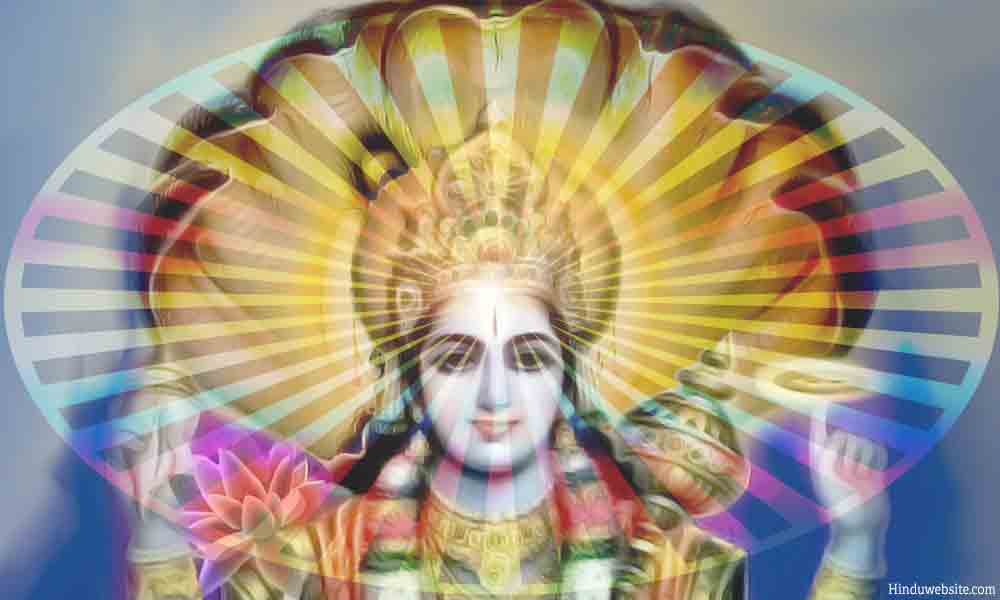
Summary: Hinduism is a loose assortment of diverse traditions, which share some common and fundamental beliefs. However, since it is derived from different sources, it also has diverse features, which are often contradictory. In this essay we examine the plurality and contradictions in the beliefs and practices of Hinduism with examples and reasons
Hinduism is a complex tradition. It does not fit into the definition of a religion in the Western sense. It is more appropriate to consider it a basket of religions rather than a religion. Hinduism has no founder. It did not have a single scripture as the basis of its doctrine. It does not insist upon a particular path, nor does it emphasize a particular philosophy, deity, or method of worship.
Hinduism has been enriched over centuries by enlightened humans who followed the will of God or translated it into human terms. Hence, it is a people’s religion and down to the earth. Anyone can take refuge in Hinduism. There are a few formal methods to initiate people into Hinduism, especially into particular sects or teacher traditions. However, one does not have to follow them to practice of mainstream Hinduism.
In Hinduism people have the freedom to choose from a variety of alternatives according to their temperament and spiritual needs to conduct their worship or work for their liberation. Since, the tradition has grown organically over several thousand years and incorporated into itself diverse ideas, beliefs and practices you cannot miss to notice the complexity and the inherent contradictions that characterize it.
The plurality of Hinduism
Hidden within Hinduism are both theistic and semi-theistic schools or philosophies. Some schools of Hinduism do not acknowledge a creator God but believe in the existence of eternal, indestructible souls. Thus, the tradition does not totally reject or condemn the idea of the non-existence of God, although a majority of Hindus believe in him and worship him in numerous forms. Even those who do not believe in the existence of God or do not approve the established methods of ritual and spiritual worship consider themselves Hindus and part of an ancient culture merely on the basis of their birth in Hindu families.
However, such people form a microscopic minority. While they may get a relatively disproportionate attention to their rhetorical arguments or for their sensational utterances, they do not set the course of Hinduism. The tradition merely tolerates them for their contradictory beliefs, just as a doting mother. Devout Hindus may or may not approve their disrespectful attitude towards their ancestral faith, but no one can deny that in our understanding of existential truths they do serve an important role by providing the contrast. In this article we will examine the contradictions that are inherent in Hinduism and try to understand their value to its diversity and plurality.
Examples of some apparent contradictions
That Hinduism is a mass of apparent contradictions becomes clear when we study its numerous scriptures, pay attention to its diverse philosophies, methods of worship, paths to liberation, social divisions and moral values. In the Puranas and epics you can see such contradictions becoming even more striking. For example, while the scriptures exhort the devotees to cultivate purity and stay free from evil, we can find from the same sources that the triple gods, Brahma, Vishnu and Shiva, do not discriminate between gods and demons. They give boons to the demons who worship them, even if they know that at some point they are going to cause trouble. They respond equally to their devotional fervor in proportion to their commitment and austerity just as they would respond to gods or devout humans. Morally conscientious people may feel troubled by such contradictions, but there is a deeper truth hidden in the stoicism of gods. Before we dwell upon it, first, we will examine a few well-known contradictions of Hinduism such as the following, which are evident in the scriptures, and in its beliefs and practices.
One God and No God.
Hinduism has numerous theistic schools, sects and teacher traditions. However, out of the six philosophies (darshanas) of Hinduism, five are decidedly uncommitted about the existence of God or his role as a creator. They do acknowledge the existence of individual souls, but not God. The Vedanta philosophy believes in God as the creator and upholder, whereas others namely Nyaya, Vaisheshika, Samkhya, Yoga and Purva Mimansa reject the idea, acknowledging Nature as the source of materiality and perceptual reality.
One God and many gods
Although the philosophies of Hinduism are undecided about God, he is central to mainstream Hinduism. Most Hindus believe in the existence of the supreme God and worship him variously as Brahman, Isvara, Paramesvara, Shiva, Vishnu, Krishna, Paramatma, Parandhama, Narayana and so on. At the same time, they also worship numerous gods and goddesses, demigods, seers, sages, spiritual teachers, animal deities, planetary deities and ancestors either as independent entities or aspects of the Supreme Being.
Ritual and ceremonial worship and spiritual practices
Rituals and sacrificial ceremonies occupy an important place in Hinduism. The Vedas extol the benefits of ritually worshipping the gods and goddesses of the higher realms and nourishing them through offerings and supplications to obtain their favors or boons. At the same time, the Upanishads, which are the end part of the Vedas, declare that ritual knowledge is ignorance. They exhort people to pursue the higher knowledge of the Self, rather than the rituals and sacrificial ceremonies, since they do not lead to liberation but rebirth only.
Image worship and contemplative methods
Hindus worship the images, idols, statues, drawings and paintings of their chosen deities both in the temples and in their homes. At the same time, many practice meditation and contemplation on the invisible, formless Self to experience peace or as part of their spiritual practice. The Upanishads declare that mental worship or the silent worship of God or the Self with mental offerings is far superior to the physical worship or sacrificial rituals which are loud and noisy.
Numerous paths of liberation
Hindu scriptures offer various alternatives to devotees to practice spirituality, emphasizing the importance of purity, sincerity and selfless devotion. They suggest different paths and methods to achieve liberation and self-purification such as the paths of selfless actions (karma), self-knowledge (jnana), self-absorption (atma-samyama), self-devotion (bhakti), and renunciation (sanyasa). Each of the paths have its own merits and demands its own discipline and practice. Emphasis upon multiple paths can complicate and confuse the minds of the initiates, unless they have proper guidance to integrate them harmoniously into a comprehensive, unified yoga.
Left hand practices and right hand practices
Hinduism allows both the left hand practices of Tantra and the right hand practices of the Vedic schools. The left hand practices which rely upon unconventional methods for transcendence are abhorrent to those who follow the Vedic methods of pure worship. Some left-hand methods violate the code of conduct which the right-hand methods prescribe and confuse a novice if he or she is not familiar with the deeper aspects of Tantrism.
Brahman as the creator and Shakti as the creator
Most schools and sects acknowledge Brahman as the Supreme God who is responsible for all the functions of creation through his dynamic aspect Prakriti. However, Shaktism revers the Goddess as the Supreme Being, and relegates Brahman to a secondary position as a passive witness and enjoyer who does not directly engage in any action or participate in creation but remains in the background as a silent partner.
Saivism and Vaishnavism
Followers of Shaivism believe that Shiva is the Supreme Being and the lord of the universe (Isvara) whereas Vishnu is an aspect or an emanation of Shiva. As the preserver, he occupies an inferior position and performs one of the five highest functions of Shiva. Followers of Vaishnavism consider the opposite. They believe that Vishnu is the Parandhama, the highest goal, and Shiva is the destroyer who performs one of the five functions of Vishnu. In ancient times the two sects maintained rivalry and opposed each other with the same intensity with which they held Buddhism and Jainism in contempt.
Isvara and Shakti
Followers of Shaivism and Vaishnavism revere Shiva and Vishnu respectively as Isvara or the Supreme Being, who is responsible for the creation, preservation and destruction of the worlds. According to them Isvara is the source of all. He is omniscient and omnipotent and nothing happens without his will. On the other hand, followers of Shakti believe that the triple gods of Hinduism namely Brahma, Vishnu and Shiva are inferior to Mother Goddess and play little or no active role in creation. They are inactive and dependent upon Shakti, who is supreme, whose Will is inviolable and who is the source of all.
Purusha and Prakriti
Some schools of Vedanta suggest that Purusha (Isvara or Brahman) is the efficient as well as material cause of creation, whereas Prakriti is an eternal but dependent reality. Others hold that Prakriti is the material cause and Purusha is only the efficient cause. Together they participate in creation as the field (kshetra) and owner of the field (kshetrajna). The schools also have varying positions about whether the individual souls and Nature are independent realities or dependent ones.
Nondualism, dualism and qualified nondualism
The schools of nondualism (Advaita) believe that only Brahman is true or real, and the rest is either an illusion, projection, reflection or appearance. They compare creation to a spider’s web, which proceeds from Brahman, the spider or the weaver of the web of illusion. However, the schools of dualism hold that although Brahman is the source of creation, his creation is also an independent and eternal reality, not an illusion or projection. They also accept that all the dualities of life are as real as God himself. The schools of qualified nondualism take a stand in between these two opposites.
The Vedas and the Agamas
Most schools of Hinduism believe that the Vedas are the words of God and inviolable. As direct revelations of God they constitute Sruti (heard ones) and serve as the verbal testimony (sabda pramana) to ascertain metaphysical truths or transcendental realities. However, followers of Tantra and some schools of Shaivism hold the Agamas are supreme because they are the revelations of Shiva. They also reject the Vedas as the authoritative texts or verbal testimony.
Universal Self and caste system.
According to the Upanishads all beings are the same since they contain divine souls. Hence, one should treat them all alike with compassion and reverence. Some Upanishads, such as the Vajrasuchika, explicitly condemn the caste system and suggest that a person becomes a Brahmana by virtue of his knowledge rather than birth. However, the law books of duties (Dharmashastras) distinguish and discriminate people according to their castes and social distinctions and prescribe different sets of privileges, rules, rewards and punishments to each. The caste system, which has some advantages, has been a troublesome feature of Hinduism for a long time.
Worldly life and ascetic life
Unlike Jainism, Hinduism is not an ascetic religion. However, asceticism is an important part of Hindu spiritual practice. The Vedic tradition recommends asceticism in the penultimate stages of human life to achieve liberation. However, some traditions and sects of Hinduism offer a choice to people to live as householders if they want to uphold Dharma or become full-fledged ascetics by renouncing worldly life at any time in their lives if they have a distaste for worldly pleasures and aspire for liberation. Both approaches are prescribed in Hinduism, which can be confusing to people if they are not conversant with the principles and practice of Hindu Dharma or the law of duties.
Wealth and renunciation of wealth
According to the Vedas, the pursuit of wealth (artha) is one of the chief aims (purusharthas) of human life. Wealth is also considered divine since God is the source of all abundance and Lakshmi, the goddess of wealth, is revered by millions of Hindus. At the same time, the scriptures warn people against evils of hoarding and greed and the risks that are inherent in pursuing material wealth and becoming attached to it. They consider wealth a karmic burden and recommend austerity, non-covetousness (asteya), charity, and renunciation as the remedy to neutralize the ill effects of pursuing material wealth.
Celibacy and sexual pleasure
In Hindu spiritual practice celibacy (brahmacharya) is considered one of the highest virtues, whereas in worldly life it is considered one of the chief aims of human life. According to the scriptures, celibacy is an austerity (tapah), which leads to the transformation of sexual energy into body vigor and mental brilliance and gives immense power to its practitioner to manifest his will. Hence, in yoga and other spiritual traditions celibacy is recommended for self-purification. However, in Tantric traditions sexual intercourse is used as a spiritual practice to achieve self-control.
Dharma and the immortality of gods
The scriptures exhort people to adhere to Dharma and live righteously, practicing morality to avoid sinful karma and downfall into darkest hells. At the same time, the Puranas are replete with questionable behavior of gods like Indra and Agni, who often throw all caution to winds and indulge in sinful behavior to satisfy their carnal desires or send celestial nymphs to disturb the austerity of pious people. We also find instances of questionable behavior by gods in both the epics, which raise doubts about what is ethical or unethical.
Marriage fidelity and polygamy
Traditionally, the scriptures uphold monogamous relationships and exemplify Rama and Sita, or Shiva and Parvathi as perfect couples. Hindu marriage tradition emphasizes the importance of chastity and loyalty and extols the virtues of women like Sati, Savitri, and Anasuya. On the other hand, polygamy was a lawful practice in ancient India and many gods have two or more wives as their consorts. Some also have lovers, in addition to wives.
The worship of Mother Goddess and the status of women
Hindus worship Mother Goddess and her numerous forms. At the same time, traditionally women were considered secondary in the ritual and spiritual practices of Hinduism. The scriptures put more emphasis on the education, duties and obligations of men and their role in the continuation of family name and tradition while they view women as assistants to men in performing their duties. For a long time, women did not enjoy an equal status in Hindu households. They were subject to numerous social and religious disabilities, and their freedom was restricted to the four walls of the household so that they would always remain under the watch of men in the family. Practices such as the devadasi system, prostitution, sale of women, denial of property rights, the practice of Sati, and the plight of widows also reflect the status of women in ancient India.
Nonviolence and animal sacrifices.
In Hinduism the practice of nonviolence (ahimsa) is considered the highest of all the virtues since they all lead to it only. The Hindu code of conduct suggests that one should not tell truth if it is going to harm or hurt others because the practice of nonviolence takes precedence over the practice of truthfulness. Conversely, the tradition has a long history of animal sacrifices which are still conducted in some parts of the world, much to the annoyance of sensitive people who think it is a primitive practice. There was a time, even human sacrifices were performed to appease certain gods or to ward off natural calamities and epidemic diseases.
Reasons for the contradictions of Hinduism
While the contradictions are discernible and confusing to the lay followers of Hinduism and to those who are not conversant with it, those who have studied it long enough know their significance and what they mean. If you know Hinduism in some detail, you will not fail to notice the unity and harmony that are hidden in its apparent contradictions. In many ways they reflect the contradictions of our own existence and the universe in which we live.
In our world nothing is clearly divisible into clear opposites. The dualities of life manifest in numerous intensities, permutations and combinations. The truths of our existence are also not always visible or known because they remain hidden in numerous guises or in the diversity of things. Some become known when you pay attention and cultivate discernment. Some become self-evident when you silence your mind and think clearly without any hidden agendas, desires and attachments.
The same is true with Hinduism. It is closer to life and caters to diverse needs and groups of people. Just as anyone can draw from a lake or a river, anyone can draw knowledge and inspiration from Hinduism. To understand it, you must suspend your judgment and your notions of what a religion should be and pay attention, with an open mind, to the suggestions and solutions it offers to different people, according to their knowledge and wisdom. No truth is found in its parts but in the totality of it. Hence, to know the truths of Hinduism you must also pay attention to all its aspects and dimensions, however contradictory they may be.
On the surface the many beliefs and practices of Hinduism may seem to contradict each other. However, at the deeper level there is a convergence in its divergence. All the apparent contradictions such as the ones which we discussed before resolve themselves harmoniously, and almost mysteriously, into an acceptable and harmonious whole when we view it from a spiritual perspective as a true projection of God’s eternal Dharma in the diversity of life. Just as the same sun shines in all directions, just as the trunk of a tree branches out in many directions, just as the same root leads to numerous other roots, and just as the same tree produces numerous flowers, fruit, and seeds, the same Truth of God, which we know as eternal (Sanatana) Dharma produces numerous truths, grades of truth and shades of truth, in all directions, in the play of God.
To believe that there can be only one Truth and one God without any variations, contradictions and gradations is to deny the reality around us and live in delusion. The unity of creation is found only in its essence not in its parts. A wise person acknowledges the apparent diversity, without losing sight of the hidden unity. Thereby, he develops equanimity, sameness and tolerance, and is never fooled by what he may experience in the visible world. In contrast, ignorant people focus upon the diversity and become distracted or deluded.
For example, on the surface it may seem a contradiction when we notice that the gods grant boons to the evil beings. However, upon reflection we can see that the devas and the asuras are aspects, appearances or projections of the same God only. They are made up of his essence. They have no existence outside him or without him. To believe that part of his creation or one side of truth does not represent God is partial atheism.
All things exist in God, whether you like them or not, and whether you consider them moral or immoral. He may not be present in all in equal parts or in the same manner, but it cannot take away their divine origin or connection. In some he is hidden behind light, and in some he is hidden behind darkness. Hence, we acknowledge that the triple qualities of sattva (light), rajas (gray) and tamas (darkness) of Nature arise from God only and envelop the soul in the embodied state. Hindus know that God has both pleasant and fierce forms and worship both according to their needs and aims. They know that in reality they worship the same deity who is hidden behind both types of forms. The apparent contradictions of Hinduism are thus its numerous faces, behind which are hidden the same eternal truths of Dharma, and the ultimate reality, God himself.
The gods and goddesses of Hinduism may grant boons to the evil beings, but in the end they do ensure that Dharma or the law of righteousness prevails and no one can escape from the consequences of their evil actions. In granting the boons they exemplify the virtue of sameness (samatvam) and universal love, and in punishing them they prove that karma is an inexorable law, and none can escape from it, without paying the due price or without renouncing desires and selfishness.
Traditionally, Hinduism has not condemned atheism as an affront to God. It holds it as a viewpoint or a perspective (Darshana). The distinction between nastkas (nonbelievers) and astikas (believers) is one of perspective. Both look at the same reality of existence, but perceive it differently. The former assume the nonexistence of cause (God) although they see the effect (creation) and the latter assume the existence of cause when they see the effect because they believe that there can be no effect with a cause.
By letting the atheist voice his doubt, Hinduism gives an opportunity to the theists to examine their beliefs and look for validation either in the scriptures, from others, or from their own experience. By letting the theists debate the issue, it gives an opportunity to the atheists to mend their way and discern the truth. In the process it also affirms the truth that since all the beings in the mortal world are subject to delusion and ignorance they cannot know the truths of existence, without adequate, spiritual effort and inner purification.
Hence, in Hinduism you have a place for all views, because each view presents an aspect of reality or a partial truth, which presents itself to you as you progress on the path and lights up a little dark corner in your consciousness. As you expand your awareness, you begin to see more truths and gain wider understanding. It does not indoctrinate you with set beliefs or enslave your mind to rigid thoughts, but lets you think for yourself and do your own due diligence.
Hinduism holds that God is unconditionally present in all aspects of life. He is the same in everything. When a good person fights with an evil person, it is God who is doing the fighting on behalf of both. He also has no preferences or partiality because he is indifferent, disinterested, and equal to all. He does not object to you, control you or resist you because if he interferes with your destiny of faith, then the law of karma becomes irrelevant or meaningless. Hinduism follows a similar approach. By giving you freedom, it lets you be yourself, and answerable to your life, thoughts, decisions and actions.
The Bhagavadgita states that God promotes or strengthens your faith according to your nature and beliefs. If you believe in the highest, supreme God, he strengthens your faith in that being. If you believe in a demigod, he strengthens that faith too for in the end all forms are but his forms and all offerings and prayers reach him only. To the nonbelievers he becomes unmanifested and to the believers he becomes manifested according to their faith, desires, expectations. Hinduism does the same. It strengthens the faith of people according to their nature and gives them a variety of choices to pursue their faith according to their convenience and spiritual needs.
From Hinduism we learn that we should give up attraction and aversion to the dualities of life and remain equal to them. It means that we should let things be as they are, rather than fighting and resisting what life offers, or acting according to our desires. When we try to push life in the direction of our choices, preferences, desires and expectations, we become vulnerable to suffering, disappointments and frustration. Hinduism reflects the same attitude in presenting a diversity of solutions and approaches, without preference, and remains equal to them all.
The objective world is the field of Nature, where the rules of Dharma are of utmost importance to help people to protect themselves from ignorance and delusion. However, the same rules of Dharma cannot universally be applied to all, just as you cannot administer the same medicine to cure all diseases. In Hinduism also you will find a similar approach. It prescribes different sets of rules to people according to their age, occupation, predominant Guna, and past karma.
Thus, while it offers one set of laws to householders, it offers a different set of laws to renunciants. It does the same with regard to men and women, and young and old. It caters to the religious and spiritual needs of a wide range of people, from the most ignorant to the most erudite and awakened. For example, while the ignorant people are advised to worship the forms of God, spiritual people are asked to meditate upon his names or upon his essence as the invisible, subtle Self. Both approaches help the devotees to progress on the path.
There is another reason why Hinduism does not limit your choices or methods. It is because it recognizes your divine nature as the eternal Self. Even though you are subject to bondage and delusion, you have the intelligence of God hidden in you which can help you and guide you according to your destiny. Therefore, rather than taking responsibility for your spiritual destiny, it presents you with options and alternatives to make your own decisions, making it very clear at the outset that all paths in the end lead to the same God.
Thus, rigid approach to theological matters is not central to Hinduism. In acknowledging the contradictions of life it exemplifies the very nature of God who is indifferent to the dualities and contradictions of his creation since they are his projections only and he is their source. It does not mean that you are totally free, or you can choose to go the way of the evil. It means that you have to be even more careful since neither the scriptures nor God nor any deity will take responsibility of your life or your actions. If things go wrong, you cannot blame anyone except yourself since you are totally responsible for the consequences of your choices and actions.
The world is made up of dualities and pairs of opposites. You cannot comprehend any reality without them. You cannot understand love, without knowing hatred or vice versa? Nonbelievers are necessary to the believers to understand the importance of belief or faith in God. However, the truth of you is not found in the dualities of life. To know yourself and experience oneness of all existence you must go beyond them and remain satisfied with yourself, which according to the Upanishads is the highest yoga.
When you accept the world as it is and resist your egoistic desire to control it, alter it or manipulate it, you will not accept or reject the apparent contradictions of life. You will become equal to them. Our gods do the same. Such reconciliation of divergent truths into a harmonious whole, which is difficult for a novice to understand, but which Hinduism projects through its contradictory beliefs and practices is aptly described in many Upanishads. For example, the Isavasya Upanishad, which cautions those who ignore the universal presence of Brahman and look at only one side of truth in the following manner.
Those who worship knowledge of sacrifices enter blinding darkness, and into greater darkness enter those who worship knowledge of the Self alone. He who knows both the knowledge of the Self and the knowledge of sacrifices together crosses death through the knowledge of sacrifices and attains immortality through the knowledge of the Self.
Into blinding darkness enter those who worship the Unmanifested and into still greater darkness those who take delight in the Manifest. He who understands both the manifest and the destruction together, through destruction crosses death and through the manifest attains immortality.
Suggestions for Further Reading
- The Samkhya Philosophy and 24 Principles of Creation
- The Bhagavadgita On The Problem Of Sorrow
- The Concept of Atman or Eternal Soul in Hinduism
- The Practice of Atma Yoga Or The Yoga Of Self
- The Problem of Maya Or Illusion and How To Deal With It
- Belief In Atman, The Eternal Soul Or The Inner Self
- Brahman, The Highest God Of Hinduism
- The Bhagavad Gita Original Translations
- The Bhagavadgita, Philosophy and Concepts
- Bhakti yoga or the Yoga of Devotion
- Hinduism And The Evolution of Life And Consciousness
- Why to Study the Bhagavadgita Parts 1 to 4
- The Triple Gunas, Sattva, Rajas and Tamas
- The Practice of Tantra and Tantric Ritual in Hinduism and Buddhism
- The Tradition Of Gurus and Gurukulas in Hinduism
- Origin, Definition and Introduction to Hinduism
- Hinduism, Way of Life, Beliefs and Practices
- A Summary of the Bhagavadgita
- Avatar, the Reincarnation of God Upon Earth
- The Bhagavadgita on Karma, the Law of Actions
- The Mandukya Upanishad
- The Bhagavadgita On The Mind And Its Control
- Symbolic Significance of Numbers in Hinduism
- The Belief of Reincarnation of Soul in Hinduism
- The True Meaning Of Renunciation According To Hinduism
- The Symbolic Significance of Puja Or Worship In Hinduism
- Introduction to the Upanishads of Hinduism
- Origin, Principles, Practice and Types of Yoga
- Hinduism and the Belief in one God
- Essays On Dharma
- Esoteric Mystic Hinduism
- Introduction to Hinduism
- Hindu Way of Life
- Essays On Karma
- Hindu Rites and Rituals
- The Origin of The Sanskrit Language
- Symbolism in Hinduism
- Essays on The Upanishads
- Concepts of Hinduism
- Essays on Atman
- Hindu Festivals
- Spiritual Practice
- Right Living
- Yoga of Sorrow
- Happiness
- Mental Health
- Concepts of Buddhism
- General Essays