
Hinduism - Upanishads - Mahavakyas
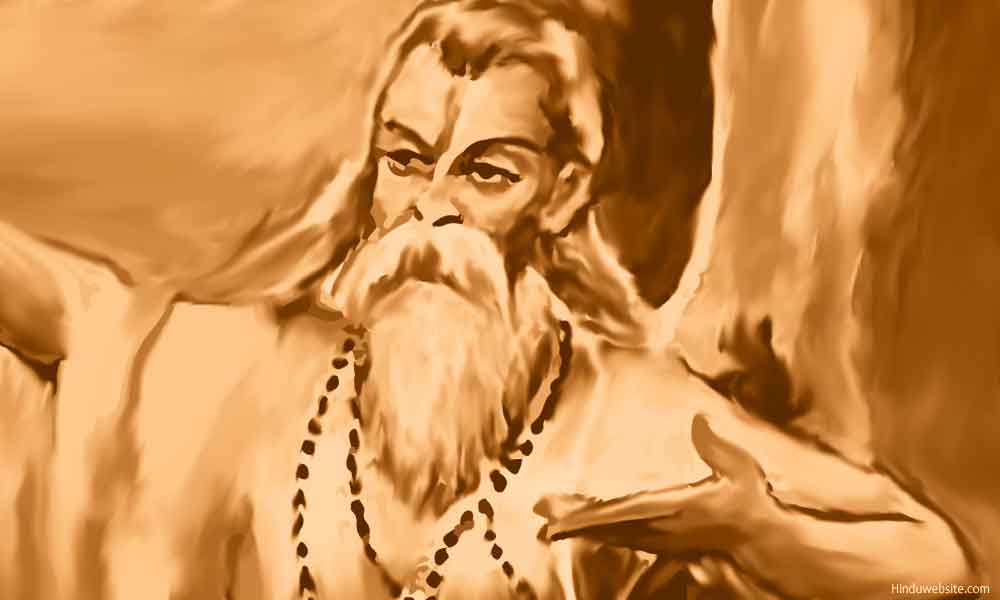
The Mahavakyas are short statements, usually taken from the Upanishads. They have profound spiritual and religious significance in Hinduism, especially in spiritual and yoga practices.
The Mahavakyas contain ageless wisdom and profound truths regarding Brahman, Self and existence.
Therefore, they are used in meditation to train the mind and the senses and develop an insight into the nature of Self, existence and Brahman.
They serve us as reminders of eternal truths in our quest for liberation. They reveal themselves and provide profound insights to the extent we awaken them in our consciousness.
They are as relevant today as they were thousands of years ago. Hence, they are as useful today as they were hundreds of years ago. Truth does not change with time. The Mahavakyas are a great example in this regard.
Regular contemplation upon them purifies our minds, promotes introspection and insight, and leads to transcendental states of awareness.
If you want to make use of them, just pick a Mahavakya from the list and meditate upon it regularly until you are satisfied that you have understood it completely or experienced its essence or truth in some significant way in your own consciousness.
You can also use them as mental hooks to refocus your mind upon the Self or God or to reengage yourself in spiritual activity.
Since they contain divine thoughts, you can also use them as short mantras and chant them quietly in the silence of your mind anytime during the day or night.
The importance of Mahavakyas
Some later day Upanishads explain the importance of the Mahavakyas and how to meditate upon them. The following is an excerpt taken from the Paingala Upanishad (3.2), reproduced from my book, the Selected Upanishads, which contains translation of 14 Upanishads. The verse declares that constant meditation upon the Mahavakyas lead to the state of liberation even when a person is alive (jivanmukta). This is one a large and continuous prose verse and provides some challenges to a translator. For your convenience, here I have broken it down into short paragraphs.
Enquiry into the meaning of "Tat Tvam Asi" and "Aham Brahmasmi" constitute Sravana (hearing). Reflecting in solitude upon the meaning of what is being heard is called Mananam (reflection)."
"Fixing the thought with single-minded concentration upon the object of what is being heard or reflected upon is Nidhidhyasana (meditation). Without the distinction of the mediator and the meditation, like a lamp (without flickering) in a windless place, such is the state of Samadhi (self-absorption)."
"In that state, although the modifications arise within oneself, they remain unknown. They are inferred from memory only. Through them only all the accumulated karmas, since the beginning of the cycle of births and deaths, become dissolved."
"Then, through practice, a thousand streams of nectar flows downs constantly. Therefore, the adepts in Yoga calls this self-absorption with a cloud of virtue raining down (Dharmamegha Samadhi)."
"When the past impressions are dis-solved without any residue whatsoever, when the bag of good and bad karmas are fully destroyed to the end, these statements, like the Amalaka fruit in the palm of the hand, bring about the direct and im-mediate vision of the ultimate reality, though it was imperceptible before."
"Then he becomes a living being who is liberated (Jivanmukta)"
List of 22 important Mahavakyas
The following 22 Mahavakyas are taken from the Siva Purana where they are listed below. They are useful to stabilize one's mind on Brahman or the absolute inner Self. Two years ago, I made a video on the Mahavakyas. The same ins included above. It is my intention to provide explanatory notes to all these. However, I have no fixed schedule to work on this. It may take time and I may keep adding a few more from other scriptures.
1. Prajnanam Brahma - Brahman is intelligence (Aitareya Upanishad)
2. Aham Brahmasmi - I am Brahman (Brihadaranyaka Upanishad)
3. Tatvamasi - That you are (Chandogya Upanishad)./p>
4. Ayamatma Brahma -This Self of mine is Brahman (Mandukya Upanishd)
5. Isavasyam idam sarvam - All this is enveloped by the Lord (Isa Upanishad)
6. Pranosmi - I am breath (Kausitaki Upanishad).
7. Prajnatma - I am the intelligent Self (Kausitaki Upanishad).
8. Yadeveha tadamutra yadamutra tadanmiha - What indeed is here that is there; what is there, that is also here (Katha Upanishad).
99. Anyad eva tad viditad atho aviditada api - It is other than the known and it also beyond the unknown. (Kena Upanishad)
10. Esa ta atmantaryamyamrtah - This is your Self, inner controller and immortal. (Brihadaranyaka Upanishad)
11. Sayascayam puruse yascasa vaditye sa ekah - He who is in this person, and who is in the sun above, one and the same only. (Taittirya Upanishad).
12. Ahamasmi parambrahma param para-paratparam - I am the Supreme Brahman who is higher than the highest.
13) Veda sastra gurutattu svaya-mananda-laksanam - According to the Vedas, sastras and the teachings of guru, the nature of my Self is pure bliss.
14) Sarva bhuthasthitham Brahma tad eva aham na samsayah - Brahman in all being. Of that I have no doubt.
15) Tattvasya pranoham asmi prithivya pranoham asmi - I am the breath of the tattvas. I am the breath (support) of the earth.
16) Apanca pranoham asmi tejasca pranoham asmi - I am the breath (support) of the waters; I am the breath (support) of the light.
17) Vayosca pranoham asmi akasasya pranoham asmi - I am the breath (support) of the air and I am the breath (support) of the sky.
18) Trigunasya Pranoham asmi - I am the breath of the triple gunas.
119) Sarvoham sarvatmakoham samsari yadbhutam yaccabhavyam yadvartamanam sarvatmakatva dadvitiyoham - I am everywhere and I am the Self of all. In the phenomenal world I am responsible for what happened, what is going to happen and what is happening. I am without a second.
20) sarvam khalv idam brahma- Truly, all this here is Brahman. (Chandogya Upanishad).
21) Sarvoham vimuktoham - I am all. I am free
22) Yasau soham hamsa soham asmi - That which He is I am. I am He. He is I am indeed.
Suggestions for Further Reading
- Om, Aum, Pranava or Nada in Mantra and Yoga Traditions
- Brahmacharya or Celibacy in Hinduism
- Atheism and Materialism in Ancient India
- Solving the Hindu Caste System
- How To Choose Your Spiritual Guru?
- Creation in Hinduism As a Transformative Evolutionary Process
- Wealth and Duty in Hinduism
- Do You Have Any Plans For Your Rebirth or Reincarnation?
- Understanding Death and Impermanence
- Lessons from the Dance of Kali, the Mother Nature
- Letting your God live in You - The True Essence of the Hindu Way of Life
- prajnanam brahma - Brahman is Intelligence
- Maslow's Hierarchy Of Needs From The Perspective Of Hinduism
- The Defintion and Concept of Maya in Hinduism
- The Meaning of Nirvana
- Self-knowledge, Difficulties in Knowing Yourself
- Hinduism - Sex and Gurus
- The Construction of Hinduism
- The Meaning and Significance of Heart in Hinduism
- The Origin and Significance of the Epic Mahabharata
- The True Meaning of Prakriti in Hinduism
- Three Myths about Hinduism
- What is Your Notion of God?
- Why Hinduism is a Preferred Choice for Educated Hindus
- Essays On Dharma
- Esoteric Mystic Hinduism
- Introduction to Hinduism
- Hindu Way of Life
- Essays On Karma
- Hindu Rites and Rituals
- The Origin of The Sanskrit Language
- Symbolism in Hinduism
- Essays on The Upanishads
- Concepts of Hinduism
- Essays on Atman
- Hindu Festivals
- Spiritual Practice
- Right Living
- Yoga of Sorrow
- Happiness
- Mental Health
- Concepts of Buddhism
- General Essays