
About Suicides in Hinduism

Hinduism does not approve suicide. Suicide in a family brings social stigma and bad reputation to the family members, and they may have to live with that for long.
It also raises many questions about the reputation of the family members and their possible complicity. Hence, many suicides in Hindu families go unreported.
Suicide of women causes more social disgrace to the members of the family than suicide of men and often leads to complaints, court cases and criminal investigation.
Suicide is an acute problem in many parts of India, caused mostly by economic distress, illness, social pressures family problems, and ill-treatment by other family members.
According to a report titled, "Accidental Deaths and Suicides in India 2012" released by National Crime Records Bureau (NCRB), a total of 1,35,445 and 1,35,585 people in India committed suicide in 2012 and 2010 respectively.
Five states, Tamil Nadu (16,927), followed by Maharashtra (16,112), West Bengal (14,957), Andhra Pradesh (14,238) and Karnataka (12,753) accounted for 53% of the suicides. Family problems and illness account for about 20% to 25% of the suicides each year.
In recent times the country also witnessed the use of suicide or the threat of suicide by some, in the form of self-immolation or fast unto death, as a desperate measure to attract the attention of the government or the public to remedy personal or social causes.
These recent trends reflect the traditional attitude of Hinduism towards suicide, as a violation of Dharma, disregard for obligatory duties and disobedience to the will of God.
However, in specific instances on the path of liberation it acknowledges self-destruction as a meritorious act of self-sacrifice and example of extreme devotion, renunciation and surrender. It is not even termed suicide, but self-sacrifice (atmahuti).
What distinguishes both is the intention or the purpose. Suicide as a selfish action to evade suffering or escape from duty and obligation to others and to God is evil, with far reaching consequences for the individual soul. It is a violation of a covenant with God and dereliction of duty. However, suicide as a selfless act to express love and devotion or as the ultimate act of renunciation is sacred and liberating.
Hindus believe that human life is very precious, which is attainted after hundreds and thousands of births. It provides each human being with a unique opportunity to pursue liberation and escape from the cycle of births and deaths to attain immortality or make a quantum jump into higher planes of existence.
Even gods and other celestial beings do not have such an opportunity to do so, unless they come down to the earth and take birth as human beings.
It is therefore a serious mistake to waste such an opportunity by those who commit suicide to escape from their worldly duties and responsibilities or cause distress to others.
It will not only hamper their spiritual progress but also delay their liberation for many lives upon earth. It also exposes them to greater suffering and a possible downfall into the darkest hells.
When suicide is permitted in Hinduism
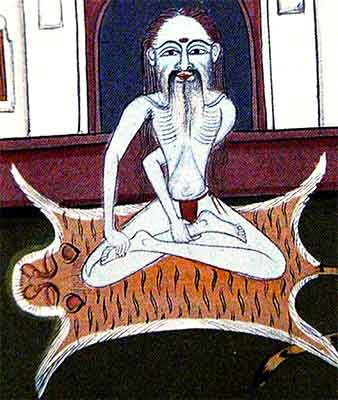 Ascetic Yogi
In ancient times religiously or spiritually motivated suicide was permitted under some circumstances by certain ascetic traditions of Hinduism. It was considered the final act of self-sacrifice (atma tyagam) or renunciation. It was practiced in three different ways, which in my opinion, pointed to the three distinct ways in which the elemental body was returned to the elements. The three methods of self-sacrifice which were practiced in ancient ascetic traditions of India are mentioned below.
- Self-immolation by entering fire (agnipravesa). This was offering the body to fire (Agni), fire being a purifier. The belief was that it purified the elemental body, removing the residual karma, and liberated the soul.
- Death by slow starvation (prayopavesa). This was making an offering of the body to air (vayu) or suspending and merging the subtle energies in the body (prana) into Prana.
- Death by entering a cave or an underground cell and suspending breath in a state of self-absorption (samadhi). This was making an offering of the body to the earth. Many spiritual gurus ended their lives in this way in the past and the practice is still in vogue in some teacher traditions.
In all the above-mentioned cases, it was believed that death by such austere practices permanently liberated the souls from the cycle of births and deaths. It must be noted that such actions were allowed only in the final phases of spiritual practices when it was considered that the body was the last remnant of Nature, and the hard to remove residual karma and past life impressions were preventing the soul from attaining liberation.
Death through self-sacrifice was not confined to ascetic traditions only in ancient India. It was also practiced by householders who followed the Vedic tradition and Varnashrama Dharma. According to it, householders (grihastas) who gave up worldly life and took vows of renunciation in the last phases of their lives were obliged to give up their bodies as the last material possession by gradually limiting the intake of food and water. It was considered the ultimate sacrifice (atmahuti).
In other words, as a part of their renunciation (sanyasashrama), they sacrificed their bodies through slow starvation. Having renounced everything, including the need to keep fire, and restrained their minds and bodies in the heat of austerities, they would gradually reduce their food intake until they stopped eating food altogether. Then, they would subsist on water only for some time before renouncing it also.
In the last phase, they would renounce both food and water and let the body wither and die. Here again, the practice was justified as a means to attain liberation in the final phases of human life, after one had discharged all the duties and obligations and become free from woldly bonds.
Thus, giving up one's own life in the service of God for liberation is justified in Hinduism, under some circumstances. However, it should not be confused with suicide because the intent and purpose of entirely different. Such practices are no more permitted in Hinduism, nor are they considered legal. Self-destruction or self-harm in any form with any intention is considered unlawful.
There are indications that in some tantric sects, willful self-sacrifice of the body by a devotee to a personal deity was practiced as a mark of total surrender and highest devotion. It is believed that such acts would lead to liberation.
The Buddha was against such practices. Hence, he recommended the noble middle path for the liberation of his monks.
Why suicide is condemned in Hinduism
Under normal circumstances suicide was and is considered a mortal sin in Hinduism for various reasons. Manusmriti states that libations of water, which are usually offered to the departed souls, should not be offered to those who commit suicide.
Suicide in Sanskrit is called atmahatya meaning murdering the soul or the Self. The very word conveys amply the attitude of Hinduism towards suicide. Suicide is murdering oneself, pure and simple. One can understand why Hinduism views suicide with such negativity as a despicable and sinful act from the following reasons.
1. Disregard for human life. In Hinduism all life is sacred, even the life of insects and animals. Human birth is especially unique and precious, which is attained only at the end of numerous births and deaths. Only humans have the unique opportunity to work for their liberation. Hence wasting away such a great opportunity is very sinful and bad for one's own karma.
2. Disruption of God's creation. In God's creation, each human being has a unique role and responsibility, which none else can fulfill. As a son, daughter, father, mother, brother, sister, friend, benefactor, teacher, etc., each individual participates in the orderly progression of the world and society. Willful act of suicide for selfish reasons interrupts that process and the orderly progression of events, disrupting the family lineage, the birth of progeny, nourishment of gods, and the proper function of society. It is evidently a willful disobedience to God and his laws.
3. Bad karma. Suicide, which is motivated by dark passions, evil intentions, ignorance and delusion, implies the misuse of the autonomy and opportunity given by God to the beings to perform their duties and work for their liberation. Therefore, it is certainly an evil act and a very bad karma.
4. Dereliction of duty. The human birth entails certain duties and obligations towards oneself, others, gods and ancestors. When a person commits suicide such duties remain unattended. This is gross negligence of obligatory duties, which in Hinduism is considered bad karma having consequences not only for the individuals responsible but also for those who may be affected such actions.
5. Disservice to gods. Each living and breathing human body is divine. It houses the individual soul as well as several divinities who depend upon it for their nourishment. If the body is prematurely killed or destroyed, the divinities who reside in it are permanently deprived of their nourishment. They are certainly not pleased when humans deprive them of their food and dwelling through suicide or acts of self-destruction.
Consequences
According to Hindu beliefs if a person commits suicide, he goes neither to hell nor heaven, but remains in the earth plane as a bad spirit and wanders aimlessly until the end of the ordained or expected span of life upon earth in the current birth. Thereafter, he or she goes to hell, where the suffering continues even more severely.
In the end, the lost soul returns to the earth to take birth and start from there afresh to continue its journey in the Samsara (the cycle of births and deaths) and complete its previous karma. In other words, suicide interferes with the destiny and delays the journey of a soul in the mortal world. It reverses the spiritual clock by a few hundred or thousand years and endangers one's spiritual wellbeing.
Hindu scriptures therefore aptly describe suicide as the murder of the self (atmahatya). Suicide also hampers the stay of one's ancestors in the ancestral heaven. As the suicide of their descendent deprives them of their nourishment from the sacrifices, their astral bodies wither and lose strength, forcing them to return to the earth rather prematurely.
Finally, as stated before, when a person commits suicide for any reason, that person causes a lot of grief and suffering to his or her family and close relationships, besides disrepute. It is a bad karma in itself, with negative consequences.
Sati
One of the traditional customs of Hinduism in the past was sati, the act of committing self immolation by a woman on the funeral pyres of her husband, with the underlying belief that if a woman died along with her husband on the funeral pyre, she would not only rejoin him in the heaven and live forever in his company as his wife and personal assistant but also redeem him by her sacrifice from any sinful karma he might have incurred.
Sati was never practiced in Hinduism universally. In many Hindu communities even in the past women had the option to live as widows or ascetics or seek the patronage of a male member of her deceased husband's family for the purpose of having a child, if she had none, or simply for company, shelter and protection.
Although sati was not practiced universally, the custom prevailed in some communities for a very long period until it was abolished in the early 19th century by the British through legislation in colonial India. In that, they were supported by many Indian social reformers such as Raja Rammohan Roy.
If self-immolation by ascetics was an act of self-sacrifice of the highest kind, sati was an act of human sacrifice, practiced in many instances by vested family members to get rid of unwanted women or resolve inheritance problems.
Although it was grounded in the ancient beliefs of Hinduism and had some justification in an idealistic world, from a social and societal point of view it was a cruel custom, born out of the belief that a woman had no intrinsic value without her husband, and had no right, duty or justification to exist by herself once he passed away.
The very fact that it was performed in public with a lot of fanfare shows the predominance of patriarchy in Hindu society Until a few centuries ago and the attitude of certain Indian men towards women as disposable property. They were the same people who would prostrate before a goddess and express their devotion and reverence. For many it was a convenient and traditionally approved way to get rid of old and helpless widows and keep control over their family properties.
Coping with suicidal thoughts
Hinduism does not condone suicide in any form, except those rare cases which we have mentioned before. It is a bad karma, a mortal sin, with terrible consequences for those who commit suicide and those who assist them or cause them by their actions or intentions. By this, we can presume that when a person commits suicide, in a way all the people and circumstances which drove that person to that desperate situation incurs sinful, collective karma. Therefore, collectively society has a greater responsibility to prevent their occurrence
Life is full of suffering. It is a miracle that despite all the problems and difficulties they face, people still hold on to their lives and do not give up. The longing for life is much stronger than the negativity and the brutality of Nature that assails the humans mind. When the thoughts of suicide enter the mind, one should effectively counter them, using effective counter measures and approaches such as the following.
1. Know that life upon earth is a rare opportunity and should not be wasted.
2. Practice yoga and other spiritual methods to cultivate positive thoughts.
3. Find a purpose greater than yourself.
4. Read books on spirituality or find a spiritual guru for guidance and help
5. Cultivate detachment, devotion and inner purity, and draw your mind to your inner Self.
6. Practice mental renunciation to bear with pain, suffering, disappointments and negativity.
7. If family or social pressures are causing distress, think of finding new friends, changing your home, or going to a new place.
8. Think of helping others or working for a social or environmental cause.
9. Talk to your family about what is going on
10. Seek medical help if you are prone to frequent depression and nothing seem to boost your morale or happiness.
11. Give yourself plenty of love and self-acceptance.
12. Learn to treat your body with kindness and consideration.
Suggestions for Further Reading
- Hindu Gods - Lord Ganesha
- God and Self in Hinduism
- Goddesses of Hinduism, Their Symbolism and Significance
- Purusharthas in Hinduism
- The History, Antiquity and Chronology of Hinduism
- Ashrama Dharma in Hinduism
- Hinduism and Buddhism
- Death and Afterlife in Hinduism
- Hinduism and Divorce
- Hinduism and Adultery
- Hinduism, Food and Fasting
- The Future of Hinduism
- Good and Evil in Hinduism
- The Hindu Marriage, Past and Present
- What is Maya in Hinduism?
- The Origin and Definition of Hindu
- Hinduism and Polygamy
- Hinduism and polytheism
- Hinduism and Premarital Relationships
- God and Soul, Atma and Paramatma, in Hinduism
- About Suicides in Hinduism
- Religious Tolerance in Hinduism
- Violence and Abuse in Hinduism
- Traditional Status of Women in Hinduism
- Ashtanga Yoga of Patanjali
- About Hanuman or Anjaneya
- Hinduism and Same-sex Marriage
- Perspectives on What Karma Means
- Hinduism - The Role of Shakti in Creation
- Significance of Happiness in Hinduism
- Hindu God Lord Shiva (Siva) - the Destroyer
- The Role of Archakas, Temple Priests, in Hinduism
- Hinduism - Gods and Goddess in the Vedas
- Essays On Dharma
- Esoteric Mystic Hinduism
- Introduction to Hinduism
- Hindu Way of Life
- Essays On Karma
- Hindu Rites and Rituals
- The Origin of The Sanskrit Language
- Symbolism in Hinduism
- Essays on The Upanishads
- Concepts of Hinduism
- Essays on Atman
- Hindu Festivals
- Spiritual Practice
- Right Living
- Yoga of Sorrow
- Happiness
- Mental Health
- Concepts of Buddhism
- General Essays