
The Atharvasikha Upanishad
|| Advaya Taraka|| The Atharvasikha|| The Atharvasiras|| Brihad Jabala|| The Importance of Breath in Yoga Practice || Morals From the s || Dakshinamurthy || Untitled 2 || Hayagriva || Jabala Darsana|| Jabali || Krishna|| Kshurika || Mahavakya|| Narayana || Nrisimha Poorva and Uttara Tapaniya|| The Paingala|| Pancha Brahma || Pasupata Brahmana|| The Pranagnihotra|| Rama Rahasya|| Rama Poorva and Uttara Tapaniya|| Sarabha|| Trisikhi Brahmana || Vasudeva|| Yoga Chudamani || Yoga Sikha ||
Introduction by Jayaram V
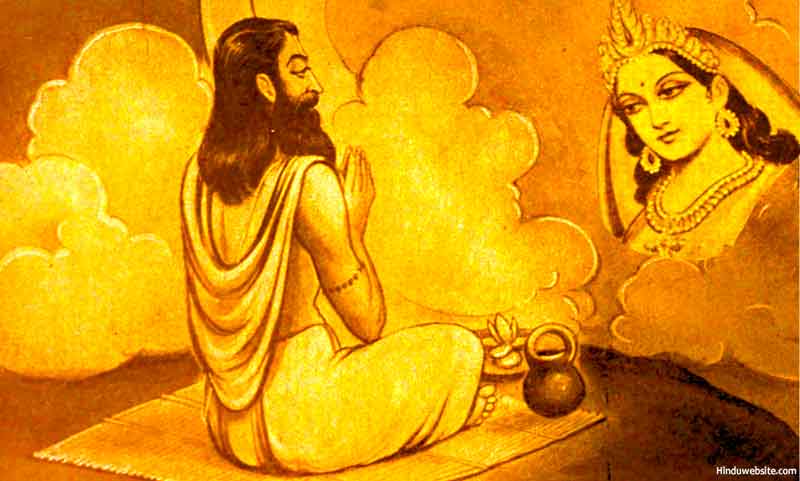
The Atharvasikha Upanishad belongs to the Atharva Veda. The teacher of the Upanishad is Atharva or Atharvan, who is also credited with the composition of many verses of the Atharvaveda. One of the students mentioned in the Upanishad is Pippalada, who is also mentioned in the Prasna Upanishad as the teacher of the Upanishad. Pippalada was a sage of great renown in his times. One of his students, Kabandhi Katyayana, or his descendent was probably a contemporary of the Buddha. However, we need not have to take these names literally since the Upanishad belongs to a later period and composed later than the principal Upanishads. The names mentioned here may not represent real persons or may refer to the names of their descendants since it was customary in ancient India to associate people with their lineages or teacher traditions.
The Atharvasikha Upanishad deals with the symbolism of Aum, the significance of its parts and its role in meditation and liberation. The first section of the Upanishad attempts to answer such questions as how to meditate, what to meditate and on whom to meditate, with specific emphasis on the syllable AUM, its meaning and significance. Aumkara, the form of AUM, is stated as Brahman Himself, representing the Trinity of Gods, namely Brahma, Vishnu and Siva in the form of the three syllables Aa, Uu and Mm. Aum is the symbolic representation of Para Brahman. It is a mantra in itself, having the ability to carry one across the ocean of existence into transcendental state. While Aum is the syllable (akshara), Pranava is the sound (sabda) of Aum. Isvara as space (akasa) is the supporter of the sound, while Siva is the end, represented by the full stop (bindu). From these descriptions we can conclude that the Upanishad leans towards the beliefs of Saivism, acknowledging Shiva as the highest Self. In the second section, one of the verses describes Rudra, Isvara and Shiva as separate gods, along with Brahma and Vishnu. They may be actually the five aspects or panchanana forms of Siva as described in various schools of Saivism in his roles as creator, preserver, destroyer, suppressor and revealer. Verse 2.2 clearly distinguishes Siva from the rest of the gods as the all pervading Supreme Self. The Following is a translation of the Atharvasikha Upanishad by P.R.Ramachander. Hope readers will find it useful for their study and spiritual practice.
Translation
Aum ! O Devas, may we hear with our ears what is auspicious;
May we see with our eyes what is auspicious, O ye worthy of
worship !
May we enjoy the term of life allotted by the Devas,
Praising them with our body and limbs steady !
May the glorious Indra bless us !
May the all-knowing Sun bless us !
May Garuda, the thunderbolt for evil, bless us !
May Brihaspati grant us well-being !
Aum ! Let there be Peace in me !
Let there be Peace in my environment !
Let there be Peace in the forces that act on me !
I meditate on that “ultimate truth”, which explains the meaning “of the sound of Aum”, which shines as the fourth leg of Aum, which is Turiya of Thoreau's (A super divine state of oneness with God, which is beyond the three states of wakefulness, sleep and dream), which enjoys being in three legs (syllables) and which is one and only one.
Aum!
Section - 1
1.1 The sages Pippalada, Aangiras and Sanath Kumara approached the great God like sage, Atharva Maharishi and asked him, “Oh, God like sage, what is the chief aspect of meditation? What is the mantra (holy syllable) on which to meditate? Who can meditate? Who is the God of meditation?”
1.2 The sage Atharva replied to them,” Mainly meditation has to be done on the single letter Aum. It itself is the mantra for meditation. The four legs of that mantra are the four devas and the four Vedas. The letter has to be recognized as the Para Brahman (Ultimate reality) and meditated upon.
1.3 The first syllable Aa, indicates earth, the Rig Veda along with its holy chants, Brahma the creator, Ashta Vasus among devas, “Gayatri” among meters, and Garhapthya (the fire of the household) among fires.
1.4 The second syllable Uu denotes ether, the Yajur Veda, Rudra who is the God of destruction, the eleven Rudras among devas, “Trishgup” among meters and dakshinagni (fire of the south - funeral pyre) among the fires.
1.5 The third syllable Ma indicates the heavens, Sama Veda with its musical sounds of Sama, Vishnu who looks after the worlds, the twelve Adityas (suns) among devas, “jagathichanda” among meters and Ahavagni (the fire used in fire sacrifice) among the fires.
1.6 That half fourth syllable which is the hidden Ma, is the magical chants of Atharva Veda, Samvarthaka (the fire of exchange) fire among fires, marud Ganas among devas. It is the self glittering Brahman which shines alone and sees everything.
1.7 The first is the red Brahma (creative aspect) , the second the holy white Rudra (destructive aspect), the third the black Lord Vishnu (the administrative aspect) and the fourth which is like lightning is the multi colored Purushothama (best among males).
1.8 This Aumkara has four legs and four heads (fires). The fourth is the half syllable sound of “Ma” which is hidden. That is pronounced in a small short form, slightly extended form (pluthyaga) and much extended form. It is pronounced as Aum with one mathra, Aum in two mathras and Aum in the extended three mathras (mathra is the unit of pronunciation).
1.9. The fourth peaceful half syllable is hidden in the long ended pronunciation. It is the incomparable glitter of the soul. It is that sound which was never there and which will be never there. If not pronounced earlier but pronounced for the first time it, takes one via the Sushumna Nadi to the lotus with thousand petals (Sahasrara).
Section - 2
2.1 The pranava (the sound of Aum) makes all the souls to bow before it. It is the one and only one which has to be meditated upon as the four Vedas and the birth place of all devas. One who meditates like that goes away from all sorrows and fears and gets the power to protect all others who approach him. It is because of this meditation only that Lord Vishnu who is spread every where, wins over all others. It is because Lord Brahma controlled all his organs and meditated upon it, he attained the position of the creator. Even Lord Vishnu , parks his mind in the sound (Aum) of the place of Paramathma (ultimate soul) and meditates upon Eeshana, who is most proper to be worshipped. All this is only proper in case of Eeshana.
2.2 Brahma, Vishnu, Rudra and Indra are creating all beings, all organs and all karanas. They are also capable of controlling them. But Lord Shiva exists in between them like sky and is permanently stable.
2.3 It is advised that the five gods Brahma, Vishnu, Rudra, Isvara and Shiva should be worshipped in the form of pranava [Aa + Uu + Ma + sound + Bindu (full stop)].
2.4 Even if for one second, if one can stay and meditate on these, he gets more results than that of performing one hundred fire sacrifices. With the full understanding and knowledge, one should only meditate on paramashiva, which would give rise to all benefits. It is definite that, by sacrificing all other things, the twice born, should learn and understand this and he would get rid of the suffering of living in the womb and attain salvation.
Aum ! O Devas, may we hear with our ears what is auspicious;
May we see with our eyes what is auspicious, O ye worthy of
worship !
May we enjoy the term of life allotted by the Devas,
Praising them with our body and limbs steady !
May the glorious Indra bless us !
May the all-knowing Sun bless us !
May Garuda, the thunderbolt for evil, bless us !
May Brihaspati grant us well-being !
Aum ! Let there be Peace in me !
Let there be Peace in my environment !
Let there be Peace in the forces that act on me !
Here ends the Atharvasikhopanishad, as contained in the Atharva Veda.
Suggestions for Further Reading
- The Wisdom of the Upanishads, Main Page
- Upanishad Miscellany
- The Brihadaranyaka Upanishad - Translation by Jayaram V
- Symbolism Miscellany
- The Upanishads Translated by Max Muller
- Brahman, The Highest God Of Hinduism
- Atman, Soul or the Eternal Self
- List of 108 Upanishads According To The Muktikopanishad
- Translation Of Various Upanishads
- Introduction to the Upanishads of Hinduism
- Essays on The Upanishads
- Translations of Upanishads - Links
- Essays On Dharma
- Esoteric Mystic Hinduism
- Introduction to Hinduism
- Hindu Way of Life
- Essays On Karma
- Hindu Rites and Rituals
- The Origin of The Sanskrit Language
- Symbolism in Hinduism
- Essays on The Upanishads
- Concepts of Hinduism
- Essays on Atman
- Hindu Festivals
- Spiritual Practice
- Right Living
- Yoga of Sorrow
- Happiness
- Mental Health
- Concepts of Buddhism
- General Essays