
Morals From the Upanishads
|| Advaya Taraka|| The Atharvasikha|| The Atharvasiras|| Brihad Jabala|| The Importance of Breath in Yoga Practice || Morals From the s || Dakshinamurthy || Untitled 2 || Hayagriva || Jabala Darsana|| Jabali || Krishna|| Kshurika || Mahavakya|| Narayana || Nrisimha Poorva and Uttara Tapaniya|| The Paingala|| Pancha Brahma || Pasupata Brahmana|| The Pranagnihotra|| Rama Rahasya|| Rama Poorva and Uttara Tapaniya|| Sarabha|| Trisikhi Brahmana || Vasudeva|| Yoga Chudamani || Yoga Sikha ||
The gods (devas), the humans (manavas) and the demons(asuras) are all children of Prajapathi Brahma, the Creator and Lord of the Beings. They are called the three offspring of Prajapathi. They all have peculiar and distinct qualities and play significant roles in the creation of God. We cannot say strictly that one is superior to the other because they all have their own strengths and weaknesses. The gods are pleasure oriented. They seek happiness through the activity of the mind and the senses.
They are divine beings of light, who remain on the side of God and take delight in guiding and helping people. They live in the heaven and are always immersed in endless pleasure. The demons are beings of darkness. They are pain oriented. They indulge in cruel and insensitive actions to inflict pain and misery upon others and often upon themselves. They live in the nether worlds of utter darkness and from there plan their attacks upon gods and other beings. They are driven by intense hatred against the gods and are always at war with them to regain control of the worlds.
The lord of the gods is Indra, the mighty ruler of the heavens, whose weapon is the lightning and who brings rains to the earth through his control over the clouds. The demons constantly look for an opportunity to unseat him from his position and take control of the heaven, often with the help of higher divinities like Lord Vishnu or Lord Siva, whom they try to appease through extreme austerities and intense devotion. The asura bhakti or the devotion of the demons is different from daiva bhakti or the devotion of the gods.
The former is more intense, extreme and selfish and egoistic in its intent and purpose, where as the latter is purer, more gentle, selfless and unconditional. But God, being who He is, does not show any distinction between the two. He responds to both equally and grants them their wishes according to the degree of their devotion. His neutral stand often creates problems for the beings of various worlds, as the asuras, emboldened by the powers they obtain from God, go berserk, like intoxicated bulls and create confusion and consternation.
The human beings are also the children of Brahma. They are a class apart. They are the connecting link between the gods and the demons, with the qualities of both of them. In addition, they are also made in the image of Purusha, the Cosmic Being Himself. Thus while the gods are immortal and enjoy endless pleasure and while the demons have uncontrollable strength and reckless pride to do whatever they want, the human beings, though mortal and subject to severe limitations and weaknesses, are alone qualified to experience the bliss of the eternal self and ascend to the world of Brahman. So it is said that neither the gods nor the demons can ascend to higher planes by themselves without entering the earth plane and taking birth as human beings. The demons and the gods therefore take us very seriously and keep us constantly under their radar.
Human life is considered very precious in the entire creation. Because it is the doorway to the world of Brahman, both the gods and demons have a stake in the happenings of the earthly world. The gods cannot enter our worlds and be part of us, if we fall into evil ways and give ourselves entirely to evil tendencies. So are the demons, if we become purer and divine and give ourselves entirely to good forces. To make sure that they have an unhindered passage into our world and control over ourselves and our world, they are always at loggerheads with each other. This behind the curtain struggle between them makes it so difficult for us to stay in balance and remain steadfast on our spiritual paths. When the conflict between the two reaches a climax and gods finally lose and give up, Brahman, the Supreme Lord of the Universe, in His aspect as Vishnu, the Preserver, comes to the rescue of the gods and humans. He incarnates upon earth to restore order and save them from becoming complete slaves to the asuras.
Hinduism is different from other religions with regard to its approach towards the issue of evil. It considers evil not as a problem of cosmic proportions but a part of divine play. It is a problem for us, but a play for God. Not that God is some kind of a sadistic person who wants to see the asuras inflict pain upon us or upon gods. The will of God is inviolable and irreversible except by Himself. Nothing can truly challenge Him without His explicit permission. So if evil exists in our creation and does something, it must be according to His will and not against it. Being non judgmental, detached and disinterested, for God there is no distinction between pain and pleasure or even good and evil. He is immune to them because He is also beyond them all. He created them because He intended them to be the two instruments through which He can guide the individual souls back to their source. As long as there is balance and order in the manifest creation, he would let everything be. But since he is also unconditional love, He also responds to the call of individual beings who are devoted to Him, surrender to Him and seek His protection from the oppression of evil powers.
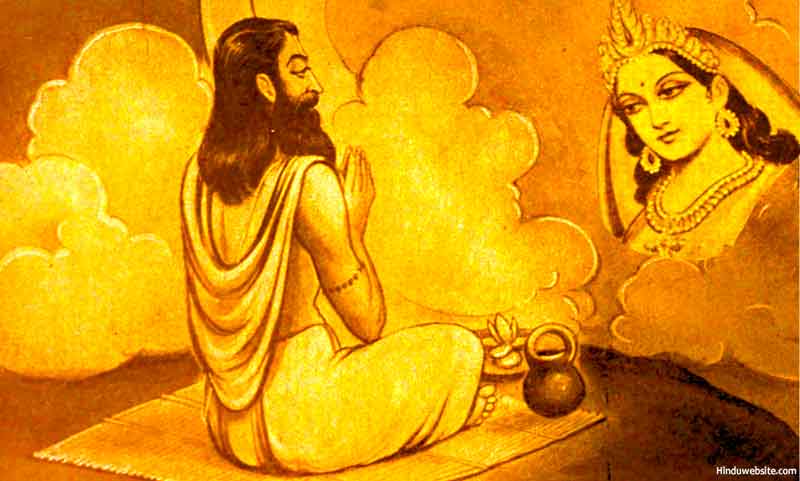
There is an interesting story in the Brihadaranyaka Upanishad as to how Brahma once tried to discipline his three types of progeny and improve their conduct. It is said that once all his three offspring stayed with him for some time as his students, practicing brahmacharya (celibacy) to complete their studies. At the end of their studies, Brahma called the gods to his side and asked them repeat after him the syllable "Da." When the gods repeated the syllable after him, he asked them whether they understood its meaning. They replied affirmatively saying they understood it as "damyata" or " practice self-control". Then he called the humans and asked them to repeat the same syllable "Da." When he asked them what they understood by it, they replied that they understood it as "Datta" or "be charitable". Finally he called the demons and asked them to repeat the same syllable. When they completed the chant, he asked them what they understood by it. They replied that they understood it as "Dayadhvam" or "be kind."
The moral of the story is that these three virtues are an inseparable part of our spiritual discipline. As human beings, we have the tendencies and qualities of all the three entities. We are part human, part divine and part demonic. Light and darkness are mixed in us as day and night in the twilight zone. While the gods and demons are polarized, we are drawn into their battle unwittingly and made vulnerable to both. Using the three instructions of Brahma, we can achieve balance and establish order (rtam) and dharma in our own microcosm. Our minds and senses are sometimes under the control of gods and sometimes that of the demons. Since we do not know when they come under the influence of whom, we have to practice both self-control and kindness. At the same time, since as human beings we are susceptible to selfishness and egoism, we need to practice charity and selflessness. Thus with the help of the three virtues we can establish balance and equanimity in our consciousness and deal effectively with the power struggle that goes on between gods and demons in all our inner planes and body sheaths.
Suggestions for Further Reading
- The Wisdom of the Upanishads, Main Page
- Upanishad Miscellany
- The Brihadaranyaka Upanishad - Translation by Jayaram V
- Symbolism Miscellany
- The Upanishads Translated by Max Muller
- Brahman, The Highest God Of Hinduism
- Atman, Soul or the Eternal Self
- List of 108 Upanishads According To The Muktikopanishad
- Translation Of Various Upanishads
- Introduction to the Upanishads of Hinduism
- Essays on The Upanishads
- Translations of Upanishads - Links
- Essays On Dharma
- Esoteric Mystic Hinduism
- Introduction to Hinduism
- Hindu Way of Life
- Essays On Karma
- Hindu Rites and Rituals
- The Origin of The Sanskrit Language
- Symbolism in Hinduism
- Essays on The Upanishads
- Concepts of Hinduism
- Essays on Atman
- Hindu Festivals
- Spiritual Practice
- Right Living
- Yoga of Sorrow
- Happiness
- Mental Health
- Concepts of Buddhism
- General Essays