
The Three Jewels of Jainism
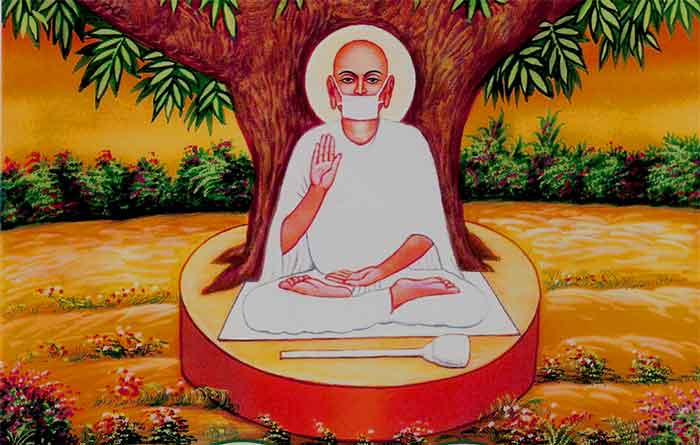
The three jewels of Jainism are also known as three gems and three refuges. They are different from the three jewels of Buddhism. They constitute the core practice of Jainism for both the ascetics and the laity. The three jewels are interdependent and yet independent. They prepare the followers to practice the vows they have to undertake as a part of their religious obligation.
Jainism is a very austere religion, which demands a high degree of commitment from its followers, in which one has to be willing to forego everything to achieve liberation, including one's life. While the laity is given some freedom to practice the law, no lenience is given to those who have choosen to become the ascetics and follow the path in letter and sprit. The three jewels which are common for both groups are cultivation of 1. Right perception (samyak darshana), 2. Right knowledge (samyak jnana) and 3. Right conduct (samyak charitra). These three jewels are discussed in detail below.
Right Perception (Samyak Darsana)
Right Perception (samyak charitra) is also translated into English as right vision, and right view. It is actually all these and even more. Perception is not a mere physical act. There is a mental process behind it and it is very much influenced by the attitude and the background of the preceptor. Right Perception comes with the ability to discriminate correctly between right and wrong, good and bad, right belief and wrong belief, right knowledge and wrong knowledge, and between truth and untruth.
Right Perception comes from right thoughts, right insight, right knowledge, right understanding, right faith, right relationships and right attitude. In a traditional sense, right perception comes from having right beliefs and right thinking about the thirthankaras and their teachings, and by knowing the difference between the Jiva, the embodied soul and Ajiva, the inert matter. In a negative sense, right perception also means not having the wrong perception, which is acquired by not believing in false prophets, not following wrong scriptures, not believing in the wrong knowledge and not indulging in wrong practices.
Right perception leads to contentment (prasanna), detachment (nirveda), spiritual yearning for liberating, (samvega), kindness (anukampa) and faith in the path (astikaya). It also results in freedom from eight kinds of pride, namely pride in family, physical strength, beauty, knowledge, wealth, authority, relationships and spiritual progress. Cultivation of right perception requires a great deal of inner discipline and assiduous practice which demands the following requirements.
1. Faith without doubts,
2. Complete renunciation of desire for worldly comforts,
3. Respect for believers on the path,
4. Absence of likes and dislikes,
5. Disinterest in wrong paths,
6. Bringing non-believers to the path,
7. Cultivation of right faith, and
8. Spreading the knowledge Jainism
Right knowledge (Samyak Jnana)
Right knowledge (samyak jnan) comes with right perception, right understanding, right discrimination and by knowing the true doctrine. Knowledge that is gained through external agencies is liable to error whereas knowledge gained directly through the faculties of the soul cannot be wrong. The true test of right knowledge lies in its ability to help us in getting what is good for us and in avoiding what is sinful. Right knowledge is useful and reliable because it is a true representation of what is.
Jainism acknowledges eight types of knowledge. Of them five constitute right knowledge. They are mati (mental knowledge), sruti (acquired knowledge), avadhi (distant knowledge), manahparyaya (paranormal knowledge) and kevala (absolute knowledge). The remaining three types of knowledge constitute false knowledge (mithya jnan). They are invalid knowledge, erroneous knowledge and wrong knowledge.
Mati jnana (mental knowledge) is ordinary perception obtained through the normal faculties of the mind such as perception, cognition, analysis and memory. It is further divided into smriti (remeberance), pratyabhijna or samjna (recognition), curita or tarka (inductive logic) and abhinibodha or anumana (deductive logic). According to another classification, it is divided into upalabdhi (end result), bhavana (feelings and emotion) and upayoga (usefulness). Matijnana comes to us mainly through the sense organs (indriyas). So sensory knowledge always precedes mental knowledge
Sruti jnana is verbal and non verbal knowledge acquired through signs, symbols and words. Study and hearing are the usual methods of obtaining srutijnana. While matijnana is acquired through primary contact srutijnana is acquired through secondary contact or another source. Srutijnana is of four types depending upon how it is acquired: labdhi (contact), bhavana (attention), upayoga (utility) and naya (perspective). The difference between sruti and mati is very subtle because in case of srutijnana also perception, cognition and understanding play an important role. Matijnana is the raw material from which comes srutijnana as a finished product. The former is based on personal experiences and perceptions while the latter is based on other people's knowledge and experiences that has been borrowed through communication.
Avadhi jnana is clairvoyance or knowledge of distant and remote things acquired through higher faculties, without the use of the senses or study. It comes either from birth (bhava) because of previous karma or from virtues (gunas) acquired by doing good karma and destroying bad karma.
Manahparyaya jnana is the knowledge acquired psychically through other people's minds using the paranormal faculty of mind reading or telepathy. People endowed with this faculty have the ability to actually see the thought forms and mental impressions of other people and know instantly what they are thinking. Manahparyaya jnana is acquired because of previous good karma or virtue acquired in the present life by removing impure karma. Manahparyaya is a kind of avadhijnana but it is limited to the extent of other people's minds and what is going on in them. In comparison, avadhijnana extends to every thing and everywhere. Secondly both human beings and others can acquire avadhijnana, but manahparyaya is possible only in case of humans.
Kevala jnana is the "Only" knowledge or the absolute knowledge. It is also described as the perfect knowledge and the ultimate knowledge. Kevalajnana is not subject to standpoints or perspectives because it contains all view points and perspectives simultaneously. It is omniscient, omnipresent, indescribable, unlimited, eternal and transcendental to which the limitations of space and time do not apply. It is acquired only when a person has achieved nirvana.
Knowledge obtained by these five means is divided into both direct knowledge (pratyaksha) and indirect knowledge (paroksha). Direct knowledge is that knowledge which is acquired directly without the intervention of an external agency. Of the five types of knowledge, the first two are considered indirect and hence reliable while the last three are direct and more reliable. Indirect knowledge is susceptible to error, invalid conclusions, and falsehood, where as direct knowledge is perfect.
From right perception comes right knowledge. From right knowledge comes right conduct and the power of discrimination. As karma is gradually removed from the embodied self, it begins to acquire different types of right knowledge. First comes perceptual knowledge. From it arises the desire to study and acquire the sruti knowledge. From the study of the doctrine and its practice comes clairvoyance or knowledge of distant objects and telepathy. These extraordinary powers enable the jiva to come into contact with higher beings from whom it gains more knowledge leading to its further purification. As the Jiva becomes adept in different types of knowledge. it gradually moves on the path of liberation and achieves kevala jnana or the highest knowledge. Ultimately, in the transcendental state, the Jiva gains perfect knowledge and becomes complete.
Right conduct (Samyak Charitrya)
The three jewels are interconnected and work in tandem. One cannot have right conduct without right knowledge and one cannot have right knowledge without right perception. Right conduct comes from the awareness of what is right and what is wrong and by doing what is right. It is practicing right knowledge as revealed by the thirthankaras and the jinas. At the core of their teachings is the practice of non-violence as a solution to the problem of karma. However ahimsa has to be practiced in conjunction with other teachings. A follower of Jainism should not have any doubt about the teachings of the Jinas. From faith comes the conviction and the resolve to remain committed to the path. Faith in the doctrine is therefore the first commitment expected of each follower. The conviction is further cemented by the 12 vows or vratas, which each initiate into Jainism has to undertake to begin his or her journey on the path. Of the 12 vows five are main vows or maha vratas and the rest are supplementary vows or anuvratas. Jain scriptures provide ancillary information on how to practice each of the main vows.
Five vows (Mahavratas)

In Jainism, the five main vows are an important part of spiritual practice to achieve liberation. They are meant for both lay followers and ascetics. The five main vows are stated below.
Ahimsa- non-injury or non-violence, to be practiced by not piercing, not binding, not overloading, not causing pain and not starving beings. Ahimsa should be practiced positively by practicing non-violence and negatively by refraining from violence
Satya - truthfulness, to be practiced by not spreading false doctrine, not back-biting, not doing forgery, not betraying secrets and not breaking promises. Satya should be practiced positively by practicing truthfulness and negatively by not speaking lies
Asteya - not to steal, to be practiced by not encouraging others to steal, not receiving stolen property, not acquiring things against law, not adulterating and not using false weights or measurements, use or what is obtained legitimately and not to take what is not given. Asteya should be practiced positively by using what one has and negatively by not taking what has not been given.
Brahmacharya - chastity or celibacy, to be practiced by not indulging in extramarital relationships, not indulging in unnatural sex, not indulging in lewd behavior, not showing excessive passion for one's spouse and not associating with sexually immortal people. Brahmacharya should be practiced positively by observing celibacy and negatively by refraining from sensual pleasure.
Aparigriha - renunciation or detachment, to be practiced by limiting one's possessions through three progressive levels of reduction: at a level higher than what one has, at a level equal to what one actually has and at a level less than what one has. Aparigriha should be practiced positively by giving away and negatively by not seeking worldly things.
The five vows are called mahavratas or great vows when they are practiced rigidly. In case of ordinary people who may not be able to practice them strictly, they are called anuvratas or minor vows. Those who have taken to asceticism are expected to observe them all the time mentally, verbally and physically. For example, the vow of ahimsa should be practiced by not injuring others mentally, verbally and physically. The laity are also advised to refrain from associating themselves with people who are not sincere on the path and who violate the vows habitually. Ascetics are advised to keep a vigil over themselves all the time while practicing the vows with firm resolve, cultivating 10 more virtues, namely kshama (forgiveness), mardava (humility), arjava (honesty), satya (truth), soucha (purity), samyam (self-restraint), tapas (penance), tyaga (sacrifice), akinchanya (non-attachment) and brahmacharya (celibacy).
Seven vows for the laity
In addition to the five vows, lay followers have to observe seven additional vows. Of them three are concerning gunas or qualities (guna vratas) and four are concerning education or religious knowledge (siksha vratas). The guna vratas are:
Dik vrata which consists of putting self imposed limitations upon oneself to reduce the chances transgressions. They act like standards of control.
Bhoga upabhoga parimana vrata, which consists of putting self-imposed limitations upon oneself with regard to the consumable and non-consumable items and possessions used.
Anartha danda vrata, which consists of self-imposed restrictions on avoiding unnecessary evil.
The Siksha vratas are meant for expanding one's awareness and knowledge. They are:
Samyak vrata, which consists of engaging in periods of meditation, study of scriptures for not less than a specified amount of time.
Desavakasika vrata, which consists of observing self-imposed limitations with regard to place of stay or travel or the time of travel.
Pausadha vrata, which consists of living periodically like an ascetic, practicing silence, fasting, not drinking water etc. for a specific period of time such as a day.
Atithi samvibhaga vrata, which consists of treating the ascetics with honor and respect due to a guest or helping the monastic community with such provisions as food, drink, cloth, medicines, accommodation etc.
11 Additional vows for the advanced laity
In addition to the 12 vows, eleven more vows are prescribed for the lay followers who want to enter into the next stage of spiritual practice. They are:
1. To worship the thirthankaras, respect for guru and believe in their teachings.
2. To face death peacefully through gradual self-starvation
3. To live the life of an ascetic six months in a year
4. To meditate three times a day
5. To avoid uncooked vegetables
6. Not to eat food after the sunset and before sunrise and not to drink water before daylight.
7. To stay away from one's spouse
8. To refrain from engaging in worldly pursuits
9. To eat only the left overs
10. To lead the life of an ascetic away from home, wearing ascetic clothes and following the rules of an ascetic.
11. To remain a novice for the rest of life
Right penance
In addition to the vows, certain common duties are prescribed for both the ascetics and the laity. The former are expected to observe these rigidly while certain allowances are made for the latter since they are not fully committed to the path.
These are described as right penance (tapas) and right contemplation. Right penance is both external and internal. The external penances are fasting (anshan), moderation in eating (unodari), living like a beggar (bhikshachari), indifference to physical pain (kayaklesh) and withdrawal from the worldly pursuits (sallinatha). The internal penances are repentance (prayaschitta), humility (vinaya), service (vaiyavritya), study (svadhyaya), meditation (dhyana) and renunciation (viyuut-sarga).
Right contemplation - 12 reflections (bhavanas)
Right contemplation consists of practicing 12 kinds of reflections, on the following.
1. Anitya Bhavna - Impermanence of the world
2. Asarana Bhavna - Helplessness or the thought that no one provides protection
3. Samsara Bhavna - The cycle of births and deaths
4. Ekatva Bhavna - Feeling of aloneness and solitude of the soul
5. Anyatva Bhavna - Otherness and Separateness
6. Asuci Bhavna - Impurity of the body and existence
7. Asrava Bhavna - The inflow of karma
8. Samvara Bhavna - Arresting the inflow of karma
9. Nirjara Bhavna - Getting rid of karma
10.Loka Bhavna - Nature of the world
11.Bodhi-durlabha Bhavna - Difficulties in attaining right faith, knowledge, and conduct
12. Dharma Bhavna - Doctrine and essential teachings
Suggestions for Further Reading
- The Atomic Theory of Jainism
- History of Jainism
- Jainism - Philosophy and Doctrine
- Major Beliefs of Jainism
- Jain Literature and Canonical Texts
- Jainism Cosmology
- The Jains And Their Creed
- Jainism - Doctrine and History
- An Introduction to Jainism or Jain Dharma
- The Philosophy and Practice of Jainism
- Information Websites on Jainism
- Jainism and the Belief in God
- Jainism - Jivas, the Embodied Souls
- Jainism - Belief in Karma
- The Theory of Knowledge in Jainism
- History of Jainism after Mahavira
- Vardhamana Mahavira
- Jainism - Anekantavada or Nayavada
- An Outsider Perspective on Jainism
- Jainism - Sects and Subsects
- Syadavada or Saptabhangi
- The Tattvas of Jainism
- Jain Thirthankaras
- Ethics of Jainism - The Three Jewels
- Tirthahkaras Before Mahavira
- Essays On Dharma
- Esoteric Mystic Hinduism
- Introduction to Hinduism
- Hindu Way of Life
- Essays On Karma
- Hindu Rites and Rituals
- The Origin of The Sanskrit Language
- Symbolism in Hinduism
- Essays on The Upanishads
- Concepts of Hinduism
- Essays on Atman
- Hindu Festivals
- Spiritual Practice
- Right Living
- Yoga of Sorrow
- Happiness
- Mental Health
- Concepts of Buddhism
- General Essays
Attribution: The image of Jaina monk used in this article is
used under the Creative Commons
Attribution-Share Alike 3.0 Unported license.