
Arjuna's Predicament in the Battle Field
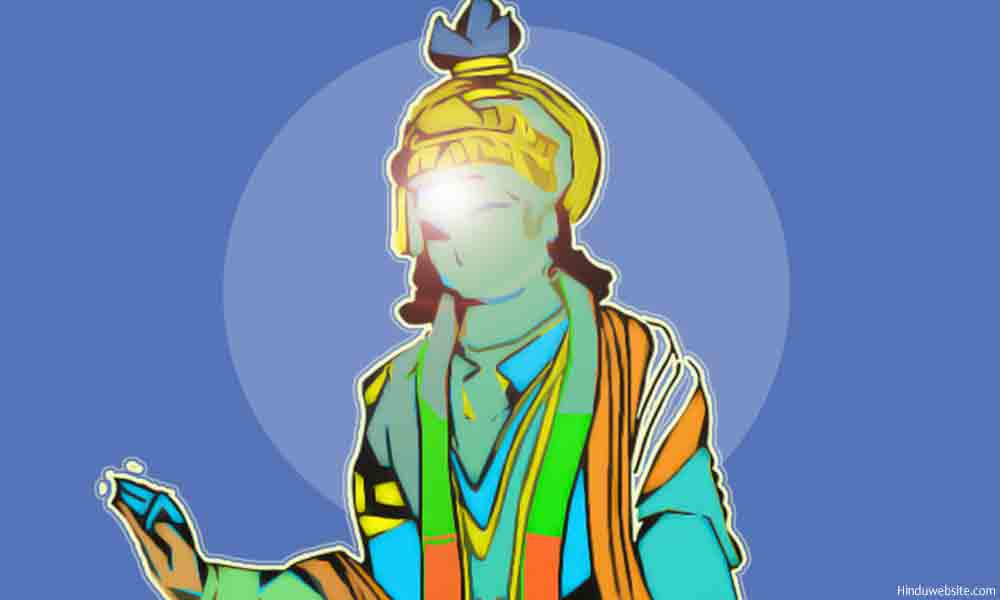
Chapter 2 - Verse 1
1. Arjuna was overcome with pity. His eyes were filled with tears and sorrow. He was much depressed. To him Krishna spoke thus.
Sometime you may be confronted with a situation where you have to hurt someone as part of your duty. Say for example, you have been asked by your company management to lay off several known friends and colleagues, who have been known to you for a long time. What will you do? You may feel pity for them, as you think of their families or the struggles they may undergo after losing their jobs. You may also experience fear, anxiety, and wonder how you will convey that sad news to them.
Arjuna was going through a similar situation. He forgot at that moment that even if he really decided to withdraw from the war, the war between the two factions was not going to stop. It would continue. Worse, his enemies would be emboldened, and his side might even lose the war because of his absence. Sometimes our good thoughts and actions may result in personal loss and create unintended consequences. Your intentions may be good, but the world does not necessarily reciprocate your good actions.
In situations, such as the one we just mentioned, no one can tell which course of action is better because doing your duty or not doing it, both will have negative consequences. It is where spirituality knowledge and wisdom come to your help. They will give you inner strength to face your problems and accept the consequences. It is not that you will not suffer, but you will suffer with certain detachment, awareness and dignity, keeping your faith in God. Spiritual people have greater capacity to withstand pain and suffering because they have the ability to step aside and let God handle their problems, or cultivate inner strength to accept their suffering with certain stoicism.
It is also important to pay attention to which part of your personality suffers. In most people, it is usually the ego. The ego cannot keep quietly. It responds with certain force and makes a lot of noise when it is disturbed. Arjuna's pity had a similar character. It was the pity of an ego bred on relative human values. His tears were the outpouring of limited human knowledge and untested egoistic beliefs. His depression was the depression of a mind which was propelled by its own prejudice and directed by its own fears. Sorrow and depression are the natural expressions of a mind, which is suddenly overwhelmed with the sudden realization of the utter futility of human endeavor in certain aspects of life where one has little control.
When life teaches valuable lessons, it is usually with the help of sorrow and by exposing our own limitations in resolving it. A person leads a routine life as long as his values and convictions are not seriously challenged and his abilities are not put to test. He brings out the best in himself when he is confronted with his own ignorance, weaknesses, fears and incapacity. It is the only way people can be stirred out of their complacency and forced to change so that they can test their wings and learn to fly. Having come thus far through trials and tribulations, Arjuna was in that situation where he had to deny a part of himself in order to resolve a very serious moral conflict, the part which he trained and tested as a warrior in several battles before.
Moral and mental conflicts are inevitable part of human life. They are the grim reminders of the inability of human knowledge and intelligence to deal with the problems of life on human terms. They expose a person to the tyranny of his own emotions and desires and make him understand the need for greater vision and understanding that can truly establish inner peace and harmony with in himself. As stated by one philosopher, the beauty of life lies in that its strength lies in its weaknesses and its solutions in its problems.
It is true because when you truly understand a problem, its solution also becomes self-evident. The limited knowledge of the mind, the limited capacity of the senses and the inherent tendency of the ego to indulge in self-perpetuating activities all contribute in the end to the search for new answers and meanings in the otherwise meaningless life. The seeker has to learn to deny himself in order to make denial a permanent basis for the emergence of a radiant, higher self. That denial is practised through renunciation and self-negation with self-imposed restraint and discipline.
Conflict and confusion are therefore the substratum of human life. In the oceanic depths of samsara the ego has to swim from conflict to conflict and confusion to confusion until it finds the ultimate source of all solutions. Arjuna was a great warrior, a man of learning. But he too was not free from the confusion created by his own ego. His egoistic beliefs and values were now seriously challenged by the needs of the war. Faced with the predicament of waging a war against his own relations, he had to review in earnest and relearn everything about his life and conduct.
He needed new awareness and guidance which could absorb his existing conflicts and moral confusion, without seriously damaging the continuity of his life and his professional duties. His consciousness needed the touch of divine knowledge so that it could achieve peace and harmony. He was now ready for the light of the higher wisdom, which he wad destined to receive from Lord Krishna, who was his friend and philosopher, and now his spiritual teacher.
Note : These commentaries are not part of the Bhagavadgita Complete Translation.
Suggestions for Further Reading
- The Samkhya Philosophy and 24 Principles of Creation
- The Bhagavadgita On The Problem Of Sorrow
- The Concept of Atman or Eternal Soul in Hinduism
- The Practice of Atma Yoga Or The Yoga Of Self
- The Problem of Maya Or Illusion and How To Deal With It
- Belief In Atman, The Eternal Soul Or The Inner Self
- Brahman, The Highest God Of Hinduism
- The Bhagavad Gita Original Translations
- The Bhagavadgita, Philosophy and Concepts
- Bhakti yoga or the Yoga of Devotion
- Hinduism And The Evolution of Life And Consciousness
- Why to Study the Bhagavadgita Parts 1 to 4
- The Triple Gunas, Sattva, Rajas and Tamas
- The Practice of Tantra and Tantric Ritual in Hinduism and Buddhism
- The Tradition Of Gurus and Gurukulas in Hinduism
- Origin, Definition and Introduction to Hinduism
- Hinduism, Way of Life, Beliefs and Practices
- A Summary of the Bhagavadgita
- Avatar, the Reincarnation of God Upon Earth
- The Bhagavadgita on Karma, the Law of Actions
- The Mandukya Upanishad
- The Bhagavadgita On The Mind And Its Control
- Symbolic Significance of Numbers in Hinduism
- The Belief of Reincarnation of Soul in Hinduism
- The True Meaning Of Renunciation According To Hinduism
- The Symbolic Significance of Puja Or Worship In Hinduism
- Introduction to the Upanishads of Hinduism
- Origin, Principles, Practice and Types of Yoga
- Hinduism and the Belief in one God
- Essays On Dharma
- Esoteric Mystic Hinduism
- Introduction to Hinduism
- Hindu Way of Life
- Essays On Karma
- Hindu Rites and Rituals
- The Origin of The Sanskrit Language
- Symbolism in Hinduism
- Essays on The Upanishads
- Concepts of Hinduism
- Essays on Atman
- Hindu Festivals
- Spiritual Practice
- Right Living
- Yoga of Sorrow
- Happiness
- Mental Health
- Concepts of Buddhism
- General Essays