
The Idea of Eternity and Rebirth of Souls
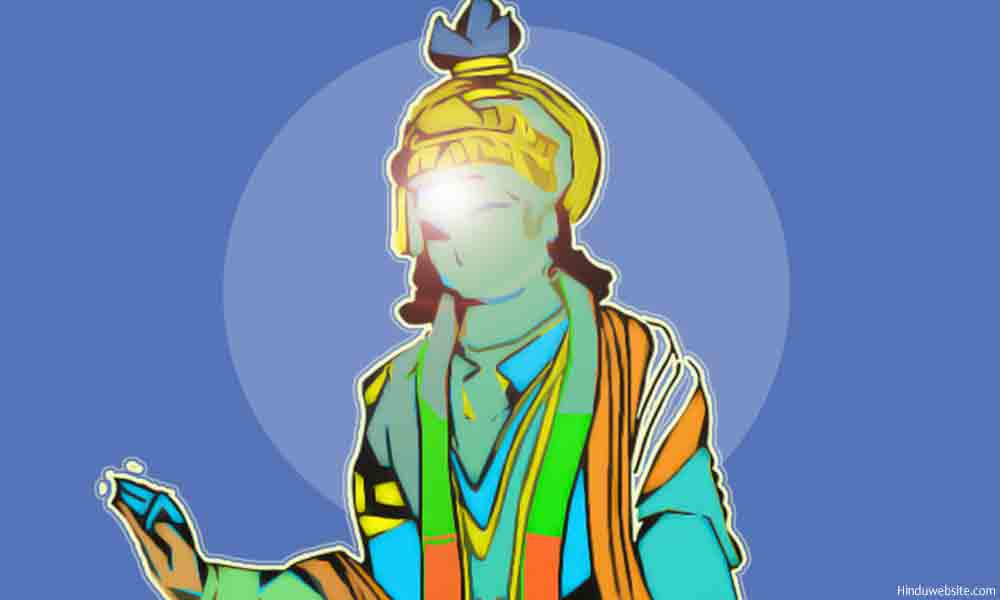
Chapter 2, Verses 12 & 13
12-13. Never was there a time when I was not, nor you, nor the lords of men, nor will there ever be a time hereafter when we all shall cease to be. Just as the soul in this body passes through childhood, youth and old age, so does it pass into another body; the steadfast one is not deluded.
Both the verses contain two fundamental and profound ideas of the Vedanta. One is that God is eternal, unchanging and indestructible. This is the common theme of all Upanishads. The second one is that individual souls are also eternal and indestructible, but unlike God they are subject to death and rebirth in the mortal world and remain bound until they are free from delusion and ignorance. Both verses briefly sum up the eternal nature of the souls and their rebirth. Rebirth is compared to aging. Just as the body passes through different phases of childhood, youth and old age, the souls pass from one life to another.
One of the most singular contributions of Hinduism is the concept of rebirth, transmigration or reincarnation of souls. Souls do not die. After death, they return to the earth to finish their unfinished work or fulfill their predominant desires. Closely allied to this is the idea the souls remain bound to the cycle of births and deaths until they achieve liberation or Moksha.
The idea of reincarnation of souls is gradually gaining ground even in the West. It has been part of many religious traditions in the eastern hemisphere since the earliest times. Buddhists and Jains also believe in rebirth, but they do not acknowledge God. The reincarnation of souls is Nature’s way of rebooting the natural, intelligent systems and improving and evolving them through iterative processes to facilitate their spiritual progress.
The creative and transformative power, which is inherent in Nature, cannot enact its evolutionary agenda in the mortal world without facilitating the reincarnation of souls and the recycling of natural materials, since life on earth is subject to numerous limitations. The fragile bodies and natural systems cannot survive for long. Besides, Nature is also not free. It is also bound to its own laws.
Nature has to slow down the liberation of souls for the order and regularity of the world and ensure its timely progress from epoch to epoch. Beings need to be limited and kept within their bounds so that their chances of escaping remain uncertain and limited.
Thus, a large number of embodied souls (jivas) remain bound to the world and its myriad attractions, pulls and pressures. In such a chaotic and ephemeral world, where Nature sets the rules and the agenda, the souls have to rely upon chance or strenuous effort to assimilate knowledge and experience and achieve the required purification to become homebound to the world of Brahman.
Each birth is an iterative process. It gives the souls an opportunity to break free from their past failures and successes and make a fresh beginning to experience life anew and prepare for their long-term goal of final liberation. When it ends, death gives them an interlude of rest and recuperation to review their past and envisage a better future. Thus, birth and death are the doors through which the souls have to pass repeatedly until they achieve required purification and perfection and qualify for their return to eternal freedom. They are the means by which the embodied souls pass through several phases of purification and transformation until they are free from impurities and modifications./p>
Life on earth is not the mere expression of a blind and unconscious force of energy working for its own whimsical and aimless meandering. It is difficult to accept life on earth as the evolutionary product of blind Nature or as the interplay of few ignorant molecules which somehow manage to come together by accident or random chance to manifest diverse life forms that somehow fit into an intelligent pattern or system, which even the most intelligent human mechanism cannot repeat or emulate.
IIt is true, Nature is bound to certain laws, and many of its methods and mechanisms can be repeated or recreated. However, some aspects of Nature do not fit into a predictable pattern, nor can we logically explain the role of random events such as cataclysmic, planetary events or mutations that make possible life upon earth or the appearance of new life forms. There is an overwhelming evidence to suggest that the universe is a well-organized and self-regulating system, which is capable of conceiving and implementing a grand universal program of creation, maintenance and destruction in cyclical and repetitive manner.
It seems as though in this grand scheme of things, Nature is guided by even more powerful and potent intelligence, which is beyond our grasp. Our scriptures call it God, Self, Supreme Self, Brahman and so on. This power is beyond the grasp of Nature and all those that are present in it. Hence, we may perhaps never perceive the existence of God amidst us except through flashes of individual experience in heightened states of spirituality. /p>
It is logical to accept life as a product of gross matter as it is subject to certain known and unknown processes. As gross matter is transformed and refined into subtle bodies through successive phases of formation and transformation beings evolve from semi conscious states to conscious and self-aware states. Eventually, they reach a stage where they become aware of their spiritual nature and strive for liberation.
Thus, to fulfill its very purpose of establishing stability and continuity, the creative mechanism of the Universe has to ensure that the souls or the consciousness in finite life forms have to shed their perishing gross bodies at some stage to return to their pristine, eternal state. How this transformation is achieved, whether in an instant or through successive phases of life and death, is the subject matter of philosophical speculation and the cause of much religious diversity, debate and discussion.
TThe Vedanta School of Hinduism, which is derived from the Upanishads (Vedas), supports the latter opinion that the transformation of life upon earth which leads to the liberation of beings is a gradual process, which is subject to the laws of karma, a self-correcting mechanism, and Dharma, the laws of god. It also believes that one can hasten the process through spiritual effort or with the help of God. Left to it, Nature may facilitate it or prevent it over a long time..
Note : These commentaries are not part of the Bhagavadgita Complete Translation.
Suggestions for Further Reading
- The Samkhya Philosophy and 24 Principles of Creation
- The Bhagavadgita On The Problem Of Sorrow
- The Concept of Atman or Eternal Soul in Hinduism
- The Practice of Atma Yoga Or The Yoga Of Self
- The Problem of Maya Or Illusion and How To Deal With It
- Belief In Atman, The Eternal Soul Or The Inner Self
- Brahman, The Highest God Of Hinduism
- The Bhagavad Gita Original Translations
- The Bhagavadgita, Philosophy and Concepts
- Bhakti yoga or the Yoga of Devotion
- Hinduism And The Evolution of Life And Consciousness
- Why to Study the Bhagavadgita Parts 1 to 4
- The Triple Gunas, Sattva, Rajas and Tamas
- The Practice of Tantra and Tantric Ritual in Hinduism and Buddhism
- The Tradition Of Gurus and Gurukulas in Hinduism
- Origin, Definition and Introduction to Hinduism
- Hinduism, Way of Life, Beliefs and Practices
- A Summary of the Bhagavadgita
- Avatar, the Reincarnation of God Upon Earth
- The Bhagavadgita on Karma, the Law of Actions
- The Mandukya Upanishad
- The Bhagavadgita On The Mind And Its Control
- Symbolic Significance of Numbers in Hinduism
- The Belief of Reincarnation of Soul in Hinduism
- The True Meaning Of Renunciation According To Hinduism
- The Symbolic Significance of Puja Or Worship In Hinduism
- Introduction to the Upanishads of Hinduism
- Origin, Principles, Practice and Types of Yoga
- Hinduism and the Belief in one God
- Essays On Dharma
- Esoteric Mystic Hinduism
- Introduction to Hinduism
- Hindu Way of Life
- Essays On Karma
- Hindu Rites and Rituals
- The Origin of The Sanskrit Language
- Symbolism in Hinduism
- Essays on The Upanishads
- Concepts of Hinduism
- Essays on Atman
- Hindu Festivals
- Spiritual Practice
- Right Living
- Yoga of Sorrow
- Happiness
- Mental Health
- Concepts of Buddhism
- General Essays