
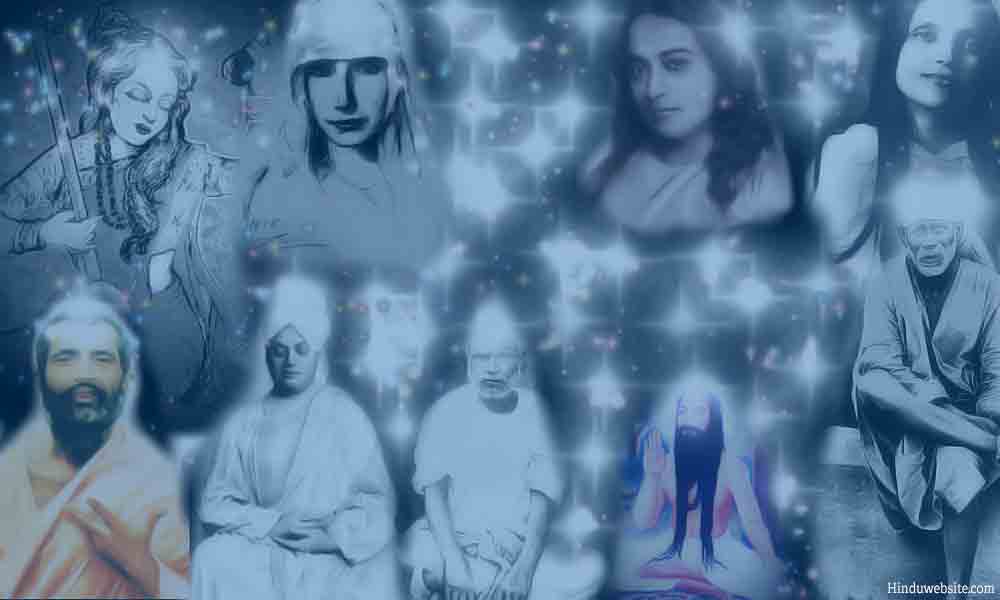
Spiritual Gurus and Saints of Hinduism, India and the World
Adi Shankara: Adi Shankaracharya was born in the early 9th century AD at Kaladi in Kerala. He was a child prodigy, who mastered the Vedic scriptures at a very early age and renounced the worldly life at the age of eight. After he became a monk he left his native place and traveled to various parts of the Indian subcontinent. During his travels he impressed many with his intuitive knowledge and philosophical bent of mind.
Adi Shankara believed in the non duality of existence and became a great exponent of the Advaita school of Hinduism. He lived a very short life of 32 years but in that brief span of life he made astounding contribution to the cause of Hinduism. He enriched Hinduism with his immortal works, such as Atmabodha, Vivekachudamani, Saundaryalahari, etc. He also wrote commentaries on Brahmasutra, the Bhagavad gita and the major Upanishads. He established Shakara Matths and started the tradition of Shankaracharyas. Adishankaracharya was undoubtedly the greatest son of the Indian subcontinent after the Buddha. He revived Hinduism and strengthened its base at a time when it was about to face a major challenge from Islam. In terms of contribution as a philosopher and scholar, there is none comparable to him in Hinduism. To know more about him please click here.
Amritapuri: Originally known as Sudhamani, Ma Amritapuri or Mata Amritanandamayi, was born in the Kollam district of Kerala on September 27th, 1953. She lived a very humble and hard life as a child, keeping herself busy with all the household drudgery as her mother was chronically ill. Even as a child she had been through many spiritual experiences and was often filled with an intense longing for Lord Krishna. At the age of 22 she revealed her divine nature to the people in her village and showed them her miraculous powers. As time passed by she became popular not only in India but in other parts of the world. The hut where she was born is now a sacred shrine from where she conducts her regular activities and blesses her devotees who throng the place. Ma Amritapuri, endearingly addressed as Amma by her devotees, has earned the admiration of many because of his intense compassion for the poor and the downtrodden for whom she has initiated many welfare programs such as educational institutions, orphanages, hospitals, homes to the homeless and pension to the poor. She has a world wide following and is revered by many in various parts of the world. Please Click here to know more about this living embodiment of the universal Divine Mother.
Anandamayi Ma: Ma Anandamayi was born on April 30, 1896, to Bengali parents in a small village named Kheora in Tripura, which is now situated in Bangladesh. From an early age, like many saintly persons, she manifested her miraculous powers and occasionally fell into trance. She was married at an early of age of 12 to Bholanath who worked in police department. After her marriage she passed through difficult times, but carried herself with aplomb. During this period she developed intense devotion to Lord Krishna and underwent gradual inner transformation, which led to her self realization at the age of 26. As time went by, her popularity grew and people from far and wide started visiting her to seek her blessings. During her eventful life she visited many parts of India and met many influential people including Mohandas Karamchand Gandhi who developed a special liking to her and treated her with fatherly affection. She passed away in August 1983. Please Click here if you want to know more about her life and activities.
Guru Raghavendra: Sri Guru Raghavendra Thirtha was born in 1595 AD in southern India to humble parents, who gave him the name of Venkatanatha as an acknowledgement of their devotion to Lord Venkateswara. As a child Venakatanatha grew up at Kumbakonam under the watchful eyes of his guru Sudheendra Thirtha. As a young man he led normal household life, in poverty, served by his dutiful wife Saraswathim, through whom he had a son. But he continued to serve his guru, whom he succeeded as Swami Raghavendra Thirtha to become the head of the Mutt. Unable to bear the news of his renunciation, his wife said to have committed suicide. As the head of the Mutt, Raghavendra Tirtha performed many miracles and helped many people who became his devotees. During his life time he composed many important Vaishanvite works and propagated the Dwaita philosophy. He died at the age of 78 at Mantralayam, originally known as Manchala, near Adoni, in present day Andhra Pradesh, India. Sri Raghavendra continues to bless his devotees from his Samadhi which is now a famous pilgrimage center in Southern India and known as the Mantralayam temple to which rich and poor alike go to pay their homage. To know more about Swami Raghavendra please click here.
Shirdi Sai Baba:Nearly a hundred years ago lived a wonderful man in an obscure Maharashtrian village, whom many consider as the one of the greatest saints of the 20th Century. Through his life and activities he proved to the world that religion is not a barrier to the goal of universal brotherhood. During his life time, on many occasions he exhibited wondrous miraculous powers and through the purity of his character and love of his heart he won the hearts and souls of many people from diverse backgrounds. The place where he spent a greater part of his life is now a famous pilgrim center of India which attracts millions of devotees every year. There is perhaps not a city or town in the country where we do not come across a temple built in the honor of this great personality, whose greatness lies in his simplicity and his unconditional love for his followers. He performed many miracles during his lifetime and passed away on October 15, 1918. A temple was built at Shirdi to house his physical remains from where he blesses millions of people even today. To know more about Shirdi Saibaba or about the activities at Shirdi, please Click Here.
Sri Sathya Sai Baba: Sai Baba was born at Puttaparthi, a remote village in southern India, on November 23, 1926. As a child he performed many miracles and at the age of 13 underwent a miraculous transformation, after he was bitten by a scorpion. Two months after this incident he declared himself as an incarnation of Shirdi Saibaba and started manifesting his immense spiritual powers. Soon his fame spread and many people started visiting the otherwise obscure and remote village called Puttaparthi, in the Anantapure District of Andhra Pradesh in Southern India. Today, Sri Sathya Baba perhaps commands the largest following of devotees in the world, which include many politicians, rich business tycoons, actors, artists, singers and scholars from all over the world. Known for his miracles and emphasis on unconditional love and equality of all religion, Sri Sathya Saibaba however is not free from controversy. While his critics are ever busy finding faults and crevices in his personality, his devotees worship him as God incarnate. To know more about him please click here.
Jayatiirtha: Swami Jayathirtha was a famous exponent of the Tattvavada (logical exposition) of the Dwaita philosophy. He lived near Pandharpur in the present-day Maharashtra in the 14 th Century AD and wrote a commentary on the Isa Upanishad to explain the approach of the Dwaita (duality) School towards the Nature of Reality and counter the theory proposed by Sri Adi Shankaracharya, the propagator of the Adwaita (non duality) philosophy. Swami Jayathirtha composed many important works on the subject works such as the Nyâya-Sudhâ, Vadavalli, TattvasamkhyânaTîkâ and so on. He spent most of his life at Malkheda, which is presently situated in the state of Karnataka and a popular pilgrim center for the followers of the Madhva Sect. To know more about Swamy Jayathirtha, please Click Here.
Sri Ananda Thirtha: He was the founder of the Tattvavada School which was later made popular by the efforts of such eminent men as Swami Jayathirtha . He is considered by many as an incarnation of Sri Madhavacharya himself, the founder of the Dwaita School. Known as Vasudeva in his childhood, and born near Udipi in Karnataka, he was said to be a gifted child and surprised many with his with miraculous powers, vast scholarly knowledge and debating skills at quite an early age. At the age of eight he came into contact with his Guru Achyutapreksha Tîrtha, who initiated him into a life of renunciation and gave him the name of Ananda Thirtha. Durijng his life the Swami undertook many noble activities. The present day famous Krishna temple at Udipi was founded by him. He composed many important works on the Tattvavada and provided inspiration to many followers. After a very eventful life, he passed away in the early 14th century. To know more about him please click here.
Krsna Balaram Swamiji : Mahant Sri Krsna Balaram Swamiji was born in Vrindavan, in a family of eminent scholars, who were well versed in the Yajurveda. As a child he received religious knowledge from his father and later joined Nimbarka Sanskrit Mahavidyalaya College, where he studied the Vedic Scriptures for eight years and became an adept in Sanskrit. Later he shifted to an English school and received modern education as well. He translated the Vedas into English and also written many books in both English and Sanskrit. He founded Bhagavat Dharma Samaj in 1990 to enlighten people about the Bhagavat Dharma. To know more about him please click here
Neem Karoli Baba: Originally named as Lakshmi Narayan, and known by many other names, Neem Karoli Baba was born at Akbarpur in presentday UP, probably around 1900 AD. At a very young age he went to Gujarath where he lived at a place called Bavania, by the side of a lake at a little temple. Later he shifted his residence to various other places. During his life time he built many temples, helped many people and was visited by many people. In the western world he was made popular by Baba Ram Dass and Bhagavan Das through such works as "Be here now" and "It is here now". Though he left his physical body at Vrindavan in 1973, many of his devotees still experience his physical presence and receive his blessings and guidance. Click here to know more about him.
Paramahansa Yogananda: Paramahansa Yogananda was born on January 5, 1893, in Gorakhpur, India. His original name was Mukunda Lal Ghosh. He hailed from a well-to-do Bengali family. From his early childhood, his parents were well aware of the spiritual significance of his birth. As a boy he was driven by an intense urge to seek the Divine and develop a friendly attitude towards God in all his forms and aspects. He went through many personal experiences that strengthened his faith in the Divine and propelled him to find a Guru who would help him reach the Highest Truth. At the age of 17 he met Swami Yukteswar Giri and became his disciple. He spent the next ten years under the guidance of his Guru, practicing Kriya Yoga and exploring the inner worlds. To prepare him for his future mission in the western world, his Guru encouraged him to join a college and receive modern education. After he completed his education in 1915, Swami Yukteswar initiated him into monk hood and gave him the name Yogananda. The Swami became very popular both in the east and the west through his teachings and his speeches. His Autobiography of a Yogi, which was published in 1943, attracted the attention of many. After spreading the message of love in many parts of the world and proving beyond doubt that through sustained self efforts human beings can ascend to extraordinary transcendental heights, he passed away on March 7, 1952. It has been said that due to his extraordinary spiritual powers, his body did not suffer any decay even twenty long days after his death, a fact which was recorded officially by the doctors. Please Click here to read more about one of the greatest saints of modern India.
Ramana Maharsh : Known popularly as Arunachala Swami and referred as Bhagawan by his ardent devotees, Ramana Maharshi can be rightfully regarded as the spiritual southern twin of Sri Ramakrishna Paramahansa, but with a message of his own that is rooted in the age old Hindu traditions of jnana marg (the path of knowledge) in contrast to the bhaktimarg (devotional approach) of the latter. He was born on December 30, 1879 at Tiruchuli, a small village, about thirty miles from Madurai, in Tamilnadu. As a childe he was unlike many other saints and was said to be rather dull and sleepy, without any signs of his extraordinary powers or the great events of his life that were yet to come. In 1896, at the age of 17, he had undergone a peculiar experience at the end of which he overcame his attachment with his physical self and realized the true nature of his hidden self. Shortly thereafter he left his home and went to Tiruvannamalai, where he spent the rest of his life providing inspiration and guidance to his followers. During his life time many foreigners visited him including such famous personalities as W. Somerset Maugham and the British author Paul Brunton. An ashram was built for him on a hill called Arunachala at Tiruvannamalai, which became popular as Ramanashram, which is now famous pilgrim center, attracting a huge number of visitors each year. His philosophy was simple, that suggested intense and persistent self enquiry to find the true nature of one self. Sri Ramana Maharshi passed away in 1950. Please Click Here to know more about him. You can also Check this Link for more information.
Sant Dariya Saheb: Sant Dariya was born in 1679 in the present-day Rohatas District of Bihar at a time when the Mughal empire was declining and the British were consolidating their gains. He got enlightenment at the age of twenty and preached against ritualism, polytheism and false doctrines. He advocated monism, non violence, vegetarianism, faith in the guru, amity between Muslims and Hindus. He urged people to control their minds in order to find Satnam (God) and attain Amarpur (the Abode of immortality). He also composed many verses knows as Sabad. Sant Dariya believed in the oneness of God, in the truth of self realization and in the possibility of nirvan or union with God. Please Click here to know more about this great saint of late medieval India.
Sant Morari Bapu: Sant Morari Bapu was born in 1946, in Gujarath in a large family of six brothers and two sisters. He was a child prodigy who started learning the great epic Ramayana at the early age of five from his grandfather. By the age of 12 he mastered the entire Ramacharit manas and was able to recite it by heart. And with the knowledge thus gained he began reciting the epic before small gatherings of rural people. Although he worked for sometime as a teacher, his heart and soul were dedicated to the sacred epic, which he continued to recite before different gatherings. His fame gradually spread to other parts of India as well as outside. He performed Ramayan recitals in many countries and such places as Manasarovar in the Himalayas. To know more about this ardent devotee of Lord Rama, please click here.
Shri Avichaldasji : He is the head of the Sat Kaival Sampradaya and is the seventh Acharya in the line. He organized many activities and also earned a place for himself for his discourses and philanthropy. He presently lives at Sarsa in Gujarat and continues to spread the message of Paramguru.
Swami Omkarananda Saraswati: Swami Omkarananda was born in Hyderabad in 1929. He had many mystic experiences at an early age and was initiated at the age of 17 into the spiritual world as Sanyasi by his Guru Sri Swami Sivananda. He published hundreds of works, some of which have been translated into several foreign languages. Apart from his main Ashran in the Himalayas, he has several Ashrams elsewhere in the world, especially in European countries like Germany, Switzerland, Austria and England. His Himalayan Ashram undertakes many philanthropic activities, including maintenance of some temples in the Himalayan region. To know more about his unique personality please click here.
Swami Prabhupada: Born in a family of Vaishanvites, Abhaya Charan De, who was to later become Swami Prabhupada for millions of followers, developed deep devotion to RadhaKrishna at a very young age. At the age of 28 he became a disciple of Srila Bhaktisiddhanta Goswami Maharaj, who belonged to the tradition of Gaudiya Vaishnavism, which traces its origin directly to Lord Krishna himself. At the age of 50 he renounced the world and spent considerable time in India, travelling from place to place, preaching the message of Lord Krishna and spreading krishna consciousness. In 1965, at the age of 69, he went to America with a determination to spread Krishna consciousness in the new world. Despite of early set backs and financial difficulties in organizing his activities, he eventually succeeded in attracting many people to the Hare Krishna movement and developed it into a world wide organization with millions of followers and committed devotees. Swami Prabhupada wrote many books and translated 30 volumes of Bhagavatam into English. His approach to the interpretation of the Bhagavad gita was uncompromising in the sense that he would not accept any deviation from the established Vaishnava tradition. To know more about this great personality please click here. To know about ISKCON the movement he started please click here. Or use this link to read the Bhagavad Gita As it is.
Swami Rama Tirtha: Gossain Tirtha Rama was born in 1873 in a small village in the district of Gujranwala, Punjab, India. From an early child hood he was inclined to listening recitations from the holy scriptures. At the age of ten his father arranged a marriage for him and left him in the care of a friend who exercised a great influence on young Ramathirtha. After completing his college education he worked for a while as a Professor of Mathematics. A few years later he resigned from his job, renounced the worldly life and went to the Himalayas. After returning from the Himalayas, Swami Ramathirtha spent the rest of his life, spreading the Vedanta. He went to Japan and then USA, where he attracted the attention of many and gained many followers. After an eventful life, the Swami left this world in 1906, but left behind him a large following and a great legacy. Please Click here to learn more about him.
Saint Arunagirinathar: Saint Arunagiri, an ardent devotee of Murugan, lived in the 15th century and composed many important religious texts which reflect his philosophy of love and compassion.
Vadiraja Tirtha: Sri Vadiraja Tirtha belonged to the Vaishnava Sampradaya of the Madhva Sect. In importance, he is considered to be next only to Swami Ananda Thirtha by the followers of the Madhva sect. He said to have lived for 112 years, between 1480 and 1600, in the present day Karnataka. He acted for several years as the head of the Sodhe Math, one of the eight Matths founded by Sri Madhavacharya. During his administration, he increased the tenure of the Matth's administration from 2 months to two years. A supreme devotee of Lord Vishnu, his life was also filled with some interesting of miracles. He was also responsible for the installation of Sri Manjunâtha (Shiva), the main deity of the temple at Dharmasthala and for the appointment of the Madhva priests to perform the daily worship in the Shiva temple. He composed several devotional songs in Kannada, some of which are still available. Please Click here to know more about Sri Vadiraja Thirtha
Variyar Swamigal: His original name was Thiru Muruga Kirupanandha Variyar but he became popular as Variyar Swamigal. Born in 1906 he lived up to 1993. For about 36 years he was associated with the publication of the monthly magazine Thiryppugazh Amirtham. A child prodigy, a great religious scholar and an ardent devotee of Lord Muruga, he also wrote screenplays for some devotional films produced in the south. During his life time he also initiated many social welfare activities for the poor and the needy. To know more about him please click here.
Vasudev Anand Saraswati: Born in 1854 AD, Sri Vasudeva Shastri, who was later to be known to his followers as Sri Vasudevanand Saraswathi, led an ordinary householder's life before he turned completely to spiritual life. As a householder, he led a rather difficult life, owing to the disputes between his wife and mother. As he turned to spiritual life, he made rapid progress and received direct guidance from Lord Dattatreya. Shri Govind Swami whom he met at Wadi acted as his guide and mentor during these testing times. After his wife's death, he renounced the worldly life completely and went to Ujjain, where he was initiated into monastic life by Shri Narayananand Saraswati, who also gave him the title of Shri Vasudevanand Saraswati. The Swamiji spent the next 23 years of his life in the service of Lord Dattatreya, traveling to various parts of the country by foot and propagating the Vedic ideals. To more about Sri Vasudevanand Saraswathi please click here.
Swami Krishnananda: Born in South Kanara District in an orthodox Shivaralli Brahmin Family, and known originally as Subbaraya, Swami Krishnananda developed deep interest in the study of Sanskrit and the Vedic scriptures and showed his religious bent of mind at an early age. After completing his education, he worked for sometime in the Government service before he turned completely to religious life. He went to Varanasi to pursue his study of Sanskrit and the Vedas. In the year 1944, he went to Rishikesh and came into contact for the first time with Swami Sivananada, who was impressed by him and permitted him to stay at his ashram. Two years later, he initiated Subbaraya into Sanyasahood and gave him the name of Swami Krishnanda Saraswathi. While continuing in the Ashram, in 1948, Swami Krishnanada experienced the heights of God consciousness and became a perfect Gnani. In 1961, Swami Sivananada appointed him as the General Secretary of The Divine Life Society in 1961. Ever since, till his death in November, 2001, the Swamiji provided guidance and inspiration to countless people through his teachings and writings, following the footsteps of his guru Swami Sivananda Maharaj. The Swamiji has also left behind an autobiography of himself which can be accessed from here.
The Alvars: Alvars were great devotees of Lord Vishnu. According to tradition, there were 12 Alvars, namely Poykai, Bhutam, Pey, Tirumazhisai, Nammalvar, Periyalvar, Andal, Kulasekharan, Madhurakavi, Tondar-adi-podi, Tiruppaan and Tirumangai,. They came from diverse caste groups and lived between 5th and 9th Century in southern India. Being great devotees of Lord Vishnu, especially Ranghanatha, they composed beautiful devotional poetry in his praise. Their individual compositions were later compiled into a single scripture by the name Divya Prabhandam. The Alvars played a very significant role in the development of bhakti cult in Southern India and in the popularity of Vaishanavism.To know more about these great souls please click here or here
Sri Ramanujacharya: Sri Ramanujacharya who lived between 1017 and 1137 was one of the foremost exponents of the Vishishtadwaita (qualified dualism) philosophy, which was based on the premise that God and soul were separate entities as opposed to Shankara's philosophy of Advaita (Non duality). He was born at Sri Perambadur in Southern India and was given the name of Ilaya Perumal by his parents. After his father's death at an early age, he and mother shifted to Kanchipuram, where young Perumal grew up and mastered all the Vedas by the age of 16. He was married a year later. But the marriage did not prove to be very successful. His wife did not appreciate Ramanuja's deep interest in the lofty ideals of Vaishnavism and had scant respect for the deeply religious Vaishnavites. Probably these difference made his task of taking to Sanayas easier. He renounced the worldly life at the age of 30 and got a new name as Ramanuja Muni. After being initiated into the secrets of Vaishnavism, he decided to help the people with the knowledge he gained. Soon his popularity grew. He acquired a number of followers. He traveled to various parts of India spreading the message of Vishishtadvaita and winning many people to his path. He wrote Sri Bhashyam, a commentary on the Brahma Sutras, and also composed many other works. After a period of intense activity, during which he ensured the success of his movement, he left the mortal world in 1137. His body was said to have been preserved within the temple presincts, at Sri Rangam, in a sitting posture. To read more about Sri Ramanuja please click here.
Madhavacharya: Born in a small village near Udipi in present day Karnakatak about 760 years ago, Sri Madhavacharya propagated Dwait philosophy, which is also known as Tattvavada. Intelligent beyond his age and deeply religious from an early childhood, young Madhva was initiated into Sanayasa at the young age of 11 by a saint at Udipi. He spent the rest of his life in the propagation of Dwaita philosophy, traveling from place to place, often facing dangers during his travels. The Acharya had many disciples, eight of whom subsequently became the Acharyas of the eight matths of Udipi. Sri Madhava is also credited with the installation of the Krishna idol at the famous Udipi temple. According to the legend, after a dream, Sri Madhavacharya got the idol taken out of the sea with the help of local fishermen at Malpe and got it installed in the temple. In his life time he also wrote many books and commentaries, including his commentaries on the Bhagavad gita, the ten Upanishads and the Brahmasutras. Able bodied, athletic, strong in mind and deeply religious, Madhavacharya displayed rare leadership abilities and spiritual excellence during his life time and earned a distinguished place for himself in the religious history of India. He died in 1317 A.D.
Nimbarkaracharya: Nimbarkara was an exponent of Dwaita Adwaita or Bhedabhed philosophy, according to which the soul, the world and God are not only different from each other (since the first two have qualities and capacities compared to God who has none) but also are one and the same (since the first two cannot exist without the latter and in a way are dependent upon Him). Since there is difference as well as no difference amongst these three entities, his philosophy is known as DwaitaAdwata philosophy. To read this philosophy in more detail please click here.
J. Krishnamurthy: J.Krishnamurthy was born at Madnapalle in Andhra Pradesh on 11 May 1895. At the age of 14, when he was in Madras, he happened to come into contact with Annie Besant, who recognized his spiritual evolution and adopted him. Three years later she took him to England for his education. Annie Besant and Lead Beater wanted to groom J.Krishanmurthy as a future Messiah. They were fully convinced of his spiritual greatness and his role in the spiritual evolution of the world. To prepare him and his close associates for his future role, they set up the Order of the Star. But while in England, Krishnamurthy developed a new vision of his own which prompted him in 1929 to disband the Order of the Star and distance himself from the activities of the Theosophical Society. From then on till his death in Feb 1986, Krishnamurthy traveled to several parts of the world, delivering his unique speeches and holding public as well as private conversations with various people. J. Krishnamurthy is undoubtedly one of the greatest original thinkers of the modern world. His teachings are transcendental and incomprehensible to minds that are caught in the mire of conformity and conditioning. To know more about him please click here
Ramakrishna Paramhansa: Born as Gadhadhar Chatterjee in 1836 in the present day West Bengal, Ramakrishna was attracted to spiritual life as a very young boy. His spiritual life took a turn when he was appointed as a temple priest of the Dakshneswar temple. In moments of total devotional fervor, Ramakrishna used to fall into trance and experience the transcendental reality. Soon his fame spread and people from all wakes of life and from far and near started visiting him for spiritual advice and guidance. Many young men and women were drawn to him spiritually. Swami Vivekananda, who was drawn similarly towards him, became his most beloved disciples and contributed greatly to the spread of his fame and his teachings. Ramakrishna passed away in 1886, but left behind him a powerful legacy that continues inspire millions of Indians. Undoubtedly, he is the greatest among the saints of modern India and the world. After his passing away, his disciples started the Ramakrishna movement. It began in an obscure movement in 1897, but due to the tireless and selfless efforts of its founders blossomed into a world wide movement. To know more about him please click here.
Swami Sivananda: Swami Sivananda was born in a Saivite family in 1877 at Pattamadai in Tamilnadu. His original name was Kuppuswami. He studied medicine and worked in Malaysia for sometime as a doctor before he turned to spiritual life. He met his spiritual guru in the holy town of Rishikesh, who initiated him into spiritual life and gave him the name of Swami Siviananda Saraswathi. He spent the next ten years practicing various yogas and exploring the inner worlds of consciousness, rarely leaving the small town of Rishikesh. He became an adept in the science of yoga and wrote several books on yoga and philosophy. He started the Divine Life Society in 1936 for the dissemination of spiritual knowledge and rendering selfless service to the humanity. He passed away on the 14th of July 1963, on the bank of the Ganges, in Shivanandanagar. To know more about Swami Sivananda please click here.
Acharya Rajneesh: Popularly known as Osho to his followers, Acharya Rajneesh, was one of the most controversial, but very interesting Gurus of modern India. Born on December 11, 1933 at Kuchwada in Madhya Pradesh in a Jain business family, he received enlightenment at the age of 21 in 1953. The experience did not drive him into the forests, but made him realize his mission. He spent the next few years preparing himself for his future role. In 1957, a year after he completed his Masters Degree in philosophy, he became a professor at a Sankrit college in Raipur, MP. A year later he moved to Jabalpur to work as a professor of philosophy at the university there. In 1966 he left his teaching profession and began delivering lectures before large gatherings and conducting meditation camps. In 1969 he moved his base to Mumbai and lived there for five years, before he settled down at his now famous Pune ashram. The new Ashram remained a center of intense spiritual activity for the next seven years, during which he delivered daily discourses and attracted thousands of followers from various parts of the world. At the request of his followers and partly because of the local pressures, in 1981 he shifted his residence to a 64000 acre ranch at Oregon in the USA. While at Oregon circumstances took a strange turn. The activities of some of his closest followers brought him into serious conflict with the local government. In 1985, he was forced to leave the ranch and the country. The next few years were perhaps the most difficult in his life. He traveled in vain to 21 countries in search of a safe haven and finally returned to India in 1986. He stayed at Mumbai for a few months, before finally shifting back to Pune. From January 1987, Rajneesh spent the rest of his life at Pune, continuing his discourses and meditation sessions, while his health deteriorated gradually. He passed away in 1999, leaving behind him a great following and a name for himself in the spiritual history of India and the world. Acharya Rajneesh was undoubtedly one of the most gifted speakers of the modern world and an enlightened philosopher par excellence whose time is yet to come. If Socrates was the most unfortunate philosopher of the ancient world, Rajneesh was the most misunderstood spiritual leaders of the our times. To know more about this great soul in his own words please click here.
Swami Vivekananda: His original name was Narendra. He was born on January 12, 1863 in Calcutta. As a child he was very courageous, inquisitive and also mischievous. He was also compassionate to the poor and the needy. When he was in college, young Narendra was driven by a great curiosity to search for God. A meeting and some strange incidents made him a disciple of Ramakrishna Paramahansa. Gradually he developed a strong faith in the methods of his master and his teachings. He continued his spiritual journey despite of personal setbacks and financial difficulties. After the death of his master, Vivekananda became a monk and took upon himself the task of managing the affairs of the mutt he and the disciples of Ramakrishna started. He also toured the entire country visiting many places on his way. During these travels he realized his mission and decided to visit America before returning to India and continue his work. In 1893, he traveled to Chicago and, at the Conference of the World Religions, in front of a large gathering, delivered his famous speech. He stayed in the States for a few months, delivering lectures and creating a new awareness among people about Hinduism. On his way back, he traveled to UK and finally, after four long years of foreign tours, returned to India. By the time he touched the Indian shores, the Swamiji was already a popular figure. People started paying attention to his speeches and utterances and also to the strength of his character. A few months after he arrived in India, he started the Ramakrishna Mission. For the next four years he remained very busy, visiting many parts of the country, delivering speeches and taking part in many humanitarian works. He also traveled second time to the US and from there went to Paris where he attended the Conference of Religions. On July 4 1902, at the age of 39, he passed away. To read more about this great personality who has been a great source of inspiration for several generations of Indians, please click here.
Sri Aurobindo: Sri Aurobindo was born in Calcutta on August 15,1872. His father, K.D.G was an atheist who wanted to bring up his son on the ideals of western culture. So he sent young Aurobindo to England at the age of seven. Sri Aurobindo completed his education in England very successfully and also, at the behest of his father, participated in the Indian Civil Services Examination. But he contrived to fail the horse riding test and returned to India in 1893. He joined the Baroda State Service, where he spent the next 15 years, working in various capacities. During this period, he also developed deep love and reverence for Indian Culture, Nationalism and Yoga. He also translated some Upanishads, the Gita, the two epics, the works of Kalidasa, Bhavabhuti and some other prominent ancient writers. At the same the political situation in the country was drawing into the whirlpool of the nationalist movement. But unlike many educated, middle class and moderate Indians, he chose to join the revolutionary movement as the means to overthrow the British rule. In 1906 he shifted his residence from Baroda to Calcutta and joined the National College as its Principal. Simultaneously a remarkable inner transformation took place in him. He turned increasingly to the practice of yoga and meditation. Due to his revolutionary activities, he was sentenced to one year imprisonment. While serving the jail term, he experienced the universal presence of Lord Krishna. After his release, he shifted his residence to Pondicherry, where he spent the rest of his life exploring the various levels of consciousness and trying to bring the supramental consciousness into earth conscsiouness. He wrote a number of books explaining the process of the descent of higher levels of consciousness and the way they would transform the human world eventually. In his efforts, he was assisted greatly by the Mother who came originally from France. Sri Aurobindo left this world on December 5th, 1950. The Mother continued his work in the earthly plane till she passed away in the seventies. To know more about these remarkable personalities please click here.
Siva Yogaswami: Sri Yogaswami was born in Sri Lanka in May 1872. Originally known as Sadasivan, he led a normal life till 1905, when he met his Guru with whom he stayed till the latter passed away in 1911. He spent the next few years in intense meditation. Soon his fame spread and people started visiting him. He started the journal named Sivathondan, meaning the servant of Siva, which became a popular vehicle of his messages. He travelled to India in 1940 and visited Kashi. He also met Ramana Maharshi. In 1961 an accident confined him to the indoors of his Ashram in Jaffna. Three years later, at the ripe age of 91, much to the chagrin of his devotees, the Swamiji passed away, leaving behind him a legacy that continues even today. For more informtion on this great saint of Srilanka please click here.
Satguru Sivaya Subramuniyaswami: For more than five decades, Satguru Sivya Subramanyaswami, popularly known as Gurudeva, worked relentlessly promoting the cause of Hinduism and spreading Siva consciousness in all the five continents. From his 458 acre Ashram in Kauai, the Hawaii's Garden Island, he organized many activities, undertook many tours, inspired millions of devotees and wrote extensively revealing the secrets of the inner worlds of Siva. Through Saiva Siddhanta Church, Himalayan Academy, Hindu Heritage Endowment and Hinduism Today, the international monthly magazine, he undertook many activities to promote the cause of Hinduism. He established a seven acre ashram in Mauritius and about Hindu 50 temples world wide. Considered 162nd Jagadacharya of the Nandinatha Sampradaya's Kailasa Parampara and Guru Mahasannidhanam, Gurudeva was "one of the strictest and most traditional gurus in the world", who wrote about 30 books on Hindu metaphysics, mysticism and yoga for those seeking salvation through the path of Hinduism.. This great Satguru attained Mahasmadhi on November 12th 2001. His Ashram in Kauai organizes a Master Course in Hinduism, comprising of his writings organized into daily lessons. The course can be studied on the Internet, at home or by mail. To know more details about this unique program please click here.
 Sri
Sri Ravishankar: He was born on May 13, 1956 in Papanasam,
Tamil Nadu, India. Stories say that at the age of 4, Ravi could
recite the whole Bhagavad Gita, and showed a gift for study of the
ancient Hindu scriptures, the Vedas. At an early age his father,
R. S. V. Ratnam ("Pitaji"), sought out a worthy spiritual
master for his son, and entrusted him to the care of Maharishi Mahesh
Yogi. Maharishi's first instruction was that Ravi (as Maharishi
called him) should finish his education, leading to his attainment
of a science degree. Subsequently Ravi joined Maharishi's entourage.
He spent much time teaching Vedic Pundits at Maharishi's charity
in Delhi, and organising Yagyas. Maharishi took Ravi to Switzerland
where he spent seasons above Lake Lucerne. According to some, Maharishi
would often not start a meeting without Ravi being present, and
in the eyes of many elevated him to the level of 'favourite'.
In 1982 he went in to 10 days of silence. It is believed that he
became an enlightened master around this time and cognised the Sudarshan
Kriya breathing technique. Sri Sri then set up the Art of Living
(AOL) Organisation to spread the Sudarshan Kriya and other related
knowledge. The Sudarshan Kriya has acclaimed health benefits (as
documented on the AOL homepage - see links below), and has been
taught in over 140 countries. The Art of Living Organization has
grown tremendously since then. Sri Sri and his delegate instructors
also conduct the Hollow and Empty and Sahaj Samadhi Yoga advanced
meditations that help create an awareness of inner silence and wellbeing.
Sri Sri Ravi Shankar has given discourses on widely varied spiritual
topics, from Krishna to Christ and also conducts Satsangs (Literally, "company
of the good people"), where people gather and sing in the praise
of divinity. Though born in a Hindu family, he has followers from
all religions. His organization is actively involved in many service
projects throughout the world. Sri Sri Ravi Shankar holds the distinction
of currently being the only non-Western member of the Council of
the Divinity School at Yale University in the United States. He
was also a guest speaker at the Millennium World Peace Summit during
the 50th anniversary of the United Nations in New York. He is cofounder
of the IAHV (International Association for Human Values), an international
nonprofit organization in special consultative status with the United
Nations Economic and Social Council. The IAHV's humanitarian
service wing, 5H, focuses on providing health, homes, hygiene, human
values, and harmony in diversity to needy communities. IAHV, 5H
and the AOL have collaborated with several UN bodies in many humanitarian
and social service programs all over the world. To know more about
Art of Living Foundation please
visit this site. (Information
about Sri Sri Ravishankar has been reproduced from
Wikipedia).
Sri
Sri Ravishankar: He was born on May 13, 1956 in Papanasam,
Tamil Nadu, India. Stories say that at the age of 4, Ravi could
recite the whole Bhagavad Gita, and showed a gift for study of the
ancient Hindu scriptures, the Vedas. At an early age his father,
R. S. V. Ratnam ("Pitaji"), sought out a worthy spiritual
master for his son, and entrusted him to the care of Maharishi Mahesh
Yogi. Maharishi's first instruction was that Ravi (as Maharishi
called him) should finish his education, leading to his attainment
of a science degree. Subsequently Ravi joined Maharishi's entourage.
He spent much time teaching Vedic Pundits at Maharishi's charity
in Delhi, and organising Yagyas. Maharishi took Ravi to Switzerland
where he spent seasons above Lake Lucerne. According to some, Maharishi
would often not start a meeting without Ravi being present, and
in the eyes of many elevated him to the level of 'favourite'.
In 1982 he went in to 10 days of silence. It is believed that he
became an enlightened master around this time and cognised the Sudarshan
Kriya breathing technique. Sri Sri then set up the Art of Living
(AOL) Organisation to spread the Sudarshan Kriya and other related
knowledge. The Sudarshan Kriya has acclaimed health benefits (as
documented on the AOL homepage - see links below), and has been
taught in over 140 countries. The Art of Living Organization has
grown tremendously since then. Sri Sri and his delegate instructors
also conduct the Hollow and Empty and Sahaj Samadhi Yoga advanced
meditations that help create an awareness of inner silence and wellbeing.
Sri Sri Ravi Shankar has given discourses on widely varied spiritual
topics, from Krishna to Christ and also conducts Satsangs (Literally, "company
of the good people"), where people gather and sing in the praise
of divinity. Though born in a Hindu family, he has followers from
all religions. His organization is actively involved in many service
projects throughout the world. Sri Sri Ravi Shankar holds the distinction
of currently being the only non-Western member of the Council of
the Divinity School at Yale University in the United States. He
was also a guest speaker at the Millennium World Peace Summit during
the 50th anniversary of the United Nations in New York. He is cofounder
of the IAHV (International Association for Human Values), an international
nonprofit organization in special consultative status with the United
Nations Economic and Social Council. The IAHV's humanitarian
service wing, 5H, focuses on providing health, homes, hygiene, human
values, and harmony in diversity to needy communities. IAHV, 5H
and the AOL have collaborated with several UN bodies in many humanitarian
and social service programs all over the world. To know more about
Art of Living Foundation please
visit this site. (Information
about Sri Sri Ravishankar has been reproduced from
Wikipedia).
Suggestions for Further Reading
- Religious texts on Spiritualism
- The Tradition Of Gurus and Gurukulas in Hinduism
- The Radhasoami Satsang, History, Philosophy and Teachings
- The History, Teachings and Philosophy of Swaminarayan Sect
- Spiritual Masters, Saints and Great Souls of Hinduism
- Biography of Jiddu Krishnamurthy
- Becoming Aware of Jiddu Krishnamurthy
- Papaji Discourses
- Essays and Writings of Sri Aurobindo and the Mother
- Thoughts and Quotations of Divine Mother
- Amma, The Mother of All - A Book Review
- The Samkhya Philosophy and 24 Principles of Creation
- The Bhagavadgita On The Problem Of Sorrow
- The Concept of Atman or Eternal Soul in Hinduism
- The Practice of Atma Yoga Or The Yoga Of Self
- The Problem of Maya Or Illusion and How To Deal With It
- Belief In Atman, The Eternal Soul Or The Inner Self
- Brahman, The Highest God Of Hinduism
- The Bhagavad Gita Original Translations
- The Bhagavadgita, Philosophy and Concepts
- Bhakti yoga or the Yoga of Devotion
- Hinduism And The Evolution of Life And Consciousness
- Why to Study the Bhagavadgita Parts 1 to 4
- The Triple Gunas, Sattva, Rajas and Tamas
- The Practice of Tantra and Tantric Ritual in Hinduism and Buddhism
- The Tradition Of Gurus and Gurukulas in Hinduism
- Origin, Definition and Introduction to Hinduism
- Hinduism, Way of Life, Beliefs and Practices
- A Summary of the Bhagavadgita
- Avatar, the Reincarnation of God Upon Earth
- The Bhagavadgita on Karma, the Law of Actions
- The Mandukya Upanishad
- The Bhagavadgita On The Mind And Its Control
- Symbolic Significance of Numbers in Hinduism
- The Belief of Reincarnation of Soul in Hinduism
- The True Meaning Of Renunciation According To Hinduism
- The Symbolic Significance of Puja Or Worship In Hinduism
- Introduction to the Upanishads of Hinduism
- Origin, Principles, Practice and Types of Yoga
- Hinduism and the Belief in one God
- Essays On Dharma
- Esoteric Mystic Hinduism
- Introduction to Hinduism
- Hindu Way of Life
- Essays On Karma
- Hindu Rites and Rituals
- The Origin of The Sanskrit Language
- Symbolism in Hinduism
- Essays on The Upanishads
- Concepts of Hinduism
- Essays on Atman
- Hindu Festivals
- Spiritual Practice
- Right Living
- Yoga of Sorrow
- Happiness
- Mental Health
- Concepts of Buddhism
- General Essays