
Buddhist Texts on Right Concentration
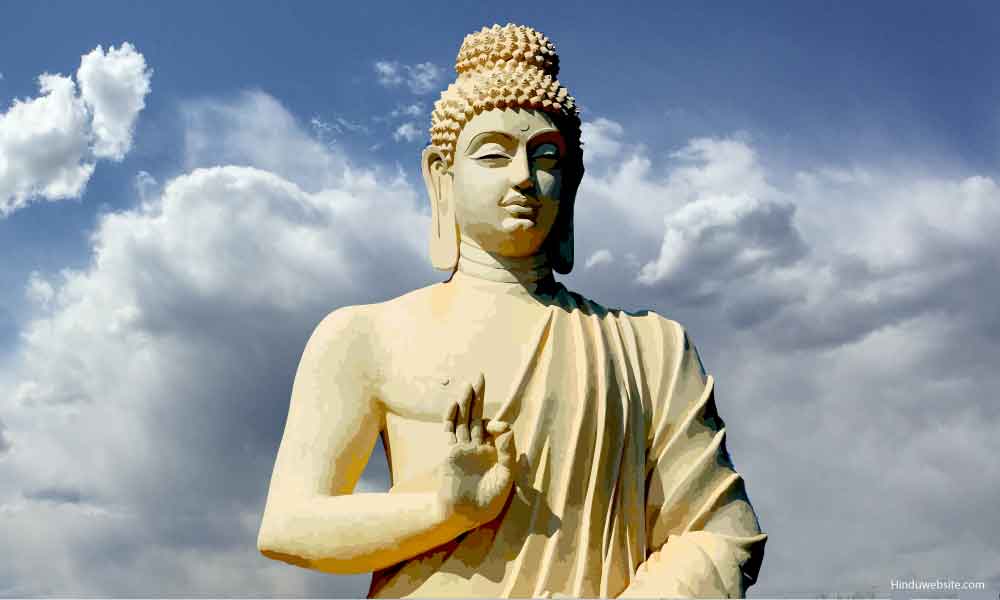
"And what is right concentration? There is the case where a monk — quite withdrawn from sensuality, withdrawn from unskillful (mental) qualities — enters & remains in the first jhana: rapture & pleasure born from withdrawal, accompanied by directed thought & evaluation. With the stilling of directed thought & evaluation, he enters & remains in the second jhana: rapture & pleasure born of composure, unification of awareness free from directed thought & evaluation — internal assurance.
With the fading of rapture he remains in equanimity, mindful, & fully alert, and physically sensitive of pleasure. He enters & remains in the third jhana, and of him the Noble Ones declare, 'Equanimous & mindful, he has a pleasurable abiding.' With the abandoning of pleasure & pain — as with the earlier disappearance of elation & distress — he enters & remains in the fourth jhana: purity of equanimity & mindfulness, neither pleasure nor pain. This is called right concentration." — SN XLV.8
Purification depends on concentration
"I tell you, the ending of the mental fermentations depends on the first jhana... the second jhana... the third... the fourth... the dimension of the infinitude of space... the dimension of the infinitude of consciousness... the dimension of nothingness. I tell you, the ending of the mental fermentations depends on the dimension of neither perception nor non-perception." — AN IX.36
The four developments of concentration
"These are the four developments of concentration. Which four? There is the development of concentration that, when developed & pursued, leads to a pleasant abiding in the here & now. There is the development of concentration that, when developed & pursued, leads to the attainment of knowledge & vision. There is the development of concentration that, when developed & pursued, leads to mindfulness & alertness. There is the development of concentration that, when developed & pursued, leads to the ending of the effluents.
(1) "And what is the development of concentration that, when developed & pursued, leads to a pleasant abiding in the here & now? There is the case where a monk — quite withdrawn from sensuality, withdrawn from unskillful qualities — enters & remains in the first jhana: rapture & pleasure born from withdrawal, accompanied by directed thought & evaluation. With the stilling of directed thought & evaluation, he enters & remains in the second jhana: rapture & pleasure born of composure, unification of awareness free from directed thought & evaluation — internal assurance. With the fading of rapture he remains in equanimity, mindful & alert, and physically sensitive of pleasure. He enters & remains in the third jhana, and of him the Noble Ones declare, 'Equanimous & mindful, he has a pleasurable abiding.' With the abandoning of pleasure & pain — as with the earlier disappearance of elation & distress — he enters & remains in the fourth jhana: purity of equanimity & mindfulness, neither pleasure nor pain. This is the development of concentration that... leads to a pleasant abiding in the here & now.
(2) "And what is the development of concentration that... leads to the attainment of knowledge & vision? There is the case where a monk attends to the perception of light and is resolved on the perception of daytime [at any hour of the day]. Day [for him] is the same as night, night is the same as day. By means of an awareness open & unhampered, he develops a brightened mind. This is the development of concentration that, when developed & pursued, leads to the attainment of knowledge & vision.
(3) "And what is the development of concentration that... leads to mindfulness & alertness? There is the case where feelings are known to the monk as they arise, known as they persist, known as they subside. Perceptions are known to him as they arise, known as they persist, known as they subside. Thoughts are known to him as they arise, known as they persist, known as they subside. This is the development of concentration that, when developed & pursued, leads to mindfulness & alertness.
(4) "And what is the development of concentration that... leads to the ending of the effluents? There is the case where a monk remains focused on arising & falling away with reference to the five clinging-aggregates: 'Such is form, such its origination, such its passing away. Such is feeling... Such is perception... Such are fabrications... Such is consciousness, such its origination, such its disappearance.' This is the development of concentration that, when developed & pursued, leads to the ending of the effluents.
"These are the four developments of concentration." — AN IV.41
Noble right concentration
"Now what, monks, is noble right concentration with its supports & requisite conditions? Any singleness of mind equipped with these seven factors — right view, right resolve, right speech, right action, right livelihood, right effort, & right mindfulness — is called noble right concentration with its supports & requisite conditions."— MN 117
What are you waiting for?
Get up!
Sit up!
What's your need for sleep?
And what sleep is there for the afflicted,
pierced by the arrow (craving),
oppressed?
Get up!
Sit up!
Train firmly for the sake of peace,
Don't let the king of death,
— seeing you heedless —
deceive you,
bring you under his sway.
— Sn II.10
"Over there are the roots of trees; over there, empty dwellings. Practice jhana, monks. Don't be heedless. Don't later fall into regret. This is our message to you." — SN XXXV.145
"Right Concentration" From The Wings to Awakening
The following passages are excerpted from the "Right Concentration" in The Wings to Awakening by Thanissaro Bhikkhu 1996.
The passages in this section deal with right concentration in terms of three questions that deserve appropriate attention:
- What is right concentration?
- How is it mastered?
- How can it be put to use?
To answer the first question: Passage §148 defines concentration as singleness of mind, but not every instance of mental singleness counts as right concentration. Passage §102 identifies right concentration with the four levels of jhana — meditative absorption — and §152 makes the point that jhana can be considered right concentration only if it is devoid of unskillful qualities such as the hindrances. Absorption in sensual passion, for instance, even though it may be very single-minded, does not count as part of the path. Thus the definition for the first level of jhana specifies that it counts as a path factor only when the mind is secluded from sensuality and unskillful mental qualities.
The singleness of jhana means not only that awareness is focused on a single object, but also that the object is reduced to a single quality that fills the entirety of one's awareness, at the same time that one's awareness broadens to suffuse the entire object. This mutual pervasion of awareness and object in a state of expansion is what is meant by absorption. The similes used to illustrate the various levels of jhana repeatedly make mention of "expansion," "suffusing," "stretching," and "filling" [§150; also MN 121; MFU, pp. 82-85], culminating in the fourth jhana where one's body is filled with a bright sense of awareness. This sense of expansion and making-single is also indicated in passages that teach specific meditation techniques. The directions for keeping the breath in mind, for instance, state that one should be sensitive to the entire body while breathing in and out. This accounts for the term "mahaggata" — enlarged or expanded — used to describe the mind in the state of jhana.
There are two basic types of jhana, which the commentaries term "form jhana" (rupa jhana) and "formless jhana" (arupa jhana). Each type has several levels. In the case of form jhana, different passages in the Canon list the levels in different ways. The differences revolve around two different senses of the word "form." In one sense, "form" denotes the body, and form jhana is a state of mental absorption in the form of one's own physical body, as sensed from within. Jhana focused on this type of form comes in four levels, identical with the four levels mentioned in the definition of the faculty of concentration [§72] and of right concentration under the noble eightfold path [§102]. In another sense, "form" can also denote the visible forms and light that some meditators can see in the mind's eye in the course of their meditation. This type of form jhana is analyzed into two patterns, one with two levels [§164], the other with three [§163]. Both patterns end with the perception of the "beautiful," which in terms of its function is equivalent to the sense of radiance filling the body on the fourth level of "body form" jhana.
For a person practicing form jhana in either sense of the term, the equanimity experienced with the sense of beautiful radiance can then act as the basis for the formless levels of jhana, which the Canon terms the four "formlessnesses beyond form." These are invariably defined as progressive absorption in the perceptions of "infinite space," "infinite consciousness," and "there is nothing," leading to a fourth state of neither perception nor non-perception.
As for the second question, on how to master right concentration: Passage §154 notes that the ability to attain the first level of jhana — however one experiences the "form" acting as its focus — depends on the abandoning of the hindrances, because the feeling of freedom that comes with their abandoning provides the sense of joy and pleasure that lets the mind settle skillfully in the present moment. How to master this process is best shown by following the Buddha's most detailed set of meditation instructions — the sixteen steps in the practice of keeping the breath in mind §151] — and comparing them with the standard description of the four stages of jhana §§149-150]. Before we analyze these maps of the practice, however, we must make a few comments on how to use them skillfully.
To begin with, internal obstacles to the practice of jhana do not end with the preliminary ground-clearing of the hindrances discussed in the preceding section. More refined levels of unskillful mental states can get in the way [§§160-61]. Lapses in mindfulness and alertness can leave openings for the hindrances to return. Thus, although the maps of the various stages of concentration proceed in a smooth, seemingly inevitable progression, the actual experience of the practice does not. For this reason, the Buddha gives specific instructions on how to deal with these obstacles as they arise in the course of the practice. Passage §159 lists five basic approaches, the first two of which we have already covered in the preceding section. The remaining three are: 1) One ignores the obstacles. This works on the principle that paying attention to the distraction feeds the distraction, just as paying attention to a crazy person — even if one is simply trying to drive him away — encourages him to stay. 2) One notices that the act of thinking a distracting thought actually takes more energy than not thinking the thought, and one consciously relaxes whatever tension or energy happens to accompany it. This approach works best when one is sensitive enough to bodily sensations to see the pattern of physical tension that appears in conjunction with the thought, and can intentionally relax it. 3) The approach of last resort is simply to exert force on the mind to drive out the distracting thought. This is a temporary stopgap measure that works only as long as mindfulness is firm and determination strong. It is useful in cases where discernment is not yet sharp enough to make the other approaches work, but once discernment is up to the task, the other approaches are more effective in the long run.
Another point to keep in mind in understanding the maps of the practice is that they list the steps of meditation, not in the order in which they will be experienced, but in the order in which they can be mastered. There are cases, for instance, where one will feel rapture in the course of the practice (step 5 in the practice of breath meditation) before one is able to breath in and out sensitive to the entire body (step 3). In such cases, it is important not to jump to any conclusions as to one's level of attainment, or to feel that one has bypassed the need to master an earlier step. Instead — when several different experiences arise together in a jumble, as they often do — one should use the maps to tell which experience to focus on first for the sake of developing one's meditation as a skill.
One qualification here is that it is not necessary to master all the levels of concentration in order to gain Awakening. The relationship of concentration to discernment is a controversial issue, which we will cover in the following section, but here we may simply note that many texts [§§173-74] point out that the experience of the first jhana can be a sufficient basis for the discernment leading to Awakening. The same holds true for the first four steps in breath meditation, which constitute one of the alternative ways of developing the body in and of itself as a frame of reference [§30]. In this case, one's practice of breath meditation would jump from a mastery of step 4 straight to step 13, skipping the intervening steps. In fact, beginning with step 4, it is possible to jump directly to 13 from any of the steps, and from there to progress all the way to Awakening.
The fact that the higher stages are unnecessary in some cases, however, does not mean that they are superfluous. Many people, as they develop the skill of their meditation, will find that their minds naturally go to deeper levels of stillness with no liberating insight arising. For them, the maps are valuable aids for a number of reasons. To begin with, the maps can help indicate what does and does not count as Awakening. When one arrives at a new, more refined level of awareness in one's practice, it is easy to assume that one has attained the goal. Comparing one's experience to the maps, however, can show that the experience is simply a higher level of concentration. Furthermore, awareness of the distinct levels can help one review them after attaining them, so that in the course of trying to master them, moving from one level to another, one can begin to gain insight into the element of will and fabrication that goes into them. This insight can then provide an understanding into the pattern of cause and effect in the mind and, as passage §182 shows, can lead to a sense of dispassion and ultimately to Awakening.
However, the maps should not be used to plan one's practice in advance. This is the message of §162, which makes the point that one should not try to use one's knowledge of the various levels of the practice to force one's way through them. In other words, one should not try to concoct a particular state of jhana based on ideas picked up from the maps. On reaching a particular level, one should not be in a hurry to go to the next. Instead, one should familiarize oneself with that level of mind, perfecting one's mastery; eventually that state of concentration will ripen naturally into the next level. To continue the image of the passage, one will find that there is no need to jump to another pasture to taste different grass and water, for the new grass and water will develop right in one's own pasture.
Finally, although the maps to the various stages of concentration seem exhaustive and complete, bear in mind that they list only the stages of right concentration, and not the varieties of wrong. In addition to the types of wrong concentration mentioned in §152, there are states of mind that may be very quiet but lack the mindfulness that would make them right. One of these stages is a blurred state — essentially a concentration of delusion — half-way between waking and sleep, in which one's object becomes hazy and ill-defined. On leaving it, one is hard put to say where the mind was focused, or whether it was awake or asleep. Another type of wrong concentration is one that a modern practice tradition calls a state of non-perception (asaññi). In this state, which is essentially a concentration of subtle aversion — the result of a strongly focused determination not to stay with any one object — everything seems to cease: the mind blanks out, with no perception of sights or sounds, or of one's own body or thoughts. There is just barely enough mindfulness to know that one hasn't fainted or fallen asleep. One can stay there for long periods of time, and yet the experience will seem momentary. One can even determine beforehand when one will leave the state; but on emerging from it, one will feel somewhat dazed or drugged, a reaction caused by the intense aversive force of the concentration that induced the state to begin with. There are other forms of wrong concentration, but a general test is that right concentration is a mindful, fully alert state. Any state of stillness without clear mindfulness and alertness is wrong.
With these points in mind we can now turn to the maps to see their answer to the question of how breath meditation leads to the mastery of jhana. As noted above, the practice of keeping the breath in mind is the meditation method that the Canon teaches in most detail. There are two possible reasons for this, one historical and the other more theoretical. From the historical point of view, the breath was the focal point that the Buddha himself used on the night of his own Awakening. From the theoretical perspective, a state of concentration focused on the breath is the meeting place of all the elements of the factor of "fabrication" (sankhara) in the formula for dependent co-arising [§§218, 223]. This factor, as experienced in the present, consists of bodily fabrication (the breath itself), verbal fabrication (the factors of directed thought and evaluation applied to the breath in the first jhana), and mental fabrication (feeling and perception, in this case the feelings of pleasure and equanimity experienced in the four jhanas, plus the mental label of "breath" or "form" that act as the basis for the state of jhana). Because transcendent discernment must deal directly with these three types of fabrication if it is to eliminate the ignorance that underlies them, the practice of jhana based on the breath is an ideal point to focus on all three at once.
The first two steps of breath meditation [§151] involve simple tasks of directed thought and evaluation: directing one's thoughts and attention to the breath in and of itself, in the present, at the same time evaluating it as one begins to discern variations in the length of the breath. Some modern teachers maintain that the factor of evaluation here also includes taking one's observations of short and long breathing as a basis for adjusting the rhythm of the breath to make it as comfortable as possible. Because the first level of jhana must be based on a sense of pleasure [§238], this advice is very practical.
The remaining steps are willed or determined: One "trains oneself," first by manipulating one's sense of conscious awareness, making it sensitive to the body as a whole. Then one can begin manipulating the bodily sensations of which one is aware, reducing them to a single sensation of calm by letting "bodily fabrication" — the breath — grow calm so as to create an easeful sense of rapture and pleasure. A comparison between the stages of breath meditation and the graphic analogies for jhana [§150] indicates that the fifth and sixth steps — being sensitive to rapture and pleasure — involve making these feelings "single" as well, by letting them suffuse the entire body, just as the bathman kneads the moisture throughout his ball of bath powder. With bodily fabrications stilled, mental fabrications — feelings and perceptions — become clearly apparent as they occur, just as when a radio is precisely tuned to a certain frequency, static is eliminated and the message sent by the radio station broadcasting at that frequency becomes clear. These mental fabrications, too, are calmed, a step symbolized in the analogies for jhana by the still waters in the simile for the third level, in contrast to the spring waters welling up in the second. What remains is simply a sense of the mind itself, corresponding to the level of fourth jhana, in which the body is filled from head to toe with a single sense of bright, radiant awareness. This completes the first level of frames-of-reference practice [II/B].
Once this stage is reached, steps 10-12 indicate that one can now turn one's attention to consolidating one's mastery of concentration. One does this by reviewing the various levels of jhana, focusing not so much on the breath as on the mind as it relates to the breath. This allows a perception of the different ways in which the mind can be satisfied and steadied, and the different factors from which it can be released by taking it through the different levels of jhana — for example, releasing it from rapture by taking it from the second level to the third, and so forth [§175]. One comes to see that, although the breath feels different on the different levels of jhana, the cause is not so much the breath as it is the way the mind relates to the breath, shedding the various mental activities surrounding its single preoccupation. As one ascends through the various levels, directed thought and evaluation are stilled, rapture fades, and pleasure is abandoned. Another way of consolidating one's skills in the course of these steps is to examine the subtle defilements that interfere with full mastery of concentration. The fact that one's focus is now on the mind makes it possible to see these defilements clearly, and then to steady the mind even further by releasing it from them. Passage §161, although aimed specifically at the problems faced by those who have visions in their meditation, gives a useful checklist of subtle mental defilements that can hamper the concentration of any meditator. The image of grasping the quail neither too loosely nor too tight has become a standard one in Buddhist meditation manuals.
The mastery of concentration developed in steps 9-12 provides an excellent chance to develop discernment into the pattern of cause and effect in the process of concentrating the mind, in that one must master the causal factors before one can gain the desired results in terms of satisfaction, steadiness, and release. Here we see at work the basic pattern of skillfulness mentioned in several earlier sections: that discernment is sharpened and strengthened by employing it in developing the skills of concentration. This would correspond to the second level of frames-of-reference meditation — focusing on the phenomenon of origination and passing away — mentioned in II/B.
Another development that can happen during these steps — although this takes one outside of the practice of breath meditation per se — is the discovery of how the equanimity developed in the fourth jhana can be applied to other refined objects of the mind. These are the four formless jhanas: the dimension of the infinitude of space, the dimension of the infinitude of consciousness, the dimension of nothingness, and the dimension of neither perception nor non-perception. These states may sound impossibly abstract, but in actual practice they grow directly from the way the mind relates to the still sense of the body in the fourth jhana. The first stage comes when the mind consciously ignores its perception (mental label) of the form of the body, attending instead to the remaining sense of space that surrounds and pervades that form; the second stage comes when the mind sheds its perception of "space," leaving a limitless sense of awareness; the third, when it lets go of its perception or mental label of "awareness," leaving a perception of inactivity; and the fourth, when it sheds the perception of that lack of activity. What is left is a state where perception is so refined that it can hardly be called perception at all, even though it is still there. As one masters these steps, one sees that whereas the first four levels of jhana differ in the type of activity the mind focuses on its one object, the four formless jhanas differ in their objects, as one level of mental labeling falls away to be replaced by a more subtle one.
Passages §162 and §164 list one more meditative attainment beyond the dimension of neither perception nor non-perception — the cessation of feeling and perception — but this is qualitatively different from the others, in that a meditator cannot attain it without at the same time awakening to the level of at least nonreturning. The reason behind this is related, once more, to the factor of "fabrication" (sankhara) in dependent co-arising [§218]. In the course of mastering the levels of jhana, verbal fabrication grows still as one enters the second jhana; bodily fabrication, as one enters the fourth; and mental fabrication, as one enters this last stage. For all three types of fabrication to stop, however, ignorance — the condition for fabrication — must stop as well, and this can happen only with the insight that leads to Awakening.
We have come to the end of the list of the stages of mastery in meditative attainment, but four steps in breath meditation remain unexplained. This is because, aside from the ninth level of attainment, the stages of mastery can all be attained without developing the discernment that constitutes Awakening, while the last four steps in breath meditation deal specifically with giving rise to that discernment. This brings us to the third question that was broached at the beginning of this introduction: how right concentration can be put to use.
Passage §149 lists four possible uses for concentration:
- a pleasant abiding in the here and now,
- the attainment of knowledge and vision,
- mindfulness and alertness, and
- the ending of the effluent.
The first use is the simple enjoyment of the experience of jhana; the second relates to the first five supranormal powers [II/D]. The third relates to the development of the frames of reference [II/B]; and the fourth, to the discernment that constitutes Awakening. We have already discussed the second and third uses of concentration in the passages just cited in brackets. This leaves us with the first and fourth.
The Canon [MN 138; MFU, pp. 114-15] notes that meditators can become "chained and fettered" to the attractions of the pleasure to be found in jhana. As a result, many meditators are afraid to let their minds settle into blissfully still states, for fear of becoming stuck. The Canon, however, never once states that stream-entry can be attained without at least some experience in jhana; and it states explicitly [AN III.88; MFU, p. 103] that the attainment of nonreturning requires a mastery of concentration. MN 36 relates that the turning point in the Buddha's own practice — when he abandoned the path of self-affliction and turned to the middle way — hinged on his realization that there is nothing blameworthy in the pleasure to be found in jhana. Thus, there is nothing to fear.
This pleasure plays an important function in the practice. To begin with, it enables the mind to stay comfortably in the present moment, helping it attain the stability it needs for gaining insight. This can be compared to a scientific experiment, in which the measuring equipment needs to be absolutely steady in order to give reliable readings. Secondly, because a great deal of sensitivity is required to "tune" the mind to the refined pleasure of jhana, the practice serves to increase one's sensitivity, making one more acutely aware of even the most refined levels of stress as well. Thirdly, because the pleasure and equanimity of jhana are more exquisite than sensory pleasures, and because they exist independently of the five senses, they can enable the mind to become less involved in sensory pleasures and less inclined to search for emotional satisfaction from them. In this sense, the skillful pleasures of jhana can act as a fulcrum for prying loose one's attachments to the less skillful pleasures of sensuality. The fact that fully mature mastery of jhana brings about the attainment of nonreturning, the preliminary level of Awakening where sensual passion is abandoned, shows the necessary role that jhana plays in letting go of this particular defilement. Finally, the pleasure of jhana provides a place of rest and rehabilitation along the path when the mind's powers of discernment become dulled or it must be coaxed into the proper mood to accept some of the harsher lessons that it needs to learn in order to abandon its cravings. Just as a person who is well-fed and rested is more open to receiving criticism than when he is tired and hungry, the mind is often more willing to admit its own foolishness and lack of skill when it is nourished by the pleasure of jhana than when it is not.
Thus, although the pleasure of jhana can become an obstacle if treated as an end in itself, there are phases of the practice where the pursuit of this form of pleasure is a useful strategy toward the fourth use of concentration: the ending of the mental effluents. This fourth use is the topic of the next section, but here we can simply note that it is related to the fifth factor of noble right concentration mentioned in §150. As the simile illustrating it suggests — with the standing person reflecting on the person sitting down — this factor is a pulling back or a lifting of the mind above the object of its absorption, without at the same time disturbing the absorption. This factor corresponds to steps 9 through 12 in the guide to breath meditation, in that one is able to focus on the way the mind relates to its object at the same time that the mind is actually in a state of concentration. Passage §172 shows that this factor can be applied to any level of jhana except for the states of neither perception nor non-perception and the cessation of perception and feeling. As for those two states, one can reflect on their component factors only after leaving them. With the other states, one stays with the object, but one's prime focus is on the mind. One sees the various mental events that go into maintaining that state of concentration, and as one contemplates these events, one becomes struck by how inconstant they are, how fabricated and willed. This provides insight into how the present aspect of kamma — one's present intentions — shape one's present experience. It also gives insight into the general pattern of cause and effect in the mind.
Focusing on the inconstancy and unreliability of the factors in this pattern gives rise to the realization that they are also stressful and not-self: neither "me" nor "mine," but simply instances of the first noble truth [III/H/i]. When this realization goes straight to the heart, there comes a sense of dispassion for any craving directed at them (the second noble truth) and an experience of their fading and cessation (the third). Finally, one relinquishes attachment not only to these events, but also to the discernment that sees through to their true nature (the fourth). This completes steps 13 through 16 in the guide to breath meditation, at the same time bringing the seven factors for Awakening to completion in a state "dependent on seclusion... dispassion... cessation, resulting in letting go [§93]," where "letting go" would appear to be equivalent to the "relinquishment" in step 16. When one can simply experience the act of relinquishment, without feeling that one is "doing" the relinquishing, one passes through the third stage of frames-of-reference meditation to the state of non-fashioning [§§179, 183], which forms the threshold to release.
Even after attaining release, the arahant continues to practice meditation, although now that the effluents are ended, the concentration is not needed to put them to an end. MN 107 mentions that arahants practice concentration both for the sake of a pleasant abiding in the here and now, and for mindfulness and alertness. A number of passages in the Canon mention the Buddha and his arahant disciples exercising their supranormal powers, which shows that they were practicing concentration for the sake of attaining knowledge and vision as well, to use in instructing those around them. The description of the Buddha's passing away tells that he entered total nibbana after exercising his mastery in the full range of jhanic attainments. Thus the practice of concentration is useful all the way to the point where one gains total release from the round of death and rebirth.
Passages from the Pali Canon
$ 148. Visakha: Now what is concentration, what qualities are its themes, what qualities are its requisites, and what is its development?
Sister Dhammadinna: Singleness of mind is concentration; the four frames of reference are its themes; the four right exertions are its requisites; and any cultivation, development, & pursuit of these qualities is its development. — MN 44
§ 149. These are the four developments of concentration. Which four? There is the development of concentration that, when developed & pursued, leads to a pleasant abiding in the here & now. There is the development of concentration that... leads to the attainment of knowledge & vision. There is the development of concentration that... leads to mindfulness & alertness. There is the development of concentration that, when developed & pursued, leads to the ending of the effluents.
And what is the development of concentration that, when developed & pursued, leads to a pleasant abiding in the here & now? There is the case where a monk — quite withdrawn from sensuality, withdrawn from unskillful qualities — enters & remains in the first jhana: rapture & pleasure born from withdrawal, accompanied by directed thought & evaluation. With the stilling of directed thought & evaluation, he enters & remains in the second jhana: rapture & pleasure born of composure, unification of awareness free from directed thought & evaluation — internal assurance. With the fading of rapture he remains in equanimity, mindful & alert, and physically sensitive to pleasure. He enters & remains in the third jhana, of which the Noble Ones declare, 'Equanimous & mindful, he has a pleasurable abiding.' With the abandoning of pleasure & pain — as with the earlier disappearance of elation & distress — he enters & remains in the fourth jhana: purity of equanimity & mindfulness, neither pleasure nor pain. This is the development of concentration that... leads to a pleasant abiding in the here & now.
And what is the development of concentration that... leads to the attainment of knowledge & vision? There is the case where a monk attends to the perception of light and is resolved on the perception of daytime [at any hour of the day]. Day [for him] is the same as night, night is the same as day. By means of an awareness open & unhampered, he develops a brightened mind. This is the development of concentration that... leads to the attainment of knowledge & vision. [§§64;]
And what is the development of concentration that... leads to mindfulness & alertness? There is the case where feelings are known to the monk as they arise, known as they persist, known as they subside. Perceptions are known to him as they arise, known as they persist, known as they subside. Thoughts are known to him as they arise, known as they persist, known as they subside. This is the development of concentration that... leads to mindfulness & alertness. [§30]
And what is the development of concentration that... leads to the ending of the effluents? There is the case where a monk remains focused on arising & falling away with reference to the five clinging-aggregates: 'Such is form, such its origination, such its disappearance. Such is feeling... Such is perception... Such are fabrications... Such is consciousness, such its origination, such its disappearance.' This is the development of concentration that... leads to the ending of the effluents. [§173]
These are the four developments of concentration. — AN IV.41
§ 150. Noble Right Concentration. Now what, monks, is five-factored noble right concentration? There is the case where a monk — quite withdrawn from sensuality, withdrawn from unskillful qualities — enters & remains in the first jhana: rapture & pleasure born from withdrawal, accompanied by directed thought & evaluation. He permeates & pervades, suffuses & fills this very body with the rapture & pleasure born from withdrawal. There is nothing of his entire body unpervaded by rapture & pleasure born from withdrawal.
Just as if a skilled bathman or bathman's apprentice would pour bath powder into a brass basin and knead it together, sprinkling it again & again with water, so that his ball of bath powder — saturated, moisture-laden, permeated within & without — would nevertheless not drip; even so, the monk permeates... this very body with the rapture & pleasure born of withdrawal. There is nothing of his entire body unpervaded by rapture & pleasure born from withdrawal. This is the first development of the five-factored noble right concentration.
Furthermore, with the stilling of directed thought & evaluation, he enters & remains in the second jhana: rapture & pleasure born of composure, unification of awareness free from directed thought & evaluation — internal assurance. He permeates & pervades, suffuses & fills this very body with the rapture & pleasure born of composure. There is nothing of his entire body unpervaded by rapture & pleasure born of composure.
Just like a lake with spring-water welling up from within, having no inflow from east, west, north, or south, and with the skies periodically supplying abundant showers, so that the cool fount of water welling up from within the lake would permeate & pervade, suffuse & fill it with cool waters, there being no part of the lake unpervaded by the cool waters; even so, the monk permeates... this very body with the rapture & pleasure born of composure. There is nothing of his entire body unpervaded by rapture & pleasure born of composure. This is the second development of the five-factored noble right concentration.
And furthermore, with the fading of rapture, he remains in equanimity, mindful & alert, and physically sensitive to pleasure. He enters & remains in the third jhana, of which the Noble Ones declare, 'Equanimous & mindful, he has a pleasurable abiding.' He permeates & pervades, suffuses & fills this very body with the pleasure divested of rapture, so that there is nothing of his entire body unpervaded with pleasure divested of rapture.
Just as in a blue-, white-, or red-lotus pond, there may be some of the blue, white, or red lotuses which, born & growing in the water, stay immersed in the water and flourish without standing up out of the water, so that they are permeated & pervaded, suffused & filled with cool water from their roots to their tips, and nothing of those blue, white, or red lotuses would be unpervaded with cool water; even so, the monk permeates... this very body with the pleasure divested of rapture. There is nothing of his entire body unpervaded with pleasure divested of rapture. This is the third development of the five-factored noble right concentration.
And furthermore, with the abandoning of pleasure & stress — as with the earlier disappearance of elation & distress — he enters & remains in the fourth jhana: purity of equanimity & mindfulness, neither-pleasure-nor-pain. He sits, permeating the body with a pure, bright awareness, so that there is nothing of his entire body unpervaded by pure, bright awareness.
Just as if a man were sitting wrapped from head to foot with a white cloth so that there would be no part of his body to which the white cloth did not extend; even so, the monk sits, permeating his body with a pure, bright awareness. There is nothing of his entire body unpervaded by pure, bright awareness. This is the fourth development of the five-factored noble right concentration.
And furthermore, the monk has his theme of reflection well in hand, well attended to, well pondered, well tuned (well-penetrated) by means of discernment.
Just as if one person were to reflect on another, or a standing person were to reflect on a sitting person, or a sitting person were to reflect on a person lying down; even so, monks, the monk has his theme of reflection well in hand, well attended to, well pondered, well tuned by means of discernment. This is the fifth development of the five-factored noble right concentration.
When a monk has developed & pursued the five-factored noble right concentration in this way, then whichever of the six higher knowledges he turns his mind to know & realize, he can witness them for himself whenever there is an opening. [§64]
Suppose that there were a water jar, set on a stand, brimful of water so that a crow could drink from it. If a strong man were to tip it in any way at all, would water spill out?
Yes, lord.
In the same way, when a monk has developed & pursued the five-factored noble right concentration in this way, then whichever of the six higher knowledges he turns his mind to know & realize, he can witness them for himself whenever there is an opening.
Suppose there were a rectangular water tank — set on level ground, bounded by dikes — brimful of water so that a crow could drink from it. If a strong man were to loosen the dikes anywhere at all, would water spill out?
Yes, lord...
Suppose there were a chariot on level ground at four crossroads, harnessed to thoroughbreds, waiting with whips lying ready, so that a skilled driver, a trainer of tamable horses, might mount and — taking the reins with his left hand and the whip with his right — drive out & back, to whatever place and by whichever road he liked; in the same way, when a monk has developed & pursued the five-factored noble right concentration in this way, then whichever of the six higher knowledges he turns his mind to know & realize, he can witness them for himself whenever there is an opening. — AN V.28
§ 151. Breath Meditation. Now how is mindfulness of in-&-out breathing developed & pursued so that it bears great fruit & great benefits?
There is the case where a monk, having gone to the wilderness, to the shade of a tree, or to an empty building, sits down folding his legs crosswise, holding his body erect, and setting mindfulness to the fore. Always mindful, he breathes in; mindful he breathes out.
[1] Breathing in long, he discerns that he is breathing in long; or breathing out long, he discerns that he is breathing out long. [2] Or breathing in short, he discerns that he is breathing in short; or breathing out short, he discerns that he is breathing out short. [3] He trains himself to breathe in sensitive to the entire body, and to breathe out sensitive to the entire body. [4] He trains himself to breathe in calming bodily fabrication, and to breathe out calming bodily fabrication.
[5] He trains himself to breathe in sensitive to rapture, and to breathe out sensitive to rapture. [6] He trains himself to breathe in sensitive to pleasure, and to breathe out sensitive to pleasure. [7] He trains himself to breathe in sensitive to mental fabrications, and to breathe out sensitive to mental fabrications. [8] He trains himself to breathe in calming mental fabrication, and to breathe out calming mental fabrication.
[9] He trains himself to breathe in sensitive to the mind, and to breathe out sensitive to the mind. [10] He trains himself to breathe in satisfying the mind, and to breathe out satisfying the mind. [11] He trains himself to breathe in steadying the mind, and to breathe out steadying the mind. [12] He trains himself to breathe in releasing the mind, and to breathe out releasing the mind.
[13] He trains himself to breathe in focusing on inconstancy, and to breathe out focusing on inconstancy. [14] He trains himself to breathe in focusing on dispassion (literally, fading), and to breathe out focusing on dispassion. [15] He trains himself to breathe in focusing on cessation, and to breathe out focusing on cessation. [16] He trains himself to breathe in focusing on relinquishment, and to breathe out focusing on relinquishment.
This is how mindfulness of in-&-out breathing is developed & pursued so as to bear great fruit & great benefits.— SN LIV.1
§ 152. Vassakara: Once, Ven. Ananda, Ven. Gotama was living at Vesali in the Hall with the peaked roof in the Great Forest. I went to where he was staying in the Great Forest... and there he spoke in a variety of ways on jhana. Ven. Gotama was both endowed with jhana and made jhana his habit. In fact, he praised all sorts of jhana.
Ananda: It was not the case that the Blessed One praised all sorts of jhana, nor did he criticize all sorts of jhana. And what sort of jhana did he not praise? There is the case where a certain person dwells with his awareness overcome by sensual passion, seized with sensual passion. He does not discern the escape, as it actually is present, from sensual passion once it has arisen. Making that sensual passion the focal point, he absorbs himself with it, besorbs, resorbs, & supersorbs himself with it.
He dwells with his awareness overcome by ill will... sloth & drowsiness... restlessness & anxiety... uncertainty, seized with uncertainty. He does not discern the escape, as it actually is present, from uncertainty once it has arisen. Making that uncertainty the focal point, he absorbs himself with it, besorbs, resorbs, & supersorbs himself with it. This is the sort of jhana that the Blessed One did not praise.
And what sort of jhana did he praise? There is the case where a monk — quite withdrawn from sensuality, withdrawn from unskillful qualities — enters & remains in the first jhana... the second jhana... the third jhana... the fourth jhana: purity of equanimity & mindfulness, neither pleasure nor pain. This is the sort of jhana that the Blessed One praised.
Vassakara: It would seem, Ven. Ananda, that the Ven. Gotama criticized the jhana that deserves criticism, and praised that which deserves praise. — MN 108
§ 153. A monk endowed with these five qualities is incapable of entering & remaining in right concentration. Which five? He cannot withstand [the impact of] sights, he cannot withstand sounds... aromas... tastes... tactile sensations. A monk endowed with these five qualities is not capable of entering & remaining in right concentration.
A monk endowed with these five qualities is capable of entering & remaining in right concentration. Which five? He can withstand [the impact of] sights... sounds... aromas... tastes... tactile sensations. A monk endowed with these five qualities is capable of entering & remaining in right concentration. — AN V.113
§ 154. A monk who has not abandoned these six qualities is incapable of entering & remaining in the first jhana. Which six? Sensual desire, ill will, sloth & drowsiness, restlessness & anxiety, uncertainty, and not seeing well with right discernment, as they actually are present, the drawbacks of sensual pleasures...
A monk who has not abandoned these six qualities is incapable of entering & remaining in the first jhana. Which six? Thoughts of sensuality, thoughts of ill will, thoughts of harmfulness, perceptions of sensuality, perceptions of ill will, perceptions of harmfulness. — AN VI.73-74
§ 155. A monk endowed with these six qualities is capable of mastering strength in concentration. Which six?
There is the case where a monk is skilled in the attaining of concentration, in the maintenance of concentration, & in the exit from concentration. He is deliberate in doing it, persevering in doing it, and amenable to doing it.
A monk endowed with these six qualities is capable of mastering strength in concentration. — AN VI.72
§ 156. A monk endowed with these six qualities could break through the Himalayas, king of mountains, to say nothing of miserable ignorance. Which six?
There is the case where a monk is skilled in the attaining of concentration, in the maintenance of concentration, in the exit from concentration, in the [mind's] preparedness for concentration, in the range of concentration, & in the application of concentration.
A monk endowed with these six qualities could break through the Himalayas, king of mountains, to say nothing of miserable ignorance. — AN VI.24
§ 157. Imagine a great pool of water to which there comes a great bull elephant, seven or seven and a half cubits tall. The thought occurs to him, 'What if I were to plunge into this pool of water, to amuse myself by squirting water into my ears and along my back, and then to bathe & drink & come back out & go off as I please.' So he plunges into the pool of water, amuses himself by squirting water into his ears and along his back, and then bathes & drinks & comes back out & goes off as he pleases. Why is that? Because his large body finds a footing in the depth.
Now suppose a rabbit or a cat were to come along & think, 'What's the difference between me & a bull elephant? What if I were to plunge into this pool of water, to amuse myself by squirting water into my ears and along my back, and then to bathe & drink & come back out & go off as I please.' So he plunges rashly into the pool of water without reflecting, and of him it can be expected that he will either sink to the bottom or float away on the surface. Why is that? Because his small body doesn't find a footing in the depth.
In the same way, whoever says, 'Without having attained concentration, I will go live in solitude, in isolated wilderness places,' of him it can be expected that he will either sink to the bottom or float away on the surface. — AN X.99
§ 158. These are the five rewards for one who practices walking meditation. Which five? He can endure traveling by foot; he can endure exertion; he becomes free from disease; whatever he has eaten & drunk, chewed & savored, becomes well-digested; the concentration he wins while doing walking meditation lasts for a long time. — AN V.29
§ 159. Distracting Thoughts. When a monk is intent on the heightened mind, there are five themes he should attend to at the appropriate times. Which five?
There is the case where evil, unskillful thoughts — connected with desire, aversion, or delusion — arise in a monk while he is referring to & attending to a particular theme. He should attend to another theme, apart from that one, connected with what is skillful. When he is attending to this other theme... those evil, unskillful thoughts... are abandoned & subside. With their abandoning, he steadies his mind right within, settles it, unifies it, & concentrates it. Just as a skilled carpenter or his apprentice would use a small peg to knock out, drive out, & pull out a large one; in the same way... he steadies his mind right within, settles it, unifies it, & concentrates it.
If evil, unskillful thoughts — connected with desire, aversion, or delusion — still arise in the monk while he is attending to this other theme, connected with what is skillful, he should scrutinize the drawbacks of those thoughts: 'Truly, these thoughts of mine are unskillful... blameworthy... these thoughts of mine result in stress.' As he is scrutinizing their drawbacks... those evil, unskillful thoughts... are abandoned & subside. With their abandoning, he steadies his mind right within, settles it, unifies it, & concentrates it. Just as a young woman — or man — fond of adornment, would be horrified, humiliated, & disgusted if the carcass of a snake or a dog or a human being were hung from her neck; in the same way... the monk steadies his mind right within, settles it, unifies it, & concentrates it.
If evil, unskillful thoughts — connected with desire, aversion or delusion — still arise in the monk while he is scrutinizing the drawbacks of those thoughts, he should pay no mind & pay no attention to those thoughts. As he is paying no mind & paying no attention to them... those evil, unskillful thoughts are abandoned & subside. With their abandoning, he steadies his mind right within, settles it, unifies it, & concentrates it. Just as a man with good eyes, not wanting to see forms that had come into range, would close his eyes or look away; in the same way... the monk steadies his mind right within, settles it, unifies it, & concentrates it.
If evil, unskillful thoughts — connected with desire, aversion or delusion — still arise in the monk while he is paying no mind & paying no attention to those thoughts, he should attend to the relaxing of thought-fabrication with regard to those thoughts. As he is attending to the relaxing of thought-fabrication with regard to those thoughts... those evil, unskillful thoughts are abandoned & subside. With their abandoning, he steadies his mind right within, settles it, unifies it, & concentrates it. Just as the thought would occur to a man walking quickly, 'Why am I walking quickly? Why don't I walk slowly?' So he walks slowly. The thought occurs to him, 'Why am I walking slowly? Why don't I stand?' So he stands. The thought occurs to him, 'Why am I standing? Why don't I sit down?' So he sits down. The thought occurs to him, 'Why am I sitting? Why don't I lie down?' So he lies down. In this way, giving up the grosser posture, he takes up the more refined one. In the same way... the monk steadies his mind right within, settles it, unifies it, & concentrates it.
If evil, unskillful thoughts — connected with desire, aversion or delusion — still arise in the monk while he is attending to the relaxing of thought-fabrication with regard to those thoughts, then — with his teeth clenched & his tongue pressed against the roof of his mouth — he should beat down, constrain, & crush his mind with his awareness. As — with his teeth clenched & his tongue pressed against the roof of his mouth — he is beating down, constraining, & crushing his mind with his awareness... those evil, unskillful thoughts are abandoned & subside. With their abandoning, he steadies his mind right within, settles it, unifies it, & concentrates it. Just as a strong man, seizing a weaker man by the head or the throat or the shoulders, would beat him down, constrain, & crush him; in the same way... the monk steadies his mind right within, settles it, unifies it, & concentrates it.
Now when a monk... attending to another theme... scrutinizing the drawbacks of those thoughts... paying no mind & paying no attention to those thoughts... attending to the relaxing of thought-fabrication with regard to those thoughts... beating down, constraining & crushing his mind with his awareness... steadies his mind right within, settles it, unifies it, & concentrates it: He is then called a monk with mastery over the ways of thought sequences. He thinks whatever thought he wants to, and doesn't think whatever thought he doesn't. He has severed craving, thrown off the fetters, and — through the right penetration of conceit — has made an end of suffering & stress. — MN 20
§ 160. There are these gross impurities in gold: dirty sand, gravel, & grit. The dirt-washer or his apprentice, having placed [the gold] in a vat, washes it again & again until he has washed them away.
When he is rid of them, there remain the moderate impurities in the gold: coarse sand & fine grit. He washes the gold again & again until he has washed them away.
When he is rid of them, there remain the fine impurities in the gold: fine sand & black dust. The dirt-washer or his apprentice washes the gold again & again until he has washed them away.
When he is rid of them, there remains just the gold dust. The goldsmith or his apprentice, having placed it in a crucible, blows on it again & again to blow away the dross. The gold, as long as it has not been blown on again & again to the point where the impurities are blown away, as long as it is not refined & free from dross, is not pliant, malleable, or luminous. It is brittle and not ready to be worked. But there comes a time when the goldsmith or his apprentice has blown on the gold again & again until the dross is blown away. The gold... is then refined, free from dross, plaint, malleable, & luminous. It is not brittle, and is ready to be worked. Then whatever sort of ornament he has in mind — whether a belt, an earring, a necklace, or a gold chain — the gold would serve his purpose.
In the same way, there are these gross impurities in a monk intent on heightened mind: misconduct in body, speech, & mind. These the monk — aware & able by nature — abandons, destroys, dispels, wipes out of existence. When he is rid of them, there remain in him the moderate impurities: thoughts of sensuality, ill will, & harmfulness. These he... wipes out of existence. When he is rid of them there remain in him the fine impurities: thoughts of his caste, thoughts of his home district, thoughts related to not wanting to be despised. These he... wipes out of existence.
When he is rid of them, there remain only thoughts of the Dhamma. His concentration is neither calm nor refined, it has not yet attained serenity or unity, and is kept in place by the fabrication of forceful restraint. But there comes a time when his mind grows steady inwardly, settles down, grows unified & concentrated. His concentration is calm & refined, has attained serenity & unity, and is no longer kept in place by the fabrication of forceful restraint. Then whichever of the six higher knowledges he turns his mind to know & realize, he can witness them for himself whenever there is an opening... [§64; 182] — AN III.100
§ 161. Ven. Anuruddha: It has happened that, as we were remaining heedful, ardent, & resolute, we perceived light & the vision of forms. But soon after that the light disappeared, together with the vision of forms, and we can't become attuned to that theme.
The Buddha: You should become attuned to that theme. Before my Awakening, while I was still only an unawakened Bodhisatta, I too perceived light & the vision of forms, and soon after that the light disappeared, together with the vision of forms. The thought occurred to me, 'What is the cause, what is the reason, why the light disappeared, together with the vision of forms?' Then it occurred to me, 'Uncertainty arose in me, and because of the uncertainty my concentration fell away; when my concentration fell away, the light disappeared together with the vision of forms. I will act in such a way that uncertainty will not arise in me again.'
As I was remaining heedful, ardent, & resolute, I perceived light & the vision of forms. But soon after that the light disappeared, together with the vision of forms. The thought occurred to me, 'What is the cause, what is the reason, why the light disappeared, together with the vision of forms?' Then it occurred to me, 'Inattention... sloth & drowsiness... fear... elation... inertia arose in me, and because of the inattention... inertia my concentration fell away; when my concentration fell away, the light disappeared together with the vision of forms. I will act in such a way that uncertainty, inattention, sloth & drowsiness, fear, elation, & inertia will not arise in me again.'
As I was remaining heedful, ardent, & resolute... it occurred to me, 'Excessive persistence [§66] arose in me, and because of the excessive persistence my concentration fell away; when my concentration fell away, the light disappeared together with the vision of forms. Just as if a man might hold a quail tightly with both hands; it would die then & there. In the same way, excessive persistence arose in me... I will act in such a way that uncertainty... & excessive persistence will not arise in me again.'
As I was remaining heedful, ardent, & resolute... it occurred to me, 'Sluggish persistence [§66] arose in me, and because of the sluggish persistence my concentration fell away; when my concentration fell away, the light disappeared together with the vision of forms. Just as if a man might hold a quail loosely; it would fly out of his hand. In the same way, sluggish persistence arose in me... I will act in such a way that uncertainty... excessive & sluggish persistence will not arise in me again.'
As I was remaining heedful, ardent, & resolute... it occurred to me, 'Longing... the perception of multiplicity... excessive absorption in forms arose in me, and because of the excessive absorption in forms my concentration fell away; when my concentration fell away, the light disappeared together with the vision of forms... I will act in such a way that uncertainty... longing, the perception of multiplicity, excessive absorption in forms will not arise in me again.'
When I knew, 'Uncertainty is a defilement of the mind,' I abandoned the uncertainty that was a defilement of the mind. (Similarly with inattention, sloth & drowsiness, fear, elation, inertia, excessive persistence, sluggish persistence, longing, the perception of multiplicity, & excessive absorption in forms.)
As I was remaining heedful, ardent, & resolute, I perceived light without seeing forms, or saw forms without perceiving light for a whole day, a whole night, a whole day & night. The thought occurred to me, 'What is the cause, what is the reason...?' Then it occurred to me, 'When I attend to the theme of light without attending to the theme of forms, I perceive light without seeing forms. When I attend to the theme of forms without attending to the theme of light, I see forms without seeing light for a whole day, a whole night, a whole day & night.'
As I was remaining heedful, ardent, & resolute, I perceived limited light & saw limited forms; I perceived unlimited light & saw unlimited forms for a whole day, a whole night, a whole day & night. The thought occurred to me, 'What is the cause, what is the reason...?' Then it occurred to me, 'When my concentration is limited, my sense of [inner] vision is limited. When my concentration is unlimited, my sense of [inner] vision is unlimited. With an unlimited sense of vision I perceive unlimited light & see unlimited forms for a whole day, a whole night, a whole day & night'...
'I have abandoned those defilements of the mind. Let me develop concentration in three ways.' So [1] I developed concentration with directed thought & evaluation. I developed concentration without directed thought but with a modicum of evaluation. I developed concentration without directed thought or evaluation. [2] I developed concentration with rapture... without rapture... [3] I developed concentration accompanied by enjoyment... accompanied by equanimity.
When my concentration with directed thought & evaluation was developed, when my concentration without directed thought but with a modicum of evaluation... without directed thought or evaluation... with rapture... without rapture... accompanied by enjoyment... accompanied by equanimity was developed, then the knowledge & vision arose in me: 'My release is unprovoked. This is my last birth. There is no further becoming.'
That was what the Blessed One said. Satisfied, Ven. Anuruddha delighted in the Blessed One's words. — MN 128
§ 162. Skill in concentration. Suppose there was a mountain cow — foolish, inexperienced, unfamiliar with her pasture, unskilled in roaming on rugged mountains — and she were to think, 'What if I were to go in a direction I have never gone before, to eat grass I have never eaten before, to drink water I have never drunk before!' She would lift her hind hoof without having placed her front hoof firmly and [as a result] would not get to go in a direction she had never gone before, to eat grass she had never eaten before, or to drink water she had never drunk before. And as for the place where she was standing when the thought occurred to her, 'What if I were to go where I have never been before... to drink water I have never drunk before,' she would not return there safely. Why is that? Because she is a foolish, inexperienced mountain cow, unfamiliar with her pasture, unskilled in roaming on rugged mountains.
In the same way, there are cases where a monk — foolish, inexperienced, unfamiliar with his pasture, unskilled in... entering & remaining in the first jhana: rapture & pleasure born from withdrawal, accompanied by directed thought & evaluation — doesn't stick with that theme, doesn't develop it, pursue it, or establish himself firmly in it. The thought occurs to him, 'What if I, with the stilling of directed thought & evaluation, were to enter & remain in the second jhana: rapture & pleasure born of composure, unification of awareness free from directed thought & evaluation — internal assurance.' He is not able... to enter & remain in the second jhana... The thought occurs to him, 'What if I... were to enter & remain in the first jhana... He is not able... to enter & remain in the first jhana. This is called a monk who has slipped & fallen from both sides, like the mountain cow, foolish, inexperienced, unfamiliar with her pasture, unskilled in roaming on rugged mountains.
But suppose there was a mountain cow — wise, experienced, familiar with her pasture, skilled in roaming on rugged mountains — and she were to think, 'What if I were to go in a direction I have never gone before, to eat grass I have never eaten before, to drink water I have never drunk before!' She would lift her hind hoof only after having placed her front hoof firmly and [as a result] would get to go in a direction she had never gone before... to drink water she had never drunk before. And as for the place where she was standing when the thought occurred to her, 'What if I were to go in a direction I have never gone before... to drink water I have never drunk before,' she would return there safely. Why is that? Because she is a wise, experienced mountain cow, familiar with her pasture, skilled in roaming on rugged mountains.
In the same way, there are some cases where a monk — wise, experienced, familiar with his pasture, skilled in... entering & remaining in the first jhana... sticks with that theme, develops it, pursues it, & establishes himself firmly in it. The thought occurs to him, 'What if I... were to enter & remain in the second jhana...' Without jumping at the second jhana, he — with the stilling of directed thought & evaluation — enters & remains in the second jhana. He sticks with that theme, develops it, pursues it, & establishes himself firmly in it. The thought occurs to him, 'What if I... were to enter & remain in the third jhana'... Without jumping at the third jhana, he... enters & remains in the third jhana. He sticks with that theme, develops it, pursues it, & establishes himself firmly in it. The thought occurs to him, 'What if I... were to enter & remain in the fourth jhana'... Without jumping at the fourth jhana, he... enters & remains in the fourth jhana. He sticks with that theme, develops it, pursues it, & establishes himself firmly in it.
The thought occurs to him, 'What if I, with the complete transcending of perceptions of [physical] form, with the disappearance of perceptions of resistance, and not heeding perceptions of diversity, thinking, "Infinite space," were to enter & remain in the dimension of the infinitude of space.' Without jumping at the dimension of the infinitude of space, he... enters & remains in dimension of the infinitude of space. He sticks with that theme, develops it, pursues it, & establishes himself firmly in it.
The thought occurs to him, 'What if I, with the complete transcending of the dimension of the infinitude of space, thinking, "Infinite consciousness," were to enter & remain in the dimension of the infinitude of consciousness.' Without jumping at the dimension of the infinitude of consciousness, he... enters & remains in dimension of the infinitude of consciousness. He sticks with that theme, develops it, pursues it, & establishes himself firmly in it.
The thought occurs to him, 'What if I, with the complete transcending of the dimension of the infinitude of consciousness, thinking, "There is nothing," were to enter & remain in the dimension of nothingness.' Without jumping at the dimension of nothingness, he... enters & remains in dimension of nothingness. He sticks with that theme, develops it, pursues, it & establishes himself firmly in it.
The thought occurs to him, 'What if I, with the complete transcending of the dimension of nothingness, were to enter & remain in the dimension of neither perception nor non-perception.' Without jumping at the dimension of neither perception nor non-perception, he... enters & remains in the dimension of neither perception nor non-perception. He sticks with that theme, develops it, pursues it, & establishes himself firmly in it.
The thought occurs to him, 'What if I, with the complete transcending of the dimension of neither perception nor non-perception, were to enter & remain in the cessation of perception & feeling.' Without jumping at the cessation of perception & feeling, he... enters & remains in the cessation of perception & feeling.
When a monk enters & emerges from that very attainment, his mind is pliant & malleable. With his pliant, malleable mind, limitless concentration is well developed. With his well developed, limitless concentration, then whichever of the six higher knowledges he turns his mind to know & realize, he can witness them for himself whenever there is an opening. — AN IX.35
§ 163. Guided by the elephant trainer, the elephant to be tamed goes only in one direction: east, west, north, or south... Guided by the Tathagata... the person to be tamed goes in eight directions. Possessed of form, he sees forms. This is the first direction. Not percipient of form internally, he sees forms externally. This is the second direction. He is intent only on the beautiful. This is the third direction. With the complete transcending of perceptions of [physical] form, with the disappearance of perceptions of resistance, and not heeding perceptions of diversity, thinking, 'Infinite space,' he enters & remains in the dimension of the infinitude of space. This is the fourth direction. With the complete transcending of the dimension of the infinitude of space, thinking, 'Infinite consciousness,' he enters & remains in the dimension of the infinitude of consciousness. This is the fifth direction. He... enters & remains in the dimension of nothingness. This is the sixth direction. He... enters & remains in the dimension of neither perception nor non-perception. This is the seventh direction. With the complete transcending of the dimension of neither perception nor non-perception, he enters & remains in the cessation of perception & feeling. This is the eighth direction. — MN 137
§ 164. 'There are these seven properties. Which seven? The property of light, the property of beauty, the property of the dimension of the infinitude of space, the property of the dimension of the infinitude of consciousness, the property of the dimension of nothingness, the property of the dimension of neither perception nor non-perception, the property of the dimension of the cessation of feeling & perception. These are the seven properties.'
When this was said, a certain monk addressed the Blessed One: '...In dependence on what are these properties discerned?'
'The property of light is discerned in dependence on darkness. The property of beauty is discerned in dependence on the unattractive. The property of the dimension of the infinitude of space is discerned in dependence on form. The property of the dimension of the infinitude of consciousness is discerned in dependence on the dimension of the infinitude of space. The property of the dimension of nothingness is discerned in dependence on the dimension of the infinitude of consciousness. The property of the dimension of neither perception nor non-perception is discerned in dependence on the dimension of nothingness. The property of the dimension of the cessation of feeling & perception is discerned in dependence on cessation.'
'...And how, lord, is the attainment of these properties to be reached?'
'The property of light, the property of beauty, the property of the dimension of the infinitude of space, the property of the dimension of the infinitude of consciousness, the property of the dimension of nothingness: These properties are to be reached as perception attainments. The property of the dimension of neither perception nor non-perception is to be reached as a what-remains-of fabrications attainment. The property of the dimension of the cessation of feeling & perception is to be reached as a cessation attainment.' — SN XIII.11
F. Concentration & Discernment

We noted in II/A that some of the sets in the Wings to Awakening list jhana as a condition for discernment, while others list discernment as a condition for jhana. Place both of these patterns into the context of this/that conditionality, and they convey the point that jhana and discernment in practice are mutually supporting. Passage §171 states this point explicitly, while §165 and §166 show that the difference between the two causal patterns relates to differences in meditators: some develop strong powers of concentration before developing strong discernment, whereas others gain a sound theoretical understanding of the Dhamma before developing strong concentration. In either case, both strong concentration and sound discernment are needed to bring about Awakening. Passage §111 makes the point that when the practice reaches the culmination of its development, concentration and discernment act in concert. The passages in this section deal with this topic in more detail.
The role of jhana as a condition for transcendent discernment is one of the most controversial issues in the Theravada tradition. Three basic positions have been advanced in modern writings. One, following the commentarial tradition, asserts that jhana is not necessary for any of the four levels of Awakening and that there is a class of individuals — called "dry insight" meditators — who are "released through discernment" based on a level of concentration lower than that of jhana. A second position, citing a passage in the Canon [AN III.88; MFU, pp. 103] stating that concentration is mastered only on the level of nonreturning, holds that jhana is necessary for the attainment of nonreturning and arahantship, but not for the lower levels of Awakening. The third position states that the attainment of at least the first level of jhana is essential for all four levels of Awakening.
Evidence from the Canon supports the third position, but not the other two. As §106 points out, the attainment of stream-entry has eight factors, one of which is right concentration, defined as jhana. In fact, according to this particular discourse, jhana is the heart of the streamwinner's path. Secondly, there is no passage in the Canon describing the development of transcendent discernment without at least some skill in jhana. The statement that concentration is mastered only on the level of nonreturning must be interpreted in the light of the distinction between mastery and attainment. A streamwinner may have attained jhana without mastering it; the discernment developed in the process of gaining full mastery over the practice of jhana will then lead him/her to the level of nonreturning. As for the term "released through discernment," passage §168 shows that it denotes people who have become arahants without experiencing the four formless jhanas. It does not indicate a person who has not experienced jhana.
Part of the controversy over this question may be explained by the fact that the commentarial literature defines jhana in terms that bear little resemblance to the canonical description. The Path of Purification — the cornerstone of the commentarial system — takes as its paradigm for meditation practice a method called kasina, in which one stares at an external object until the image of the object is imprinted in one's mind. The image then gives rise to a countersign that is said to indicate the attainment of threshold concentration, a necessary prelude to jhana. The text then tries to fit all other meditation methods into the mold of kasina practice, so that they too give rise to countersigns, but even by its own admission, breath meditation does not fit well into the mold: with other methods, the stronger one's focus, the more vivid the object and the closer it is to producing a sign and countersign; but with the breath, the stronger one's focus, the harder the object is to detect. As a result, the text states that only Buddhas and Buddhas' sons find the breath a congenial focal point for attaining jhana.
None of these assertions have any support in the Canon. Although a practice called kasina is mentioned tangentially in some of the discourses, the only point where it is described in any detail [MN 121; MFU, pp. 82-85] makes no mention of staring at an object or gaining a countersign. If breath meditation were congenial only to Buddhas and their sons, there seems little reason for the Buddha to have taught it so frequently and to such a wide variety of people. If the arising of a countersign were essential to the attainment of jhana, one would expect it to be included in the steps of breath meditation and in the graphic analogies used to describe jhana, but it isn't. Some Theravadins insist that questioning the commentaries is a sign of disrespect for the tradition, but it seems to be a sign of greater disrespect for the Buddha — or the compilers of the Canon — to assume that he or they would have left out something absolutely essential to the practice.
All of these points seem to indicate that what jhana means in the commentaries is something quite different from what it means in the Canon. Because of this difference we can say that the commentaries are right in viewing their type of jhana as unnecessary for Awakening, but Awakening cannot occur without the attainment of jhana in the canonical sense.
We have already given a sketch in the preceding section of how jhana in its canonical sense can act as the basis for transcendent discernment. To recapitulate: On attaining any of the first seven levels of jhana, one may step back slightly from the object of jhana — entering the fifth factor of noble right concentration [§150] — to perceive how the mind relates to the object. In doing this, one sees the process of causation as it plays a role in bringing the mind to jhana, together with the various mental acts of fabrication that go into keeping it there [§182]. Passage §172 lists these acts in considerable detail. The fact that the passage emphasizes the amazing abilities of Sariputta, the Buddha's foremost disciple in terms of discernment, implies that there is no need for every meditator to perceive all these acts in such a detailed fashion. What is essential is that one develop a sense of dispassion for the state of jhana, seeing that even the relatively steady sense of refined pleasure and equanimity it provides is artificial and willed, inconstant and stressful [§182], a state fabricated from many different events, and thus not worth identifying with. Jhana thus becomes an ideal test case for understanding the workings of kamma and dependent co-arising in the mind. Its stability gives discernment a firm basis for seeing clearly; its refined sense of pleasure and equanimity allow the mind to realize that even the most refined mundane states involve the inconstancy and stress common to all willed phenomena. Passage §167 lists a number of verbal mental acts surrounding the exercise of supranormal powers that can be regarded in a similar light, as topics to be analyzed so as to give rise to a sense of dispassion. The dispassion that results in either case enables one to experience the fading away and cessation of the last remaining activities in the mind, even the activity of discernment itself. When this process fully matures, it leads on to total relinquishment, resulting in the clear knowing and release of arahantship.
In contrast to the issue of the role of jhana as a condition for discernment, the role of discernment as a condition for jhana is uncontroversial. Discernment aids jhana on two levels: mundane and transcendent. On the mundane level, it enables one to perceive the various factors that go into one's state of jhana so that one can master them and shed the factors that prevent one from attaining a higher level of jhana. This again involves the reflection that constitutes the fifth factor of noble right concentration, but in this case the results stay on the mundane level. For instance, as one masters the first level of jhana and can reflect on the elements of stress it contains, one may perceive that directed thought and evaluation should be abandoned because they have become unnecessary in maintaining one's concentration, just as the forms used in pouring a cement wall become unnecessary when the cement has hardened. In dropping these factors, one then goes on to the second level of jhana. Passage §175 gives a list of the factors that, in succession, are dropped in this way as one attains higher and higher levels of concentration.
On the transcendent level, the discernment that precipitates Awakening results in a supramundane level of jhana called the fruit of gnosis, which is described in §§176-77 — a type of jhana independent of all perceptions (mental labels) and intentional processes, beyond all limitations of cosmos, time, and the present: the arahant's foretaste, in this lifetime, of the absolutely total Unbinding experienced by the awakened mind at death.
Passages
from the Pali Canon
These four types of individuals are to be found existing in world. Which four?
There is the case of the individual who has attained internal tranquillity of awareness, but not insight into phenomena through heightened discernment. There is... the individual who has attained insight into phenomena through heightened discernment, but not internal tranquillity of awareness. There is... the individual who has attained neither internal tranquillity of awareness nor insight into phenomena through heightened discernment. And there is... the individual who has attained both internal tranquillity of awareness & insight into phenomena through heightened discernment.
The individual who has attained internal tranquillity of awareness, but not insight into phenomena through heightened discernment, should approach an individual who has attained insight into phenomena through heightened discernment... and ask him: 'How should fabrications be regarded? How should they be investigated? How should they be seen with insight?' The other will answer in line with what he has seen & experienced: 'Fabrications should be regarded in this way... investigated in this way... seen in this way with insight.' Then eventually he [the first] will become one who has attained both internal tranquillity of awareness & insight into phenomena through heightened discernment.
As for the individual who has attained insight into phenomena through heightened discernment, but not internal tranquillity of awareness, he should approach an individual who has attained internal tranquillity of awareness... and ask him, 'How should the mind be steadied? How should it be made to settle down? How should it be unified? How should it be concentrated?' The other will answer in line with what he has seen & experienced: 'The mind should be steadied in this way... made to settle down in this way... unified in this way... concentrated in this way.' Then eventually he [the first] will become one who has attained both internal tranquillity of awareness & insight into phenomena through heightened discernment.
As for the individual who has attained neither internal tranquillity of awareness nor insight into phenomena through heightened discernment, he should approach an individual who has attained both internal tranquillity of awareness & insight into phenomena through heightened discernment... and ask him, 'How should the mind be steadied? How should it be made to settle down? How should it be unified? How should it be concentrated? How should fabrications be regarded? How should they be investigated? How should they be seen with insight?' The other will answer in line with what he has seen & experienced: 'The mind should be steadied in this way... made to settle down in this way... unified in this way... concentrated in this way. Fabrications should be regarded in this way... investigated in this way... seen in this way with insight.' Then eventually he [the first] will become one who has attained both internal tranquillity of awareness & insight into phenomena through heightened discernment.
As for the individual who has attained both internal tranquillity of awareness & insight into phenomena through heightened discernment, his duty is to make an effort in establishing ('tuning') those very same skillful qualities to a higher degree for the ending of the effluents. — AN IV.94
§ 166. Ven. Ananda: Whenever a monk or nun declares the attainment of arahantship in my presence, they all do it by means of one or another of four paths. Which four?
There is the case where a monk has developed insight preceded by tranquillity. As he develops insight preceded by tranquillity, the path is born. He follows that path, develops it, pursues it. As he follows the path, developing it & pursuing it — his fetters are abandoned, his obsessions destroyed.
Furthermore, there is the case where a monk has developed tranquillity preceded by insight. As he develops tranquillity preceded by insight, the path is born. He follows that path... His fetters are abandoned, his obsessions destroyed.
Furthermore, there is the case where a monk has developed tranquillity & insight in concert. As he develops tranquillity & insight in concert, the path is born. He follows that path... His fetters are abandoned, his obsessions destroyed.
Furthermore, there is the case where a monk's mind has its restlessness concerning the Dhamma [Comm: the corruptions of insight] well under control. There comes a time when his mind grows steady inwardly, settles down, and becomes unified & concentrated. In him the path is born. He follows that path... His fetters are abandoned, his obsessions destroyed.
Whenever a monk or nun declares the attainment of arahantship in my presence, they all do it by means of one or another of these four paths. — AN IV.170
§ 167. Then Ven. Anuruddha went to where Ven. Sariputta was staying and, on arrival, greeted him courteously. After an exchange of friendly greetings & courtesies, he sat to one side. As he was sitting there, he said to Ven. Sariputta: By means of the divine eye, purified & surpassing the human, I see the thousand-fold cosmos. My persistence is aroused & unsluggish. My mindfulness is established & unshaken. My body is calm & unaroused. My mind is concentrated into singleness. And yet my mind is not released from the effluents through lack of clinging/sustenance.
Sariputta: My friend, when the thought occurs to you, 'By means of the divine eye, purified & surpassing the human, I see the thousand-fold cosmos,' that is related to your conceit. When the thought occurs to you, 'My persistence is aroused & unsluggish. My mindfulness is established & unshaken. My body is calm & unperturbed. My mind is concentrated into singleness,' that is related to your restlessness. When the thought occurs to you, 'And yet my mind is not released from the effluents through lack of clinging/sustenance,' that is related to your anxiety. It would be well if — abandoning these three qualities, not attending to these three qualities — you directed your mind to the Deathless property.'
So after that, Ven. Anuruddha — abandoning those three qualities, not attending to those three qualities — directed his mind to the Deathless property. Dwelling alone, secluded, heedful, ardent, & resolute, he in no long time reached & remained in the supreme goal of the holy life for which clansmen rightly go forth from home into homelessness, knowing & realizing it for himself in the here & now. He knew: 'Birth is ended, the holy life fulfilled, the task done. There is nothing further for the sake of this world.' And thus Ven. Anuruddha became another one of the arahants. — AN III.128
§ 168. And what is an individual released in both ways? There is the case of the individual who remains touching with his body the peaceful liberations, the formlessnesses beyond forms; when he has seen with discernment, his effluents are totally ended. I do not say that such a monk has any duty to do with heedfulness. Why is that? Because he has done his duty with heedfulness; he is no more capable of being heedless.
And what is an individual released through discernment? There is the case of the individual who does not remain touching with his body the peaceful liberations, the formlessnesses beyond forms; but when he has seen with discernment, his effluents are totally ended. I do not say that such a monk has any duty to do with heedfulness. Why is that? Because he has done his duty with heedfulness; he is no more capable of being heedless. — MN 70
§ 169. Develop concentration, monks. A concentrated monk discerns things as they actually are present. And what does he discern as it actually is present?
'This is stress,' he discerns as it actually is present. 'This is the origination of stress... This is the cessation of stress... This is the path of practice leading to the cessation of stress,' he discerns as it actually is present...
Therefore your duty is the contemplation, 'This is stress... This is the origination of stress... This is the cessation of stress... This is the path of practice leading to the cessation of stress.' — SN LVI.1
§ 170. Develop concentration, monks. A concentrated monk discerns things as they actually are present. And what does he discern as it actually is present?
The origination & disappearance of form... of feeling... of perception... of fabrications... of consciousness.
And what is the origination of form... of feeling... of perception... of fabrications... of consciousness? There is the case where one relishes, welcomes, & remains fastened. To what? One relishes form, welcomes it, & remains fastened to it. While one is relishing form, welcoming it, & remaining fastened to it, delight arises. Any delight in form is clinging. With that clinging as a condition there is becoming. With becoming as a condition there is birth. With birth as a condition then aging & death, sorrow, lamentation, pain, distress, & despair all come into play. Thus is the origination of this entire mass of suffering & stress. (Similarly with feeling, perception, fabrications, & consciousness.)
And what is the disappearance of form... feeling... perception... fabrications... consciousness? There is the case where one does not relish, welcome or remain fastened. To what? One does not relish form, welcome it, or remain fastened to it. While one is not relishing form, welcoming it, or remaining fastened to it, one's delight in form ceases. From the cessation of that delight, clinging ceases. From the cessation of clinging, becoming ceases. From the cessation of becoming, birth ceases. From the cessation of birth, then aging & death, sorrow, lamentation, pain, distress, & despair all cease. Thus is the cessation of this entire mass of suffering & stress [§211]. (Similarly with feeling, perception, fabrications, & consciousness.) — SN XXII.5
There's no jhana
for one with no discernment,
no discernment
for one with no jhana.
But one with both jhana
& discernment:
he's on the verge
of Unbinding.— DHP.372
§ 172. Monks, Sariputta is wise, of great discernment, deep discernment, wide... joyous... rapid... quick... penetrating discernment... There is the case where Sariputta... enters & remains in the first jhana. Whatever qualities there are in the first jhana — applied thought, evaluation, rapture, pleasure, singleness of mind, contact, feeling, perception, intention, consciousness (vl. intent), desire, decision, persistence, mindfulness, equanimity, & attention — he ferrets them out one by one. Known to him they arise, known to him they remain, known to him they subside. He discerns, 'So this is how these qualities, not having been, come into play. Having been, they vanish.' He remains unattracted & unrepelled with regard to those qualities, independent, detached, released, dissociated, with an awareness rid of barriers. He understands, 'There is a further escape,' and pursuing it, he confirms that 'There is.' (Similarly with the levels of jhana up through the dimension of nothingness.)
Furthermore, completely transcending the dimension of nothingness, he enters & remains in the dimension of neither perception nor non-perception. He emerges mindful from that attainment. On emerging... he regards the past qualities that have ceased & changed: 'So this is how these qualities, not having been, come into play. Having been, they vanish.' He remains unattracted & unrepelled with regard to those qualities, independent, detached, released, dissociated, with an awareness rid of barriers. He understands, 'There is a further escape,' and pursuing it, he confirms that 'There is.'
Furthermore, completely transcending the dimension of neither perception nor non-perception, he enters & remains in the cessation of feeling & perception. When he sees with discernment, his effluents are totally ended. He emerges mindful from that attainment. On emerging... he regards the past qualities that have ceased & changed: 'So this is how these qualities, not having been, come into play. Having been, they vanish.' He remains unattracted & unrepelled with regard to those qualities, independent, detached, released, dissociated, with an awareness rid of barriers. He understands, 'There is no further escape,' and pursuing it, he confirms that 'There isn't.'
If someone, rightly describing a person, were to say, 'He has attained mastery & perfection in noble virtue... noble concentration... noble discernment... noble release,' he would be rightly describing Sariputta... Sariputta takes the unexcelled wheel of Dhamma set rolling by the Tathagata, and keeps it rolling rightly. — MN 111
§ 173. I tell you, the ending of the effluents depends on the first jhana... the second jhana... the third... the fourth... the dimension of the infinitude of space... the dimension of the infinitude of consciousness... the dimension of nothingness... the dimension of neither perception nor non-perception.
'I tell you, the ending of the effluents depends on the first jhana.' Thus it has been said. In reference to what was it said?... Suppose that an archer or archer's apprentice were to practice on a straw man or mound of clay, so that after a while he would become able to shoot long distances, to fire accurate shots in rapid succession, and to pierce great masses. In the same way, there is the case where a monk... enters & remains in the first jhana: rapture & pleasure born of withdrawal, accompanied by directed thought & evaluation. He regards whatever phenomena there that are connected with form, feeling, perception, fabrications, & consciousness, as inconstant, stressful, a disease, a cancer, an arrow, painful, an affliction, alien, a disintegration, an emptiness, not-self. He turns his mind away from those phenomena, and having done so, inclines his mind to the property of deathlessness: 'This is peace, this is exquisite — the resolution of all fabrications; the relinquishment of all acquisitions; the ending of craving; dispassion; cessation; Unbinding.'
Staying right there, he reaches the ending of the mental effluents. Or, if not, then — through this very dhamma-passion, this very dhamma-delight, and from the total wasting away of the first five of the Fetters [self-identity views, grasping at precepts & practices, uncertainty, sensual passion, and resistance] — he is due to be reborn [in the Pure Abodes], there to be totally unbound, never again to return from that world.
'I tell you, the ending of the effluents depends on the first jhana.' Thus was it said, and in reference to this was it said.
(Similarly with the other levels of jhana up through the dimension of nothingness.)
Thus, as far as the perception-attainments go, that is as far as gnosis-penetration goes. As for these two spheres — the attainment of the dimension of neither perception nor non-perception & the attainment of the cessation of feeling & perception — I tell you that they are to be rightly explained by those monks who are meditators, skilled in attaining, skilled in attaining & emerging, who have attained & emerged in dependence on them. — AN IX.36
§ 174. Then Dasama the householder from the city of Atthaka went to where Ven. Ananda was staying and on arrival, having bowed down, sat to one side. As he was sitting there, he said to Ven. Ananda, 'Is there, venerable sir, any one condition explained by the Blessed One... whereby a monk — dwelling heedful, ardent, & resolute — releases his mind that is as yet unreleased, or whereby the effluents not yet brought to an end come to an end, or whereby he attains the unsurpassed security from bondage that he has not yet attained?
Ananda: Yes, householder, there is... There is the case where a monk... enters & remains in the first jhana... He notices that 'This first jhana is fabricated & willed.' He discerns, 'Whatever is fabricated & willed is inconstant & subject to cessation.' Staying right there, he reaches the ending of the effluents. Or, if not, then — through passion & delight for this very phenomenon [of discernment] and from the total ending of the first five Fetters — he is due to be reborn [in the Pure Abodes], there to be totally unbound, never again to return from that world. (Similarly with the other levels of jhana up through the dimension of nothingness and the four releases of awareness based on good will, compassion, appreciation, & equanimity.) — AN XI.17
Sariputta: This Unbinding is pleasant, friends. This Unbinding is pleasant.
Udayin: But what is the pleasure here, my friend, where there is nothing felt?
Sariputta: Just that is the pleasure here, my friend: where there is nothing felt. There are these five strings of sensuality. Which five? Forms cognizable via the eye — agreeable, pleasing, charming, endearing, fostering desire, enticing; sounds... smells... tastes... tactile sensations cognizable via the body — agreeable, pleasing, charming, endearing, fostering desire, enticing. Whatever pleasure or joy arises in dependence on these five strings of sensuality, that is sensual pleasure.
Now there is the case where a monk — quite withdrawn from sensuality, withdrawn from unskillful qualities — enters & remains in the first jhana... If, as he remains there, he is beset with attention to perceptions dealing with sensuality, that is an affliction for him. Just as pain arises as an affliction for a healthy person, even so the attention to perceptions dealing with sensuality that beset the monk is an affliction for him. Now the Blessed One has said that whatever is an affliction is stress. So by this line of reasoning it may be known how Unbinding is pleasant.
Furthermore, there is the case where a monk... enters & remains in the second jhana... If, as he remains there, he is beset with attention to perceptions dealing with directed thought, that is an affliction for him...
Furthermore, there is the case where a monk... enters & remains in the third jhana... If, as he remains there, he is beset with attention to perceptions dealing with rapture, that is an affliction for him...
Furthermore, there is the case where a monk... enters & remains in the fourth jhana... If, as he remains there, he is beset with attention to perceptions dealing with equanimity, that is an affliction for him...
Furthermore, there is the case where a monk... enters & remains in the dimension of the infinitude of space. If, as he remains there, he is beset with attention to perceptions dealing with form, that is an affliction for him...
Furthermore, there is the case where a monk... enters & remains in the dimension of the infinitude of consciousness. If, as he remains there, he is beset with attention to perceptions dealing with the dimension of the infinitude of space, that is an affliction for him...
Furthermore, there is the case where a monk... enters & remains in the dimension of nothingness. If, as he remains there, he is beset with attention to perceptions dealing with the dimension of the infinitude of consciousness, that is an affliction for him...
Furthermore, there is the case where a monk... enters & remains in the dimension of neither perception nor non-perception. If, as he remains there, he is beset with attention to perceptions dealing with the dimension of nothingness, that is an affliction for him... whatever is an affliction is stress. So by this line of reasoning it may be known how Unbinding is pleasant.
Furthermore, there is the case where a monk... enters & remains in the cessation of perception & feeling. And, having seen [that] with discernment, his effluents are completely ended. So by this line of reasoning it may be known how Unbinding is pleasant. — AN IX.34
§ 176. Ananda: It is amazing, my friend, it is marvelous, how the Blessed One has attained & recognized the opportunity for the purification of beings... and the direct realization of Unbinding, where the eye will be, and forms, and yet one will not be sensitive to that sphere; where the ear will be, and sounds... where the nose will be, and smells... where the tongue will be, and tastes... where the body will be, and tactile sensations, and yet one will not be sensitive to that sphere.
Udayin: Is one insensitive to that dimension with or without a perception in mind?
Ananda: ...with a perception in mind...
Udayin: ...what perception?
Ananda: There is the case where with the complete transcending of perceptions dealing with form, with the disappearance of perceptions of resistance, and not heeding perceptions of diversity, thinking, 'infinite space,' one remains in the dimension of the infinitude of space: Having this perception in mind, one is not sensitive to that sphere.
Further, with the complete transcending of the dimension of the infinitude of space, thinking, 'infinite consciousness,' one remains in the dimension of the infinitude of consciousness: Having this perception in mind, one is not sensitive to that sphere.
Further, with the complete transcending of the dimension of the infinitude of consciousness, thinking, 'There is nothing,' one remains in the dimension of nothingness: Having this perception in mind, one is not sensitive to that sphere.
Once, friend, when I was staying in Saketa at the Game Refuge in the Black Forest, the nun Jatila Bhagika went to where I was staying, and on arrival — having bowed to me — stood to one side. As soon as she had stood to one side, she said to me: 'The concentration whereby — neither pressed down nor forced back, nor with mental fabrications kept blocked or suppressed — still as a result of release, contented as a result of stillness, and as a result of contentment one is not agitated: This concentration is said by the Blessed One to be the fruit of what?'
I said to her, '...This concentration is said by the Blessed One to be the fruit of gnosis [the knowledge of Awakening].' Having this sort of perception, friend, one is not sensitive to that sphere. — AN IX.37
§ 177. The Buddha: Sandha, practice the absorption (jhana) of a thoroughbred horse, not the absorption of an unbroken colt. And how is an unbroken colt absorbed?
An unbroken colt, tied to the feeding trough, is absorbed with the thought, 'Barley grain! Barley grain!' Why is that? Because as he is tied to the feeding trough, the thought does not occur to him, 'I wonder what task the trainer will have me do today? What should I do in response?' Tied to the feeding trough, he is simply absorbed with the thought, 'Barley grain! Barley grain!'
In the same way, there are cases where an unbroken colt of a man, having gone to the wilderness, to the foot of a tree, or to an empty dwelling, dwells with his awareness overcome by sensual passion, obsessed with sensual passion. He does not discern the escape, as it actually is present, from sensual passion once it has arisen. Making that sensual passion the focal point, he absorbs himself with it, besorbs, resorbs, & supersorbs himself with it.
He dwells with his awareness overcome by ill will... sloth & drowsiness... restlessness & anxiety... uncertainty, obsessed with uncertainty. He does not discern the escape, as it actually is present, from uncertainty once it has arisen. Making that uncertainty the focal point, he absorbs himself with it, besorbs, resorbs, & supersorbs himself with it.
He is absorbed dependent on earth... liquid... fire... wind... the dimension of the infinitude of space... the dimension of the infinitude of consciousness... the dimension of nothingness... the dimension of neither perception nor non-perception... this world... the next world... whatever is seen, heard, sensed, cognized, attained, sought after, pondered by the intellect. That is how an unbroken colt of a man is absorbed.
And how is a thoroughbred absorbed? An excellent thoroughbred horse tied to the feeding trough, is not absorbed with the thought, 'Barley grain! Barley grain!' Why is that? Because as he is tied to the feeding trough, the thought occurs to him, 'I wonder what task the trainer will have me do today? What should I do in response?' Tied to the feeding trough, he is not absorbed with the thought, 'Barley grain! Barley grain!' The excellent thoroughbred horse regards the feel of the spur as a debt, an imprisonment, a loss, a piece of bad luck.
In the same way, an excellent thoroughbred of a man, having gone to the wilderness, to the foot of a tree, or to an empty dwelling, dwells with his awareness not overcome by sensual passion, not obsessed with sensual passion. He discerns the escape, as it actually is present, from sensual passion once it has arisen.
He dwells with his awareness not overcome by ill will... sloth & drowsiness... restlessness & anxiety... uncertainty, obsessed with uncertainty. He discerns the escape, as it actually is present, from uncertainty once it has arisen.
He is absorbed dependent neither on earth, liquid, heat, wind, the dimension of the infinitude of space, the dimension of the infinitude of consciousness, the dimension of nothingness, the dimension of neither perception nor non-perception, this world, the next world, nor on whatever is seen, heard, sensed, cognized, attained, sought after, or pondered by the intellect — and yet he is absorbed. And to this excellent thoroughbred of a man, absorbed in this way, the gods, together with Indra, the Brahmas, & Pajapati, pay homage even from afar:
'Homage to you, O thoroughbred man.
Homage to you, O superlative man —
you of whom we don't know even what
dependent on which
you're absorbed.'
Sandha: But in what way is the excellent thoroughbred of a man absorbed when he is absorbed...?
The Buddha: There is the case, Sandha, where for an excellent thoroughbred of a man the perception (mental note or label) of earth with regard to earth has ceased to exist; the perception of liquid with regard to liquid... the perception of fire with regard to fire... the perception of wind with regard to wind... the perception of the dimension of the infinitude of space with regard to the dimension of the infinitude of space... the perception of the dimension of the infinitude of consciousness with regard to the dimension of the infinitude of consciousness... the perception of the dimension of nothingness with regard to the dimension of nothingness... the perception of the dimension of neither perception nor non-perception with regard to the dimension of neither perception nor non-perception... the perception of this world with regard to this world... the next world with regard to the next world... and whatever is seen, heard, sensed, cognized, attained, sought after, or pondered by the intellect: the perception of that has ceased to exist.
Absorbed in this way, the excellent thoroughbred of a man is absorbed dependent neither on earth, liquid, fire, wind, the dimension of the infinitude of space, the dimension of the infinitude of consciousness, the dimension of nothingness, the dimension of neither perception nor non-perception, this world, the next world, nor on whatever is seen, heard, sensed, cognized, attained, sought after, or pondered by the intellect — and yet he is absorbed. And to this excellent thoroughbred of a man, absorbed in this way, the gods, together with Indra, the Brahmas, & Pajapati, pay homage even from afar:
'Homage to you, O thoroughbred man.
Homage to you, O superlative man —
you of whom we don't know even what
dependent on which
you're absorbed.' — AN XI.10
§ 178. Knowledge of the ending of the effluents, as it is actually present, occurs to one who is concentrated, I tell you, and not to one who is not concentrated. So concentration is the path, monks. Non-concentration is no path at all. — AN VI.64
G. Equanimity in Concentration &
Discernment
We have pinpointed the fifth, reflective level of noble right concentration [§150] as the mental state in which transcendent discernment can arise. A look at how equanimity functions in this process will help to flesh out our account of this state.
The word "equanimity" is used in the Canon in two basic senses: 1) a neutral feeling in the absense of pleasure and pain, and 2) an attitude of even-mindedness in the face of every sort of experience, regardless of whether pleasure and pain are present or not. The attitude of even-mindedness is what is meant here.
Passage §179 gives an outline of the place of equanimity in the emotional life of a person on the path of practice. This outline is interesting for several reasons. To begin with, contrary to many teachings currently popular in the West, it shows that there is a skillful use for the sense of distress that can come to a person who longs for the goal of the practice but has yet to attain it. This sense of distress can help one to get over the distress that comes when one feels deprived of pleasant sensory objects, for one realizes that the goal unattained is a much more serious lack than an unattained sensual pleasure. With one's priorities thus straightened out, one will turn one's energy to the pursuit of the path, rather than to sensual objectives. As the path thus matures, it results in the sense of joy that comes on gaining an insight into the true nature of sensory objects — a joy that in turn matures into a sense of equanimity resulting from that very same insight. This is the highest stage of what is called equanimity "dependent on multiplicity" — i.e., equanimity in the face of multiple objects.
Passages §180 and §181 go into more detail on how to foster this sort of equanimity. Passage §181 describes three stages in the process: 1) development, or a conscious turning of the mind to equanimity in the face of agreeable or disagreeable objects; 2) a state of being in training, in which one feels a spontaneous disillusionment with agreeable or disagreeable objects; and 3) fully developed faculties, in which one's even-mindedness is so completely mastered that one is in full control of one's thought processes in the face of agreeable or disagreeable objects. Because the first of these three stages is a conscious process, both §180 and §181 illustrate it with a series of graphic metaphors to help "tune" the mind to the right attitude and to help keep that attitude firmly in mind.
However, the cultivation of equanimity does not stop with equanimity dependent on multiplicity. Formless jhana, if one is able to attain it, functions as a basis for equanimity dependent on singleness [§179], i.e., the singleness of jhana. The next stage is to use this equanimity to bring on the state of equipoise called non-fashioning (atammayata), although §183 shows that non-fashioning can be attained directly from any of the stages of jhana, and not just the formless ones. Exactly what non-fashioning involves is shown in §182: one perceives the fabricated and willed nature of even one's refined state of jhana, and becomes so dispassionate toward the whole process that one "neither fabricates nor wills for the sake of becoming or un-becoming." In this state of non-fashioning, the mind is so balanced that it contributes absolutely no present input into the conditioning of experience at all. Because the process of conditioned or fabricated experience, on the unawakened level, requires present input together with input from the past in order to continue functioning, the entire process then breaks down, and all that remains is the Unfabricated.
After this experience, the processes of worldly experience resume due to the kammic input from the past, but one's attitude toward these processes is changed, in line with the mental fetters [II/A] that have been cut by the Awakening. If the Awakening was total, one continues to deal on an awakened level with the world until the time of one's total Unbinding with an attitude of perfect even-mindedness, illustrated by the three "frames of reference" described at the end of §179 [see also II/B]. One feels sympathy for others and seeks their well-being, experiencing a sense of satisfaction when they respond to one's teachings, but otherwise one stays equanimous, untroubled, mindful, and alert. This passage shows that the even-mindedness of a fully awakened person is not an attitude of cold indifference, but rather of mental imperturbability. Such a person has found true happiness and would like others to share that happiness as well, but that happiness is not dependent on how others respond. This is the ideal state of mind for a person who truly works for the benefit of the world.
Passages
from the Pali Canon
§ 179. 'The thirty-six emotions should be known by experience.' Thus was it said. And in reference to what was it said? Six kinds of household joy & six kinds of renunciation joy; six kinds of household distress & six kinds of renunciation distress; six kinds of household equanimity & six kinds of renunciation equanimity.
And what are the six kinds of household joy? The joy that arises when one regards as an acquisition the acquisition of forms cognizable by the eye — agreeable, pleasing, charming, endearing, connected with worldly baits — or when one recalls the previous acquisition of such forms after they have passed, ceased & changed: That is called household joy. (Similarly with sounds, smells, tastes, tactile sensations, & ideas.)
And what are the six kinds of renunciation joy? The joy that arises when — experiencing the inconstancy of those very forms, their change, fading, & cessation — one sees with right discernment as it actually is that all forms, past or present, are inconstant, stressful, subject to change: That is called renunciation joy. (Similarly with sounds, smells, tastes, tactile sensations, & ideas.)
And what are the six kinds of household distress? The distress that arises when one regards as a non-acquisition the non-acquisition of forms cognizable by the eye — agreeable, pleasing, charming, endearing, connected with worldly baits — or when one recalls the previous non-acquisition of such forms after they have passed, ceased & changed: That is called household distress. (Similarly with sounds, smells, tastes, tactile sensations, & ideas.)
And what are the six kinds of renunciation distress? The distress coming from the longing that arises in one who is filled with longing for the unexcelled liberations when — experiencing the inconstancy of those very forms, their change, fading, & cessation — he sees with right discernment as it actually is that all forms, past or present, are inconstant, stressful, subject to change and he is filled with this longing: 'O when will I enter & remain in the dimension that the noble ones now enter & remain in?' This is called renunciation distress. (Similarly with sounds, smells, tastes, tactile sensations, & ideas.)
And what are the six kinds of household equanimity? The equanimity that arises when a foolish, deluded person — a run-of-the-mill, untaught person who has not conquered his limitation or the results of action & who is blind to danger — sees a form with the eye. Such equanimity does not go beyond the form, which is why it is called household equanimity. (Similarly with sounds, smells, tastes, tactile sensations, & ideas.)
And what are the six kinds of renunciation equanimity? The equanimity that arises when — experiencing the inconstancy of those very forms, their change, fading, & cessation — one sees with right discernment as it actually is that all forms, past or present, are inconstant, stressful, subject to change: This equanimity goes beyond form, which is why it is called renunciation equanimity. (Similarly with sounds, smells, tastes, tactile sensations, & ideas.)
'Thirty-six emotions should be known by experience.' Thus was it said. And in reference to this was it said.
'With regard to them, depending on this, abandon that.' Thus was it said. And in reference to what was it said?
Here, by depending & relying on the six kinds of renunciation joy, abandon & transcend the six kinds of household joy. Such is their abandoning, such is their transcending. By depending & relying on the six kinds of renunciation distress, abandon & transcend the six kinds of household distress. Such is their abandoning, such is their transcending. By depending & relying on the six kinds of renunciation equanimity, abandon & transcend the six kinds of household equanimity. Such is their abandoning, such their transcending.
By depending & relying on the six kinds of renunciation joy, abandon & transcend the six kinds of renunciation distress. Such is their abandoning, such is their transcending. By depending & relying on the six kinds of renunciation equanimity, abandon & transcend the six kinds of renunciation joy. Such is their abandoning, such their transcending.
There is equanimity coming from multiplicity, dependent on multiplicity; and there is equanimity coming from singleness, dependent on singleness.
And what is equanimity coming from multiplicity, dependent on multiplicity? There is equanimity with regard to forms, equanimity with regard to sounds... smells... tastes... tactile sensations [& ideas: this word appears in one of the recensions]. This is equanimity coming from multiplicity, dependent on multiplicity.
And what is equanimity coming from singleness, dependent on singleness? There is equanimity dependent on the dimension of the infinitude of space, equanimity dependent on the dimension of the infinitude of consciousness... dependent on the dimension of nothingness... dependent on the dimension of neither perception nor non-perception. This is equanimity coming from singleness, dependent on singleness.
By depending & relying on equanimity coming from singleness, dependent on singleness, abandon & transcend equanimity coming from multiplicity, dependent on multiplicity. Such is its abandoning, such its transcending.
By depending & relying on non-fashioning, abandon & transcend the equanimity coming from singleness, dependent on singleness. Such is its abandoning, such its transcending.
'Depending on this, abandon that.' Thus was it said. And in reference to this was it said.
'There are three frames of reference that a noble one cultivates, cultivating which he is a teacher fit to instruct a group.' Thus was it said. And in reference to what was it said?
There is the case where the Teacher — out of sympathy, seeking their well-being — teaches the Dhamma to his disciples: 'This is for your well-being, this is for your happiness.' His disciples do not listen or lend ear or apply their minds to gnosis. Turning aside, they stray from the Teacher's message. In this case the Tathagata is not satisfied nor is he sensitive to satisfaction, yet he remains untroubled, mindful, & alert. This is the first frame of reference...
Furthermore, there is the case where the Teacher — out of sympathy, seeking their well-being — teaches the Dhamma to his disciples: 'This is for your well-being, this is for your happiness.' Some of his disciples do not listen or lend ear or apply their minds to gnosis. Turning aside, they stray from the Teacher's message. But some of his disciples listen, lend ear, & apply their minds to gnosis. They do not turn aside or stray from the Teacher's message. In this case the Tathagata is not satisfied nor is he sensitive to satisfaction; at the same time he is not dissatisfied nor is he sensitive to dissatisfaction. Free from both satisfaction & dissatisfaction, he remains equanimous, mindful, & alert. This is the second frame of reference...
Furthermore, there is the case where the Teacher — out of sympathy, seeking their well-being — teaches the Dhamma to his disciples: 'This is for your well-being, this is for your happiness.' His disciples listen, lend ear, & apply their minds to gnosis. They do not turn aside or stray from the Teacher's message. In this case the Tathagata is satisfied and is sensitive to satisfaction, yet he remains untroubled, mindful, & alert. This is the third frame of reference...
'There are three frames of reference that a noble one cultivates, cultivating which he is a teacher fit to instruct a group.' Thus was it said. And in reference to this was it said. — MN 137
§ 180. Rahula, develop meditation in tune with earth. For when you are developing meditation in tune with earth, agreeable & disagreeable sensory impressions that have arisen will not stay in charge of your mind. Just as when people throw what is clean or unclean on the earth — feces, urine, saliva, pus, or blood — the earth is not horrified, humiliated, or disgusted by it; in the same way, when you are developing meditation in tune with earth, agreeable & disagreeable sensory impressions that have arisen will not stay in charge of your mind.
Develop meditation in tune with water. For when you are developing meditation in tune with water, agreeable & disagreeable sensory impressions that have arisen will not stay in charge of your mind. Just as when people wash what is clean or unclean in water — feces, urine, saliva, pus, or blood — the water is not horrified, humiliated, or disgusted by it; in the same way, when you are developing meditation in tune with water, agreeable & disagreeable sensory impressions that have arisen will not stay in charge of your mind.
Develop meditation in tune with fire. For when you are developing meditation in tune with fire, agreeable & disagreeable sensory impressions that have arisen will not stay in charge of your mind. Just as when fire burns what is clean or unclean — feces, urine, saliva, pus, or blood — it is not horrified, humiliated, or disgusted by it; in the same way, when you are developing meditation in tune with fire, agreeable & disagreeable sensory impressions that have arisen will not stay in charge of your mind.
Develop meditation in tune with wind. For when you are developing meditation in tune with wind, agreeable & disagreeable sensory impressions that have arisen will not stay in charge of your mind. Just as when wind blows what is clean or unclean — feces, urine, saliva, pus, or blood — it is not horrified, humiliated, or disgusted by it; in the same way, when you are developing meditation in tune with wind, agreeable & disagreeable sensory impressions that have arisen will not stay in charge of your mind.
Develop meditation in tune with space. For when you are developing meditation in tune with space, agreeable & disagreeable sensory impressions that have arisen will not stay in charge of your mind. Just as space is not established anywhere, in the same way, when you are developing meditation in tune with space, agreeable & disagreeable sensory impressions that have arisen will not stay in charge of your mind. — MN 62
§ 181. And how, Ananda, in the discipline of a noble one is there the unexcelled development of the faculties? There is the case where, when seeing a form with the eye, there arises in a monk what is agreeable, what is disagreeable, what is agreeable & disagreeable. He discerns that 'This agreeable thing has arisen in me, this disagreeable thing... this agreeable & disagreeable thing has arisen in me. And that is compounded, gross, dependently co-arisen. But this is peaceful, this is exquisite, i.e., equanimity.' With that, the arisen agreeable thing... disagreeable thing... agreeable & disagreeable thing ceases, and equanimity takes its stance. Just as a man with good eyes, having closed them, might open them; or having opened them, might close them, that is how quickly, how rapidly, how easily, no matter what it refers to, the arisen agreeable thing... disagreeable thing... agreeable & disagreeable thing ceases, and equanimity takes its stance. In the discipline of a noble one, this is called the unexcelled development of the faculties with regard to forms cognizable by the eye.
Furthermore, when hearing a sound with the ear, there arises in a monk what is agreeable, what is disagreeable, what is agreeable & disagreeable. He discerns that... and equanimity takes its stance. Just as a strong man might easily snap his fingers, that is how quickly... equanimity takes its stance. In the discipline of the noble ones, this is called the unexcelled development of the faculties with regard to sounds cognizable by the ear.
Furthermore, when smelling an aroma with the nose, there arises in a monk what is agreeable, what is disagreeable, what is agreeable & disagreeable. He discerns that... and equanimity takes its stance. Just as drops of water roll off a gently sloping lotus leaf & do not remain there, that is how quickly... equanimity takes its stance. In the discipline of the noble ones, this is called the unexcelled development of the faculties with regard to aromas cognizable by the nose.
Furthermore, when tasting a flavor with the tongue, there arises in a monk what is agreeable, what is disagreeable, what is agreeable & disagreeable. He discerns that... and equanimity takes its stance. Just as a strong man might easily spit out a ball of saliva gathered on the tip of his tongue, that is how quickly... equanimity takes its stance. In the discipline of the noble ones, this is called the unexcelled development of the faculties with regard to flavors cognizable by the tongue.
Furthermore, when touching a tactile sensation with the body, there arises in a monk what is agreeable, what is disagreeable, what is agreeable & disagreeable. He discerns that... and equanimity takes its stance. Just as a strong man might easily extend his flexed arm or flex his extended arm, that is how quickly... equanimity takes its stance. In the discipline of the noble ones, this is called the unexcelled development of the faculties with regard to tactile sensations cognizable by the body.
Furthermore, when cognizing an idea with the intellect, there arises in a monk what is agreeable, what is disagreeable, what is agreeable & disagreeable. He discerns that 'This agreeable thing has arisen in me, this disagreeable thing... this agreeable & disagreeable thing has arisen in me. And that is compounded, gross, dependently co-arisen. But this is peaceful, this is exquisite, i.e., equanimity. With that, the arisen agreeable thing... disagreeable thing... agreeable & disagreeable thing ceases, and equanimity takes its stance. Just as a strong man might let two or three drops of water fall onto an iron pan heated all day: Slow would be the falling of the drops of water, but they quickly would vanish & disappear. That is how quickly, how rapidly, how easily, no matter what it refers to, the arisen agreeable thing... disagreeable thing... agreeable & disagreeable thing ceases, and equanimity takes its stance. In the discipline of the noble ones, this is called the unexcelled development of the faculties with regard to ideas cognizable by the intellect. [§60]
And how is one a person in training, someone following the way? There is the case where, when seeing a form with the eye, there arises in a monk what is agreeable, what is disagreeable, what is agreeable & disagreeable. He feels horrified, humiliated, & disgusted with the arisen agreeable thing... disagreeable thing... agreeable & disagreeable thing. (Similarly with the other senses.)...
And how is one a noble one with developed faculties? There is the case where, when seeing a form with the eye, there arises in a monk what is agreeable, what is disagreeable, what is agreeable & disagreeable. If he wants, he remains percipient of loathsomeness in the presence of what is not loathsome. If he wants, he remains percipient of unloathsomeness in the presence of what is loathsome. If he wants, he remains percipient of loathsomeness in the presence of what is not loathsome & what is. If he wants, he remains percipient of unloathsomeness in the presence of what is loathsome & what is not. If he wants — in the presence of what is loathsome & what is not — cutting himself off from both, he remains equanimous, alert, & mindful. (Similarly with the other senses.) [§§45-46; 98]
This is how one is a noble one with developed faculties. — MN 152
§ 182. [On attaining the fourth level of jhana] there remains only equanimity: pure & bright, pliant, malleable & luminous. Just as if a skilled goldsmith or goldsmith's apprentice were to prepare a furnace, heat up a crucible, and, taking gold with a pair of tongs, place it in the crucible. He would blow on it periodically, sprinkle water on it periodically, examine it periodically, so that the gold would become refined, well-refined, thoroughly refined, flawless, free from dross, pliant, malleable & luminous. Then whatever sort of ornament he had in mind — whether a belt, an earring, a necklace, or a gold chain — it would serve his purpose. In the same way, there remains only equanimity: pure & bright, pliant, malleable, & luminous. He [the meditator] discerns that 'If I were to direct equanimity as pure & bright as this toward the dimension of the infinitude of space, I would develop the mind along those lines, and thus this equanimity of mine — thus supported, thus sustained — would last for a long time. (Similarly with the spheres of the infinitude of consciousness, nothingness, & neither perception nor non-perception.)'
He discerns that 'If I were to direct equanimity as pure & bright as this toward the dimension of the infinitude of space and to develop the mind along those lines, that would be fabricated. (Similarly with the spheres of the infinitude of consciousness, nothingness, & neither perception nor non-perception.)' He neither fabricates nor wills for the sake of becoming or un-becoming. This being the case, he is not sustained by anything in the world (does not cling to anything in the world). Unsustained, he is not agitated. Unagitated, he is totally unbound right within. He discerns that 'Birth is ended, the holy life fulfilled, the task done. There is nothing further for this world.' — MN 140
§ 183. A person who is not truly good... enters & remains in the first jhana. He notices, 'I have gained the attainment of the first jhana, but these other monks have not gained the attainment of the first jhana.' He exalts himself for the attainment of the first jhana and disparages others. This is the quality of a person who is not truly good.
The truly good person notices, 'The Blessed One has spoken of non-fashioning even with regard to the attainment of the first jhana, for however they construe it, it becomes otherwise.' So, making non-fashioning his focal point, he neither exalts himself for the attainment of the first jhana nor disparages others. This is the quality of a person who is truly good.
(Similarly with the other levels of jhana up through the dimension of nothingness.)
A person who is not truly good... enters & remains in the dimension of neither perception nor non-perception. He notices, 'I have gained the attainment of the dimension of neither perception nor non-perception, but these other monks have not gained the attainment of the dimension of neither perception nor non-perception.' He exalts himself for the attainment of the dimension of neither perception nor non-perception and disparages others. This is the quality of a person who is not truly good.
The truly good person notices, 'The Blessed One has spoken of non-fashioning even with regard to the attainment of the dimension of neither perception nor non-perception, for however they construe it, it becomes otherwise.' So, making non-fashioning his focal point, he neither exalts himself for the attainment of the dimension of neither perception nor non-perception nor disparages others. This is the quality of a person who is truly good.
The truly good person, completely transcending the dimension of neither perception nor non-perception, enters & remains in the cessation of feeling & perception. When he sees with discernment, his effluents are ended. This is a monk who does not construe anything, does not construe anywhere, does not construe in any way. — MN 113
Suggestions for Further Reading
- Buddhism - The Concept of Anatta or No Self
- Anatta or Anatma in Buddhism
- Anicca or Anitya in Buddhism
- The Buddha on God
- The Buddha on Avijja or Ignorance and on the Origin of Life
- The Buddha On the Self And Anatta, the Not-Self
- History Of The Four Buddhist Councils
- Chinese Buddhism
- The Eightfold Path Of Buddhism
- The Four Noble Truths of Buddhism
- Four Stages of Progress on the Middle Way in Buddhism
- The Practice of Friendliness, Kalyanamittata, in Buddhism
- Karma or Kamma In Buddhism
- Mahayana Buddhism
- Buddha's Last Days and Final Words
- Buddhism - The Middle Way
- The Buddha's Teaching on Right Mindfulness
- The Meaning and Practice of Mindfulness
- Buddhism - Vinaya or Monastic Discipline
- Right Conduct For Lay Buddhists
- Nirvana or Nibbana in Buddhism
- Buddhism - Objects of Meditation and Subjects for Meditation
- Buddhism - Right Speech and Mind Training
- Buddhism - Right Living On The Eightfold Path
- Handbook for the Relief of Suffering by Ajaan Lee
- Theravada Buddhism
- Meat Eating or Vegetarianism in Buddhism
- Essays On Dharma
- Esoteric Mystic Hinduism
- Introduction to Hinduism
- Hindu Way of Life
- Essays On Karma
- Hindu Rites and Rituals
- The Origin of The Sanskrit Language
- Symbolism in Hinduism
- Essays on The Upanishads
- Concepts of Hinduism
- Essays on Atman
- Hindu Festivals
- Spiritual Practice
- Right Living
- Yoga of Sorrow
- Happiness
- Mental Health
- Concepts of Buddhism
- General Essays
Source: Copyright © 1996 Thanissaro Bhikkhu. Excerpted from Wings to Awakening Part III from Access to Insight edition © 1996 For free distribution. This work may be republished, reformatted, reprinted, and redistributed in any medium. It is the author's wish, however, that any such republication and redistribution be made available to the public on a free and unrestricted basis and that translations and other derivative works be clearly marked as such.