
Meat Eating or Vegetarianism in Buddhism
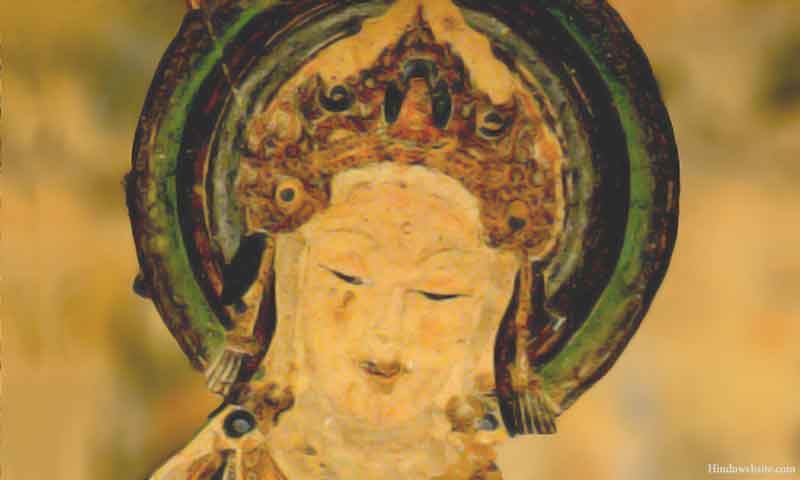
Avalokiteswara, Bodhisattvas are compassionate beings
In the days of the Buddha, the Buddhist monks wandered from village to village carrying minimum necessities, which included a begging bowl. They ate whatever food that was given to them, without preference and choice as a part of their effort to control greed and desires. Since choice meant desire, they shunned all preferences and choices in matters of living and practicing the Buddhist Dharma. They tolerated harsh conditions of life and accepted them as opportunities to practice the Eightfold Path. They observed the same discipline in matters of eating food. When they passed through a village and if someone offered them meat, they ate it dispassionately, without craving or contempt.
The essential practice of Buddhism, which was based on the Four Noble Truth and The Eightfold Path precluded any possibility of seeking and desiring on the part of the monks. The teachings of the Buddha encouraged them to overcome their desires and live unconditionally with an ethical bent of mind. Thus there were no restrictions on meat eating in the early days of Buddhism. This practice continues till today in many schools of Buddhism. For the followers of the Buddha, right resolve or right intention is more important than the superficial display of morality, which is defined as "resolved on renunciation, on freedom from ill-will and on harmlessness.
Lay followers of Buddhism are urged to shun five types of business of which business in meat is one. Right action included abstaining from taking life. Thus on their own the monks cannot indulge in wrong practices or crave for food that is in direct conflict with the basic teachings of the Buddha. But if someone offered them food such as meat, even though it conflicted with their beliefs, they had to accept it without objection. In cases such as this it is probably the person who offers them such food who will incur bad karma, if any.
Thus in the days of the Buddha, the key to right living was the intention behind the action and absence of craving. The Buddha taught that if there was a passion, delight and craving for physical and mental food, it would lead to growth of fabrications, becoming and rebirth (Atthi Raga Sutta). However as Buddhism spread, it became necessary to establish a specific code of conduct for the monks with regard to right food and right eating. The Buddhist Monastic Code (Vinay Pitika) defines various types of food and specifies what types of meat are allowed or not allowed. The following details are reproduced from the same1.
"The following types of meat are un-allowable: the flesh of human beings, elephants, horses, dogs, snakes, lions, tigers, leopards, bears, and hyenas (panthers). Human beings, horses, and elephants were regarded as too noble to be used as food. The other types of meat were forbidden either on grounds that they were repulsive ("People were offended and annoyed and spread it about, 'How can these Sakyan contemplatives eat dog meat? Dogs are loathsome, disgusting'") or dangerous (bhikkhus, smelling of lion's flesh, went into the jungle; the lions there were offended and annoyed and attacked them).
"To eat human flesh entails a thullaccaya2; to eat any of the other unallowable types, a dukkata (Mahavagga.VI.23.9-15). If a bhikkhu is uncertain as to the identity of any meat presented to him, he incurs a dukkata if he doesn't ask the donor what it is (Mahavagga.VI.23.9).
"Fish or meat, even if of an allowable kind, is unallowable if raw. Thus bhikkhus may not eat steak tartare, sashimi, oysters on the half-shell, etc. (Raw flesh and blood are allowed at Mahavagga.VI.10.2 only when one is possessed by non-human beings (!)) Furthermore, even cooked fish or meat of an allowable kind is unallowable if the bhikkhu sees, hears, or suspects that the animal was killed specifically for the purpose of feeding bhikkhus (Mahavagga.VI.31.14)."
There is historical evidence to suggest that meat eating was not shunned by the Buddha himself and if certain interpretations are to be believe, he died because of eating improperly cooked pork offered by one of his lay followers.
The Mahayana Buddhists challenged the traditional Buddhist attitude towards meat eating and believed that it conflicted with the principles of compassion, harmlessness and non injury to living creatures. They questioned how a bodhisattva, who wished to treat all living beings as though they were himself, would accept eating the flesh of any living being. According to them men should feel the affinity with all living beings, as if they were their own kin and refrain from eating meat. The Lankavatara Sutra openly criticized the meat eating habits of the Theravada School and concluded thus, "All meat eating in any form or manner and in any circumstances is prohibited unconditionally and once and for all." Meat eating is not prohibited in Vajrayana Buddhism also.
Thus, we can see that in Buddhism, there is a divergence of opinion regarding eating meat. However the permission to eat meat is not to be construed as a license kill animals. Monks in those schools may accept meat which has been offered to them, but they should not desire it or willfully indulge in it. Meat eating is allowed as an expression of indifference and as a part of the practice to overcome all desires, likes and dislikes. Its ultimate purpose is to overcome attraction and aversion and cultivate sameness or equanimity, solely for the purpose of keeping the body alive, avoiding any temptation to derive pleasure.
Suggestions for Further Reading
- The bhikkhus' code of discipline.
- The Bhikkhus' Rules A Guide for Lay People
- Dana, the practice of giving
- The economy of gifts - code for the Buddhist monks
- Food for the Heart, Talks on the Dhamma practice
- How is meditation like cooking?
- Duties of the Sangha
- Practical advice for meditators
- Starting Out Small, A Collection of Talks for Beginning Meditators
- Buddhism - The Concept of Anatta or No Self
- Anatta or Anatma in Buddhism
- Anicca or Anitya in Buddhism
- The Buddha on God
- The Buddha on Avijja or Ignorance and on the Origin of Life
- The Buddha On the Self And Anatta, the Not-Self
- History Of The Four Buddhist Councils
- Chinese Buddhism
- The Eightfold Path Of Buddhism
- The Four Noble Truths of Buddhism
- Four Stages of Progress on the Middle Way in Buddhism
- The Practice of Friendliness, Kalyanamittata, in Buddhism
- Karma or Kamma In Buddhism
- Mahayana Buddhism
- Buddha's Last Days and Final Words
- Buddhism - The Middle Way
- The Buddha's Teaching on Right Mindfulness
- The Meaning and Practice of Mindfulness
- Buddhism - Vinaya or Monastic Discipline
- Right Conduct For Lay Buddhists
- Nirvana or Nibbana in Buddhism
- Buddhism - Objects of Meditation and Subjects for Meditation
- Buddhism - Right Speech and Mind Training
- Buddhism - Right Living On The Eightfold Path
- Handbook for the Relief of Suffering by Ajaan Lee
- Theravada Buddhism
- Meat Eating or Vegetarianism in Buddhism
- Essays On Dharma
- Esoteric Mystic Hinduism
- Introduction to Hinduism
- Hindu Way of Life
- Essays On Karma
- Hindu Rites and Rituals
- The Origin of The Sanskrit Language
- Symbolism in Hinduism
- Essays on The Upanishads
- Concepts of Hinduism
- Essays on Atman
- Hindu Festivals
- Spiritual Practice
- Right Living
- Yoga of Sorrow
- Happiness
- Mental Health
- Concepts of Buddhism
- General Essays
1. From The Buddhist Monastic Code I The Patimokkha Rules, Chapter 8 Translated and Explained by Thanissaro Bhikkhu 1994, 2007
2. A type of offense for which punishment was prescribed in the monastic code.