
Nirvana or Nibbana in Buddhism
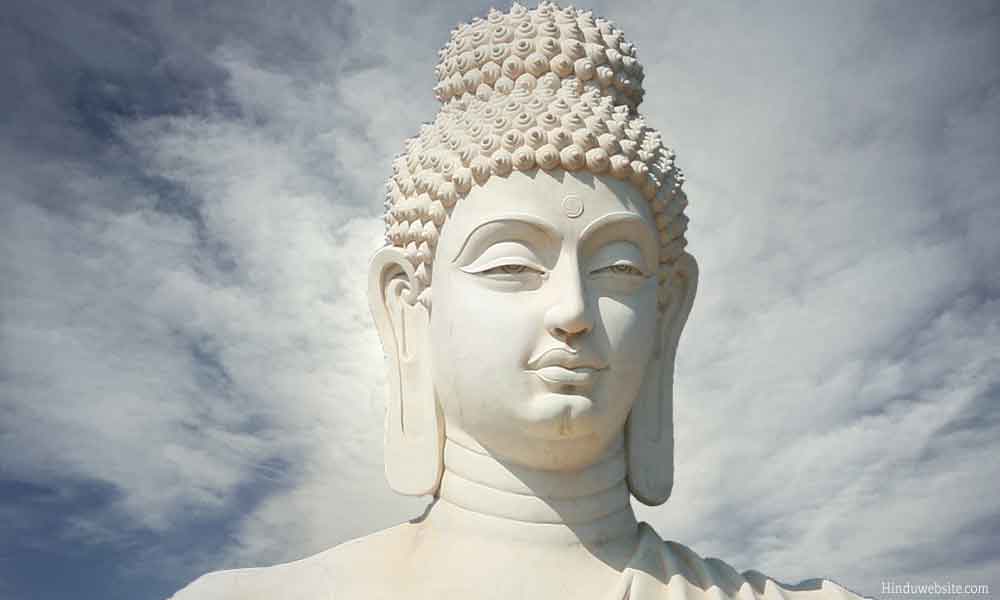
"Of course you're befuddled, Vaccha. Of course you're confused. Deep, Vaccha, is this phenomenon, hard to see, hard to realize, tranquil, refined, beyond the scope of conjecture, subtle, to-be-experienced by the wise." the Buddha
What is Nirvana?
Nirvana or nibbana is the final state of liberation a monk attains after spending years reflecting upon the Four Noble Truths and practicing sincerely the Eightfold Path. When a monk attains this state after a prolonged spiritual practice, he becomes completely free from all becoming and karmic debt.
Nirvana or "nibbana" as it is popularly called, is the final extinguishing of all desires and bonds and mental modifications arising from them.
It is resting in total and unconditional peace.
In a spiritual sense, it is liberation from the evils of impermanence, change and samsara and the dissolution of the transmigrating individual ego.
It is a condition where nothing actually happens, moves, changes or becomes. Is it a state of bliss.
Well, actually, we do not know what Nirvana is like. We may speak about it metaphorically, but we cannot really describe it, because in that state there is no experience, no knowing and no knower and observer either.
In Buddhism, Nirvana is the highest and the ultimate goal. The Buddha emphatically advised his followers to aim for Nirvana rather than a place in a higher world of gods. He state that heavenly life was a great distraction for a monk on the path of salvation.
When the Arhat or the holy one passes away, he attain the realm where there is nothing, "neither solid nor fluid, neither heat nor motion, neither this world nor any other world, neither the sun nor the moon."
This is called the cessation of becoming which is "neither arising, nor passing away, neither standing still nor being born, nor dying." It is Nirvana, which is unborn, without source, uncreated and unformed real into which escape is possible for the beings through cessation of craving.
The Buddha did not encourage speculation by the initiates on the condition of Nirvana, because of the purely subjective nature of the experience. But an understanding of Nirvana was considered essential for the monks to continue their practice on the Eightfold path.
What is the state of Nirvana?
Is it a passing away into some void, into some nothingness, into some state that is without a center and without a boundary ? If it is liberation, passing away or dying out, then into what? What happens when a person attains Nirvana? Is Nirvana a kind of death from purely mental point of view? These are some of the difficult question we try to answer here.
If we go by the sermon of flame delivered by the Buddha, Nirvana is the extinction of lust, of aversion, of delusion (raga, dvesha and moha), and of the urge to live. We are also told that when Nirvana is attained all becoming comes to an end. The notion of "I" and the "conceit of self-reference" disappears, since all notions of individuality have gone.
We are not sure whether Nirvana is a state of bliss or not, unlike in Hinduism where we are explicitly told that Self-realization leads to the experience of unbound bliss (Brhamananda). We are also not sure what happens when an Arhat who has attained Nirvana passes away. Does he continue to exists or cease to exist? The Buddha did not encourage any speculation on this and did not reveal anything about it, because in his opinion such knowledge in no way would contribute to the absence of passion, sorrow or attainment of Nirvana.
Another question regarding Nirvana that is difficult to answer is whether an Arhat who has attained Nirvana would remain continuously in that state while he still remains in this world, or moves in and out of it from time to time.
We are not sure, what happens when an Arhat remains alive in this world. We do not know whether his mind becomes empty all the time or intermittently. We also do not know in what manner and condition he continues to remain engaged with the outside world.
Available descriptions suggest that until he departs from here, he is not completely free from names and forms, and from perceptions.
While he may experience higher states of consciousness (jhana) in meditation, he may still vacillates between the duality of perception and complete absorption. Since his senses remain active, he may still experience some form of individuality.
We are also not sure, what happens when he leaves this world. We do not know whether he ceases to exist at all or exists in some manner. Even the Buddha did not provide us with a clear answer.
Probably in order to resolve this confusion, the followers of Mahayana Buddhism proposed the concept of Bodhisattvas deferring their salvation for the welfare of the people. These Bodhisattvas are beings of great merit who can attain Nirvana at will. But because of their unbound compassion, they sacrifice their own liberation and work for the liberation of others. The Buddhist pantheon grew out of this argument.
End
Buddhist scriptures on Nirvana ***
"This is peace, this is exquisite — the resolution of all fabrications, the relinquishment of all acquisitions, the ending of craving; dispassion; cessation; Nibbana." — Anguttara Nikaya III.32
There's no fire like passion,
no loss like anger,
no pain like the aggregates,
no ease other than peace.
Hunger: the foremost illness.
Fabrications: the foremost pain.
For one knowing this truth
as it actually is,
Unbinding
is the foremost ease.
Freedom from illness: the foremost good fortune.
Contentment: the foremost wealth.
Trust: the foremost kinship.
Unbinding: the foremost ease. - Dhammapada 202-205
The enlightened, constantly
absorbed in jhana,
persevering,
firm in their effort:
they touch Unbinding,
the unexcelled safety
from bondage. - Dhammapada 23
"There is that dimension where there is neither earth, nor water, nor fire, nor wind; neither dimension of the infinitude of space, nor dimension of the infinitude of consciousness, nor dimension of nothingness, nor dimension of neither perception nor non-perception; neither this world, nor the next world, nor sun, nor moon. And there, I say, there is neither coming, nor going, nor stasis; neither passing away nor arising: without stance, without foundation, without support [mental object]. This, just this, is the end of stress." — Udana VIII.1
"There is, monks, an unborn — unbecome — unmade — unfabricated. If there were not that unborn — unbecome — unmade — unfabricated, there would not be the case that emancipation from the born — become — made — fabricated would be discerned. But precisely because there is an unborn — unbecome — unmade — unfabricated, emancipation from the born — become — made — fabricated is discerned." — Udana VIII.3
Where water, earth, fire, & wind have no footing:
There the stars do not shine,
the sun is not visible,
the moon does not appear,
darkness is not found.
And when a sage,
a brahman through sagacity,
has known [this] for himself,
then from form & formless,
from bliss & pain,
he is freed. — Udana I.10
Then the Blessed One, picking up a little bit of dust with the tip of his fingernail, said to the monks, "What do you think, monks? Which is greater: the little bit of dust I have picked up with the tip of my fingernail, or the great earth?"
"The great earth is far greater, lord. The little bit of dust the Blessed One has picked up with the tip of his fingernail is next to nothing. It's not a hundredth, a thousandth, a one hundred-thousandth — this little bit of dust the Blessed One has picked up with the tip of his fingernail — when compared with the great earth."
"In the same way, monks, for a disciple of the noble ones who is consummate in view, an individual who has broken through [to stream-entry], the suffering & stress that is totally ended & extinguished is far greater. That which remains in the state of having at most seven remaining lifetimes is next to nothing: it's not a hundredth, a thousandth, a one hundred-thousandth, when compared with the previous mass of suffering. That's how great the benefit is of breaking through to the Dhamma, monks. That's how great the benefit is of obtaining the Dhamma eye." — Samyutta Nikaya XIII.1
[Aggivessana Vacchagotta:] "But, Master Gotama, the monk whose mind is thus released: Where does he reappear?"
[The Buddha:] "'Reappear,' Vaccha, doesn't apply."
"In that case, Master Gotama, he does not reappear."
"'Does not reappear,' Vaccha, doesn't apply."
"...both does & does not reappear."
"...doesn't apply."
"...neither does nor does not reappear."
"...doesn't apply."
"How is it, Master Gotama, when Master Gotama is asked if the monk reappears... does not reappear... both does & does not reappear... neither does nor does not reappear, he says, '...doesn't apply' in each case. At this point, Master Gotama, I am befuddled; at this point, confused. The modicum of clarity coming to me from your earlier conversation is now obscured."
"Of course you're befuddled, Vaccha. Of course you're confused. Deep, Vaccha, is this phenomenon, hard to see, hard to realize, tranquil, refined, beyond the scope of conjecture, subtle, to-be-experienced by the wise. For those with other views, other practices, other satisfactions, other aims, other teachers, it is difficult to know. That being the case, I will now put some questions to you. Answer as you see fit. What do you think, Vaccha: If a fire were burning in front of you, would you know that, 'This fire is burning in front of me'?"
"...yes..."
"And suppose someone were to ask you, Vaccha, 'This fire burning in front of you, dependent on what is it burning?' Thus asked, how would you reply?"
"...I would reply, 'This fire burning in front of me is burning dependent on grass & timber as its sustenance.'"
"If the fire burning in front of you were to go out, would you know that, 'This fire burning in front of me has gone out'?"
"...yes..."
"And suppose someone were to ask you, 'This fire that has gone out in front of you, in which direction from here has it gone? East? West? North? Or south?' Thus asked, how would you reply?"
"That doesn't apply, Master Gotama. Any fire burning dependent on a sustenance of grass and timber, being unnourished — from having consumed that sustenance and not being offered any other — is classified simply as 'out' (unbound)."
"Even so, Vaccha, any physical form by which one describing the Tathagata would describe him: That the Tathagata has abandoned, its root destroyed, like an uprooted palm tree, deprived of the conditions of existence, not destined for future arising. Freed from the classification of form, Vaccha, the Tathagata is deep, boundless, hard to fathom, like the sea. 'Reappears' doesn't apply. 'Does not reappear' doesn't apply. 'Both does & does not reappear' doesn't apply. 'Neither reappears nor does not reappear' doesn't apply.
"Any feeling... Any perception... Any mental fabrication...
"Any consciousness by which one describing the Tathagata would describe him: That the Tathagata has abandoned, its root destroyed, like an uprooted palm tree, deprived of the conditions of existence, not destined for future arising. Freed from the classification of consciousness, Vaccha, the Tathagata is deep, boundless, hard to fathom, like the sea." Majjhima Nikaya 72
"Birth is ended, the holy life fulfilled, the task done. There is nothing further for this world." — Samyutta Nikaya XXII.59
Some are born in the human womb,
evildoers in hell,
those on the good course go
to heaven,
while those without effluent:
totally unbound. — Dhammapada 126
Suggestions for Further Reading
- Nibbana, the ultimate goal of Buddha dhamma
- Nibbana as Living Experience- two Studies from the Pali Canon
- Does Rebirth Make Sense by Bhikkhu Bodhi
- The Road to Nirvana Is Paved with Skillful Intentions
- Thirty one planes of existence - the Buddha worlds
- A Verb for Nirvana
- Why End Suffering by Nyanaponika Thera
- Hinduism: Paths to Liberation
- The Philosophy of Jainism or Jain Dharma
- Buddhism - The Concept of Anatta or No Self
- Anatta or Anatma in Buddhism
- Anicca or Anitya in Buddhism
- The Buddha on God
- The Buddha on Avijja or Ignorance and on the Origin of Life
- The Buddha On the Self And Anatta, the Not-Self
- History Of The Four Buddhist Councils
- Chinese Buddhism
- The Eightfold Path Of Buddhism
- The Four Noble Truths of Buddhism
- Four Stages of Progress on the Middle Way in Buddhism
- The Practice of Friendliness, Kalyanamittata, in Buddhism
- Karma or Kamma In Buddhism
- Mahayana Buddhism
- Buddha's Last Days and Final Words
- Buddhism - The Middle Way
- The Buddha's Teaching on Right Mindfulness
- The Meaning and Practice of Mindfulness
- Buddhism - Vinaya or Monastic Discipline
- Right Conduct For Lay Buddhists
- Nirvana or Nibbana in Buddhism
- Buddhism - Objects of Meditation and Subjects for Meditation
- Buddhism - Right Speech and Mind Training
- Buddhism - Right Living On The Eightfold Path
- Handbook for the Relief of Suffering by Ajaan Lee
- Theravada Buddhism
- Meat Eating or Vegetarianism in Buddhism
- Essays On Dharma
- Esoteric Mystic Hinduism
- Introduction to Hinduism
- Hindu Way of Life
- Essays On Karma
- Hindu Rites and Rituals
- The Origin of The Sanskrit Language
- Symbolism in Hinduism
- Essays on The Upanishads
- Concepts of Hinduism
- Essays on Atman
- Hindu Festivals
- Spiritual Practice
- Right Living
- Yoga of Sorrow
- Happiness
- Mental Health
- Concepts of Buddhism
- General Essays
Source: ***Excerpts are reproduced and reformatted from Access to Insight edition © 2005 For free distribution. The excerpts may be republished, reformatted, reprinted, and redistributed in any medium. It is the author's wish, however, that any such republication and redistribution be made available to the public on a free and unrestricted basis and that translations and other derivative works be clearly marked as such.