
The Practice of Right Livelihood in Buddhism
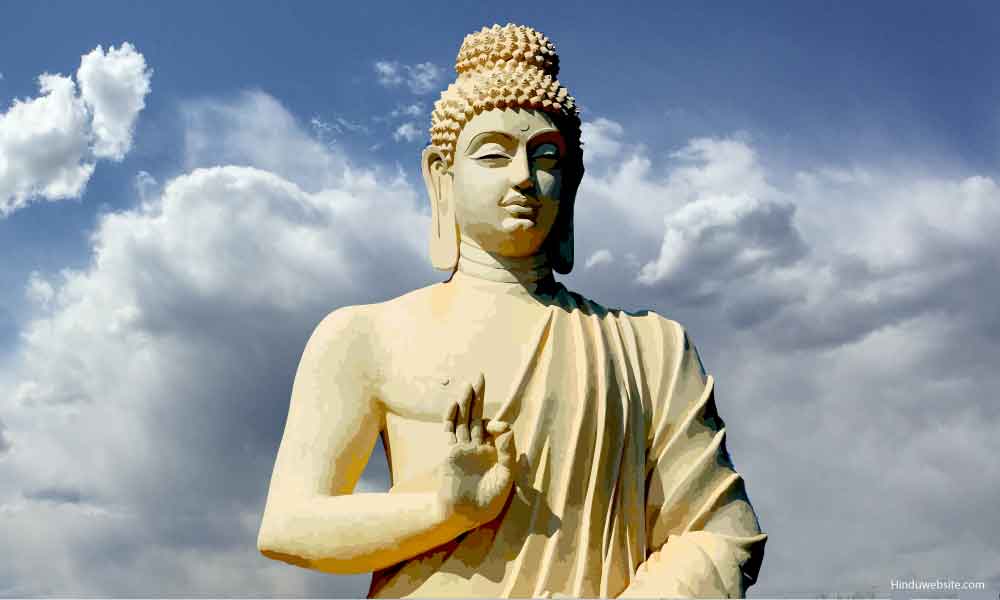
"And what is right livelihood? There is the case where a disciple of the noble ones, having abandoned dishonest livelihood, keeps his life going with right livelihood: This is called right livelihood." — SN XLV.8
Right Living is to avoid wrong way of living and to get ones livelihood by right way of living.
Right living consists of living a life based on the percepts of the Eightfold path and observing the Dhamma in letter and spirit. It is avoidance of the pursuit of desires, developing the equanimity of the mind and aversion to the objects of the world.
It means to lead a pure and holy life, not wishing injury to any one, not stealing things that do not belong to one, and not deviating from the path suggested by the Buddha. It means to remain detached and truly holy, through the awareness of the transience and impermanence of life and the process of becoming. It means a living that would finally lead to the extinction of karma and liberation of the being from all suffering.
Right Living is of two kinds
The Mundane Right Living: This is the same as the above. It leads to worldly gains and brings good results.
The Ultramundane Right Living: This is the practice of Mundane Right Living, keeping the mind holy, to remain other worldly and following the holy path in conjunction with the Eightfold path.
A balanced livelihood
"Herein, Vyagghapajja, a householder knowing his income and expenses leads a balanced life, neither extravagant nor miserly, knowing that thus his income will stand in excess of his expenses, but not his expenses in excess of his income.
"Just as the goldsmith, or an apprentice of his, knows, on holding up a balance, that by so much it has dipped down, by so much it has tilted up; even so a householder, knowing his income and expenses leads a balanced life, neither extravagant nor miserly, knowing that thus his income will stand in excess of his expenses, but not his expenses in excess of his income." — AN VIII.54
Wrong livelihood for lay followers
"A lay follower should not engage in five types of business. Which five? Business in weapons, business in human beings, business in meat, business in intoxicants, and business in poison." — AN V.177
Wrong livelihood for contemplatives
... reading marks on the limbs [e.g., palmistry]; reading
omens and signs; interpreting celestial events [falling stars,
comets]; interpreting dreams; reading marks on the body [e.g.,
phrenology]; reading marks on cloth gnawed by mice; offering
fire oblations, oblations from a ladle, oblations of husks,
rice powder, rice grains, ghee, and oil; offering oblations
from the mouth; offering blood-sacrifices; making predictions
based on the fingertips; geomancy; laying demons in a cemetery;
placing spells on spirits; reciting house-protection charms;
snake charming, poison-lore, scorpion-lore, rat-lore, bird-lore,
crow-lore; fortune-telling based on visions; giving protective
charms; interpreting the calls of birds and animals ... — DN
2
Right living for a warrior
Then Yodhajiva the headman went to the Blessed One and, on arrival, having bowed down to him, sat to one side. As he was sitting there he said to the Blessed One: "Lord, I have heard that it has been passed down by the ancient teaching lineage of warriors that 'When a warrior strives & exerts himself in battle, if others then strike him down & slay him while he is striving & exerting himself in battle, then with the breakup of the body, after death, he is reborn in the company of devas slain in battle.' What does the Blessed One have to say about that?"
"Enough, headman, put that aside. Don't ask me that."
A second time... A third time Yodhajiva the headman said: "Lord, I have heard that it has been passed down by the ancient teaching lineage of warriors that 'When a warrior strives & exerts himself in battle, if others then strike him down & slay him while he is striving & exerting himself in battle, then with the breakup of the body, after death, he is reborn in the company of devas slain in battle.' What does the Blessed One have to say about that?"
"Apparently, headman, I haven't been able to get past you by saying, 'Enough, headman, put that aside. Don't ask me that.' So I will simply answer you. When a warrior strives & exerts himself in battle, his mind is already seized, debased, & misdirected by the thought: 'May these beings be struck down or slaughtered or annihilated or destroyed. May they not exist.' If others then strike him down & slay him while he is thus striving & exerting himself in battle, then with the breakup of the body, after death, he is reborn in the hell called the realm of those slain in battle. But if he holds such a view as this: 'When a warrior strives & exerts himself in battle, if others then strike him down & slay him while he is striving & exerting himself in battle, then with the breakup of the body, after death, he is reborn in the company of devas slain in battle,' that is his wrong view. Now, there are two destinations for a person with wrong view, I tell you: either hell or the animal womb."
When this was said, Yodhajiva the headman sobbed & burst into tears. [The Blessed One said:] "That is what I couldn't get past you by saying, 'Enough, headman, put that aside. Don't ask me that.'"
"I'm not crying, lord, because of what the Blessed
One said to me, but simply because I have been deceived, cheated, &
fooled for a long time by that ancient teaching lineage of warriors
who said: 'When a warrior strives & exerts himself in
battle, if others then strike him down & slay him while
he is striving & exerting himself in battle, then with the
breakup of the body, after death, he is reborn in the company
of devas slain in battle.'— SN 42.3
Suggestions for Further Reading
- Buddhism - The Concept of Anatta or No Self
- Anatta or Anatma in Buddhism
- Anicca or Anitya in Buddhism
- The Buddha on God
- The Buddha on Avijja or Ignorance and on the Origin of Life
- The Buddha On the Self And Anatta, the Not-Self
- History Of The Four Buddhist Councils
- Chinese Buddhism
- The Eightfold Path Of Buddhism
- The Four Noble Truths of Buddhism
- Four Stages of Progress on the Middle Way in Buddhism
- The Practice of Friendliness, Kalyanamittata, in Buddhism
- Karma or Kamma In Buddhism
- Mahayana Buddhism
- Buddha's Last Days and Final Words
- Buddhism - The Middle Way
- The Buddha's Teaching on Right Mindfulness
- The Meaning and Practice of Mindfulness
- Buddhism - Vinaya or Monastic Discipline
- Right Conduct For Lay Buddhists
- Nirvana or Nibbana in Buddhism
- Buddhism - Objects of Meditation and Subjects for Meditation
- Buddhism - Right Speech and Mind Training
- Buddhism - Right Living On The Eightfold Path
- Handbook for the Relief of Suffering by Ajaan Lee
- Theravada Buddhism
- Meat Eating or Vegetarianism in Buddhism
- Essays On Dharma
- Esoteric Mystic Hinduism
- Introduction to Hinduism
- Hindu Way of Life
- Essays On Karma
- Hindu Rites and Rituals
- The Origin of The Sanskrit Language
- Symbolism in Hinduism
- Essays on The Upanishads
- Concepts of Hinduism
- Essays on Atman
- Hindu Festivals
- Spiritual Practice
- Right Living
- Yoga of Sorrow
- Happiness
- Mental Health
- Concepts of Buddhism
- General Essays