
The Third Sermon of the Buddha
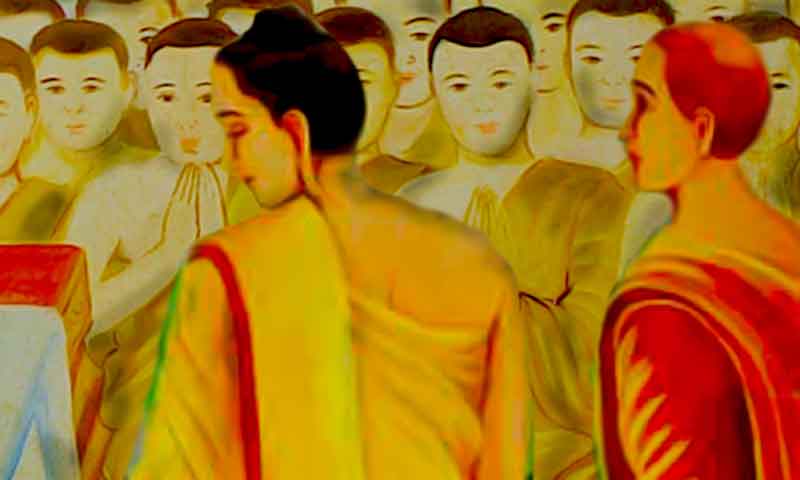
The Buddha's third sermon is about the three evils that afflict the beings and bind them to the cycle of births and deaths and suffering. They are passion (raga), anger (dhvesha) and delustion (moha). They blind the senses, the mind, the thoughts and actions resulting in birth, old age, death, lamentation, misery, grief and despair. The following is the entire text of the third sermon delivered by the Buddha at Uravela to the new converts.
The Master delivered his third sermon at Uravela, to three Brahmincal ascetics and their followers whom he had just converted. Uravela Kassapa, who later became one of his chief disciples, was one among them. Since they were previously fire worshippers, he rightly delivered to them this third sermon which is popularly known as "The Discourse on Fire."
"O monks know that all things are on fire. And what are they that are on fire? The eye, the forms, the eye-consciousness, the impressions, and whatever sensation, whether pleasant, unpleasant or neutral that arises from the impressions received by the eye, they are all in fire.
"And with what are they on fire? I say with the fire of lust, of aversion, and passion (raga, dvesha and moha); with birth, with old age, with death, lamentation, misery, grief and despair, they are on fire.
"Similar is the case with the ear, with the nose, the tongue and the sense of touch. The mind is also on fire. The thoughts are on fire. The mind-consciousness, the impressions received by the mind and the sensations that arise from such impressions, also are on fire.
"And with what are they on fire? I say with the fire of lust, of aversion, and passion (raga, dvesha and moha); with birth, with old age, with death, lamentation, misery, grief and despair, they are on fire.
"And knowing thus O Monks, the true disciple develops an aversion to the eye, to the forms, to the eye-consciousness, to the impressions received by the eye, to the sensations arising from there, to the ear, to the nose, to the tongue, to the sense of touch, to the mind, to the thoughts, to the mind-consciousness, impressions, and sensations.
"There by he overcomes his desire, becomes freed and having become freed realizes that becoming is exhausted, that he has lived a pure life, that he had done what was expected of him and that he has done away with mortality for ever. "
Thus ended the third sermon of the Buddha. The monks who assembled and listened to it became free from attachment and attained Arhat and Nirvana in due course of time.
Suggestions for Further Reading
- Buddhism - The Concept of Anatta or No Self
- Anatta or Anatma in Buddhism
- Anicca or Anitya in Buddhism
- The Buddha on God
- The Buddha on Avijja or Ignorance and on the Origin of Life
- The Buddha On the Self And Anatta, the Not-Self
- History Of The Four Buddhist Councils
- Chinese Buddhism
- The Eightfold Path Of Buddhism
- The Four Noble Truths of Buddhism
- Four Stages of Progress on the Middle Way in Buddhism
- The Practice of Friendliness, Kalyanamittata, in Buddhism
- Karma or Kamma In Buddhism
- Mahayana Buddhism
- Buddha's Last Days and Final Words
- Buddhism - The Middle Way
- The Buddha's Teaching on Right Mindfulness
- The Meaning and Practice of Mindfulness
- Buddhism - Vinaya or Monastic Discipline
- Right Conduct For Lay Buddhists
- Nirvana or Nibbana in Buddhism
- Buddhism - Objects of Meditation and Subjects for Meditation
- Buddhism - Right Speech and Mind Training
- Buddhism - Right Living On The Eightfold Path
- Handbook for the Relief of Suffering by Ajaan Lee
- Theravada Buddhism
- Meat Eating or Vegetarianism in Buddhism
- Essays On Dharma
- Esoteric Mystic Hinduism
- Introduction to Hinduism
- Hindu Way of Life
- Essays On Karma
- Hindu Rites and Rituals
- The Origin of The Sanskrit Language
- Symbolism in Hinduism
- Essays on The Upanishads
- Concepts of Hinduism
- Essays on Atman
- Hindu Festivals
- Spiritual Practice
- Right Living
- Yoga of Sorrow
- Happiness
- Mental Health
- Concepts of Buddhism
- General Essays