Ananda: Discovering the Bliss at the Heart of Existence
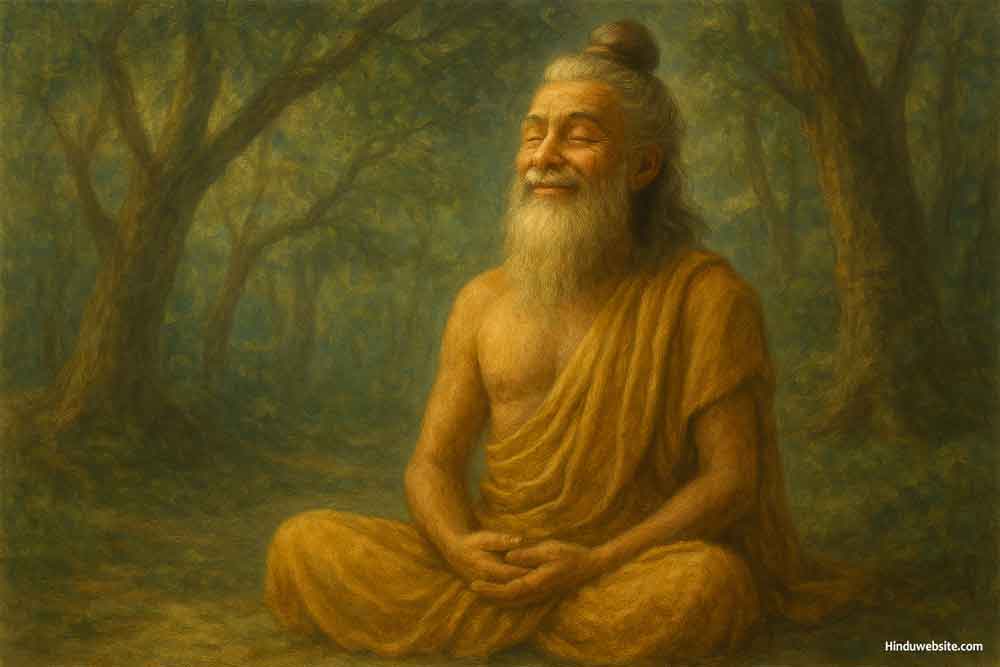
Summary: Ananda signifies happiness flowing from all directions a joy without cause or condition. In its highest sense, ananda is an eternal aspect of Brahman, experienced when the boundaries between knower and known dissolve completely. The scriptures describe Brahman itself as ananda (anandobrahma), suggesting that bliss is not something to acquire but rather our fundamental nature veiled by desire and attachment. Worldly happiness depends upon fulfillment of desires; spiritual ananda arises from their absence. Peace, equanimity, detachment, contentment, and devotion all serve as doorways to this inner joy. Hinduism, Buddhism, and Jainism each recognize suffering as inherent to existence, yet point toward liberation as the ultimate remedy. When dependence upon happiness ceases, happiness manifests naturally as the radiant core of consciousness itself.
Ananda means happiness or bliss.
Literally, 'aa' means from all sides and 'nanda' means happiness or joy. Thus literally speaking, 'ananda' means joy from all sides. In a spiritual context, ananda is an eternal aspect of Brahman which we experience when we are united with Him. When there is no distinction between the knower and the knowing, the object and the subject, one becomes immersed in immense bliss. The scriptures describe Brahman as ananda itself (anandobrahma). In the material world ananda is pure joy attained through the fulfillment of desires or some material gains. In the spiritual world it is the pure and unqualified bliss attained through union with the Highest Self.
How to experience ananda or happiness?
I Happiness, ananda, arises from peace, equanimity, stability, detachment, renunciation, absence of desires, contentment, devotion, love, and liberation. Life is full of suffering. Yet for those who are caught in the phenomenal world, it is possible to experience happiness by the above means. Ananda is a state of freedom. From freedom comes supreme bliss. Hence the best means to experience ananda or happiness is liberation, mukti.
Spiritual happiness
When the need or desire for happiness is absent, happiness manifests itself. When dependence upon happiness is absent, happiness becomes an integral part of your consciousness. This is the secret of happiness or bliss the yogis understand. Therefore they cultivate detachment and strive for their liberation. Hindu scriptures describe God as a combination of sat (truth), chit (consciousness) and ananda (pure bliss).
In their ordinary consciousness human beings are incapable of experiencing pure ananda because of the interference of the mind and the senses and the attachment of the ego with the sense objects. The Bhagavadgita tells us from the activity of the senses arises attachment and from attachment comes anger and from anger comes delusion and from delusion suffering, which is opposite of ananda. The purpose of religious and spiritual activity is to turn the mind away from the sensory objects and inwards so that both the mind and the ego can be dissolved in an endless state of ananda or bliss.
Happiness in different traditions
Hinduism, Jainism and Buddhism recognize suffering as an inseparable aspect of human life. However, each religion attempts to address it in its own way by suggesting distinct solutions. Whatever may the means they prescribe, the goal of all these religions is always the same, release from the cycle of births and deaths, disease, attachment and suffering.
Buddhsim does not describe the state of liberation as pure bliss. But Jainism and Hinduism do. According to them, the natural state of soul is pure bliss, which become veiled by the activity of the senses and the development of a physical personality. When the soul regains its pure state of joy it overcomes its limitations and becomes one with itself or with the highest Brahman.
Attribution: Image for this article created with AI