The Bhagavadgita on Ananya Bhakti: Exclusive Devotion as Liberation's Gateway
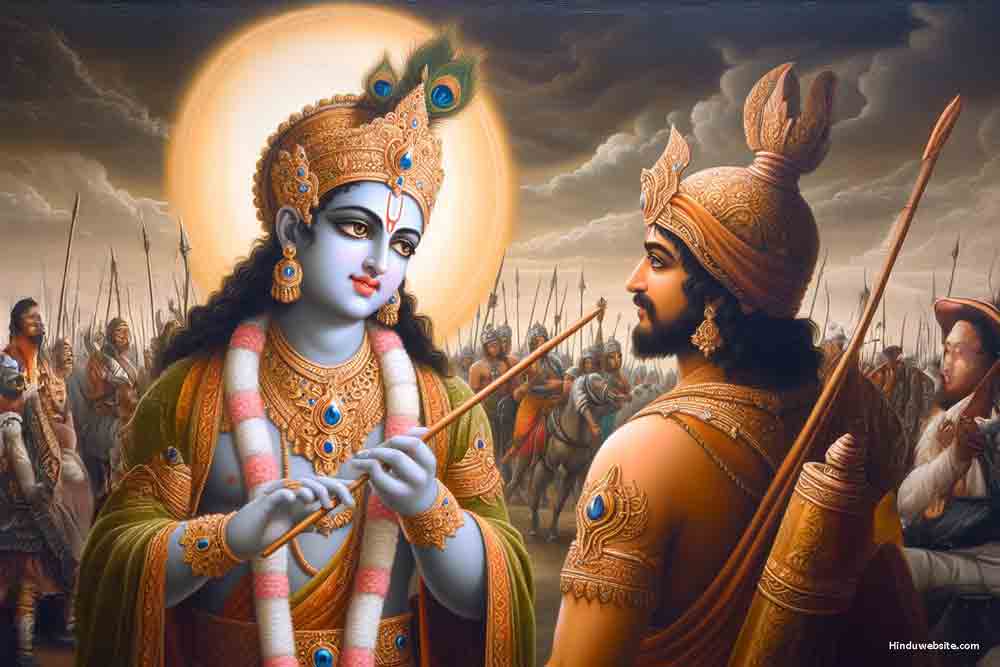
Krishna Arjuna Samvadam - Image: Al
Summary: Commentary on Bhagavadgita Chapter 11, Verse 54 emphasizing exclusive devotion (ananya/kevala bhakti) as highest yoga practice. Explains how only single-minded devotion enables knowing Brahman, seeing Him directly, and entering His reality. Details the liberated soul's journey through Viraja river, meeting Amanava messenger, entering Vaikuntha's Golden City, and attaining three blessings: nearness (samipya), same form (sarupya), eternal unity (sayujya). Compares Vishistadvaita and Advaita views on post-liberation existence.
Chapter 11 - Sloka 54
bhaktyā tv ananyayā śakya aham evamvidhorjuna
jñātum drastum ca tattvena pravestum ca paramtapa
Translation
bhaktya = by devotion; tu = but; ananyaya = not another or no other; sakyah = can be; aham = I; evam-vidhah = in this manner; arjuna = O Arjuna; jnatum = known; drastum = seen; ca = and; tattvena = reality; pravestum = enter; ca = and; parantapa = O destroyer of foes.
Meaning
" Only by devotion, but by no other means, O Arjuna, can I be known or seen in this manner, or can My divine reality be entered, O destroyer of foes.
Commentary
Until now, Lord Krishna spoke about his manifestations, essential nature, divine qualities, and duties as the Lord of the universe. From here on, he will focus on devotion and speak about it. The first six chapters of the Bhagavadgita are primarily about knowing the individual Self, overcoming delusion, and cultivating discernment and the knowledge of the Self. In the next six chapters, we learn mainly about the Supreme Brahman and his numerous glories and manifestations. In the next six chapters, for which this is introductory, we will learn about the relationship between him and his devotees or between the Supreme Self and the individual Self. Their relationship is established, sustained, and strengthened through devotion of the highest kind.
In this verse, Lord Krishna emphasizes the importance of devotion in attaining divine grace and liberation, describing it as ananya, meaning exclusive or nothing else. It is also known as single-minded devotion (kevala bhakti). Thus, this verse sums up the essential practice of bhakti yoga, which is considered the highest of all yogas. Although it seems simple and easy, it is not. Devotees of the Supreme Lord who practice kevala bhakti or ananya bhakti have a unique opportunity to know him, see him directly, and enter his supreme reality or immortal abode. Followers of Dvaita and Vishistadvaita believe that they are uniquely qualified to enjoy his company and live blissfully in his presence after death, establishing with him an everlasting, internal connection through their pure consciousness. However, according to the Advaita, those who attain liberation cease to exist individually after death as they become dissolved in his pure consciousness without a trace. Whatever the truth, without exclusive devotion, one cannot attain liberation or the Supreme Brahman.
True devotion is the gateway to eternal life and liberation. It is the royal path by which pure souls ascend to the highest heaven. There is no better way to enter the reality of Brahman (brahma tattva) than through pure and unmixed devotion, which is free from desires and worldly attachments. However, it does not arise without self purification and perfection in yoga. The devotion that is tinged with selfishness and desires is a poor shadow of it. It may lead to a better life in the next birth, but not liberation. In this journey, faith and knowledge are important because true devotion arises from the right knowledge acquired through jnana yoga and the firm faith that is strengthened by that knowledge. The knowledge of Brahman arises from the study of scriptures and association with mahatmas (great souls). Without it, true devotion (bhakti) does not arise as one remains deluded, impure, and ignorant. Liberation is not possible without the grace of the Supreme Lord, and his grace can be attained only when the mind is free from egoism, desires, and attachments and filled with pure devotion.
Ananya bhakti is not the simple devotion many people practice in temples and homes to fulfill their desires or for worldly reasons. Renunciation, purity, detachment, and discernment are important aspects of it. It arises only when you are absent from your consciousness and fully establish your mind in the thoughts of the Lord. Exclusive devotion means devotion that is free from the duality between you and God. True devotees do not think of themselves but only the Lord. They worship him without seeking, desiring, expecting, or claiming attention, ownership, or doership. For them, devotion is an act of sacrifice, renunciation, and an opportunity to serve others by seeing him in them. For them, life becomes a great sacrifice in which they pour everything they have as a sacrificial offering, becoming the sacrificer and the sacrificed, as a mark of their purity, divinity, love, and devotion.
What happens to the devotees who attain Brahman in the embodied state? According to the descriptions available in our devotional literature, when a devotee attains liberation through the grace of the divine couple (Maha Lakshmi and Maha Vishnu) while alive and leaves this world, he passes through many planes and worlds of light, meeting on the way many divinities. They rejoice in his liberation and take great delight in seeing him and helping him. After meeting them, he finally reaches the river called Viraja, which reflects the beauty, splendor, and illumination of the Supreme Lord. The liberated soul takes a plunge into its radiant waters and becomes invigorated and perfected by its cleansing and illuminating power. When he emerges from the river, a strange being named Amanava appears on the banks of the river and greets him. He is a personal messenger, or ambassador of Lord Vishnu, meant to accompany the liberated souls and acquaint them with the landmarks and the wonders they will see on the way. Accompanied by him, they enter the immortal world of the Supreme Lord, where he takes leave from them.
Continuing their journey further, they interact with many divine beings and witness divine splendors. Then, they enter the Golden City of Vaikuntha and pass through many golden palaces and halls, where many divinities and souls of the highest order come forward to welcome them, showering them with great love and affection as if they have met their long-lost companions. Marching further, they pass through a Golden Hall studded with precious stones and gems of all kinds, where the aura of the Supreme Lord enters them and pervades them, filling them with supreme bliss. Passing further, they meet with the deputies of Lord Vishnu, divinities of the highest order. They assist him personally. Finally, at the end of that long and delightful journey, they come into the presence of the Great Lord himself, decked in his divine splendor and resting on the coils of the mighty serpent, Adisesha, surrounded by his close attendants and the purest beings, with the Divine Mother, Goddess Maha Lakshmi seated by his side. Upon seeing his divine form (svarupa), the devotee who traveled thus far becomes fully saturated with infinite love and bliss. The sight of his kevala bhaktas in his close presence fills the Lord with great delight since he enjoys their company and keeps them close to his heart. From that moment of reunion onwards, the liberated soul (mukta atma), who entered his direct presence, remains eternally connected to him through an internal channel and experiences the same consciousness and potency as his.
According to the Vishistadvaita School (qualified dualism), the liberated souls who enter Vaikuntha through exclusive devotion to Lord Vishnu earn an honorable place in his court. They enjoy proximity, direct access, and a direct connection with him through their inseparable, infinite consciousness, while the Lord enjoys their delightful presence. Thus, in the liberated state, they enjoy three great blessings that are rarely achieved by gods or celestial beings, namely nearness (samipya), same form (sarupya), and eternal unity (sayujya).